emily wilson

Susan Orlean calls Emily Wilson ‘a bit of a jerk’ for ‘Odyssey’ take

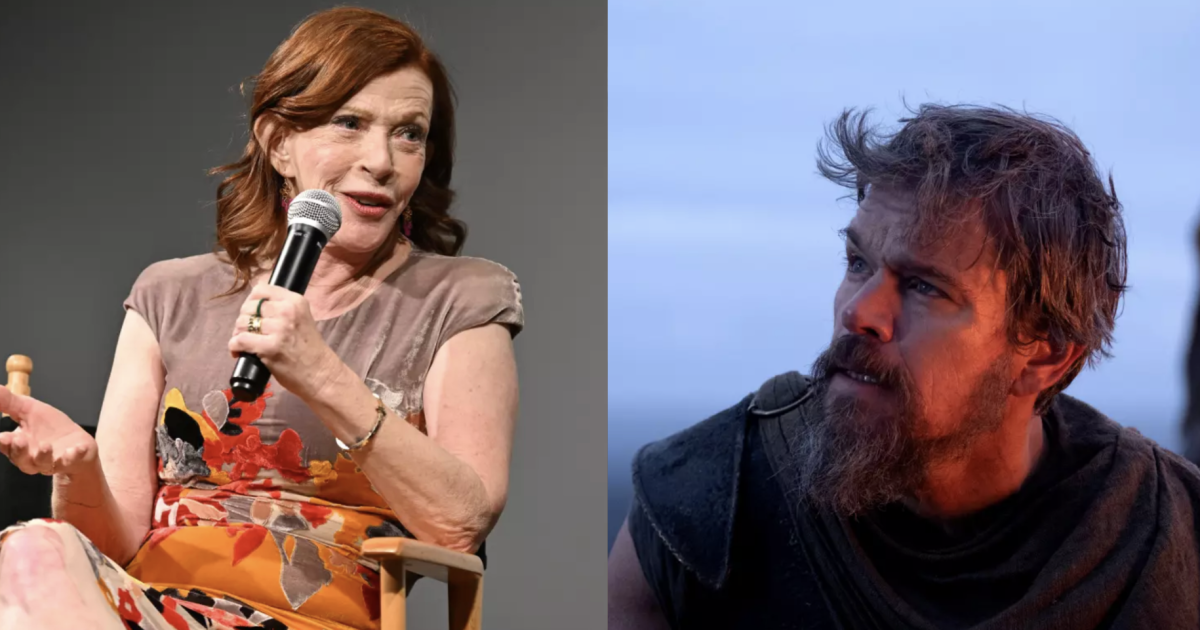
In a book nerd battle that’s become so epic, even The Onion has satirized the saga, acclaimed author Susan Orlean has grabbed the mic, and Emily Wilson is admitting she has one regret in her review of “The Odyssey.”

Earlier this week, Joyce Carol Oates panned Wilson’s critique of Christopher Nolan’s big-screen adaptation, and now acclaimed author and journalist Susan Orlean has entered the chat.

“I loved The Odyssey (saw it twice) and love any piece of art that gets people talking and reading and thinking,” she posted on Threads on Thursday. “Emily Wilson is being a bit of a jerk.”

Choice words from Orlean, but she knows a thing or two about film adaptations: her 1998 book “The Orchid Thief” inspired Spike Jonze’s 2002 film “Adaptation” starring Nicolas Cage and Meryl Streep (who played Orlean), and her 1998 article “Life’s Swell” was brought to screen as “Blue Crush,” also in 2002.

“Why can’t things be the things they are and if they’re different from their source material that’s their new form and their own thing and I SAY THIS FROM EXPERIENCE,” she added in a separate post.

The ire stems from a biting 4,200-word takedown of “The Odyssey” penned by classicist Wilson, who translated Homer’s poem in 2017.

In early interviews discussing the film, Nolan referenced Wilson’s translation, which subsequently skyrocketed in sales. A representative for Audible told The Times on Wednesday that, year over year, purchases of Wilson’s “Odyssey” translation were up by more than 600% across Audible’s U.S., U.K. and Canadian marketplaces.

Wilson’s review, published in the London Review of Books, essentially dubbed Nolan’s film a dud for academics with taste and a blockbuster hit for virgins who like special effects that go “Boom!”

“Nolan’s Odyssey lacks many of the elements that make the poem great. It has nothing convincing to say about time, memory, history, war, or about the relationship between one warrior’s glorious return and the lives of his family, adversaries, comrades, friends and neighbours,” she wrote. “It lacks psychological, emotional, political and ethical depth. Its narrative structure is gimmicky. The writing is abysmal. None of the characters has convincing motivation for their actions or words. There are no sex scenes, and all the food looks horrible.”

Pulitzer Prize finalist Oates, like Orlean, is also team Nolan. “Her tone of dismissal & haughty superiority strike a sour note,” Oates said of Wilson’s review in a post on X. Oates added that rather than Wilson disagreeing with “interpretations of Homer in a collegial manner,” she benefited from Nolan’s film and then attacked it.

Wilson’s review went so viral it crashed the London Review of Books website for a few hours on Monday. On the heels of the missive’s publication, Wilson posted on Bluesky that an earlier draft of the essay was actually more cutting than the version that went live.

“Was I too mean? Or not mean enough? I went through my first draft and tried to take out the snark,” she wrote. “To quote the great poet: ‘Though much is taken, much remains… That which we are, we are.’”

She added in the same thread: “The oddest thing about the response to this essay is people who say it’s ‘personal’. You can disagree about some or all of it! I may well be wrong! But it’s not ‘personal’ to analyze a film or other work of art, even negatively. Criticism is more than ‘Hurray!’ or ‘Hiss!’”

One criticism Wilson admits she regrets in retrospect is her take on Nolan’s race-neutral casting. In the review she wrote that while the casting launched a culture war, it wasn’t actually progressive. She likened the characters portrayed by Zendaya, Lupita Nyong’o, Himesh Patel, Corey Antonio Hawkins and Travis Scott to “versions of the Black best friend, whose only role in the drama is to provide aid to the white protagonist.”

On Bluesky, she wrote, “In this piece, I regret the paragraph about the uses of the POC actors – who are all great, but IMO under-utilized (and why couldn‘t Himesh Patel be Odysseus instead?) I still think the film largely wastes its strong cast, but I framed it badly.”
Source link

Joyce Carol Oates slams Emily Wilson over viral ‘Odyssey’ takedown

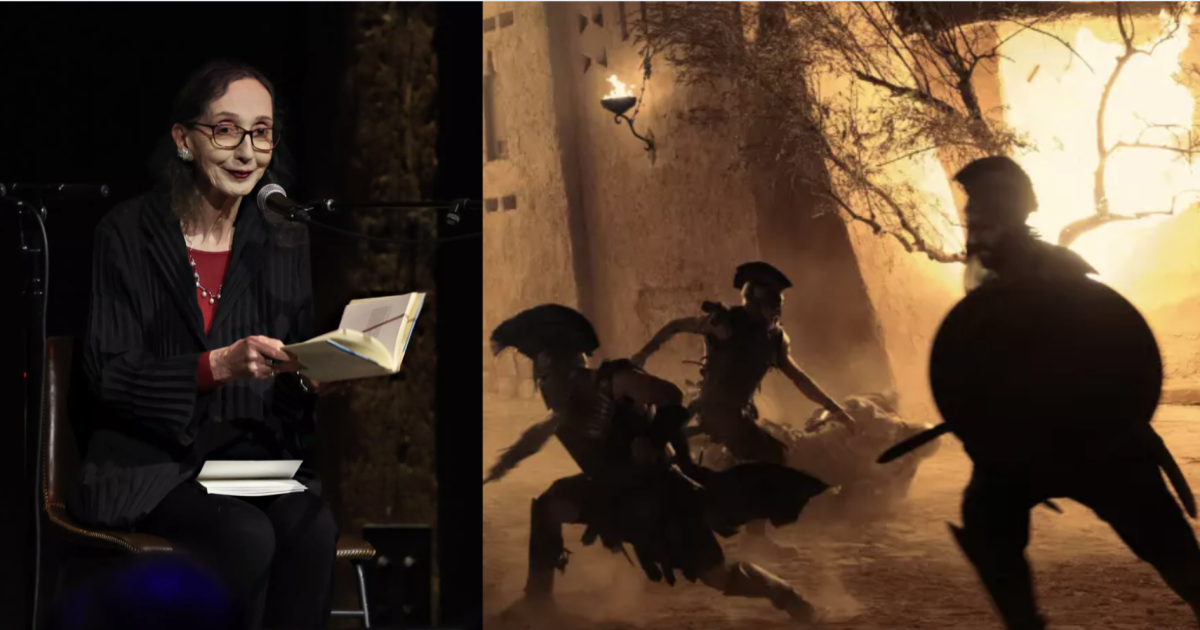
Days after a classicist who translated Homer’s “The Odyssey” in 2017 eviscerated the Christopher Nolan film based on the poem, Joyce Carol Oates has entered the debate.

She’s Team Nolan.

The National Book Award-winning author is known for her (sometimes controversial) hot takes on social media, and on Wednesday, she stepped up to the plate in opposition of translator Emily Wilson’s brutal takedown of Nolan’s big-screen adaptation of “The Odyssey.” Nolan had previously said Wilson’s translation inspired him in making the film. But Wilson wrote that she would be ashamed to have written any part of the script.

“Her tone of dismissal & haughty superiority strike a sour note,” Oates said of Wilson’s review in a post on X. “Rather than disagreeing with interpretations of Homer in a collegial manner, this person, who has benefited enormously from Nolan’s film, speaks in the crude language of MAGA folks attacking someone with ideas that differ from hers.”

Wilson’s biting missive, published in the London Review of Books this week, went so viral that it reportedly crashed the outlet’s website for a few hours Monday. The British American classicist’s take on the film was especially notable because, last fall, Nolan quoted Wilson’s translation when telling Empire magazine why he was drawn to the story. “I think it’s the Emily Wilson translation that begins, ‘Tell me about a complicated man,’” he said.

Wilson’s version of “The Odyssey” subsequently spiked in sales. A representative for Audible told The Times on Wednesday that, year over year, purchases of Wilson’s “Odyssey” translation were up by more than 600% across Audible’s U.S., U.K. and Canadian marketplaces. Daily global title sales rose nearly sixfold during the week the movie premiered. And in the nine days following wide release, daily global sales averaged around 20 times more than the rate before the premiere, showing sustained demand for Wilson’s translation.

Oates, who penned the Pulitzer Prize-nominated “Blonde,” said that, within the world of translators, Wilson’s review “seems all the more surprising since all translations are, presumably, subjective & not equivalent to the original text.”

“One would expect a translator, of all people, beholden to a text, in service to a text, to be just a wee bit more thoughtful & respectful of others who are acting in good faith just as (she would claim) she is,” Oates wrote.

In separate posts on the social platform, Oates said she highly recommended Nolan’s adaption and that she wasn’t a fan of Wilson’s translation. “What I’d read of Emily Wilson’s translation was not for me,” she wrote, adding that she assumes it was “deliberately written to appeal to an audience comfortable with YA (young adult) directness & spareness of vocabulary — that is, with the intention of being marketable, adopted by high school classes.

“With a more poetic, elevated speech, you are naturally limiting your audience,” continued the author, who further noted that there was nothing wrong with a direct, commercial approach. “Why not profit from a classic work not protected by copyright?”

In the viral review by Wilson, who also translated Seneca and Euripides, as well as Homer’s “Iliad,” she likened Nolan’s nearly three-hour epic to Peter Jackson’s “Lord of the Rings” trilogy and “Game of Thrones.”

Her sharpest critiques were aimed at Nolan’s rendering of Homer’s female characters, of which she said there were more than in his other films “thanks to the source material” but that, in contrast to the poem, none of them “had much to say.” Wilson said Nolan’s race-neutral casting was essentially a wash as “[m]ost of the non-white actors — Zendaya, Lupita Nyong’o, Himesh Patel, Corey Antonio Hawkins, Travis Scott — play versions of the Black best friend, whose only role in the drama is to provide aid to the white protagonist.”

And don’t get her started on the whole point of the poem — the cost of war — of which Wilson quipped, “We are not shown that war or killing are bad, only that good men sometimes feel bad about it — a very different point.”

Source link