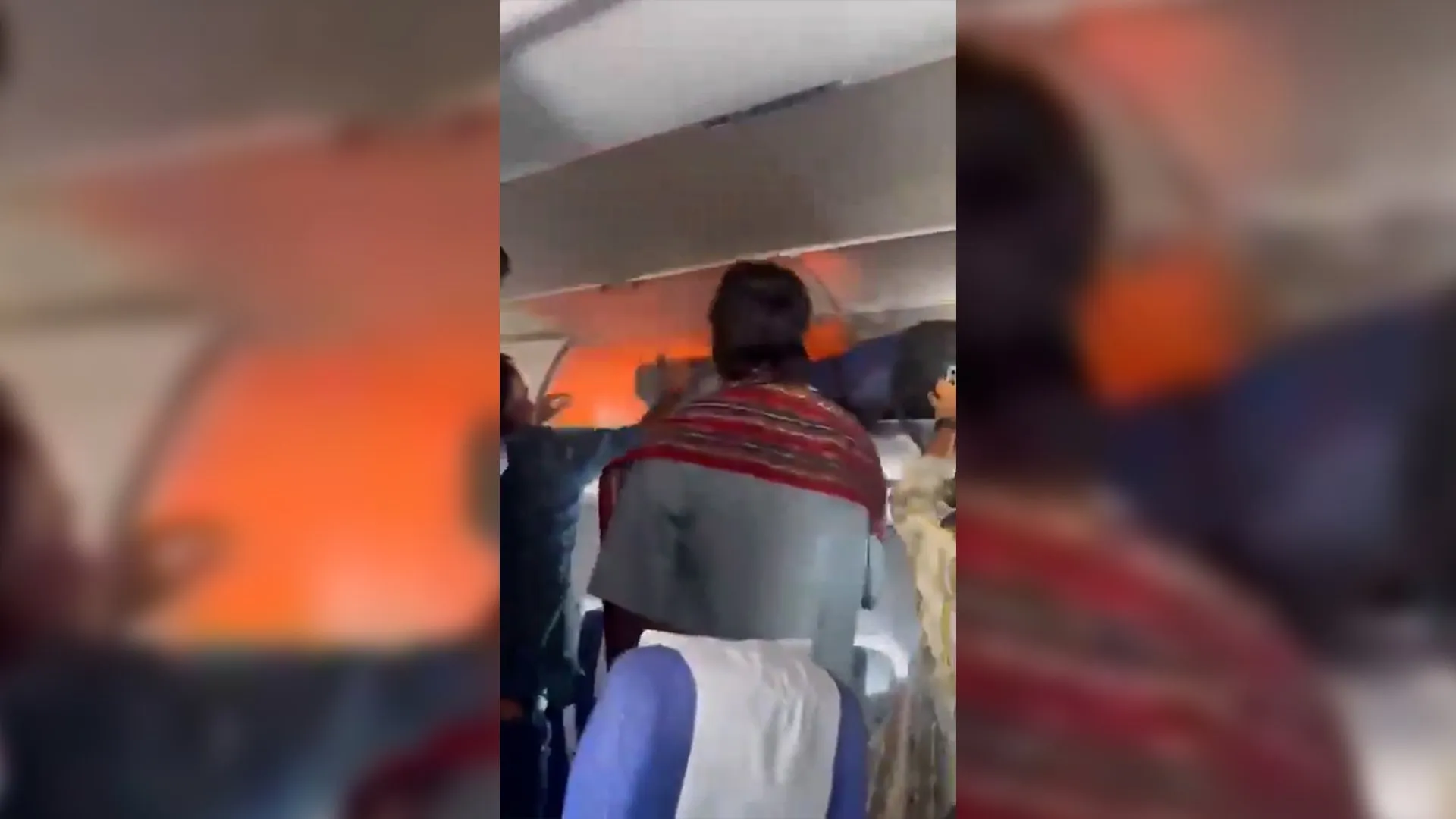
An IndiGo plane was forced to make an emergency landing after a passenger’s power bank reportedly caught fire, during a flight from New Delhi to Chennai. Passengers managed to extinguish the fire on board.
80s rock legends rushed Deen Castronovo offstage mid-set after he suffered a medical emergency during gig on Thursday night.
The 62-year-old, who is the drummer for rock band Journey, had performed just two songs before he was rushed off stage at the BOK Center in Tulsa, Oklahoma.
80s rock legend Deen Castronovo was rushed offstage mid-set on Thursday nightCredit: GettyThe drummer pictured back in March this year in Hamilton, OntarioCredit: Getty
According to Tulsa World, keyboardist Jonathan Cain made the crowd aware of the situation after performing their tunes Be Good To Yourself and Stone in Love.
He said to fans: “We’re going to see what happens as this progresses.
Sign up for the Showbiz newsletter
Thank you!
“It’s an unfortunate situation. We’re very sorry. We’re hoping it’s only a delay, but please — I’m sorry. Don’t worry.
“Have your prayers ready. Have your prayers ready for Deen Castronovo, everybody. Thank you.”
Jonathan Cain, Todd Jensen, Arnel Pineda, Jason Derlatka, Journey founder Neal Schon, Gregg Rolie, and Deen Castronovo pictured together in 2023Credit: GettyDeen was rushed to hospital last nightCredit: Getty
Guitarist Neal Schon later returned and told the crowd that their band mate had been taken to hospital.
And according to Rolling Stone, when the group got back to performing, he told fans: “This concert is for Deen.
“I think he’s going to be fine.”
Journey has not addressed what has happened on social media.
The Sun has contacted the band’s representative for comment.
The band were performing as part of their Final Frontier Tour across North America when it happened.
Journey are set to return to the stage in San Antonio tomorrow night for one of their remaining shows.
Their tour is set to wrap up at the beginning of November.
The group currently consists of Neal Schon, Jonathan Cain, Deen Castronovo, Arnel Pineda, Jason Derlatka and Todd Jensen.
Journey was formed back in 1973 until 1987.
They reunited in 1995 and have been together ever since.
Some of the their best songs include Don’t Stop Believin’, Separate Ways, Faithfully and Open Arms.
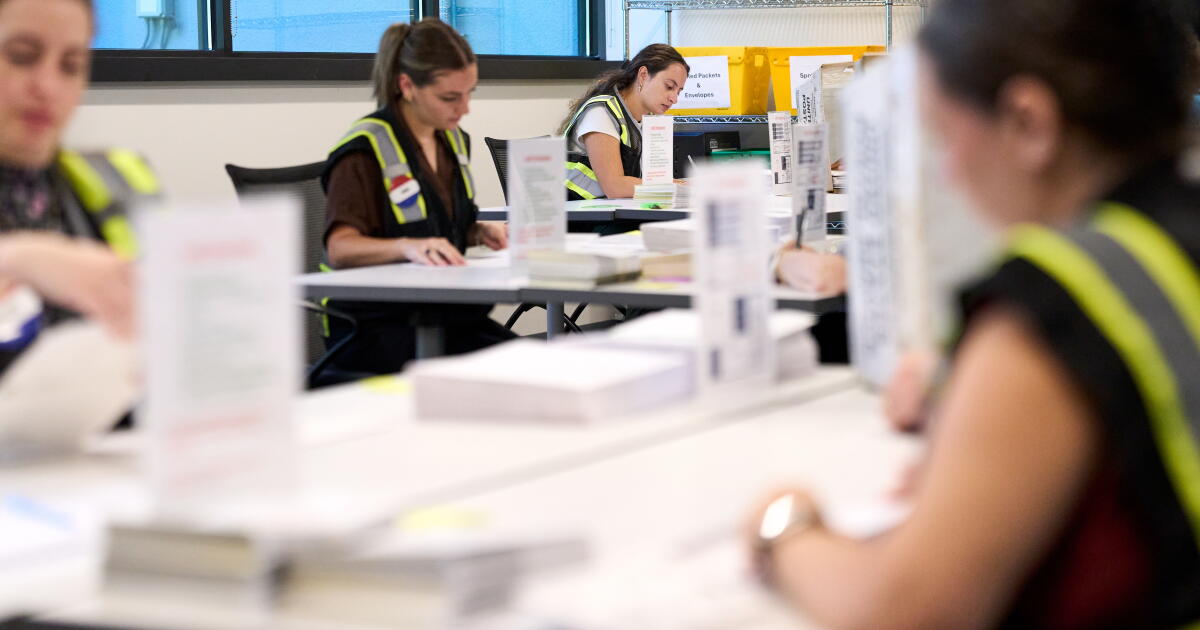
The Democratic National Committee on Thursday filed a lawsuit alleging that President Trump’s administration secretly changed a postcard used by U.S. citizens overseas in a way that makes it harder to register to vote.
The lawsuit contends that the Department of Defense made the change by declaring an emergency, which allowed it to eliminate a specific box on the form. That box is typically checked by potential voters who acknowledge they are U.S. citizens but who have never lived in the United States.
They are usually the children of U.S. citizens, and 38 states allow them to cast ballots provided they have close family connections. Since 2013, the box has appeared on postcards sent to overseas voters.
Republicans have filed lawsuits in multiple states trying to prevent those voters, who typically support Democrats, from casting ballots. Thursday’s lawsuit contends that the administration simply made the change on its own without giving proper notice.
“These American citizens pay U.S. federal and state taxes, but now a years-old plan has culminated in a manufactured ‘emergency’ to justify impeding their right to vote in American elections and potentially disenfranchising them entirely,” the lawsuit states.
The Department of Defense, which administers the form, did not immediately respond to a request for comment.
The number of Americans overseas who have never lived in the United States yet cast ballots in the country was estimated at about 11,500 in 2016. The lawsuit contends the number has likely grown.
Some are already registered and are due to receive ballots for November. Others can opt to check other boxes saying they’re citizens who either intend to return to the U.S. or do not intend to return in order to receive ballots.
The move follows Secretary of Defense Pete Hegseth urging members of the military to cast ballots en masse, implying they could out-vote Democratic jurisdictions, such as Detroit, if they all cast ballots. The same federal law that lets members of the military who live overseas cast ballots also requires that civilians who live overseas be given the same opportunity.
But as Democratic-leaning civilians overseas have out-voted Republican-leaning members of the military in recent years, the GOP hasstarted to target the law, known as the Uniformed and Overseas Citizens Absentee Voting Act, or UOCAVA. Republicans were able to win a court case forbidding the votes of overseas citizens who have never lived in North Carolina from being counted there, but have not yet succeeded in lawsuits in other states, including swing state Michigan.
Susan Dzieduszycka-Suinat is a U.S. citizen in Munich whose 28-year-old daughter also is a U.S. citizen who has never resided in the country but votes regularly. She said the administration’s move was alarming.
“If this works in slicing off a piece of the electorate,” said Dzieduszycka-Suinat, who is president of the U.S. Vote Foundation, “wait until the next emergency.”
Riccardi writes for the Associated Press. AP writer Konstantin Toropin in Washington contributed to this report.
The Trump administration has warned France and Germany to release emergency diesel reserves to help lower global fuel prices or risk facing a potential US ban on diesel exports, according to people familiar with the discussions.
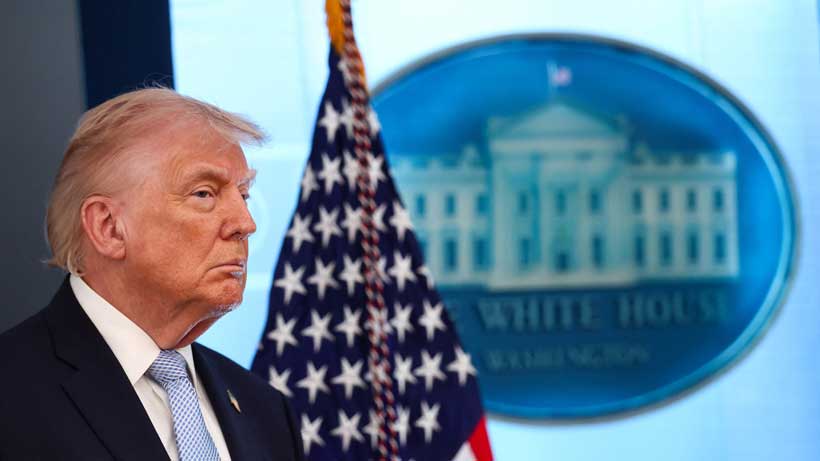
The warning represents a sharp escalation in Washington’s pressure on European allies as President Donald Trump looks for ways to increase fuel supplies and bring down prices ahead of the November midterm elections.
US officials have become increasingly frustrated with France and Germany, which Washington believes have not fully acted on earlier commitments to release emergency oil and petroleum reserves as global fuel markets face mounting disruptions.
“It is in Europe’s best interest to work with the United States as we pursue multiple pathways to boost the supply of refined products and lower costs for consumers,” a US official told Reuters.
Stay ahead of the geopolitical week.
MD Briefing delivers expert analysis across five global fronts — the Indo-Pacific, energy, geoeconomics, European security, and the Middle East — every Monday morning. Free.
A second source familiar with the discussions said the United States had asked the European Union to release 120 million barrels of diesel over the next six months.
The demand highlights the growing importance of Europe’s fuel reserves at a time when disruptions to major energy-producing regions are tightening global supplies.
Washington Raises Pressure on Europe
The US administration’s warning comes as Trump considers restricting US diesel exports as part of a broader effort to increase domestic supplies and reduce fuel prices for American consumers.
The approach creates a difficult balance for Washington. Limiting exports could increase the amount of diesel available inside the United States, potentially putting downward pressure on domestic prices. But it could simultaneously reduce supplies available to international markets, particularly Europe, which has become increasingly dependent on imported refined fuels.
US Energy Secretary Chris Wright said on Wednesday that the administration expected European countries to announce additional diesel supplies soon.
“We’ve lost some diesel exports from the Middle East, although we’re restoring those, and we’ve lost diesel exports from China,” Wright told reporters.
The disruptions have exposed the vulnerability of global refined fuel markets to geopolitical conflicts and changes in trade flows.
Germany’s economy ministry did not immediately respond to a request for comment, while France’s energy ministry declined to comment.
The White House’s pressure also appears to have become a broader diplomatic issue among Western allies.
An official at the French presidency said Trump and French President Emmanuel Macron did not discuss the issue when they met on the sidelines of the UN General Assembly in New York last week.
Macron, however, plans to convene a video conference of G7 leaders to address rising fuel prices and the availability of refined petroleum products.
The discussions are expected to include coordination over the release of emergency reserves in cooperation with the International Energy Agency.
Why Europe Matters to the Fuel Market
Europe’s position in the global fuel market has changed substantially since Russia’s invasion of Ukraine.
European countries previously relied heavily on Russian crude oil and refined petroleum products. The subsequent sanctions and restrictions on Russian energy imports forced European governments and companies to find alternative suppliers.
The result has been greater dependence on imports from countries including the United States and suppliers in the Middle East and Asia.
That dependence has become more significant as the conflict involving the United States, Israel and Iran has disrupted energy flows from the Middle East.
The loss or reduction of refined fuel exports from major suppliers can quickly affect diesel markets because refining capacity cannot always be shifted between regions immediately.
Diesel is particularly important because it powers much of Europe’s commercial transport, heavy industry, agriculture and logistics sectors. Sustained shortages can therefore affect the broader economy rather than simply increasing prices at fuel stations.
The US Faces Its Own Fuel Dilemma
For Trump, the issue also has a strong domestic political dimension.
Fuel prices are highly visible to American consumers, making gasoline and diesel costs politically sensitive ahead of the November midterm elections.
The administration is therefore examining multiple ways to increase available supplies and reduce costs.
But a potential US diesel export ban could have consequences beyond America’s borders.
The United States has become an important supplier of refined petroleum products to international markets. Restricting those exports could tighten supplies elsewhere, potentially pushing international prices higher even if American prices fall.
That creates a difficult policy tradeoff for Washington.
The administration wants to protect US consumers from high fuel costs while maintaining sufficient supply in global markets. European governments, meanwhile, face pressure to use their own emergency reserves even as they seek to maintain energy security following the loss of Russian supplies.
Europe Seeks a Coordinated Response
France appears to be pursuing a broader G7 response rather than treating the issue as a bilateral dispute with Washington.
Macron’s planned meeting would allow the world’s major industrial economies to discuss the availability of refined products and potentially coordinate emergency stock releases through the International Energy Agency.
Such coordination could help prevent individual countries from taking measures that unintentionally worsen shortages elsewhere.
But disagreements over how much fuel should be released, when reserves should be used and who should bear the cost could complicate the process.
Emergency reserves are designed primarily to protect countries against severe supply disruptions. Releasing large quantities can provide temporary relief, but it also reduces the buffer available if another disruption occurs.
That makes Europe’s response particularly consequential at a time when energy markets remain exposed to geopolitical shocks.
A New Test for Transatlantic Energy Relations
The dispute illustrates how the global energy system has become increasingly intertwined with broader geopolitical and trade relationships.
Europe needs reliable fuel supplies after cutting its dependence on Russian energy, while the United States is attempting to use its position as a major energy producer and exporter to address domestic price pressures.
Trump’s warning to France and Germany adds another layer to that relationship by linking European reserve policy to continued access to US diesel exports.
Whether Europe ultimately releases the amount of diesel Washington has requested will depend on national assessments of market conditions, domestic energy security and the risks of further supply disruptions.
For now, the dispute signals that the energy consequences of conflicts in the Middle East are reaching far beyond the region itself.
As the United States and its European allies try to contain fuel prices, they face a common problem but increasingly different pressures over how the burden of stabilising global energy markets should be shared.
British holidaymakers heading to one of Europe’s most popular destinations have been issued a warning
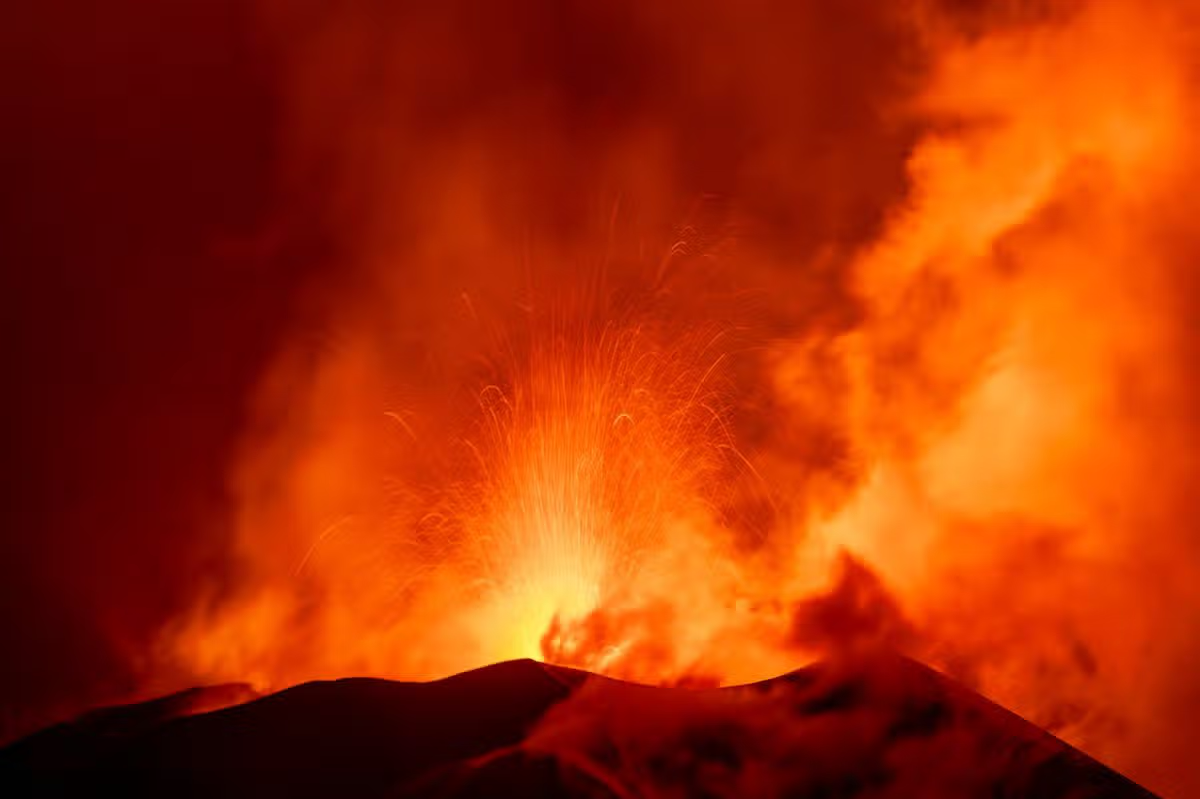
It concerns a volcanic eruption(Image: Getty Images)
Anyone travelling to Italy or the Vatican City this week have been told to check the latest official advice, after an update highlighted a developing issue that could affect some journeys. The Foreign, Commonwealth and Development Office (FCDO) updated its Italy travel advice on Monday, September 28.
The update relates to Mount Etna, the active volcano on Sicily’s eastern coast which is one of the world’s most active volcanoes. According to UNESCO, Etna’s eruptive history stretches back around 500,000 years, with at least 2,700 years of its activity documented by humans.
It is also one of Sicily’s best-known natural landmarks and was added to the UNESCO World Heritage List in 2013 because of its geological importance. UNESCO describes Etna as the highest mountain on a Mediterranean island and says its continuing activity has made it an important site for scientific research.
The latest FCDO advice says Italian authorities have increased the alert level because of volcanic activity at Mount Etna. Travellers are advised to follow instructions from local authorities if an eruption occurs.
It could have consequences for people travelling by air, with the FCDO stating that arrivals and departures at Catania Airport may be cancelled, delayed or rerouted to Palermo or Comiso if volcanic activity affects the airport. Holidaymakers heading to or from Catania have been advised to check with their airline or travel provider and the airport itself.
The FCDO does not advise against travel to Italy as a whole, but its general guidance states that “no travel can be guaranteed safe” and tells travellers to read the full advice before travelling. It also recommends appropriate travel insurance covering an itinerary, planned activities and emergency expenses.
There are also wider safety points for visitors to Italy, with the FCDO warning that demonstrations can occur with little or no warning in cities and advising people to avoid protests, political gatherings and marches. The government also says petty crime, including bag-snatching and pickpocketing, is more common in city centres and at major tourist attractions.
Wildfires remain another risk during Italy’s extended summer months, with the FCDO describing them as dangerous and unpredictable and advising visitors to check local alerts and weather forecasts. The same guidance says people should follow local authorities’ instructions and take care when travelling through woodland areas.
Anyone travelling should therefore check the FCDO advice shortly before departure because circumstances can change. The government’s travel guidance also recommends having appropriate insurance and following instructions from local authorities while abroad.
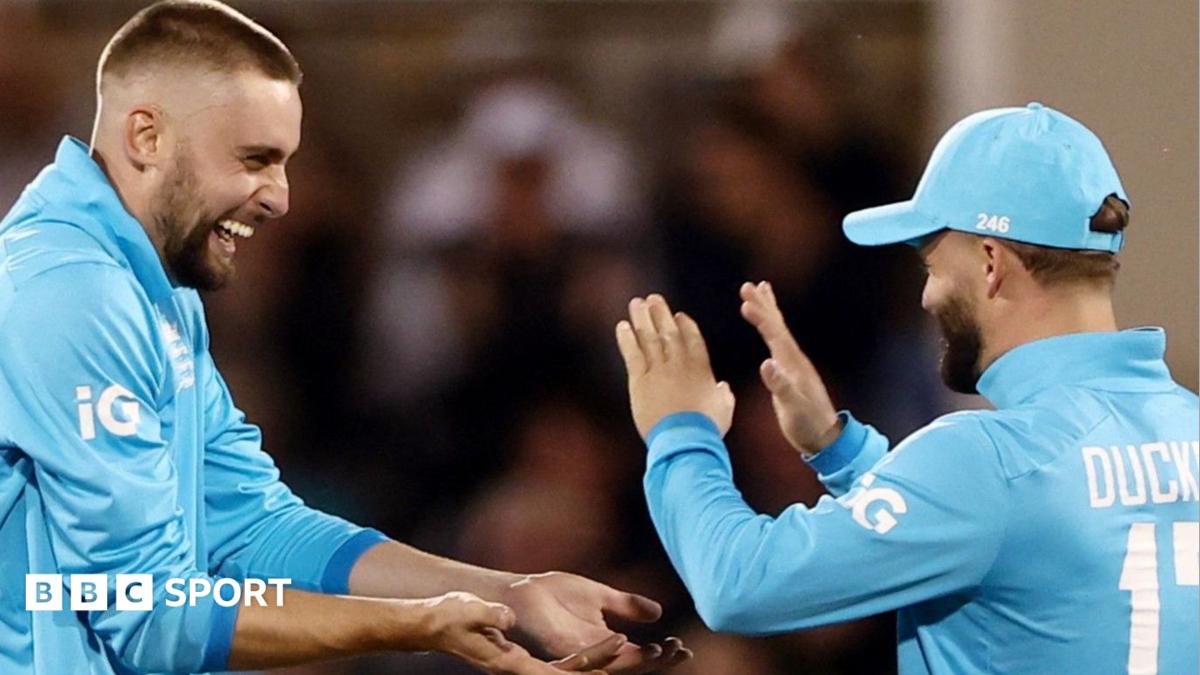
Jacks’ match in the north east also included an important 46 not out with the bat.
Though he was eventually left stranded, he batted responsibly, hitting only one four in his first 43 deliveries, to make sure England’s innings was extended from 211-7 in the 39th over to 265 in the penultimate.
“I came in and found it really difficult to start off,” he said.
“I just re-evaluated what I thought was a good score and obviously what then happened with wickets falling around me a change of the role, just try and bat out the overs.”
For so long “batting out the overs” has not been the England way, but Jacks is a player growing in maturity.
He is also vice-captain to Harry Brook for these Sri Lanka series in the absence of Jacob Bethell and has become an increasingly vocal member of the group.
It was telling that when England’s T20 World Cup campaign began earlier this year amid the cloud of Brook’s Wellington episode, Jacks was first put up to speak to the media.
“He’s just a good leader,” Brook said, plainly.
Reliable off the field, Jacks is becoming increasingly so on it.
It is 18 months since he moved from the top of the order to the middle as England’s finisher in T20 and 50-over cricket.
“I feel very comfortable going out there on the day and any situation can arise which I really enjoy,” Jacks said.
“It is not the same every day which you get opening so it keeps that fresh element to the game.
“At the beginning of my career it felt like you are just fighting to play in the next game, which is not the best place to be.
“It is a luxury to know, say when we go to Headingley [for the second ODI], that I will be in the team. You can’t take that for granted and appreciate the hard work you have done to get there.”
It is also easy to forget Jacks began the year in England’s Test side, as their spinning all-rounder during the Ashes – a role now filled by Dan Lawrence.
Jacks, who met new Test coach Stephen Fleming when the New Zealander joined the white-ball squad at Old Trafford last weekend, has is signed up for a stint with MI Cape Town in the SA20 this winter.
There would no clash there with Fleming’s first tour in charge in South Africa over Christmas, but the later part of the T20 competition overlaps with England’s two Tests in Bangladesh, where English spinners will be needed.
“I don’t know about what would happen or even if they would want me,” he said.
“We will finish the summer before getting into the winter.”
For now, Jacks will focus on white-ball trips to Pakistan, Australia and South Africa as England build towards the 50-over World Cup next autumn.
One downside of a Test recall would be losing more time to rearrange that Edinburgh trip.
“It didn’t go how we planned but we will have to find time to redo it,” Jacks smiled.
CARROT Top has been hospitalised in Las Vegas after an emergency.
His Friday night show at the Luxor was scrapped as a result.
Comedian Carrot Top, whose real name is Scott ThompsonCredit: AlamyThe comedian was reportedly rushed to hospital, forcing him to scrap his Friday night showCredit: Alamy
A source told TMZ Carrot Top, 61, had been rushed to hospital after a suicide attempt.
His rep said the comedian was recovering in hospital with “the care and support he needs”.
Sign up for the Showbiz newsletter
Thank you!
The performer’s real name is Scott Thompson.
He got his nickname from a high school swimming coach.
The comedian also snagged roles on the big screen, including in Chairman of the Board, Dennis the Menace Strikes Again and Tugger: The 4×4 Jeep Who Wanted to Fly.
He has appeared on many talk shows, including a 2010 episode of The Jay Leno Show, when he had pies chucked at him by Leno and guest Emma Roberts.
His agent Jami Schlicher said: “Mr. Thompson is recovering in the hospital and is receiving the care and support he needs.
“His family and those closest to him are deeply grateful for the concern, prayers and respectfully ask for privacy.”
The Sun contacted Scott Thompson’s agent for comment.
Lawyers criticised mass arrests under emergency powers that allowed authorities to detain people without charge.
Published On 17 Sep 202617 Sep 2026
The Caribbean country of Trinidad and Tobago has ended a state of emergency that granted the government extraordinary powers to combat crime, including the ability to imprison people without charge.
The country’s prime minister told parliament on Wednesday that the government would not extend the state of emergency. One was issued in 2024 and another in 2025, with extensions lengthening both. Instead, the government would seek a “permanent legal framework”.
Recommended Stories
list of 3 itemsend of list
“The proposed legislation will establish a permanent legal framework for targeted operations against violent crime, gangs, illegal weapons and the criminal networks that finance them, while providing safeguards for law-abiding citizens, judicial oversight and parliamentary accountability,” Prime Minister Kamla Persad-Bissessar said in a social media post.
The government had faced criticism for a campaign of mass arrests that suspended key civil liberties in what it said was in the name of cracking down on crime and those the government deemed threats to security. A prominent businessman and his wife were among those arrested over alleged involvement in a plot to assassinate the prime minister, but were never charged and later released.
The measures were last extended in June, with the prime minister stating that more than 5,800 people have been arrested since a March extension. About 2,250 of those have yet to be charged, and it remains to be seen whether they will be released now that the state of emergency has ended.
Lawyer Criston Williams told The Associated Press news agency that he expects some of those detained without charge to bring lawsuits against the government and called for the Inter-American Commission on Human Rights to investigate possible abuses by the government.
“They are transported to us blindfolded, shackled, hands behind their backs, a gray knapsack over their heads,” he said, adding that meetings with lawyers took place in the presence of five armed men from law enforcement, “who refer to themselves as operator one, two, three, four, five. There’s a camera above, so guess what, there’s nothing like attorney-client privilege.”
Police reported a record 624 killings in the country of about 1.4 million people in 2024, a figure that police say dropped to 369 in 2025. Police state that 255 killings have been recorded this year, compared with 268 over the same period in 2025.
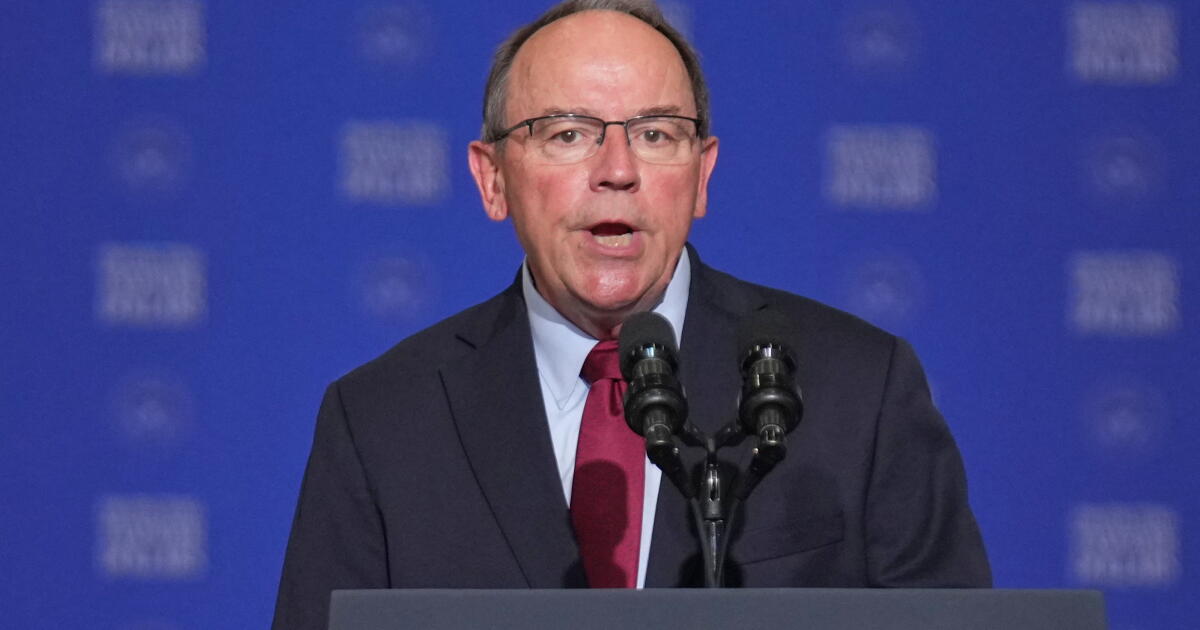
WAUSAU, Wis. — U.S. Rep. Tom Tiffany, the Republican nominee for Wisconsin governor, wiped away tears and laughed while sharing how thankful he was Sunday to survive a harrowing late-night emergency landing into a lake of the small plane he was riding in.
The pilot “said we are going down,” Tiffany told reporters at a downtown Wausau firehouse. “‘Pull your seat belt tight.’ I gave it a yank and pulled it good and tight. It was probably about 10 seconds later … we hit the water.”
Tiffany said he and the pilot, Leonard Boltz, remained on top of the plane in Lake Wausau until it began sinking. They decided on swimming to shore. He said they swam about 100 to 150 feet until they reached water shallow enough to stand in.
“We’re really fortunate that God was looking after us last night,” said Tiffany, 68.
The Marathon County Sheriff’s Office said in a statement that the emergency landing happened just before 9 p.m. Saturday. Boltz called 911 after the pair got out of the plane. They were rescued by emergency responders in a fire department airboat just after 9 p.m.
“The gravity of this is probably just hitting me at this point,” Tiffany said Sunday. “We were making jokes every step of the way last night. Though we knew it was a serious situation, we tried to keep it light through the whole thing.”
David Crowley, the Democratic gubernatorial nominee, wished Tiffany a “quick recovery” in a post on X and lauded the “heroism of the pilot.”
Tiffany said he was returning from the La Crosse County Lincoln Day Dinner when the single-engine, four-seat Beechcraft Bonanza aircraft lost power as it approached Wausau Downtown Airport.
Tiffany said he had a cut above his right eye that required 12 stitches. Boltz, who Tiffany said is a retired Air Force pilot, also suffered cuts and received four stitches.
Tiffany said the incident will not affect his gubernatorial campaign.
A no-wake buoy was placed near the plane, which remained in the lake, and boaters were asked to avoid the area until the aircraft can be removed, the sheriff’s office said.
A Federal Aviation Administration spokesperson said the agency would investigate the incident. A National Transportation Safety Board spokesperson said that agency is waiting for the FAA to assess the plane as to whether the damage was substantial enough for it to get involved.