Elizabeth Warren

Housing bill becomes law without Trump’s signature

July 11 (UPI) — A housing bill passed by Congress became law at midnight Saturday when President Donald Trump refused to sign it, but didn’t veto it.

The 21st Century ROAD to Housing Act is a comprehensive law that was designed to make housing more affordable and increase housing supply. Trump refused to sign it because he wanted Congress to pass the SAVE America Act, an election reform bill that would require those registering to vote to provide proof that they are U.S. citizens.

But Congress doesn’t have the votes to pass the SAVE Act.

On Friday, Trump announced that he again would not sign the ROAD to Housing bill.

“I will not sign the Housing Bill, which has been fully approved by Congress and sent to the White House, in PROTEST over the fact that the United States Senate is not capable of passing THE SAVE AMERICA ACT,” he said on Truth Social.

The housing bill includes measures that modernize building standards, encourage renovating older homes, encourage communities to build more housing with funding and grant programs, local governments to reform restrictive zoning policies around building housing and effectively ban private equity from buying up single-family homes. Critics of the bill say it doesn’t go far enough, but they acknowledge it’s a good first step.

“This bill becoming law is a genuine milestone — and I don’t use that word lightly,” Dennis Shea of the Bipartisan Policy Center told the BBC. “Getting Congress to move on housing supply and affordability has been a long time coming, and the American people made clear they were ready for it.”

Earlier this year, a BPC survey found that 89% of voters wanted congressional action to make housing more affordable.

Congressional leaders had planned a bill signing ceremony last month, ready to show voters that they are trying to bring down costs, a key issue to Americans. But hours before it was scheduled to begin, Trump canceled it.

Sen. Elizabeth Warren, D-Mass., criticized Trump’s ongoing refusal to sign Friday.

“At the stroke of midnight, a huge bipartisan bill to lower housing costs became law without the President’s signature. Why did President Trump sit on the landmark housing bill for more than 2 weeks? Maybe because there was nothing in it for him personally – no gold-encrusted ballroom, no Qatari jet, no $2 billion crypto deal. Nothing in the 21st Century ROAD to Housing except ways to make housing more affordable,” she said in a statement. “Donald Trump couldn’t pick up the pen because he just isn’t interested in lowering costs for American families.”

At 4 a.m. Saturday, she posted on X: “BREAKING: the clock struck midnight and our bipartisan housing bill is now law. Trump refused to sign it, but he couldn’t stop it.”

“This law is GROUNDBREAKING. It will build more housing, bring down costs, and for the first time, stop private equity from buying up homes,” she said.

Trump had called the housing bill “so unimportant” and “a yawn.”

Speaker of the House Mike Johnson, R-La., defended the bill without criticizing Trump’s comments.

He said, “the president has a lot going on, and I think it’s safe to say he’s not read through every line of that piece of legislation.

“What he was saying is in comparison to ensuring election integrity, which is now represented by the SAVE America Act, nothing is as important,” Johnson said. “That’s not to say that there are not also incredibly important issues, and the cost of living and affordability is among them. It’s top of mind.”

“So I hope he does sign it. If he doesn’t, it’s still law; we’ll still celebrate it,” Johnson said. “But he’s trying to make a point and I think he’s making it very effectively.”

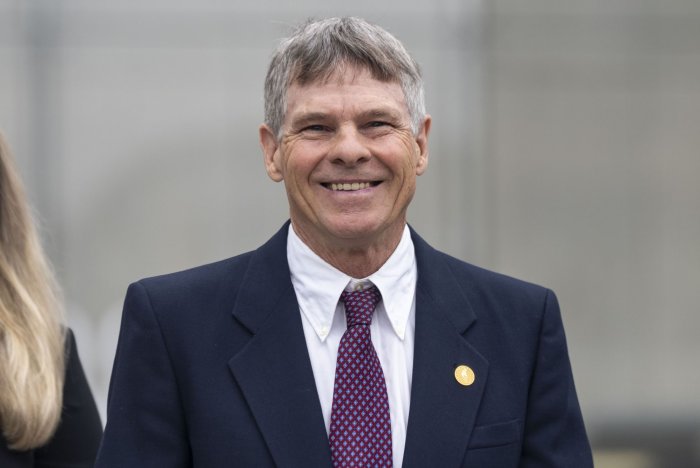
Olympic canoeist David Hearn departs the Moultrie Courthouse after pleading not guilty to damaging the Lincoln Memorial Reflecting Pool on Thursday. Hearn was indicted on July 2 on one count of destruction of property of more than $1,000 for allegedly damaging the Reflecting Pool, carrying a maximum penalty of 10 years in prison if convicted. Photo by Bonnie Cash/UPI | License Photo

Source link

Platner drops out of Maine Senate race

July 8 (UPI) — Graham Platner dropped out of the Maine Senate race on Wednesday evening, two days after allegations arose that he sexually assaulted a woman in 2021.

In a video, Platner said that “we believe that for the movement to continue, it can’t be me — and for that reason we are suspending campaign operations.”

“It’s not the false allegations, though, that have brought us to where we are,” he said. “It’s the fact that they’re being used by the political establishment to put structural pressure on us. We live in a political system that is not built for normal people. It is a system built structurally to make sure movements like ours cannot flourish.”

The decision allows Democrats to choose a new candidate for the race against Republican Susan Collins, the five-term incumbent. Platner had until Monday to drop out; Democrats now have two weeks to pick a contender for the race.

On Monday, a woman who once dated Platner said he forced her to have sex with him about five years ago, Politico reported. Jenny Racicot said Platner was intoxicated when he entered her home one night in 2021 andassaulted her while she told him repeatedly to stop. Others have also made claims about Platner and abuse.

Platner has steadily denied the allegations, calling them “categorically untrue.”

Earlier Wednesday, the Maine Democratic Party approved a plan to hold a nominating convention if Platner suspended his campaign.

Valli Geiger, a Maine state representative, told WMTW-TV of Portland, Maine, that Platner called her and encouraged her to try to take his place on the ballot.

“He said, ‘Valli, you are a fighter; you have been with this movement since the beginning,’ ” Geiger said. She said she was “heartbroken” by the accusations against Platner but agreed that he needed to suspend his campaign. She also said he was encouraging others to put their names forward.

CNN reported that candidates to replace Platner include three Democrats who ran for governor: Nirav Shah, former director of the Maine Center for Disease Control; Secretary of State Shenna Bellows; and former state Sen. Troy Jackson.

Since the allegations broke, a rising tide of Democrats called on Platner to suspend his campaign, including former supporters Sens. Elizabeth Warren and Bernie Sanders. Many groups rescinded endorsements of the candidate.

Platner has also been involved in other controversies, including over a tattoo with Nazi connotations that he said he was unaware of.

Source link

U.S. Senate passes bipartisan housing bill

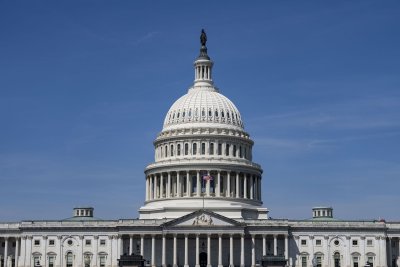
The U.S. Capitol building is seen in Washington, D.C. The Senate passed a bipartisan bill Monday aimed at lowering housing costs, sending it to the House of Representatives. File Photo by Bonnie Cash/UPI | License Photo

June 22 (UPI) — The U.S. Senate on Monday passed a bipartisan bill aimed at lowering housing costs, sending it to the House of Representatives for a final vote.

The Senate voted 85-5 to pass the 21st Century ROAD to Housing Act. Several senators missed the vote because of severe thunderstorms that affected Ronald Reagan International Airport, NBC News reported.

A deal on the act was negotiated by a bipartisan group including Sen. Tim Scott, R-Ariz.; Sen. Elizabeth Warren, D-Mass.; Rep. French Hill, R-Ark., and Rep. Maxine Waters, D-Calif.

Scott and Warren both said before the vote that it showed that common ground is possible.

“Today’s vote proves that it is possible to find bipartisan, common ground on legislation that actually helps the American people,” Warren said on the Senate floor, The Hill reported. “And, importantly, it proves that bipartisan legislation doesn’t have to be the weakest, most milquetoast agreement that doesn’t offend anyone or do too much to help anyone either.”

The bill’s provisions include measures that encourage renovating older homes, encourage communities to build more housing through funding and grant programs, cut some red-tape issues around building housing and effectively ban private equity from buying up single-family homes. It restricts companies that already own more than 350 single-family homes from buying more.

The act had been stranded for a time after the Senate passed one version in March and the House of Representatives passed a different version in May. The final bill includes provisions sought by the House and drops a provision it objected to that would have required large investors that own or construct at least 350 single-family homes to sell them after seven years.

Those voting against it included Sen. Rick Scott, R-Fla., who told The Hill that housing is “a local issue.” Scott said he wanted to see Congress balance the budget and drive interest rates down.

If the House votes to approve the bill this week as expected, it will go to President Donald Trump, who is expected to sign it.

Source link

U.S. extends temporary Russia sanctions relief for 3rd straight month

May 19 (UPI) — The Trump administration has issued temporary Russia sanctions relief for a third straight month, extending a waiver allowing the delivery and sale of Russian oil already loaded onto tankers at sea amid the ongoing energy crisis cause by the U.S. war with Iran.

Treasury Secretary Scott Bessent announced the 30-day reprieve on social media, saying it will “provide the most vulnerable nations with the ability to temporarily access Russian oil currently stranded at sea.”

“This extension will provide additional flexibility, and we will work with these nations to provide specific licenses as needed. This general license will help stabilize the physical crude market and ensure oil reaches the most energy-vulnerable countries,” he said in a statement.

The United States has imposed thousands of sanctions on Russia since it invaded Ukraine in February 2022, in an effort to cut it off from a lucrative revenue source to fund its war.

The sanctions relief — first issued on March 5 to permit the sale of Russian crude to India before being broadened March 12 — may have helped Russia generate ab additional $150 million per day in oil revenue, or $3.3 billion to $5 billion in the month of March alone, according to the Council on Foreign Relations.

Ukrainian President Volodymyr Zelensky said in mid-April that about $10 billion worth of Russian oil was at sea, condemning the sanctions relief by stating “every dollar paid for Russian oil is money for the war.”

Democrats and Ukrainians have been sharply critical about the sanctions relief, describing it as undercutting their years of work to try to hobble Russian President Vladimir Putin’s ability to make war.

Following the announcement of the extension on Monday, Democratic Sens. Jeanne Shaheen of New Hampshire and Elizabeth Warren of Massachusetts described the waiver as “delivering another dangerous and indefensible gift” to Putin.

“Every additional dollar the Kremlin earns from this license helps Putin finance his illegal war against Ukraine and kill innocent Ukrainians,” the Democratic pair said in a joint statement.

The Trump administration initially issued the waiver as oil prices surged in response to the war in the Middle East, which began Feb. 28 when the United States and Israel launched joint attacks on Iran.

Shaheen, ranking member of the Senate Foreign Relations Committee, and Warren, ranking member of the Senate Banking, Housing and Urban Affairs Committee, criticized the Trump administration over its reasoning that the waiver is to support vulnerable countries, stating that justification “would be more credible had it not launched this war, or if it had used policy tools to limit the prices Russia could push on those countries.”

“Instead, the Trump administration has helped Russia charge more for its oil cargoes by removing the risk of sanctions,” they said.

“Continuing to show weakness like this will only invite more aggression and put a just end to the war in Ukraine further away.”

Source link

Trump administration considers $1.7B fund to compensate allies

May 16 (UPI) — The Trump administration is considering the creation of a $1.776 billion fund to compensate people allied with President Donald Trump who were investigated during the Biden administration.

The fund would be part of a settlement with Trump that would result in him dropping his lawsuit with the Internal Revenue Service over the leaking of his tax returns six years ago, ABC News and The New York Times reported.

The deal emerged after months of negotiations between the White House and Department of Justice, which had originally been aiming to directly pay Trump, but conflict of interest concerns steered toward the compensation fund.

Although Trump has the right to sue as a private citizen, his position as president means that he also can instruct agencies within the executive branch, which would make him both the plaintiff and defendant in a trial.

The concept is partially modeled on an Obama administration compensation fund for Native American farmers and ranchers that distributed $760 million from the Treasury Department’s Judgment Fund.

In addition to Trump allies’ legal fees linked to investigations during his first term, the fund also likely would be open to people charged in the Jan. 6, 2021, riot at the Capitol building that saw the building get ransacked by Trump supporters.

Critics of the plan have called it a “slush fund” for Trump and his allies.

“An insane level of corruption — even for Trump,” U.S. Elizabeth Warren, D-Mass., said of the plan earlier this week.

Vice President JD Vance speaks during a news conference on anti-fraud initiatives in the Indian Treaty Room of the Eisenhower Executive Office Building at the White House on Wednesday. Photo by Daniel Heuer/UPI | License Photo

Source link