Ryanair, easyJet, and TUI ban electrical item – what passengers need to know
Need to know
Airlines have strict rules on power banks and batteries, with some banning them entirely while others only allow them in cabin hand luggage

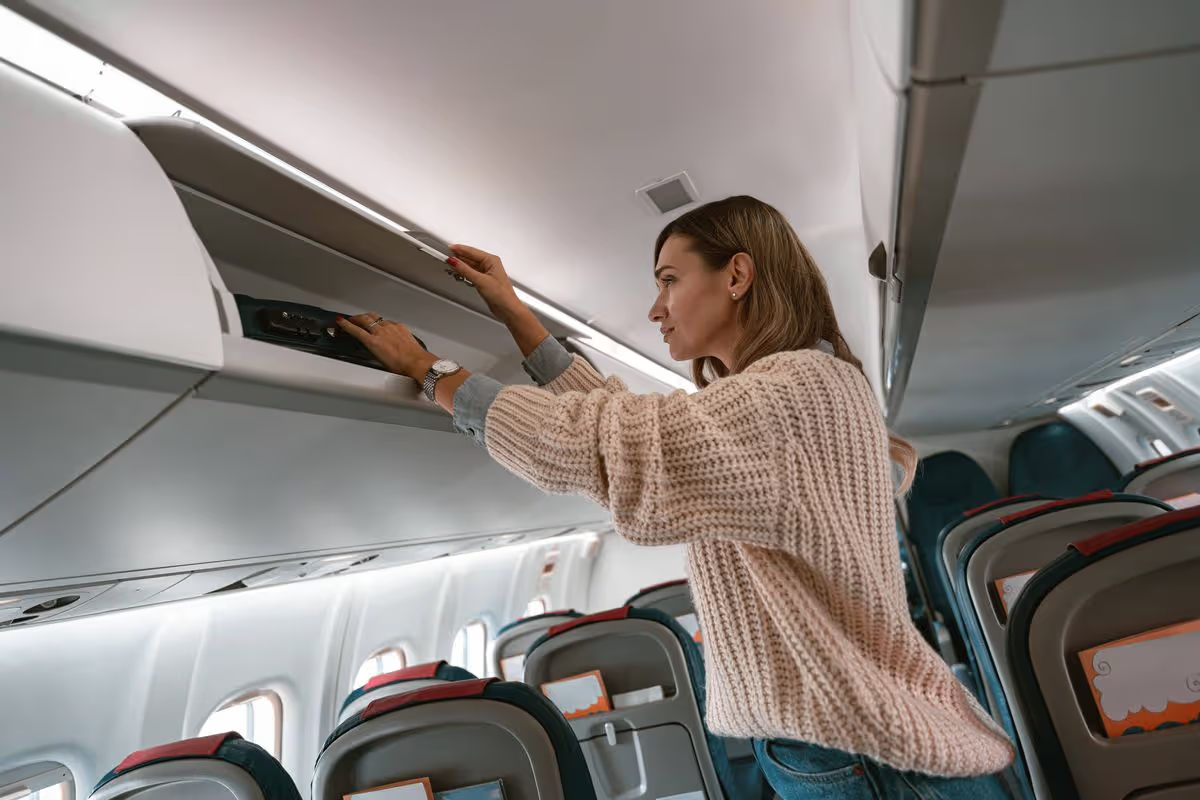
Airline passengers have been told some items must only be put in cabin luggage and not used while taking off(Image: Getty Images)
Power Bank Flight Rules: What You Need to Know
- Airlines have issued strict warnings to passengers about packing power banks and electrical items in hold baggage due to serious safety concerns.
- Some carriers including Vietnam Airlines, Vietjet Air and Emirates have completely banned power banks, while budget airlines like Ryanair, EasyJet and TUI still permit them but only with tight restrictions.
- According to UK Civil Aviation Authority (CAA) safety experts, lithium batteries pose a danger on planes primarily due to their potential to enter “thermal runaway,” a phenomenon where a battery experiences a rapid, uncontrollable rise in temperature, resulting in fire, explosion, and the release of toxic fumes.
- Ryanair allows up to 15 personal electronic devices but requires spare batteries to be individually protected in original packaging or with taped terminals. Power banks must be stored under seats, not in overhead lockers, and cannot exceed 100Wh.
- EasyJet strictly bans all lithium batteries from hold luggage and requires power banks under 100Wh to be carried in cabin baggage only. Those between 100-160Wh need airline authorisation.
- TUI forbids loose lithium batteries in checked luggage and caps power bank capacity at 100Wh, with terminals safeguarded against short circuits.
- The new rules reflect growing concerns about battery fires mid-flight, with some airlines now prohibiting the use of power banks during flights entirely.
- READ THE FULL STORY: Ryanair, TUI and easyJet in ban of common electric item from baggage