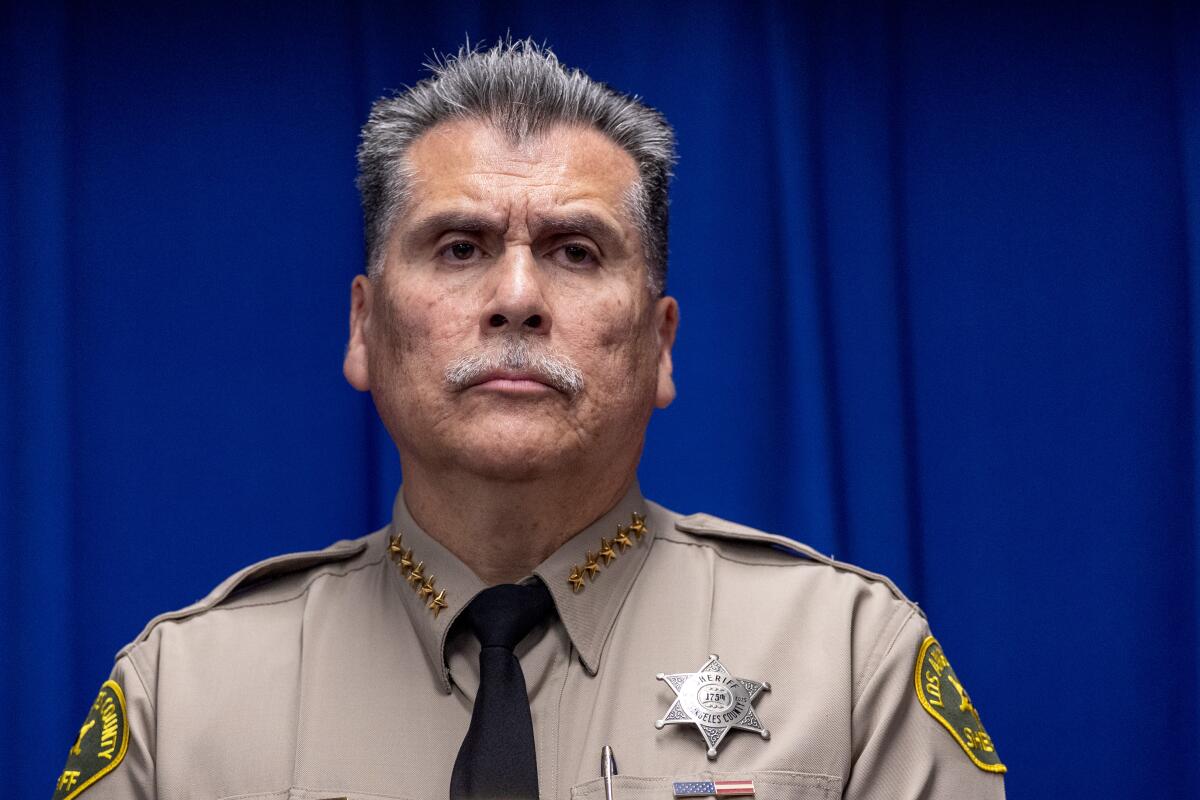
Robert Luna seeks a second term as L.A. County Sheriff but faces nine challengers, including predecessor Alex Villanueva, whom he defeated in 2022.
(Eric Thayer/Los Angeles Times)
Robert Luna is hoping to be the first L.A. County Sheriff to win a second term in more than 10 years. He points to a reduction in crime for the county during his term and says he brought stability after a series of one-term sheriffs since 2014.
Last year, deputy-patrolled areas of the county experienced a 12.5% drop in serious crimes from the previous year, including a drop of 12% in murders and 20% in auto thefts.
Perhaps the most vocal and well-known of Luna’s opponents is his predecessor, Alex Villanueva, who paints a picture of a department in disarray, with low morale and trouble in recruiting. Villanueva claims his return would keep deputies from leaving and appeal to new hires.
Former sheriff’s Lt. Eric Strong, who also served as chief of campus safety and security operations at the county probation office, has entered the fray once again after finishing third in 2022. Strong has called for increased transparency by the department, advocating for the agency to work with oversight bodies like the Office of Inspector General and the Civilian Oversight Committee.
“Nothing has really changed, and that’s why I’m running,” Strong said.
Mike Bornman, a retired former captain, also is vying for the job. He’s looking to lift morale inside the department, which he said has faced a series of challenges with social movements that have been “anti-cop,” such as the George Floyd protests of 2020 and calls to defund the police.
“There’s been no real pushback from law enforcement; there’s been nothing coming from this office relative to that,” Bornman said.
He said the department is struggling with difficulty in recruitment, significant overtime hours and deputies at risk of burnout.
Sgt. Karla Carranza is running again after an unsuccessful campaign in 2022. At one point assigned to the Twin Towers Correctional Facility in downtown L.A., Carranza has made jail reform one of her top campaign focuses, promising to reduce violence and lower the risk of lawsuits and what she says are preventable inmate deaths.
Brendan Corbett, also running for the job, served as assistant sheriff during Villanueva’s tenure. He’s looking to restructure the department, focus resources on patrol and line functions and increase the reserve program.
Lt. Oscar Martinez, assigned to the department’s Palmdale station, is running to unseat his boss and criticizes Luna for fostering relationships with the county board of supervisors and oversight bodies, saying his focus should be on law enforcement, not politics .
“The sheriff is more interested in protecting the political establishment,” Martinez said. “Under my leadership, the mission of the sheriff’s department is to fight crime. Our job is not to fix politics.”
Andre White, a detective with about 11 years at the department, also vowed to take a “community-oriented approach” if elected.
Some voters may recognize Sonia Montejano, a former senior deputy in the department’s court services division, as the court bailiff in the television court program “Judge Joe Brown.”
Montejano filed paperwork for the position and listed her personal website on campaign forms. Her website, however, makes no mention of her campaign or position on issues involving the department. She did not respond to requests for comment.
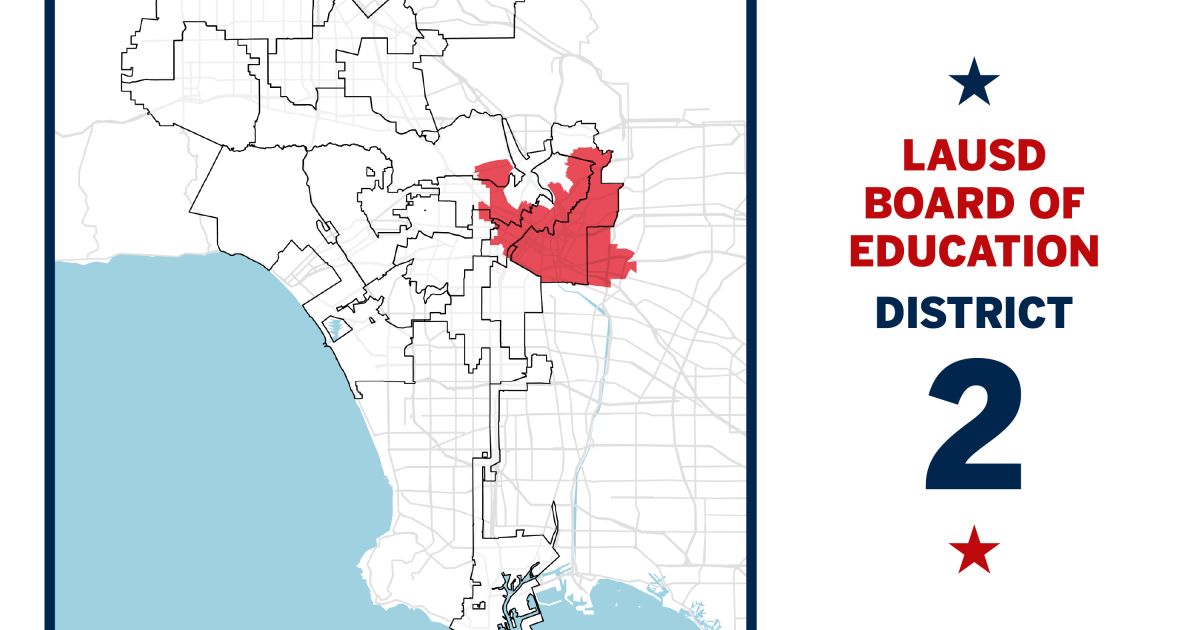
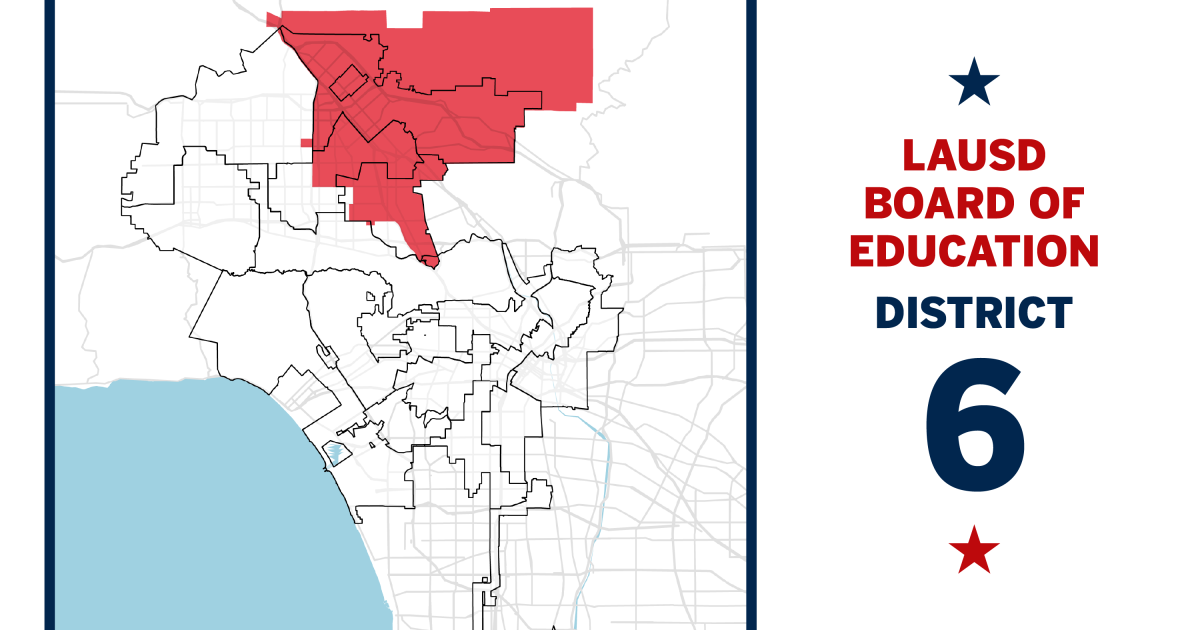
Three seats — two contested — are on the June 2 primary ballot for the seven-member Los Angeles Unified School District Board of Education.
The nation’s second-largest school system, with about 390,000 students, faces evolving challenges and uncertainties that could alter the direction of the district for years.
In mid-April L.A. Unified officials barely averted a strike by agreeing to significant employee raises, rescinding about 200 layoffs and agreeing to hundreds of new hires of counselors, school psychologists and other student support staff. The contracts with three district unions, including teachers, will cost nearly $1.2 billion a year, and board members now must find a way to pay for them amid budget pressures.
Standardized test scores have trended upward since the nadir of the COVID-19 pandemic, recovering faster than the state average, but the pace remains too incremental for critics.
The future of L.A. schools Supt. Alberto Carvalho is uncertain. He’s on paid administrative leave following FBI raids of his San Pedro home and downtown office. At least part of the investigation centers on a failed chatbot project that was supposed to revolutionize and individualize education.
Carvalho said he’s done nothing wrong and would like to return to work. If he does not return — and cannot serve out his new four-year contract — board members would select a superintendent.
L.A. Unified also faces declining enrollment — which reduces state funding and increases pressure to save money by closing many campuses.
Heightened federal immigration enforcement also has affected enrollment and attendance while creating anxiety that spills over into the classroom. Officials responded by declaring L.A. Unified a sanctuary district — both for immigrants and for the LGBTQ+ community, which also has been a target of some conservative groups.
Carvalho’s central focus on improving test scores has led to increased tutoring, repeated diagnostic measures and phonics training. In addition, the district put a successful school bond on the ballot to continue renovations, worked to lower student absenteeism and emphasized greener campuses.
The board majority consists of candidates elected with the endorsement of the powerful teachers union — United Teachers Los Angeles. This election will not change that balance because five seats are held by union-friendly incumbents. But the outcome will determine whether UTLA can further strengthen its hand or whether other constituencies will gain a measure of power at the union’s expense.
UTLA is the most reliable funder of school board campaigns — and the union’s spending is not controlled by candidates.
Also exerting influence in recent elections has been the district’s other largest union: Local 99 of Service Employees International Union. It represents some 30,000 bus drivers, teacher aides, custodians, gardeners, cafeteria workers and technical support staff. This union has yet to endorse candidates.
A potential but diminished source of election-funding firepower would be charter school advocates — who once routinely outspent the unions. Retired businessman Bill Bloomfield — a charter school ally who makes his own calls about whom to support — has been a big spender inrecent elections, typically as a counter to teachers-union-endorsed candidates. He has not committed to being involved in this school board election cycle.
The material below was assembled through reporting and surveys provided to candidates. Some responses are paraphrased for clarity or condensed for brevity.
Three seats are on the June 2 primary ballot for the seven-member Los Angeles Unified School District Board of Education, but the District 6 race is essentially a foregone conclusion: The only name on the ballot is two-term incumbent Kelly Gonez.
The nation’s second-largest school system, with close to 400,000 students, faces evolving challenges and uncertainties that could alter the direction of the district for years.
In mid-April L.A. Unified officials barely averted a strike by agreeing to significant employee raises, rescinding about 200 layoffs and agreeing to hundreds of new hires of counselors, school psychologists and other student support staff. The contracts with three district unions, including teachers, will cost nearly $1.2 billion a year, and board members now must find a way to pay for them amid budget pressures.
Standardized test scores have trended upward since the nadir of the COVID-19 pandemic, recovering faster than the state average, but the pace remains too incremental for critics.
The future of L.A. schools Supt. Alberto Carvalho is uncertain. He’s on paid administrative leave following FBI raids of his San Pedro home and downtown office. At least part of the investigation centers on a failed chatbot project that was supposed to revolutionize and individualize education.
Carvalho said he’s done nothing wrong and would like to return to work. If he does not return — and cannot serve out his new four-year contract — board members would select a superintendent.
L.A. Unified also faces declining enrollment — which reduces state funding and increases pressure to save money by closing many campuses.
Heightened federal immigration enforcement also has affected enrollment and attendance while creating anxiety that spills over into the classroom. Officials responded by declaring L.A. Unified a sanctuary district — both for immigrants and for the LGBTQ+ community, which also has been a target of some conservative groups.
Carvalho’s central focus on improving test scores has led to increased tutoring, repeated diagnostic measures and phonics training. In addition, the district put a successful school bond on the ballot to continue renovations, worked to lower student absenteeism and emphasized greener campuses.
The board majority consists of candidates elected with the endorsement of the powerful teachers union — United Teachers Los Angeles. This election will not change that balance because five seats are held by union-friendly incumbents. But the outcome will determine whether UTLA can further strengthen its hand or whether other constituencies will gain a measure of power at that union’s expense.
The material below was assembled through reporting and a survey provided to Gonez. Some responses are paraphrased for clarity or condensed for brevity.
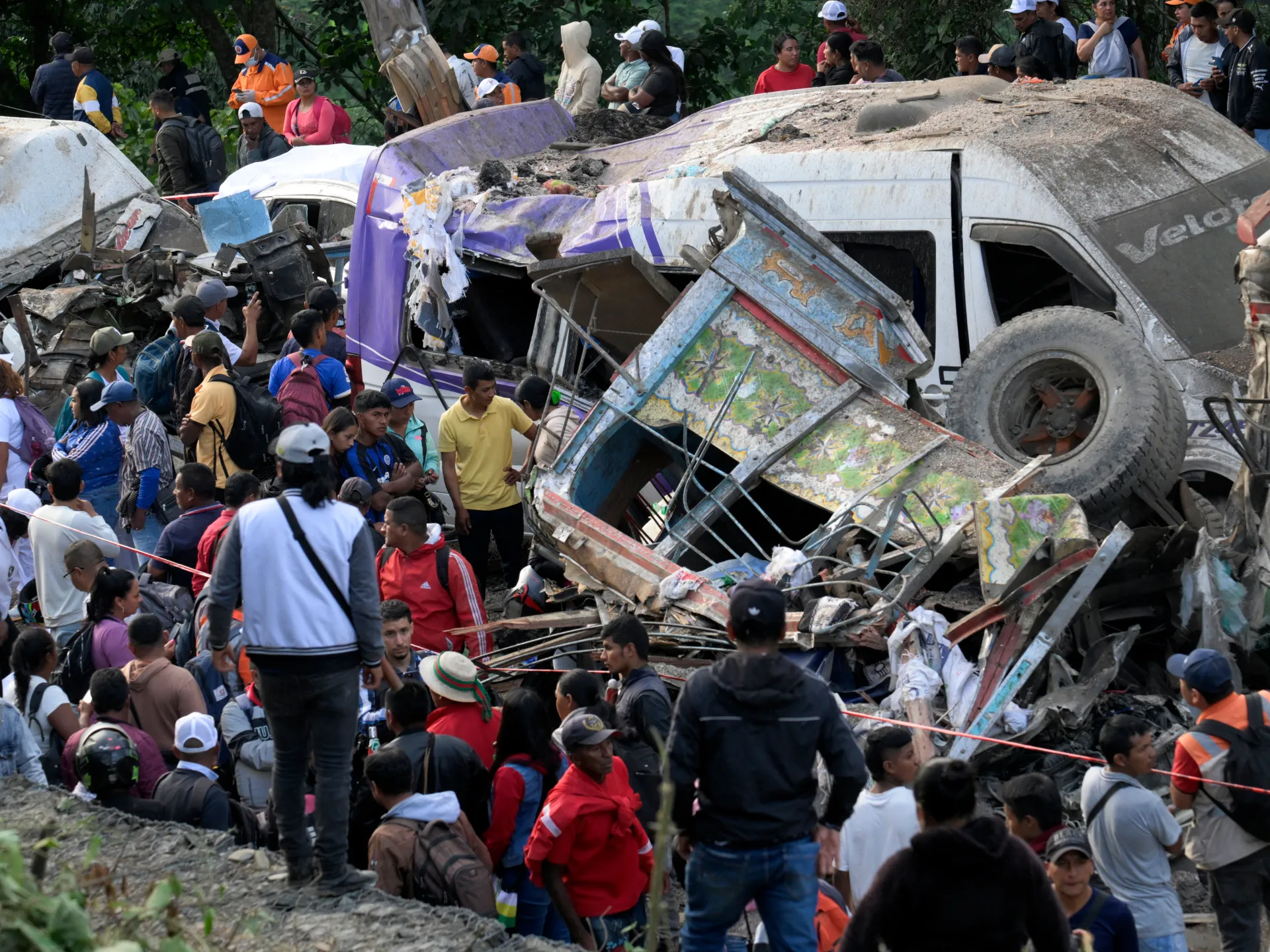
A highway bomb attack in southwestern Colombia has killed 19 people and injured at least 38, the latest spate of violence ahead of next month’s presidential election.
Buses and vans were left mangled in the blast Saturday on the Pan-American Highway, in the restive southwestern Cauca department.
Several cars were flipped over by the force of the explosion and a large crater was blown out of the roadway.
The department’s governor on Saturday evening provided a death toll of 14, with more than 38 injured, but the National Institute of Legal Medicine and Forensic Sciences said Sunday morning it had begun the examination of 19 bodies.
Military chief Hugo Lopez told a news conference on Saturday that the bomb had exploded after assailants stopped traffic by blocking the road with a bus and another vehicle.
The attack comes just over one month ahead of national elections, in which voters will pick a successor to President Gustavo Petro.
Petro blamed the bombing on Ivan Mordisco, the South American country’s most-wanted criminal, whom the president has compared to late cocaine kingpin Pablo Escobar.
The violence came after a bomb attack on Friday on a military base in Cali, Colombia’s third-largest city, injured two people and set off a string of attacks in the Valle del Cauca and Cauca departments.
According to Lopez, 26 attacks have been recorded in the two departments over the past two days.
Authorities have boosted military and police presence in the areas, Defence Minister Pedro Sanchez said.
Security is one of the central issues of the May 31 presidential election. Political violence was brought into sharp focus last June, when young conservative presidential frontrunner Miguel Uribe Turbay was shot in broad daylight while campaigning in the capital Bogota and later died from his wounds.
Leftist Senator Ivan Cepeda, an architect of Petro’s controversial policy of negotiating with armed groups, is ahead in polls.
He is trailed by right-wing candidates Abelardo de la Espriella and Paloma Valencia, both of whom have pledged to take a hard line against rebel groups.
All three have reported receiving death threats and are campaigning under heavy security.
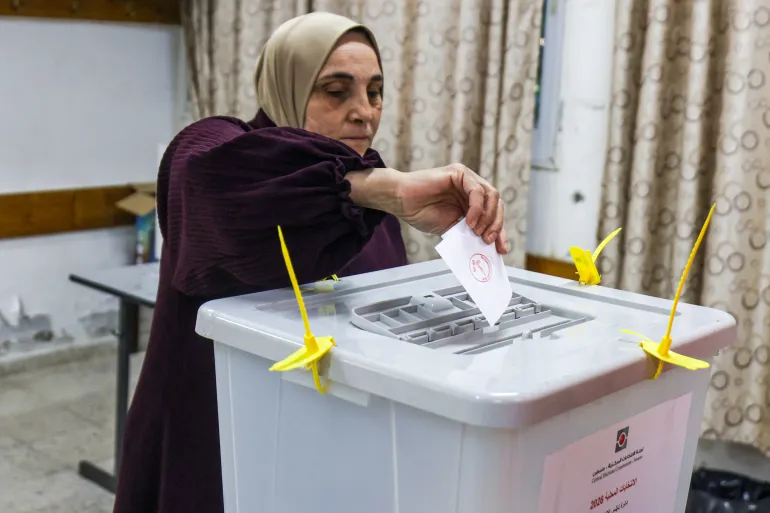
People cast votes in the municipal elections in Deir al-Balah, in the central Gaza Strip, on Saturday — the first election held in Gaza in 20 years, and the first in the West Bank since the outbreak of the war. Photo by Haitham Imad/EPA
April 25 (UPI) — Palestinians in Gaza held an election for the first time in 20 years as municipal elections were held there and in the West Bank on Saturday.
People in Deir al-Balah, a city in central Gaza, voted for the first time since 2006 because it was the least destroyed area after two years of airstrikes by Israel after the attacks of Oct. 7, 2023, CNN reported.
The elections, which also were held in many parts of the West Bank, were run by the Palestinian Authority and required candidates to agree with Palestinian Liberation Organization to recognize the state of Israel and support a two-state solution.
Elections were last held in the West Bank in 2022, The BBC reported, and had not been held in Gaza since Hamas took the enclave over two decades ago. Hamas was not permitted to participate in the elections.
Election results will be reported either late Saturday or on Sunday.
Salama Badwan, who voted with his wife and daughter, told Al Jazeera that the first election “is a truly Palestinian democratic celebration.”
“We must change everything through the ballot box,” Badwan said. “Whoever wins, it is their right, but not through inheritance … change must be through the hands of the people.”
Roughly 70,000 Palestinians — or 5% of the entire Gazan population — in Deir al-Balah were eligible to vote because many of the places that would have been used for voting were destroyed, as were supplies like ballot boxes.
The Palestinian Authority’s Fatah party dominated ballots as votes were held for 90 municipal councils and 93 village councils — leaving 42 other municipal councils and 155 village councils to be decided without votes.
Hamas praised the vote in Gaza and expressed hope for the rest of the territory to also choose its own leaders, although after its election in 2006 it forced Fatah out of Gaza in often violent battles and had not held an election since.
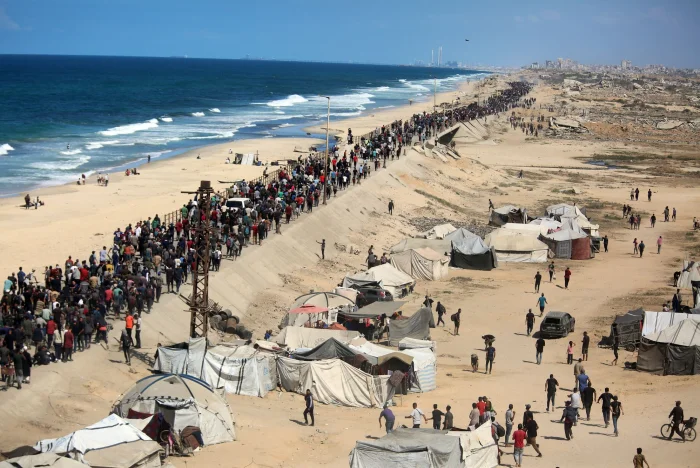
Thousands of displaced Palestinians walk along the Rashid coastal road toward Gaza City on October 10, 2025, after the implementation of a cease-fire agreement between Israel and Hamas. Photo by Hassan Al-Jadi/UPI | License Photo
Palestinians in central Gaza and the occupied West Bank have begun voting in municipal elections, the first local vote held since the start of Israel’s genocidal war on Gaza.
Polling stations opened at 7am (04:00 GMT) on Saturday for 70,000 eligible voters in Gaza’s Deir el-Balah area – the first electoral exercise in the besieged enclave in 20 years.
Recommended Stories
list of 4 itemsend of list
The vote in a single city in Gaza is largely symbolic, with officials calling it a “pilot”. Deir el-Balah was selected because it is one of the few areas in Gaza not destroyed by Israeli forces.
Nearly 1.5 million registered voters in the occupied West Bank are also voting to determine the makeup of the local councils overseeing water, roads and electricity.
The elections come amid a tightly restricted political landscape and deep public disillusionment, as the Palestinian Authority (PA) seeks to project reform and legitimacy amid growing public frustration over corruption, political stagnation and the absence of national elections since 2006.
A Palestinian woman casts her ballot at a polling station during municipal elections in the village of al-Badhan, north of Nablus, in the occupied West Bank [AFP]
Most electoral lists are backed by President Mahmoud Abbas’s Fatah movement or independent candidates, with no official participation from Hamas, which controls parts of Gaza.
Linking the occupied West Bank and Gaza
With much of Gaza decimated by more than two years of war, the Ramallah-based Central Elections Commission chose to hold its first vote in Deir el-Balah. It had to improvise because it was unable to conduct traditional voter registration.
“The main idea is to link the West Bank and Gaza politically as one system,” its spokesperson, Fareed Taamallah, said.
The commission has not coordinated directly with either Israel or Hamas ahead of the Deir el-Balah vote and has been unable to send materials like ballot papers, ballot boxes or ink into Gaza, he added.
Though Palestinian voter turnout has gradually decreased, it has been relatively high in past local elections by regional standards, according to commission figures, averaging between 50 and 60 percent.
Gaza’s first election in 20 years
Hamas won parliamentary elections in 2006 and seized control of Gaza from the Fatah-led PA a year later.
It did not put forth candidates for Saturday, but polling from the Palestinian Center for Policy and Survey Research indicates it remains the most popular Palestinian faction in both Gaza and the occupied West Bank.
Ramiz Alakbarov, the United Nations deputy special coordinator for the Middle East peace process, called the elections “an important opportunity for Palestinians to exercise their democratic rights during an exceptionally challenging period”.
Hamas controls half of Gaza, which Israeli forces partially withdrew from last year, including Deir el-Balah, but the coastal enclave is preparing to transition to a new governance structure under US President Donald Trump’s 20-point plan.
The plan established a Board of Peace composed of international envoys and a committee of unelected Palestinians, intended to operate under it.
Progress towards further phases, including disarming Hamas, reconstruction and a transfer of power, has stalled.
A polling official assists a Palestinian woman as she votes during the municipal council election, in Hebron, the occupied West Bank [Mussa Qawasma/Reuters]
Electoral reform
Palestinian President Mahmoud Abbas, 90, signed a decree last year to overhaul the electoral system in line with some demands from Western donors.
The reforms allow voting for individuals rather than party lists (slates), lowering the eligibility age to run and raising quotas for female candidates.
In January, another Abbas decree required candidates to accept the programme of the Palestine Liberation Organization, the group that leads the PA. The programme calls for the recognition of Israel and renouncing armed struggle, in effect, sidelining Hamas and other factions.
The slates in major West Bank cities are dominated by Fatah, the faction that leads the PA, and independents, some with ties to other factions. It marks the first time in six local elections that no other faction has officially put forward its own slates.
A Palestinian man shows his marked finger after casting his ballot at a polling station in the occupied West Bank city of el-Bireh [AFP]
In the occupied West Bank, the PA exercises limited autonomy, and local councils oversee services from rubbish collection to building permits.
Votes are being held in villages in Area C, which covers about 60 percent of the West Bank and remains under direct Israeli control. Full administrative control would have been handed to the PA according to the 1995 Oslo Accords.
Votes will also be held in municipalities that Israel’s military has occupied since it launched a ground invasion in the northern West Bank last year.
Campaign posters have been plastered across cities, though many – including Ramallah and Nablus – will not hold elections because too few candidates or slates registered.
The PA’s power has withered amid years without peace negotiations with Israel and the expansion of illegal Israeli settlements in the occupied West Bank.
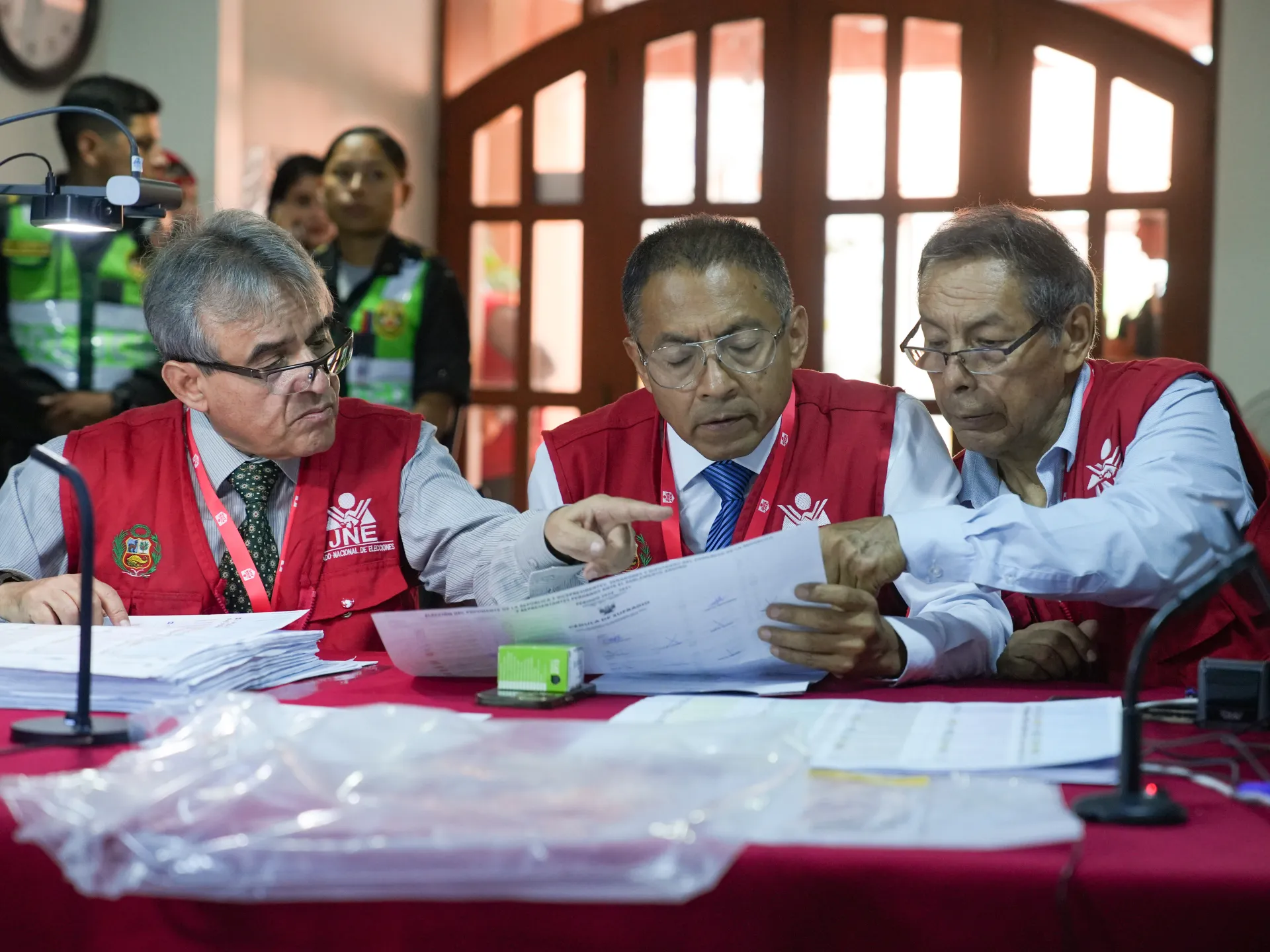
Anticorruption police gathered material from the homes of election officials including former office leader Piero Corvetto.
By Reuters and The Associated Press
Published On 24 Apr 202624 Apr 2026
Police in the Peruvian capital of Lima have raided a home belonging to the former head of its national election agency, amid growing frustration in the aftermath of the country’s presidential election.
As of Friday, results still had not been finalised for the presidential race, which took place on April 12.
Recommended Stories
list of 3 itemsend of list
Delays in ballot deliveries forced the voting in some areas to be extended by an extra day, and the slow vote count has led to accusations of wrongdoing. But the European Union’s election mission to Peru found no indication of fraud.
Law enforcement was seen entering the home of Piero Corvetto, the former head of Peru’s National Office of Electoral Processes (ONPE), on Friday as part of a judicial warrant.
The officers with the local anticorruption police unit were tasked with removing mobile phones, laptops and documents, according to local broadcaster RPP.
The homes of five other officials were also targeted by police raids, as were offices belonging to Galaga, a private company that transports election ballots.
Corvetto resigned on Tuesday, though he denied any wrongdoing or irregularities in the election process. In a statement, he said he hoped his departure would boost public confidence.
On Friday, his lawyer, Ricardo Sanchez Carranza, told the news agency Reuters that a judge authorised the raid but denied prosecutors’ request to put Corvetto in preliminary detention.
But one of the leading presidential candidates, Lima’s former far-right mayor, Rafael Lopez Aliaga, has accused Corvetto of being a “criminal” and pledging to pursue him “until he dies”.
Lopez Aliaga is currently in a narrow race for second place in the presidential election.
With 95 percent of the ballots tallied, right-wing candidate and former First Lady Keiko Fujimori is in first place with 17 percent of the vote. She is all but assured of proceeding to the run-off on June 7.
Lopez Aliaga, meanwhile, is in third place with 11.9 percent, behind left-wing Congress member Roberto Sanchez at 12.03 percent.
Roughly 20,000 votes separate Sanchez from Lopez Aliaga, who has increasingly denounced the election as illegitimate, though he has yet to provide evidence to support that claim. Still, he has called the vote tally an “electoral fraud unique in the world”.
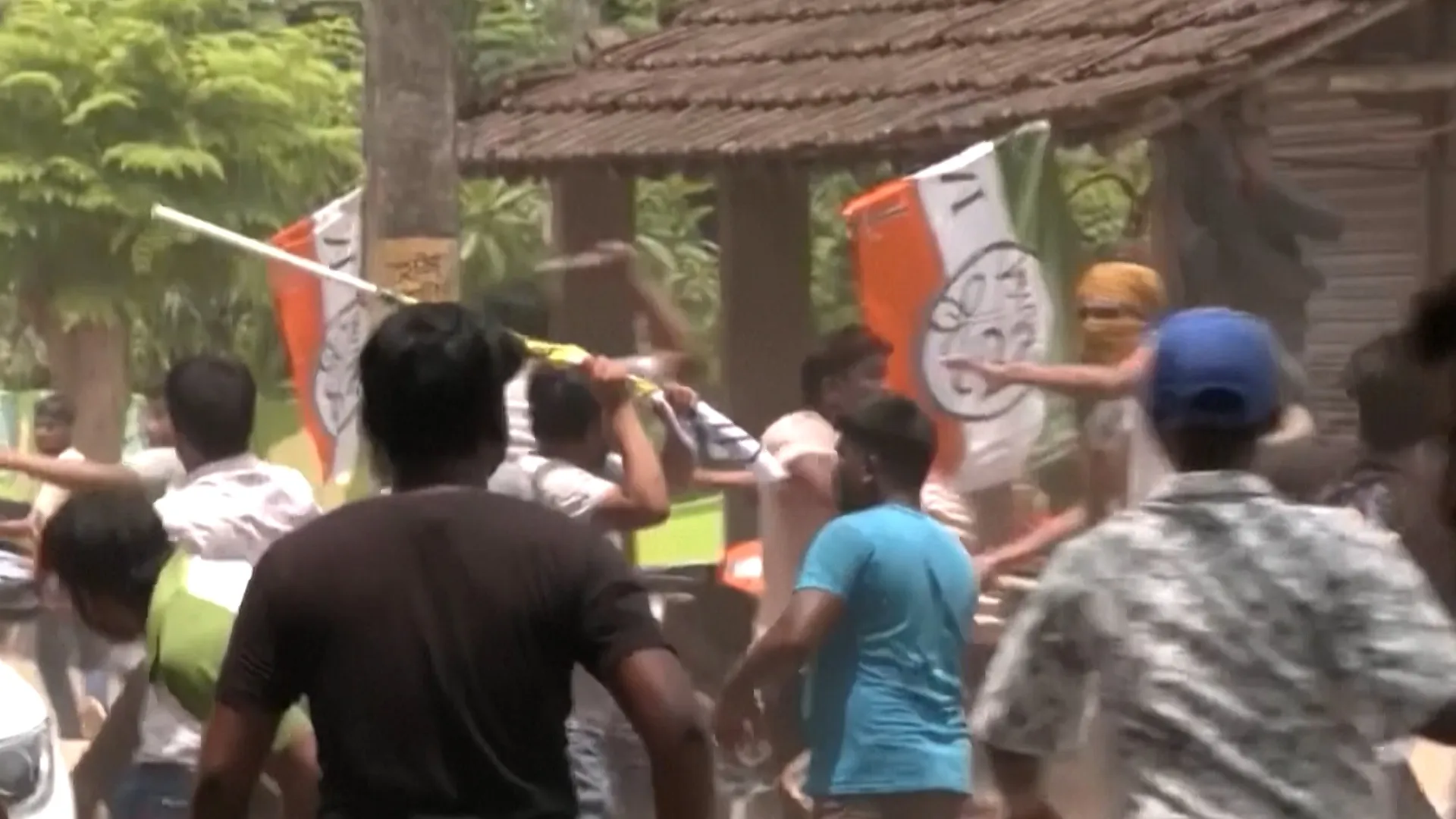
Workers from two regional parties in India have been fighting on election day for West Bengal’s state assembly. Local media reported the fighting broke out as opposition party leaders accused the state ruling party of voter intimidation.
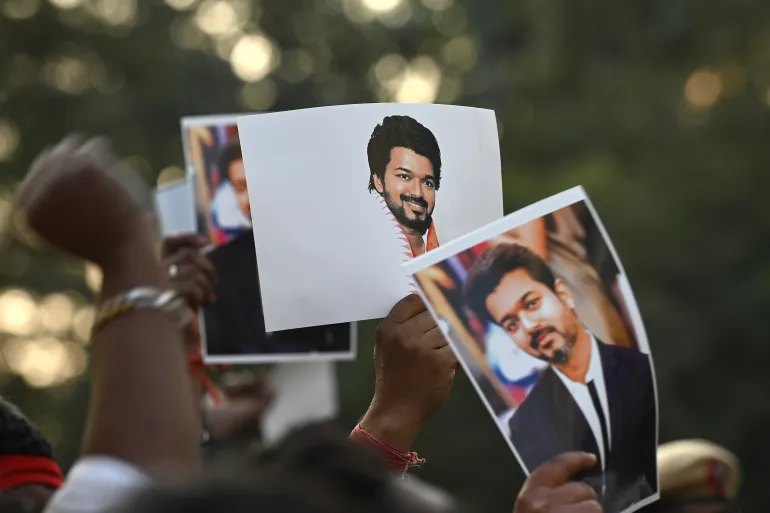
Tamil Nadu, India – Standing on top of a customised van on a hot and humid afternoon in Tirunelveli, about 600km (373 miles) south of Tamil Nadu’s capital Chennai in southern India, C Joseph Vijay tells his supporters his opponents have joined hands to stop him from becoming the state chief minister.
“My rivals might appear different from outside, but they have only one aim: that Vijay should not become the chief minister,” says the 51-year-old actor-turned-politician to a mammoth crowd that begins to chant his name, which means “victory” in Tamil, in unison.
Tamil Nadu, one of India’s most developed states with impressive human development indices, also has a long history of electing film stars as leaders, some of whom are still revered by people as demigods years after their deaths.
As Tamil Nadu votes on Thursday to elect its 234-member state legislative assembly, Vijay’s bid for power is the latest addition to the state’s trend of film star-politicians, turning a traditionally bipolar battle into a triangular contest.
Riding on personal charisma, Vijay has attracted millions of supporters to his rallies [File: Sanchit Khanna/ Hindustan Times via Getty Images]
‘A blessing and a curse’
Vijay entered politics with much fanfare when he launched the Tamilaga Vettri Kazhagam (TVK) party in 2024, promising to end the decades-old dominance of the governing Dravida Munnetra Kazhagam (DMK) and the main opposition All India Anna Dravida Munnetra Kazhagam (AIADMK).
Incumbent Chief Minister MK Stalin leads the DMK and its 14-party Secular Progressive Alliance, in which the Indian National Congress is a junior partner. On the other hand, opposition leader Edappadi K Palaniswami of the AIADMK heads the 10-party National Democratic Alliance, which also includes Prime Minister Narendra Modi’s Bharatiya Janata Party (BJP).
The DMK and the AIADMK identify themselves as Dravidian parties, which derive their names from a powerful political and social justice movement in Tamil Nadu that opposed caste inequalities, championed social reforms, and rejected perceived attempts by India’s more dominant north Indian parties to impose Hindi – and upper-caste Hindu values – on the non-Hindi speaking southern states.
Dravidian parties have held power in Tamil Nadu continuously since 1967, with national parties like the Congress and the BJP playing secondary roles. While the BJP is contesting 27 seats in alliance with the AIADMK, the Congress is fighting for 28 seats as part of the DMK-led coalition.
More than 87 percent of Tamil Nadu’s 72 million people are Hindu, followed by Christians at 6.1 percent and Muslims at 5.8 percent, according to the last census conducted in 2011.
Among Hindus, the so-called “backward” or less-privileged castes constitute 45.5 percent, “extremely backward” castes 23.6 percent, while Dalits are at 20.6 percent. Dalits, formerly referred to as “untouchables”, fall at the bottom of India’s complex caste hierarchy and have faced marginalisation and violence for centuries.
Vijay, son of a Christian filmmaker father and a Hindu mother who is a background singer in films, belongs to the Vellalar community, an affluent agrarian group in Tamil Nadu with both Hindu and Christian members.
Vijay started his film career as a child actor in movies directed by his father. His 1992 debut as a hero, however, in Naalaiya Theerpu (Tomorrow’s Verdict), flopped. Following the setback, his father cast him alongside popular star Vijayakanth — who later founded his own political outfit, Desiya Murpokku Dravida Kazhagam (DMDK) — in Senthoorapandi (1993), which gave his career a new lease of life.
It was the 2004 film Ghilli (Gutsy), which carried a subtle political undertone, that catapulted Vijay to superstar status. He dropped hints about his political ambitions in the 2013 hit Thalaivaa (Leader), which was launched with the tagline “Time to Lead”.
Soon, political messaging became central to many of Vijay’s subsequent films. Even the title of his yet-to-be-released Jana Nayagan (People’s Leader) — which he claims will be his final film — alludes to his political aspirations.
Riding on personal charisma, Vijay has attracted millions of supporters to his rallies, despite allegations of poor crowd management, which caused a stampede at one such gathering in September last year, killing 42 people.
He is expected to draw a share of Dalit and minority Christian votes that would have otherwise flowed to the DMK-led coalition. He is also banking on anti-incumbency votes that could have benefitted the AIADMK alliance.
Yet analysts say Vijay’s ambition of becoming the next chief minister will not be as easy as the scripted blockbusters he has built his career on, since he faces two opponents with decades of experience in real politics.
That leads political commentator R Kannan to describe Vijay as “both a blessing and a curse” for the two Dravidian coalitions.
“When the AIADMK joined the BJP-led NDA, many predicted the Dravidian party would lose heavily, with minorities and Dalits flocking to the DMK. Vijay’s entry, however, has offered the AIADMK a ray of hope — he is expected to draw a decent share of votes that would otherwise have gone to the DMK,” he said.
“At the same time, he works in the DMK’s favour by siphoning off anti-incumbency votes that might not entirely have gone to the AIADMK. For both Dravidian parties, he is at once a blessing and a curse.”
Tamil Nadu’s tryst with stars
Vijay is aiming to follow the path of illustrious predecessors: Maruthur Gopalan Ramachandran, popularly known as MGR, and his protege, Jayaram Jayalalithaa – Tamil Nadu’s most beloved on-screen pair.
Born into poverty, MGR’s rise to stardom was nothing short of phenomenal. He captured the imagination of Tamil Nadu’s working class, who idolised him in return. From his first superhit, Rajakumari (Princess) in 1947, his films cast him as a champion of the masses, battling oppression and corrupt authority.
MGR launched the AIADMK in 1972 after breaking away from the DMK and served as Tamil Nadu’s chief minister from 1977 to 1987. He introduced several welfare programmes, the most significant being the Puratchi Thalaivar MGR Nutritious Meal Scheme, which provided free meals to schoolchildren to eliminate malnutrition and boost school enrolment.
His political heir, Jayalalithaa, was a six-time chief minister between 1991 and 2016, when she became India’s first female state leader to die in office. She is remembered for launching several women-centric programmes, including all-women police stations and subsidised two-wheelers for working women, apart from her work in curbing female infanticide.
Jayalalithaa offering flowers to a portrait of AIADMK founder MG Ramachandran in Chennai, May 20, 2016 [Arun Sankar/AFP]
The DMK also has a history of film personalities, including the party’s founder, CN Annadurai, who rose to fame as a pathbreaking scriptwriter with films like Velaikkari (1949), and MGR as the party’s star campaigner and leader before he founded the AIADMK.
Soon, Muthuvel Karunanidhi emerged as another prominent writer, poet and screenwriter with films like Parasakthi (1952), meaning Supreme Power, often cited as a turning point in Tamil cinema. Directed by Krishnan-Panju and written by Karunanidhi, then 28 years old, the film fiercely attacked casteism and social inequality, while propelling the spread of the Dravidian ideology.
Karunanidhi, popularly known as Kalaignar (artist), wrote scripts for more than 75 films that resonated with the struggles of the working class, championing rationalism and social equality.
He won the Tamil Nadu Legislative Assembly election for a record 13 terms and served as the state’s chief minister for five terms between 1969 and 2011. He died at the age of 94 in 2018, when his son, Stalin, took over as chief minister and DMK chief.
Film star-politicians who embraced Tamil identity politics flourished, while those who did not fell by the wayside.
“Successful leaders such as MGR, popularly known as Puratchi Thaalaivar [Revolutionary Leader], Jayalalithaa, who earned the monikers Puratchi Thalaivi [Revolutionary Female Leader] and Amma [Mother], embraced identity politics. Another popular film actor, Sivaji Ganesan, by contrast, could not make the same mark in politics even after he tried,” said Kannan, who has written biographies of MGR and Annadurai.
Indian PM Narendra Modi, left, and MK Stalin, chief minister of Tamil Nadu, gesture during the foundation stone laying ceremony of various infrastructure projects, in Chennai, May 26, 2022 [Arun Sankar/AFP]
In 2005, popular actor Vijayakanth added to the starry mix by launching his DMDK party, another Dravidian political outfit. He made every attempt to position his party as an alternative to the DMK and the AIADMK, but failed. The party won just one seat in 2006 — Vijayakanth’s own — and drew a blank in 2009. Though he went on to become the leader of the opposition in the assembly in 2011, the election reverses forced him to seek alliances. The DMDK, now led by his wife Premalatha, is contesting 10 seats in alliance with the DMK.
Which is where, say analysts, Vijay’s pitch for power is unlikely to make an impact in this election. They say his TVK party does not fall in the long line of Dravidian parties that have a distinct political ideology and programme that appeals to their voters.
“Tamil Nadu is an ideologically and politically evolved state. Issues such as social justice, centre-state relations, and linguistic and cultural identity are paramount here. People will not back a politician without a clear ideology,” Ramu Manivannan, former professor of political science at the University of Madras, told Al Jazeera.
Manivannan said large crowds at Vijay’s rallies should not be mistaken for potential votes. “Film stars always attract crowds. To assume all of them will translate into votes is unfair.”
Vijay’s TVK is rooted in his fan clubs, which thrive on masculine aggression, said S Anandhi, retired professor at the Madras Institute of Development Studies.
“Vijay’s populist rhetoric — defying all authority — appeals strongly to the youth. But he never clarifies what he will actually do in power. He frames it as all established forces being arrayed against young men, and youngsters see this as an opportunity for a new kind of collectivisation. I would call it a dangerous class,” she told Al Jazeera.
Appeal to young, female voters
Vijay appears to be banking heavily on two voter blocs: younger voters between 18 and 39 years, who number 23 million of the state’s 57 million voters, and women, who account for more than half of them.
At his rallies packed with young people and women, Vijay has alleged that Stalin’s true allies are “bribery and corruption”, framing the contest as a personal battle between himself and the chief minister.
Stalin, for his part, has largely brushed off Vijay’s attacks. “Newly-formed parties have a wrong notion that they can survive by criticising DMK,” he said in a recent interview.
Instead, Stalin has focused his attacks on the Modi government, accusing it of depriving Tamil Nadu of its share of federal funds, and framing the election as a contest between Tamil Nadu and New Delhi – a ploy that simultaneously targets the AIADMK for allying with an “adversary”, the BJP.
The AIADMK’s Palaniswami has countered by saying Stalin raises the centre-state issue only because he has “no achievements of his own to show”.
Despite their ideological differences, all parties are competing heavily on welfare promises in a state known for freebies during elections.
The DMK has pledged to double the monthly women’s allowance to 2,000 rupees ($21), offer 8,000 rupees ($85) in home appliance coupons, and build one million homes for the poor over five years. The AIADMK, also promising a monthly allowance of 2,000 rupees for women, has additionally offered free refrigerators to the poor and a one-time family grant of 10,000 rupees ($106).
Vijay’s TVK, hoping to cash in on the ongoing global fuel crisis, has promised six free LPG cylinders annually, 2,500 rupees ($26.5) monthly support for the female heads of a household, 8gm gold and a silk saree for poor women getting married, 4,000 rupees ($42.5) stipend for unemployed college graduates, and interest-free education loans of up to 2 million rupees ($21,257).
Still, Kannan feels Vijay can at best be a disruptor in the three-cornered contest.
“Vijay’s campaign gained momentum in the final lap. He turned what was a bipolar contest into a three-cornered one. But apart from his personal charisma, he lacks proper organisational machinery. Many of his party’s candidates are unknown faces,” he said.
SAN FRANCISCO — With the California governor’s race quickly approaching, six candidates will face off Wednesday evening in the first debate since former Rep. Eric Swalwell dropped out of the race in the aftermath of sexual assault and misconduct allegations.
The debate takes place at a critical moment in the turbulent contest to replace termed-out Gov. Gavin Newsom. Ballots will start landing in Californians’ mailboxes in less than two weeks, and voters are split by a crowded field of eight prominent candidates. The debate also takes place after former state Controller Betty Yee ended her campaign because of a lack of resources and support in the polls.
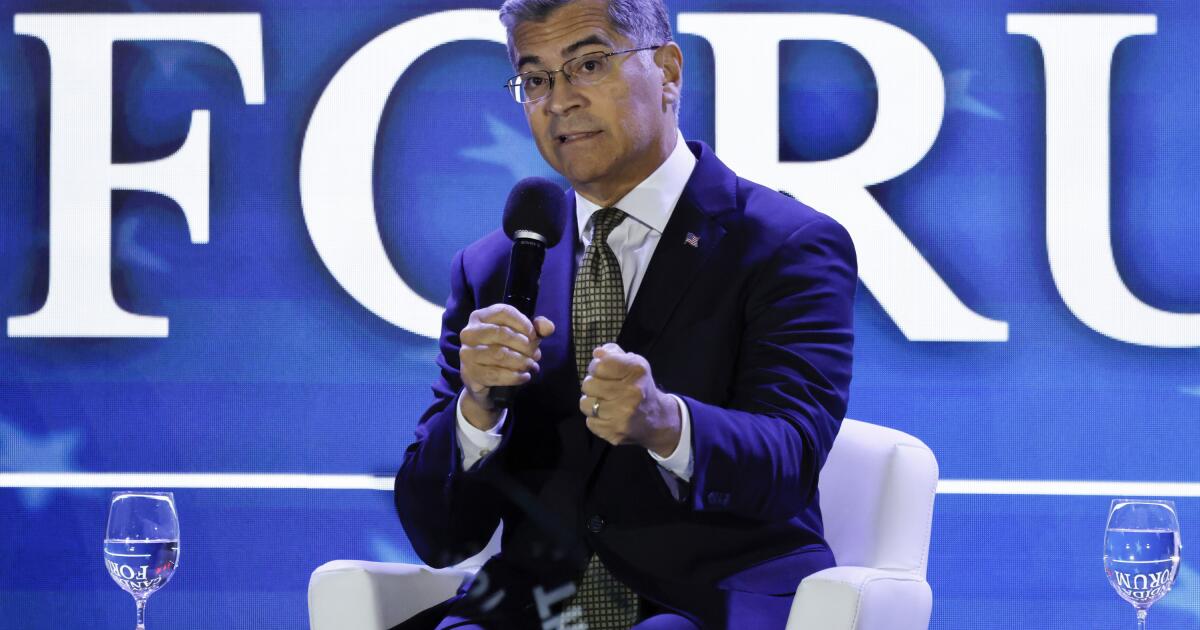
Two Republicans — Riverside County Sheriff Chad Bianco and conservative commentator Steve Hilton — and four Democrats — billionaire Tom Steyer, former Biden administration Secretary Xavier Becerra, former Orange County Rep. Katie Porter and San Jose Mayor Matt Mahan — will take the stage at Nexstar’s KRON4 studios in San Francisco. Former Los Angeles Mayor Antonio Villaraigosa and state Supt. of Public Instruction Tony Thurmond, both Democrats, were not invited to participate because of their low polling numbers.
As the candidates strive to distinguish themselves in a crowded field, the debate could include fiery exchanges about the role of money in politics and potential heightened attacks on Becerra, who has surged in the polls since Swalwell dropped out. With the debate taking place on Earth Day, environmental issues are also likely to be raised.
The Wednesday night gathering is the first televised debate in the gubernatorial contest since early February. Last month, USC canceled a debate hours before it was set to begin over mounting criticism that its criteria excluded all major candidates of color.
The 7 p.m. debate is hosted by Nexstar and will be moderated by KTXL FOX40 anchor Nikki Laurenzo and KTLA anchor Frank Buckley. It can be viewed on KRON4 (San Francisco), KTLA5 (Los Angeles), KSWB/KUSI (San Diego), KTXL (Sacramento), KGET (Bakersfield) and KSEE (Fresno). NewsNation will also air the debate.
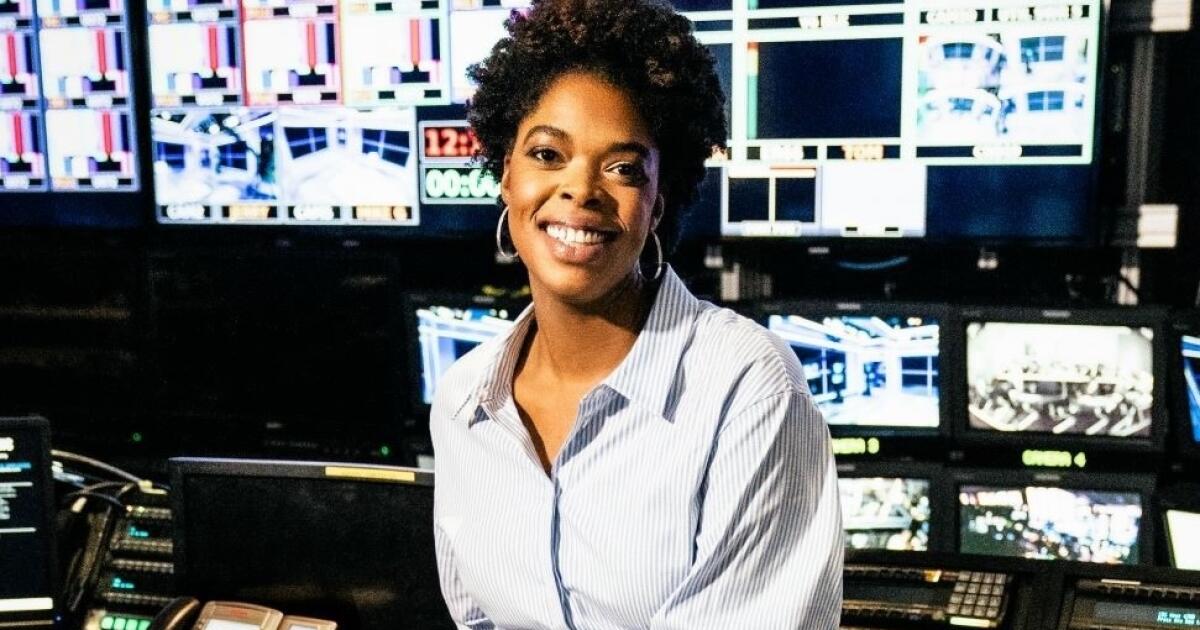
Shawna Thomas, who exited CBS News earlier this year, has joined MS NOW as political director.
The cable network formerly known as MSNBC announced Wednesday that Thomas will lead the organization’s political unit and direct coverage of campaigns and elections. She will also appear as an on-air analyst.
Thomas lands at the progressive-leaning MS NOW after five years as executive producer for “CBS Mornings.” She announced her departure from the program last month, just as co-host Gayle King was signed to a new deal.
Thomas is among a number of executives and on-air talent who have left CBS News since the arrival of editor-in-chief Bari Weiss, although she told colleagues her decision was about getting away from the grind of early morning television.
MS NOW is owned by Versant, a company created out of the cable assets spun off by Comcast. The new company chose not to rely on the news-gathering resources of NBC News, which oversaw MSNBC, and is building its own editorial operation.
Last month, MS NOW poached long time NBC News White House correspondent Peter Alexander, who will have a daily program on MS NOW and handle extended breaking news coverage starting later this year.
Thomas is a veteran of political coverage. She is a former Washington bureau chief for the news division at Vice Media, overseeing politics and policy stories for the HBO series “Vice News Tonight.”
Thomas spent a decade working for NBC News in various production roles, including planning its election coverage. She also had a stint as an executive at Quibi, the short-form streaming video platform.
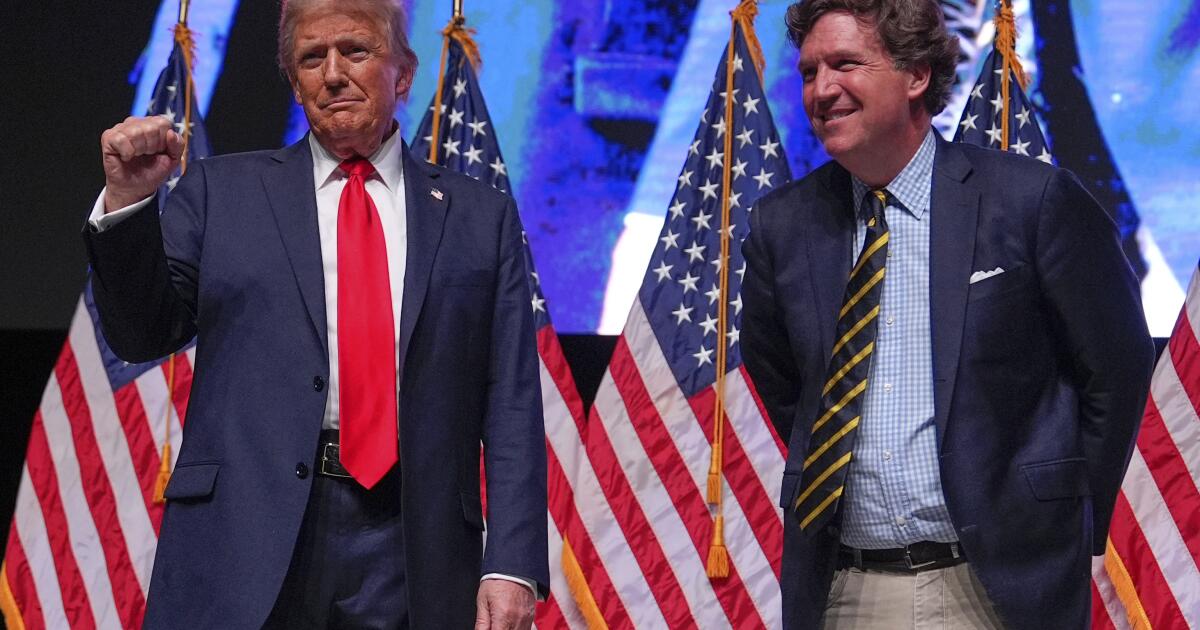
Former Fox News host and ex-Trump advocate Tucker Carlson is feeling remorse for the role he and others played in publicly promoting Donald Trump as a candidate and as the president.
“In very small ways, but in real ways, you and me and millions of people like us are the reason this is happening right now,” Carlson said Monday on his podcast, “The Tucker Carlson Show.” He was chatting with Buckley Carlson, his brother and a former Trump speechwriter, about the erosion of conservative values within the Republican Party under Trump.
“I do think it’s a moment to wrestle with our own consciences,” Carlson said. “You know, we’ll be tormented by it for a long time. I will be, and I want to say I’m sorry for misleading people. It was not intentional, and that’s all I’ll say.”
After nearly 10 years of yammering nightly about the greatness of Trump, Carlson picks now to cut the conversation short?
There’s a lot more to say, but this time, it’s about Carlson’s too-little, too-late mea culpa. His claim that he did not intentionally mislead the public is in itself misleading. While Carlson promoted Trump and the Big Lie ad nauseam on his prime-time Fox News show, “Tucker Carlson Tonight,” he was privately disparaging the president and discrediting Trump’s claims that the 2020 election was stolen.
His off-camera thoughts were revealed when internal communications between Fox staffers went public in 2023 due to Dominion Voting Systems’ defamation lawsuit against Fox News for knowingly broadcasting false claims that its machines rigged the 2020 election. Texts and emails from Carlson and other high-profile hosts suggested they knew Trump’s election fraud claims were unfounded, yet they still pushed the “rigged” narrative on air.
In one such example, Carlson texted that Trump needed to concede, and agreed that “there wasn’t enough fraud to change the outcome” of the election, according to the filing. Yet three nights later, he was on air claiming that there were “legitimate concerns” about election integrity. There were several more communications from Carlson where he expressed doubt about Trump’s claims. But in the public eye, he continued to assail the election results and the legitimacy of Biden’s win.
The Fox News host also privately scorned the first Trump presidency as a “disaster,” then turned around and stumped for Trump in 2024, praising him as a “national leader” at the Republican National Convention and campaigning with him in Arizona just days before the election.
If that’s not intentionally misleading the public, then what is?
Perhaps Carlson should have heeded his initial instincts about Trump. Before gaining notoriety with his Fox show, he posted on the website Slate about Trump in 1999, referring to him as “the single most repulsive person on the planet.”
Today the podcaster is among a growing number of right-wing influencers who have turned on their former leader. Former Rep. Marjorie Taylor Greene and conspiracy theorist Alex Jones want to push Trump out of office by invoking the 25th Amendment. Carrie Prejean Boller, who was a Trump-appointed member of the Religious Liberty Commission up until February, simply called him an “evil psychopath”.
Carlson has criticized the Trump administration’s decision to go to war in Iran, calling it “absolutely disgusting and evil” in March, and later said it was the “single biggest mistake” of Trump’s presidency. And when Trump demanded on Truth Social that Iran “open the F—– Strait, you crazy bastards,” Carlson said the post was “vile on every level” and “the most revealing thing the president has ever done. … Who do you think you are? You’re tweeting out the F word on Easter morning?” Carlson said in his podcast.
But Carlson is hardly the only American with buyer’s remorse. A recent NBC poll found that Trump is facing the lowest job approval rating of his second term, largely due to strong disapproval of how the president has handled inflation and the cost of living. Carlson, unlike the rest of the country, rode the MAGA wave to prosperity. His show kicked off in 2016, within weeks of the election, and he rose to prominence on the fervor of Trumpism. Supporting Trump was a family business. From his brother, a Republican operative who previously wrote speeches for Trump, to his son, who worked until recently in Vice President JD Vance’s press office.
Now Carlson is making his way back into the conversation by opposing the man he once claimed to revere.
He is asking for forgiveness for backing a faulty product, while also claiming to be a victim of its beguiling charms. “You and I and everyone else who supported him … you wrote speeches for him, I campaigned for him. We’re implicated in this for sure,” Carlson told his brother on the podcast. “It’s not enough to say, ‘Well, I changed my mind,’ or ‘Oh, this is bad. I’m out.’”
True, that’s not enough. Carlson should apologize for misleading the public, intentionally.
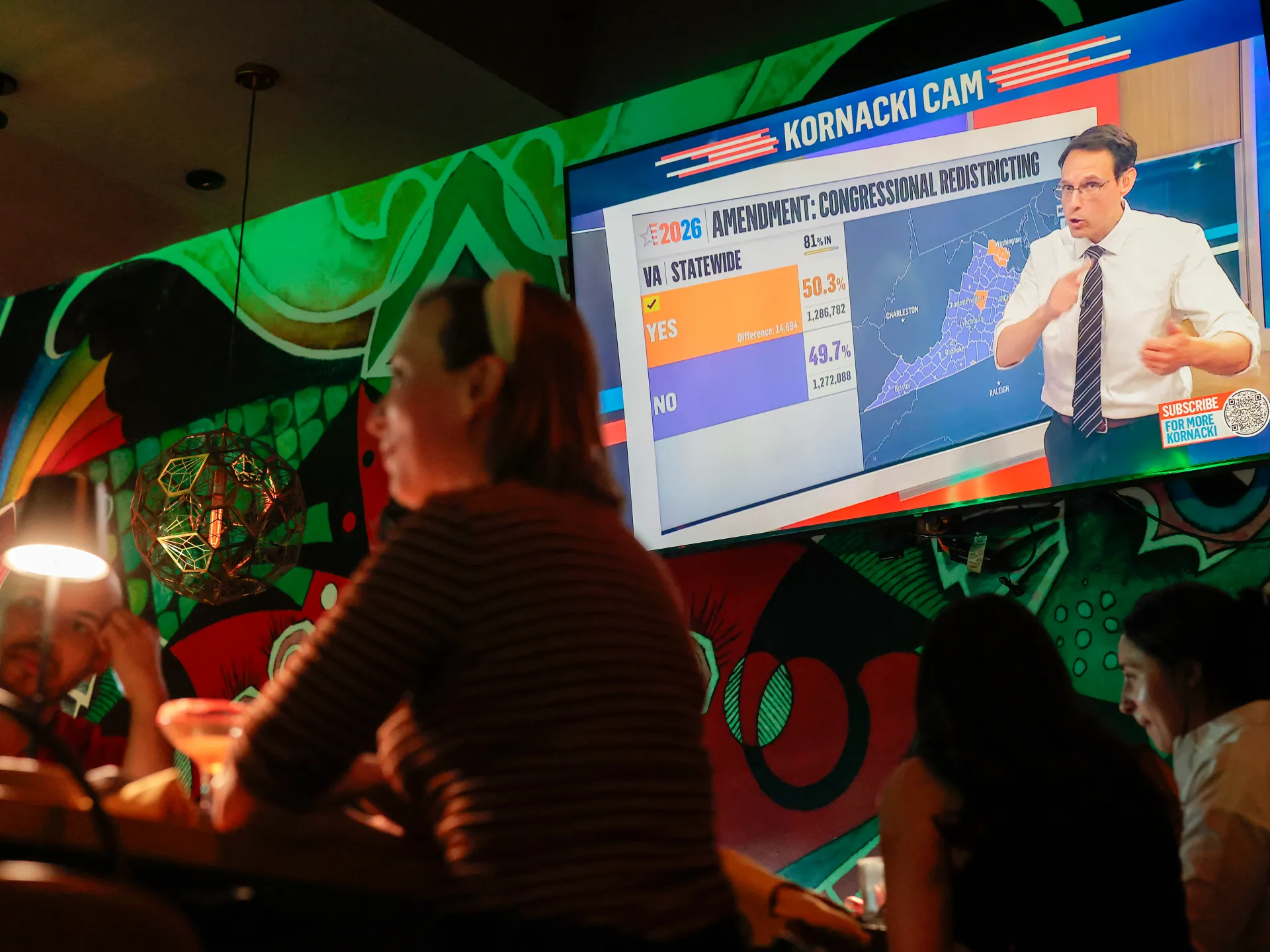
Virginia voters have narrowly approved a referendum to redraw the state’s congressional map, with about 51.5 percent voting yes and 48.6 percent voting no, and 97 percent of ballots counted, according to The Associated Press news agency.
The map redraws the boundaries of Virginia’s congressional districts, changes that can directly shape which party wins seats in the United States House of Representatives.
With most votes counted, the result remained close, but Democratic-leaning areas helped push it through.
The vote is part of a broader national fight over district lines – a battle that could decide who controls Congress.
Republicans in Florida, for instance, are planning a special session of the state legislature next Tuesday where they are expected to seek to redraw their state’s political map – a move that could help them gain as many as five seats, potentially wiping out any Democratic gain in Virginia.
Here are five key takeaways:
Democrats gain a major advantage in the House race
Currently, Virginia sends 11 members to the US House. At the moment, they comprise six Democrats and five Republicans.
The new map changes how those seats are drawn. By reshaping district boundaries, it makes most areas more favourable to Democrats by clumping together voters who lean towards the party strategically, while splintering communities that typically vote Republican.
Eight districts would be safely Democratic
Two would be competitive but lean Democratic
Only one would be safely Republican.
Because of this, Democrats could realistically win at least eight and possibly up to 10 of the 11 seats in the US house, instead of just six.
This shift follows a high-stakes political battle, with total spending estimated at $100m.
Democratic leaders, including Virginia Governor Abigail Spanberger, framed the new map as a direct response to efforts by US President Donald Trump and Republicans to redraw districts in their favour in other states.
However, even with this win, “there’s no guarantee they’ll send a delegation dominated by Democrats to Washington,” Al Jazeera’s Rosiland Jordan said, reporting from Virginia.
There are still six months until the midterm elections, and voter behaviour can shift. Even favourable maps can produce unexpected outcomes.
Virginia is one part of a bigger battle
Virginia is just one part of a bigger fight over who controls the US House.
After the 2024 election, Trump pushed Republican-led states to redraw congressional maps before the usual timeline to improve their chances in the 2026 midterms.
Republicans moved first in states like Texas, where new maps could give them up to five more seats.
Democrats responded with their own moves. In California, voters approved a plan backed by Governor Gavin Newsom that allowed lawmakers to draw a new, more partisan map. This is expected to give Democrats up to five extra seats.
The Virginia result fits into this bigger picture. If Democrats gain up to four seats there, it could help cancel out Republican gains in other states.
But the fight is not over. More changes could still happen, including in Florida, where Governor Ron DeSantis is looking at redrawing the map.
“Virginia just changed the trajectory of the 2026 midterms,” Democratic state House Speaker Don Scott said in a celebratory statement.
“At a moment when Trump and his allies are trying to lock in power before voters have a say, Virginians stepped up and levelled the playing field for the entire country.”
Legal challenges could still overturn the result
The measure has been approved by voters, but its future is still uncertain.
The Supreme Court of Virginia is expected to review ongoing legal challenges that could affect whether the new map takes effect. While the court allowed the vote to go ahead, it said it would examine the case in full if the measure passed.
The challenges focus on two key issues: Whether Democratic lawmakers followed the correct legal process when putting the proposal forward, and whether the wording on the ballot may have been misleading to voters.
A narrow win
Both parties were watching the vote closely.
Democrats were happy to win, even if it was close. Republicans, meanwhile, were relieved it wasn’t a big loss.
“Virginia Democrats can’t redraw reality,” said Republican Congressman Richard Hudson. “This close margin reinforces that Virginia is a purple state that shouldn’t be represented by a severe partisan gerrymander.”
Gerrymandering is the process of redrawing electoral maps in ways that can benefit one party over another.
Democrats said the tight result was partly down to voter confusion, which they blamed on Republican messaging. Democrats framed the effort as a response to Trump, promoting the plan with advertisements featuring former US President Barack Obama.
Opponents pushed back by pointing to past comments from Obama and Spanberger, both of whom have previously criticised gerrymandering, using that to question the Democrats’ position.
Gerrymandering is at the centre of the fight
The vote highlights the growing importance of partisan map-drawing in US politics.
Democrats say this balances Republican advantages elsewhere. Republicans call it a power grab in a competitive state.
Either way, redistricting is now a key tool shaping election outcomes, not just reflecting them.