After the total failure that was Mexico’s participation in the Qatar 2022 World Cup, where they were eliminated in the group stage, the future looked very dire for “El Tri.” By 2024, the situation had worsened after another international failure at the Copa América. The 2026 World Cup co-hosts had even more pressure now. In a crisis-control move, the Mexico Football Federation opted to bring back its proven problem solver, head coach “El Vasco” Javier Aguirre, for a third stint.
In a short time, Aguirre was able to shape “El Tri” into a competitive squad by breaking from his usual approach. The man who shockingly demoted then-24-year-old goalkeeper Guillermo “Memo” Ochoa in favor of a more experienced player prior to the 2010 World Cup was now relying on upstarts.
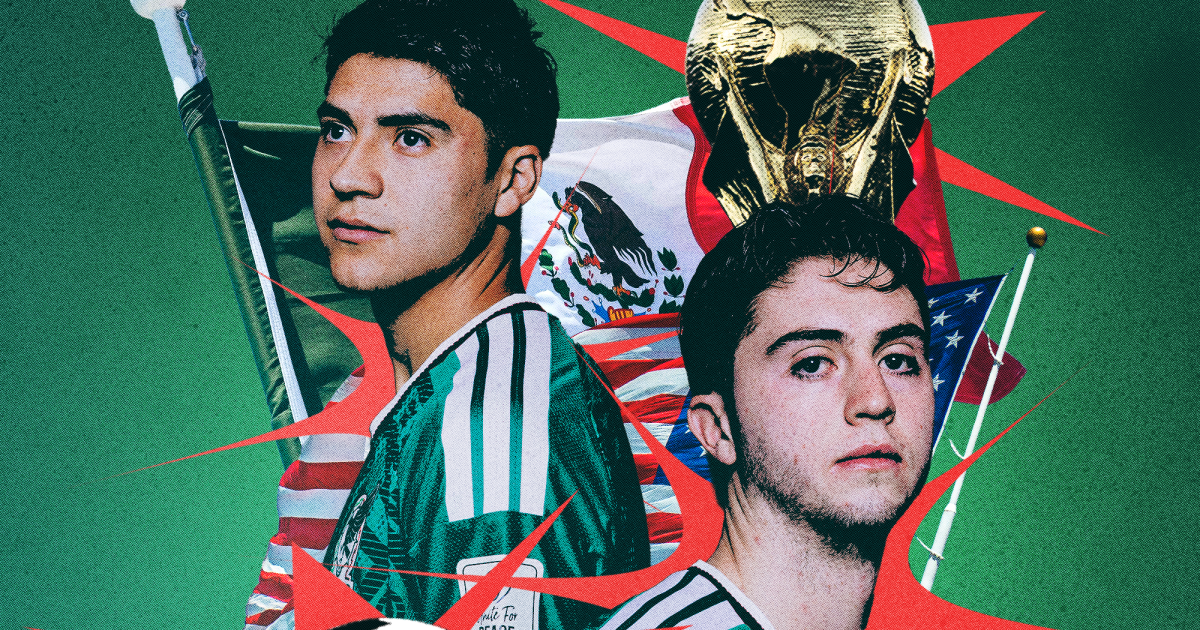
Aguirre’s 26-man roster for the 2026 World Cup features 14 debutants on soccer’s grandest stage.The crown jewel of this nucleus is undoubtedly 17-year-old wonderkid Gilberto Mora, but there are also two American-born players who are also expected to become pillars of the team: Brian Gutiérrez, from Berwyn, Ill., and Obed Vargas, from Anchorage, Alaska.
Under Article 30, Section A, Part II of the Mexican Constitution, individuals born abroad are considered Mexican by birth if they are children of Mexican parents — a Mexican mother or a Mexican father. Gutiérrez’s parents are from San Juan de los Lagos, Jalisco, while Vargas’ father is a native of Morelia, Michoacán, and his mother was raised in Mexico City.
“Obviously, I’m taking it day by day and just trying to enjoy the experience,” said Gutiérrez about the opportunity to play for Mexico at the World Cup. “I talk about it a lot with my friends and family. Honestly, it’s amazing… I’m just living in the moment.”
Gutiérrez, 22, and Vargas, 20, are not the first players born in the United States to represent Mexico in a World Cup. That distinction belongs to Miguel Ponce and Isaac Brizuela, who were both born in California and part of the 2014 squad. But the comparisons largely end there.
Unlike Ponce and Brizuela, Gutiérrez and Vargas were fully raised in the United States and went through their entire soccer development on American fields. Ponce and Brizuela were also fringe contributors; they didn’t see any minutes in Brazil 2014.
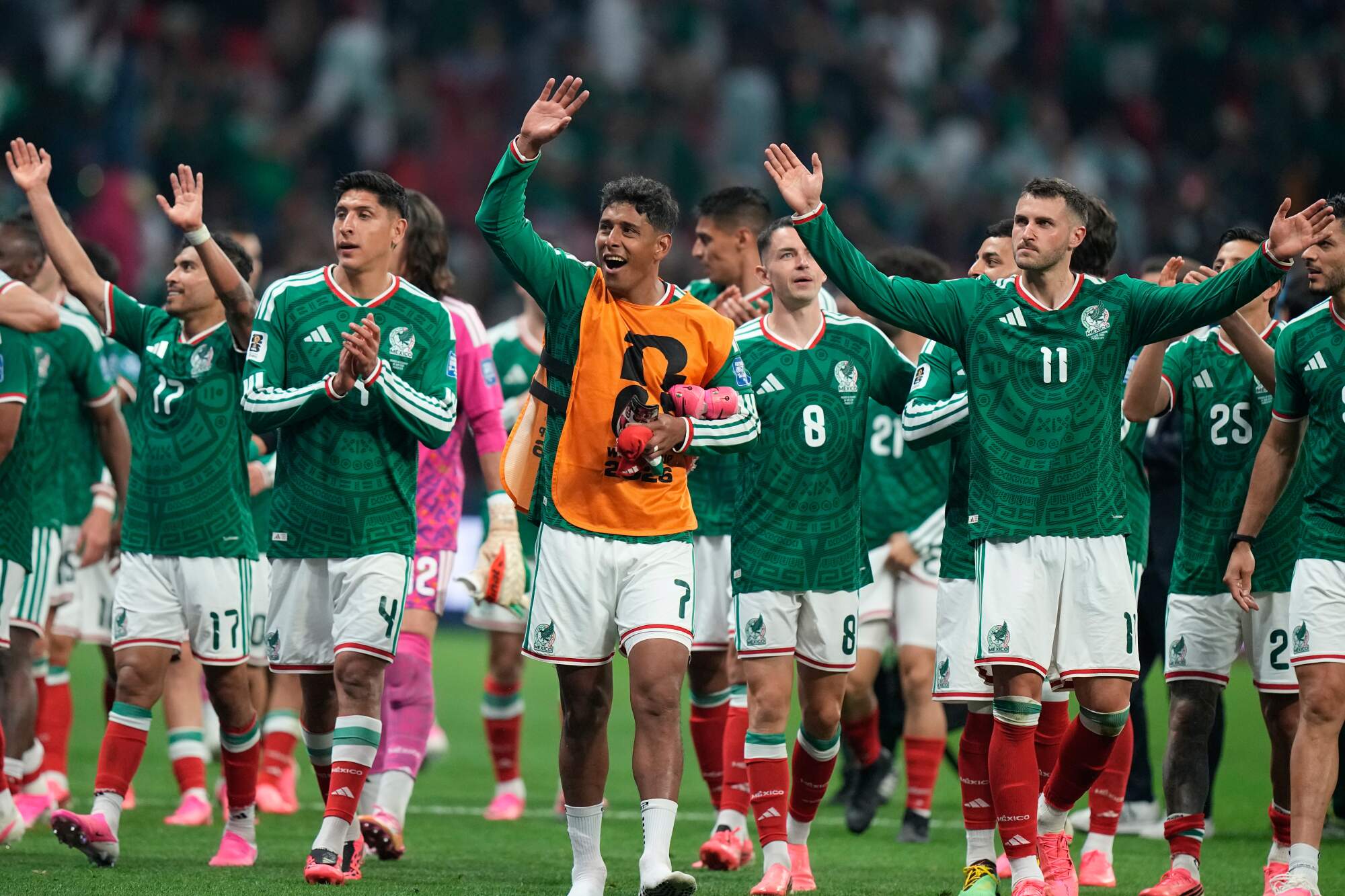
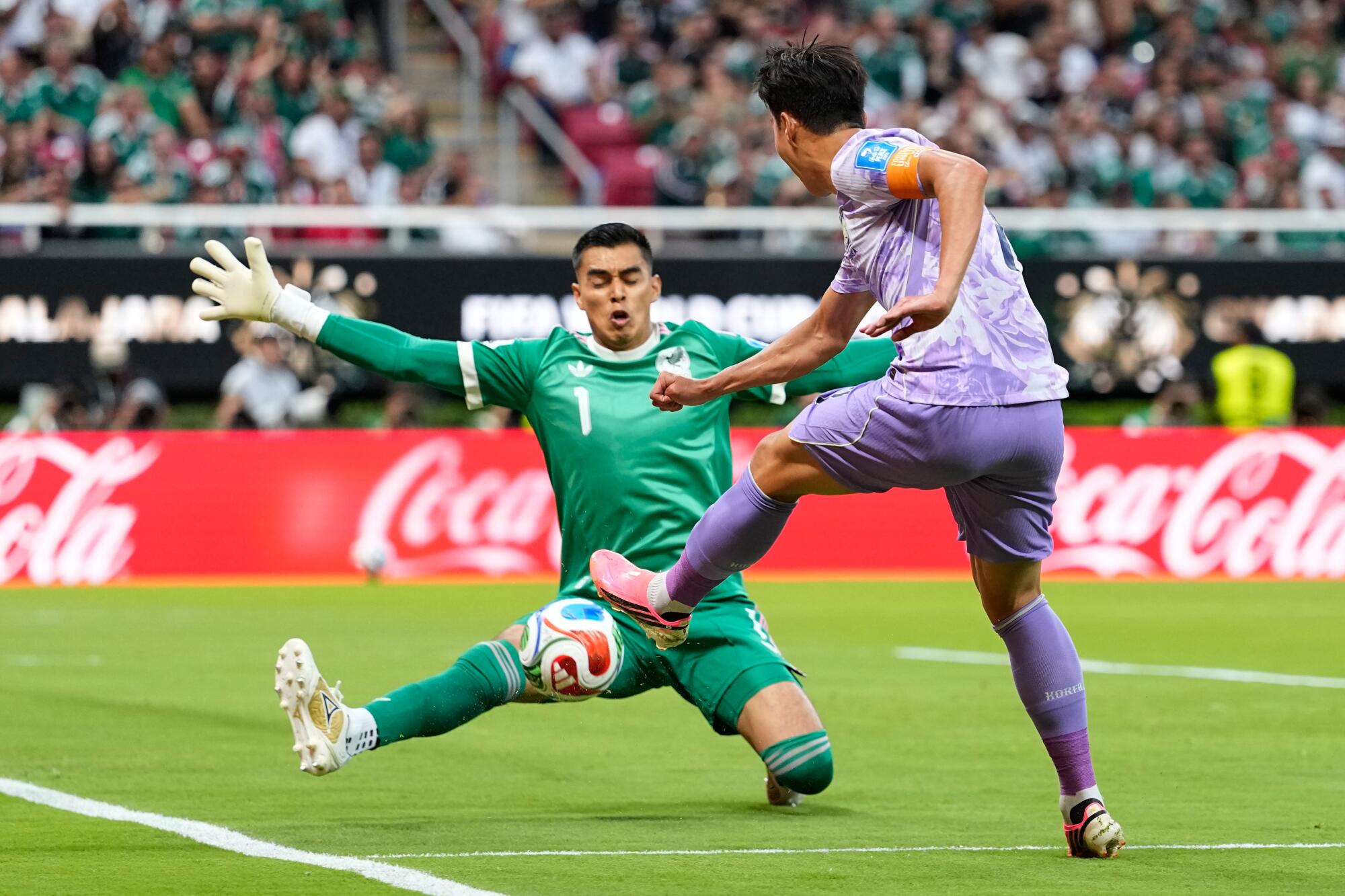
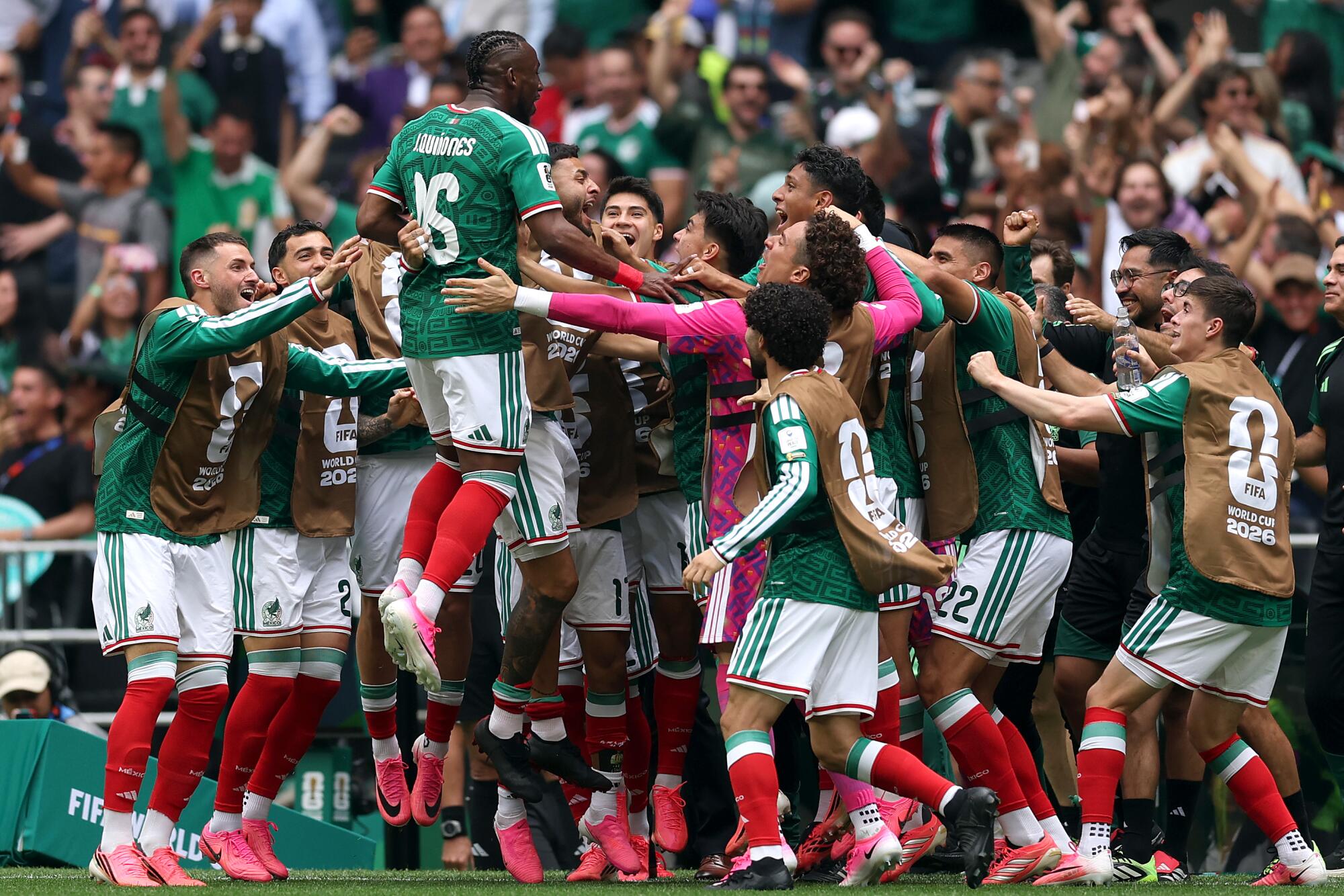
Meanwhile, Gutiérrez and Vargas are already getting important playing time with the national team. Both were part of Mexico’s historic group stage where, for the first time in history, the team won all three of its games. Gutiérrez was a starter against South Africa and South Korea, while Vargas came off the bench to help preserve the 1-0 lead over South Korea.
Their protagonism in Aguirre’s squad could also signal another new era for the Mexican national team — one in which Mexican American players are just as vital as those born on Mexican soil.
“Brian and Obed are two young players of Mexican heritage. They are very talented players who have made great progress recently. We called them up, and they convinced us with their performances,” said Aguirre prior to the tournament. “I believe there are many Mexican American players who, in the future, will continue strengthening Mexico’s youth national teams, including the women’s side. That makes me happy because they were not born in Mexico, yet they have a deep love for the country and have shown it by choosing to represent us.”
Both Gutiérrez and Vargas are also products of MLS academies.
Gutiérrez, a skillful and dynamic attacking midfielder, rose through the ranks of Chicago Fire’s youth system and made his senior debut in 2020. In December, he moved to storied Liga MX club Chivas, his childhood team. It took time for Gutiérrez to establish himself as a starter for Gabriel Milito’s squad, but his game-changing talent was there — enough to catch the eye of “El Vasco.”
Vargas, a box-to-box midfielder, developed through the Seattle Sounders youth system and debuted with the senior team in 2021. A strong showing against Atlético de Madrid in the 2025 Club World Cup led to the Spanish club adding him to its roster this February. This move also put him in Aguirre’s World Cup plans.
“Playing for Mexico at the World Cup is a dream come true for all Mexican American kids,” said Vargas. “Obviously, with the World Cup being in both countries, it’s special to me. I have connections and ties to both countries.”
For so long, it was said Mexican American players just could not earn a place with Mexico at the international level. Players like Édgar Castillo and Alejandro Zendejas — born in Juárez but raised in El Paso — represented “El Tri” up to the U-23 level, then switched and played for the U.S. Jonathan González (Santa Rosa, Calif.) represented the U.S. at youth level and then chose Mexico, but after a few call-ups he fell out of the picture.
But in this World Cup cycle, Mexican American players have stood out more than ever.
Aguirre’s preliminary 55-man World Cup roster included six Mexican American players. Richard Ledezma (Phoenix), Efraín Álvarez (Los Angeles), Jorge Ruvalcaba (Rialto), and Julián Araujo (Lompoc, Calif.) ultimately missed the final cut. Of the four, Ledezma and Araujo came closest to making the team, but for different reasons fell short.
Vargas believes it was only a matter of time before the talent broke through.
“I think Mexican American players have always been there. The quality has always been there. Obviously, the growing passion for the sport in the United States has helped fuel the development of many of those players,” said Vargas. “I think it’s amazing to see so many Mexican Americans doing well with the national teams of both the United States and Mexico. Dreams come true for kids, and that continues to inspire the next generation of Mexican American players coming through in the U.S.”
Gutiérrez and Vargas, like many standout Mexican American players over the last 15 years, began their paths with “El Tri” amid a long-standing tug-of-war between their birth country and the country of their parents. The Mexico men’s national team and their U.S. counterparts have increasingly become rivals, both on the field and in recruiting dual-national players.
For Mexico, the United States now represents a prime area for scouting outside its territory. According to the Migration Policy Institute’s (MPI) tabulation of data from the U.S. Census Bureau’s 2022 American Community Survey, approximately 38.8 million U.S. residents were either born in Mexico or reported Mexican ancestry or origin.
Not only do Mexican American players expand the national team’s talent pool, but as some argue, they also bring a different element that can be a major advantage for the program.
Former Mexico youth coach and current Guatemala coach Luis Fernando Tena recently raised eyebrows in an interview with ESPN Deportes by stating that Mexican American players possess qualities that can set them apart from homegrown Mexican players.
“They have an American mindset. They grew up with that mentality and with good nutrition, and that makes them different,” said Tena, who led Mexico’s U-23 team to the gold medal at the 2012 London Olympics. “They are more disciplined, work harder, and are more focused — something that we sometimes don’t always find in many Mexican-born players.”
Gutiérrez and Vargas started their international careers representing Team USA at youth level, but FIFA’s one-time switch rule allowed them to change allegiances.
Vargas said he chose Mexico because he simply “followed his heart.” His love for his heritage and the Mexican national team outweighed everything else.
As for Gutiérrez, he was motivated to make the change because his time at Chivas convinced him. In Liga MX, the club has been at the forefront of tapping into the Mexican diaspora in the U.S. Their long-standing “Mexicans-only” policy limits the club’s talent pool when acquiring players. Because of this, Mexican American players are becoming a vital lifeline for Chivas.
“As soon as I arrived at Chivas, I knew my decision was to represent Mexico because we play with 100% Mexicans, that’s just how it is,” said Gutiérrez.
Opportunity may have also played a major role in Gutiérrez’s and Vargas’s “one-time switch” decisions. Both had no clear pathway into the U.S. senior squad, while Mexico offered a clearer route — and a chance at the 2026 World Cup.
In a 2023 interview, El Paso native Ricardo Pepi, who made the one-time switch from Mexico to the U.S., said on the Men in Blazers podcast that his decision was influenced by the fact that the U.S. had him in mind for the senior squad, while “El Tri” did not.
“It was just easy to decide. The U.S. wanted me to join them in World Cup qualifiers, which is a big deal,” said Pepi. “It’s a unique opportunity, being at a World Cup, and something I didn’t even have to think about because Mexico wanted me for the U-20s and eventually the first team. I was like, ‘I’m past that.’”
Although Gutiérrez and Vargas chose Mexico and embrace their parents’ culture, their duality is still present. They carry their communities with them.
A year ago, when aggressive ICE raids and mass deportations swept through many immigrant communities in the United States, particularly Mexican immigrant communities, a visibly frustrated Aguirre refused to comment on the situation, saying he was “apolitical” and not “a spokesperson” for the Mexican people.
This was not the case with Gutiérrez and Vargas, who both addressed questions about the ICE raids during Mexico’s World Cup media day in Pasadena, where they switched seamlessly between English and Spanish.
Gutiérrez answered without hesitation. His hometown of Berwyn is a suburb of Chicago, a city that in September was targeted by “Operation Midway Blitz,” a major federal immigration enforcement surge. According to the Chicago Tribune, between 3,800 and 4,500 individuals were detained or arrested during the operation.
Gutiérrez’s words reflected the strain felt throughout his community.
“It’s been a hard, hard year for us,” Gutiérrez said. “It’s affected a lot of families, and I take playing for Mexico with great pride and hope to show it on the field.”
It’s no secret that a large part of Mexico’s fanbase is composed of Mexican Americans. They are the ones who help fill massive NFL stadiums for “El Tri’s” annual MexTour, a slate of mostly inconsequential friendly matches that are often seen as a cash grab for the Mexican Football Federation. The presence of standout players like Gutiérrez and Vargas is a major development for this segment of the fanbase.
By featuring players with shared cultural experiences and struggles, the connection between the Mexican diaspora in the U.S. and “El Tri” can only strengthen. The ties now go beyond simply sharing the same roots; Mexican Americans can now gravitate toward a team with players who represent their dual identity. And this can bring a true sense of belonging.