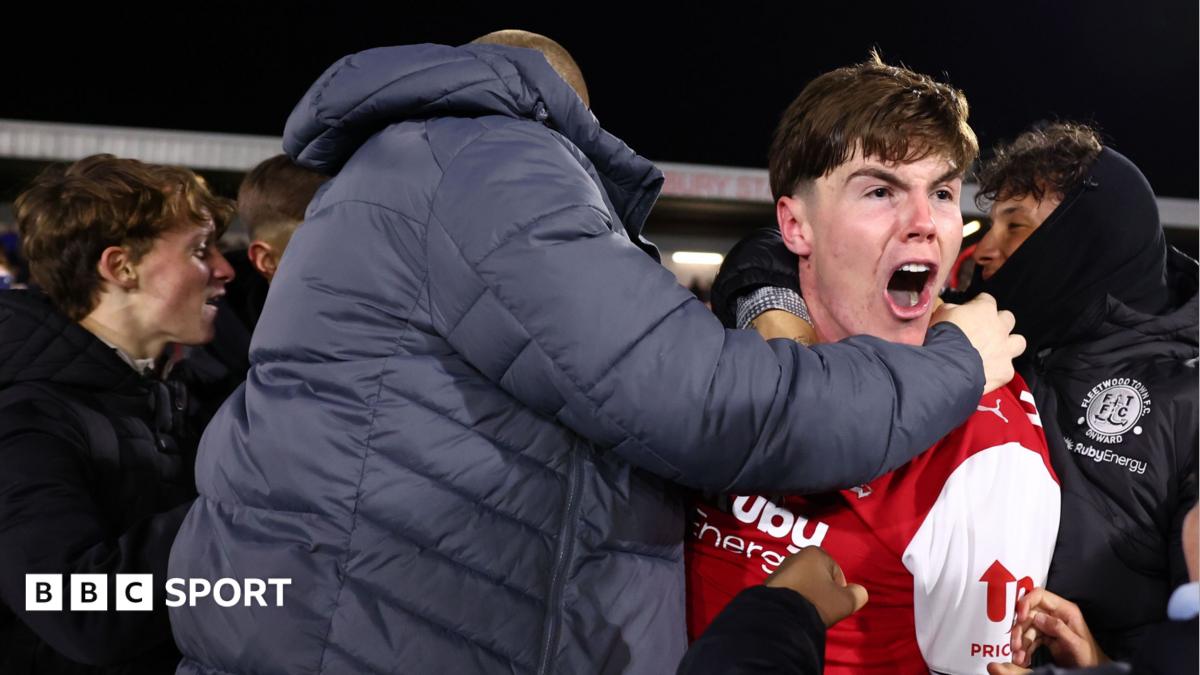
Fleetwood Town: League Two club fearless for EFL Cup quarter-final after Arsenal upset
Given their league positions, form and pedigree there could only have been one winner predicted.
Fleetwood played Arsenal on Tuesday with 83 places separating the teams and most home fans arriving in hope rather than any expectation. But remarkably, it was the hosts who booked their place in the Carabao Cup quarter-final thanks to their penalty shootout win over the Gunners.
For the Cod Army, who won six promotions in 12 years in their impressive journey from non-league, this result will surely be remembered longest of all. Against the reigning Premier League champions, the club from a small seaside town in Lancashire created history in claiming one of the biggest cup upsets ever.
Aaron Loupalo-Bi gave the hosts the lead after 21 minutes but, after the break, Viktor Gyokeres pulled the visitors level.
And from there, they might have been expected to take charge but Fleetwood remained resolute, prospering from a wasteful performance from Arsenal that included Max Dowman being sent off for kicking out after a robust challenge from Harrison Neal.
Fleetwood, who sit 18th in League Two having won just once in their past eight league games, dared to dream and took the game to penalties, with fans spilling on to the pitch in the after Conor Haughey’s decisive spot kick.
“The biggest night in the club’s history in terms of opposition coming to town and we’ve managed to beat the champions,” boss Matt Lawlor told Sky Sports in the aftermath of his side’s stunning victory.
“I’m a big football fan and I watch National League all the way through to the Premier League, Championship. So for me it was a tough game to prepare for, but I’m just so glad that the lads have the feeling the way they are and took that performance in to make that town, the club, everyone proud.”