Ecuadors

Ecuador’s disappeared: Inside one family’s search for answers | Human Rights News

While it might be true that the cases are progressing, families of the missing argue they are moving at a snail’s pace.

Since early December, Fault Lines has spent time with families who are pushing for accountability and pleading with the government to learn what happened to their loved ones.

In some cases, they have spent years without receiving any direct response.

“It gets harder every time my nephew asks when his father will come home and I don’t have any answers,” said Rosario Villon, whose brother, Jonathan Villon, has been missing for almost a year and a half.

The 31-year-old father of three was last seen on December 9, 2024, when he left to pick up groceries in his hometown of Guayaquil.

Addressing a vigil for Jonathan last December, Rosario explained the toll his disappearance has taken on her family.

“Seeing my mother cry for her son, not knowing what to do next to bring him home — it isn’t easy,” she said.

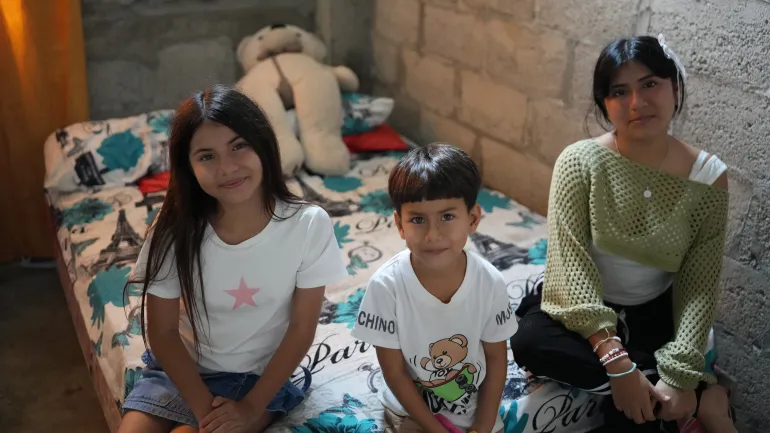
The three children of Jonathan Villon in Ecuador
Jonathan Villon, who disappeared in the custody of Ecuadorian soldiers, leaves behind a partner and three children, pictured here [Fault Lines/Al Jazeera]

Fault Lines has reviewed footage of the day Jonathan was detained. Security cameras show soldiers patrolling Jonathan’s neighbourhood, Nueva Prosperina.

A neighbour’s mobile phone video also captures the moments after Jonathan was forced into the truck’s bed, under a wooden bench. The truck then drives off, and he has not been seen since.

The family recorded the licence plate numbers of the municipal vehicle the soldiers were using, but the military has refused to respond to requests about Jonathan’s case.

“We have the evidence, we have videos, we have the licence plates of the truck, and they won’t give us a concrete and exact answer. What happened to my husband?” asked Jonathan’s partner, Yadira Bohorquez.

Lawyers representing the family say the military simply declared that it had no operations in that area on that date, despite the video evidence.

“The case of Jonathan Villon is completely paralysed by the refusal of the Ministry of Defence to cooperate in handing over information that the Prosecutor’s Office has already requested,” said Fernando Bastias, a lawyer with CDH Guayaquil, a human rights nonprofit representing the family.

Source link

Ecuador’s Noboa pledges to extradite criminals in State of the Union speech | Crime News

The right-wing president highlighted anti-crime operations and economic progress, while critics warned of abuses.

Ecuadorian President Daniel Noboa has used his State of the Union speech to tout his United States-backed crime-fighting strategies as well as improvements to the economy.

Addressing the National Assembly in the capital Quito on Sunday, Noboa cited the extradition of a dozen crime bosses to the US and the seizure of almost 300 tonnes of drugs as examples of what he described as his decisive and effective approach.

Recommended Stories

list of 3 itemsend of list

“We will seek them out, find them and extradite them,” Noboa said of wanted criminals. He also asserted that the South American country cannot develop “if families live in fear”.

Organised crime is the leading concern among Ecuadorians this decade, after a spike in homicides during the COVID-19 pandemic.

Since 2021, Ecuador has struggled to contain drug violence as rival cartels partner with local gangs to battle for control of routes and coastal ports used to smuggle cocaine. The country is wedged between Colombia and Peru, the world’s top cocaine producing countries.

Last year, Ecuador recorded its highest homicide rate in decades, with approximately 50 murders for every 100,000 residents, according to the Ministry of the Interior.

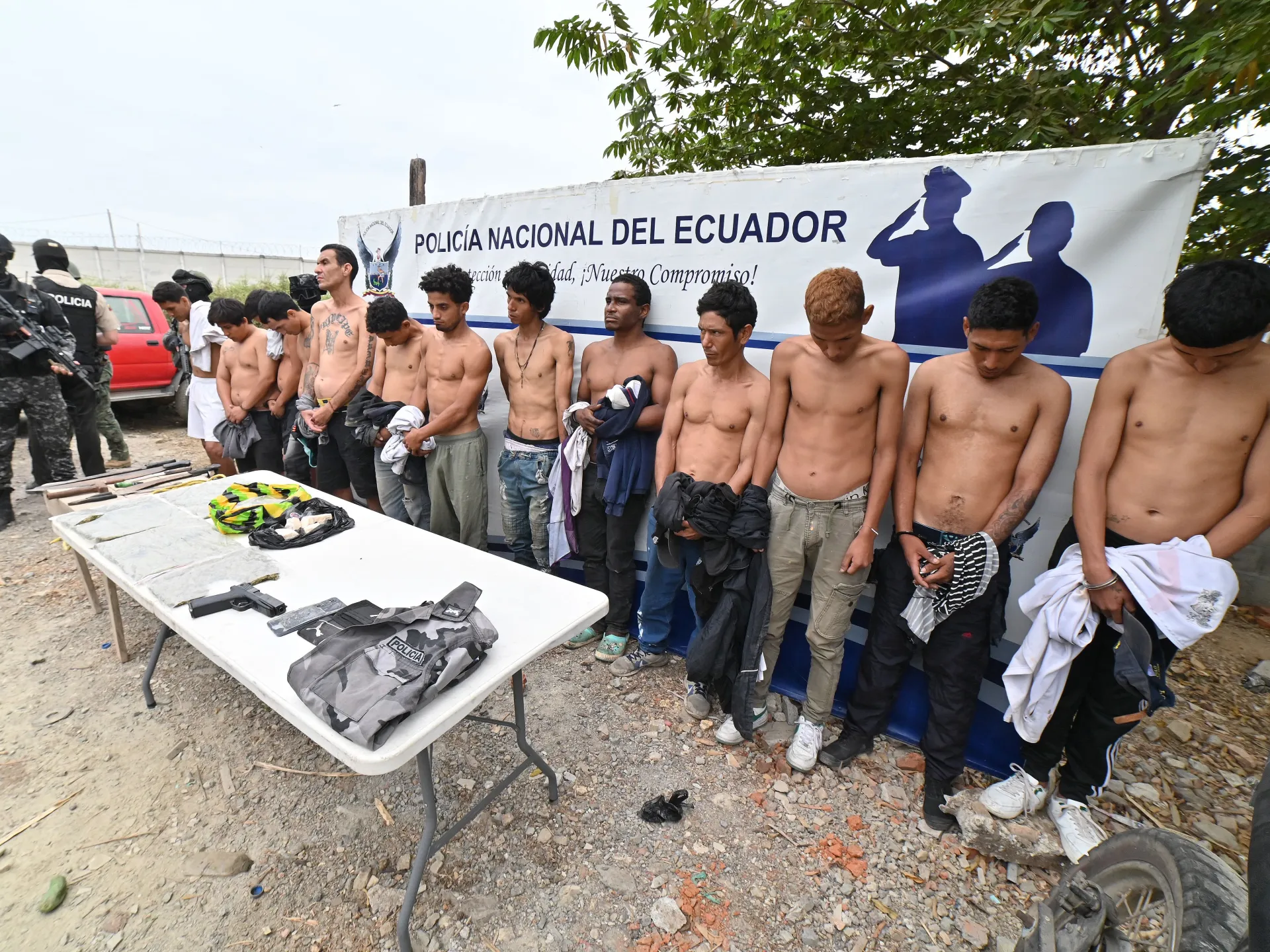
In response, Noboa, who was reelected last year to a four-year term, has used a state of exception to allow the military to implement a variety of crime-fighting strategies, including joint patrols with police officers and property searches without warrants.

Earlier this year, Ecuador’s military also carried out an operation with US forces against a training camp allegedly used by Colombian drug traffickers, attacking the site with drones, helicopters and boats.

Noboa’s approach, however, has come under criticism from civil society groups, who say his iron-fisted methods have failed to reduce crime while putting civilians in danger.

Glaedys Gonzalez, an analyst for the Andean region at the International Crisis Group, said on Sunday that Noboa may have been optimistic in his speech regarding the country’s security.

“Progress on violence is far from being achieved,” Gonzalez said. “It is evident that the situation in Ecuador has reached unprecedented levels.”

Sunday’s speech also promoted Ecuador’s economic progress, with Noboa telling lawmakers that poverty dropped from 26 percent to 21.4 percent in 2025. Extreme poverty, he added, went down from 10.4 percent to 8.4 percent.

Noboa was first elected in 2023 during a snap election triggered when then-President Guillermo Lasso dissolved the National Assembly and shortened his own term.

Source link