
AI boom echoes 1997 Asian financial crisis: SocGen's Albert Edwards
AI boom echoes 1997 Asian financial crisis: SocGen's Albert Edwards
Source link
AI boom echoes 1997 Asian financial crisis: SocGen's Albert Edwards
Source link
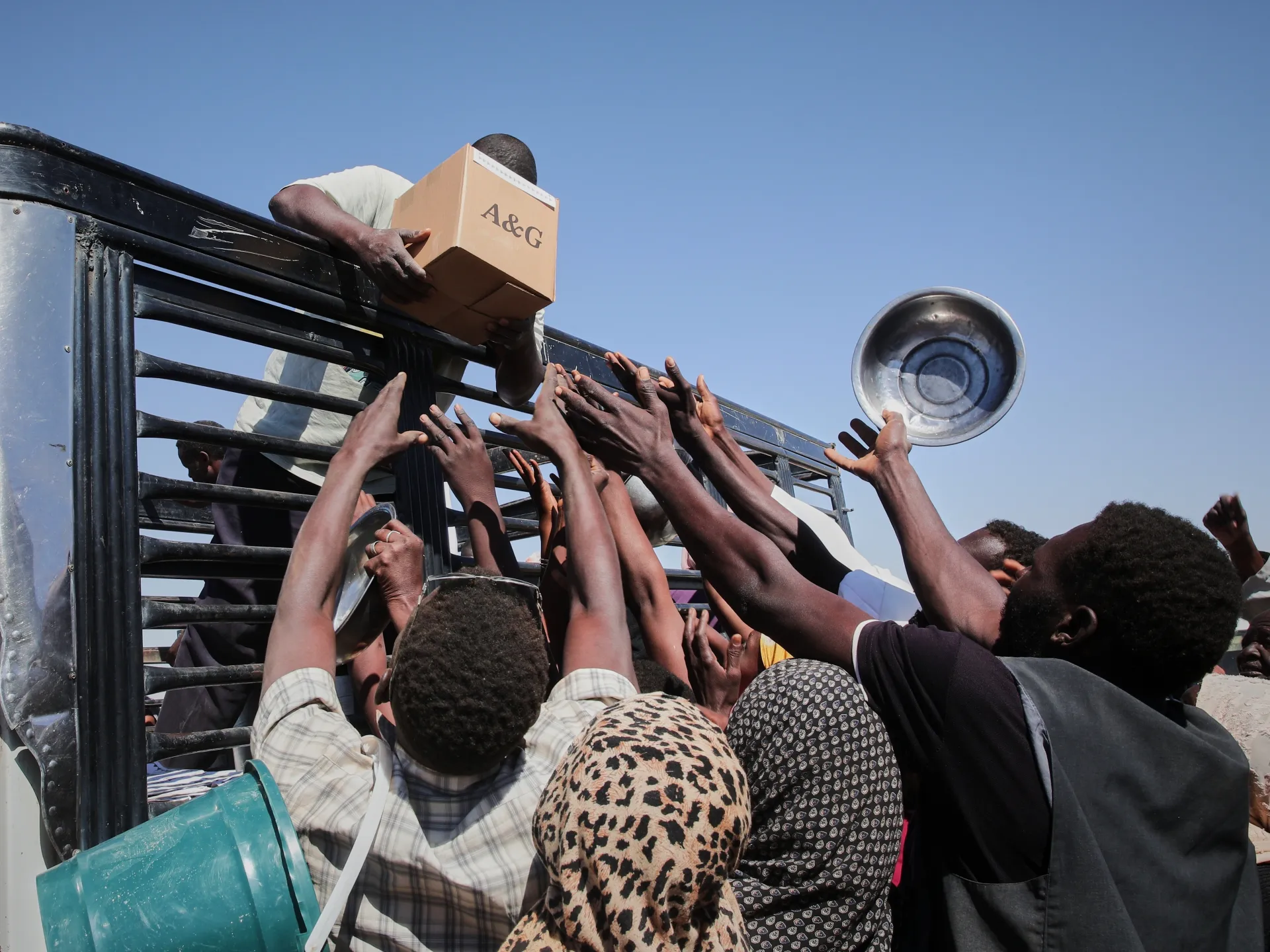
Sudan’s collective memory has long carried stories of famine-induced tragedies. Now, as war pushes the country deeper into a catastrophic food crisis, historians and humanitarian activists fear that some of those horrors are being repeated.
The ongoing war between the Sudanese army and the paramilitary Rapid Support Forces, which erupted in April 2023, has plunged the country into one of its worst modern food crises, with conditions deteriorating sharply since 2024.
list of 3 itemsend of list
Sudan has endured severe famines before, often triggered or made worse by drought and other environmental shocks. However, the current hunger crisis, which has triggered famines in Sudan in 2024 and 2025, has been brought on by a man-made factor: war.
One of the earliest recorded major food crises in what is now Sudan occurred in 1684, during the Funj Sultanate. The crisis, which lasted several years, brought severe grain shortages across central Sudan. Historical accounts describe people driven to desperation, and in some cases forced to eat dog meat. The hunger triggered mass displacement, as well as a deadly smallpox outbreak.
Similar climate-driven crises were recorded in 1750 and again between 1835 and 1838 during a period of Ottoman-Egyptian rule, exacerbated by severe drought and low water levels in the River Nile.
The famine most deeply embedded in Sudanese popular memory occurred between 1888 and 1889, during the rule of Khalifa Abdullahi al-Taashi.
Drought, locust infestations and conflict combined to cause widespread hunger and death. Some historical estimates put the death toll at more than one million people, although precise figures from the period are difficult to establish. The crisis was reported to have been so severe that some families shut themselves inside their homes to die rather than going out to beg for food.
Sudan experienced more periods of food shortages during the 20th century. Droughts and poor harvests during the colonial period of the first half of the century forced the authorities at times to import grain from abroad.
Then, in 1984, during the rule of President Jaafar Nimeiri, a devastating drought hit western Sudan, including Darfur and Kordofan, where there were widespread crop and livestock losses, displacing hundreds of thousands of people from rural areas to the capital, Khartoum.
Unlike many of those historical crises, the current famine is distinctly man-made.
War has disrupted agricultural production and trade, forced farmers to leave their land, and made it difficult to move food and humanitarian aid across the country.
Abdullah al-Tijani, a social historian and humanitarian activist, noted the unprecedented scale of the current disaster.
“Most previous famines were often confined to specific regions, as happened in 1984, or areas in southern Sudan before its secession in [2011], while the capital and major cities continued to have the necessities of life and services,” al-Tijani told Al Jazeera.
This time, he said, hunger and the collapse of basic services have spread across the entire country.
“A comprehensive food crisis has struck the heart of major urban and agricultural centres in the states of Khartoum, Gezira, Sennar, Darfur, and Kordofan, causing millions of citizens to be displaced inside and outside the country,” al-Tijani added.
He pointed to what he described as the “systematic destruction of infrastructure, disruption of large agricultural projects, and targeting of markets, bakeries, and crops, along with disrupting the banking system and communication networks, which isolated entire regions”.
Al-Tijani also cited the “restrictions on humanitarian access and delays in granting transit permits for relief workers”. He accused the warring parties of using control over food supplies as a tool of war, while warning that international funding has fallen short of the size of the crisis.
The scale of the crisis is stark because of Sudan’s agricultural potential. The country has immense resources, including roughly 200 million acres (81 million hectares) of arable land, abundant water from the Nile, and extensive livestock resources, but Sudan’s potential as a global breadbasket remains unfulfilled.
Mohammed Abdul Rahman, an economic researcher, explained that the current food security crisis reflects a clear development gap, and a longstanding weakness in Sudan’s agricultural sector compounded by war.
“Wars and armed conflicts are among the most influential factors on food production,” Abdul Rahman said, “along with the displacement of farmers from their lands, the absence of political stability and agricultural policies, weak funding and government guarantees, and reliance on traditional farming methods.”