

easier

The two UK airports that are about to be much easier and cheaper to travel to

TWO UK airports will be much easier to travel to in less than two weeks and could save you from a hefty fine.

Contactless payment will make it easier to travel to London Stansted and London Southend Airports from March 8.

Greater Anglia trains has expanded the pay-as-you-go contactless option to 20 stationsCredit: Greater Anglia

The update applies to some Greater Anglia routes and means that passengers travelling from London Liverpool Street Station to either airport, can tap-in and tap-out on their journey.

In total, across Essex, 20 stations will be added to the contactless network.

Before, passengers were travelling to Stansted Airport using their contactless cards at the start of their journey not realising that you could not use contactless at the end of their journey, at the airport, reports London TravelWatch.

This meant that passengers would need to purchase a ticket instead, to avoid a £100 penalty.

Read more on travel inspo

GO ON

All the little-known websites for cheap or FREE tickets to gigs, theatre & festivals


CHEAP BREAKS

UK’s best 100 cheap stays – our pick of the top hotels, holiday parks and pubs

If they did try to tap-out, they would get an automatic £100 fine, plus the price of a standard single ticket – though the fine would be reduced to £50 if paid within 21 days.

Data released back in 2019 revealed that the number of people fined had risen by over 16,000 in just two years.

At the time, London TravelWatch’s boss Michael Roberts told the Daily Mail: “It’s plainly wrong that passengers continue to be unfairly penalised for not knowing that contactless payment isn’t accepted at London Stansted Airport.

“With ‘London’ in its name, people quite reasonably assume they’ll be able to tap out using a contactless card, especially when they were allowed to tap in using one at the start of their journey.”

Despite the update, passengers will still NOT be able to use their Oyster cards in the stations.

Contactless can sometimes be cheaper than purchasing a ticket.

Your fare will either be based on a peak or off-peak single for each journey you make.

And daily and weekly caps will be applied to journeys into and within London.

The Stansted Express links London Liverpool Street Station with Stansted Airport, taking about 48 minutes.

The trains are usually every 15 minutes, with fares starting from £9.90 per person.

This means it will be easier for passengers to travel to and from London Stansted and London Southend AirportsCredit: Alamy

In comparison, the journey from London Liverpool Street to Southend Airport takes about 50 minutes.

Commuters will benefit from the update too, as stops such as Southend Victoria, Witham, Chelmsford, Harlow Town and Bishop’s Stortford have all been added to the contactless payment option.

Greater Anglia’s managing director, Martin Beable, said: “We are pleased to be able to confirm that pay-as-you-go contactless ticketing will be introduced at a further 20 stations from March 8, making travel across our network simpler and more flexible for customers.

“This extension is another important step in modernising ticketing on the railway, allowing passengers to tap in and out and pay for the journeys they make, while improving the overall experience for those travelling into and out of London.”

The update comes as part of a wider programme to simplify fares and ticketing across the rail industry, which both the Department for Transport and Transport for London are working on.

New stations with the pay-as-you-go contactless option

  • Billericay
  • Beaulieu Park
  • Bishop’s Stortford
  • Chelmsford
  • Harlow Mill
  • Harlow Town
  • Hatfield Peverel
  • Hockley
  • Ingatestone
  • Prittlewell
  • Rayleigh
  • Rochford
  • Roydon
  • Sawbridgeworth
  • Stansted Airport
  • Southend Victoria
  • Stansted Mountfitchet
  • Wickford
  • Witham
  • Southend Airport

In other rail news, thousands more Brits will get a £126 discount on rail travel as certain rules have been relaxed.

Plus, a miniature railway has unveiled a new electric steam train and it’s right by the best place to live in the UK.

Previously, travellers had been fined £100 for trying to tap out at London StanstedCredit: Alamy

Source link

Women’s Champions League: Is new format easier for English teams?

Not exactly.

Reigning champions Arsenal had to kick off their campaign against record eight-time winners Lyon, who they beat in the semi-finals last season.

This time they lost and they were also beaten by Bayern Munich in the league phase, meaning they had work to do to qualify.

It was a nervy few months but victories against Real Madrid and FC Twente helped Arsenal finish fifth in the table. They were handed a favourable tie in their knockout play-offs, avoiding more established European teams like Wolfsburg and Juventus to take on competition debutants OH Leuven, who they had already beaten 3-0 in the league phase.

They bettered that scoreline in the first leg, winning 4-0, but Arsenal boss Renee Slegers insisted it was not straightforward, saying her side just found form when it mattered.

“Ahead of the first game, we were very aware that Leuven had made it difficult for teams in Europe,” said Slegers after their 3-1 victory in the second leg.

“We actually played really well in Leuven and were clinical. When we go into the second game, we know we’re already 4-0 up, so it becomes a different game.”

United had to face Atletico Madrid, who have reached the main draw six times in the past decade, having also played them in the league phase.

The Spanish side are sixth in Liga F and 25 points adrift of leaders Barcelona.

The competition has been far from easy for United though, having to play three qualifying rounds before the league phase – coming from behind to beat Brann – and then meeting two-time winners Wolfsburg, Italian giants Juventus and record-holders Lyon in their group.

“For sure, it hasn’t felt easy. I’ve really enjoyed the structure of the Champions League to get here,” said United boss Marc Skinner. “It’s exposed us to different styles of play. The experiences have helped us grow quickly.

“You look back to when we played Lyon, the close Valerenga game and Juventus in the last game of the league phase – the growth is incredible from our team.”

Even Chelsea, who were top seeds and qualified directly for the quarter-finals, had to play fellow last-eight qualifiers Barcelona and Wolfsburg in the league phase.

They have Arsenal next, and could still face Lyon and Barcelona on route to the final.

Source link

Travellers urged to ditch 1 common suitcase item for an easier holiday

A travel expert who has visited over 60 countries has shared that an everyday item most people pack for their holidays is weighing them down

February is a dreary month, with never-ending grey skies, and many of us begin browsing holiday offers to find somewhere more appealing to visit in the summer. However, people often overlook how stressful packing can be, and there is nothing worse than lugging a heavy suitcase whilst rushing around to catch a flight or train.

Amanda Williams, a travel expert and founder of Dangerous Business, has visited over 60 countries, and the biggest mistake to make whilst travelling is packing too many pairs of jeans. She said: “You may have learned this the hard way already, but actual denim is HEAVY, bulky, and slow to dry if you have to wash it on the road. If you’re going to pack jeans on a trip, I recommend only taking one or two pairs max, along with some non-denim pants or bottoms.”

Jeans are a dependable everyday staple at home, which often makes them seem like a sensible choice for a holiday.

However, denim is a thick fabric that does not fold easily, so even a few pairs of jeans can take up a lot of space and add considerable weight to a suitcase.

They are also uncomfortable in warm weather or when sitting for extended periods, making them unsuitable for most summer destinations, reports the Express.

Most people only wear jeans once or twice whilst on holiday, and it will be more practical in the long run to pack just one pair if you are going somewhere warm. Instead, consider packing lightweight trousers that dry swiftly, such as chinos, shorts, dresses, skirts or even jeggings, as it will make lugging a suitcase considerably easier.

It’s also preferable to avoid packing a different outfit for every day, and instead select pieces that can be combined and coordinated to conserve space.

Amanda said: “My rule is usually four bottoms, five to seven tops, two layering pieces (like cardigans), and two to three dresses. Add in accessories like jewellery or maybe a scarf, and you can get a lot of outfits out of that amount of clothing!”

Only pack items you’re sure you’ll use, as travellers often squander space bringing things like hiking boots when they’ve made no firm plans to go mountain climbing.

Similarly, avoid packing gym clothes unless you regularly exercise at home, as you’re unlikely to feel inspired to work out whilst unwinding on holiday.

It may seem straightforward, but investing time to evaluate how practical each garment will be whilst travelling can save suitcase space and prevent exceeding luggage weight restrictions.
Source link

New Eurostar rules to make travelling by train to Europe MUCH easier

A CHANGE to how you board the Eurostar is about to make it much easier to head over to Europe.

The international train operator has said they will cut boarding times by 30 minutes in an attempt to ease crowding at St Pancras station.

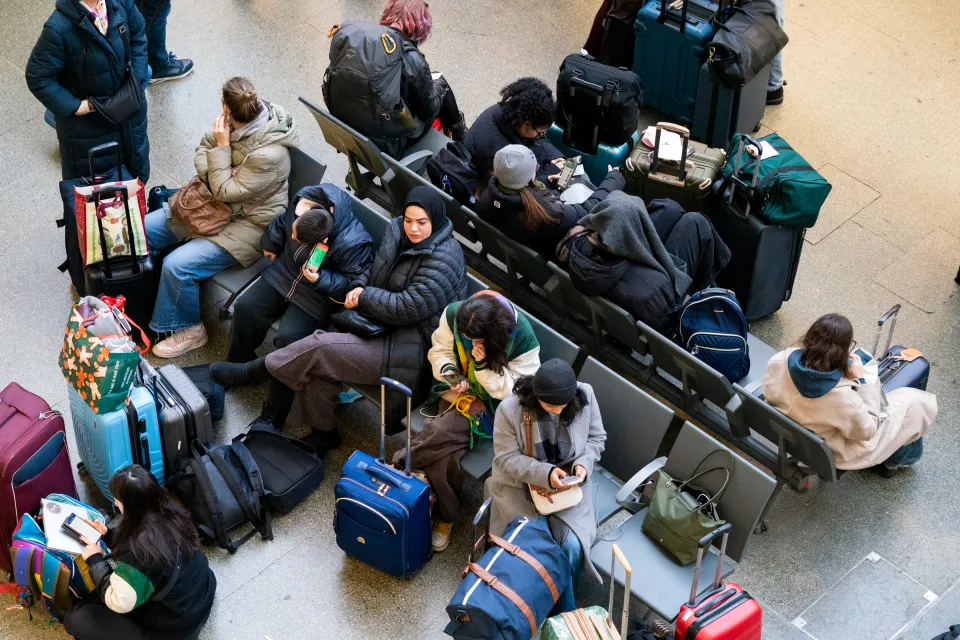
People sitting with their luggage at St Pancras station after Eurostar trains were cancelled.
Eurostar has promised to cut its boarding timesCredit: Louis Wood

Currently, Eurostar passengers must check in an hour before boarding their train, where they they have to wait in departures.

According to The Telegraph, there are plans to allow passengers to board Eurostar trains as soon as they arrive at the station.

This would mean that passengers would be able to board up to half an hour before their train departs.

The hope is that this will allow people to arrive at St Pancras much closer to the time that their train is due to leave, as well as ease crowds.

Read more on travel inspo

ALL IN

I found the best value all inclusive London hotel… just £55pp with free food & booze


CHEAP BREAKS

UK’s best 100 cheap stays – our pick of the top hotels, holiday parks and pubs

Wendy Spinks, chief commercial officer at London St Pancras High Speed, said that the process of boarding Eurostar had become too much like flying, when in reality it should be easier than an airport.

She added: “It has become too close to the airport experience, where you check in, go to security, wait in the lounge and then rush to the gate.

“You will always want some people to turn up a bit earlier so that you can process them and get them on board but at least 50 per cent of passengers should go straight to the train.”

Not only should train travel be less stressful, but it also allows passengers to go directly into the city centre, rather than an airport further out.

But she warned: “The more you go beyond two hours and start getting out to Germany or Geneva, say, then your time differential is harder against flying. If we shrink the time that you hang around in the station it cuts the end-to-end journey.”

The changes come amid the major renovation of St Pancras, ahead of the launch of new travel rivals Richard Branson‘s Virgin Trains and Trenitalia of Italy by 2030.

Ms Spinks also warned that the busy departures area is preventing any further growth of Eurostar, especially ahead of the new kiosks ahead of the new EU Entry/Exit System.

The St Pancras renovation – which is expected to cost around £100million – will hopefully free up space and could even cut waiting times to just 15 minutes.

Not only that, but a new ground floor layout would double the station’s current capacity to 5,000 passengers an hour.

The full renovation is set to be complete by the 2030s, which is also when the new additions of destinations such as Germany and Switzerland could be rolled out.

In other train news, UK’s busiest train station with 100million passengers finally gets go ahead for controversial £1.2billion expansion.

Plus, major UK train station shuts for nine days for ‘once in generation’ overhaul worth £8million.

Two Eurostar trains sit on tracks at St Pancras International station under a large arched glass and metal roof.
The changes are expected to be introduced alongside the overhaul of St Pancras stationCredit: photogenics

Source link

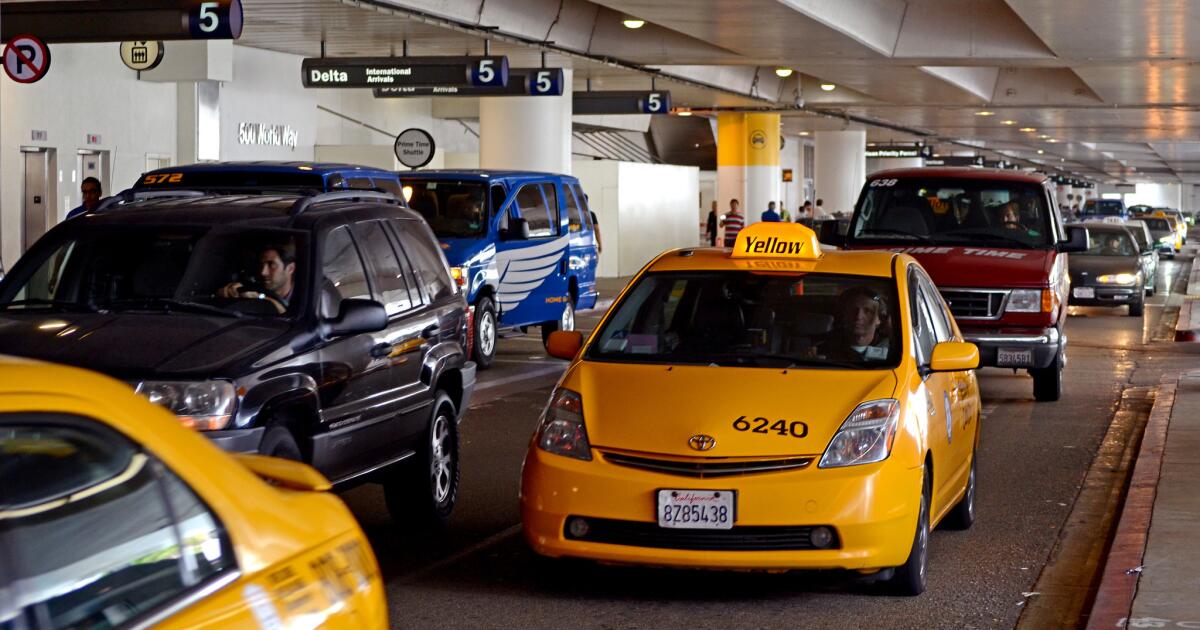
A California lawmaker wants to make it easier for taxis to compete with Uber. But is it too little, too late?

Uber and Lyft continue to expand their dominance in California, and taxi companies are looking to the state Legislature for some relief.

“If communities value taxicabs, then we’re going to have to have a regulatory environment that allows cab companies to thrive,” said William Rouse, general manager of Yellow Cab of Los Angeles. “Right now, that’s just not the case.”

Rouse and others in the taxi industry have turned to Assemblyman Evan Low (D-Campbell) for help. Low has introduced AB 1069, which aims to ease taxi regulations to make the companies more competitive with their ride-hailing rivals.

Under Low’s legislation, which overwhelmingly passed the Assembly last month, taxi regulation would occur regionally rather than city by city. This means, for instance, cabs could pick up passengers in Los Angeles, drop them off in Santa Monica and vice versa without needing multiple permits.

Taxis also could lower or raise their prices — similar to Uber and Lyft’s surge-pricing models — in response to demand, with a maximum price set by each region.

“If we don’t do anything now, they will completely be annihilated,” Low said.

In California, numbers show the extent of the taxi industry’s decline and the ride-hailing boom. Taxi trips dropped nearly 30% in Los Angeles from 2012, right before Uber and Lyft began operating, to 2015. New research from the Brookings Institution shows that the number of ride-hailing drivers doubled in Los Angeles, Sacramento, San Diego and San Jose in 2015.

Uber and Lyft’s business models rely on using public pressure and lobbying to shape and change laws and regulations, said Elizabeth Pollman, a professor at Loyola Law School who has written about how Uber and Lyft have challenged existing state and local rules.

“Their business model wasn’t just to replicate the world we had, but rather to create a new model,” Pollman said.

Uber and Lyft have succeeded at the state Capitol in getting regulations and laws passed to benefit their industry and shooting down those that don’t. Even if Low’s bill passes, major regulatory disparities between ride-hailing companies and taxis will remain.

Taxi drivers still will have to pass fingerprint-based background checks, while Uber and Lyft drivers face less onerous rules. After years of delays, the California Public Utilities Commission, which regulates ride-hailing statewide, is scheduled in the fall to decide whether ride-hailing drivers will need to pass fingerprint checks as well. Neither Uber nor Lyft has taken a position on Low’s bill, but each company has been generally supportive of loosening taxi regulations.

Still, cab companies and transportation experts said the legislation could have clear benefits for the taxi industry. Currently, it costs more than $3,000 a year for taxi permits to operate in four cities — Torrance, Redondo Beach, Hermosa Beach and Manhattan Beach — that stretch roughly six miles along the Los Angeles County coast. In Silicon Valley, similar annual city-by-city fees can run $13,000. Low’s bill aims to wipe away such charges and replace them with a single payment.

The measure would promote greater competition by allowing taxis to grow their own on-demand apps and other dispatch services with fewer restrictions, said Bruce Schaller, a New York-based consultant who monitors both industries.

Schaller said the taxi industry’s problems go beyond regulation, and cabs will need to dramatically improve their service and reduce their fares.

“Why do people use Uber and Lyft?” Schaller said. “It’s because they’re cheap and they show up. That’s it.”

Low’s bill faces many obstacles. Last year, he wrote legislation that would have turned over taxi regulation to the state, but Gov. Jerry Brown vetoed it. The governor’s veto message said he didn’t believe such a major change was warranted. Low’s current bill shifts the burden from cities to counties, but counties don’t want the responsibility.

In a May letter opposing the bill, a representative of the California State Assn. of Counties wrote that counties were ill-equipped to handle taxi regulations without help from cities.

“AB 1069 confuses the relationship between counties and cities by arbitrarily placing the entire burden on the county for taxicab licensure,” the letter said.

Low said he’s open to another entity, such as regional agencies including the Southern California Assn. of Governments in the Los Angeles area, to regulate taxis instead of counties handling them. But he warned that local governments shouldn’t be shortsighted in maintaining strict regulations and high fees that could continue driving taxis out of business.

In that case, Low said, cities “won’t get any of their revenues whatsoever.”

liam.dillon@latimes.com

@dillonliam

ALSO

An overhaul of California’s taxi regulations passes the Legislature

With Uber battle raging, one state lawmaker wants to deregulate the taxi industry

Uber and Lyft are winning at the state Capitol — here’s why

Updates on California politics


Source link