ear

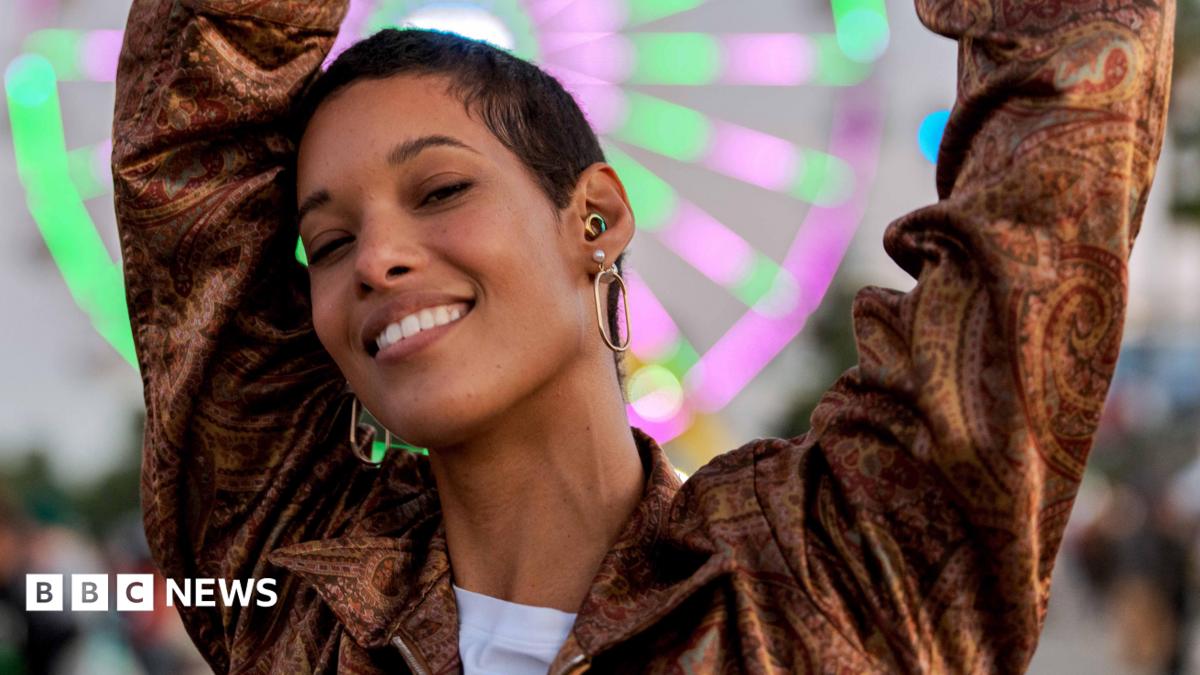
Why are music fans choosing to wear ear plugs at festivals?

Loop’s website shows images of people wearing their devices in casual, fun settings, and the brand has also collaborated with festivals such as Coachella and Tomorrowland.

Alpine CEO Arthur van Keeken says their ear-plugs have been popular with “younger, urban people” – exactly the audience for these types of events.

He believes they are more conscious of looking after their hearing, and wants a future where music fans view ear protection in the same way skiers see helmets.

The British Association of Audiologists – healthcare experts who specialise in diagnosing and treating ear problems – say hearing loss is one of the most common disabilities.

According to the Royal National Institute for Deaf People (RNID), it affects about one in three UK adults.

The charity’s audiology manager Franki Oliver says that, under a microscope, the sound-sensing cells in our ears and the tiny hairs growing out of them resemble a patch of grass at a festival.

“The first day, the grass looks absolutely beautiful,” she says. “Nice and green.”

“After the first couple of days, it’s OK. But at the end of the weekend it’s looking pretty dead and it’s probably not coming back.

“The same thing is happening with our ears when we expose them to loud noises”.

Oliver says it’s a good thing that ear-plugs are increasingly seen as an “accessory to a night out, rather than something you have to use”.

But, like our ears, they are not all created equal.

Source link

Best specialized massages in Los Angeles: A head-to-toe guide

Kosha is a boutique spa in Sherman Oaks offering skincare and massages. One of its signature offerings is the “buccal facial,” which is actually more of a face and jaw area massage as opposed to a facial involving exfoliating, steaming and pore extraction.

The 55-minute treatment promises to improve circulation and relax muscles, helping to plump the skin while lifting and firming, “giving it a more contoured appearance,” Kosha owner Anastasia Talan told me.

It starts with a short grounding meditation before a cleansing of the skin and a light scalp massage. It then transitions into a wonderfully relaxing neck, shoulder and face massage, with an emphasis on the face. (The actual “buccal massage” part comes later.) Talan said the overall treatment blends multiple types of massage, including European “contouring and lifting massage,” lymphatic drainage, acupressure and myofascial release as well as light stretching.

As she worked on my face, Talan applied pressure while stroking under my cheek bones, along my sinuses and up, down and around my cheeks and jaw area.

The “buccal massage” portion was about 15 minutes. It’s also called “intraoral massage” because it takes place inside of the mouth. Talan donned blue plastic gloves and then pulled my lips apart, massaging the inside of my cheeks, lips and around my jawbone and temporomandibular joint. Relieving tension there is helpful in aiding TMJ and other temporomandibular joint disorders. Another benefit, says Talan: clenching the jaw, a stress reaction, can enlarge the masseter muscles on the jaw, leading to the lower part of the face looking heavy. Relaxing those muscles could preserve slimness of the face.

But go for the sheer relaxation of it. Once the (admittedly awkward) intraoral massage part was over, Talan spent a few more minutes massaging the outside of my face and neck. The treatment was so dreamy, I nearly drooled while fighting off sleep.

Treatment name: The Buccal Facial

Price: 55 minutes, $195

Source link