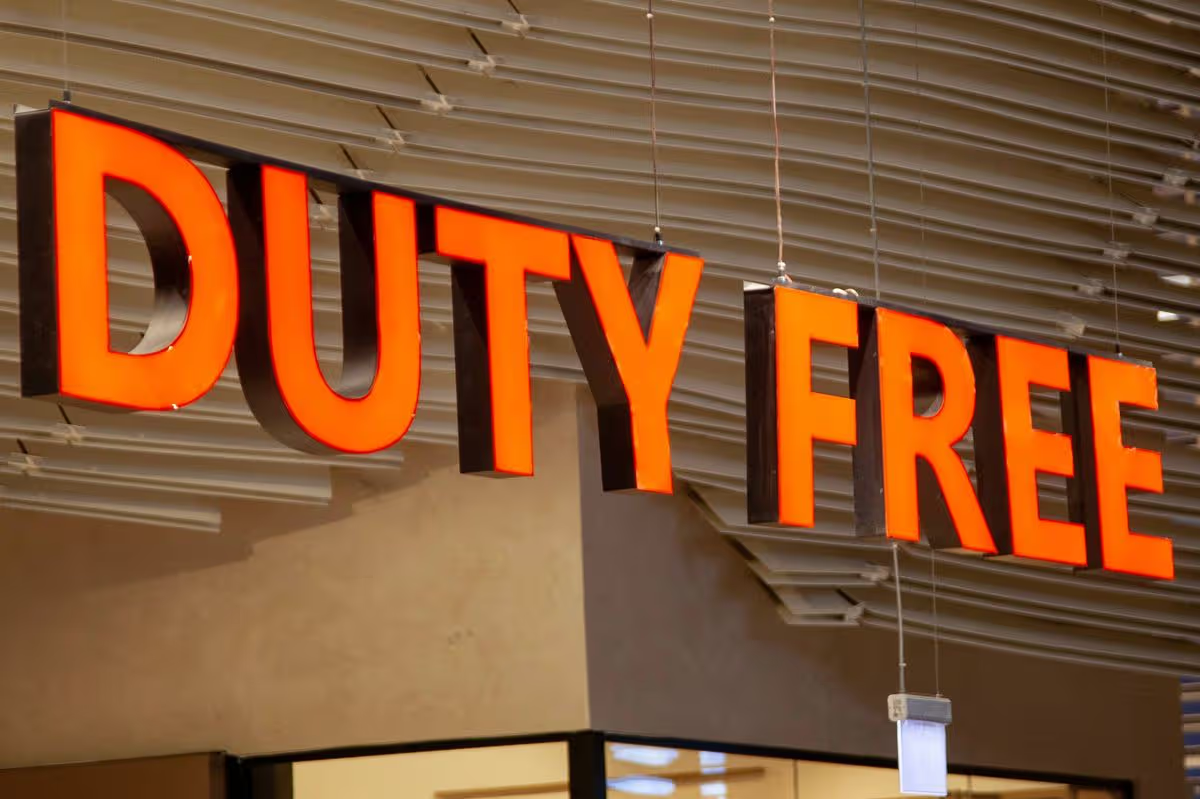
dutyfree

UK duty-free limit ‘rule’ passengers may not be aware of

When travelling, it’s important to know what won’t get you in trouble at customs

Travellers could face fines or worse if they overlook an airport ‘rule’ that puts a limit on certain items. It could catch Brits off guard if they end their latest getaway with a last-minute spending spree on various common products or high-end items.

When going to or from the European Union (EU), it is important to understand the regulations regarding the duty-free allowance passengers are permitted. Failing to comply with these restrictions could result in goods being seized, along with potential fines or legal proceedings.

The duty-free allowance applies to both EU and non-EU nationals, including holidaymakers and business travellers. Following Brexit, the UK has been adhering to the regulations for non-EU nationals.

Why is there a duty-free allowance?

Duty-free allowance is the authorised quantity of goods, such as alcohol, tobacco, and gifts, that travellers can bring into a country without incurring customs duty, value-added tax (VAT), or other levies. As a result, people face a strict limit on how much they can observe, or risk being perceived as exploiting the system, reports the Express.

What are the duty-free limits?

Duty-free allowances are split into two categories – restricted and unrestricted goods. Unrestricted goods are those without any special regulations or caps, such as clothing, electronics, or personal belongings, while restricted items are subject to specific limitations, including alcohol, tobacco, and perfume.

The restrictions in place also vary depending on how you’re returning to the UK. Shoppers are often caught out by the deals on offer in airports – but identical rules apply to those travelling by sea.

You’re also unable to pool your allowance with fellow passengers, which means people need to be mindful of their own spending habits. According to ETIAS Visa Europe, Brits returning to the UK via air or sea travel have the following allowances on ‘restricted’ items:

  • 200 cigarettes (or 100 cigarillos or 50 cigars or 250g of tobacco)
  • Four litres of still wine and 16 litres of beer and one litre of spirits or two litres of fortified or sparkling wine
  • Other goods up to a value of €430 per person

The thresholds are reduced for non-EU citizens travelling by rail or road. The website explains that travellers should bring no more than:

  • 40 cigarettes (or 20 cigarillos or 10 cigars or 50g of tobacco)
  • One litre of spirits or two litres of fortified or sparkling wine and four litres of still wine and 16 litres of beer
  • Other goods up to a value of €300 per person

ETIAS warned that, when goods go beyond the duty-free allowance, customs duty, value-added tax (VAT), and other taxes may be applied on the excess amount. The total of duties and taxes owed depends on various factors, such as the type of goods, their value, and the country of origin.

A spokesperson said: “To avoid overpaying taxes and duties, travellers should be aware of the duty-free allowances for the type of goods they are bringing into the EU. They should accurately declare all goods they are bringing in and their value.

“If unsure about the value of an item, travellers can check online or with customs officials. Additionally, travellers should keep all receipts and documentation to show the value of their goods.”

In other news, holidaymakers could face fines of up to £5,000 for bringing certain goods into England, even if those items were purchased at a duty-free price. The Department for Environment, Food and Rural Affairs (DEFRA) released an update at the end of March, calling on travellers to take this “simple step” to protect against diseases.

Source link

Ryanair, easyJet, TUI and Jet2 hand luggage rules on duty-free bags explained

TUI, easyJet, Ryanair and Jet2 can have different rules around what duty free bags you can bring onboard as part of your hand luggage allowance – we take a look at what passengers need to know

Before heading to the airport, it’s crucial to be aware of any hand luggage restrictions and certain duty-free rules that not everyone knows about, with airlines including TUI and Ryanair.

Many of us fly with different airlines, depending on the route, airport and price, so it’s tricky to keep up with the various hand luggage allowances or restrictions. Most airlines allow passengers to take on board a small personal bag for free, which can include a backpack or handbag, while others offer a generous addition of a free cabin bag.

There can also be confusion when it comes to carrying on duty-free, alongside your personal bag or cabin bag. Holidaymakers have often been left questioning whether they can carry it on separately or if they have to pack it into one of their bags.

READ MORE: Travel expert names 4 cheap holiday destinations you should book for MayREAD MORE: Stunning village close to UK with 24C April temperatures is paying people to move there

To ensure you’re fully prepared for your next getaway, we’ve outlined the key hand luggage rules for four major UK airlines. So you know exactly how big your bag needs to be and what to do with your duty-free goodies before boarding your flight.

Ryanair

When it comes to duty-free, Ryanair allows passengers to carry on their duty-free items alongside their cabin bags. Additionally, passengers can purchase checked bags of 10kg, 20kg, or 23kg while flying with Ryanair.

All Ryanair fares include a small personal bag (40 x 30 x 20 cm), but it must fit under the seat in front of you. There is technically no weight limit to this bag, which is typically a handbag, laptop bag, or small rucksack, but passengers must be able to carry it onboard, unless there is an exception.

When booking Priority boarding, travellers can take an additional 10kg cabin bag (55 x 40 x 20cm) on the plane, which is stored in the overhead lockers. While infants (aged from 8 days to 23 months) have no cabin allowance, parents or guardians can bring a 5kg baby bag ( 45 x 35 x 20 cm) and two baby items on board for free. For more information, visit the Ryanair website.

easyJet

In terms of duty-free, the airline states: “You’re allowed to bring some extra things into the cabin. e.g. umbrella, overcoat, crutches, walking stick, one standard bag of goods bought at the airport.”

Everyone flying with easyJet is entitled to bring one small bag (45 x 36 x 20 cm) on board for free, which must fit under the seat in front. It can weigh up to 15kg, but it’s important to note that its size, including handles and wheels, cannot exceed the specified measurements.

The airline notes that travellers “need to be able to lift and carry the bag” themselves. easyJet passengers can pay for an additional cabin bag (56 x 45 x 25 cm) that fits in the overhead lockers, which also comes with their Speedy Boarding service.

For an easyJet Plus member or customer who has booked an Inclusive Plus fare, they can also take a large cabin bag on board, in addition to the standard cabin bag. Of course, there’s the option to book checked-in luggage too.

For more information, visit the easyJet website.

TUI

TUI customers can take one piece of hand luggage (55 x 40 x 20cm) on board for free, excluding infants. It can weigh up to 10kg, and they can also take one small personal bag (40 x 30 x 20cm) on board, which must fit under the seat in front.

A duty-free bag is also allowed on board, and TUI outlines its requirements for liquids purchased at the airport. They said: “Any liquids you buy from duty-free must be carried in a sealed security bag – you’ll be given this bag when you buy the item at the airport. You’ll need to keep the item and the receipt sealed in the security bag throughout the journey.”

A checked-in bag of 20kg or 25kg is also available to book for an extra fee. For more information, visit the TUI website.

Jet2

Holidaymakers are entitled to take a small bag (40 x 30 x 20cm), such as a handbag or laptop bag – or a duty free bag – that must fit under the seat in front.

You can also take one piece of hand luggage (56cm x 45cm x 25cm) on board for free, provided it fits within the measurements, including wheels and handles, and doesn’t weigh more than 10kg.

Parents with infants under 2 years old are also provided with an additional 10kg allowance. They can also take two items per child or infant on board free of charge, including a collapsible pushchair, car seat or booster, a baby carrier, and a travel cot.

For more information, visit the Jet2 website.

Airline hand luggage rules

When it comes to hand luggage, there are certain packing restrictions to be aware of, and these are typically universal across all airlines. These include the following:

Liquids: Many airports require liquids to be under 100ml, while some UK airports have ditched this rule. As rules have changed, it’s best to check directly with the airport for both your outbound and inbound flights, as countries outside the UK may have different restrictions.

Lighters: As outlined on the government website, travellers can only carry one lighter on board a plane. It cannot be packed in hold luggage; instead, it should be placed in a resealable plastic bag in carry-on luggage and kept in your possession throughout the flight.

Food and powders: While you can carry certain food items and powders in your hand luggage, they can obstruct images on X-ray machines. This means that bags may need to be manually checked at security, which can cause delays. The government advises packing suitable items into your hold luggage to minimise delays.

Frozen items: Typically, you cannot carry frozen items in your hand luggage onto your flight, such as food, liquids or ice packs. However, there are some exceptions, such as for medicines, medical equipment, dietary requirements, baby food and baby milk. It’s best to check directly with the airline you’re flying with to ensure you meet their requirements.

Sharp objects: While you can carry scissors on a plane, the blade must be shorter than 6cm to be placed in carry-on luggage. Small sewing or embroidery scissors are generally allowed, while other larger, sharp items can be packed into hold luggage. It’s best to check directly with your airline for specific requirements.

Some airlines may have specific requirements for some of the above items, so before heading to the airport, it’s best to check directly with your airline to avoid being caught out. After all, there’s nothing worse than having something confiscated at airport security.

Do you have a travel story to share? Email webtravel@reachplc.com

Source link