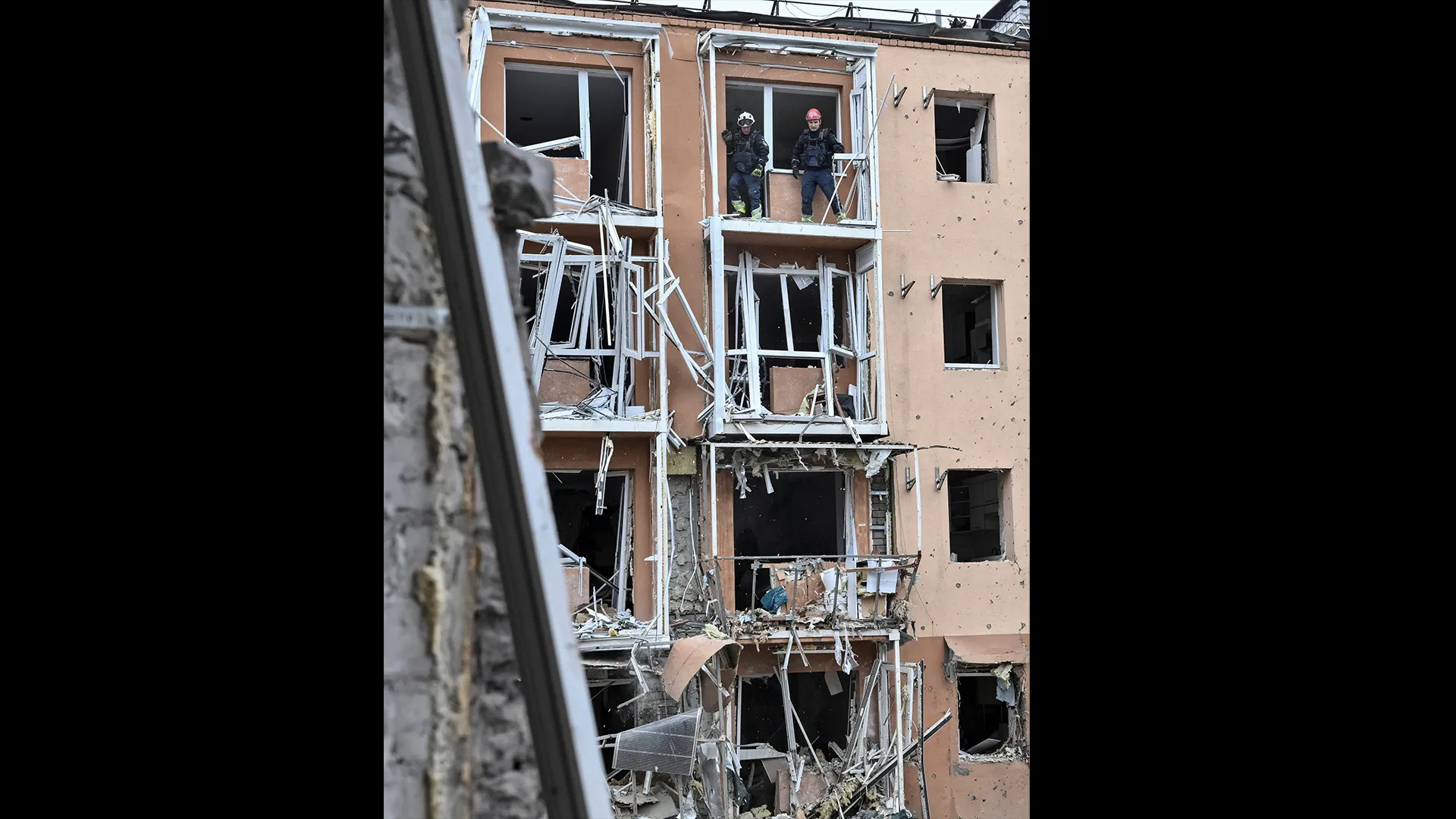
At least eight people have been killed and nearly 60 injured in the latest wave of Russian strikes across Ukraine. Ukraine’s Air Force said Russia launched 332 drones and missiles overnight, of which 293 were intercepted or neutralised.
Ukrainian President Volodymyr Zelenskyy warned Russia’s ambitions extend beyond eastern Ukraine, saying its drone attacks threaten NATO. Speaking after an EU summit in Belgium, he also took a jibe at US President Donald Trump for saying he is harder to deal with than Putin.
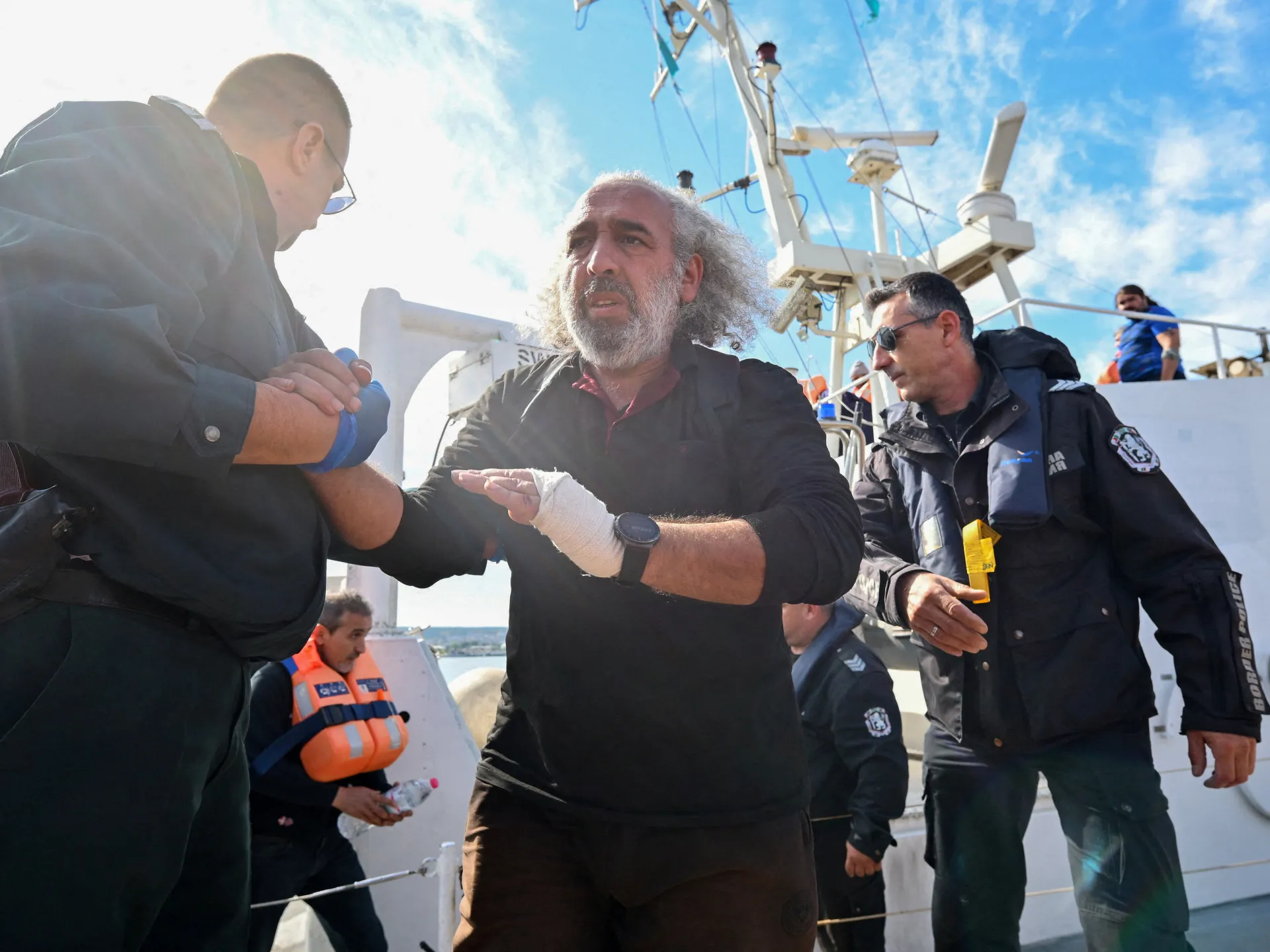
Emergency teams are searching for 7 missing crew after two chemical tankers were attacked in the Black Sea. Fires broke out on the ships after they were hit by suspected Russian drones.
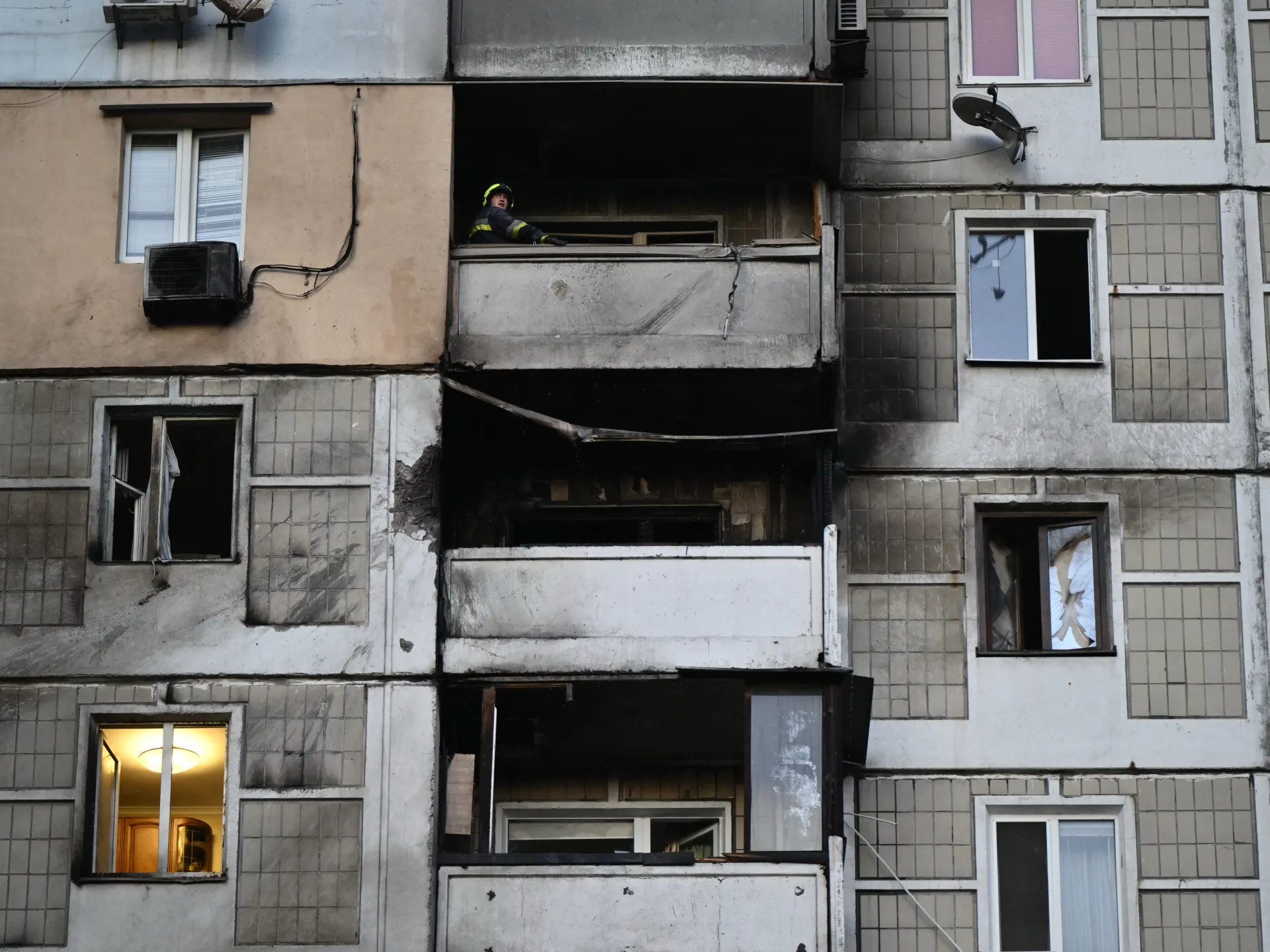
The woman’s young daughter was rescued from a large fire inside the apartment caused by the attack.
Published On 14 Oct 202614 Oct 2026
An Israeli air strike on an apartment block in Gaza has killed a woman and wounded two other people, hospital officials said.
Reem Asaad Awad, 33, was killed in the attack early on Wednesday in the Al-Rimal neighbourhood of Gaza City, the Turkish state news agency Anadolu reported, quoting a source at Al Shifa hospital.
Recommended Stories
list of 3 itemsend of list
The source said the strike caused extensive destruction to the targeted apartment and nearby buildings.
The daughter of the woman who was killed was rescued from a large fire that broke out after the attack.
Israel says it is investigating the strike and claims it targeted a member of Hamas, without providing evidence.
Reporting from Gaza City, Al Jazeera’s Ibrahim al-Khalili said the strike happened at 4am (01:00 GMT).
Israel has killed 1,501 Palestinians in Gaza since it agreed a “ceasefire” with the Palestinian group Hamas last October. The truce was part of a wider United States-backed proposal to end Israel’s genocidal war against Palestinians in Gaza.
Talks aimed at advancing to the second phase of the US plan, which includes the withdrawal of Israeli forces and the disarmament of Hamas, have stalled.
The agreement states that 600 trucks of humanitarian aid are to be allowed into Gaza each day, but Israeli authorities have continued to impose severe restrictions on supplies entering the enclave, and reconstruction of the war-shattered territory has not begun.
Third strike on Yandex facilities in a week comes as Russia and Ukraine escalate attacks on tech infrastructure.
Published On 11 Oct 202611 Oct 2026
A Russian data centre run by technology and AI company Yandex has been shut down after it was hit in a drone attack.
No injuries were reported in the attack on the facility in the city of Vladimir, east of the capital, Moscow, the company said on Sunday.
Recommended Stories
list of 4 itemsend of list
Emergency services were at the site and several of Yandex’s services were unavailable to users, the company said, as it evaluated ways to restore its systems.
“Operations at the data centre have been completely suspended,” Yandex said in a service alert on Telegram, advising users to activate disaster-recovery plans as the platform operated in emergency mode.
“The remaining resource configuration is considered unstable,” it added, warning that technical support communications could also be disrupted as teams assessed the damage.
It is the third attack on the company’s data centres in the last week, as Russia and Ukraine continue to escalate attacks on each other’s technology infrastructure.
On Friday, Yandex, which is heavily involved in Russia’s AI development and is sometimes referred to as “Russia’s Google”, said its data centre in the Kaluga region southwest of Moscow was struck by Ukrainian drones and partly put out of action.
A day earlier, a Ukrainian attack shut down Yandex’s data hub in Sasovo, southeast of Moscow, where two of the three supercomputers used to develop the company’s AI model are housed.
“We always respond in mirror-like fashion,” Ukrainian President Volodymyr Zelenskyy said on Thursday, following the Sasovo strike. “You all know, they have been hitting and continue to hit our data centres. We are responding. I can’t share all the details.”
Russia has struck several Ukrainian data centres and telecommunications infrastructure facilities over the past month, including targets in central Kyiv, in an apparent effort to disrupt the country’s connectivity and digital commerce.
Five Syrians and one Lebanese wounded in latest Israeli attack, officials say.
Published On 10 Oct 202610 Oct 2026
An Israeli drone attack has wounded six people in Lebanon’s Hermel district, close to the Syrian border, according to the Lebanese health ministry.
The ministry said on Friday that the six wounded included five Syrian nationals, two of them women, and one Lebanese.
Recommended Stories
list of 3 itemsend of list
Lebanon’s state-run National News Agency (NNA) reported that the drone attack targeted a car.
It added the area has largely been spared such attacks since an Israel-Hezbollah ceasefire was agreed in June.
Israel’s military claimed it struck “a Syrian terrorist” who “operated under the direction of the Iranian regime”, alleging that the man “planned and advanced attacks” against Israeli forces in Syria’s southern territory.
Since the ouster of longtime Syrian ruler Bashar al-Assad in December 2024, Israel has carried out hundreds of strikes against Syria. It has sent troops into a UN-patrolled buffer zone that had separated Israeli and Syrian forces in the Golan since 1974, and has carried out repeated incursions deeper into Syrian territory, sometimes seizing residents.
Israel has also continued to attack Lebanon since a ceasefire with Hezbollah was agreed in June.
It has vowed to keep troops in so-called security zones along its border in both Syria and Lebanon.
Syria’s President Ahmed al-Sharaa told the UN General Assembly last month: “We reject Israeli attempts to impose a fait accompli. We reject their aggressions, which undermine peace and security.”
He said Israel had carried out “500 air strikes, more than 1,200 incursions and 300 detentions” in Syria.
He also called for Israeli withdrawal from Syrian territory and for the international community to commit to a 1974 agreement that created a UN-supervised separation zone between Israeli and Syrian forces.
Israeli air strike kills Palestinian Civil Defence rescue volunteer as he was travelling to help wounded people near Kamal Adwan Hospital in Beit Lahiya, northern Gaza, a medical source says.
Published On 7 Oct 20267 Oct 2026
Israeli attacks have killed at least four Palestinians, including a rescue worker, and wounded several others across Gaza.
The Palestinian Civil Defence rescue volunteer was killed in an air strike as he was travelling to help wounded people near Kamal Adwan Hospital in Beit Lahiya, northern Gaza, a medical source said on Wednesday.
Recommended Stories
list of 3 itemsend of list
The Civil Defence identified the victim as Mohamed Tamous.
Meanwhile, an Israeli drone strike in the southern city of Khan Younis killed Hisham Ibrahim Abu Mustafa, 60, and injured several others, Nasser Hospital said.
The body of a 17-year-old Palestinian was also brought to Nasser Hospital after he was killed in an Israeli drone strike in the Qizan Abu Rashwan area south of Khan Younis, Turkiye’s state news agency Anadolu reported, citing a medical source.
A teenage boy died from wounds sustained last month when Israeli forces opened fire east of Khan Younis, Anadolu reported, citing a medical source.
Also on Wednesday, a girl was injured by Israeli gunfire directed at displaced Palestinians’ tents in the Al-Amal neighbourhood, Anadolu reported.
Additionally, in Khan Younis, the Israeli military carried out two demolitions in the northeastern and eastern parts of the city.
The military also carried out demolitions east of Gaza City’s Tuffah neighbourhood.
Israel has killed more than 74,245 Palestinians since it launched its genocidal war on Gaza in response to the Hamas-led October 7, 2023, attack on Israel.
Rescuers halt operation off the coast with no survivors found, following a Black Sea attack that also damaged a second vessel.
Published On 7 Oct 20267 Oct 2026
Bulgarian authorities have ended search operations after confirming no survivors were found following a drone strike that sank a ship off the country’s coast.
“There is no trace of the sailors,” Rumen Nikolov, the head of the country’s Maritime Search and Rescue Coordination Centre, told reporters on Wednesday.
The search stopped late on Tuesday and would not continue, he added.
Eighteen Turkish and Indian crew members were rescued from the ship that caught fire, but the crew members from the vessel that sank remain missing.
Authorities have not said how many people are missing, but according to the Maritime.bg specialised website, 10 people were on board the ship.
Nikolov said the incident occurred in a so-called “responsible search and rescue zone” and not in the country’s territorial waters, which extend to 12 nautical miles off the coast.
“What was found from the sunken ship was one overturned boat, three life rafts and debris from the ship’s equipment that was floating on the surface of the sea,” he said.
Asked whether any debris from the drones had been recovered, Nikolov said: “I have no information about drone debris.”
Prime Minister Rumen Radev has described the attack as “absolutely unacceptable”.
European Union chief Ursula von der Leyen has also condemned the incident.
Bulgarian authorities have said they are not yet able to determine the origin of the drones.
A distress beacon signal from the ship that sank was received at 2:54am on Tuesday (23:54 GMT on Monday), while the distress signal from the other ship was received at 3:23am (00:23 GMT), Nikolov said.
Both commercial ships were managed by Turkiye-based companies, according to the Equasis merchant shipping database.
They were hit about 80 nautical miles (150km) east of the Bulgarian coastal town of Byala.
The strikes came a day after another ship caught fire and sank off the Romanian coast on Monday, killing two people. Ukraine blamed Russia for the drone attack.
No warning given before Israeli deadly strike hit Rimal area, one of Gaza City’s most densely populated neighborhoods.
Published On 3 Oct 20263 Oct 2026
An Israeli air attack on a residential apartment in western Gaza City has killed at least five people and severely wounded at least six others, according to medical staff at al-Shifa Hospital.
The strike hit the al-Asala building in the Remal neighbourhood early on Saturday without prior warning, according to Al Jazeera’s Hani al-Shaer, reporting from Khan Younis.
Recommended Stories
list of 3 itemsend of list
Remal is one of Gaza City’s most crowded residential areas, home to thousands of displaced people sheltering in makeshift camps across the neighbourhood.
Al-Shaer said the attack came in the middle of the night, when residents were asleep.
“We heard fighter jets getting louder, then three strikes followed, hitting the apartment and killing those inside,” he said.
The strike penetrated the targeted apartment and tore through the floors below, causing further destruction throughout the multi-storey building.
Fires burned for at least an hour before Palestinian Civil Defence crews managed to put them out.
Al-Shaer described the scene as “horrific”, with people buried under the rubble as they slept.
Civil defence crews were still searching the site for missing people and bodies, he said, as Israeli drones continued flying over the area and fighter jets were heard flying low across the Strip.
Al-Shifa Hospital said the dead included four women, among them an elderly Christian woman and her daughter.
The six wounded were taken to al-Shifa Hospital for treatment.
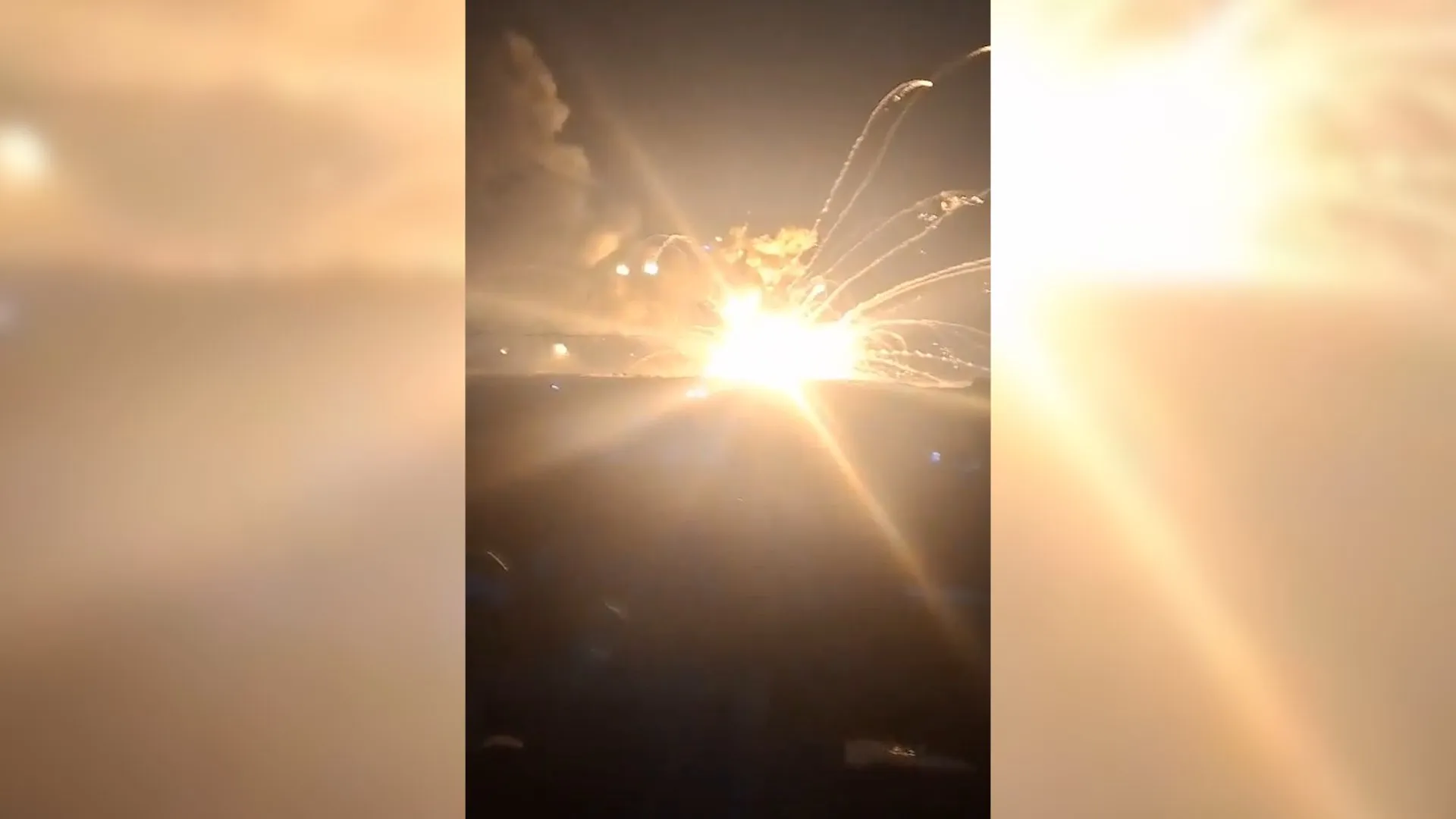
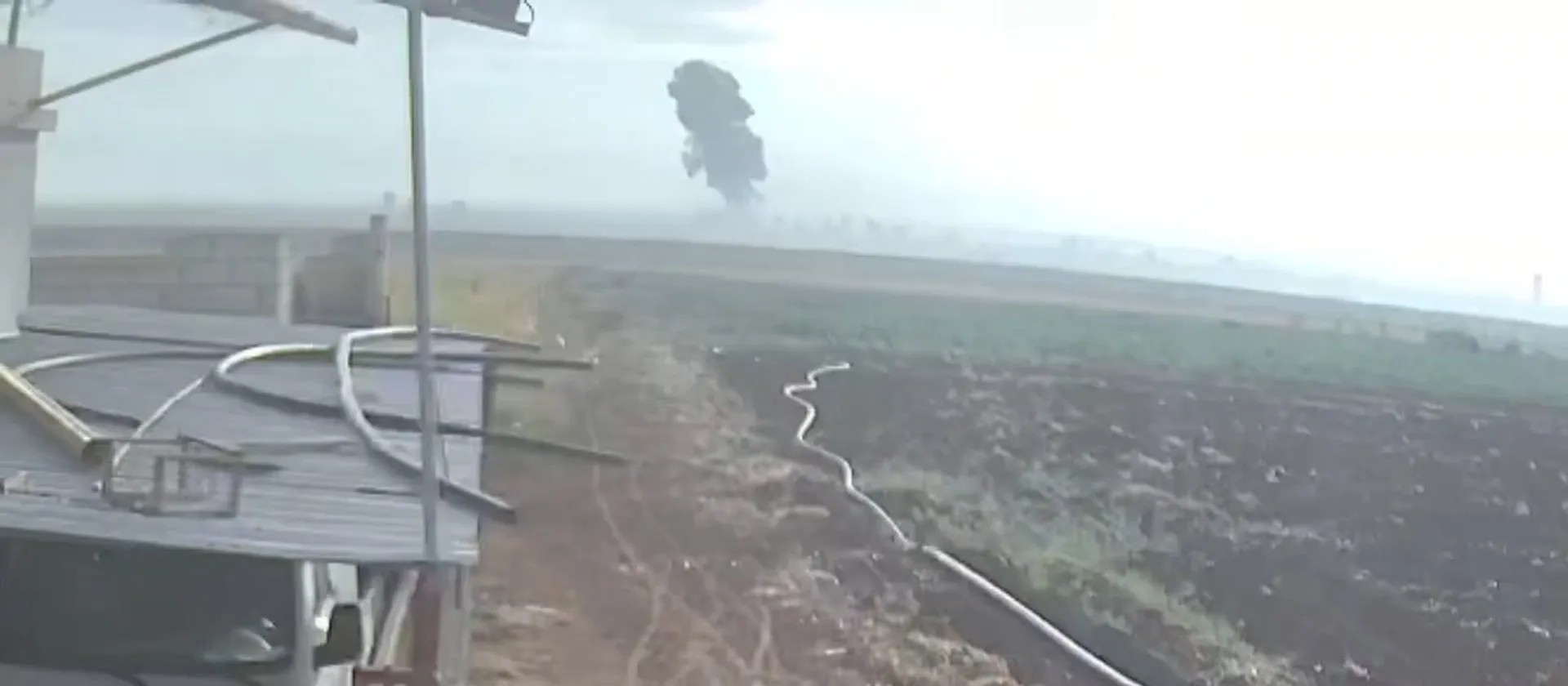
Two large explosions have occurred near Taftanaz military airport in Syria’s Idlib province, sending a plume of smoke into the sky. Witnesses say reconnaissance aircraft circled overhead afterwards. The military has not commented, and the cause of the explosion remains unknown.
Gaza’s health toll mounts, with 1,439 dead and 5,052 injured since the ceasefire began in October 2025.
Published On 1 Oct 20261 Oct 2026
An Israeli drone strike has killed a Palestinian man and wounded several others in southern Gaza while settlers shot dead another Palestinian man near Ramallah in the occupied West Bank.
The body of Tamer al-Hamayda, 42, and three wounded people were brought to Nasser Medical Complex on Thursday after the strike hit a tent sheltering displaced Palestinians in the al-Mawasi area, west of Khan Younis on the southern coast of the Gaza Strip.
Recommended Stories
list of 3 itemsend of list
Another Palestinian succumbed to wounds sustained in an earlier Israeli drone strike on Tuesday that targeted a gathering of Palestinians in Jabalia refugee camp in northern Gaza, according to medical personnel in Nasser Medical Complex.
Israeli forces also carried out a large-scale demolition operation targeting buildings east of Gaza City’s al-Tuffah neighbourhood.
The Gaza Health Ministry reported eight new deaths and 26 wounded over the past 24 hours, putting the toll since the “ceasefire” took effect in October 2025 at 1,439 killed and 5,052 wounded, with 834 bodies recovered from the rubble.
Israel’s war on Gaza has killed at least 74,040 Palestinians and wounded 175,168 since October 2023, the ministry said.
Occupied West Bank pogroms
In the occupied West Bank, Israeli settlers shot dead a Palestinian man and wounded another during a raid on the village of Yasuf, north of Ramallah, on Thursday.
51-year-old Mashhour Yassin was shot dead by settler gunfire, the Palestinian Health Ministry said.
Describing the attack, the Palestinian Ministry of Foreign Affairs said Israeli forces had detained an ambulance, seizing its key and throwing it aside, “in a crime that reflects clear coordination between the settlers and occupation forces.”
It said the killing “falls within the framework of a serious and continuous escalation in organised settler crimes,” saying Israel gives free rein to settler “terrorism against our people in the service of settlement, annexation, forced displacement and ethnic cleansing plans.”
Yasuf Mayor Jumaa Abdel Fattah told the AFP news agency that dozens of Israeli settlers armed with sticks and firearms had attacked the village, which lies between four Israeli settlements.
“Yassin was at his doorstep when the settlers attacked the village homes. He went out to defend his house,” Abdel Fattah said, adding that Yassin’s nephew was also wounded in the attack.
Abdel Fattah said the settlers had come from Havat Anton, an illegal Israeli settlement established in July that has previously attacked the village’s residents.
Palestinians in the occupied West Bank have reported a surge in settler pogrom attacks in recent months.
More than 500,000 Israelis live in West Bank settlements considered illegal under international law.
According to the UN, at least 1,112 Palestinians in the occupied West Bank have been killed by Israeli forces or settlers in the territory since October 2023, including at least 37 killed by settlers.
Putin warned the West he would deploy nuclear weapons if necessary to defend the Russian Baltic exclave of Kaliningrad.
Published On 1 Oct 20261 Oct 2026
Russian President Vladimir Putin has ruled out a ceasefire on long-range strikes with Ukraine as Moscow steps up its campaign of aerial attacks on Kyiv.
“We are told: ‘Let them stop striking your refineries, and you will stop striking their ships.’ It is simply ridiculous,” Putin said on Thursday at the Valdai political forum in Moscow.
Recommended Stories
list of 3 itemsend of list
The remarks followed a meeting between United States President Donald Trump and Ukrainian President Volodymyr Zelenskyy in New York on September 22, when Zelenskyy said Kyiv was ready to cease strikes on Russian oil refineries and other energy facilities if Moscow also stopped its attacks on Ukrainian energy infrastructure.
Speaking at the forum of the Moscow-based think tank, Putin said Ukraine had “partially achieved its objectives” with these strikes, with attacks on Russian oil refineries having cost the country 1 percent of its gross domestic product (GDP), but added that Russia was now responding in kind.
Russia has ramped up long-range strikes, targeting Ukraine’s steel companies as well as supply chains, notably in the rail sector. Ukraine accuses Moscow of deliberately hitting civilian targets and keeping Kyiv on a near-constant state of alert as it braces for another tough winter.
A Russian drone struck a school in Kyiv on Thursday, according to city officials, as the Ukrainian capital endured relentless aerial attacks. No casualties were reported as children and staff at the school were in shelters when the drone hit.
Putin added that Russia would prefer to end the conflict in Ukraine through talks and wanted it to be a neutral country after the end of hostilities.
The nuclear option
He warned the West not to escalate the standoff over Ukraine by threatening the Russian exclave of Kaliningrad, which is wedged between Poland and Lithuania, and pledged to defend it with nuclear weapons if necessary.
“If it comes to a direct attack on the Russian Federation – in this case, we are referring to Kaliningrad, and perhaps other territories as well – the question of the Russian Federation deploying all the weapons at our country’s disposal will, of course, inevitably and immediately be on the agenda,” he said.
Putin’s comments followed a diplomatic note which NATO said this week it had received from Russia, warning the Western military alliance it would be ready to resort to nuclear weapons if NATO attempted to cut off Russia’s Baltic exclave.
Putin warned that cycles of escalation in international conflict could quickly lead to dangerous scenarios. “We must realise that the moment when nothing can be changed any longer may come very quickly and unexpectedly for everyone. The logic of escalating, increasingly harsh retaliatory measures leads to a fatal point of no return,” he said.
On the contrary, in the event of a “favourable scenario”, Putin said the assets of Western companies that Moscow had seized could potentially be returned. Putin last month ordered the seizure of businesses and assets of Swiss food giant Nestle, French retailer Auchan, the former Leroy Merlin DIY chain and German wholesaler and food retailer Metro.
Crowds cheered and waved national flags as two Shahed drones were paraded through Tehran. Iranian-made, low-cost Shahed drones have become a major feature of modern warfare, used in attacks across the Gulf and extensively by Russia in its war in Ukraine.
Ukrainian President Zelenskyy says Moscow launched nearly 4,000 drones, aerial bombs and missiles against his country in past week.
Published On 28 Sep 202628 Sep 2026
A Russian military strike on northeastern Kharkiv, Ukraine’s second-largest city, has injured at least 22 people, including children, less than a day after eight people were killed in attacks nationwide.
Kharkiv Mayor Ihor Terekov said on his Telegram account that a guided Russian aerial bomb hit an apartment block early on Monday, destroying two floors of the multistorey building.
Recommended Stories
list of 3 itemsend of list
He said six children were among the injured.
Russian attacks were also reported across Ukraine on Sunday.
Ukrainian Minister of Internal Affairs Ivan Vyhivskyi said three people, including a 16-year-old girl, were killed in air strikes that damaged a children’s centre in the northern city of Sumy.
Authorities in the Odesa region, meanwhile, said a “massive strike” on the south of the Black Sea region killed one person and damaged residential buildings, a shop, a hotel, a medical building, and a grain warehouse.
And in the capital, Kyiv, Mayor Vitali Klitschko said a woman and two 16-year-olds were injured and hospitalised.
“The enemy continues to relentlessly attack the Kyiv region with strike drones,” the city’s administration said.
“Sixteen sites have been damaged”, including 12 houses, a warehouse and a production facility, it added.
Ukrainian President Volodymyr Zelenskyy said on Sunday that three people were killed in strikes in the southern Zaporizhia region and that a Russian drone strike had killed one man in Kyiv.
Zelenskyy said in a post on his X account that Russia had launched more than 2,200 attack drones, 1,630 aerial bombs and 38 missiles of various types against Ukraine in the past week.
“If Russia were truly preparing for any real steps towards de-escalation, as it claims, particularly to American negotiators, this wave of Shahed terror would not be happening,” Zelenskyy said in later comments, referring to the Iran-developed drones Moscow has used against Ukraine.
In Moscow, Russia’s Ministry of Defence said it had bombed a Kyivstar data centre in Kyiv and another belonging to the Omega Telecom company. It said that the firms were providing services to the Ukrainian army.
Russian Minister of Foreign Affairs Sergey Lavrov told the United Nations General Assembly in New York on Saturday that Moscow intended to continue its military campaign “to the end”.
Ukrainian drones struck an oil depot in Russia’s Krasnodar region on Monday, according to local reports.
Ukrainian Telegram channel Exilenova+ published footage of a large fire and identified the facility as the Pavlovskaya oil depot.
No injuries have been reported so far.
Ukraine has intensified its targeting of Russian oil infrastructure in recent weeks.
United States-led talks to end the war, which began with Russia’s full-scale invasion of Ukraine in February 2022, have failed to produce a breakthrough, and the UN has highlighted the growing civilian toll.
Relations strain further as Afghanistan and Pakistan trade accusations over terrorism and cross-border violence.
Published On 27 Sep 202627 Sep 2026
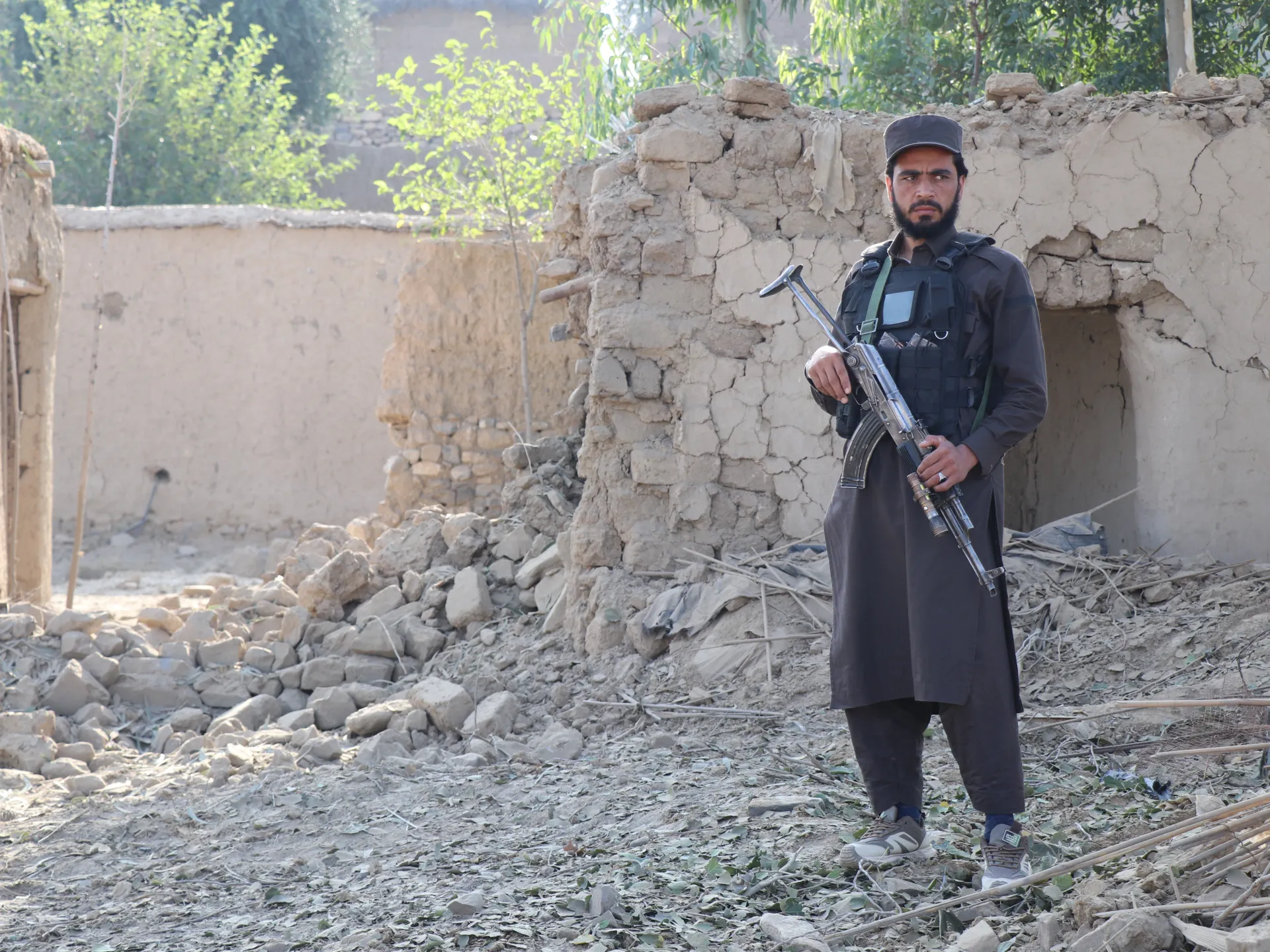
Afghanistan’s Ministry of Defence said its forces killed 28 fighters in the eastern province of Nuristan who had crossed the border from Pakistan.
In a statement posted to X, the Taliban’s defence ministry confirmed it had engaged in clashes with the opposing group on Sunday.
Recommended Stories
list of 3 itemsend of list
The defence ministry alleged that most of the fighters were former Afghan government security personnel recruited by Pakistan’s intelligence services with promises of asylum and well-paid employment in foreign countries.
The defence ministry claimed the fighters included ISIL (ISIS) fighters who were supported by Pakistani militias.
Pakistan’s Ministry of Information and Broadcasting rejected the allegations, describing them in a post on X as “frivolous, baseless and devoid of any truth”.
Pakistan denied that its security forces or intelligence agencies were involved in clashes in Nuristan, had recruited or trained former Afghan security personnel, or had facilitated ISIL (ISIS) or other armed groups in Afghanistan.
Pakistan’s information ministry also said the Taliban “should take credible and verifiable action against terrorist organisations operating from its territory” and fulfil its obligation so that “Afghan soil will not be used for terrorism against Pakistan or any other country rather than attempting to deflect responsibility through fabricated accusations”.
Escalating tensions
The clashes follow increasing tension between the two countries.
Last week, Pakistan launched air strikes on 10 locations in Afghanistan it said were used to store and launch drones, some of which were used in cross-border attacks.
The Pakistani air strikes on Thursday killed at least four people, a spokesman for the Afghan Taliban government said while promising to deliver an “appropriate response”.
Pakistan has repeatedly accused Afghanistan of sheltering fighters who attack its territory, a charge Kabul denies.
Sunday’s incident also follows Pakistani air strikes in Afghanistan on September 21 that Islamabad said killed 28 fighters. Afghan officials said civilians were killed and the U.N. mission in Afghanistan confirmed three civilian deaths.
Army chief accuses Eritrea of funding and supporting armed groups to weaken Ethiopia.
Ethiopia’s federal military has said it is handling rising tensions in the country’s north with restraint, as fears grow that Ethiopia could be heading towards another civil war.
In his first comments on the recent military developments, Army Chief of Staff Field Marshal Berhanu Jula said the army was responding to what he called provocations from the Tigray front with “wisdom and restraint”.
Recommended Stories
list of 3 itemsend of list
He accused Eritrea of funding and supporting armed groups to weaken Ethiopia, describing the “Tsimdo” alliance as an extension of a longstanding pattern of hostile alliances, which he said cannot confront the state without outside backing.
Eritrea, wary that landlocked Ethiopia may be seeking to invade it to gain access to the Red Sea, denied the accusations.
The fighting has spread from Tigray into neighbouring Afar and Amhara regions after seven armed groups announced an alliance, the Ethiopian Peoples’ Forces Alliance for Survival, committed to removing Prime Minister Abiy Ahmed’s government.
In Afar, the latest battles have taken place around Abala, where the military has been trying to prevent rebels from seizing control.
Separately, in North Wollo, a zone of Amhara bordering Tigray, the army said on Thursday it had killed 272 Tigrayan fighters and wounded 260 in a counter-offensive, reporting heavy losses for the Tigray People’s Liberation Front (TPLF).
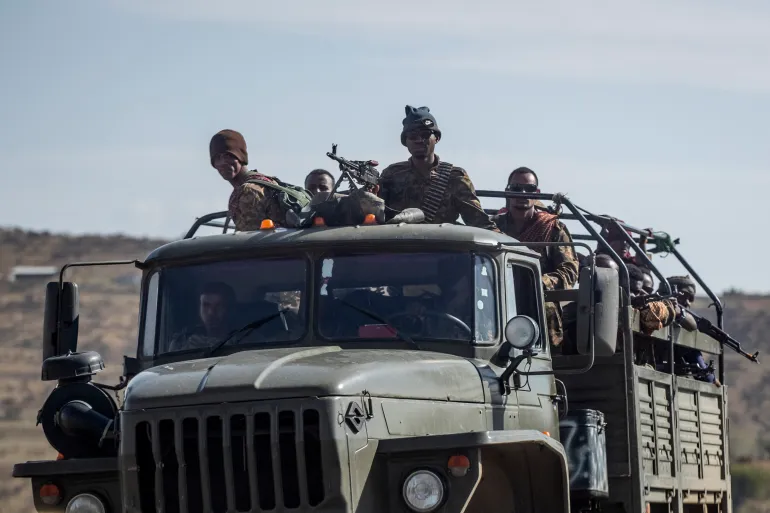
Members of the armed forces ride a military vehicle as fighting across Ethiopia intensifies amid fears of full-scale civil war [AP]
The TPLF’s Tigray Army said the federal government had launched a “full-scale offensive” involving infantry, mechanised units and drones.
Abdisalam Balema, a TPLF central committee member, told Al Jazeera the situation had become a “full war”.
Fighting has also continued around Sama, Soqota and Raya Alamata, with government forces reportedly closing in on the town of Alamata.
The army command said it prefers a strategy of “strategic calm” over a large-scale military confrontation, arguing the Tigray front’s popular support is dwindling and its leadership divided.
Internet access was reportedly cut across northern Ethiopia on Friday, a day after the UN said it was alarmed by reports of drones being used against civilians there.
The renewed fighting has put the 2022 Pretoria Agreement, which ended a brutal two-year civil war in Tigray, under severe strain. It comes weeks after Washington lifted sanctions on Ethiopia and Eritrea tied to atrocities from the last war, saying the “national emergency … has expired”.
It marks the most serious challenge yet to that agreement, raising fears of a wider regional conflict that could draw in armed groups from across Ethiopia.
Addressing the UN General Assembly, Ethiopia’s president sought to portray the country as a force for regional stability, accusing unnamed external actors of meddling in Ethiopia’s affairs while highlighting Addis Ababa’s role in supporting peace efforts in neighbouring Sudan.
Alemayehu Weldemariam, a professor of law at Indiana University, told Al Jazeera that the federal government bears much of the blame for the collapse of the Pretoria Agreement.
“This war has been in the making for a while now. Much of the provisions in the cessation of hostilities [in the 2022 agreement] were primarily sabotaged by the federal government itself,” he said, citing fuel, service and cash restrictions imposed on Tigray, and the government’s failure to set up the interim administration the deal had promised.
“What was supposed to be an interim arrangement turned out to be permanent,” with Tigray excluded from national elections since, he added.
Pakistani security forces report ongoing cross-border fire in latest escalation in fighting between the neighbours.
Published On 25 Sep 202625 Sep 2026
Pakistan has foiled an “attempted Afghan aggression” on the Pakistan-Afghan border.
Pakistani security sources said several Afghan members of the Taliban were killed in an intermittent exchange of fire in the Gulistan area of the border on Friday and that fighting was ongoing.
Recommended Stories
list of 3 itemsend of list
There has been no official confirmation from either country involved.
The Afghan government said on Thursday that it would deliver an “appropriate response” to Pakistani air attacks on 10 locations in Afghanistan earlier in the day.
The strikes were in response to a “deliberate and unlawful incursion into Pakistan by drones” on Wednesday, Pakistani Information Minister Attaullah Tarar said on Thursday.
Tarar said in a post on his X account that Pakistan’s aerial and drone attacks hit “terrorist hideouts and support infrastructure including drone launching and storage sites”.
He also posted a video said to show the military strikes on the Afghan sites.
Afghanistan’s government spokesperson Zabihullah Mujahid said the air strikes targeted Kandahar, Paktia and Khost provinces.
Taliban officials denied that their government launched drones against Pakistan on Wednesday.
The air raids on Thursday were carried out amid growing tensions between the former allies over attacks by armed groups in Pakistan, which triggered their worst fighting in years in February.
Islamabad accuses Kabul of harbouring fighters who stage cross-border attacks, but Afghanistan’s government denies harbouring anti-Pakistani armed groups and says the attacks are Pakistan’s internal problem.
The escalation threatens mediation efforts by China, Turkiye, Qatar and Saudi Arabia to broker a lasting peace between the two neighbours.
Strikes carried out in southeastern province of Khost cause no casualties, governor’s office says.
Published On 24 Sep 202624 Sep 2026
Pakistan says it has carried out air strikes on 10 locations in Afghanistan used to store and launch drones, some of which were used in cross-border attacks.
The air strikes on Thursday were carried out as tensions grow between the former allies over attacks by armed groups in Pakistan, which triggered their worst fighting in years in February.
Recommended Stories
list of 3 itemsend of list
Islamabad accuses Kabul of harbouring fighters who stage cross-border attacks, but Afghanistan’s Taliban government denies harbouring anti-Pakistani armed groups and says the attacks are Pakistan’s internal problem.
The air strikes were “deliberate, precise, calibrated, and proportionate, and strictly limited to identified military objectives directly linked to the attempted attacks against Pakistan”, Pakistani Information Minister Attaullah Tarar wrote on X.
He condemned a “deliberate and unlawful incursion into Pakistan by drones” on Wednesday.
“This constitutes a blatant violation of Pakistan’s sovereignty and territorial integrity and is a grave and unacceptable act of aggression,” he said.
The Pakistani air strikes were conducted in several areas of Khost province in southeastern Afghanistan, Mustaghfir Gurbaz, spokesperson for the Khost governor, said.
There were no casualties, he said.
An attack on a police facility in northwestern Pakistan last week that killed at least 21 people has reignited fighting between the countries after nearly three months of relative calm. A Pakistan Taliban faction claimed responsibility for the blast and subsequent gun battle.
On Monday, air strikes targeting three locations in northeastern Afghanistan killed three civilians in the Nurgal district of Kunar province, Afghan officials said. Islamabad said it killed 28 “terrorists”.
The escalation threatens mediation efforts by China, Turkiye, Qatar and Saudi Arabia to broker a lasting peace between the two neighbours.
Relations between the former allies have been strained since the fighting in February, the worst for years.
Overnight missile and drone attacks hit several Ukrainian regions as world leaders gather in New York for the UN General Assembly.
Published On 22 Sep 202622 Sep 2026
Russian forces have launched widespread attacks targeting industrial sites and critical energy infrastructure across several regions of Ukraine, killing at least three people and knocking out power to nearly 100,000 residents, Ukrainian officials said.
The strikes overnight hit industrial facilities simultaneously in the Dnipropetrovsk region, including Dnipro, Pavlohrad and Kryvyi Rih, the hometown of President Volodymyr Zelenskyy, regional Governor Oleksandr Hanzha said on Telegram on Tuesday.
Recommended Stories
list of 3 itemsend of list
Three people were killed and six others were wounded in Dnipro, where missiles, drones and artillery heavily damaged business and warehouse premises, Hanzha said.
Ukraine’s air force said Moscow’s overnight barrage involved 212 drones, four cruise missiles, and an unspecified number of Oniks antiship and ballistic missiles.
The strikes also damaged energy infrastructure. An attack on a power facility left nearly 100,000 consumers without electricity in the northern region of Chernihiv, while in the Poltava region, Governor Vitalii Diakivnych said a “massive” Russian attack hit an industrial enterprise and a critical infrastructure facility.
The Russian Ministry of Defence confirmed its forces carried out major strikes, stating it hit industrial and military facilities, the fuel and energy sector, port infrastructure and sea vessels operating for the Ukrainian military.
Meanwhile, Ukrainian drones targeted Russia’s Samara region along the Volga River, killing one person and injuring four, according to the local governor. The region hosts critically important facilities, including oil refineries.
The Russian Defence Ministry said its air defence units intercepted and destroyed 297 Ukrainian drones across various regions overnight.
Diplomatic push in New York
The attacks come as Zelenskyy arrived in New York for the United Nations General Assembly (UNGA), where talks on ending the war are set to be high on the agenda as nearly 130 heads of state gather.
The Ukrainian president wrote on X that a “drone deal” was ready to be signed to bolster air defence and secure funding for the war effort.
“Of course, Ukraine’s number one priority is bringing peace closer and protecting the lives of our people,” Zelenskyy posted. “There are concrete security proposals and de-escalation measures that could bring the end of the war closer. We are working to strengthen air defence and ensure sufficient financing for Ukraine.”
He said, “Around 20 meetings are planned, including with the US president, European leaders, US senators and members of the House of Representatives, heads of international organisations, leading American companies and think tanks.”
Zelenskyy met French President Emmanuel Macron on Monday and is likely to meet US President Donald Trump on Tuesday.
Earlier, Macron also met Trump, after which he said the two countries agreed to work together to secure a moratorium on strikes targeting energy networks and civilian infrastructure in Ukraine. Both Zelenskyy and Russian Foreign Minister Sergey Lavrov are set to address the UNGA later this week.
French President Emmanuel Macron, left, with his Ukrainian counterpart, Volodymyr Zelenskyy, on the sidelines of the UNGA in New York, US, September 21, 2026 [Ludovic Marin/AFP]
Al Jazeera’s Obaida Hitto reports on explosions that rocked a Syrian army ammunition depot south of Aleppo, injuring at least four people. Exploding missiles and ammunition hampered rescue efforts, while authorities closed nearby roads.
Russian President Vladimir Putin has cast the vote as a test of support for his ongoing war in Ukraine.
Published On 20 Sep 202620 Sep 2026
Polls have closed in Russia’s first wartime parliamentary elections, with the ruling United Russia party on course to win the tightly controlled vote.
The Kremlin wants the elections, the first parliamentary vote since the start of the full-scale invasion of Ukraine in 2022, to showcase popular support for the war and legitimise its action.
Recommended Stories
list of 3 itemsend of list
Russian government officials accused Ukraine of trying to disrupt voting after Kyiv launched hundreds of drones at Moscow and other regions in what the TASS state news agency said was the biggest attack of its kind since the war began.
The drone strikes on Sunday killed at least three people in the Moscow region and two more in the Russian-held part of Ukraine’s Kherson region, including an election official, according to the region’s governor and the election commission.
Initial results showed the United Russia party comfortably ahead, and Russia’s Central Election Commission said turnout at the close of polls stood at 56.66 percent.
The first official results and turnout are expected on Monday morning.
Voting in Russian-held Ukrainian areas
The vote, which began on Friday for 111 million eligible voters, included residents of four Ukrainian regions that Moscow illegally annexed after the war began, but still doesn’t fully control, as well as those in Crimea, the Black Sea peninsula that was illegally annexed by Russia in 2014.
Authorities in Kyiv denounced the voting in the Russian-held areas as illegal and urged foreign governments not to recognise the result. The European Union on Friday called the action a “blatant violation of international law”.
Voters cast two separate ballots, filling half of the lower house’s 450 seats by selecting political parties listed on the ballot. The rest are contested in single-seat constituencies, with voters choosing individual candidates.
The main Kremlin party, United Russia, is widely expected to retain its overwhelming control of the State Duma. Several smaller parties of the “systemic opposition” that vote in sync with Putin’s views on all key issues are also expected to maintain their presence.
A massive state media campaign and tight control over the elections in the absence of genuine opposition all but assure the Kremlin will keep tight control of Russian politics amid mounting economic costs and increasing Ukrainian drone attacks deep inside the country.
The liberal Yabloko party, the only registered political entity that dared to publicly criticise the war, was removed from the ballot last month by Russia’s Supreme Court. It only has a few dozen candidates in the single-constituency races.
Additionally, some anti-war politicians were imprisoned or forced to flee abroad ahead of the campaign.
Russia didn’t invite election observers from the Organization for Security and Cooperation in Europe. The Russian Foreign Ministry has accused the body of “double standards” for its criticism of Russia.
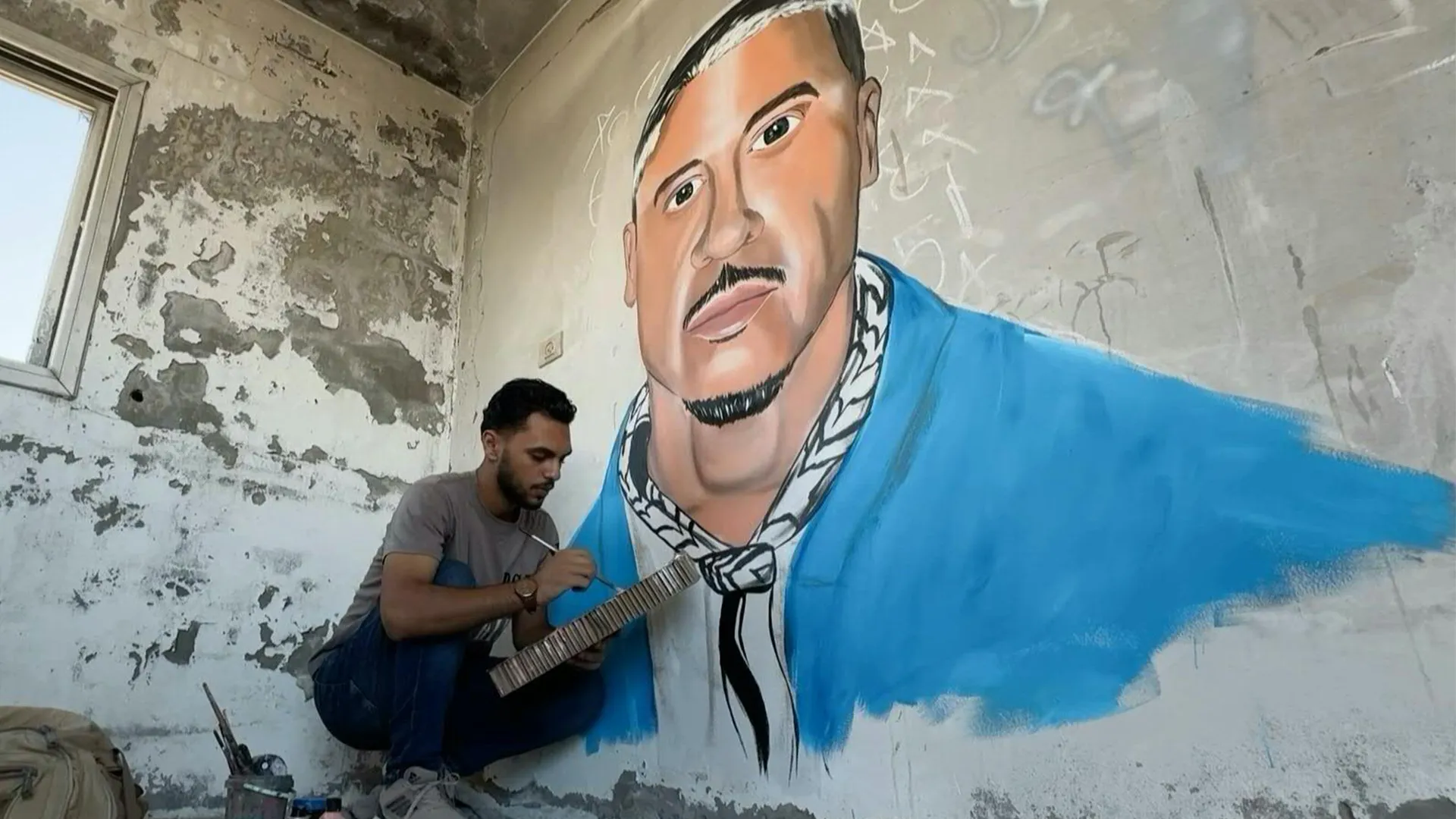
Artists in Gaza are painting murals on destroyed walls, honouring US rapper Macklemore for his support for Palestine. Despite a ceasefire agreement, Israel continues to kill Palestinians in frequent strikes across Gaza.





![France's President Emmanuel Macron meets with Ukraine's President Volodymyr Zelenskyy on the sidelines of the United Nations General Assembly in New York City on September 21, 2026 [Ludovic Marin/AFP]](https://i0.wp.com/www.aljazeera.com/wp-content/uploads/2026/09/AFP__20260922__C8XY4MU__v1__HighRes__UsFranceUkrainePoliticsDiplomacy-1790058813.jpg?w=640&ssl=1)