Chad Baker-Mazara scored scored a career-high 34 points and Jordan Marsh hit a contested three-pointer at the buzzer to lift USC to a 107-106 win over Troy on Thursday night.
Troy, coming off a 108-107 double-overtime win at San Diego State on Tuesday, led throughout the third overtime but threw the ball away into the front court after rebounding Baker-Mazara’s missed drive with about 10 seconds to go. Rodney Rice got the loose ball and fired it ahead to Marsh, who took a couple of dribbles and hit from almost straightaway.
Rice had 26 points and nine assists for USC (4-0) and Ezra Ausar 22 points, which was outrebounded 63-39, including 25-7 on the offensive end.
Cooper Campbell had a career-high 32 points, 10 in the third overtime, for Troy (4-3), including a pair of his career-high six three-pointers to start the final overtime, plus 12 rebounds and eight assists. Victor Valdes had 24 points, Theo Send scored 20 points and Thomas Dowd had 19 points and 12 rebounds.
Campbell forced overtime with a three-pointer from the right wing a couple steps behind the line with 7.8 seconds to play, tying the game 68-68. Rice’s turn-around jumper from the foul line bounced off the rim as time ran out.
It was the same in overtime, but Seng made a pair of layups with less than 20 seconds to go, tying the game at 78. A long heave wasn’t close for USC.
Troy got its first lead since late in the first half when Seng opened the second overtime with a basket. Baker-Mazara scored eight points and USC was up two when Dowd put up a contested shot in the lane to tie it at 89 with 22.1 seconds to go. Baker-Mazara failed to convert a drive as time ran out.
Both teams struggled on offense in the first half, which finished tied at 29. Neither team led by more than five and there were 15 lead changes.
Up next: USC plays Boise State on Monday in the Maui Invitational.
Shortly before Monday afternoon’s City Section Division I quarterfinal football game between host Eagle Rock and Dorsey was set to begin in the pouring rain, referee Patrick Riley ruled the middle of the grass field unsafe.
City Section Commissioner Vicky Lagos was in attendance and acted quickly to get the contest, scheduled to begin at 4 p.m., moved to an alternate site, which turned out to be Contreras Learning Complex — seven and a half miles away in downtown Los Angeles. When all was said and done, Dorsey moved on to the semifinals after a dominant 26-0 shutout.
“When the referees ruled the field unplayable we immediately called Sotomayor and Contreras because they have turf fields and are the closest in proximity to Eagle Rock,” Lagos said. “We had to arrange busing and we’re thankful to the officials — it was the same crew that was going to do the game Friday. If we couldn’t find a facility [today] then we would’ve had to play the game tomorrow.”
The game was supposed to be played Friday night along with the full slate of City Section contests, but it was postponed until Monday afternoon after a transformer problem left the school without power.
Dorsey wide receiver Stafon Johnson runs with the ball during a City Section Division I playoff win over Eagle Rock on Monday night.
(Craig Weston)
“We were told at 3:45 that we weren’t going to be able to play,” said Dorsey coach Stafon Johnson, a Dorsey alum who played at USC from 2006-09. My main concern at that point was whichever team wins would have a short turnaround for the next game.”
When the game finally kicked off at 6:45 p.m. the rain was still pouring. Eleventh-seeded Dorsey controlled the tempo from the start, marching 65 yards in five plays on its first possession, which ended on a five-yard run by Mahkai McCluster.
Nathan Schiebler fumbled on the second play of Eagle Rock’s first possession and defensive lineman Draysean Mixson recovered for Dorsey at the Eagles’ 47. Jamell Edmond capped the Dons’ ensuing drive with an 11-yard sweep and Deuce Johnson caught the two-point conversion pass to make it 14-0 late in the first quarter.
“We were ready to get down and dirty in the mud,” Dorsey quarterback Elijah McDaniel said after rushing for 120 yards and engineering all four of his team’s scoring drives. “We wanted to play [at Eagle Rock]. We wanted to play Friday even but the longer we had to wait the more time it gave us to prepare.”
Liam Pasten, one of the best passers in the City, completed only three of seven attempts for 22 yards in the first half and finished seven for 24 for 53 yards. Even as the rain subsided in the second half, the third-seeded Eagles (8-4) could not get their offense on track.
“I had 100% attendance at practice Saturday in the rain,” Johnson said. “This is the first time all year we’ve been fully loaded. This is Jamell’s first game back and he made a significant impact. That team averages over 40 points a game and we give them full credit. We just wanted to play … we didn’t care where it was.”
Edmond finished with 87 yards in 10 carries.
De Anthony Young-Jones scored on a two-yard run to increase the lead to 20-0 late in the third quarter and Jaziel Hernandez-Cruz closed the scoring with a one-yard run with 3:48 left in the fourth quarter. The 11th-seeded Dons (7-5) will be on the road again in the semifinals against No. 2 South Gate, a game that has been pushed back to Saturday.
Eagle Rock players did not get a chance to play one last time at Don Mengel Field. In February, construction is scheduled to begin on the school’s new synthetic turf field, eight-lane rubber track and scoreboard.
POPPING over to France from the UK couldn’t be easier, and there are plenty of pretty cities and towns to explore along the Opal Coast.
The spot in the north of France is known for its natural landscape, beautiful beaches and being home to lots of charming seaside destinations like Boulogne-sur-Mer.
Sign up for the Travel newsletter
Thank you!
Boulogne-sur-Mer is behind fort walls and can be reached in just over an hour from the UKCredit: AlamyThe soft sandy beach is a great place for an autumn stroll or summer swimCredit: Alamy
When Brits usually take day trips, it’s usually to bustling cities like Paris or Amsterdam.
But if you fancy somewhere quieter, then the Opal Coast is a great option, especially as it’s so easy to get there by car.
Brits can also take the ferry from Dover to Calais which takes 90 minutes and drive from there.
Boulogne-sur-Mer, once an ancient town, is a city that is still used as a major fishing port.
The old centre is a great spot for mooch around thanks to its pretty cobbled streets and quaint shops all surrounded by medieval walls.
The popular Boulogne-sur-Mer’s beach is common with sand yachters as well as kite surfers too.
Most read in Beach holidays
Thanks to it being a fishing port, there are plenty of restaurants around serving local specialties like pickled herring, mackerel, and mussels.
According to Tripadvisor, the most highly-rated seafood restaurant in Boulogne-sur-Mer is Le Chatillon.
Thanks to it being a fishing hub there are plenty of seafood restaurantsCredit: Alamy
There, those who enjoy seafood can get a seafood platter from €38.90 (£34.26) which has half a crab, four langoustines, six organic pink prawns, whelks, grey prawns and five superior oysters.
A trip to Boulogne-sur-Mer doesn’t have to break the bank either, according to Numbeo, you can buy a bottle of wine there from between €5-8 (£4.40 to £7.04).
Domestic beer cost €2.06 (£1.81) and a meal at an inexpensive restaurant is around €16 (£14.09).
If you’re looking for a place to amuse the kids, check outNausicaá – Europe‘s largest aquarium where you’ll find tropical fish, sharks, sea lions and penguins.
The city is where you’ll find Nausicaa – Europe’s largest aquarium
One day tickets start from €30 (£26.41) for visitors over 12, and €23 (£20.25) for those between three years old up to 12.
History buffs should check out the Cathédrale Notre-Dame, which was originally built as a church and later transformed into a cathedral.
It’s 100 meters tall and from there you can get a great view of the city.
Not to mention that lying underneath is the largest crypt in France where you’ll find over 400 artefacts like paintings and beautiful wall murals.
The cathedral is free to enter, with a small fee of around €6 (£5.28) to enter the crypt.
But that barely scratches the surface — or beneath the surface — of what you can see there. That tank is certainly impressive. It is 65ft wide and 16ft high, and took a month to fill. As a veteran of many such outings, I have never seen anything like it.
Nor had the kids: Ten-year-old Miles and Ava were entranced by the quantity and variety of everything on show.
But even the sorts of things they had seen before — the touch tank with the smaller rays, glass tunnel (yet more sharks), penguins and sea lions and hundreds of clown fish — it is like every aquarium you have ever visited, rolled into a gigantic piscine extravaganza.
Marine conservation is the overarching theme, but it is never rammed down your throat. You can even have a nice fish lunch in one of the cafés. Being French, they take this very seriously. And naturally, there is a good selection of wine.
North Africa is emerging as a growth engine, led by Egypt and Morocco. But structural challenges persist.
This year again, North Africa is the fastest growing region in Africa and the Arab world. Combined GDP growth in Mauritania, Morocco, Algeria, Tunisia, Egypt, and Libya is expected to reach 4% in 2025, compared to 3.9% for the rest of the continent and 2% in the Middle East, according to the International Monetary Fund.
They aim to keep the trend going. Despite differing economic trajectories, the six countries have signed multiple agreements over the years to boost trade. Chronic political tensions have limited the impact of these deals, and North Africa is far from being a unified market. But there is still growth potential.
In 2023, Egypt’s exports to North Africa reached a record $3.5 billion, or 9% of total exports. Trade with Morocco has nearly doubled over the past decade and Libya is Egypt’s largest regional export market, with many Egyptian companies playing a role in the war-torn country’s reconstruction.
In support of corporate activity, many of the region’s local banks have established a cross-border footprint. Attijariwafa Bank, Morocco’s leading institution, operates in Tunisia, Mauritania, and Egypt. Algerian banks have recently expanded into Mauritania and Tunisia’s Banque International Arabe de Tunisie (BIAT) which has offices in Libya.
“Many Tunisian SMEs export to Libya and vice versa, and this sector holds strong growth potential,” says Elyes Jebir, general director of BIAT, Tunisia’s largest bank by assets.
For now, Europe is still the main trading partner for North African countries, but Morocco and Egypt are also increasingly looking south of the Sahara for new ventures.
“Our added value is supplying safe and effective products at an affordable price,” says Seif Yashar Helmy, director of international affairs at Pharco Pharmaceuticals, which ships 20% of its exports—worth $9 million a year—to other parts of Africa and expects strong growth in the coming years thanks to a new line of World Health Organization-approved mRNA vaccine.
Egypt And Morocco Lead The Way
Egypt is by far North Africa’s largest market with a population of over 110 million, half of whom are under 30. The country is emerging from a severe fiscal crisis that almost led to bankruptcy in 2024, but is expected to post a solid 3.8% GDP growth this year, according to the IMF. While the economy relies heavily on foreign support and imports, Cairo, Africa’s largest city, has a strong industrial base across sectors including textiles, food processing, and automotive.
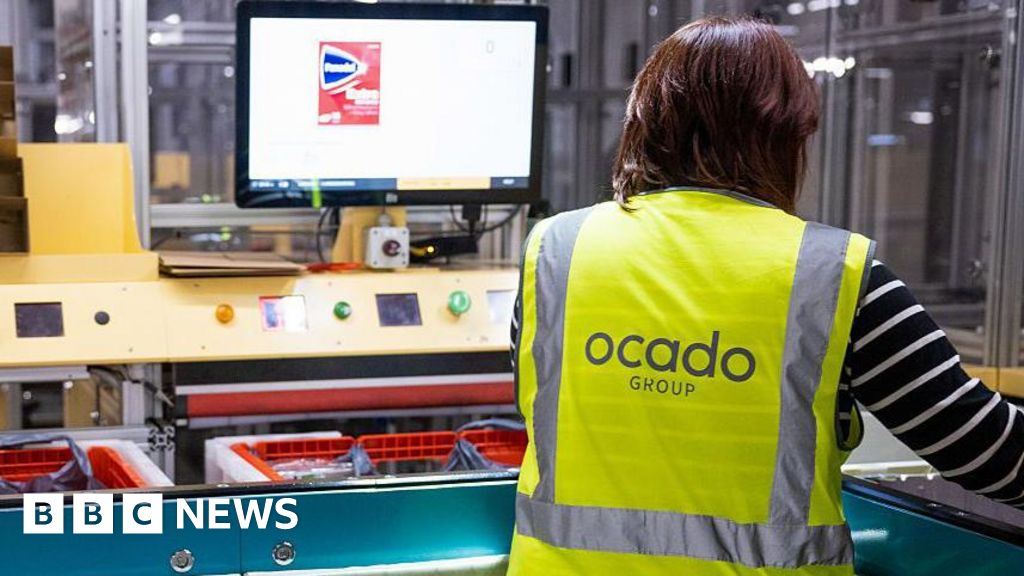
Pharco, Egypt’s leading pharmaceutical maker, produces 1.7 million boxes of drugs a day. During last year’s crisis, it had to scale back some production, but optimism is returning.
“We see the economy picking up, and prospects are good,” says Helmy. Pharco recently invested $350,000 in Medoc, a clinic management startup. “Egypt is underserved in healthcare, be it clinics, polyclinics, laboratories, imagery, and that opens opportunities.”
Recent reforms, including the floating of the Egyptian pound, have helped stabilize the economy and rekindled foreign investors’ interest. Many local companies are seeking new global partners, and a robust pipeline of IPOs is expected on the Egyptian Stock Exchange.
“The laws are becoming more flexible for foreigners to invest, and we see a lot of appetite for foreign direct investment [FDI] coming from Europe and the Gulf Cooperation Council,” Helmy notes.
Egypt also boasts some of Africa’s largest banks and most successful financial innovators. Fawry and MNT Halan were among the region’s first fintechs to reach $1 billion valuations. Today, Cairo is one of Africa’s top three fintech hubs, home to hundreds of startups from giants like Paymob to emerging players such as Sahl and Kilivvr.
For fintech entrepreneurs, structural challenges, from low financial literacy to currency devaluation, are creating space for innovation.
Islam Zekry, group CFO and COO, CIB
“There’s a universal problem in our region, which is a lack of foreign currency, combined with rising inflation, shooting consumer price indices, and no investment products,” says Ahmed Amer, CEO of Web3 tech provider EMURGO Labs. “People basically only have two ways of investing their money, either in gold or in real estate.” EMURGO has supported the launch of USDA, a stablecoin regulated by the US Securities and Exchange Commission that is pegged to the US dollar for trade finance and remittances.
“It’s really important that emerging economies start thinking outside of the box to develop new ways of attracting and preserving capital,” Amer adds.
Traditional banks are moving in the same direction. “We’re investing heavily in building a group-wide data infrastructure, not only in Egypt but across our African footprint,” says Islam Zekry, group CFO and COO at Commercial International Bank (Egypt), the country’s largest private bank. “One clear opportunity lies in streamlining KYC and compliance processes. By creating an integrated data warehouse and sharing verified customer intelligence across our markets, we expect to reduce the cost to serve by 20% to 30%. We aspire to be a platform that attracts capital, connects businesses, and delivers a new standard of banking experiences, all while being proudly rooted in Egypt.”
Morocco is the second pillar of North Africa’s economy. Decades of economic reforms encouraging private sector growth and infrastructure investment have turned the country into an FDI magnet. Today, Morocco is considered one of the best places in Africa to do business, with global giants including Procter & Gamble, Unilever, Siemens, and AstraZeneca setting up factories and regional headquarters in the kingdom. Despite global headwinds, the IMF expects Morocco’s GDP to grow 3.9% this year.
Tunisia Faces Headwings
Other North African countries present a different story.
Mauritania, Algeria, and Libya remain largely shut off, rent-driven economies. In Tunisia, despite years of deep economic and financial turmoil, the government still has not enacted reforms that could unlock IMF support.
Last year, the Central Bank of Tunisia had to step in to bail out the economy, and the IMF projects growth for 2025 at just 1.4%. That said, the banking sector has held up relatively well. In March, Moody’s upgraded Tunisia’s sovereign debt rating to Caa1 from Caa2, citing the central bank’s ability to maintain stable foreign exchange reserves.
“Results for 2023, 2024, and the first half of 2025 demonstrate the resilience of Tunisian banks,” argues BIAT’s Jebir. “I believe we can expect progress in Tunisia’s next reviews, which would have a positive knock-on effect for banks’ ratings. This would enable us to expand further internationally without being constrained.”
Tunisia’s banking model is still largely brick-and-mortar, but modernization efforts are underway. This year, the government passed laws restricting the use of paper checks and encouraging digital payments. Jebir sees an opportunity in the shift.
“We are developing a wide range of digital solutions for both retail and corporate clients,” he says. “At the same time, we are reshaping our branch network into advisory and expertise centers, providing added value beyond the traditional services of a bank.”
A fintech ecosystem is emerging, with startups such as mobile wallet Floucy, but international investors remain cautious.
“It’s tough to operate there,” says Amer, who has supported Tunisian startups in the past. “I mean, it’s very hard to attract FDI when your fiscal and monetary policy doesn’t provide any confidence to the investors, right?”
Looking South
As their own economies improve, North African companies are looking south for expansion, supported by their banks. Moroccan lenders now operate across the continent; Bank of Africa, Attijariwafa, and BCP Group cover more than 25 African countries, from Senegal to Ethiopia. Egyptian banks, including CIB and Banque Misr, are following trade corridors in East Africa using Kenya as a regional base.
“We’re enhancing SME lending through digital partnerships, leveraging the country’s well-developed ecosystem,” says CIB’s Zekry. “We’re also advancing digital channels to scale access and deepen client engagement, reflecting our broader model of localized innovation with regional consistency.”
Zekry also sees growth potential in climate finance. “As we expand across Africa, a significant share of our growth will come from transitional finance, particularly in agricultural and underserved communities. We’re introducing specialized services in these areas, not just as a development goal but because they make strong business sense.”
Cross-border trade, industrial strength, and financial innovation are opening new opportunities throughout North Africa, but structural issues remain. “The potential is massive, but reforms need to continue and the capacity to introduce new technologies will be critical,” Amer observes. If these elements align, North Africa could realize its aspiration to become a strategic hub connecting Europe, the Middle East, and sub-Saharan Africa.