Travelers are flocking to Ashland, Ore. — thanks to William Shakespeare
Just 16 miles north of the California border, enchanting Ashland, Ore., has drawn theater fans for more than 90 years. The city owes its modern tourism economy in large part to William Shakespeare.
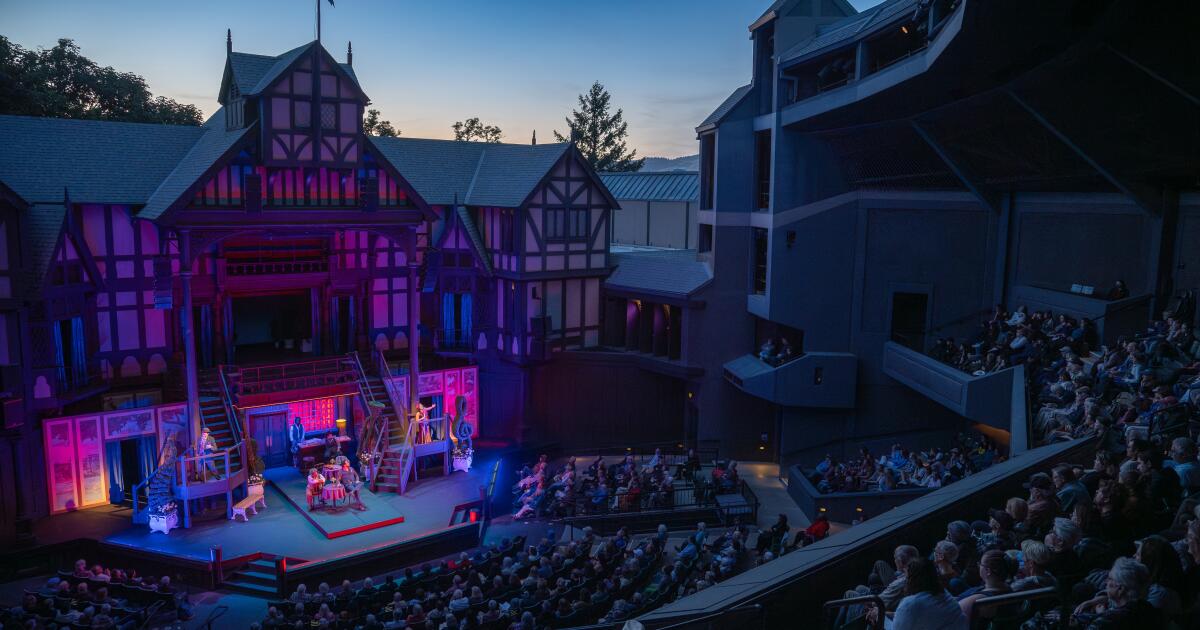
The Oregon Shakespeare Festival runs from spring to fall annually, attracting many of the 350,000 annual visitors to the city of 21,000 residents. Locals and travelers gather to watch live productions in venues like the Allen Elizabethan Theatre — modeled after a 1599 London playhouse, with a three-story Tudor facade — where for one magical evening, they’re transported to Shakespeare’s heyday.
While it’s hard to escape the Bard’s reach in the downtown core, Ashland and environs offer much more than theater. Its outdoor wonderland especially is well worth exploring. Or as Shakespeare once put it: “One touch of nature makes the whole world kin.”
Within a short drive await wineries, hiking, cycling and white-water rafting on the magnificent Rogue River. Crater Lake National Park is about a two-hour drive, and the destruction of dams on the Klamath River reopened scenic rafting there last year for the first time in more than a century. As a designated Tree City USA community, Ashland is steeped in greenery. Parks abound. Lovely Ashland Creek meanders through the town.
Founded as a farm town in the 1850s, Ashland incorporated as a city in 1885 after rapid growth fueled by the railroad’s arrival. Many buildings in the downtown historic district date to the turn of the 20th century. Today, Ashland is home to a variety of shops — a couple of favorites include Bloomsbury Books with its ecology rack right out front and Mountain Provisions for high-quality outdoor gear. And with more than 100 restaurants, Ashland’s food and beverage scene runs the gamut from casual (try the porkstrami at Sammich) to inventive (check out the unique Alsatian menu at Nous).
These days, a cautious optimism prevails throughout Ashland, which had been hit hard by the pandemic and simultaneous wildfires. At downtown’s Village Baker, the scent of baking bread hints at the 1,400 loaves produced daily. They start at 4 a.m. and deliver for miles around. That broad reach, co-owner Gerardo Gutierrez says, has helped them weather challenging times.
“We’re coming back from the ashes,” he said.