



domestic

Government shutdown slowed quarter 4 gross domestic product growth

Feb. 20 (UPI) — The 43-day government shutdown in the fall stymied U.S. gross domestic product growth in the fourth quarter, the Bureau of Economic Analysis reported Friday.

GDP for the fourth quarter of 2025 grew by 1.4% on an annual basis, more than a full point below the Dow Jones estimate of 2.5%. Consumer spending climbed more slowly than expected, while government spending lagged behind greatly.

The slowdown in growth is significant when compared to the 4.4% growth recorded in the third quarter.

While economic growth slowed, inflation continued to apply pressure. The personal consumption expenditures price index, the key measurement of inflation used by the Federal Reserve, increased by 2.9%, well above the Fed’s 2% target.

The price index for GDP purchases rose 3.7%, accelerating from 3.4% in quarter three.

The BEA report says the full effects of the record government shutdown “cannot be quantified” as the data cannot be separated. It still estimated the effects of reduced labor services by government employees.

Hundreds of thousands of government employees were furloughed during the shutdown.

“BEA estimates that this reduction in services provided by the federal government subtracted about 1.0 percentage point from real GDP growth in the fourth quarter,” the report says.

Government spending in defense and nondefense declined, as did spending on exports.

Health care services were a leading source of growth in consumer spending. Decreased spending on goods offset this growth.

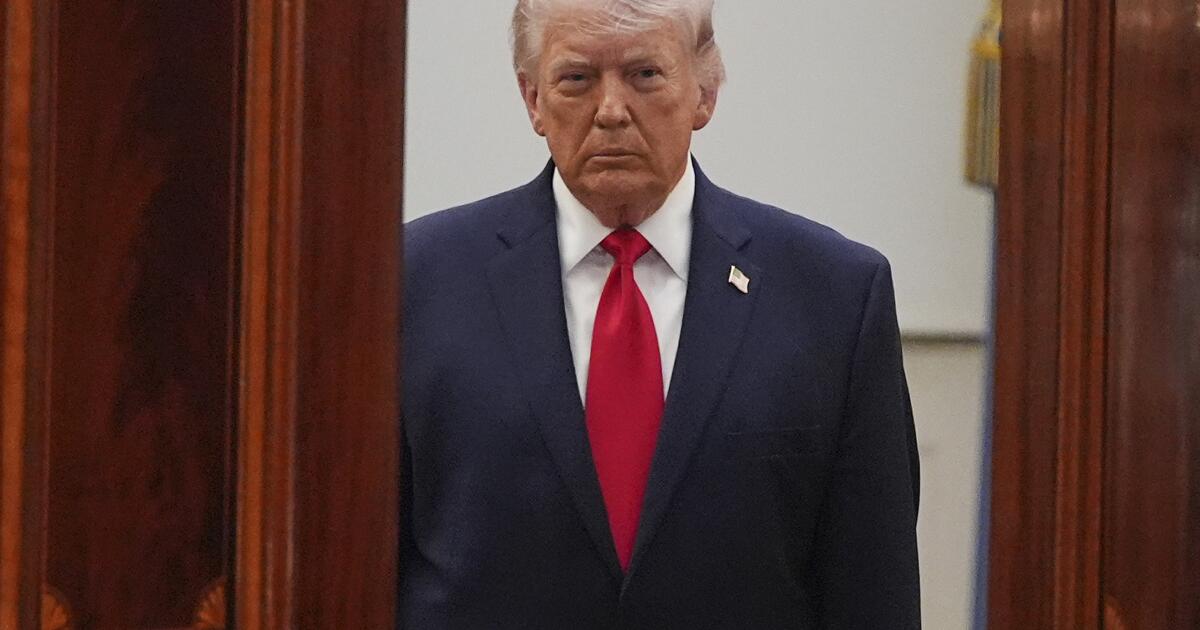
President Donald Trump speaks alongside Administrator of the Environmental Protection Agency Lee Zeldin in the Roosevelt Room of the White House on Thursday. The Trump administration has announced the finalization of rules that revoke the EPA’s ability to regulate climate pollution by ending the endangerment finding that determined six greenhouse gases could be categorized as dangerous to human health. Photo by Will Oliver/UPI | License Photo

Source link

High-speed rail CEO on leave after news of arrest on suspicion of domestic battery

Ian Choudri, CEO of the California High-Speed Rail Authority, was arrested Feb. 4 at his home on suspicion of domestic battery. He took an administrative leave on Tuesday, Feb. 17.

The head of California’s High-Speed Rail Authority took a voluntary leave Tuesday after news reports circulated about his recent arrest on suspicion of domestic battery against a spouse.

Ian Choudri was arrested Feb. 4 at his Folsom home in the 500 block of Borges Court.

The rail authority said in a statement Tuesday that Choudri agreed to take a temporary leave to allow its board of directors and the California State Transportation Agency to review and assess the situation.

Choudri’s attorney said Monday that the Sacramento County district attorney’s office declined to file charges in the case. Police were called to Choudri’s home by a third party, Choudri’s attorney told The Times.

“This matter is over and no further action will be taken,” said Allen Sawyer, who is representing Choudri.

The district attorney’s office did not respond to a request for comment.

Choudri is among the highest-paid state employees in California, having earned $563,000 last year, according to payroll records obtained by The Times from the state controller’s office.

The High-Speed Rail Authority did not answer a question about whether Choudri would receive pay during his absence.

The board of directors is scheduled to meet next on March 4.

The day before his arrest, Choudri had appeared with Gov. Gavin Newsom in Kern County to announce the completion of a 150-acre facility that would serve as a hub for construction of the high-speed rail project in the San Joaquin Valley.

California’s grand vision for a bullet train, originally to connect San Francisco to Los Angeles, has become a flash point in national politics.

President Trump and Republicans have seized on the billions of dollars in cost overruns and slow progress to cast the project as a Democratic boondoggle and waste of taxpayer money.

Newsom, eager to show some advancement before he leaves office, has refocused construction on building a segment from Merced to Bakersfield. His office said earlier this month that 119 miles were under construction and 58 structures, including bridges, overpasses and viaducts, have been completed.

The California High-Speed Rail Authority’s Board of Directors approved Choudri as chief executive in August 2024. Newsom praised the decision and commended his more than 30 years of experience in the transportation sector.

Choudri replaced former CEO Brian Kelly, who retired. Choudri joined the agency from HNTB Corp., an infrastructure design firm where he previously held the position of senior vice president.

Choudri did not respond to requests for comment. Newsom’s office directed questions to the High-Speed Rail Authority.

Source link

High-Speed Rail CEO arrested on suspicion of domestic violence

Ian Choudri, the CEO of California’s High-Speed Rail Authority, was arrested on suspicion of domestic battery earlier this month at his Folsom home, officials said.

The 57-year-old was arrested Feb. 4 on suspicion of battery against a spouse, Sgt. John Triplett of the Folsom police confirmed. The arrest occurred in the 500 block of Borges Court, where records indicate he owns a home.

“The High-Speed Rail Authority is aware of the matter and is reviewing it,” a spokesperson for the agency said Monday in a statement. “We have no other comment at this time.”

Choudri was approved as CEO of the state agency in August 2024, and lauded by Gov. Gavin Newsom as having more than 30 years’ experience in the transportation sector.

Choudri replaced former CEO Brian Kelly, who retired. Choudri joined the agency from HNTB Corp., an infrastructure design firm where he previously held the position of senior vice president.

Choudri did not immediately respond to requests seeking comment.

Choudri’s attorney told The Times that police were called to Choudri’s home by a third-party and that prosecutors did not file charges in the case.

Choudri was set to appear in court Feb. 6 but was notified by the Sacramento district attorney’s office that they had declined to file charges, said Allen Sawyer, Choudri’s attorney.

“This matter is over and no further action will be taken,” Sawyer said.

Officials at the Sacramento district attorney’s office did not immediately respond to a request for comment.

The day before his arrest, Choudri had appeared with Newsom in Kern County to announce the completion of a 150-acre facility that would serve as a hub for construction of the high-speed rail project in San Joaquin Valley.

“The railhead facility is a critical step in the track-installation process and keeps us on pace to deliver this system smarter, faster and more economically,” Choudri announced at the media event, according to a statement released by Newsom’s office.

Newsom’s office did not immediately respond to a request for comment.

Choudri is among the highest-paid state employees in California, having earned $563,000 last year, according to payroll records obtained by The Times from the state controller’s office.

Times staff writer Melody Gutierrez contributed to this story.

Source link

Iran seeks to get out of FATF blacklist amid domestic political divisions | Financial Markets News

Tehran, Iran – Iran says it will continue efforts to get out of a blacklist of a prominent global watchdog on money laundering and “terrorism” financing despite “20 years of obstruction” from domestic opponents.

The statement by the Financial Intelligence Unit of Iran’s Ministry of Economic Affairs on Sunday came two days after the Paris-based Financial Action Task Force (FATF) renewed its years-long blacklisting of Iran, according to a report by the official IRNA news agency.

Recommended Stories

list of 4 itemsend of list

The FATF also ramped up measures aimed at isolating Iran from global financial markets with a particular focus on virtual asset service providers (VASPs) and cryptocurrencies.

It recommended member states and financial institutions around the world to:

  • Refuse to establish representative offices of Iranian financial institutions and VASPs or consider the noncompliance risks involved.
  • Prohibit financial institutions and VASPs from establishing offices in Iran.
  • On a risk basis, limit business relationships or financial transactions, including virtual asset transactions, with Iran or people inside the country.
  • Prohibit financial institutions and VASPs from establishing new correspondent banking relationships and require them to undertake a risk-based review of existing ties.

Even the flow of funds involving humanitarian assistance, food and health supplies as well as diplomatic operating costs and personal remittances are recommended to be handled “on a risk basis considering the “terrorist” financing or proliferation financing risks emanating from Iran”.

What does the FATF move mean?

Iran has been blacklisted by the FATF for years and is currently on the list in the company of just two other countries: North Korea and Myanmar.

Since October 2019, Iran has had “heightened measures” like supervisory examination and external audit requirements recommended against it and has been subject to “effective countermeasures” since February 2020.

This contributed to making access to international transactions increasingly difficult or impossible for Iranian banks and nationals and made the country more dependent on costlier shadowy third-party intermediaries for transactions.

The new countermeasures emphasise existing frameworks but also specifically cite virtual assets, signalling an increased focus.

The fact that the FATF also urges countries and global institutions to remain wary of risks of having any dealings with Iran may mean even more limited transaction opportunities for Iranian entities and nationals.

Small banks maintaining old correspondent relations with Iranian counterparts may also reconsider after being recommended to re-evaluate existing links.

The isolation has hobbled state-run or private income streams and contributed to the continuous depreciation of the Iranian rial over the years.

The FATF, formerly known by its French name, was established by the Group of Seven (G7) countries in 1989 to combat money laundering but later had its mandate expanded to countering financing of “terrorism” and weapons of mass destruction.

It has been formally raising concerns about Iran since the late 2000s, which is also when it started calling for countermeasures as international tensions grew over Iran’s nuclear programme and the country was sanctioned by the United Nations Security Council.

But a year after Iran signed a landmark 2015 nuclear deal with world powers that lifted the sanctions, the FATF also acknowledged a “high-level political commitment” from Iran and agreed to an action plan for the country to address its compliance requirements.

The centrist government of President Hassan Rouhani, who had clinched the deals, pressed ahead with ratifying several laws needed to fulfil the action plan despite opposition from hardliners who were firmly against the increased financial transparency and international supervision.

But United States President Donald Trump unilaterally reneged on the nuclear deal in 2018, imposing a “maximum pressure” campaign that has remained in effect until today. The move empowered the argument from the hardliners in Tehran, who succeeded in blocking the ratification of the rest of the FATF-linked legislation, leaving the issue dormant for years.

Washington has retained the sanctions over the years with some of the latest – including the blacklisting in January of two United Kingdom-based cryptocurrency exchanges – allegedly connected to Iran’s Islamic Revolutionary Guard Corps.

The UN Security Council sanctions were also reinstated against Iran in September when Western powers triggered the “snapback” mechanism of the nuclear accord. They include an arms embargo, asset freezes and travel bans as well as nuclear, missile and banking sanctions that are binding for all UN member states.

Support for ‘axis of resistance’

The Iranian hardliners railing against any progress on FATF-related legislation have presented two main concerns.

They assert that fully adhering to the watchdog’s guidelines would curb Tehran’s ability to back its “axis of resistance” of aligned armed groups in Lebanon, Iraq, Yemen and Palestine. The axis lost its base in Syria with the fall of President Bashar al-Assad in December 2024.

Hardliners have also suggested that Iran’s ability to circumvent US sanctions may be significantly compromised by disclosing all the information required by the FATF.

Iran has been selling most of its oil to China at hefty discounts, using a shadow fleet of ships that turn their transponders off to avoid detection in international waters. The country has also for years been forced to rely on a capillary network of currency exchanges and intermediaries, some of them based in neighbouring countries, such as Türkiye and the United Arab Emirates.

To assuage some of the domestic concerns, two FATF-related laws ratified by Iran in 2025 were passed with special “conditions” and reservations infused in the text.

One of the main conditions was that the ratified regulations must not “prejudice the legitimate right of peoples or groups under colonial domination and/or foreign occupation to fight against aggression and occupation and to exercise their right to self-determination” and “shall not be construed in any manner as recognition of the Zionist occupying regime”, a reference to Israel.

Iran also said it would not accept any referral to the International Court of Justice and asserted that its own Supreme National Security Council would determine which groups qualify as “terrorist” outfits.

Those conditions were rejected by the FATF, leading to the increased countermeasures.

The watchdog also said it expects Iran to identify and freeze “terrorist assets” in line with relevant UN Security Council resolutions. Some of Iran’s nuclear and military authorities are among individuals sanctioned by those resolutions.

Source link

Falcons’ James Pearce arrested after domestic dispute with Rickea Jackson

Atlanta Falcons rookie star James Pearce Jr. was arrested near Miami on Saturday night after fleeing officers and then crashing his car following what police said was a domestic dispute with Sparks player Rickea Jackson.

Pearce, the first-round pick who led the Falcons in sacks and was third in NFL defensive rookie of the year voting, was booked into the Turner Guilford Knight Correctional Center after Doral police were summoned to investigate a reported domestic dispute between a man and a woman.

According to jail records, Pearce is facing charges of two counts of aggravated battery with a deadly weapon as well as aggravated stalking and fleeing or eluding police with lights or siren. Bond was not immediately set on all the charges.

The Falcons said in a statement they are aware of the arrest.

“We are aware of an incident involving James Pearce Jr. in Miami,” the Falcons said in a statement provided to the Associated Press. “We are in the process of gathering more information and will not have any further comment on an open legal matter at this time.”

WPLG TV in Miami reported Doral Police Chief Edwin Lopez confirmed the dispute was between Pearce and Jackson, a forward for the WNBA’s Sparks. Jackson was the No. 4 overall pick in the 2024 WNBA draft and averaged 14.7 points in 38 games, including 37 starts, in the 2025 season. Jackson played college basketball for Tennessee and Mississippi State.

Pearce, an edge rusher from Tennessee, was the No. 26 overall pick in the 2025 NFL draft as the Falcons emphasized the pass rush. Pearce had 10 1/2 sacks and his 45 quarterback pressures set a team record for a rookie. Pearce had 26 tackles and 16 quarterback hits. He forced a fumble and recovered a fumble while playing in all 17 games.

The Falcons finished 8-9, leading to the firings of coach Raheem Morris and general manager Terry Fontenot. The Falcons hired Kevin Stefanski as coach and Ian Cunningham as general manager.

Odum writes for the Associated Press. AP Sports Writer Maura Carey in Atlanta contributed to this report.

Source link

‘The Love That Remains’ review: Icelandic domestic drama reinvents the form

The gorgeous, quirky and melancholy “The Love That Remains,” from Icelandic filmmaker Hylnur Pálmason (“Godland”), opens with an exhilarating shot from inside a long, empty seaside building, from where we can see the roof suddenly wrenched off by some exterior force. As it hovers in the air above, we get to consider the two parts of this one-time whole and how the light changes inside this deconstructed space.

In one respect, that’s the whole of the movie encapsulated, as we encounter a family of five living in the wake of a separation. Visual artist Anna (Saga Garðarsdóttir) looks to assert herself while still living in the rural home she shared with her teenage sweetheart. The increasing alienation leaves fisherman Magnús (Sverrir Guðnason) living offshore on a big trawler as his hold on domestic security slips. Their kids, meanwhile — teenage Ída and twin boys Grímur and Þorgils (the trio played by director Pálmason’s own children) — exhibit a healthy absorption of the circumstances, meeting moments of togetherness with plenty of humor and spirit.

What we glean of the past comes from the fragmented present, as if we’re leafing through a stranger’s exquisitely curated album (there’s only Harry Hunt’s piano score for sad commentary). Elsewhere we see that home-cooked meals, chores and foraging excursions occasionally bring this fractured family back together. But when Magnus pushes to stay for a while, Anna firmly claims her independence.

While apart, their working lives — his at sea, hers on land — speak to a confluence of the elemental and the man-made. Pálmason, who serves as his own cinematographer (and a great one with the 4:3 framing), revels in the sweep and heft of deep-sea fishing, a seasonal trade that gives purpose to Magnus’ days and nights but also fosters an increasingly unwanted solitude. Anna, meanwhile, devotes herself to earth art, turning machine-lasered iron cutouts laid on white sheets in the open air into large-scale, rust-patterned pieces. Getting her work appreciated, however, is another matter. In one painfully funny sequence, a visiting gallerist (and gasbag) barely seems to care about her art, showing more interest in a goose’s nest that has materialized in an enclosure.

Is love another natural element susceptible to age and wear? Across a running time tied to the shifting seasons, pocked by images of breathtaking beauty, Pálmason is after a feeling that only patient observance yields: a lasting reality about the passing of relationships. One of the director’s frequent visual cutaways is to a knight-outfitted dummy the children build on a picturesque spot, lashed to a stake. It’s an indelibly amusing and heartbreaking totem, suggesting play and suffering, and eventually manifesting wounds both real and internalized. (The director’s 2022 short “Nest,” which captures the building of a tree house over a year, is a precursor to his temporal approach to this feature.)

On the heels of Pálmason’s masterful “Godland,” a 19th century colonizer epic of faith and conquest that couldn’t be more different, “The Love That Remains” nevertheless positions this filmmaker as a gifted craftsman of adult storybooks, no matter the era or scope. This is a delicate, confidently imagined fiction made with the eyes of a naturalist, the heart of a believer in family, and a sensibility with room for both the Pythonesque and the Lynchian.

‘The Love That Remains’

In Icelandic and English, with subtitles

Not rated

Running time: 1 hour, 49 minutes

Playing: Opens Friday, Feb. 6 at Laemmle Royal and Laemmle Glendale

Source link

Jill Biden’s first husband charged in killing of wife in domestic dispute at their Delaware home

The first husband of former First Lady Jill Biden has been charged in the killing of his wife at their Delaware home in late December, authorities announced in a news release Tuesday.

William Stevenson, 77, of Wilmington was married to Jill Biden from 1970 to 1975.

Caroline Harrison, the Delaware attorney general’s spokesperson, confirmed in a phone call that Stevenson is the former husband of Jill Biden.

Jill Biden declined to comment, according to an emailed response from a spokesperson at the former president and first lady’s office.

Stevenson remains in jail after failing to post $500,000 bail after his arrest Monday on first-degree murder charges. He is charged with killing Linda Stevenson, 64, on Dec. 28.

Police were called to the home for a reported domestic dispute after 11 p.m. and found a woman unresponsive in the living room, according to a prior news release. Lifesaving measures were unsuccessful.

She ran a bookkeeping business and was described as a family-oriented mother and grandmother and a Philadelphia Eagles fan, according to her obituary, which does not mention her husband.

Stevenson was charged in a grand jury indictment after a weekslong investigation by detectives in the Delaware Department of Justice.

It was not immediately clear if Stevenson has a lawyer. He founded a popular music venue in Newark called the Stone Balloon in the early 1970s.

Jill Biden married U.S. Sen. Joe Biden in 1977. He served as U.S. president from January 2021 to January 2025.

Source link