doesnt

Why Regime Change Doesn’t Mean Stability For Venezuela

Home Executive Interviews After Maduro: Why Regime Change Doesn’t Mean Stability For Venezuela—Or Investors

Economist Abigail Hall explains what Maduro’s removal means for Venezuela, global markets, and the risks of US-led regime change.

The sudden ouster of Venezuelan President Nicolás Maduro following a US-led operation has shaken global markets, energy circles, and Latin America’s political landscape.

As Washington signals plans to temporarily oversee Venezuela’s government and reopen access to the world’s largest proven oil reserves, questions are mounting over legality, economic fallout, and what comes next.

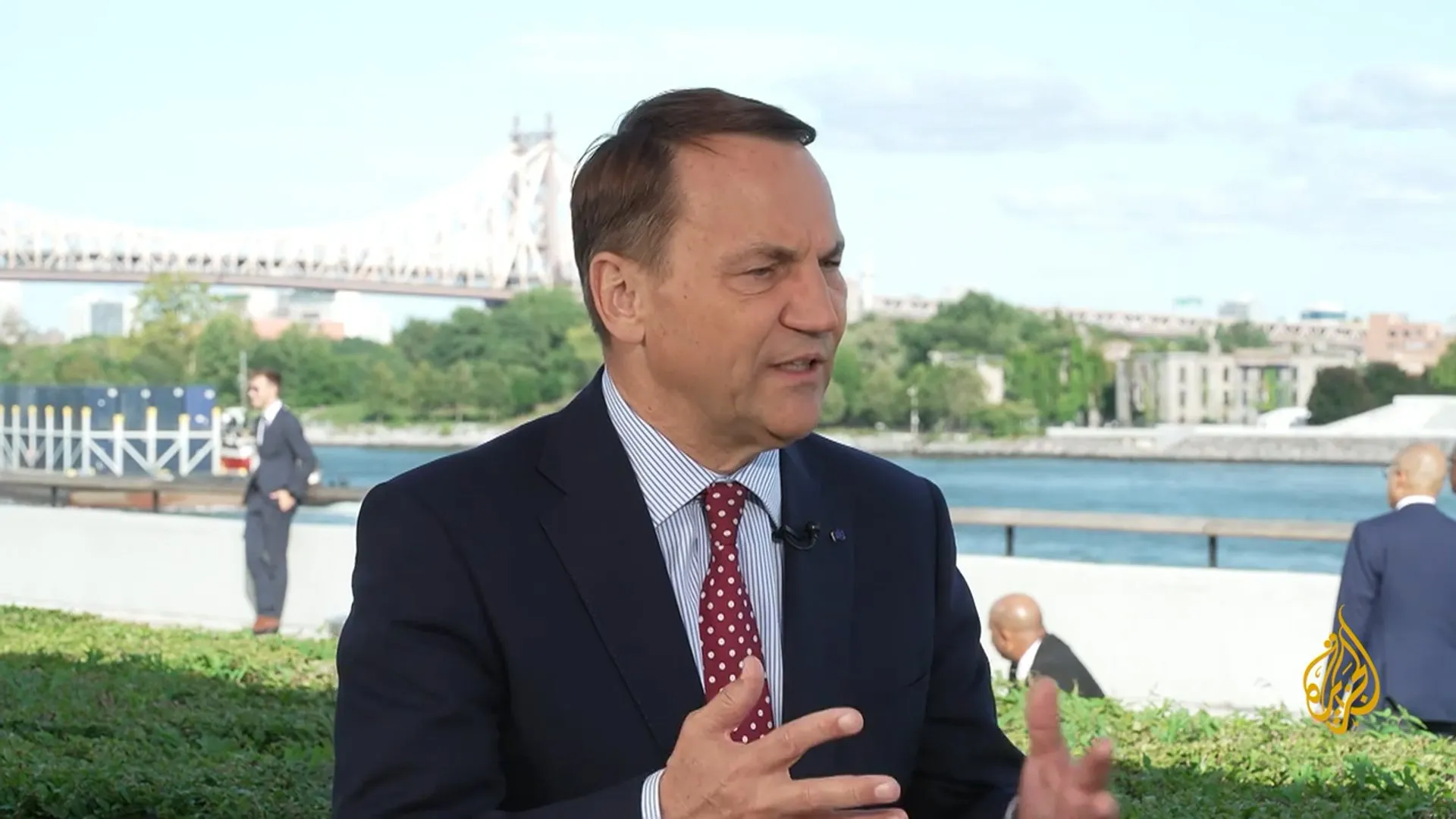
To unpack the implications, Global Finance spoke with Abigail Hall, associate professor of economics at the University of Tampa and a senior fellow at the Independent Institute, whose research focuses on US intervention, political economy, and Latin America.

Global Finance: How does this episode affect investment banks operating in Venezuela, like J.P. Morgan, Banesco Banco, Mercantil Banco and BBVA Provincial?

Hall: One of the things that has been happening with the US buildup to this point is regime uncertainty. We cannot predict which government policies will be in place in the near or intermediate future. Having some predictability about the regulatory or other government policy environment is essential for planning. This is relevant whenever we discuss domestic planning, such as with tariffs in the US. But it is also important when we’re talking about international business.

Abigail Hall, senior fellow at the Independent Institute

In this case, an external actor is imposing changes on a foreign country. I would not be surprised if international companies adopt a wait-and-see approach regarding Venezuela. No one will want to invest resources without knowing what comes next. We don’t know who’s in power or how the transition will occur. From an economic development perspective, that approach is detrimental and necessitates that the US government expend resources to prop up or stimulate Venezuela’s economy. The obvious way is oil, but there’s a lot that goes into that, too.

GF: Should business leaders focus on who controls Venezuelan oil, or on whether institutional incentives will actually change now that Maduro faces an arraignment in New York?

Hall: It’s both. Who is in power and who controls Venezuela’s primary asset—oil—certainly matters. But it’s equally important to understand the institutional structures surrounding the Venezuelan government. If, as the Trump administration has suggested, the US moves to temporarily run the country and impose new institutions, a key question is whether those institutions would “stick” after a potential US withdrawal. At this point, it’s simply too early to tell what Venezuela’s political and economic landscape will look like, even weeks or months from now.

GF: Maduro’s vice president, Delcy Rodríguez, was sworn in as acting president and denounced his capture as an “illegal kidnapping.” Meanwhile, Venezuelan opposition leader María Corina Machado, who recently won the Nobel Peace Prize, has called for Edmundo González, to be recognized as the rightful leader of the nation, considering he won the country’s 2024 presidential election. Will conditions get worse before they get better, given the confusion about who will be running the country and its resources?

Hall: Certainly things could get worse before they get better—if they get better. Whether we liked the regime in power and whether this is an effective way to transition away from it are two separate questions. Thinking broadly, we mustn’t throw the baby out with the bathwater. Maduro has been absolutely detrimental to Venezuela’s economy and its people. He’s guilty of numerous crimes. I don’t think he’s guilty of the crimes that he’s being charged with by the US government, but he certainly has run the Venezuelan economy into a ditch, as did his predecessor, Hugo Chavez. We could now wind up with a situation as we had in Iraq or Afghanistan, where the US has a military presence and they work to hold elections or try to help install a US-friendly “democratic” regime. You could also have a situation like Libya in 2012, where the US takes out the head of a regime and a subsequent power struggle follows. We’re still seeing geopolitical instability across northern Africa as a result of the Libyan conflict. I would not be surprised if we observe a similar scenario in Latin America, particularly in northern South America.

GF: The US alleges that Maduro participated in so-called “narco terrorism,” and that he used Venezuelan government power to facilitate shipments of drugs to the US. But data shows that Venezuela accounts for less than 1% of the US drug market, while Trump explicitly called on American companies to rebuild Venezuela’s oil industry. How do we reconcile that?

Hall: I don’t know that you can effectively reconcile them. In terms of narco trafficking, Venezuela has not been a significant power player in the illicit drug market in the US, or really anywhere. It’s not a key power player. It doesn’t manufacture or transport a lot of illicit drugs. If you look at other places, such as Mexico, you might actually see a significant amount of drugs that enter the US coming through. However, you have diplomatic ties with Mexico, and if you’re trying to negotiate a trade agreement, bombing Mexico would likely not go over well. You have no love lost between Washington and Caracas by going after Venezuela.

But when we start talking about oil, Venezuela is sitting on the largest repository of crude oil. They have vast amounts of resources that should make Venezuela a very wealthy country. A friendlier regime in Caracas could benefit the US by enabling imports of that crude oil. Beyond that, another important consideration regarding Venezuelan oil at this point is to whom it has been sold. The Venezuelan government has deep ties with both the Chinese and Russian governments, allowing them to conduct oil drilling in the Orinoco River basin and Lake Maracaibo. From a geopolitical perspective, this is really poking both of the US’s main geopolitical rivals square in the eye.

For Russia, which is fighting a war with Ukraine, having access to relatively cheap resources like oil is essential. A lot is going on here close to the surface. And I think you have a very difficult case making an argument that this would actually be about drugs and narco terrorism, when it has everything to do with Venezuelan oil, but also, more fundamentally, a friendlier regime to the US and Caracas compared to a friendly regime to China and Russia.

GF: At a January 3 press conference, Trump hinted at military action against Cuba, Mexico, and Colombia next. Considering that the US is effectively “poking” Russia and China, did Washington just light a powder keg?

Hall: Geopolitically, the US has engaged in a variety of interventions throughout Latin America, specifically from the 1950s onwards. Look at Guatemala in the 1950s, or El Salvador and Nicaragua in the 1980s. At this point, people have likely heard of the Monroe Doctrine or the Roosevelt Corollary, which essentially states that the US government will prohibit foreign entities, meaning those in the other half of the world, from intervening in the Western Hemisphere. People now point out that this is kind of a return to that more aggressive type of US intervention.

President Obama explicitly signaled that the Monroe Doctrine was dead. Now it’s roaring back. While we don’t have a crystal ball to predict how this will play out, there are broader implications to consider—particularly regarding how other powers, such as China, might interpret these actions in light of its relationship with Taiwan. If the US justifies intervention on grounds like drugs or criminal activity, it may open the door for similar rationales elsewhere. The potential spillover effects are significant.

GF: Is the US involving itself in something that’s unlikely to be economically beneficial?

Hall: History suggests this is unlikely to be economically beneficial for the US. Even setting China and Russia aside and focusing solely on intervention, the US has a poor track record when it comes to regime change and externally imposed democracy. A cursory glance at history makes that clear.

What we can say with certainty is that any form of intervention—whether airstrikes, boots on the ground, or, as suggested in recent statements, running a foreign government—requires enormous resources. History also shows that once external pressure is removed, these efforts tend not to hold, often dragging the US into prolonged, costly engagements. That’s why some are already asking whether Venezuela risks becoming another Afghanistan.

There are also broader consequences to consider, including migration. Venezuela has lost roughly a quarter of its population over the past decade, which is staggering. Further instability could exacerbate migration pressures, not just from Venezuela but across the region. These are costs we rarely account for upfront. While monetary costs are easier to tally, the non-monetary costs—political, social, and human—are harder to predict and often emerge gradually over time.

GF: In the last year, the Trump administration conducted 626 airstrikes against Somalia, Iraq, Yemen, Iran, the Caribbean, Syria, Nigeria, and now Venezuela. Is this a pattern better understood as a strategic necessity, or is it merely political signaling to a domestic audience in the US?

Hall: Utilizing airstrikes is very much a continuation of the policy that we’ve seen for several decades at this point.

GF: It’s already well over what the Biden administration conducted during its entire four years.

Hall: It’s an escalation of what we’ve seen historically, but it’s a difference of degree as opposed to a difference of kind. Many people don’t know that the last time the United States formally declared war through Congress was in the 1940s. Since then, the US has not formally declared war. If you look at the war-on-terror period forward, specifically, we’ve seen the supposed permissions for engaging in this type of activity stem from Authorizations for Use of Military Force, or AUMFs, which came out when we were looking at Iraq and Afghanistan. Even though those have since both been repealed, it’s largely seen as a nominal type of repeal.

Administrations following President George W. Bush have used the AUMFs as a way to effectively engage in all kinds of intervention, if you can link it to terrorism. And this is important in the Venezuelan case, and part of the reason that I imagine you have narco terrorism within the charges. That’s a way to couch this as part of the broader global war on terror. Much of what we’ve seen from the administration is clearly an attempt to flex its muscle and assert what it is capable of: using military force to achieve political objectives. And as you alluded to earlier, I think some of Trump’s statements to Cuba and to Colombia in the January 3 press conference are indicative of that.

GF: Many Venezuelans are happy that Maduro is gone. Is that the biggest upside here?

Hall: It depends on perspective. Anyone who understands Venezuela knows that Maduro is a tin-pot dictator. But being anti-Maduro and anti-US intervention are not mutually exclusive positions. Whether this ultimately benefits the people of Venezuela is to be determined. The country has been in such dire economic straits for so long—it’s the kind of poverty and policy where they hit bottom and kept digging.

To the extent that this pivots Venezuela away from the types of economic policies that have been so detrimental to its population, this could be beneficial to your average Venezuelan—those are the people who are at the direct receiving end of these interventions, regardless of what flavor they come in, whether they’re sanctions, air strikes or boots on the ground, but have largely been ignored in a lot of conversations.

But the thing that I would caution people against is that we’ve been sold these benefits to intervention before. We’ve seen this movie, and yet we are continuously convinced that this time is going to be different. If history is an indicator, we should be highly skeptical of such arguments.

Source link

Man City 1-1 Chelsea: Pep Guardiola says he doesn’t have ‘crystal ball’

The mood inside the Etihad at full-time felt like one of deflation rather than the expected elation, as City failed to win successive games for only the second time this season.

Guardiola’s side are unbeaten in their past 10 games in all competitions, but the draws in their past two could be significant come the end of the season.

Arsenal are aiming for a first top-flight triumph in more than two decades, while City are looking to reclaim the crown having failed to win silverware last season – the results in the first week of 2026 feel important when considering where the title could end up.

Despite going ahead City could not hold on against a stubborn Chelsea side led by interim manager Calum McFarlane, the under-21s coach who was taking charge of his first senior game and denied Guardiola all three points.

“It’s a brilliant result for Chelsea, with no manager,” former City goalkeeper Shay Given told BBC Sport. “And it is a brilliant result and week for Arsenal, who are now six points clear.

“City dropping four points in the last two games is huge at this time of the season. We always say Christmas and new year, with such a busy schedule, is so important and it’s not been a great festive period for Manchester City.”

Erling Haaland has had a prolific campaign scoring 38 goals for club and country this season, but he has now failed to net in his past three games, which has proved pivotal.

The Norwegian was shackled for long periods by the Chelsea backline and struck the post in the first half, while in the second he had little joy as the home side looked to double their lead.

But they were unable to be clinical enough in the final third and Fernandez’s late equaliser not only snatched a draw for Chelsea but ruined a clean sheet for City and handed the initiative to Arsenal.

“Manchester City will be kicking themselves,” ex-City defender Micah Richards said on Sky Sports. “They know they should’ve had three points today with the chances they created.

“They are normally more ruthless. You are looking at it thinking, ‘what has changed?’ Haaland’s not scored in a few games, Phil Foden had near misses, Rayan Cherki looking very tricky but not the final product. They’ve only got themselves to blame today.”

Former Manchester United defender Gary Neville added on Sky Sports: “Pep Guardiola could smell it. The City fans could smell it. I don’t think Chelsea could though. City needed to make it 2-0.

“It was a big goal for Chelsea – and a big goal for Arsenal.”

Source link

A Giant That Doesn’t Know How to Use Its Power

This year, in the US-China trade war and the grand military parade, China demonstrated economic and military strength that forced the United States to back down. However, Beijing merely displayed its power; various parties discovered that this giant does not know how to wield it.

The US paused its economic attacks on China, but the Dutch government directly “took control of” a Chinese-owned company in the Netherlands—Nexperia—through public authority. The EU expanded anti-dumping measures against China, with France as the main driver behind anti-China economic policies.

The US publicly acknowledged that China’s rising military power in the Western Pacific can no longer be suppressed and adjusted its global strategy to focus on the Western Hemisphere. Yet Japan shifted the Taiwan issue from strategic ambiguity to strategic clarity, adopting a more confrontational posture and challenging China’s bottom line. Regional countries, in various ways, have called for “peace” in the Taiwan Strait—support that amounts to nothing less than opposing China’s unification and indirectly endorsing Japan’s position. Meanwhile, the Philippines, mired in internal chaos, continued to provoke China in the South China Sea.

Since China has the capability to confront the US, it should have the ability to punish Europe, Japan, and the Philippines for their unfriendliness toward China. But Beijing did not do so. When facing challenges from these parties, it only issued symbolic verbal protests or took measures that failed to eradicate the problems—putting on a full defensive posture but lacking concrete and effective actions. As a result, events often started with thunderous noise but ended with little rain, fizzling out in the end.

From Beijing’s appeasement toward Europe, Japan, and the Philippines, all parties have reason to believe that China is a giant that doesn’t know how to use its own power. This presents a strategic opportunity for the weak to overcome the strong—especially now, as the US contracts its global strategy and distances itself from its allies. Maximizing benefits from China’s side is the rational choice.

For example, with Japan: Beijing responded to Tokyo’s intervention in the Taiwan issue with high-intensity verbal criticism, but its actions were inconsistent with its words. Although it revisited the “enemy state clauses” at the UN, raised the postwar Ryukyu sovereignty issue, and even conducted joint military exercises with Russia 600 kilometers from Tokyo, these actions were far less intense than the rhetoric. Even the verbal criticism cooled down after a month.

The US maintained a low profile on the China-Japan dispute, adopted a cool attitude toward Tokyo, and even indirectly expressed condemnation—likely the main reason Beijing de-escalated. This shows that China’s original intent in handling the incident was to force the US to “decouple” from Japan on the Taiwan issue and isolate Tokyo, which maintains close ties with Taipei.

Influenced by official attitudes, the Chinese people once again mistook official rhetoric for commitments, believing Beijing would go to war if necessary to eradicate Japan’s interference in internal affairs. After all, unresolved deep-seated hatred—akin to a sea of blood—remains between China and Japan. Moreover, this year marks the 80th anniversary of China’s victory in the War of Resistance Against Japanese Aggression, with various events held throughout the year to engrave in memory the national humiliation of Japan’s invasion of China.

But after Trump indirectly criticized Japan for provoking unnecessary disputes, Beijing seemed satisfied and stepped down gracefully. Although the dispute has not ended and continues to develop, like its handling of Philippine provocations, China has placed disputes with neighbors into long-term games, effectively shelving the issues—and causing the Chinese people renewed frustration.

After this three-way interaction, the asymmetry between Beijing’s words and actions has likely become deeply ingrained. In the future, it will be much harder for Beijing to mobilize the 1.4 billion people’s shared enmity.

The key point: In this dispute, who—China, Japan, or the US—gained the greatest substantive strategic benefits? So far, it’s hard to say who won the first round. China appeared to come out looking the best, preserving the most face, yet Japan also gained, and the US obtained leverage for future talks with China.

In the first round of this dispute, China strategically established the legitimacy of denying Japan’s intervention in the Taiwan issue, narrowing Tokyo’s diplomatic space for anti-China actions via Taiwan. Japan’s right wing advanced toward national normalization, hollowing out its peace constitution to cope with US strategic contraction; additionally, the Liberal Democratic Party regained public support. The US demonstrated its influence in East Asia—even after “withdrawing” its military to the second island chain—and raised its bargaining chips at the US-China negotiation table.

However, from a medium- to long-term perspective, Japan gains nothing worth the loss: the Ryukyu Islands will become a burden rather than an outer defense wall. The two major powers, China and the US, will orderly redraw their spheres of influence in East Asia; the US will gain a dignified pretext for abandoning Taiwan, while China will recover Taiwan at a lower cost.

Conversely, beyond the asymmetry between words and actions, there is also asymmetry between actions and strength. Beijing’s greatest loss is that the international community—especially its neighbors and Europe—has seen through China’s essence of appearing fierce but being timid inwardly. They have once again discovered that antagonizing China brings no adverse consequences; on the contrary, it can yield unexpected benefits—provided they give China the face it needs to achieve strategic gains.

For example, Vietnam: After the China-Japan dispute cooled, a Vietnamese warship transited the Taiwan Strait under the pretext of freedom of navigation without prior notification to China, signaling it is not a vassal of Beijing and aligning with Washington’s position.

Vietnam is a major beneficiary of the US-China confrontation, with massive Chinese goods rerouted through Vietnam to the US; transit trade has skyrocketed its economic growth. Thus, it firmly believes maximizing benefits lies in a neutral stance between China and the US. However, from a supply chain perspective, China is the supplier and the US the customer—the latter slightly more important. Factoring in China-Vietnam South China Sea disputes and China’s habitual concessions versus the lethal US carrot-and-stick approach, Vietnam naturally leans more pro-US.

Additionally, during the China-Japan dispute, Singapore’s prime minister publicly sympathized with Japan, while Thailand and Vietnam jointly called for peace in the Taiwan Strait—showing Southeast Asian nations, like Japan, hope to maintain the peaceful status quo in the Taiwan Strait and oppose military conflict in the region, which is equivalent to opposing China’s recovery of Taiwan. Of course, Northeast Asia’s South Korea holds the same view; some countries publicly state it due to internal and US factors, while others choose silence.

China’s neighboring countries all see the fact that the Philippines’ intense anti-China stance has gone unpunished. Despite deep internal political turmoil, Manila can still spare efforts to provoke China in the South China Sea—clearly a profitable path. Neighbors conclude: If China can concede on core interests, what can’t it concede?

On the other side of the globe, Europe has noticed this phenomenon too. The Dutch government rashly took over a Chinese enterprise, severely damaging China’s interests and prestige; Beijing’s response started strong but ended weakly—mainly to avoid impacting China-EU trade, even amid decoupling risks everywhere. No wonder Britain subsequently sanctioned two Chinese companies on suspicion of cyberattacks, unafraid of angering Beijing just before Prime Minister Starmer’s planned January visit to China.

In short, whether on the regional Taiwan issue or extraterritorial China-EU economic issues, China faces a broken windows effect. Although from a grand strategic view, all related events remain controllable for Beijing, appeasement only invites more trouble. It’s not impossible that China will eventually be unable to suppress public indignation and be forced to suddenly take tough measures—like at the end of the pandemic, when people took to the streets and Beijing immediately lifted lockdowns, rendering all prior lockdown justifications untenable overnight.

Indeed, China currently appears as a giant that doesn’t know how to use its power. But when a rabbit is cornered, it bites. When Beijing is forced to align actions with strength, the intensity will be astonishing; then, China will want more than just face.

There’s a saying: Attack is the best defense. But with its long history, this nation views offense and defense more comprehensively. The Chinese believe that when weak, attack is the best defense; when holding an advantage, defense is the best attack. As long as the opponent’s offense can be controlled within acceptable limits, persistent defense inflicts less damage than the opponent’s self-exhaustion in stamina. Conversely, when at a disadvantage, a full assault is needed to reverse it.

In other words, China doesn’t fail to know how to use power; it deems using power uneconomical. This explains why the West walks a path of decline while China continues rising—the latter accumulates power, and the former overdraws it.

President Trump is shrewd and pragmatic; he knows cornering China awakens the giant, so he eased US-China relations. But simultaneously, the US doesn’t mind—and even quietly encourages—its allies to provoke China, while positioning itself as a mediator to benefit. This is a reasonable tactic and the most effective offensive against China.

Xi Jinping once said China has great patience—implying that if patience is exhausted, the world will see a completely different China, one that uses power without regard for cost.

Source link

‘Jay Kelly’: Noah Baumbach doesn’t love L.A. But he is fascinated by it

George Clooney plays the title character in Netflix’s “Jay Kelly,” a Clooney-esque movie star who is seemingly on top of the world — but is, in fact, at a crossroads. He’s finished his latest movie and is at a point in his career where he’s begun to worry that every project could be his last. His hope to spend the summer with his youngest daughter, Daisy, is squashed when he realizes she’s set to travel in Europe before heading off to college in the fall. (Jessica, Jay’s eldest daughter, barely speaks to him.) His mentor, a British director who cast him in his first movie, has recently died; on top of the looming sense of mortality is the guilt Jay feels for not attaching his name to the director’s final project in order to get the financing. And after the funeral, Jay runs into the former friend who brought him to that fateful audition as emotional support — and who remains bitter that Jay got the role and “stole his life.”

Instead of sitting down to process these conflicts, Jay decides to run away from them, dropping out of his next movie to follow Daisy to Europe. His professional entourage — a group that includes his longtime manager and friend Ron (Adam Sandler) and his no-nonsense publicist Liz (Laura Dern) — immediately springs into action, accompanying Jay on a chaotic trip abroad, with the final stop being an Italian film festival where Jay is set to receive a career achievement award.

“I did have an idea of an actor having a crisis of some sort, and it would be a journey forward and backward at the same time,” says writer-director Noah Baumbach of the spark that eventually became “Jay Kelly.” As Jay flees Hollywood, the city and its people continue to haunt him. Visions of himself as a young actor float in and out of his mind as he recognizes the mistakes he made by screwing over his friend and neglecting his older daughter. But no matter where he goes — even on board a crowded train from Paris to Tuscany — he’s instantly recognized as the A-list star that he is. Jay Kelly cannot escape himself no matter how hard he tries.

Laura Dern, George Clooney and Adam Sandler in "Jay Kelly."

Laura Dern, George Clooney and Adam Sandler in “Jay Kelly.”

(Peter Mountain / Netflix)

Baumbach wrote “Jay Kelly” with British actor and screenwriter Emily Mortimer, who also appears in the film as Jay’s go-to makeup artist: “It really wasn’t until I brought Emily into it that it started to shape itself more into the movie you see,” Baumbach says.

One might assume that the pair’s years in the business (now in their 50s, Baumbach and Mortimer both got their start in the mid-1990s) informed their depiction of fame and stardom, but Baumbach is adamant that he didn’t set out to write a satire of their industry. “As Emily and I were focusing on the characters and the story, meaning started to reveal itself,” he explains. “Part of our job is to be open and aware of that.”

It tracks that a megastar like Jay would be surrounded by a close-knit circle of people managing his life, which led to Baumbach and Mortimer exploring those complicated relationships. One central storyline is the friendship between Jay and Ron, who have worked together for decades. Despite his devotion to his wife and kids, Ron’s top professional priority is Jay, and the inherently transactional nature of their relationship is a conflict that slowly bubbles up to the surface. There’s simply no getting around the fact that the person Jay is the closest to is also someone who takes 15% of his earnings.

Filmmaker Noah Baumbach.

Filmmaker Noah Baumbach.

(Sela Shiloni / For The Times)

It’s an awkward situation that many who work in the entertainment industry will recognize — but it’s also a humorous truth, the kind that underscores all of Baumbach’s films. “Jay Kelly” isn’t his first film set, at least in part, in Los Angeles. In “Greenberg,” Ben Stiller’s title character is a cantankerous and neurotic New Yorker who has fled west after a nervous breakdown. In the autobiographical “Marriage Story,” Adam Driver’s Charlie, a New York-based theater director, finds himself trapped in L.A. during his divorce from his actor wife, Nicole (Scarlett Johansson).

Baumbach, a Brooklyn native, calls his relationship with Los Angeles complex. “It’s a place I don’t always love being in,” he says — a bit of an understatement. But he’s more fascinated than repulsed by the city. “I was never drawn to be satirical about it. I think it’s such an interesting, strange place. [My films that] take place here do so for a reason. With ‘Greenberg,’ L.A. is a metaphor for loneliness. In ‘Marriage Story,’ Charlie is forced to fight for a home outside of where he feels his home is.” And at the end of the day, where else could a star like Jay reside? “I mean, Jay Kelly couldn’t have lived in New York, right?”

There is, of course, show business, an industry that values make-believe and vanity and couldn’t possibly exist anywhere else. “Ron has the line, ‘Death is so surprising, particularly in L.A.,’” Baumbach says, reciting Sandler’s dialogue from early in the film. “[These characters are] living in a place that, for the most part, doesn’t change — and that helps support the collective illusion that we’re all going to live forever.”

Jay Kelly might not, but the movies will.

Source link