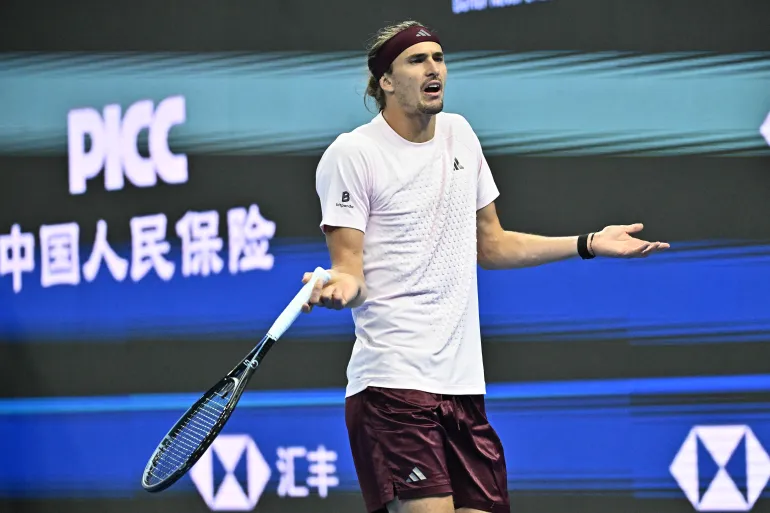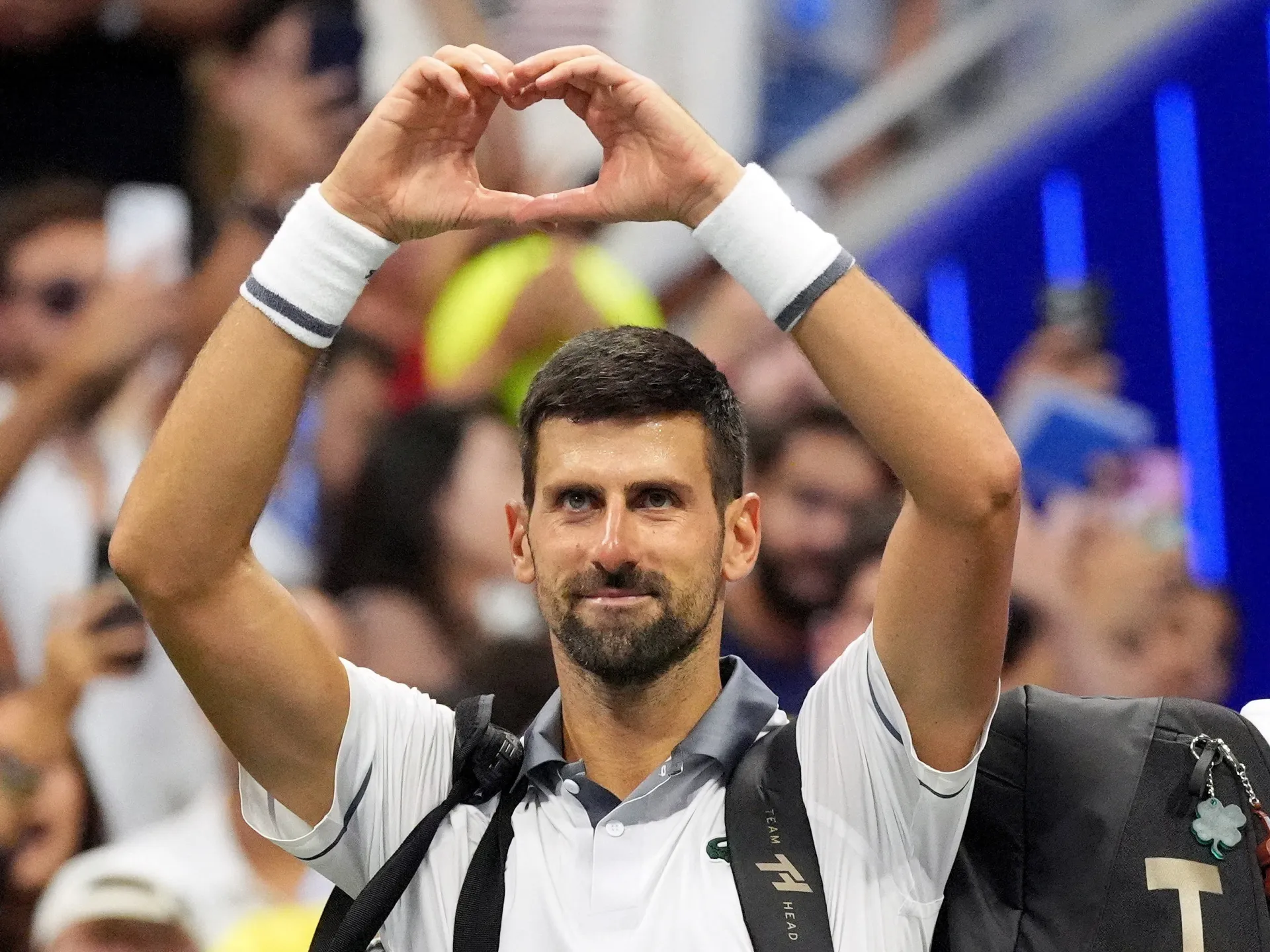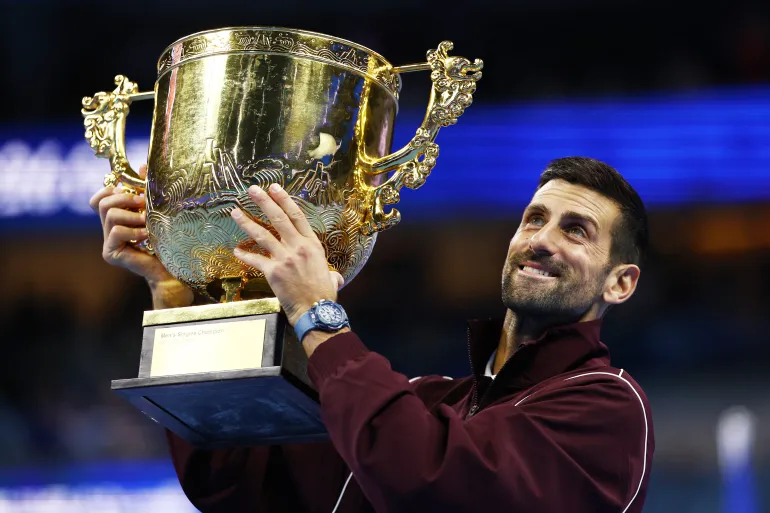
Novak Djokovic’s pursuit for a record 25th Grand Slam title is put to an end by defending champion Jannik Sinner, whose straight-set win sets up a meeting with Alexander Zverev in the final of Wimbledon 2026.
LONDON — A local boy sleeps in his own bed, plays in front of a king and queen and makes a Cinderella run to the Wimbledon semifinals. Sounds like a Hollywood script that might never see the silver screen.
But it’s no fairy tale — it’s Arthur Fery’s out-of-nowhere performance over the last 10 days.
Fery, a virtually unknown British wild card with a triple-digit ranking, has become the emotional heartbeat of Wimbledon while legitimately diverting some national attention from England’s World Cup quest.
The royal treatment at his matches across the All England Club has come in more ways than one.
Fery, who grew up five minutes from Wimbledon and is staying at home during the tournament, first played before grass-court king Roger Federer, Wimbledon’s eight-time singles champion, during Monday’s fourth-round victory. Two days later, he beat No. 9 seed and French Open runner-up Flavio Cobolli of Italy in the quarterfinals 6-4, 7-6 (4), 6-0 in front of Queen Camilla.
Ranked 114th, Fery had never reached the semifinals of an ATP Tour event, let alone a major, before his brief chat with the queen following the match.
“She just said, ‘Congratulations, keep going,’” 23-year-old Fery told reporters later. “I told her it was my birthday on Sunday, so it would be great to play the Wimbledon final on my birthday.”
That’s still a match away. To get there, Fery will have to get past one of the hottest players on tour: No. 2 seed Alexander Zverev, who is fresh off his first Grand Slam title at the French Open. Looming on the other side of the draw is a highly anticipated showdown between defending champion Jannik Sinner against 24-time major winner Novak Djokovic.
If Fery can continue his magical run to the end, he would become the first British wild card to win a Wimbledon title.
Arthur Fery reacts after defeating Flavio Cobolli in the Wimbledon quarterfinals on Wednesday.
(Maja Smiejkowska / Associated Press)
Born in France, Fery’s family moved to Wimbledon when he was an infant. His mother played professional tennis. He was a top British junior but chose to sharpen his game for three years in the U.S. collegiate system at Stanford, as many of his compatriots have done.
“I came out with a lot of hunger coming out of that, and I was ready to attack the pro circuit,” Fery said.
After struggling with bone bruising in his arm that limited him to playing mostly on the lower-tier Challenger circuit in recent years, Fery is finally healthy and playing consistently.
His path to the last four in London has been a masterclass in clutch come-from-behind performances. The Brit has stared down near-certain elimination in multiple matches, repeatedly breaking his opponents’ momentum with Houdini-like on-court acts.
At 5-foot-9, Fery possesses a skill set perfectly suited for low-bounding grass.
His compact strokes, low center of gravity, and elite movement allow him to hug the baseline, take time away from opponents, and confidently execute delicate volleys at the net, according to ESPN analyst Chris Eubanks.
“He defends well,” said Eubanks, a 2023 Wimbledon quarterfinalist. “He can scrap. He can claw. He can dig his way back into points. And when he ventures forward, he’s very, very comfortable at the net. This is a picture-perfect example of someone whose game is built for the surface.”
Still, it’s hard to fathom the multitude of milestones for Fery, who briefly reached the No. 1 ranking in college and earned 2023 Pac-12 Singles Player of the Year honors before leaving early to pursue a pro career.
He arrived at Wimbledon with just one main-draw victory at a major, a losing record as a professional, and only one previous ATP quarterfinal, at Queen’s Club last month. He’s now 11-8, won his first two five-set matches, and is the first British wild card to reach the Wimbledon men’s semifinals in the Open Era. The only other men’s wild-card semifinalist was Goran Ivanisevic, who won the title as a wild card in 2001.
Fery, who started the season ranked No. 185 and will climb to at least No. 36 after the tournament, said there were a “lot of first times” as he reflected on his unprecedented run. “First five-setter, longest match that I’ve ever played, first time breaking into the top 100, first second week in a slam, all at home, five minutes from where I grew up. It’s a great story for me,” he said.
The gap with his fellow semifinalists is understandably massive.
Entering Wimbledon, Djokovic, Sinner and Zverev’s combined records include 29 Grand Slam titles, 2,088 match wins and 155 tour-level titles. Fery was 6-8 in tour-level matches with zero titles.
But he has singlehandedly lifted the tournament for locals. With top hopes Jack Draper and Emma Raducanu withdrawing before the tournament and the rest of Britain’s singles prospects falling one by one — 18 men and women were eliminated by the third round — Fery became the nation’s last knight standing.
If his first name inevitably evokes Arthurian legend, Fery’s march through the draw gave Britain reason to believe again. No sword, no Round Table, just world-class shot-making, a lion’s heart and a Centre Court crowd thrilled to rally behind him.
“This is really quite something to see on home soil,” said Russell Fuller, the BBC’s tennis correspondent, who compared it with Raducanu’s stunning U.S. Open win in 2021 as a qualifier.
Fery earned every bit of it.
In the first round against Damir Dzumhur, Fery dropped the opening set and trailed by a break in the second before surging back. Against Zizou Bergs in the third round, he faced a 4-1 deficit with a double break in the fourth set, and again fell behind 4-1 in the fifth, before somehow surviving.
Then, stepping onto Centre Court for the first time against former top-10 stalwart Grigor Dimitrov of Bulgaria in the fourth round, Fery clawed out of a 2-sets-to-1 hole and a break down in the fourth set to clinch the victory in a fifth-set tiebreak.
“He carries himself with humility, but he’s a fierce competitor, and he’s got a ton of belief in himself,” said Stanford men’s coach and former top-60 player Paul Goldstein, who flew to England Tuesday to see his former charge compete against Cobolli.
While Fery attempts to outmaneuver Zverev on Friday, the other semifinal features a 2025 Wimbledon semifinal rematch between seven-time Wimbledon winner Djokovic and top-ranked Sinner, who defeated the Serb in straight sets on his way to the title. It’s also their second Grand Slam semifinal meeting in 2026. At January’s Australian Open on hard courts, Djokovic bested 24-year-old Sinner in five sets before falling to now-injured Carlos Alcaraz in the Melbourne final.
Arthur Fery hits a return during his Wimbledon quarterfinal win over Flavio Cobolli on Wednesday.
(Clive Brunskill / Getty Images)
Djokovic, 39, enters the match after surviving a grueling five-set, 5-hour-plus quarterfinal slugfest against No. 3 Félix Auger-Aliassime that concluded just minutes before Wimbledon’s 11 p.m. curfew. But the seventh-seeded Serb has a way of defying Father Time and he has had two days to recover on a surface where points are shorter and generally less taxing on the body.
Italy’s Sinner, who defeated Alcaraz in last year’s Wimbledon final, has been efficient if not at the level that saw him capture five consecutive titles before crashing out in the second round at the French Open. After a first-round scare here, the four-time Grand Slam champion has dominated opponents behind his improving serve, winning 80% of his first-serve points. He hasn’t dropped a set since the opening round. Sinner leads the head-to-head with Djokovic 6-5.
According to Eubanks, Djokovic must disrupt Sinner’s movement to break his rhythm, and take his chances.
“He’s got to play similar to how he played in Australia, where it was just all-out aggression,” Eubanks said.
For Sinner, he added: “His serve can be a neutralizing force for what Novak is going to try to do.”
On the other side of the ledger, Fery’s poise under pressure and deft use of the home crowd will be paramount to continue his surprise run against Germany’s Zverev, whom he called a “step up again” from his last five matches. Zverev, 29, is seeking his fifth major final and first at Wimbledon.
“I’m ready for it,” Fery said. “I have nothing to lose. I’m just going to go out there and … put my game on the court, do what I’ve done, believe in myself. We’ll see where that takes me.”
Home has never been closer to Centre Court. Nor has Arthur Fery ever been closer to tennis history.
Novak Djokovic beats Arthur Rinderknech in four sets to go level with Roger Federer for most men’s singles wins at SW19, as the seventh seed progresses into the fourth round.
The Williams sisters, Andy Murray and Novak Djokovic are back at Wimbledon. What year is it again?
The mention of those names may make it feel like we’re stuck in a timewarp – but, no, it is 2026 and some of the sport’s greatest are returning to SW19, in one way or another.
American icon Serena Williams, 44, is making a blockbuster singles comeback after four years away from the sport and also resumes her iconic doubles pairing with sister Venus, 46.
Djokovic, meanwhile, is only a week younger than 39-year-old Murray yet is still chasing that elusive record 25th Grand Slam title.
“It’s very special to be here – we have quite a history here. It’s nice to be back in 2026,” said Venus Williams, who has won five singles and six doubles titles at the All England Club.
As one of the highlights of the British sporting summer, Wimbledon never goes under the radar, but the presence of the old guard will help elevate the grass-court Grand Slam in a summer stacked with sporting events.
Eyeballs are inevitably trained on the men’s football World Cup, particularly with England still in the competition, while the women’s T20 cricket World Cup and British Grand Prix are also jostling for the limelight.
The appearance of the legends – along with younger superstars like Jannik Sinner, Aryna Sabalenka and Coco Gauff, plus the high-profile return of Briton Jack Draper – will ensure Wimbledon will remain at the centre of attention.
“We’re always unbelievably excited to be part of an exciting summer of sport,” Wimbledon tournament director Jamie Baker told BBC World Service.
“Every summer there are always other big events on and I think that does add to the buzz around sport in general. We do love being part of that.”
Fonseca has long been touted as the next big thing, first garnering attention when he followed in the footsteps of Sinner and Alcaraz to win the 2024 ATP Next Gen finals – the end-of-season showpiece for players under the age of 21 – before bursting into the spotlight with his victory over Rublev in Melbourne barely a month later.
He clinched his maiden ATP title on the clay courts of Buenos Aires in February 2025 before reaching the third round on his French Open debut, where he lost to Britain’s Jack Draper. And wherever he went, a carnival of Brazilian flags followed.
Twelve months after making his bow in Paris as the world number 65, he returned as the 28th seed but, while there have been flashes of promise in that period – reaching the third round at Wimbledon, a second career title at last October’s Swiss Indoors, and a quarter-final at the Monte-Carlo Masters – there was a sense he hadn’t quite lived up to his precocious talent.
No more. At the sixth time of asking, Fonseca is through to the second week of a major.
He’s gone where no teenager has gone before in beating Djokovic at a Grand Slam, and is only the sixth to do so at any ATP Tour-level event.
He is the first player since Philipp Kohlschreiber, in 2009, to knock Djokovic out before the quarter-finals at the French Open and the first to do so at any Slam since the 2024 US Open.
“Joao Fonseca has definitely announced himself now,” Annabel Croft said on BBC Radio 5 Live. “He can proudly say he has lived up to the hype, because everyone was saying he hadn’t done much since the hype.
“When all the Brazilians and South Americans were running to the courts to watch him play a couple of years ago, now we know why.”
“It took time for him to find his feet, and the crowd was going to play such an important part if he could get them going, and it literally ended in fireworks,” added former French Open semi-finalist Jo Konta on TNT Sports.
“It was exactly the situation Joao needed to bring out that level of tennis.
“He just played one of the biggest matches we’ve seen for some time.”
Instead, he must now reset and recharge to go again at Wimbledon next month.
Given he is a seven-time champion on a grass surface which younger players have struggled to master, Djokovic will always fancy his chances at the All England Club.
Djokovic can never be ruled out of becoming the oldest major men’s singles champion in the Open Era, but Father Time has been sat waiting on his shoulder for a good while.
By rights, he should probably be basking in a post-retirement glow by now.
Coaching a young compatriot away from the public glare like Andy Murray, perhaps. Doing a promotional tour for a new Netflix documentary like Rafael Nadal, maybe.
While his long-time rivals move into the next phase of their lives, Djokovic was retching at the side of a court in an attempt to summon the energy to beat a teenager.
It is a testament to his superpower that he still wants to push himself to such limits against much younger opponents.
As we have seen time and time again, Djokovic’s insatiable appetite for the sport’s biggest prizes will never diminish.
But, having reached at least the semi-finals at the past five Grand Slams, this was the clearest sign yet that the ageing process was finally catching up with him.
Djokovic looked in complete control as he moved two sets ahead, but could not maintain his level as Fonseca proved he is the real deal.
“It would be nice if it was best-of-three,” Djokovic smiled.
“I just ran out of gas, to be honest. I didn’t feel good at all on the court in the next couple of sets.”
Djokovic has always thrived in the best-of-five format of the majors, beating almost anybody who has stood in his way for the best part of two years.
The only exceptions have been Sinner, Alcaraz and the muscle injury which forced him to quit against Zverev at last year’s Australian Open.
Everyone else has not been good enough, or not had the mentality, to see veteran Djokovic off.
Novak Djokovic’s wait for a record 25th Grand Slam singles title goes on after teenage star Joao Fonseca produced a stunning fightback to win a five-set epic in the French Open third round.
The Serb was the only player left in the draw who had won a major title and was arguably the favourite to go all the way after world number one Jannik Sinner lost on Thursday.
But after winning the first two sets, Djokovic was gradually overpowered by 19-year-old Fonseca, who hit back to force a decider.
In front of a raucous crowd, Fonseca battled back from 3-1 down in the fifth set to win 4-6 4-6 6-3 7-5 7-5 after a gruelling four hours and 53 minutes.
Fonseca is the first teenager to beat the Serb at a major – a testament to the coolness he showed under pressure against one of the game’s all-time greats.
It is only the third time in 22 appearances that Djokovic has failed to reach the second week at Roland Garros.
With Sinner out and Carlos Alcaraz skipping the clay-court major with injury, Djokovic will be left wondering if his best opportunity of winning that elusive 25th Grand Slam has been wrenched from his grasp.
Fonseca, who will face either two-time finalist Casper Ruud or American 24th seed Tommy Paul in round four, is joined in the second week by fellow 19-year-old Rafael Jodar, who has emerged as a genuine title contender after winning 18 of his 21 clay-court matches in 2026.
Novak Djokovic showed signs of rust as he was forced to fight back from a set down to beat world number 83 Giovanni Mpetshi Perricard in four sets in the first round of the French Open.
The third seed, who is bidding for a record 25th Grand Slam singles title, had only played 11 singles matches in 2026 prior to arriving in Paris, including losing in three sets to Dino Prizmic in his only outing on clay.
The 39-year-old was visibly frustrated in the opening two sets as he struggled against the 6ft 7in (2.01m) Frenchman’s serve and ferocious forehand, conceding the first set 7-5 and later wasting nine break points in the second before converting his fourth set point.
That proved the turning point in the match, with Djokovic rattling through the third set in just 22 minutes before closing out the win 5-7 7-5 6-1 6-4.
He will face another home hope, Valentin Royer, in round two on Wednesday.
Jannik Sinner has broken Novak Djokovic’s all-time record of successive match wins at ATP Masters 1000 tournaments by recording the 32nd straight victory of his historic streak to reach the Italian Open semi-finals.
The Italian world number one overpowered 12th seed Andrey Rublev 6-2 6-4 to continue his bid to join Djokovic as only the second man to win all nine Masters 1000 titles – the sport’s highest level below the Grand Slams.
Sinner, 24, appears in unstoppable form before the French Open – the only major standing between him and a career Grand Slam – begins on 24 May.
He has joined Spanish great Rafael Nadal as the only other man to reach semi-finals at each of the first five Masters 1000 events in a season, and will face Russian Daniil Medvedev for a place in the showpiece final.
Seventh seed Medvedev lost the first five games against Spanish lucky loser Martin Landaluce as he conceded the opening set in just 26 minutes, but battled back to win 1-6 6-4 7-5 and reach his first semi-final in the clay-court swing.
“I don’t play for records. I play just for my own story,” Sinner told the crowd.
“At the same time, it means a lot to me. But tomorrow is another opponent, in different conditions – it’s a night match.
“Now the highest priority for me is trying to recover as much as I can physically.
“Emotionally it takes a lot playing here at home. At the same time, I’ll definitely try to do my best. It’s a win-win situation for me in any case. It was a good day today.”
Returning to the now, manager Patrick Videira has the club second in Ligue 2 with just one game remaining – and on course for back-to-back promotions.
Consolidation in the second tier was the objective following promotion from the National, an amateur division, the previous summer.
“If, as an objective, you set an obligation to go up, it is the best way to not go quickly and to not reach that objective,” says Gomez.
But Oliveira is clear on the club’s direction of travel: “I would say that our goal in seven years is to consolidate [a place in] Ligue 1, to be one of the top 10 academies in France and to have a brand that is recognisable in global football.”
To grow the “branding and sponsorship” Oliveira has been influenced by Italian side Como, who he considers the benchmark in this domain.
Inspiration, however, will not be drawn from clubs such as Chelsea.
Le Mans have now entered into a multi-club (MCO) model with Coritiba. And while, currently, OutField has no plans to acquire further clubs, such organisations are perceived with scepticism in France.
The anti-BlueCo protests at Strasbourg are a case in point, while, to a lesser degree, there has been opposition to Black Knight Football Club’s (BKFC) full takeover at Lorient earlier this season – Bill Foley’s consortium also owns Bournemouth.
“We don’t like to see ourselves at OutField as the traditional MCO structure. [At BlueCo] you can clearly see that there’s a pyramid and everyone involved is working towards the club on top,” says Oliveira.
“It is the same with City [Group] and with Red Bull. We don’t want to be that and that’s why we’re establishing this horizontal model.”
Gomez speaks about “preserving the club’s identity”, adding: “The investor’s first objective is to understand the club that he invests in, to understand its identity, to remain close to local actors, be it business, supporters, the wider public.”
Growing that fanbase is also on the lengthy list of objectives. In the wider region, there are Rennes, Nantes, Angers, Lorient and Brest to compete with.
Such competition provides sporting challenges – notably regarding youth talent acquisition – and also potentially limits the scope for growing the support.
But the aim is to make Le Mans known for something beyond its 24-hour race, all while harnessing that rich motorsport heritage.
Massa and Magnussen, it is hoped, will help “build a narrative” around the club, whose ground sits in the middle of the famous circuit; it is a sellable one, but to be successful, it must be substantive, too.
In a town famous for its endurance race, Le Mans’ new owners are looking to build a project that will last.