DIY

DIY SOS’ most incredible builds as Nick Knowles issues emotional update on show ending

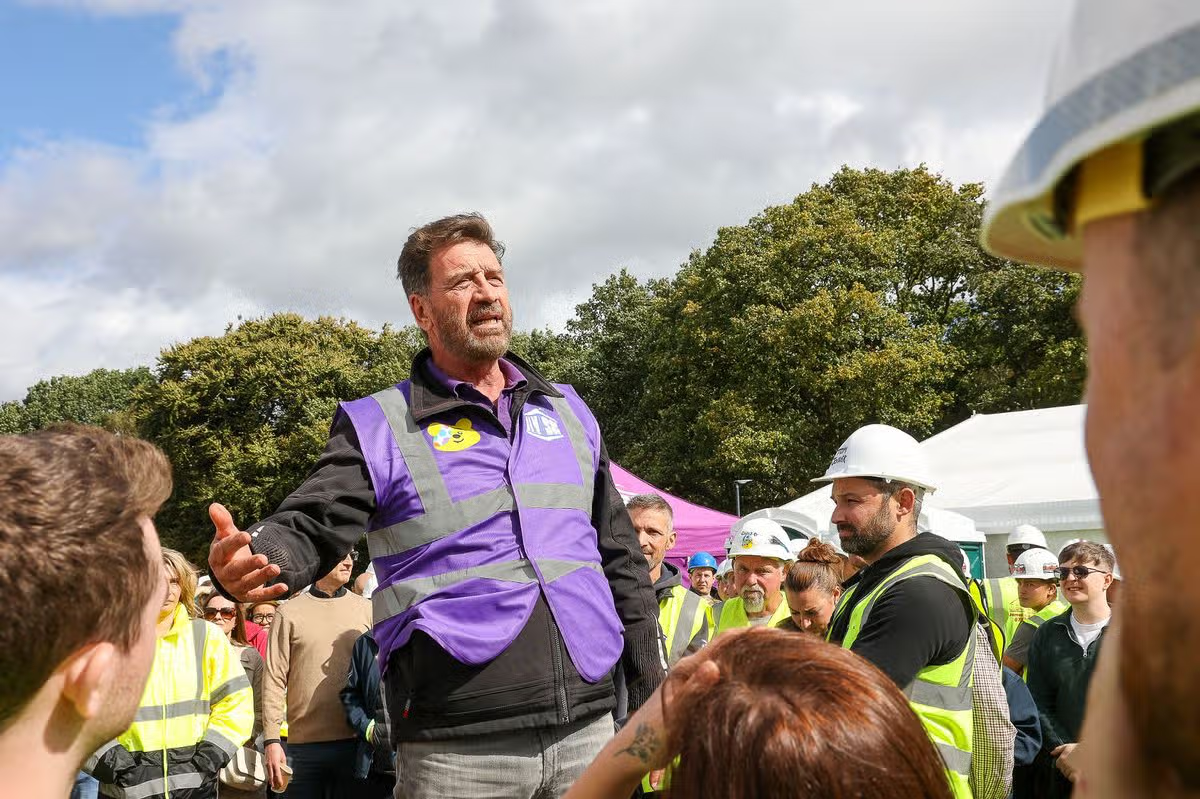
DIY SOS – hosted by Nick Knowles – will not return in its current format again following the end of this series, as we take a look back at some of the incredible families the team have helped over the years

DIY SOS will not return in its current format – as fans launch a petition to reinstate the show hosted by Nick Knowles.

The presenter was devastated by the news from the BBC that the show won’t return as it is now. For nearly three decades, Nick and the DIY SOS team have been joined by volunteers, tradespeople and supporters to transform the lives – and homes – of families who really need their living spaces adapted, changed or added to to help make their lives just that little bit easier.

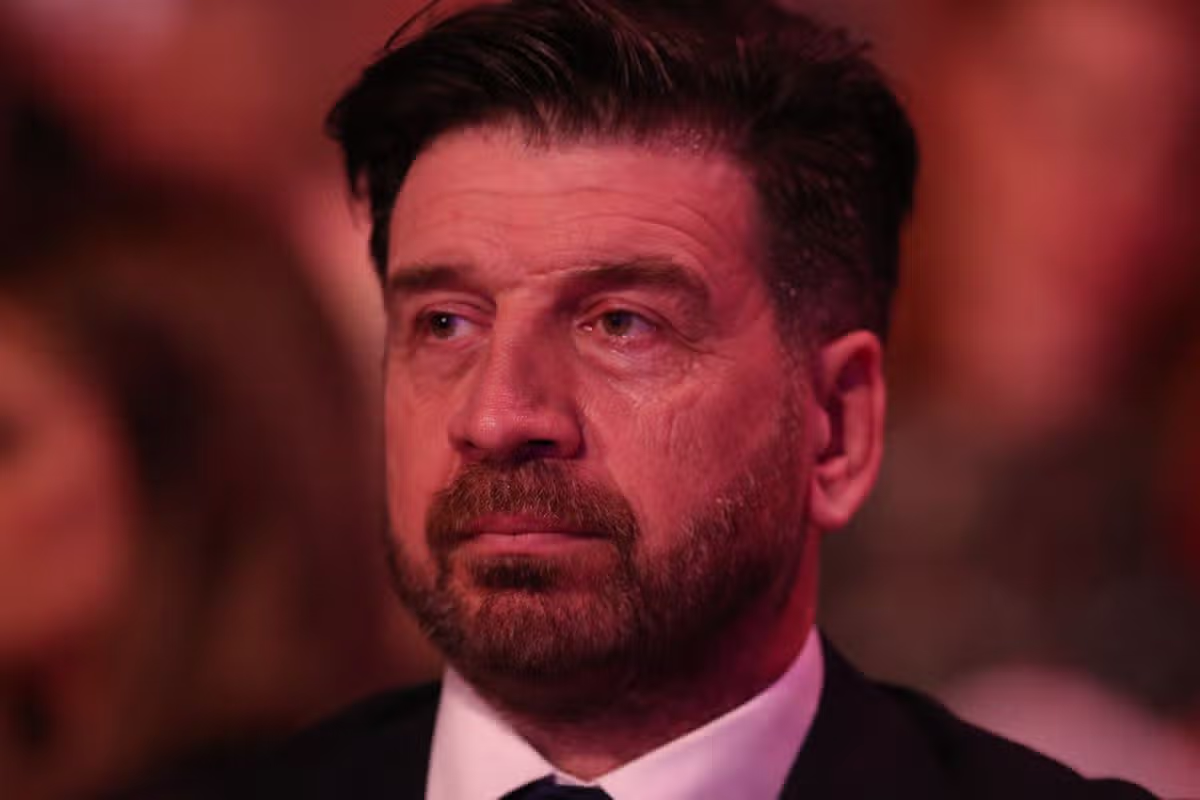
Last night, fans were in tears as the final episode aired. The BBC have said the show will return next year but not in the format it is now. Ahead of the episode last night, Nick told his followers how emotional he was feeling about the show’s future.

“We have been told the programme has been shelved and not ended but I have asked the question, ‘Will it ever come back in the form it is where it builds whole houses for people or builds these hospices and charity places?’ and I’ve been told no, if it comes back in the future it will be smaller and more cost effective,” he said.

Discussing how he feels about the show ending in its current format, he added: “I thought I would be OK with it but actually it’s a little bit emotional. I’d like to thank everyone we’ve worked with over the last 26 years.”

A BBC spokesperson previously said: “In light of the BBC’s savings challenges we have taken the decision to rest DIY SOS in 2027 and commission a new spin-off show instead from producers South Shore. DIY SOS Rebuilt My Life will revisit successes from the show’s past and expand the brand on the BBC in a more cost-effective way next year.”

Here, The Mirror look back at just a few of the incredible people Nick and the team have helped over the years.

The Hudson Family

One of the most poignant stories from the history of DIY SOS was that of Darren Hudson, who hailed from Hull. Darren was diagnosed with a degenerative spine condition in 2017 and feared how he could provide for his family following his diagnosis.

In a wheelchair himself, Darren also lived with adopted son Oliver, who had severe disabilities. The DIY SOS team transferred the entire home, which was also being live in by Darren’s two other children.

Following the build, the family of four spoke of how they could take the “next step forward” finally with their new property. He told the volunteers and tradespeople: “Words don’t even seem enough. I have been in there and I didn’t even recognise my house. In fact it’s not a house, you have brought the home back for us.”

In 2020 when the show aired, the BBC announced the sad news that Ollie had since died, with host Nick sending his condolences to the family following their devastating loss.

The McAuley Family

DIY SOS fans will remember the tragic story of the McAuley family, made up of mum Lindsey and her four children. Sadly, Shaun McAuley died the previous year to them being on the show, leaving the house unfinished.

Shaun was diagnosed with an aggressive form of cancer but works on their home extension in Kettering had to stop when Shaun got ill. He had a kidney and bowel operation but fell ill with cancer and died in November, just two months or so after falling ill.

As a show of support, members of the Royal Engineers, Shaun’s old regiment, also helped to finish the project

“Shaun would have been amazed at what they achieved and thankful for what everyone’s done for his family. He would have loved living here,” Lindsey told The Mirror at the time, “To know so many people have come together to create this beautiful house out of the goodness of their own hearts, it’s just amazing. Without the show, we wouldn’t have been home for quite some time.”

A community makeover

As well as individual homes, DIY SOS also worked on big community projects too. One of those was at childhood cancer support centre The Joshua Tree, a charity based in Northwich, Cheshire.

It was one of the largest the show ever did and was for Children In Need. The upgrades featured two family accommodation studios, a gym for rehabilitation, two therapy suites, two counselling rooms, a teenage breakout room and an outdoor therapy garden.

There were around 250 volunteers each day, with founders Dai and Lynda Hill sharing: “It’s incredible, people came from far and wide to help us. The energy, compassion, and teamwork were just inspiring. We can’t thank them or BBC Children in Need enough.”

Nick Knowles had said ahead of the build: “We have another huge build ahead of us in Cheshire, which will benefit children who are going through cancer treatment and help support their families too. If you have a trade, a skill, can spare some time to graft or can help us with materials then get in touch. It’ll be great fun and something you’ll never forget being part of.”

Young Dan stuck in hospital

Most recently, host Nick Knowles was reduced to tears after he and the team headed to Preston to help 16-year-old Dan, who has spent the last three years in hospital after life-saving surgery to remove a brain tumour left him with complex disabilities.

He had been ready to leave the hospital for 18 months, but has been stuck on a ward as their home wasn’t suitable for his needs. Mum Julie spent her time by Dan’s side in hospital and dad Nigel was at home looking after their daughters, Charlotte and Emily, and the family had been living apart for years.

Towards the end of the build, he teared up as he said: “We still have hours of hard graft ahead of us, but against all the odds, the end is in sight. I genuinely don’t know how to put into words how tough this has been, how amazing everyone has been, how much doubt I had along the way, how much guilt I felt, and how amazing it is that these amazing people have called it of physically and emotionally draining,” before stepping away from the cameras.

The Chapman Family

One of DIY SOS’ builds followed the story of dad Peter, who was building am extension for his family at their home in Charlton Kings, near Cheltenham. He spent 24/7 caring for his wife Sarah and daughter Suzanne, who are at different stages of a long-term genetic disorder called myotonic dystrophy.

The symptoms of the condition are worsening muscle loss and weakness and it can also include cataracts, intellectual disability and heart conduction problems. Sadly, just before the team arrived, daughter Margaret – who had the same condition – died aged 31.

Peter’s mother also had died a few years before, so he and Sarah took 64-year-old autistic brother Steve in to live with them too. Peter himself was later diagnosed with fibromyalgia.

Like this s tory? F or more of the latest showbiz news and gossip, follow Mirror Celebs on TikTok , Snapchat , Instagram , Twitter , Facebook , YouTube and Threads .

Source link

‘Disappointed’ Nick Knowles issues statement as DIY SOS rested after 25 years

Nick Knowles has spoken out after the news that DIY SOS was being rested by the BBC and whilst he is “disappointed,” he can understand the reasons behind the decision

Nick Knowles has admitted he is “disappointed” that DIY SOS has been rested. The TV star, 64, has fronted the BBC programme since it began in 1999 but it emerged at the end of last week that bosses had decided to pull the programme for now.

After 27 years, the BBC has admitted cost-cutting methods are behind the decision to bench the show for the foreseeable, and now former Strictly Come Dancing star Nick has spoken out on the matter.

He wrote on Instagram: “You may have already seen the news that DIY SOS is being put on ‘pause’. Of course, I’m disappointed not to be filming the show next year or again in the same format we know and love.

“But I do understand there’s no endless pot of money at the BBC and sometimes they have to make difficult decisions. Thank you for all the messages and comments over the weekend. It’s so clear you share my sentiment and deep love for this show.

To see more of the stories you love from The Mirror and to find them easily in Google then make us your preferred source. Free and easy-to-do, just click on the link here to find more from The Mirror at the top of your feed.

“For 26 years it’s been an honour and a privilege to be part of DIY SOS and I’ve loved nothing more than making it. What I always come back to is that it’s the people who are the beating heart of SOS. “

Nick used the rest of his lengthy post to reflect on the help that the programme has brought to thousands during its time on air, and thanked everyone who has been invoved.

“Over the years we’ve had thousands of tradespeople, suppliers and volunteers, all people trying to make their own living, who have shown up time and time again for the families who need it most. Kind, hardworking people and real working-class heroes coming together to build a better community. It really is the best of Britain and we need to see more of it on telly.

“I’ve always put my head above the parapet for tradespeople and this industry I love and I’ll keep doing that. But for now, I want to say thank you to every family for sharing their story with us over the last 26 years.

“To the volunteers, production team, purple shirts, commissioners and everyone watching at home, we couldn’t have done this without you. And to everyone who hasn’t seen the series yet, give it a watch. I promise your heart will be warmed.”

Despite initial reports that the programme had been cancelled entirely, the BBC were keen to stress that this is not the case.

A BBC Spokesperson said: “In light of the BBC’s savings challenges we have taken the decision to rest DIY SOS in 2027 and commission a new spin off show instead from producers South Shore. DIY SOS Rebuilt My Life (w/t) will revisit successes from the show’s past and expand the brand on the BBC in a more cost-effective way next year.”

The comments come after sources claimed the show was to be cancelled all together. A source told The Sun : “We were told it was being paused, but when we asked whether it would come back in 2028 or 2029 they couldn’t give us an answer.”

They went on: “It’s a disgusting outrage that a BBC show, which genuinely helps some of the neediest people in our country, is being shut down because it’s basically seen as ‘too expensive’.

“DIY SOS is one of the few shows on television that genuinely represents working-class people. Thousands of tradesmen and women offer their time, and often the materials, for free to people in need, even when they’re struggling to make ends meet themselves.”

Like this story? For more of the latest showbiz news and gossip, follow Mirror Celebs on TikTok , Snapchat , Instagram , Twitter , Facebook , YouTube and Threads .


Source link

‘We tried a DIY family digital detox and there was one unexpected benefit’

As new research reveals young people could spend 42% more time on their phones during the school holidays, mum of two Hannah Britt took matters into her own hands on a DIY digital detox

With half term approaching, screen time may be about to soar. In fact, young people could spend 42% more time on their phones during the summer holidays compared to term time, according to research by Vodafone. But it doesn’t have to be this way. Mum of two Hannah Britt booked her family into a remote farmhouse in France for a DIY digital detox to reap the rewards of going screen-free…

I’m not going to lie, I’m completely addicted to my phone. As is my partner John. We spend our evenings scrolling social media, sending endless Reels back and forth. We work on small screens during the day, take breaks and look at our tiny screens… then watch the big screen in the living room to unwind.

Thankfully our two young children don’t have a phone, but they do both own a Kindle and are quite partial to a Peppa Pig marathon. Like many, during school holidays their screen time soars. And this is something I’m determined to change. When I read the research that young people could spend 42% more time on screens on school holidays, it gave me an idea.

Leaving the Kindles at home, I booked a remote French farmhouse on Airbnb and packed us off for a DIY digital detox. And I’m so glad I did. The stone farmhouse, in Saint-Sauveur-de-Cruzieres provided the perfect backdrop for old fashioned family fun – not a telly or smartphone in sight.

Parenting expert Kirsty Ketley explains. “School provides children with structure and built-in limits on screen use, and of course, once home, there are less hours in the day for screens, but once the holidays arrive, that structure disappears,” she says.

“Parents are often juggling work, childcare, and the cost of keeping kids entertained, so screens naturally become a convenient option. On top of that, digital entertainment is designed to be engaging and hard to switch off from, so it’s no surprise children gravitate towards it when they have long stretches of free time.”

So what’s the issue? “It’s not that screens are inherently ‘bad’,” says Kirsty. “In fact, they can be educational, social, and even calming at times. However, when screen time dominates, it can crowd out other important activities like active play, real-world socialising, outdoor time, and rest.

High levels of screen use are also linked to disrupted sleep, reduced concentration, and higher stress levels in both children and adults. The key issue isn’t the screen itself, but what’s being displaced when usage creeps up too high. It’s why having consistent boundaries around screen time is important, so that kids strike a healthy balance.”

But back to the Airbnb farmhouse. It was a Guest Favourite (easy to recognise as they have a special logo on the properties, and a collection of the most-loved homes on Airbnb, according to guests), and soon became a home from home.

On arrival, John and I placed our phones in a drawer, along with the children’s Kindles. Finding the TV remote, we hid it on the top shelf of a bookcase. The DIY digital detox had begun!

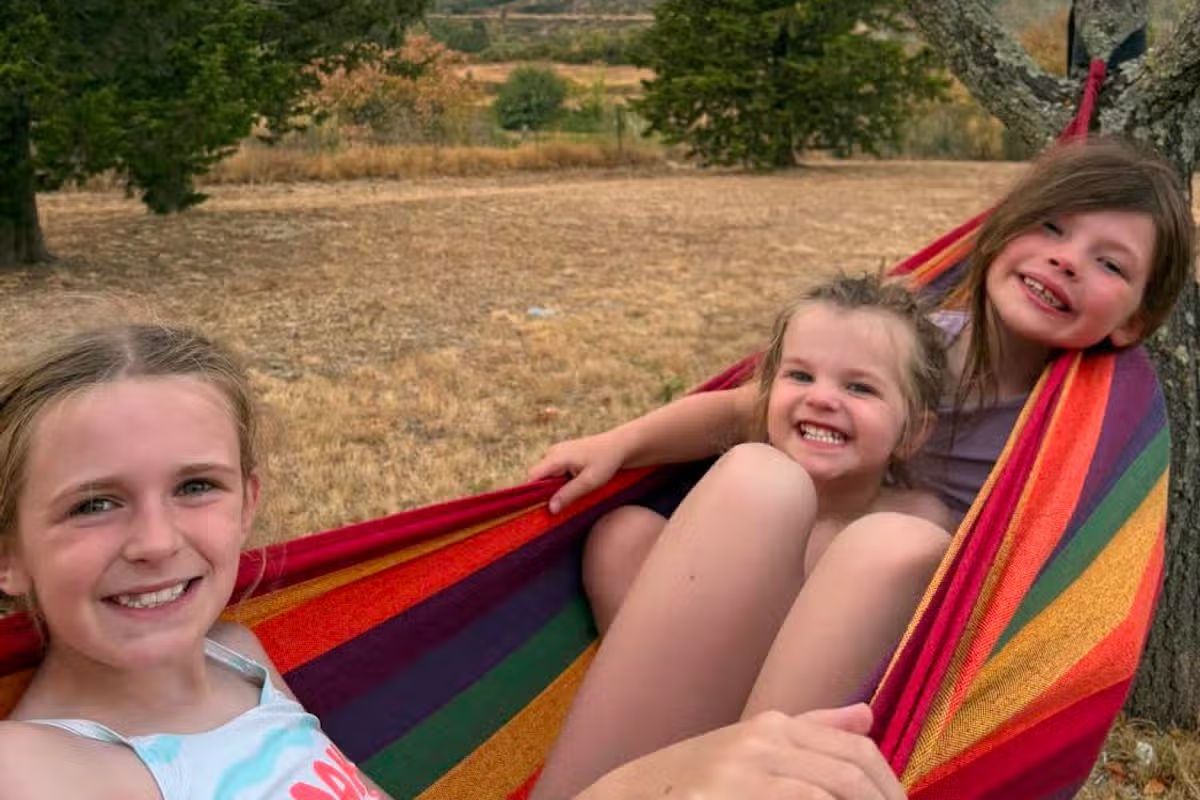
And soon we found there was plenty to do that didn’t involve a device. The pool, of course, provided hours of entertainment, as did the swings, hammock and garden games. With no phone to check, I found myself truly engaged the whole time, present and in-the-moment. The girls were the same.

Peppa Pig was replaced with a performance of the Backstreet Boys in the outdoor dining area, and Instagram was shunned in favour of a nature walk in the grounds. We saw a rabbit, hundreds of crickets and the back end of a badger for our troubles.

The farmhouse’s long indoor table was close to the aircon, and provided a place to draw and read when the weather outside reached boiling point. And we spread blankets out on the parched grass to lounge upon and play tea parties.

We did use a satnav (technically a screen) when exploring the local area, but car games provided entertainment on journeys to Barjac for its antique market, and and phones were stashed in bags when out and about, only taken out to pay for fridge magnets and snacks.

As the days wore on, the kids stopped asking for their Kindles, or to watch TV, and I missed my phone less and less. I felt more relaxed than I had in ages, more present and calm. By the time our week at the farmhouse was up I was almost sad to take my device from its drawer, something totally unexpected. And I can’t wait to go screen free again.

Exploring Saint-Sauveur-de-Cruzières and beyond

  • Barjac: Stroll through the shady, cobbled streets of this neighbouring Renaissance village (about 7.4 km away), known for its stone architecture, local artisan shops, and vibrant markets.
  • Saint-Montan: Wander around a beautifully restored medieval village clinging to the rocks near the Sainte-Beaume gorges.
  • Local Markets: Visit nearby regional open-air markets, such as Barjac on Fridays or Saint-Ambroix on Tuesdays, to sample local goat’s cheese, honey, and charcuterie.
  • Gorges de l’Ardèche & Pont d’Arc: See the famous natural stone arch of Le Pont d’Arc (about 16 km away) and enjoy canoeing, swimming, or lounging on the river beaches.
  • Bois de Païolive: Hike through a magical, labyrinth-like stone forest filled with bizarrely shaped limestone rocks and ancient oak trees.

Plan fun offline activities

  • Cook and bake together: Involve children in prepping meals, measuring ingredients, or baking treats to build teamwork and practical skills.
  • Head outdoors: Go for family bike rides, visit a local park, or kick a football around to boost physical health and burn energy.
  • Play together: Break out board games, card games, puzzles, or building blocks like Lego for low-stress, interactive group play.
  • Create easy access to crafts: Keep colouring books, crafting supplies, and building kits in a visible, reachable spot so family members can grab them out of boredom instead of reaching for a screen

*For more information on Airbnb, see HERE

Source link

Ben Gleib built a late-night show in his house — he’s not the only comedian going DIY

A quick glance from the sidewalk shows a midsize home in the Valley. Fallen leaves from a large tree scatter across the neatly trimmed front lawn. It’s just like any other house in a suburban neighborhood outside of Los Angeles.

Inside, there’s a whole network TV operation going on.

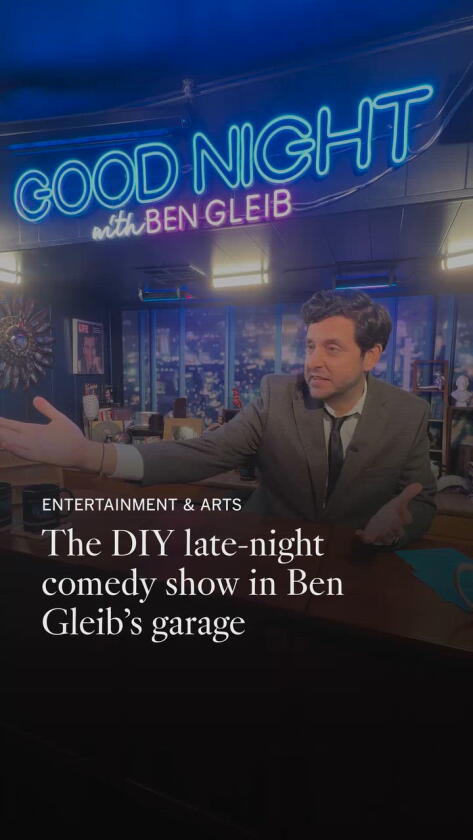
The three-bedroom chateau is packed with people. Every inch of space in the house is being used to make “Good Night With Ben Gleib” happen. The living room TV displays the multiple angles of cameras spread across the house. The pantry doubles as a control room while the backyard shed was turned into a venue for the musical guest.

It’s not a traditional late-night talk show. It’s not on a legacy network, it isn’t filmed in a studio, and the U.S. president isn’t calling the host a “deranged lunatic.”

This show is filmed in a room of Gleib’s house that was converted into an 18-seat studio. The host drinks a cocktail as he delivers his topical monologue in front of blue drapes, and after the taping concludes the cameras continue to roll and capture the nightcap, where Gleib mingles with audience members.

Rather than following the traditional path — from stand-up or sketch comedy to eventually landing behind a late-night desk — Gleib built his own opportunity and releases it on YouTube, a trend becoming more prominent in the comedy world.

“The landscape has changed very largely,” Gleib said. “It’s hard to make your mark in TV and a stand-up appearance on late night doesn’t change your career like it use to, you really have to find creative ways to create your dream career.”

Production staff controls the taping of the show.

Production staff controls the taping of the show “Good Night With Ben Gleib” on Sept. 16.

(Brian Feinzimer / For The Times)

Since “Lazy Sunday” from “Saturday Night Live” hit the airwaves and caught a second wind on YouTube, the comedy landscape “had changed forever,” according to Seth Meyers.

“What made it so great then and still today is that it was an instant hit but also felt DIY in a way things hadn’t for so long,” said the “Late Night” host in an interview with GQ.

Social media platforms like YouTube have helped make it easier for anyone with a camera to create original content and spread it to the masses. The hashtag “comedy” has 20 billion views on TikTok and genres such as stand-up and sketch comedy grow every year, according to Business Insider. Meanwhile, late-night television has taken a dip in audience and ad revenue.

The old guard of comedy is changing and the DIY movement has transformed fame in the comedy world. Comics no longer have to wait to get stage time on a late-night talk show, they just need to get it done, said Nicole Blaine, owner of the Crow comedy club. It is also inexpensive to create digital content. With platforms like TikTok, Instagram and YouTube, the ability to be seen is easier, she added.

“I don’t think you can count on anyone to ‘make it,’” Blaine said. “I think you literally have to make it yourself and I do believe that the industry [is] paying attention behind the scenes in more ways than the artists know.

“You want to be your own showrunner,” she added.

Makeup artist Lisa Lopez applies makeup to musical guest Ada Pasternak while in the kitchen of the home.

Makeup artist Lisa Lopez gets musical guest Ada Pasternak ready in the kitchen of Ben Gleib’s home, also the set of “Good Night.”

(Brian Feinzimer / For The Times)

Representation comes and goes, but the fan base a comedian creates for themselves stays with them, Blaine said. Creating digital content for social media to back up a career in stand-up demonstrates that success is completely within the control of comics, she continued.

The DIY formula relies on taking advantage of the skills each performer has and using them to self-produce material to build a fan base, a concept that comedian Emmy Browning is putting into practice. Using her background in screenwriting, she pitched “Hands!” to the Elysian Theater and performed it for its Spaghetti Festival, designed to showcase new work, within three months.

“I essentially wrote, cast, directed, produced, got a crew together …,” she said. “It was just a crazy team of people that came together for no money to make this thing happen.”

“Hands!” spoofs FX’s “The Bear,” while satirizing TV conventions, like the will-they-won’t-they romantic plotlines, multicamera operation and filming in front of a live studio audience. Browning’s show was performed live while a camera crew shot different angles that were being projected on screens located on stage.

It made the stream of the show feel like an actual live performance. Now the stream can be seen by anyone, anywhere in the world, at any time. Browning said when her comic friends began to create clips for social media, they were able to travel around the country and perform for the fans they’ve garnered from their content.

“There are so many different ways and opportunities to be seen first,” Browning said. “…If you have the stamina to generate content online that promotes yourself, you can really make a living or create a fan base yourself.”

Self-producing isn’t only about promotion, it’s about creative ownership.

“There’s nothing as creatively freeing as being your own boss and not having to conform to network notes or the comedic ideas and opinions of people who have never been comedians and have never been recognized for their comedy skills,” Gleib said.

Guests are interviewed during the taping of "Good Night With Ben Gleib."

Guests are interviewed during the taping of “Good Night With Ben Gleib.”

(Brian Feinzimer / For The Times)

The sentiment is shared by Ron Lynch, a comedian known for voicing Hugo, the neurotic health inspector in Fox’s animated series “Bob’s Burgers,” who’s produced a variety show at the Elysian Theater called “Tomorrow!” for 20 years now.

The show gives participants the opportunity to do whatever they want, within a five-minute time frame. Half the acts are stand-ups, the other half “are just weird.”

“We’re not responsible for sponsors or anything like that,” Lynch said. “We can basically do whatever we want.”

Self-producing allows creators to explore their voice without any limitations.

“What we do is provide entertainment,” Lynch said.

In the new DIY era, it is not a matter of when a performer will make it, but rather how much a performer really wants it, Blaine said. It’s a lot of work that needs to get done, even after a day job, but it will separate the people who want it badly over those not wanting to put in the time, she added.

It isn’t about landing a late-night talk show, it is about creating.

“It isn’t easy,” Blaine said. “But artists will always find a way if we really want to do it.”

The DIY movement also comes with big risks that will not work unless the comedian believes in it, said Gleib. His team is putting a lot on the shoulders of the comedian to reinvent late night and make it a lucrative business.

And if the big swing doesn’t work?

“I’ll have to come crawling back to the traditional entertainment industry, hoping that I still have a place there,” he added.

Source link