diversify

Canada to fast track oil pipeline meant to diversify economy away from US | Business and Economy News

Carney declared the pipeline a project of national interest, smoothening its way to a single federal regulatory review process.

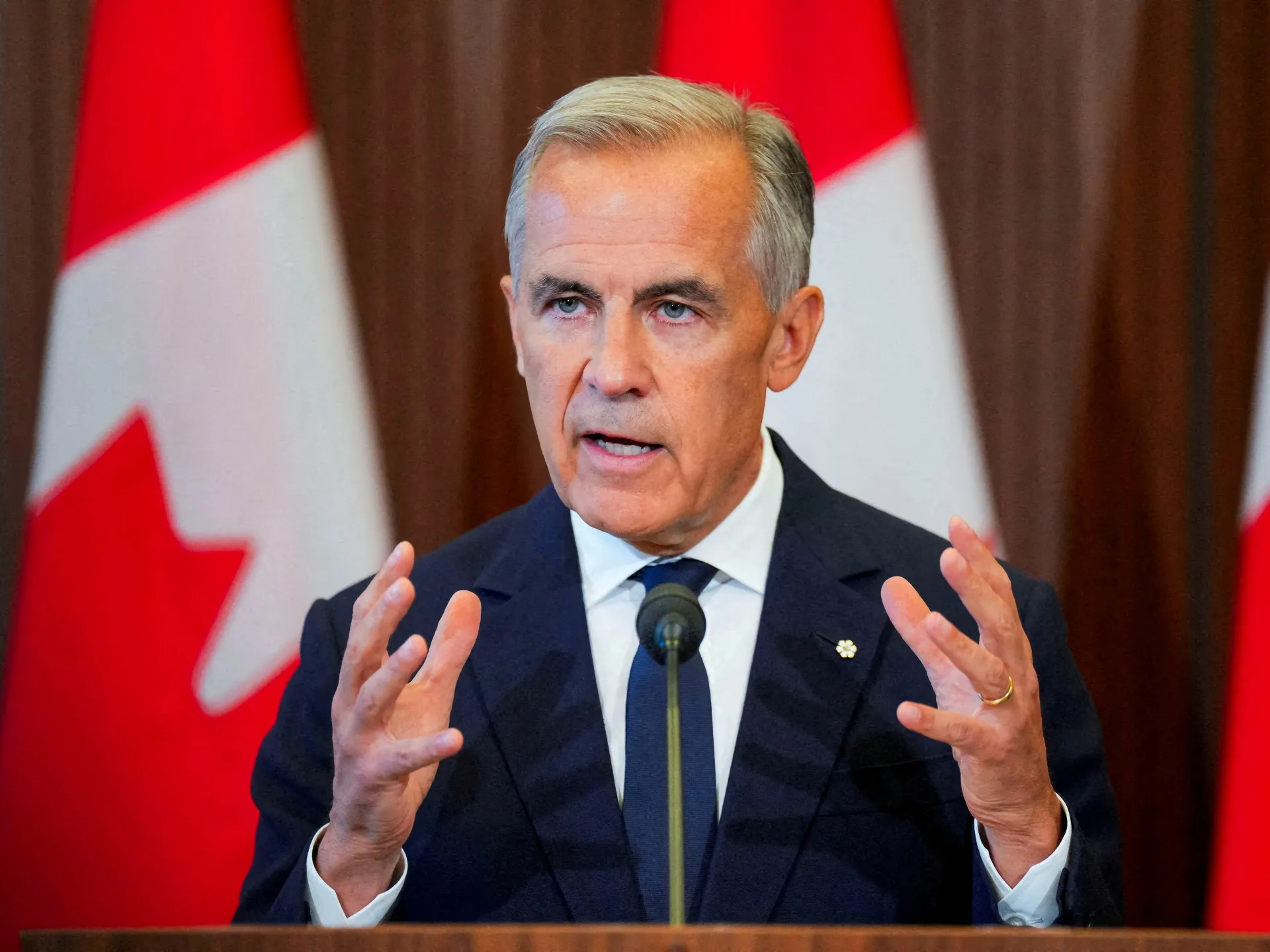
Canada will fast track the approval process for a new proposed crude oil export pipeline to its west coast that could generate billions in revenue and boost economic growth, Prime Minister Mark Carney has said.

Carney made the announcement on Thursday to fast-track the pipeline, which is a crucial part of his bid to diversify the economy away from the United States and help lessen the effect of US President Donald Trump’s tariffs.

Recommended Stories

list of 4 itemsend of list

Carney said Ottawa is officially listing the Pacific Link pipeline, which had been announced in July, as a project of national interest. That will ensure it proceeds through a single federal regulatory review process. He said Ottawa aimed to complete the process by September 1, 2027.

“A pipeline to the west coast is part of our mission to transform our economy, to double our non-US exports over the next decade … [and] to unlock our full potential as a global energy superpower,” he told reporters in Fort McMurray, hub of Alberta’s tar sands industry.

Ottawa says the 1 million barrel a day project would create 140,000 jobs and generate more than 20 billion Canadian dollars ($14bn) in gross domestic product (GDP) per year and 100 billion Canadian dollars ($70bn) in government revenue by 2060.

Canada currently has just one east-west oil export pipeline in Canada, the 890,000-barrel-per-day Trans Mountain pipeline. An expansion of that pipeline was completed in 2024, but it is already running at capacity.

For years, Canada has sent more than 90 percent of its crude oil exports to the US via pipeline. A new oil export pipeline could make Canada a major global energy supplier, as Asia’s top importers seek oil from outside the Middle East in the wake of the Iran conflict.

Filling the pipeline, however, would require new tar sands expansions of the type no company has undertaken in more than a decade.

The pipeline will be built by government-owned Trans Mountain Corp in coordination with Pembina Pipeline Corp. Alberta estimates it could cost between 35.2 billion Canadian dollars and 43.7 billion Canadian dollars ($24.7bn – $30.7bn).

The majority owners will be the federal government and the government of Alberta. Indigenous communities will be offered a minimum of 10 percent ownership interest.

Previous oil pipeline projects in Canada have faced strong opposition from environmentalists and Indigenous groups, resulting in the cancellation of some projects and leading to cost overruns and construction delays with others.

Alberta separatism

Carney made the announcement alongside Alberta Premier Danielle Smith in Fort McMurray in the heart of Canada’s tar sands, a move meant to mend relations with oil-rich Alberta as separatists push for a referendum on leaving Canada.

Alberta is holding a public vote on October 19 on whether to hold a referendum on leaving Canada. Smith has long complained that Carney’s predecessor, Justin Trudeau, hindered Alberta’s energy industry and fuelled separatist sentiment.

Smith said she would vote to keep Alberta in Canada and called the roughly 22 percent support for separation in a recent poll “still too high for my liking”.

“I don’t like the fact that many of our fellow citizens have given up on Canada,” Smith said, adding that the pipeline was an example of how “cooperative federalism can work in action”.

Asked what message Albertans considering separation should take from the announcement, Carney said it demonstrated that “Canada is working” and showed what the country could achieve by acting together.

Source link

EU seals Philippines trade deal in push to diversify away from China and US

Published on •Updated

The European Commission struck a trade agreement with the Philippines on Tuesday, stepping up its diversification strategy across the Indo-Pacific region.


ADVERTISEMENT


ADVERTISEMENT

The deal comes more than a year after the US introduced sweeping new tariffs on many of its trading partners, prompting retaliatory measures and adding to global trade tensions.

Since then, the EU has been seeking new trade ties, recently concluding major deals with India, Australia and Indonesia.

“This agreement sends a clear signal that the EU is reinforcing its engagement with the Indo-Pacific,” EU Trade Commissioner Maroš Šefčovič said on Tuesday.

“Half of global consumers are covered by European Free trade agreements. Nobody else has this advantage.”

“Squeeze on supply chains”

The new agreement will give EU businesses access to a market of 113 million people, and remove over 94% of customs duties. It will cover more than 97% of bilateral trade, including EU exports of machinery, medicines and medical appliances, as well as agri-products such as meat, pork, poultry and spirits.

Exports from the Philippines are dominated by semiconductors, integrated circuits and industrial machinery.

The deal should also facilitate EU investment in raw materials in the Philippines, as the EU seeks to move away from China, which holds a monopoly on key raw materials.

Bilateral trade in goods between the EU and the Philippines was €17.6 billion in 2025, while trade in services reached €10.3 billion in 2024. The stock of EU foreign direct investment in the Philippines amounted to €15.4 billion.

Šefčovič also said there was a “mutual interest” with countries in the wider Indo-Pacific area “to address the current global turbulence” and “the squeeze on the supply chains.”

Brussels says China has weaponised critical products for EU industry such as chips and rare earths in 2025, jeopardising whole sectors such as the car industry.

The Commissioner added that trade deals with Thailand and Malaysia were next on the EU agenda, with an agreement with Bangkok foreseen by the end of the year.

Source link

Arab News | Iraq eyes Europe as it seeks to diversify oil exports: PM

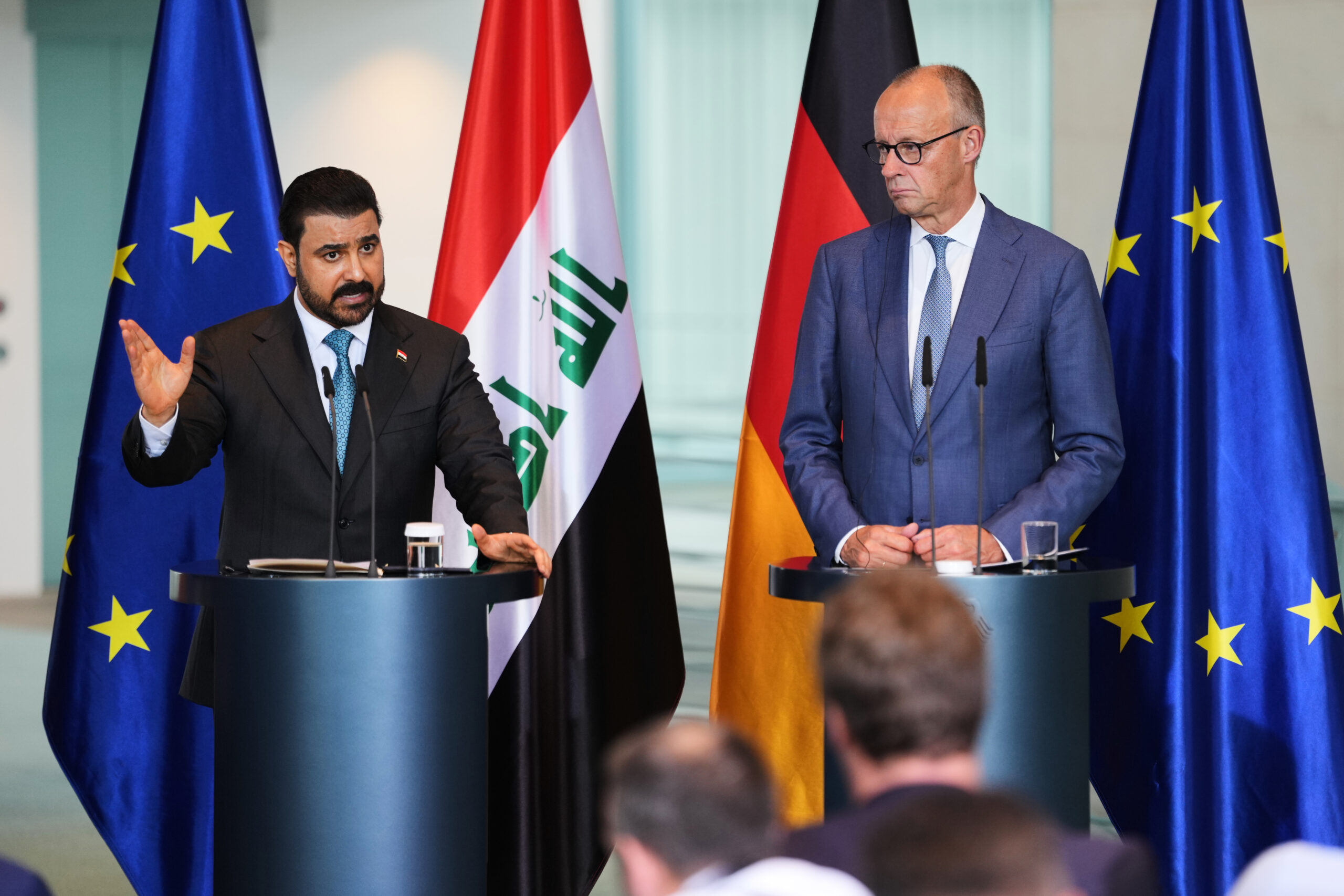
BERLIN: Iraqi Prime Minister Ali al-Zaidi said on Tuesday that he discussed selling oil to Europe during visits to France and Germany, as Baghdad seeks to diversify its export routes and reduce its reliance on the Strait of Hormuz.

During a press conference with German Chancellor Friedrich Merz in Berlin, Zaidi said “we want to expand and diversify our export routes”.

He added that “Iraq cannot remain hostage to a single corridor” as recent events have demonstrated, referring to the Strait of Hormuz, which has been blockaded by Iran during the Middle East war.

Zaidi said that he had discussed oil exports to Europe with Merz and French President Emmanuel Macron, whom he met in Paris on Monday.

Crude oil sales account for nearly 90 percent of Iraq’s revenue but its exports have been hurt by the outbreak of the Middle East war between Iran and the United States.

Before the war began in February, Iraq produced around four million barrels per day, and exported an average of 3.4 million bpd, mostly via Hormuz.

Most of its oil exports go to East Asia, with China and India its largest buyers.

Due to the disruption, Iraq began exporting crude using tanker trucks through Syria, as well as through a pipeline to the Turkish port of Ceyhan, although these routes can handle only a fraction of its usual sea-bound trade.

Zaidi said that Baghdad could “double its oil exports through the Mediterranean” to supply markets in Europe and the United States.

Zaidi, who hopes to increase Iraq’s oil production to 10 million barrels per day, said that “a large share, or nearly half, can go to European countries and the West”.

He said that Iraq and Germany were expected to reach “an understanding on the export of crude oil” while Baghdad would purchase German technology and equipment.

Merz said that the main focus for Iraqi-German cooperation is the economy.

“Many German companies are now active in Iraq. They are developing new solutions, for example for energy supply,” he said, adding that “the best example is an agreement on Iraq’s electricity supply, which we will sign today”.

Merz also expressed his concerns after Yemen’s Houthis cemented their control over the Bab al-Mandab waterway at the entrance to the Red Sea, a vital route for Saudi oil exports.

“This further exacerbates the situation on the energy markets, and also affects Germany,” he said.


Source link