disputes

Cambodians struggle with displaced lives amid tense ceasefire with Thailand | Border Disputes News

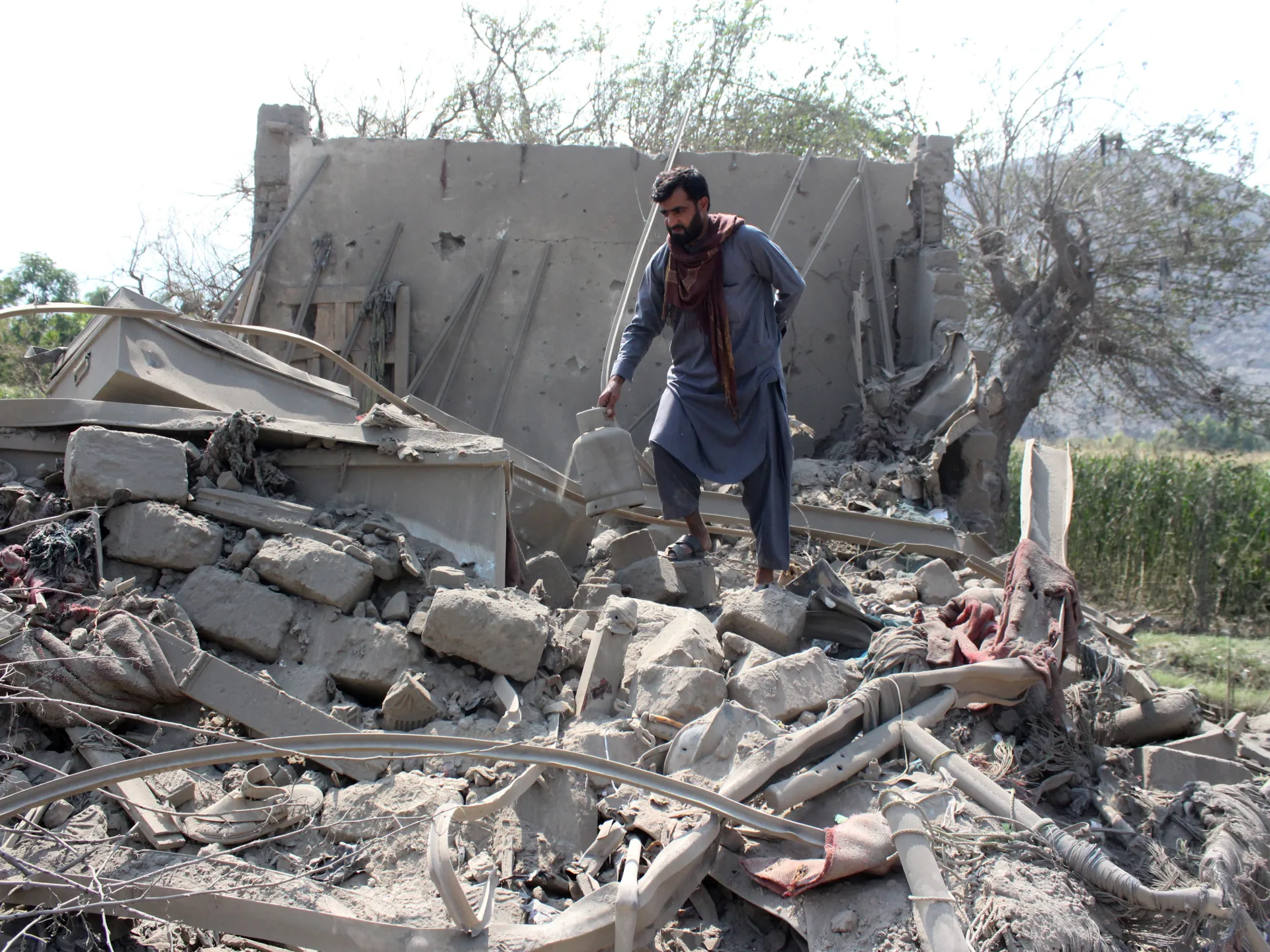
Preah Vihear/Siem Reap provinces – When asked how she spends her day, 11-year-old Sokna rattled off a list of chores.

She first fetches water, then washes dishes and sweeps the leaves and dust from around the blue tarpaulin tent her family now calls home, in the grounds of a Buddhist pagoda in northwestern Cambodia.

Recommended Stories

list of 4 itemsend of list

Sokna and her sister have stopped attending school, their mother Puth Reen said, since moving to this camp for people displaced by the recent rounds of fighting between Thailand and Cambodia.

The two sisters are among more than 34,440 people who remain in displacement camps in Cambodia – 11,355 of whom are children – as of this month, according to the country’s Ministry of Interior.

“I tried to tell them to go to school, but they don’t go,” Puth Reen told Al Jazeera, explaining how precarious life had become since returning to live in Cambodia after fleeing neighbouring Thailand, where she had worked for many years, as the fighting started.

Like Puth Reen and her family, the future looks murky for the tens of thousands of Cambodians – including many schoolchildren – who are still in displacement camps, and their lives remain disrupted months after the last outbreak of fighting between Thailand and Cambodia.

Forced to flee their homes in areas where local troops are now stationed and on high alert, or in areas occupied by opposing Thai forces, Cambodia’s internally displaced say they are surviving off aid donations, while those more fortunate are transitioning from emergency tents into wooden stilted houses provided by the Cambodian government.

But with tension still evident between the leadership in Bangkok and Phnom Penh, the tenuous ceasefire along the Thai-Cambodia border means life cannot yet return to normality.

Some areas on the Cambodian border, such as the villages of Chouk Chey and Prey Chan in Banteay Meanchey province, have become rallying points for nationalists who post on social media about the Thai occupation of Cambodian territory. Their anger is directed at the large shipping containers and barbed wire that Thai forces have used to block access to villages once inhabited by Cambodians and occupied during fighting.

The Thai military-installed containers now form a sort of new frontier between the two countries.

The Cambodian military has also prevented people, such as local farmer Sun Reth, 67, from returning to their homes in front-line areas, which are still highly militarised zones, with troops ready at any moment for a new round of fighting.

“Now the Cambodian military base is just next to [my house],” Sun Reth said, adding that she was not allowed by authorities to sleep in her modest home or pick cashew nuts from her farm to sell for a little income.

Cambodian children more focused on ‘rumours’ of war

The long-held border dispute between Thailand and Cambodia erupted into two rounds of conflict last year, over five days in July and almost three weeks in December.

Dozens were reported killed on both sides, and hundreds of thousands of civilians fled their homes as both countries’ armed forces fired artillery, rockets, and, in the case of Thailand, conducted air strikes deep into Cambodian territory. Thailand has a modern air force, a military capability not possessed by its smaller neighbour.

Cambodian and Thai officials reached a ceasefire on December 27, but the situation remains tense five months on.

For families who fled the fighting, school continues for most children in the displacement camps, but parents say education is fragmented while their lives are still so unsettled.

Mothers at the Wat Bak Kam camp for the displaced in Preah Vihear province told Al Jazeera that primary school students can join classes at a local school, but high school students need to travel daily to the provincial capital, about 15km (9 miles) away.

(Danielle Keeton-Olsen/Al Jazeera)
Families living temporarily at the Wat Bak Kam internal displacement camp sit outside their tents, supplied by Chinese government aid [Roun Ry/Al Jazeera]

Now the rising cost of petrol, due to the US-Israel war on Iran, has made it even harder for teenaged students, who have access to motorcycles, to make the journey to school.

Kinmai Phum, technical lead for WorldVision’s education programme, which is providing support to the camps, said school dropout rates and children skipping classes have increased substantially among students from the displaced border regions.

Kinmai Phum said the situation is a perfect storm of problems: Displaced families have been forced to move around for shelters, schools and temporary learning spaces lack facilities, and some students have psychological trauma due to the conflict.

“Local authorities [are] concerned that many children may not return to school at all if displacement and economic hardship persist,” Kinmai Phum said.

(Danielle Keeton-Olsen/Al Jazeera)
Puth Reen, left, and her three daughters sit inside their tent in a camp for the displaced at Wat Chroy Neang Ngourn in Siem Reap province [Roun Ry/Al Jazeera]

Yuon Phally, a mother of two, said she had noticed the impact of the war on her daughter and son, who are in their first and third years in primary school.

When they return from school, Yuon Phally said, they tell her about rumours they had heard about Cambodia and Thailand resuming fighting.

“Their feeling is not fully focused on school; they focus more on these rumours,” she said.

Her children’s world was more impacted by the conflict because their father is a soldier stationed in the Mom Bei area of the border.

During the fighting in December, Yuon Phally said she could not convince her children to go to school because they all waited to see if their father would call on a mobile phone from the front line.

“I couldn’t hold back my tears, and that added more pressure onto my kids,” she said.

“They would ask about their dad and how he is doing now. Then they told me to eat rice. They understood my feelings.”

She said her children’s focus on their studies only improved after their father returned from fighting to the camp where they are staying, to rest and recover from sickness and injuries sustained in battle.

(Danielle Keeton-Olsen/Al Jazeera)
Two construction workers transport corrugated metal sheeting between the newly constructed resettlement houses for displaced Cambodians in Preah Vihear province [Roun Ry/Al Jazeera]

‘Who doesn’t want to have peace?’

Soeum Sokhem, a deputy village chief, told Al Jazeera how his home is located in the militarised “danger zone” along the border, but he feels compelled to return every few days to check on his house, tend crops, sleep an occasional night, and check in with other neighbours doing the same.

“I can’t just stay here”, he said of camp life.

“I have to go back.”

When asked how he felt about the border war, Soeum Sokhem said he had experienced so much war in Cambodia that he did not know how to describe his “inner feeling like I really want to”.

He then listed off all the conflicts he had lived through in Cambodia since the 1960s: The spill over into Cambodia from the US war in neighbouring Vietnam; the US bombing campaign in Cambodia; the genocidal Khmer Rouge regime, and the civil war that followed after Vietnam’s intervention to topple the regime’s leader Pol Pot in 1979, and which lasted until the mid-1990s.

Then in the 2000s, sporadic border fights with Thailand began, he said.

(Danielle Keeton-Olsen/Al Jazeera)
Soeum Sokhem at the internal displacement camp at Wat Bak Kam [Roun Ry/Al Jazeera]

Cambodia’s contemporary history has been anything but peaceful, a fact which might explain why the current Cambodian government so often speaks of peace. Government buildings and billboards proclaim the government’s unofficial motto: “Thanks for peace.”

“But who doesn’t want to have peace?” Soeum Sokhem said, after charting his life and the many conflicts he had lived through.

Now the 67-year-old said he once again hears gunfire occasionally when he returns to check on his home on the front line.

“Before, when I walked there, it was normal,” he said.

“But nowadays, I walk with fear when going back there.”

Source link

UK to hold off on deal ceding Chagos Islands amid US opposition | Border Disputes News

A bill laying out plans to return the Indian Ocean archipelago, home to the US-UK Diego Garcia base, has been paused.

The United Kingdom is setting aside a bill to return the Chagos Islands to Mauritius amid a lack of support from United States President Donald Trump.

“We have always said we would only proceed with the deal if it has US support,” a UK government spokesperson said in a statement, according to the Reuters and AFP news agencies on Saturday.

Recommended Stories

list of 4 itemsend of list

This followed reports in the UK media that said a bill laying out plans to cede sovereignty of the 60-plus Indian Ocean islands had been dropped from the next parliamentary agenda.

Last May, the UK and Mauritius jointly announced a deal that would return full sovereignty of Chagos to Mauritius, which is some 2,000 kilometres (1,200 miles) away from the archipelago.

Britain would then pay to lease Diego Garcia – the largest island and a strategic location in the middle of the Indian Ocean between Asia and Africa, which is home to the military base – on a 99-year lease to preserve US operations there.

But Trump opposed the move, calling it an “act of great stupidity” in January.

“Diego Garcia is a key strategic military asset for both the UK and the US. Ensuring its long-term operational security is and will continue to be our priority – it is the entire reason for the deal,” the UK government spokesperson added in his statement.

“We are continuing to engage with the US and Mauritius.”

The statement added that the UK “continue[s] to believe ⁠the agreement is the best way to protect ⁠the long-term future of the base”.

‘Big mistake’

After Trump’s initial opposition, he appeared to momentarily back down in February after speaking with UK Prime Minister Keir Starmer, saying Starmer had made the “best deal he could make”.

But he then attacked the prime minister again on Truth Social weeks later.

“He is making a big mistake,” Trump wrote, adding that ceding the Chagos Islands would be “a blight on our Great Ally”.

Over the last six weeks, relations between Trump and Starmer have been further strained by the US-Israel war on Iran.

The UK is now leading a coalition of more than 30 countries to protect vessels in the Strait of Hormuz, without US participation in the initial talks.

Britain has controlled the Chagos since 1814, including after Mauritius gained independence in the 1960s. The Diego Garcia base has played a key role in US military operations in Vietnam, Iraq and Afghanistan.

Chagossians – thousands of whom were forcibly evicted to make way for the base – have brought compensation claims to British courts, culminating in a 2019 International Court of Justice recommendation that the archipelago be returned to Mauritius.

Source link

White House disputes claim of Navy escort on Strait of Hormuz

March 10 (UPI) — President Donald Trump posted on social media that the United States has destroyed 10 inactive mine-laying vessels on the Strait of Hormuz while the White House cleared up a claim by another administration official.

White House press secretary Karoline Leavitt said Tuesday that the U.S. Navy did not escort an oil tanker through the Strait of Hormuz after Energy Secretary Chris Wright claimed it did on social media.

Leavitt said President Donald Trump may consider using Navy escorts for oil tankers on the strait but that has not happened yet.

“The U.S. Navy has not escorted a tanker or vessel at this time,” Leavitt told reporters during a press briefing Tuesday.

Earlier in the day, Wright posted that the U.S. Navy “successfully escorted an oil tanker through the Strait of Hormuz to ensure oil remains flowing to global markets.”

Leavitt said she was “made aware of this post,” but had not spoken with Wright about it.

The post was later taken down.

The price of crude oil fell below $80 per barrel briefly following Wright’s post. It climbed again after the post was deleted.

Iran has taken measures to close the Strait of Hormuz, a critical oil trade route, since the United States and Israel launched strikes on Feb. 28.

To combat the impact the military conflict with Iran will have on the global oil market, the United States has discussed plans to escort oil tankers through the Strait of Hormuz. However, retaliatory strikes by Iran have demanded more military resources, Wright previously said.

Source link