

Supreme Court sides with Republicans in dispute over cost of campaign ads
WASHINGTON — The Supreme Court sided with Republicans Wednesday and gave political parties and their fundraising committees lower rates for broadcast campaign ads.
Over two dissents, the justices granted a fast-track appeal from the Trump administration and the National Republican Congressional Committee and upheld the use of the GOP-friendly rule in the midterm election.
In a brief order, the court said the issue should be left to the Federal Communications Commission.
The outcome has given Republican candidates an advertising edge in the final weeks of the campaign.
Federal law says a “legally qualified candidate” running for election is entitled to a “lower unit charge” for campaign ads in the 60 days prior to an election.
However, on March 30, the FCC, under Republican control, announced that broadcasters must extend the lower rates to political parties and their joint fundraising committees.
The FCC notice did not explain the basis for this change, and it refused to hold a commission hearing to debate the issue.
But the change was seen as benefiting Republicans.
Democratic candidates have raised more money from direct but limited contributions from individuals, while Republicans have raised far more through party committees that are funded by wealthy donors.
The non-partisan Campaign Legal Center said the FCC’s rule change was “contrary to the text and purpose of the federal statute and would effectively grant super PACs an advertising discount.”
Anna Gomez, the lone Democrat on the FCC, issued a statement objecting to the change.
“The American public should not have sweeping election-year rule changes forced on them in the dark, on the eve of the election, without a single opportunity for public input,” she said.
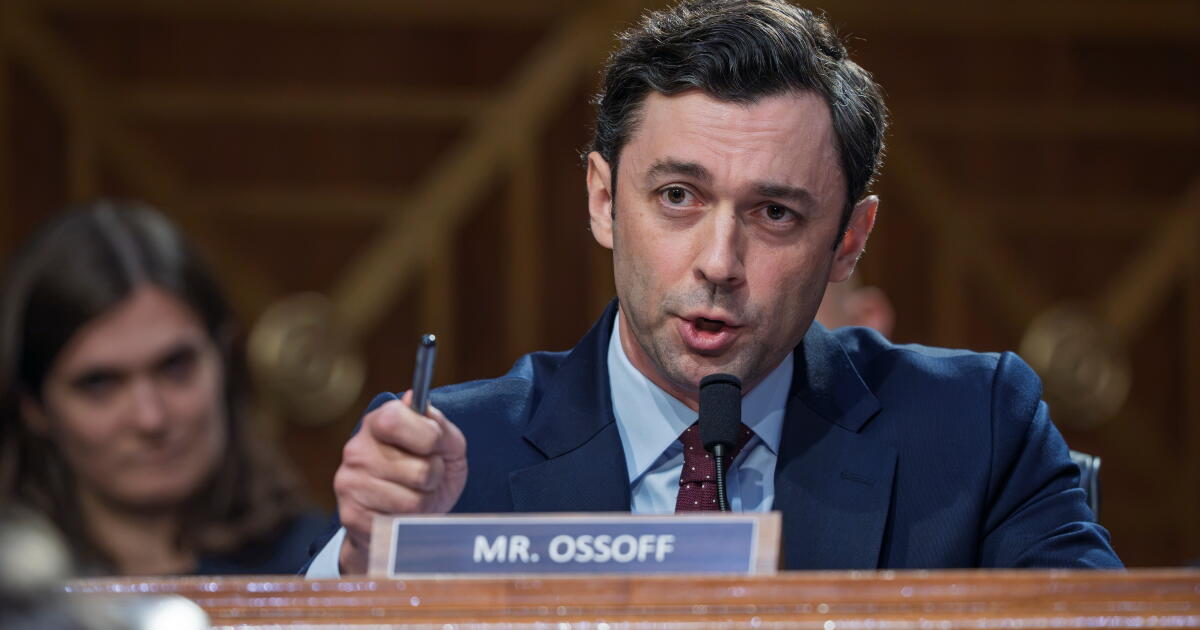
Democratic Senate candidates Sherrod Brown of Ohio, Jon Ossoff of Georgia and Roy Cooper from North Carolina objected to the FCC rule change in April and and asked for a review.
When no action was taken, they filed suit in federal court. They argued the FCC had no authority to change the law that gave only candidates, not fundraising committees, the benefit of the lower ad rates.
Since then, the two sides have gone back and forth in the courts, with both accusing the other of seeking a late change in the rules.
The U.S. 4th Circuit Court of Appeals in Virginia ruled for the Democrats in a pair of 2-1 decisions.
“Suffice to say that any ‘chaos’ is the FCC’s fault, not ours,” Judge Robert B. King, a Clinton appointee, said on Oct. 7. It “has endeavored to create from whole cloth a new rule entirely outside the purview of judicial review.”
But the Supreme Court stepped in twice to overturn the 4th Circuit and rule for the Republicans.
In a Sept. 4 order, the court said in an unsigned order the 4th Circuit intervened too soon. The law “makes clear that an aggrieved party must wait for the Commission to resolve its application for review by order before filing a petition for judicial review.”
Only Justice Ketanji Brown Jackson dissented.
In September, the FCC did nothing other than to ask for public comments on its March rule change.
Frustrated with the delay, the 4th Circuit issued a second order requiring the FCC to act by Oct. 9.
Last week, in response to an appeal from Solicitor Gen. D. John Sauer, Chief Justice John G. Roberts put the 4th Circuit order on hold.
On Wednesday, the full court said the 4th Circuit Court should have left the issue to the FCC.
“Our system of separation of powers does not allow the judiciary to meddle in the workings of a coordinate branch of the government in this manner,” the court said an unsigned opinion.
In dissent, Jackson and Justice Sonia Sotomayor voted to deny the administration’s appeal.
Nicolas Cage says he won’t work with Amazon again over AI dispute
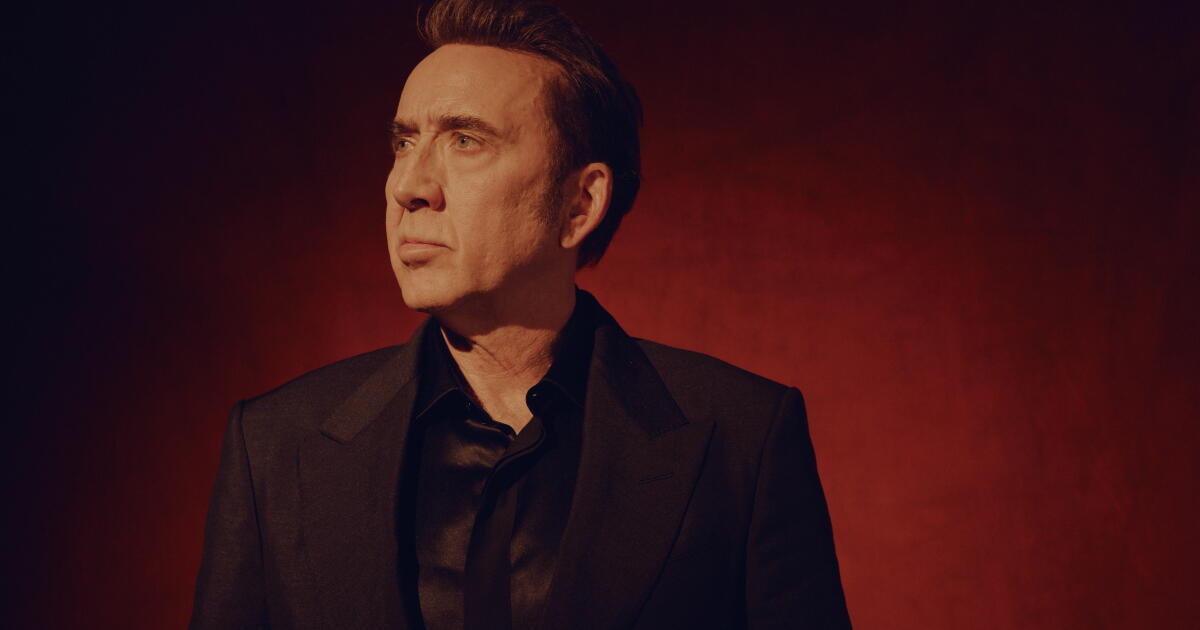
Nicolas Cage is making it clear — he’s not an “AI-friendly actor.”
The 62-year-old actor spoke out against a tech giant during an appearance at New York Comic Con on Saturday. He alleged that he was asked to sign an artificial intelligence waiver for the television series “Spider Noir.”
“Amazon is a very AI-friendly company, to the tune of $50 billion invested in OpenAI,” Cage said on stage.
“I am not an AI-friendly actor, so it’s like, connect those dots! I’m not a member of their club. I didn’t sign the waiver to let him use AI on ‘Spider-Noir.’ I’m probably not going to be working with that studio again, but that’s OK.”
Amazon did not immediately respond to a request for comment.
The use of AI continues to be a major sticking point across Hollywood. Industry unions including SAG-AFTRA and the Writers Guild recently secured protections against technology in new contracts. But as AI evolves and AI actors like Tilly Norwood continue to make headlines, it’s still unclear exactly how the industry will be affected.
“Spider-Noir,” which premiered in May, is a “Spider-Man” project that put a 1930s crime-thriller spin on the web-slinging superhero. The show was produced by both Sony Pictures Television and Amazon MGM Studios.
Cage’s part as “The Spider” marked his first leading role in a series. The Oscar-winning actor, whose home in Malibu was recently affected by a sinkhole, is known best for his roles in movies like “National Treasure,” “Moonstruck” and “The Rock.”
Upon its release, “Spider-Noir” received much praise from fans and critics alike. In its first six weeks of streaming, the series earned 2.6 billion minutes watched, according to Nielsen. It was also Amazon’s most-nominated show at this year’s Emmys, with 11 nominations and five wins.
Last month, Amazon announced that the show was canceled after only one season, leaving much of the industry in shock.
During his Comic Con panel, Cage also said he plans to keep working in TV. He announced that he will be joining the HBO series “True Detective.”
“My agent’s out there somewhere listening,” Cage said. “That’s OK that I’m the first to announce that, right?”
James McClean: Ex-Republic of Ireland international hits out at Derry City treatment amid dispute
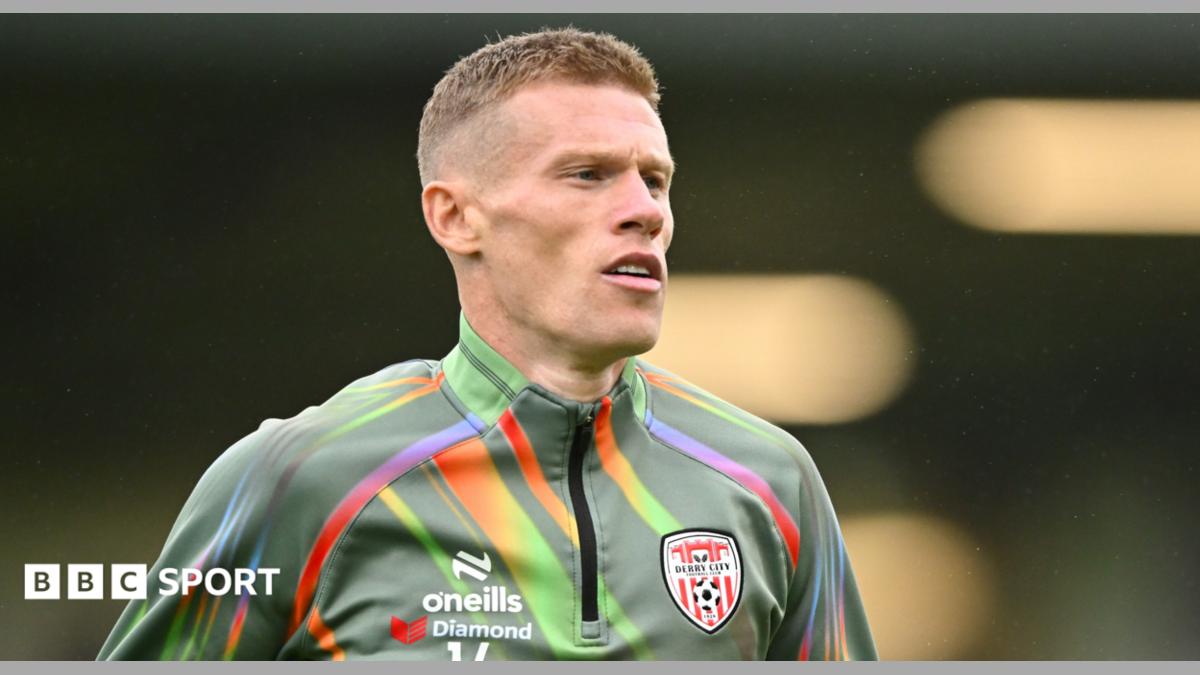
Reports have indicated in recent months that Derry attempted to terminate McClean’s contract because of persistent injuries, a matter alluded to in Tuesday’s statement by the PFAI.
The statement says that Derry had attempted to invoke Section 18 of the Standard Players Contract, which permits them to terminate a contract with six months’ notice when a player is deemed to have a “permanent incapacity”, as confirmed by an independent physician.
“For any club to feel it is OK to attempt to terminate a player’s contract without any due process or just cause is incomprehensible, and it sets a dangerous precedent for every player in this league,” said McClean.
“I am not permanently incapacitated, or anything even remotely close to that. I am capable of contributing and doing well in the League of Ireland. I train as hard and give as much as anyone.
“I will decide when I retire. Nobody else will make that decision for me. When that time comes, my body will tell me. This is my life and my career. I deserve the same duty of care and fairness given to the majority of other players at Derry City FC.”
The PFAI gave further information on the nature and extent of the player’s injury.
“In short, James has had a hip injury which had been causing intermittent issues for him. This has caused him to miss some games and occasional training sessions,” the statement read.
“He has sought medical treatment for this and is currently fit and well.
“He has trained fully for the last nine weeks and has made himself available for selection. He recently played in an internal match arranged by the club. He believes he can help the team and has not been provided with a satisfactory reason for being left out of the squad.”
BBC Sport NI contacted Derry City for comment but a spokesperson said that the club were presently “solely focused on this weekend’s FAI Cup semi-final against Galway United (Saturday, 15:00 BST kick-off).
Court of Appeal hears residents’ parade challenge over Drumcree dispute
A challenge to the decision to allow a controversial Orange Order parade to go down a predominantly nationalist road is being heard in court.
The deadlock over the proposed march in Portadown – opposed by residents of the Garvaghy Road – has lasted since last Sunday morning.
The stalemate has reopened what was once the most bitter parading dispute in Northern Ireland, with stand-offs in the mid-to-late 90s accompanied by riots, roadblocks and killings.
The fresh Court of Appeal application argues that the Parades Commission, the organisation that approved the march, had “materially misdirected itself” on the police assessment of the potential for disorder.
The application also said the commission had not given an “accurate representation” of PSNI evidence in its decision.
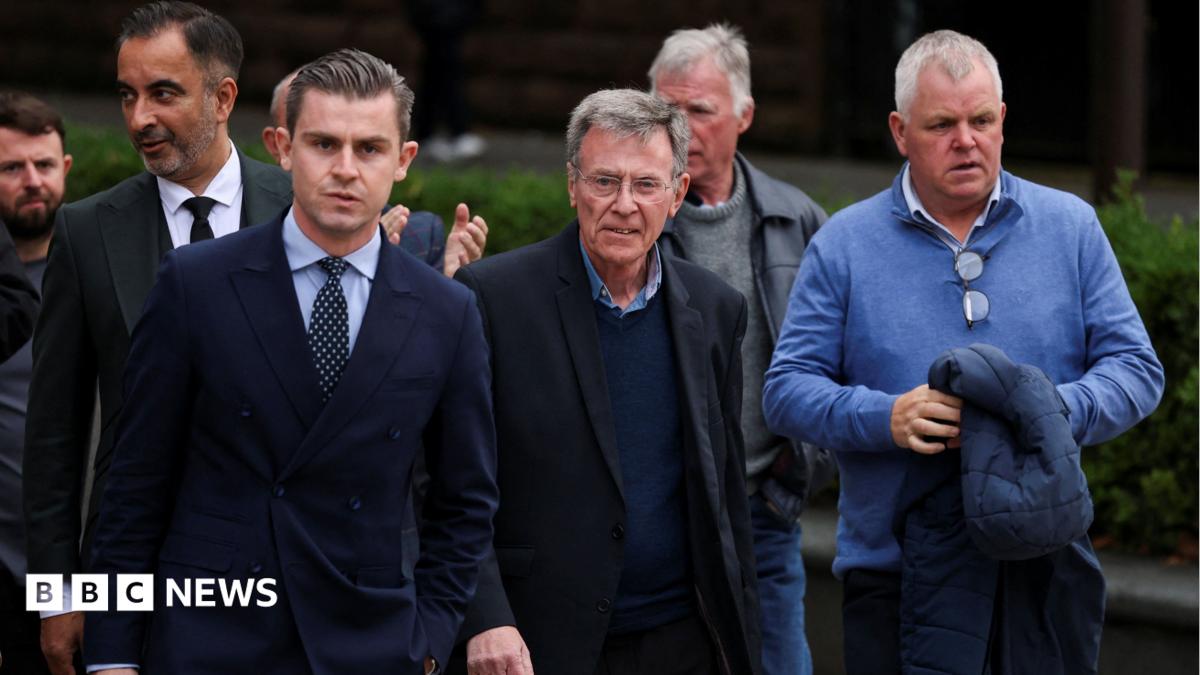
The Garvaghy Road Residents Coalition (GRRC) and their legal representatives arrived at the court on Monday morning.
Loyalist activist Jamie Bryson, who has been acting as legal advisor to the Portadown District, Democratic Unionist Party (DUP) MP Carla Lockhart and Orange Order legal representatives also arrived.
The hearing began in Belfast at about 10:30 BST.
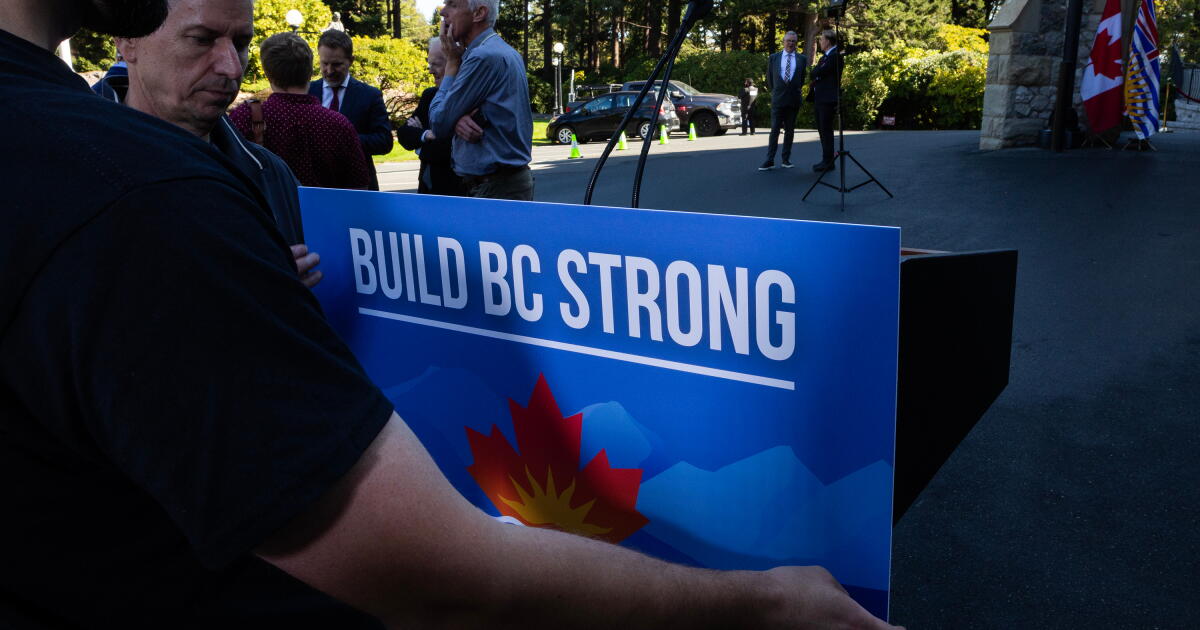
British Columbia leader calls snap election as premier tells voters to say ‘hell no to Trump’
VICTORIA, British Columbia — A Canadian provincial premier called a snap election Tuesday, saying President Trump’s attacks on Canada are threatening jobs, businesses and the country’s ability to determine its own future.
The provincial election comes after U.S.-Canada trade talks broke down, deepening a dispute that has brought steep tariffs. British Columbia Premier David Eby effectively put Trump on the ballot, arguing the election offers British Columbians a choice between his government’s efforts to resist U.S. economic pressure and opponents he accused of embracing “MAGA-style politics.”
“Join us saying hell no to Trump and to his politics,” Eby said in announcing the Oct. 24 election.
Eby said Trump’s trade war and threats against Canada have changed conditions in British Columbia enough to justify an election two years early.
“Donald Trump is attacking our workers, he’s targeting our businesses, and he is threatening our sovereignty,” Eby said. “He’s threatening our ability to make decisions for ourselves.”
The left-leaning New Democratic Party leader said British Columbia needs to build a “firebreak” against Trump’s economic policies by protecting workers and businesses, reducing its dependence on the United States and finding new markets for Canadian products.
“This isn’t just a trade dispute,” Eby said. “It’s about the life that you and your family are building.”
Eby said British Columbia’s exports to the United States have fallen 4% while exports to other markets have risen 16%.
He also vowed to keep American alcohol off provincial shelves, saying “not one drop of Jack Daniels” would return until Canada gets a fair deal with the United States.
The New Democrats won a narrow majority in the 2024 provincial election, giving Eby enough seats to govern without relying on another party, and he was not required to call another election until 2028.
The election call also comes amid turmoil among the opposition British Columbia Conservatives. Kerry-Lynne Findlay resigned as party leader Sunday following a wave of defections and expulsions from her caucus. Lorne Doerkson was named interim leader.

U.S. Supreme Court won’t intervene in custody dispute between California couple and surrogate
WASHINGTON — The U.S. Supreme Court on Tuesday declined to intervene in a custody dispute over a 5-week-old child who was born in Texas after a surrogate refused a California couple’s wishes to have an abortion.
Justice Elena Kagan denied the request from McKenna West, who was seeking conservatorship over a baby boy she gave birth to in Dallas.
The brief order did not detail the legal reasoning, as is typical in emergency appeals. The decision came from Kagan because she handles appeals of cases out of California.
West had previously been rejected by other courts in her efforts to have a say in the treatment of the child, who was born with a life-threatening heart condition. She gave birth to the boy in Dallas, where most abortions are banned, after she refused the couple’s wishes to end the pregnancy.
West had asked the Supreme Court to halt a California court order that recognizes Omar Ahmed and Nausheen Gilkar as the parents of the child whom she calls Gabriel and they call Rumi.
Lawyers for the couple had urged the court to reject the request, questioning what an intervention would do for medical decision-making at an already chaotic time. They also accused West of overstating the prognosis for children born with the heart condition.
“Such chaos would be devastating for Respondents and, most importantly, their child,” the couple told the court.
The legal battle over surrogacy and abortion has attracted the attention and support of Republican officeholders and anti-abortion groups. West has said she believes the couple will not provide life-saving care, citing their request for an abortion at 23 weeks. Gilkar and Ahmed have denied those claims.
The boy was born Aug. 12 with hypoplastic left heart syndrome, a life-threatening condition that prevents normal blood flow to the organ. He underwent surgery soon after he was born. The couple’s attorney said in August that the newborn had been in critical condition and appeared to be “suffering from potential complications.”
Without treatment, children affected by the heart defect can die within days or weeks. Surgical repairs are not necessarily cures, and additional surgeries or heart transplants may be needed, according to the CDC.
Wilder and Whitehurst write for the Associated Press.