difference

‘I design hotels – there’s one room detail most people miss but it makes a huge difference’

Luxury hotel designer Tatiana Sheveleva, who has worked with brands such as The Ritz-Carlton and St. Regis, has been involved in some remarkable projects and knows a thing or two about hospitality

A luxury hotel designer has revealed the key feature in every room that guests might miss, but it can make a huge difference.

Tatiana Sheveleva, originally from Kazakhstan but living in Toronto, Canada, has been a luxury hospitality designer, including for hotels, resorts and yachts, for 15 years and runs her company, Chapi Design. During her creative career, she’s worked on incredible projects with major brands, including St. Regis Hotels, The Ritz-Carlton, and The Luxury Collection.

These projects have taken Tatiana all over the world, designing interiors for hotels and resorts in Costa Rica, the Dominican Republic, Mexico, Peru, Antigua, Orlando, Nashville, and Toronto. She’s even designed a luxury yacht for the Ritz-Carlton Yacht Collection, Luminara, which boasts 226 suites with private terraces, five restaurants, seven bars, and a wine vault.

READ MORE: Travel operators accused of ‘profiteering’ as ferry boss makes announcementREAD MORE: British Airways, Ryanair, easyJet and Jet2 issue fuel warning amid Middle East war

One of Tatiana’s most recent projects was for St. Regis in Cap Cana, Dominican Republic, which was completed last year. “I like to do big properties, and everything we design [at Chapi Design] is custom-made,” Tatiana told the Mirror, “I have been very fortunate to work on different properties around the world.

“But it’s still so surreal for me that I’m working on the most amazing properties in the world, even though I have been doing this for 15 years.”

With a wealth of expertise on luxury interior designs, Tatiana revealed that there’s one key element in every hotel room that guests regularly miss.

The designer said: “The most money is spent on the headboard. Typically, it’s the most expensive piece as it’s often a feature. How you design the headboard depends on the bed’s location, and it can be a strong element of the project’s narrative.”

Tatiana revealed another important feature of any hotel room. “I would say the bathroom, believe it or not. It always gives the guests a good impression, and it’s the first place they go when they check into the room.

“The bathroom area is important. If you design a very unique layout for the washroom, people will start to talk about it. In the washroom, you can create something very sculptural and unique.

“If you are successful enough to create this interesting washroom, first of all, people will be spending more time there, they will have a bath and feel more relaxed. And actually, we spend a lot of our time in there.”

She added: “The light in the bathroom should be accommodating for different scenarios, bright enough to put on make-up but cosy and romantic at the same time. For me, every single washroom I design is very unique.”

Another feature of a hotel room that Tatania argues warrants attention is the bed.

“The mattress has to be comfortable, and the bedding. Also, there might be special glasses by the bedside table; it’s these details,” she said.

The designer likes to add a special feature inside the closet, such as interesting wallpaper, a splash of color, or a pretty stone.

“That’s a unique element you don’t notice right away, but you notice it after,” she added.

For Tatiana, the joy of the job comes from travelling and working with different people. She said: “The whole process is quite fun, and during this process, you get to meet a lot of interesting people who are passionate about projects. I also like to investigate new locations and new countries, because when I was in Kazakhstan, I didn’t really travel much. So, my first project for St. Regis was in Mexico, and it was my dream to go there.

“Mexico has a very unique culture, it’s very colourful, there’s amazing food, and they use alot of bright colours – there’s a lot of celebrations. It was very different, and I was very excited about that. The Dominican Republic is the same. It’s very comfortable, the people and land, it’s very nice.”

And her travels aren’t stopping anytime soon. Tatiana is currently working on mega interior design projects for St. Regis in Costa Rica, The Luxury Collection Hotel in Mexico, and Luxury Hotels in Peru and Antigua, and some projects can take as long as six years to complete.

You can read more about Tatiana’s projects on the Chapi Design website. You can also follow their Instagram page.

Do you have a travel story to share? Email webtravel@reachplc.com


Source link

Commentary: 90 minutes, 6 gubernatorial candidates, zero big moments — but some differences that matter

Two of our esteemed gubernatorial candidates, the cowboy and the dilettante, apparently could not find ties for the first debate Wednesday night, showing up with dress shirts casually unbuttoned.

Mr. Middleground sported a scruffy sorta-beard, apparently unable to pay for a razor in the midst of California’s affordability crisis. It’s a trademark look that always makes me think if this doesn’t work out, he’ll opt to live on a boat in some not-too-expensive slip by the Bay.

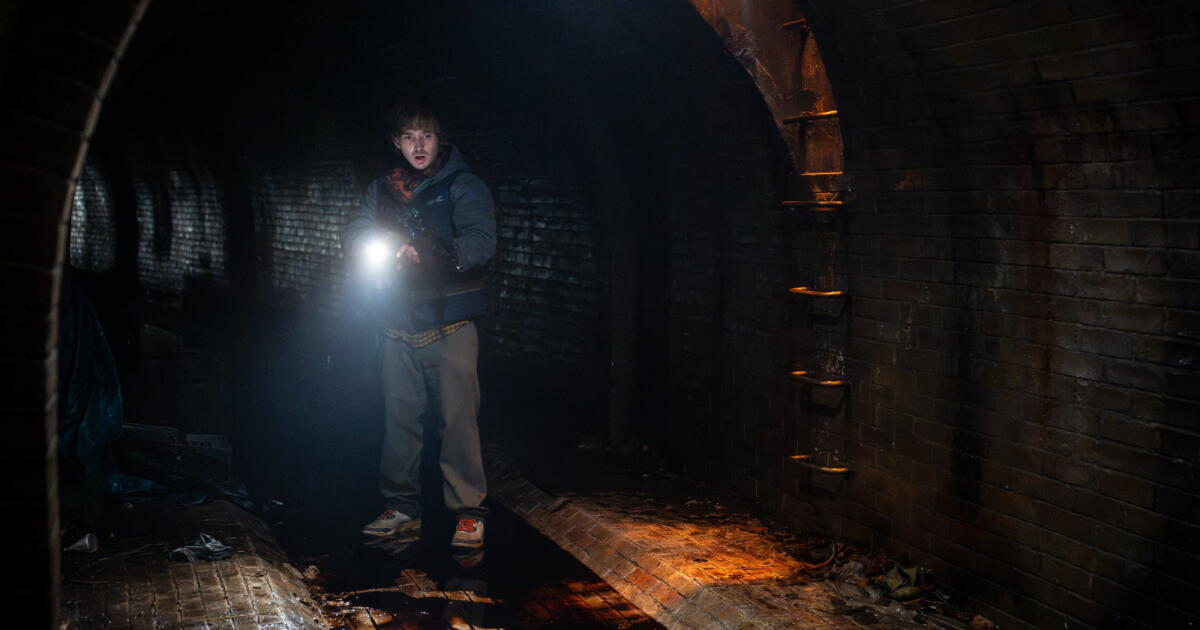
The billionaire wore Nikes instead of dress shoes, a sartorial nod perhaps to his bid to be the outsider-fighter. Or maybe his feet just hurt.

The last two contenders were remarkably unremarkable.

Why start with fashion? Honestly, it might be the most interesting, and telling, bit of insight that came from this first (of three) chances for our next governor to let us know who they are and what they’re made of. If the debate showed us anything, it’s that none of these candidates are hiding follow-me charisma or an excitement-inducing political vision for our collective future.

Yes, there were a few decent jabs here and there about Tom Steyer’s money, Katie Porter’s temper, Matt Mahan’s tech ties and Chad Bianco’s far-right world view. But even those were predictable.

Still, in between the yawns, there were a couple of answers worth noting, ones that might actually give us insight into how the Democratic candidates differ (Despite all the hype, it seems increasingly unlikely that two Republicans will come out of the primary, and even more unlikely that in a Democratic vs. Republican race, the Democrat would lose in blue California.)

I’ll start with a surprising place where I agreed with Steve Hilton, the Republican endorsed by President Trump.

The candidates were asked if they would support a ban on social media for kids under age 16. This is a quickly accelerating idea not beloved by tech companies. Australia and Indonesia already have bans in place. Other countries, including France and Portugal, have them in the works. Florida banned children under 14 from opening social media accounts on their own last year.

And a Los Angeles jury last month dealt a blow to Meta and YouTube when it found the platforms had damaged the mental health of a young woman with their addictive features.

Hilton took the ban question a step further, saying it “misses the point.” He has long argued that it isn’t just social media that is the problem, but having kids staring at a digital device for hours a day instead of interacting in the real world. It was one of the most genuine answers of the night.

“We’ve got to get to the heart of the problem, and that’s the devices and the screens,” he said. “I think that every parent in their heart knows that it’s wrong.”

While Steyer and Xavier Becerra, the former California attorney general, both said they would support such a ban, the remaining three candidates hedged or said they would not. Porter said no to a ban under age 16, but said she “might consider a different ban,” without being specific.

Mahan, who is backed by significant tech money, and Bianco both said they believed requiring parental consent was the way to go (though Mahan said he would ban devices in schools).

As Becerra pointed out, “kids have died as a result of their use of social media,” so it’s a place where policy matters. And if a candidate doesn’t see government’s role in controlling the dangers of social media, what will happen with artificial intelligence?

The candidates also had differences in how they would handle homelessness and the related crisis of housing affordability, though the devil was often buried in the details.

At least for Democrats. For Bianco, the difference was stark.

“We are not dealing with homeless. So stop calling it homeless,” he snapped at the moderators. “It has nothing to do with homes. This is drug- and alcohol-induced psychosis, mental illness.”

Of course, this is wrong. Last year, the UC San Francisco Benioff Homelessness and Housing Initiative released the results of the state’s most comprehensive survey of homeless people. It found that for most people living on our streets, “the cost of housing had simply become unsustainable.” It also found an increasing percentage of those folks were older — almost half were over the age of 50 — and had become homeless after a hardship such as an illness or a job loss.

“It’s also families who are fleeing intimate partner and domestic violence,” Porter said. “It’s people who are double and tripled up. It’s people who are living in their cars on our college campuses. Homelessness comes in a lot of different forms.”

Most of the Democratic candidates seemed to understand this and embraced the increasingly popular idea of putting more money into helping people stay housed after a hardship, instead of trying to get them housed after they lose their place.

“How can I help you keep your home?” Becerra said. “Because it costs me so much more money to pick you off the streets, provide you with the assistance in the shelter, than it does to keep you in the home.”

But the issue of homelessness is also where daylight emerged between the candidates. Steyer said he and his wife had helped finance low-barrier homes, not just shelter spaces, where people do not need to be addiction-free and where they can bring pets — two issues that are common hindrances for moving folks off sidewalks voluntarily.

Mahan, the mayor of San José, who often touts his city’s success at moving people indoors, agreed that emergency and interim housing was critical, but also voiced support for forcing folks to accept help. Last year, San José passed an ordinance he backed that some say criminalizes homelessness — a person can be cited twice for refusing shelter, and a third refusal within 18 months can lead to an arrest.

“When shelter was available, we required that people come indoors,” Mahan said, adding, “We have to be able to mandate treatment.”

It’s a controversial position, but also one that is increasingly popular. Gov. Gavin Newsom has backed mandated treatment, in a lighter form, with his CARE Court (which is technically voluntarily). And the movement to require people to accept a shelter space or face arrest is growing on the right and even the Democratic-middle.

But there is a fine and dangerous line with mandated treatment and shelter requirements that is often pushed further and further to the side in favor of the clean, safe streets argument. Whenever we start locking folks up — whether it’s in mental wards or immigration detention centers or jails — we should be careful that expediency isn’t trumping ethics.

Of course, the debate would not be complete without the Democratic candidates’ position on our president, speaking of ethics.

Steyer was gleeful that Trump has come after him on social media, a point of pride that he is a relevant figure in the fight against MAGA. He also said he would abolish Immigration and Customs Enforcement if he could, which he can’t.

Becerra highlighted his many lawsuits as California’s attorney general during Trump’s first term, and pledged to keep fighting. Porter leaned into her time in Congress and her efforts to help Democrats in other races win.

Mahan took a different route, pledging to fight when necessary, but adding, “We need a partnership, and we need to find common ground with this administration on certain issues.”

Newsom learned the hard way that common ground is what Trump says it is, and shifts without warning or reason.

So what’s the takeaway from all this?

Boring dad; feisty mom; rich do-gooder; striving newcomer; MAGA one; MAGA two.

None of them hit it out of the park, but no one struck out. Maybe next time.

Source link

OPEC+ to hike crude output: Will it make a difference to oil prices?

Published on Updated

OPEC+ members met virtually on Sunday and afterwards announced plans to hike crude quotas by 206,000 barrels per day (bpd) in May as the Strait of Hormuz, which is the world’s most important route for black gold, continues to face disruptions as a result of the US-Iran conflict.


ADVERTISEMENT


ADVERTISEMENT

However, the modest rise agreed by the eight key producing countries — Saudi Arabia, Russia, Iraq, the UAE, Kuwait, Kazakhstan, Algeria and Oman — is not likely to bring down oil prices as it represents less than 2% of the supply disrupted by the Hormuz closure. Moreover, the increase is more symbolic than material as the oil can’t be exported until the Strait of Hormuz opens.

“In their collective commitment to support oil market stability, the eight participating countries decided to implement a production adjustment of 206 thousand barrels per day from the 1.65 million barrels per day additional voluntary adjustments announced in April 2023. This adjustment will be implemented in May 2026,” the group said in a statement.

The members’ statement also noted that the 1.65 million barrels per day may be returned in part or in full subject to evolving market conditions and in a gradual manner.

“The countries will continue to closely monitor and assess market conditions, and in their continuous efforts to support market stability, they reaffirmed the importance of adopting a cautious approach and retaining full flexibility to increase, pause or reverse the phase out of the voluntary production adjustments, including reversing the previously implemented voluntary adjustments of the 2.2 million barrels per day announced in November 2023,” the statement also said.

Efforts to stabilise soaring oil prices

The latest statement from OPEC+ comes as oil prices have surged since the Iran conflict began, with Brent and US crude nearing $120 a barrel, driving up fuel costs and putting pressure on consumers and businesses worldwide.

Meanwhile, J.P. Morgan said in a note on Thursday that oil prices could go as high as $150 a barrel if supply flows remain disrupted until mid-May.

US President Donald Trump has given Iran a deadline of Tuesday to open the Strait of Hormuz and has vowed to hit the country’s power plants and bridges otherwise.

European markets were closed on Monday for the Easter holiday.

Source link

Bondi struggled to prosecute Trump foes. But will a new attorney general make a difference?

Pam Bondi is out of her job after failing to deliver criminal cases against President Trump’s political enemies.

But there’s no guarantee her successor will have any better success at placating the president.

Over the last year, Bondi’s Justice Department has encountered resistance from judges, grand jurors and its own workforce in trying to establish criminal conduct by one Trump foe after another. A new attorney general will confront not only Trump’s demand for political prosecutions — a constant dating back to his first term in the White House — but also the same skeptical court system, and factual and legal hurdles, that have impeded efforts to deliver the sought-after results.

“At the end of the day, it’s not like there were some magic steps that Pam Bondi could have taken to make bad cases look good to grand juries or judges,” Peter Keisler, a former acting attorney general in President George W. Bush’s administration, said in an email. “The problem is that the president is demanding that prosecutions be brought when there’s no evidence and no valid legal theory. A new Attorney General won’t change that.”

Bondi was just the latest Trump attorney general pressed to meet the president’s demands of loyalty and desire for retribution. Trump in his first term called for Jeff Sessions to investigate Democrat Hillary Clinton and ultimately pushed him out over his recusal from the Russia election interference investigation. He berated another attorney general, William Barr, over Barr’s refusal to back his false claims of election fraud in the 2020 contest. Barr resigned soon after.

Bondi arrived at the Justice Department 14 months ago seemingly determined to remain in Trump’s good graces unlike her predecessors had, heaping praise on him, offering unflinching support and embarking on investigations into Democrats and the president’s adversaries — even amid concerns from career prosecutors about the sufficiency of evidence.

Days after Trump implored Bondi via social media last September to prosecute former FBI Director James Comey and New York Atty. Gen. Letitia James, the Justice Department did just that, securing indictments in Virginia.

But the win was short-lived: a judge weeks later dismissed the cases after finding that the prosecutor who filed them, Lindsey Halligan, was illegally appointed. Grand juries have since refused to bring new mortgage fraud charges against James and the Comey case is mired in a thorny evidentiary dispute and statute of limitations concerns. Both Comey and James have vigorously denied any wrongdoing and called the cases against them politically motivated.

Since then, a federal grand jury in Washington refused to return an indictment against Democratic lawmakers in connection with a video in which they urged U.S. military members to resist “illegal orders.” And a federal judge has quashed Justice Department subpoenas issued to the Federal Reserve as part of an investigation into testimony last June by Chair Jerome Powell about a $2.5 billion building renovation.

The judge, James Boasberg, said that the government has “produced essentially zero evidence to suspect Chair Powell of a crime” and called its justifications for the subpoenas a “thin and unsubstantiated” pretext to force Powell to cut interest rates. A prosecutor on the case subsequently conceded in court that the investigation had not found evidence of a crime.

An additional investigation into a Trump enemy remains underway with prosecutors in Florida scrutinizing former CIA Director John Brennan over testimony to Congress related to Russian interference in the 2016 election. That investigation has been open for months, but has not produced charges and it’s not clear that it will. Brennan’s lawyers have similarly called the investigation baseless.

One high-profile Trump critic who could face trial in the years ahead is his former national security adviser, John Bolton, though the investigation that produced that indictment and examined Bolton’s handling of classified documents began before Trump took office.

For now, the Justice Department will be led by Deputy Atty. Gen. Todd Blanche, who has a longstanding relationship with Trump after having served as one of his personal lawyers. Several people familiar with the matter told the Associated Press on Thursday that Lee Zeldin, a Trump loyalist and head of the Environmental Protection Agency, has been privately mentioned by Trump as a possible pick.

Whoever holds the job in the long term will almost certainly be expected to carry out Trump’s retribution campaign with more success, said Jimmy Gurule, a former Justice Department official and law professor at Notre Dame. Blanche appeared to acknowledge as much in a Thursday evening interview with Fox News, saying “I think the president is frustrated, everybody is frustrated ” and that “what we saw happen for the past four years is unforgivable and can never happen again.”

“If she was fired because Trump did not think that she was moving quickly enough in bringing criminal cases against his political enemies, then you would expect that the person that would replace her would probably agree to escalate those efforts,” Gurule said.

Tucker writes for the Associated Press.

Source link

Premier League: Does running more actually make a difference?

In May of last year, former Chelsea boss Enzo Maresca said: “We are not good enough for transition games. If you see our worst moments of the season, or games we struggled, they were all games where the game became transition.”

This quote helps explain why Chelsea may have run less on purpose, particularly in the first part of the season. Instructing his team to play slower while dominating possession would have created fewer turnovers and transitions leading to Chelsea needing to run big distances less often.

Playing more slowly on the ball in theory may have helped Chelsea’s players rest during the game before then pressing more intensely for shorter periods.

This season, Manchester City are top in terms of the average distance run per Premier League game.

Although this appears to be a positive stat, after their 3-0 win against West Ham earlier this season, Guardiola said: “I love [how much we run], last season we didn’t have that. But it’s not enough, we have to play better [so] we could run less.”

Reading between the lines, Guardiola appeared pleased at the increase in commitment but likely wanted his side to play in a less end-to-end fashion, instead looking for more control.

Source link