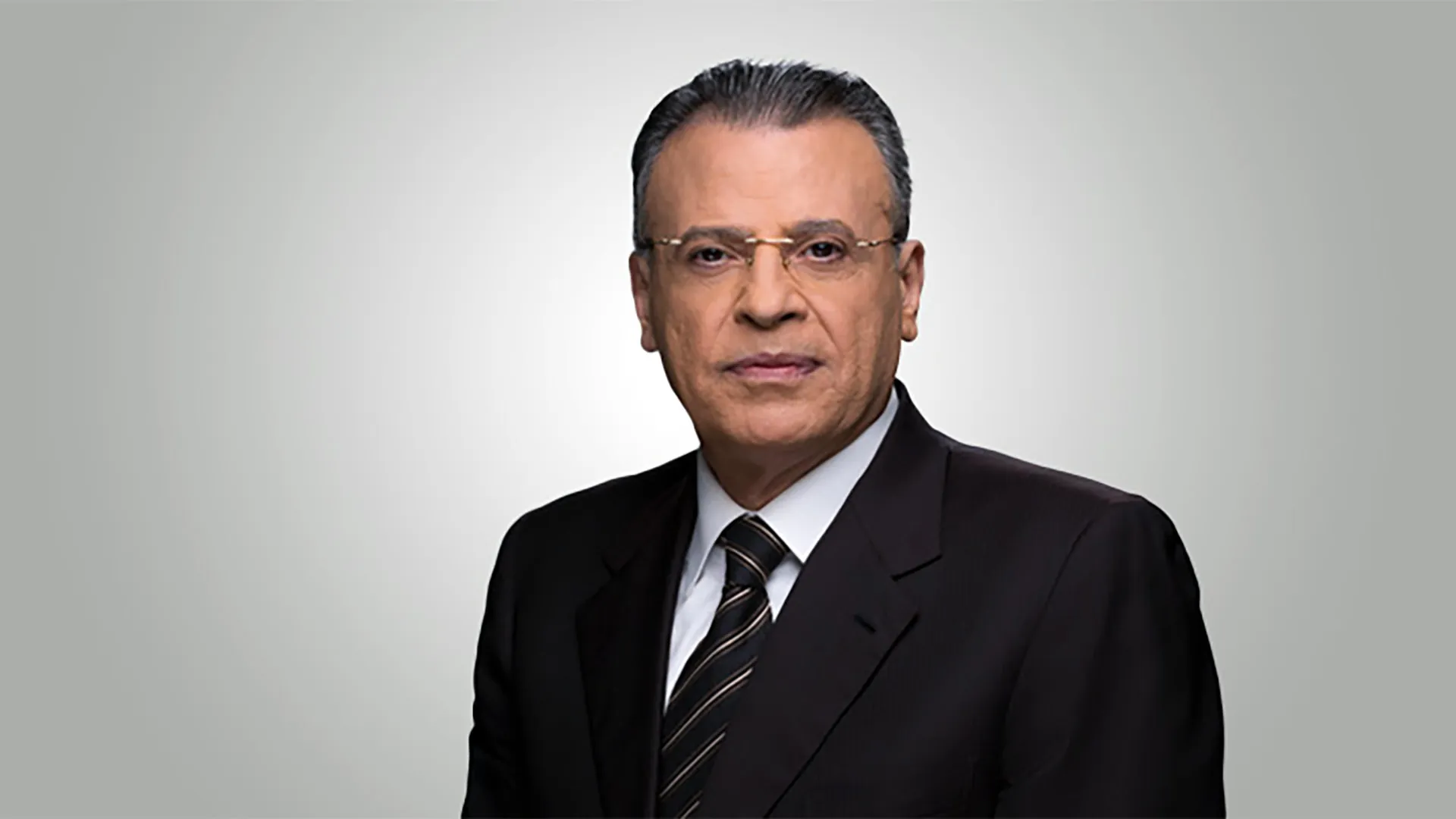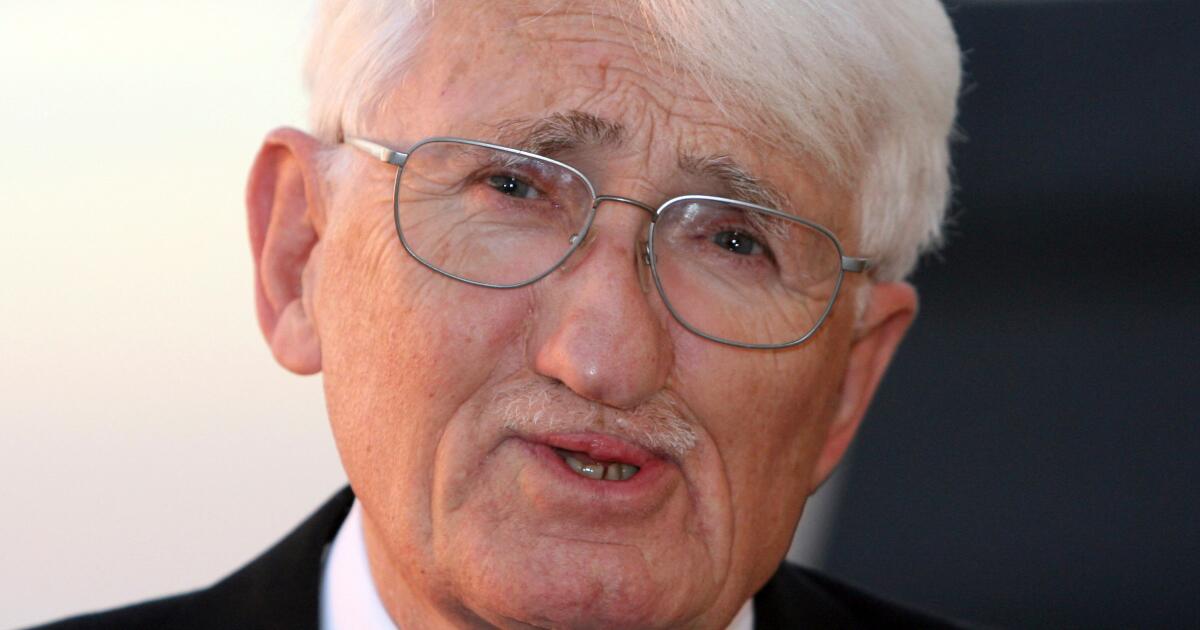
dies

Paul Tagliabue, NFL commissioner who led expansion, dies at 84

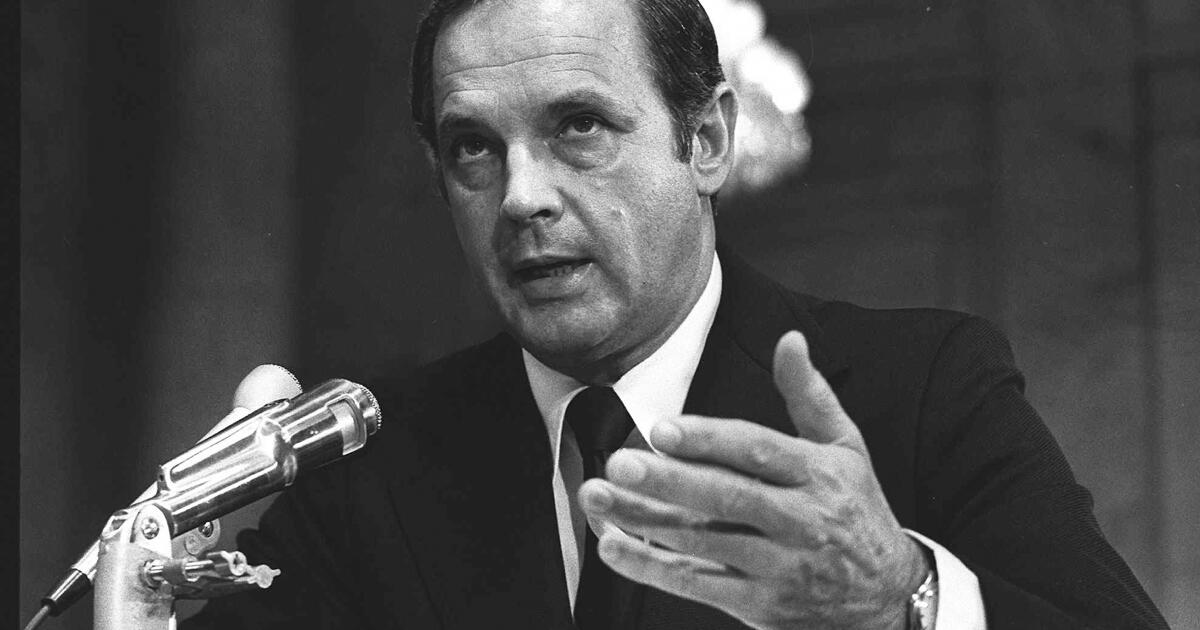
Paul Tagliabue, who helped bring labor peace and riches to the NFL during his 17 years as commissioner but was criticized for not taking stronger action on concussions, died Sunday from heart failure. He was 84.

NFL spokesman Brian McCarthy said Tagliabue’s family informed the league of his death in Chevy Chase, Maryland.

Tagliabue, who had developed Parkinson’s disease, was commissioner after Pete Rozelle from 1989 to 2006. He was elected to the Pro Football Hall of Fame as part of a special centennial class in 2020. Current Commissioner Roger Goodell succeeded Tagliabue.

“Paul was the ultimate steward of the game — tall in stature, humble in presence and decisive in his loyalty to the NFL,” Goodell said in a statement. “I am forever grateful and proud to have Paul as my friend and mentor. I cherished the innumerable hours we spent together where he helped shape me as an executive but also as a man, husband and father.”

Tagliabue oversaw a myriad of new stadiums and negotiated television contracts that added billions of dollars to the league’s bank account. Under him, there were no labor stoppages.

During his time, Los Angeles lost two teams and Cleveland another, migrating to Baltimore before being replaced by an expansion franchise.

Tagliabue implemented a policy on substance abuse that was considered the strongest in all major sports. He also established the “Rooney Rule,” in which all teams with coaching vacancies must interview minority candidates. It has since been expanded to include front-office and league executive positions.

When he took office in 1989, the NFL had just gotten its first Black head coach of the modern era. By the time Tagliabue stepped down in 2006, there were seven minority head coaches in the league.

In one of his pivotal moments, Tagliabue called off NFL games the weekend after the terrorist attacks of Sept. 11, 2001. It was one of the few times the public compared him favorably to Rozelle, who proceeded with the games the Sunday after John Kennedy was assassinated in 1963. A key presidential aide had advised Rozelle that the NFL should play, a decision that was one of the commissioner’s great regrets.

Tagliabue certainly had his detractors, notably over concussions. The issue has plagued the NFL for decades, though team owners had a major role in the lack of progress in dealing with head trauma.

In 2017, Tagliabue apologized for remarks he made decades ago about concussions in football, acknowledging he didn’t have the proper data at the time in 1994. He called concussions “one of those pack-journalism issues” and contended the number of concussions “is relatively small; the problem is the journalist issue.”

“Obviously,” he said on Talk of Fame Network, “I do regret those remarks. Looking back, it was not sensible language to use to express my thoughts at the time. My language was intemperate, and it led to serious misunderstanding.

“My intention at the time was to make a point which could have been made fairly simply: that there was a need for better data. There was a need for more reliable information about concussions and uniformity in terms of how they were being defined in terms of severity.”

While concussion recognition, research and treatment lagged for much of Tagliabue’s tenure, his work on the labor front was exemplary.

As one of his first decisions, Tagliabue reached out to the players’ union, then run by Gene Upshaw, a Hall of Fame player and former star for Al Davis’ Raiders. Tagliabue had insisted he be directly involved in all labor negotiations, basically rendering useless the Management Council of club executives that had handled such duties for nearly two decades.

It was a wise decision.

“When Paul was named commissioner after that seven-month search in 1989, that’s when the league got back on track,” said Joe Browne, who spent 50 years as an NFL executive and was a confidant of Rozelle and Tagliabue.

“Paul had insisted during his negotiations for the position that final control over matters such as labor and all commercial business dealings had to rest in the commissioner’s office. The owners agreed and that was a large step forward toward the tremendous rebound we had as a league — an expanded league — in the ’90s and beyond.”

Tagliabue forged a solid relationship with Upshaw. In breaking with the contentious dealings between the league and the NFL Players Association, Tagliabue and Upshaw kept negotiations respectful and centered on what would benefit both sides. Compromise was key, Upshaw always said — although the union often was criticized for being too accommodating.

Tagliabue had been the NFL’s Washington lawyer, a partner in the prestigious firm of Covington and Burling. He was chosen as commissioner in October 1989 over New Orleans general manager Jim Finks after a bitter fight highlighting the differences between the NFL’s old guard and newer owners.

Yet during his reign as commissioner, which ended in the spring of 2006 after pushing through a highly contested labor agreement, he managed to unite those divided owners and, in fact, relied more on the old-timers who supported him than on Jerry Jones and many of the younger owners.

Tagliabue was born on Nov. 24, 1940, in Jersey City, New Jersey. He was the 6-foot-5 captain of the basketball team at Georgetown and graduated in 1962 as one of the school’s leading rebounders at the time — his career average later listed just below that of Patrick Ewing. He was president of his class and a Rhodes scholar finalist. Three years later, he graduated from NYU Law School and subsequently worked as a lawyer in the Defense Department before joining Covington & Burling.

He eventually took over the NFL account, establishing a close relationship with Rozelle and other NFL officials during a series of legal actions in the 1970s and 1980s.

Tagliabue was reserved by nature and it sometimes led to coolness with the media, which had embraced Rozelle, an affable former public relations man. Even after he left office, Tagliabue did not measure up in that regard with Goodell, who began his NFL career in the public relations department.

But after 9/11, Tagliabue showed a different side, particularly toward league employees who had lost loved ones in the attacks. He accompanied Ed Tighe, an NFL Management Council lawyer whose wife died that day, to Mass at St. Patrick’s Cathedral, a few blocks from the NFL office.

Art Shell, a Hall of Fame player, became the NFL’s first modern-day Black head coach with the Raiders. He got to see Tagliabue up close and thought him utterly suited for his job.

“After my coaching career was over, I had the privilege of working directly with Paul in the league office,” Shell said, “His philosophy on almost every issue was, ‘If it’s broke, fix it. And if it’s not broke, fix it anyway.’

“He always challenged us to find better ways of doing things. Paul never lost sight of his responsibility to do what was right for the game. He was the perfect choice as NFL commissioner.”

Tagliabue is survived by his wife Chandler, son Drew, and daughter Emily.

Wilner and Maaddi write for the Associated Press.

Source link

Woodrow Lowe, 11-year starter for Chargers at linebacker, dies

Woodrow Lowe, a three-time All-American linebacker at Alabama and an 11-year starter for the NFL’s San Diego Chargers, has died. He was 71.

Lowe died at his home in Collierville, Tenn., on Thursday, according to the National Football Foundation.

Lowe was a 2009 NFF Hall of Fame inductee. He starred at Alabama (1972-75) and was the second player in program history to make the first-team All-America list three times. He helped the Crimson Tide make the Sugar Bowl in 1973, losing to eventual national champion Notre Dame, and was a consensus All-America selection the following year.

“Woodrow Lowe was one of the finest linebackers ever to play the game, and we are deeply saddened to learn of his passing,” NFF Chairman Archie Manning said. “A three-time All-American and one of the most decorated linebackers in college football history, he defined excellence at one of the top programs in the country.

“After his playing days, he dedicated himself to shaping young lives as a coach and mentor, carrying forward the lessons of excellence and dedication that defined his own career. Our thoughts and prayers are with his family and the entire Alabama football community.”

Born June 9, 1954, in Columbus, Ga., Lowe got his football start at Phenix City Central High in Alabama. He stayed in state for college and set a single-season record at Alabama with 134 tackles in 1973. The Tide went 43-5 during his four seasons in Tuscaloosa, and his 315 career tackles still rank fourth in school history.

A fifth-round draft pick by the Chargers in 1976, Lowe played in 164 of 165 possible games during his NFL career and tallied 21 interceptions, including four returned for touchdowns.

He coached at the high school, college and professional levels before retiring in Tennessee.

Lowe also was inducted into the Alabama Sports Hall of Fame, the Sugar Bowl Hall of Fame and the Senior Bowl Hall of Fame.

Source link

Cowboys’ Marshawn Kneeland dies of apparent self-inflicted gunshot

Dallas Cowboys defensive end Marshawn Kneeland has died of an apparent self-inflicted gunshot wound, police in Frisco, Texas, said Thursday. He was 24.

“It is with extreme sadness that the Dallas Cowboys share that Marshawn Kneeland tragically passed away this morning,” the Cowboys said in a statement. “Marshawn was a beloved teammate and member of our organization. Our thoughts and prayers regarding Marshawn are with his girlfriend Catalina and his family.”

The Frisco Police Department said it was called at approximately 10:39 p.m. Wednesday to help the Texas Department of Public Safety to find a vehicle that had entered the city during a pursuit. The state-level law-enforcement agency said in a statement Thursday that it had attempted to stop the vehicle for a traffic violation, but the driver had refused to stop.

The vehicle was soon found unoccupied, crashed on southbound Dallas Parkway near Warren Parkway. A man — later identified as Kneeland, a resident of nearby Plano — was reported to have fled the scene on foot.

Frisco police were told during the search that Kneeland had expressed “suicidal ideations,” the department said in a statement. “Kneeland was later located at 1:31a.m., deceased with what appeared to be a self-inflicted gunshot wound. The cause/manner of death will be determined by the Collin County Medical Examiner’s Office.”

The Plano Police Department had visited Kneeland’s residence at the request of Frisco police at 11 p.m. Wednesday night but officers were unable to make contact with anyone there. At 11:40 p.m., Plano police said, officers responded to a separate call for a welfare concern associated with Kneeland at the same address, but again were unable to make contact.

Kneeland was selected by the Cowboys out of Western Michigan in the second round of the 2024 draft, less than three months after his mother, Wendy Kneeland, died suddenly of an undisclosed illness. Kneeland told the Dallas Morning News last year that he carried some of his mother’s ashes with him everywhere in a tiny urn on a chain around his neck.

“She helped me a lot in my younger years getting into football,” Kneeland said. “I always had the dream. I always told her, ‘I’m going to the NFL’ and I made it. It’s a hard situation just knowing she got to see me potentially going to the NFL and going through [the process]. She’s still with me. I got this urn of her ashes I carry with me everywhere. I still feel like she’s there watching over me.”

Kneeland played in 18 games, including four starts, and had 26 tackles, four quarterback hits and one sack. On Monday night against the Arizona Cardinals, Kneeland recovered a blocked punt in the end zone for his first NFL touchdown.

“I watched him fight his way from a hopeful kid at Western Michigan with a dream to being a respected professional for the Dallas Cowboys,” Kneeland’s agent, Jonathan Perzley, said in a statement. “Marshawn poured his heart into every snap, every practice, and every moment on the field. To lose someone with his talent, spirit, and goodness is a pain I can hardly put into words.”

Kneeland’s family also released a statement Thursday.

“We are devastated by this tremendous loss and are still processing the depth of our grief,” the family said. “As Marshawn was making his mark on the football field with the Dallas Cowboys, he held an even more special place off the field — as a devoted son, brother, uncle, cousin, nephew, grandson, and friend. He was kind, determined, humble, and full of love. His light shone brightly in every life he touched, and his spirit will continue to live on through the countless hearts he inspired.”

Suicide prevention and crisis counseling resources

If you or someone you know is struggling with suicidal thoughts, seek help from a professional and call 9-8-8. The United States’ first nationwide three-digit mental health crisis hotline 988 will connect callers with trained mental health counselors. Text “HOME” to 741741 in the U.S. and Canada to reach the Crisis Text Line.

Source link

Pauline Collins, star of Shirley Valentine, dies aged 85

Emma SaundersCulture reporter

Getty Images Pauline Collins pictured in 2017, she is wearing a black and white blouseGetty Images

Pauline Collins, the star of the film Shirley Valentine, for which she was Oscar nominated in 1990, has died at the age of 85.

She died “peacefully” aged 85 in her London care home surrounded by her family having had Parkinson’s disease for several years, her family said.

Collins will be best remembered for her portrayal of disgruntled housewife Shirley in Lewis Gilbert’s award-winning film, based on the acclaimed stage play by Willy Russell.

Her critically acclaimed performance also won her the Golden Globe Award for best actress along with a Bafta.

‘Witty presence’

Collins’ family said in a statement: “Pauline was so many things to so many people, playing a variety of roles in her life. A bright, sparky, witty presence on stage and screen. Her illustrious career saw her play politicians, mothers and queens.

“She will always be remembered as the iconic, strong-willed, vivacious and wise Shirley Valentine – a role that she made all her own. We were familiar with all those parts of her because her magic was contained in each one of them.

“More than anything, though, she was our loving mum, our wonderful grandma and great-grandma. Warm, funny, generous, thoughtful, wise, she was always there for us. And she was John (Alderton)’s life-long love. A partner, work collaborator, and wife of 56 years.

“We particularly want to thank her carers: angels who looked after her with dignity, compassion, and most of all love. She could not have had a more peaceful goodbye. We hope you will remember her at the height of her powers; so joyful and full of energy; and give us the space and privacy to contemplate a life without her.”

Broadway role

Collins first played the title role of Shirley Valentine at the Vaudeville Theatre in London in 1988. She won that year’s Olivier award for best actress.

The following year she reprised the role on Broadway, New York, where she picked up numerous prizes including a prestigious Tony award.

The film of the same name was released later that year.

Her other films included 1991’s City of Joy with Patrick Swayze, filmed in Calcutta, which brought her wider recognition globally.

Born in Exmouth in 1940, Collins was raised near Liverpool and started out her career as a teacher.

Her love of the stage led her to take up acting on a part-time basis, and in 1957 she had a cameo role as a nurse in the Emergency Ward 10 TV series.

She starred in the film Secrets of a Windmill Girl in 1966, playing a fictional dancer in a London striptease nightclub, the Windmill Theatre.

After a number of stage roles, she used her Liverpool accent to land a role on The Liver Birds.

From 1971 to 1973 she played a maid in the ITV’s popular series Upstairs, Downstairs.

It was through acting that she met husband John Alderton. They married in 1969 and had three adult children, Nicholas, Kate, and Richard.

Alderton and Collins starred alongside each other in a number of television and film roles, such as Upstairs, Downstairs.

Source link

No Limit rapper Glenn Clifton Jr dies suddenly after brain aneurysm as son pays tribute

RAPPER Young Bleed has tragically died aged 51 after suffering a brain aneurysm.

The star, whose real name was Glenn Clifton Jr, sadly passed away on Saturday, his son confirmed.

Young Bleed died aged 51 after suffering complications from a brain aneurysmCredit: Getty
The rap icon’s son, Ty’Gee Ramon Clifton, confirmed the tragic news with an Instagram videoCredit: Instagram@ty_gee_ramon
Young Bleed passed away on SaturdayCredit: Getty

He had been rushed to hospital in the days leading up to his death after collapsing in Las Vegas.

Young Bleed rose to fame in the 90s with the hit “How You Do That” and went on to release nine studio albums.

The rap icon’s son, Ty’Gee Ramon Clifton, confirmed the tragic news with an Instagram video captioned: “RIP to the biggest legend I know.”

Addressing fans in the clip, he said: “As of November 1st, my dad gained his wings.

This is a tough topic for me – not sure how it’s going to go. But I am here to clear up a lot of false narratives.”

He added: “I know with him being a legend worldwide, all lot of people were concerned for him, they wasn’t sure what they heard.

“So I’m here to confirm as his oldest child that he has gained his wings.

“My dad was 51 years out when this happened to him… The My dad didn’t have no real health issues, these are just chapters in life.

“I hope after this video that people that are going through grieving moments find peace in this video.

“My dad like most as you get in [older] in age take had high blood pressure. He would take his medicines… Once he collapsed he did pass from the aneurysm, the bleed to the brain.”

The late rapper’s mother has also set up a GoFundMe page to help cover the cost of medical and funeral expenses. 

She had started the page when he had been hospitalized and admitted it was ‘completely unexpected and has turned our world upside down.’

Young Bleed was born on June 6, 1974, in Baton Rouge, Louisiana and his passion for music was sparked at nine-years-old.

He shot to fame in the 90s and worked with fellow rappers C-Loc, Max Minelli, J-Von, and J-Von’s younger brother Chris Hamilton.

They created the group Concentration Camp in 1995 and his song with C-Loc How You Do That was released two years later, seeing him rise within the industry.

The song peaked at No. 1 on Billboard’s R&B and Hip Hop album charts the following year.

Young Bleed, whose real name was Glenn Clifton Jr, sadly passed away on SaturdayCredit: Getty

Source link

Victor Conte, BALCO founder behind steroids scandal, dies

Victor Conte, the architect of a scheme to provide undetectable performance-enhancing drugs to professional athletes including baseball stars Barry Bonds and Jason Giambi and Olympic track champion Marion Jones decades ago, has died. He was 75.

Conte died Monday, SNAC System, a sports nutrition company he founded, said in a social media post. It did not disclose his cause of death.

The federal government’s investigation into another company Conte founded, the Bay Area Laboratory Co-Operative, yielded convictions of Jones, elite sprint cyclist Tammy Thomas, and former NFL defensive lineman Dana Stubblefield along with coaches, distributors, a trainer, a chemist and a lawyer.

Conte, who served four months in federal prison for dealing steroids, talked openly about his famous former clients. He went on television to say he had seen three-time Olympic medalist Jones inject herself with human growth hormone, but always stopped short of implicating Bonds, the San Francisco Giants slugger.

The investigation led to the book “Game of Shadows.” A week after the book was published in 2006, baseball Commissioner Bud Selig hired former Senate Majority Leader George Mitchell to investigate steroids.

The Steroids Era

Conte said he sold steroids known as “the cream” and “the clear” and advised on their use to dozens of elite athletes, including Giambi, a five-time major league All-Star, the Mitchell report said.

“The illegal use of performance-enhancing substances poses a serious threat to the integrity of the game,” the Mitchell report said. “Widespread use by players of such substances unfairly disadvantages the honest athletes who refuse to use them and raises questions about the validity of baseball records.”

Mitchell said the problems didn’t develop overnight. Mitchell said everyone involved in baseball in the previous two decades — including commissioners, club officials, the players’ association and players — shared some responsibility for what he called “the Steroids Era.”

The federal investigation into BALCO began with a tax agent digging through the company’s trash.

Conte wound up pleading guilty to two of the 42 charges against him in 2005 before trial. Six of the 11 convicted people were ensnared for lying to grand jurors, federal investigators or the court.

Bonds’ personal trainer, Greg Anderson, pleaded guilty to steroid distribution charges stemming from his BALCO connections. Anderson was sentenced to three months in prison and three months of home confinement.

Bonds was charged with lying to a grand jury about receiving performance-enhancing drugs and went on trial in 2011. Prosecutors dropped the case four years later when the government decided not to appeal an overturned obstruction of justice conviction to the Supreme Court.

A seven-time National League MVP and 14-time All-Star outfielder, Bonds ended his career after the 2007 season with 762 homers, surpassing the record of 755 that Hank Aaron set from 1954-76. Bonds denied knowingly using performance-enhancing drugs but has never been elected to the Baseball Hall of Fame.

Bonds didn’t respond to an email seeking comment.

Conte told the Associated Press in a 2010 interview that “yes, athletes cheat to win, but the government agents and prosecutors cheat to win, too.” He also questioned whether the results in such legal cases justified the effort.

Conte’s attorney, Robert Holley, didn’t respond to an email and phone call seeking comment. SNAC System didn’t respond to a message sent through the company’s website.

Defiant about his role

After serving his sentence in a minimum security prison he described as “like a men’s retreat,” Conte got back in business in 2007 by resuscitating a nutritional supplements business he had launched two decades earlier called Scientific Nutrition for Advanced Conditioning or SNAC System. He located it in the same building that once housed BALCO in Burlingame, Calif.

Conte remained defiant about his central role in doling out designer steroids to elite athletes. He maintained he simply helped “level the playing field” in a world already rife with cheaters.

To Dr. Gary Wadler, a then-member of the World Anti-Doping Agency, Conte might as well have been pushing cocaine or heroin.

“You are talking about totally illegal drug trafficking. You are talking about using drugs in violation of federal law,” Wadler said in 2007. “This is not philanthropy and this is not some do-gooding. This is drug dealing.”

The hallway at SNAC System was lined with game jerseys of pro athletes, and signed photographs, including athletics stars Tim Montgomery, Kelli White and CJ Hunter, all punished for doping.

Conte wore a Rolex and parked a Bentley and a Mercedes in front of his building. He told the AP in 2007 he wouldn’t drive over the speed limit.

“I’m a person who doesn’t break laws anymore,” he said. “But I still do like to look fast.”

Years later, he met with the then-chairman of the World Anti-Doping Agency, Dick Pound.

“As someone who was able to evade their system for so long, it was easy for me to point out the many loopholes that exist and recommend specific steps to improve the overall effectiveness of their program,” Conte said in a statement after the meeting.

He said that some of the poor decisions he made in the past made him uniquely qualified to contribute to the anti-doping effort.

SNAC System’s social media post announcing Conte’s death called him an “Anti-Doping Advocate.”

Conte was also a musician, serving as a bass player for the funk band Tower of Power for a short time in the late 1970s. He is pictured on the back of the band’s 1978 “We Came To Play” album.

“He was an excellent musician and a powerful force for clean sports and he will be missed,” band founder Emilio Castillo posted on X.

Associated Press sports writers Janie McCauley and Chris Lehourites contributed to this report.

Source link

Dick Cheney, former vice president who unapologetically supported wars in Iraq, Afghanistan, dies at 84

Richard B. Cheney, the former vice president of the United States who was the architect of the nation’s longest war as he plotted President George W. Bush’s thunderous global response to the 9/11 terror attacks, has died.

Vexed by heart trouble for much of his adult life, Cheney died Monday night due to complications of pneumonia and cardiac and vascular disease, according to a statement from his family. He was 84.

“For decades, Dick Cheney served our nation, including as White House Chief of Staff, Wyoming’s Congressman, Secretary of Defense, and Vice President of the United States,” the statement said. “Dick Cheney was a great and good man who taught his children and grandchildren to love our country, and to live lives of courage, honor, love, kindness, and fly fishing. We are grateful beyond measure for all Dick Cheney did for our country. And we are blessed beyond measure to have loved and been loved by this noble giant of a man.”

To supporters and detractors alike, Cheney was widely viewed as the engine that drove the Bush White House. His two-term tenure capped a lifetime of public service, both in Congress and on behalf of four Republican presidents.

It often fell to Cheney, not President Bush, to make an assertive, unapologetic case for the American-led wars in Afghanistan and Iraq and for the controversial antiterrorism measures such as the Guantánamo Bay prison. And after the election of President Obama, it was once again Cheney, not Bush, who stood among the new president’s fiercest critics on national security.

In an October 2009 speech — one emblematic of the role he embraced after leaving the White House — Cheney blasted the Obama administration for opening a probe of “enhanced” interrogations of suspected terrorists conducted during the Bush years.

“We cannot protect this country by putting politics over security, and turning the guns on our own guys,” he said. The rhetoric was textbook Cheney: blunt, unvarnished, delivered with authority.

While Cheney at the time was attempting to occupy the leadership vacuum in the GOP in the age of Obama, there was little doubt that he also was motivated to preserve a legacy that appears to be as much his as former President Bush‘s. For eight years, Cheney redrew the lines that defined the vice presidency in a way no predecessor had. His office enjoyed greater autonomy than others before it, while working to keep much of his influence from plain sight. That way of operating led to a challenge before the Supreme Court as well as a criminal investigation over a leak of classified information.

Moreover, the image of a powerful backroom operator managing the Bush administration’s “war on terror,” combined with his service as Defense secretary during the Persian Gulf War and his stint as a chairman of defense contracting giant Halliburton, made Cheney a towering bête noire to liberals worldwide. To them, he embodied a dangerous fusion of politics and the military-industrial complex — and they viewed his every move with deep suspicion.

To his champions, however, he was the firm-jawed, hulking, resolute defender of American interests.

Standing with the administration was more than a duty to Cheney; it was an article of faith. The invasion of Iraq “was the right thing to do, and if we had to do it over again, we’d do exactly the same thing,” Cheney said in a 2006 interview, even as the nation slowly learned that U.S. intelligence suggesting Saddam Hussein’s regime possessed weapons of mass destruction was simply not true.

Three years earlier, Cheney had pledged that the U.S. would be greeted in Iraq as “liberators” — a comment that haunted him as insurgents in the country gained strength, killed thousands of allied troops and extended the conflict for years. The war in Afghanistan would drag on for 20 years, ending in 2021 as it had begun, with the Taliban back in control.

While Cheney will largely be remembered for his leading role in the response to the 9/11 terror attacks, he had long worked the corridors of power in Washington. He was a White House aide to President Nixon and later chief of staff to President Ford. As a member of the House from Wyoming, he rose quickly to become part of the Republican leadership during the 1980s. In the early ’90s, he ran the Pentagon during the Gulf War.

Richard Bruce “Dick” Cheney was born in Lincoln, Neb., on Jan. 30, 1941, and spent much of his teenage years in Casper, Wyo. His father worked for the U.S. Soil Conservation Service.

As a young man, he was more interested in hunting, fishing and sports than in academics, and a stint at Yale University was short-lived. He eventually obtained bachelor’s and master’s degrees from the University of Wyoming and studied toward a doctorate at the University of Wisconsin.

In 1964, he married Lynne Ann Vincent, who became a lifelong political partner while strongly influencing Cheney’s conservatism. Daughter Elizabeth, who was elected to Congress in 2017, was born in 1966 and her sister, Mary, arrived three years later. The sisters became embittered years later when Elizabeth — who preferred Liz — took a stance opposing same-sex marriage, which seemed a slap to Mary and her wife. Cheney, however, offered his support for such unions, an early GOP voice for same-sex marriage. Years later, he came to Liz’s defense when she broke with fellow Republicans and voted to impeach President Trump following the Jan. 6, 2021 attack on the U.S. Capitol. In addition to his wife and daughters, Cheney is survived by seven grandchildren.

A fellowship sent Cheney to Washington, where he soon began working for a politically shrewd House member who also was a lifetime influence, Donald H. Rumsfeld. When Rumsfeld joined the Nixon administration, Cheney followed.

After Ford succeeded Nixon in the wake of Watergate, Rumsfeld served as chief of staff, with Cheney at his side. Ford eventually appointed Rumsfeld secretary of Defense, and Cheney, at 34, ran the White House. Even then, his calm reserve was a hallmark.

Although nearly everyone working for him was older, “He was very self-assured,” James Cannon, a member of Ford’s White House team, said years later. “It didn’t faze him a bit to be chief of staff.”

Ford lost a narrow election to Jimmy Carter in 1976, but Cheney’s Washington career was just getting underway. He headed back to Casper and in little more than a year was running for Congress.

His health, though, already was a factor. In 1978, at age 37 and in the midst of a primary election campaign, he had a heart attack, the first of several. He would undergo multiple surgeries, including a quadruple bypass, two angioplasties, installation of a heart pump and — in 2012 — a transplant. His frequent trips to the hospital and seeming indestructibility provided fodder for late-night talk show hosts during Cheney’s vice presidency.

With the help of television ads reminding voters that Dwight D. Eisenhower and Lyndon B. Johnson had served full White House terms despite having had heart attacks, he narrowly won the Republican nomination and, in November 1978, secured election to the House of Representatives from Wyoming’s single district.

In Congress, he was known as a listener more interested in problem-solving than conservative demagoguery, even as he quietly built a voting record that left no doubt about where he stood on the political spectrum. He quickly moved into the ranks of GOP leadership.

Cheney stepped into the public spotlight after he was named Defense secretary by President George H.W. Bush in 1989. As the Berlin Wall fell and the Cold War cooled, Cheney was charged with overseeing a Pentagon that was more fractious than usual. In a test of political and managerial will, he oversaw major reductions in the Defense budget, a profound downsizing of forces and the closing of obsolete military bases. He helped implement the U.S. invasion of Panama in 1989 to oust the country’s leader, Manuel Noriega, for drug trafficking and racketeering.

But Cheney — along with his hand-picked chairman of the Joint Chiefs of Staff, Colin Powell — made his mark in the American response to the Iraqi invasion of Kuwait in 1990. Cheney played a key role in persuading the Saudi royal family to allow American troops to be stationed in Saudi Arabia to defend against a looming attack from Hussein’s forces.

The Cheney-led Pentagon then shifted to offense in 1991, amassing an enormous American force that totaled more than 500,000 soldiers, nearly twice the number employed in the 2003 U.S. invasion of Iraq. The U.S. military, with help from allied countries, overwhelmed the Iraqi forces in Kuwait in only 43 days and easily entered Iraq.

Characteristically, Cheney would defend the then-controversial decision to halt the U.S. advance toward Baghdad, which left Hussein in power. “I would guess if we had gone in there, we would still have forces in Baghdad today. We’d be running the country,” he said in a 1992 speech. “We would not have been able to get everybody out and bring everybody home.”

Cheney’s efforts to station U.S. troops in Saudi Arabia, considered critical to the push to repel Iraq, would have unforeseen ramifications. The military presence there helped radicalize young Islamic militants such as Osama bin Laden.

After President Clinton’s victory in 1992, Cheney left government service. Three years later, he assumed the helm of Halliburton, one of the world’s leading oil field companies and a prominent military contractor. The company thrived under Cheney’s leadership: Its relationship with the Pentagon flourished, its international operations expanded and Cheney grew wealthy.

In 2000, then-Texas Gov. George W. Bush, the Republican nominee for president, asked Cheney to head up the search for his running mate, then ultimately chose Cheney for the job instead. He brought to the ticket an element of maturity and Washington gravitas that the inexperienced Bush did not possess.

Cheney’s lack of design on the presidency, and his willingness to return to government 10 days shy of his 60th birthday, seemingly gave Bush the benefit of his experience and earned Cheney a measure of trust — and thus authority — commanded by few presidential advisors.

Once in office, Cheney, mindful of lessons learned in the Ford White House, sought to revitalize an executive office he believed had become too hemmed in by Congress and the courts. He termed it a “restoration.”

“After Watergate, President Ford said there was an imperiled president, not an imperial presidency,” said presidential historian Robert Dallek. Cheney, he said, felt “he badly needed to expand the powers of the presidency to assure the national security.”

In office barely a week, Cheney created a national energy policy task force in response to rising gasoline prices. A series of meetings with top officials from the oil, natural gas, electricity and nuclear industries were closed to the public, and Cheney refused to reveal the names of the participants. Cheney would exert similar influence over environmental policy and, with an office on Capitol Hill, forcefully advance the president’s legislative agenda.

A lawsuit seeking information about the task force made its way to the Supreme Court, which ruled in the vice president’s favor in 2004. One of the justices in the majority was Antonin Scalia, who was a friend and, it was later revealed, had recently gone duck hunting with the vice president.

Another hunting trip gone awry earned Cheney embarrassing headlines in 2006 when he accidentally shot and wounded a member of the party with a round of birdshot while quail hunting on a Texas ranch.

More troubling to Cheney was a federal criminal probe in connection with the 2003 leak of the identity of covert CIA operative Valerie Plame Wilson. The investigation resulted in the conviction four years later of Cheney aide I. Lewis “Scooter” Libby for perjury and obstruction of justice. Libby was later pardoned by President Trump.

Cheney, however, will be largely remembered for his unwavering belief that the U.S. invasions of Afghanistan and Iraq — especially the latter — were essential, a stance he maintained even as the missions in both theaters evolved from rooting out suspected terrorists to nation-building, and even as the casualties skyrocketed and it became clear the 20-year mission was doomed.

When U.S. troops and civilians were pulled out of Afghanistan in a fraught and fatal departure in 2021, it was Cheney’s daughter who spoke up.

“We’ve now created a situation where as we get to the 20th anniversary of 9/11, we are surrendering Afghanistan to the very terrorist organization that housed al Qaeda when they plotted and planned the attacks against us,” Rep. Liz Cheney (R.-Wyo.) said.

The former vice president’s steely resolve was captured years later in “Vice,” a 2018 biographical drama in which Christian Bale portrayed Cheney as a brainy yet uncompromisingly uncharismatic leader.

It was Cheney who insisted early on that Hussein possessed weapons of mass destruction. “There is no doubt he is amassing them to use against our friends, against our allies, and against us,” Cheney said in August 2002. The U.S. eventually determined that Iraq had no such weapons.

He argued forcefully that Hussein was linked to the 2001 terror attacks. When other administration officials fell silent, Cheney continued to make the connections even though no shred of proof was ever found. In a 2005 speech, he called the Democrats who accused the administration of manipulating intelligence to justify the war “opportunists” who peddled “cynical and pernicious falsehoods” to gain political advantage.

Cheney also frequently defended the use of so-called extreme interrogation methods, such as waterboarding, on al Qaeda operatives. He did so in the final months of the Bush administration, as both the president’s and Cheney’s public approval ratings plunged.

“It’s a good thing we had them in custody and it’s a good thing we found out what they knew,” he said in a 2008 speech to a friendly crowd at the Conservative Political Action Conference.

“I’ve been proud to stand by him, the decisions he made,” Cheney said of Bush. “And would I support those same decisions today? You’re damn right I would.”

Oliphant and Gerstenzang are former Times staff writers.

Staff writer Steve Marble contributed to this story.

Source link

Worker dies after partial collapse of medieval tower in Rome

A worker who was trapped after part of a medieval tower collapsed in the heart of Rome, has died, according to hospital officials.

Octay Stroici was pulled free at 23:00 local time (22:00 GMT), nearly twelve hours after a section of the Torre dei Conti, on the edge of the famous Roman Forum and close to the Colosseum, gave way and trapped him beneath.

His heart stopped in the ambulance, and doctors at the hospital he was rushed to were unable to save him.

The Romanian foreign ministry said Stroici was a Romanian national, as was another worker among three others pulled from the rubble. One is said to be in a critical condition.

Stroici’s rescue was initially described as an exceptional feat by firefighters who had worked late into the night. Rescue teams used drones and rubble clearers to try to reach him, despite the risk that the fragile tower could collapse further.

He had been conscious and talking to the emergency workers throughout the rescue. His wife was also at the scene.

Stroici had been carrying out conservation work on the medieval tower which is part of the Roman Forum, one of this city’s busiest tourist sites. But this particular building had been empty and abandoned for many years.

The Rome Prosecutor’s Office has opened an investigation into the incident.

Efforts to rescue Stroici – reported to be in his 60s – were interrupted when a second section of the 29m (90ft) high tower began crumbling again, with bricks raining down, creating a huge cloud of dust.

Earlier, Rome prefect Lamberto Giannini had described it as a “very complex situation”. Giannini said that after the initial collapse firefighters had “put up some protection” around the trapped man, so when the second collapse happened, “they obviously shielded him”.

He added that the rescue was a long operation due to having to “mitigate…the enormous risks faced by the people trying to carry out the rescue”.

One firefighter was taken to hospital with an eye problem, according to local media, but the rest were unharmed, eventually resuming their search for the man.

A police chief said there was no imminent danger that the tower will disintegrate.

“My thoughts and deepest sympathies go out to the person currently fighting for his life beneath the rubble, and to his family, for whom I sincerely hope that this tragedy finds a positive outcome,” wrote Italian Prime Minister Giorgia Meloni on X before the rescue was complete.

Another worker, 67-year-old Ottaviano, who was inside at the time of the collapse but escaped from a balcony uninjured, told the AFP news agency: “It was not safe. I just want to go home.”

Rome’s mayor and Italy’s culture minister visited the scene.

The 13th Century tower is part of the Roman Forum, a major tourist attraction in the centre of Rome, but it is separated from the main visitors’ area by a road. The streets all around have been taped off by police as a precaution.

The medieval tower was built by Pope Innocent III as a residence for his brother.

Source link

Nigeria’s Former President Buhari Dies: What His Legacy Means for Security

In December 2014, an incumbent president lost a re-election bid for the first time in Nigeria’s history. 

It was a time characterised by widespread anguish and anger at how insecure the Nigerian life had become. Boko Haram, the extremist insurgent group fighting to establish what it calls an Islamic State, had intensified its violence, killing hundreds of thousands, displacing millions more, and abducting hundreds of teenage girls from school. Bombs were also being detonated in major cities at an alarming rate. For Nigerians, the incumbent President Goodluck Jonathan simply had to go. And so Muhammadu  Buhari was voted in with unflinching hope that things would get better. That hope quickly turned into disillusionment and, in some cases, anger as things began to take a different turn than was hoped for.

Today, July 13, the former president, Muhammadu Buhari, passed away at 82, signalling the conclusion of a significant political chapter. As tributes from dignitaries continue to emerge and headlines reflect on his ascent and legacy, HumAngle analyses the impact of his presidency on the lives of Nigerians beyond the halls of power, in displacement camps, remote villages, and troubled areas.

An examination of the security legacy

During his time in office from 2015 to 2023, Nigeria faced increasing violence on various fronts: the Boko Haram insurgency in the North East, a resurgence of militants in the Niger Delta, and the rising threat of terrorism and conflicts between farmers and herders in the North West and Middle Belt. 

Buhari’s administration initiated multiple military operations, including Operation Lafiya Dole, Operation Python Dance, Operation Safe Corridor, etc., yielding mixed outcomes and levels of responsibility. While some campaigns succeeded in pushing back armed groups, others faced criticism due to evidence of excessive force, extrajudicial killings, and displacements within communities. Non-kinetic counter-insurgency operations such as the Operation Safe Corridor, which was launched in 2016, also came under heavy criticism. Though the programme was designed for Boko Haram members or members of similar insurgent groups in the northeastern region to safely defect from the terror groups and return to society, HumAngle found that civilians were finding their way into these programmes, due to mass arbitrary arrests prompted by profiling and unfounded allegations. The International Crisis Group also found that, beyond innocent civilians being forced to undergo the programme, other kinds of irregularities were going on. 

“The program has also been something of a catch-all for a wide range of other individuals, including minors suspected of being child soldiers, a few high-level jihadists and alleged insurgents whom the government tried and failed to prosecute and who say they have been moved into the program against their will,” the group said in a 2021 report. At the time, more than 800 people had graduated from the programme.

The programme also did not – and still does not – have space for women, and HumAngle reported the repercussions of this.

During Buhari’s reign, terrorists were also forced out of major towns but became more entrenched in rural communities. The former president launched aggressive military campaigns against them, reclaiming villages and cities. Boko Haram retreated into hard-to-reach areas with weaker government presence, operating in remote parts of Borno, Yobe, and Adamawa States. In these areas, the group imposed strict rules, conscripted fighters, and punished dissenters, often with brutal force.

A HumAngle geospatial investigation also showed how insurgency wrecked hundreds of towns and villages in Borno state. Many of the rural settlements were overrun after Boko Haram lost urban ground under Buhari’s watch.

Even with significant investment in security, a large portion of rural Nigeria remains ungoverned to date. As the former president failed to curb the forest exploits of Boko Haram, the terror group expanded control over ungoverned spaces, particularly in the North Central and North East regions. In Niger State alone, terrorists took over communities in Shiroro, Rafi, Paikoro, and Munya LGAs, uprooting thousands and launching multiple attacks. The lack of accessible roads and communication infrastructure made rapid response nearly impossible, allowing the terrorists to operate with impunity.

HumAngle found that, under Buhari, Nigeria lost many forest areas to terrorists, especially in Niger state. In areas like Galadima Kogo, terrorists imposed taxes, enforced laws, and ran parallel administrations. The withdrawal of soldiers from key bases emboldened the terrorists. This shift from urban insurgency to rural domination underscores the failure to secure Nigeria’s vast ungoverned spaces. Analysts who conducted a study on alternative sovereignties in Nigeria confirmed that Boko Haram and other non-state actors exploited the governance gaps under Buhari’s administration to expand their influence, threatening national security.

Perspectives from areas affected by conflict

For individuals beyond Abuja and Lagos, Buhari’s governance was characterised more by the state’s tangible influence than by formal policy declarations.

In Borno and Yobe, civilians faced military checkpoints and insurgent violence. School abductions like the Dapchi abduction and many others were recorded..

In Zamfara and Katsina, the president’s silence on mass abductions often resounded more than his condemnations. In Rivers and Bayelsa, the Amnesty Programme faltered, and pipeline protection frequently took precedence over human security.

What remained unaddressed

While some lauded his stance against corruption, numerous victims of violence and injustice during Buhari’s time in office did not receive restitution or formal acknowledgement of the wrongdoing. The former President remained silent during his tenure, as significant human rights violations were recorded. The investigations into military abuses, massacres, forced disappearances, and electoral violence either progressed slowly or ultimately came to an end.

Police brutality was a major problem during his tenure, leading to the EndSARS protests that swept through the entire nation in October 2020, with Lagos and Abuja being the major sites. The peaceful protests sought to demand an end to extrajudicial killings and extortion inflicted by the now-defunct Special Anti-Robbery Squad (SARS). For two weeks, Nigerians trooped into the streets with placards and speakers, memorialising the victims of police brutality and demanding an end to the menace. The protests came to a painful end on the night of October 20, when the Nigerian military arrived at the Lekki Toll Gate in Lagos and fired live rounds into the crowd of unarmed civilians as they sat on the floor, singing the national anthem. It is now known as the Lekki Massacre. Though the government denied that there was any violence, much less a massacre, a judicial panel of inquiry set up to investigate the incident confirmed that there had, in fact, been a massacre. 

No arrests were made, and activitsts believe some protesters arrested then may still be in detention to date.

Five years before this, on December 13 and 14, the Nigerian military opened fire on a religious procession in Zaria, containing members of the Islamic Movement of Nigeria (IMN), killing many and leaving others wounded. The incident is now known as the Zaria Massacre. HumAngle spoke to families of some of the people who were killed and children who were brutalised during this time.

Though these massacres have all been well documented, there has been little to no accountability for the aggressors or compensation for victims and their families. 

“My life became useless, losing three children and my husband to soldiers for committing no offence…I have never gone three days without my husband and all my children. This has affected my last-born, who is now in a psychiatric facility,” Sherifat Yakubu, 60, told HumAngle. 

“I feel a great wrench of sadness anytime I remember the injustice against my people, and I don’t think the authorities are ready to dispense justice,” another victim told HumAngle in 2022, highlighting the gap and lack of trust in the system created by the absence of any accountability after the incident.

Key achievements 

Beyond the headlines, Buhari played a crucial role in establishing a framework for centralised security authority. Choices regarding law enforcement, military presence, and national security circumvented local leaders and established institutions, exacerbating conflicts between the central government and regional entities. This centralisation continues to influence Nigeria’s democratic journey, disconnecting many experiences from those who are supposed to safeguard them.

Buhari rode into power on a widely hailed anti-corruption campaign, a promise honoured with the swift implementation of the already-proposed Single Treasury Account (TSA). By 2017, the programme, which consolidated up to 17,000 accounts, had saved the country up to ₦5.244 trillion. Buhari’s Presidential Initiative on Continuous Audit (PICA) eliminated over ₦54,000 ghost jobs, and Nigeria reclaimed ₦32 billion in assets in 2019. Under the same administration, Nigeria got back $300 million in Swiss-held Abacha loot. 

From 2.5 million MT in 2015, rice production rose to four million MT in 2017. In an effort to deter rice, poultry and fertiliser smuggling, the former president closed Nigeria’s land borders on August 20, 2019, a move believed to have bolstered local food production significantly. His government’s Presidential Fertiliser Initiative also produced over 60 million 50 kg bags, saving about $200 million in forex and ₦60 million yearly.

Infrastructural achievements under the late president include the completion of the Abuja-Kaduna, Itakpe-Warri and  Lagos-Ibadan railway projects, as well as the extension of the Lagos-Ibadan-Port Harcourt rail line. Notably, his government completed the Second Niger Bridge and the Lekki Deep Seaport.

Fatalities from Boko Haram reduced by 92 per cent, from 2,131 deaths in 2015 to 178 in 2021. Under the same administration, over a million Internally Displaced Persons (IDPs) were resettled, and 13,000+ hostages, including some Chibok and Dapchi schoolgirls, regained freedom. The same government acquired 38 new aircraft and Nigeria’s first military satellite (Delsat-1).

In 2021, the Buhari government signed the Petroleum Industry Act (PIA), restructuring the Nigerian National Petroleum Commission (NNPC) into a commercial entity and setting the stage for significant transformation in the country’s oil and gas sector.

Confronting the past may be the path forward

The passing of a president demands more than mere remembrance or the crafting of political narratives. It should create an opportunity for national reflection. As Nigeria faces fresh challenges of insecurity, displacement, and regional strife, Buhari’s legacy presents both insights and cautions. 

As official tributes accumulate, Nigerians reflect not only on what Buhari accomplished but also on what remains incomplete.

Source link

British tourist dies on dream holiday after horror poisoning while backpacking

Bethany Clarke and her best friend Simone White were backpacking together around Southeast Asia when they drank bootleg shots laced with methanol – and it proved tragically fatal for Simone

A woman has died after unknowingly drinking shots laced with methanol.

Bethany Clarke, 28, from Orpington, southeast London, went backpacking around Southeast Asia with her best friend, Simone White, 28, last year.

Both the women drank the bootleg alcohol, and tragically it proved fatal for Simone.

Bethany and Simone started their backpacking in Cambodia and went from there to Laos. They had spent the day tubing down the river – a popular tourist activity – before returning to their hostel for a night of drinking.

Bethany said: “We had methanol-laced shots. We had five or six each, just mixing them with Sprite.

READ MORE: Man collapsed and died within three minutes after texting ‘it’s my lucky day’READ MORE: ‘I went to a bar to celebrate after work – then I woke up completely blind’

“The next morning, we didn’t feel right, but we just assumed it was a hangover. It was strange though – unlike any hangover I’d had before.

“It felt like being drunk but in a way where you couldn’t enjoy it. Something was just off.”

Despite their condition, they continued on with their plans, heading to the Blue Lagoon and kayaking down the river again.

Bethany added: “We were just lying on the backs of the kayaks, too weak to paddle. Simone was being sick off one of them. Neither of us wanted to swim or eat – which, we later learned, are early signs of methanol poisoning.”

It wasn’t until hours later, after they’d boarded a bus to their next destination, that things worsened, with Bethany fainting and Simone continuing to vomit.

Eventually, they were taken to a local hospital – one that Bethany described as “very poor”.

She said: “They had no idea what was wrong, they talked about food poisoning, but we hadn’t eaten the same things. It didn’t make sense.”

Still confused and deteriorating, the women made it to a private hospital. But by then it was too late.

READ MORE: Pensioners snorting cocaine skyrockets as UK hospitals in crisis

Bethany said: “They told me they’d do all they could to save her. She was having seizures during dialysis.”

When Simone’s condition worsened, her mother, Sue White, flew out to Laos, arriving just as her daughter was being wheeled into emergency brain surgery.

Bethany said: “Her brain had started to swell, and they had to shave her head. The surgery relieved the pressure but caused bleeding and the other side started swelling.”

The results confirming methanol poisoning wouldn’t arrive until two weeks later. By then, Simone had died.

Bethany said: “On an emotional level, it’s been a lot to process. Sometimes I still think, ‘Why don’t you reach out to Simone for that?’ and then I remember I can’t.”

Bethany has channeled her grief into campaigning for change and awareness. She said: “People still aren’t aware and don’t know the signs to look for.

READ MORE: Fake vodka poisoning kills 19 people with one fighting for life as nursery teacher arrested

“The government aren’t doing enough to educate British citizens about the signs of methanol poisoning.

“In Australia, where I live now, they have a big TikTok campaign and signs in all the airports.

“There’s a lot more work to be done in the UK – we’re behind. Anywhere there is organised crime, the opportunity exists – even in the UK.

Bethany also reckons there will be more deaths until people become more aware.”It’s highly likely we’ll see more deaths unless the UK government acts in a more radical way,” she said.

“It has to be in people’s heads – stick to canned drinks. But bottles can be more risky because the cap could have been replaced.

“Any spirits can be a risk. I say ‘steer clear, drink beer’ which rolls off the tongue.”

READ MORE: Limoncello poisoning victims’ parents reveal they bought booze that killed couple

Just recently, the Foreign Office added eight further countries to the risk list for methanol poisoning due to risks associated with counterfeit or tainted alcoholic drinks.

The list already covered Thailand, Laos and Vietnam, Cambodia, Indonesia, Turkey, Costa Rica and Fiji.

Ecuador, Japan, Kenya, Mexico, Nigeria, Peru, Russia and Uganda were now included in the list following incidents.

Methanol poisoning results from methanol being added to drinks such as cocktails and spirits to up the volume and cut costs.

Signs of the poisoning include nausea, vomiting, dizziness and confusion – and more distinctive symptoms, such as vision issues, can develop between 12 and 48 hours after consumption.

Source link