
die

Healthcare experts warn ‘people will die’ unless state steps up amid federal cuts

As massive federal cuts are upending the healthcare system in California, analysts and healthcare professionals are urging state lawmakers to soften the blow by creating new revenue streams and helping residents navigate through the newly-imposed red tape.

“It impacts not only uninsured but also Medicare and commercially insured patients who rely on the same system,” said Dolly Goel, a physician and chief officer for the Santa Clara Valley Healthcare Administration. “People will die.”

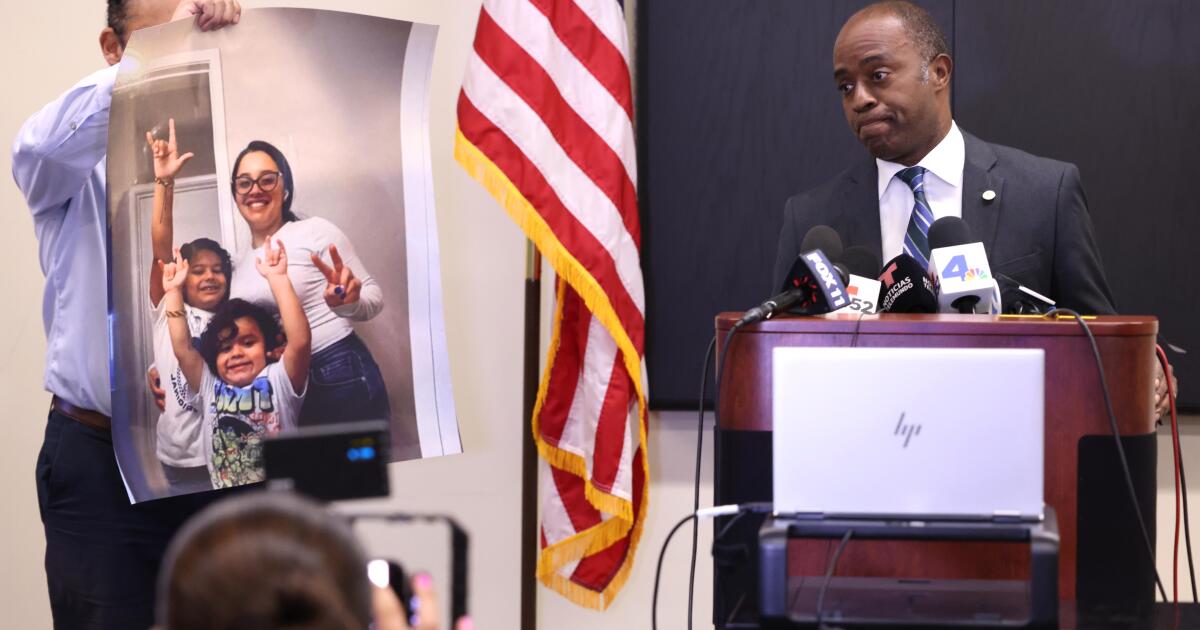
Goel was among more than a dozen speakers this week at a state Assembly Health Committee hearing held to collect input on how to address cuts enacted by a Republican-backed tax and spending bill signed last year by President Trump. The committee’s Republican members — Assemblymembers Phillip Chen of Yorba Linda, Natasha Johnson of Lake Elsinore, Joe Patterson of Rockin, and Kate Sanchez of Trabuco Canyon — did not attend.

The so-called “Big, Beautiful Bill” passed by Republicans shifts federal funding away from safety-net programs and toward tax cuts and immigration enforcement. A recent report from the Legislative Analyst’s Office, which advises the state Legislature on budgetary issues, estimated this will reduce funding for healthcare by “tens of billions of dollars” in California and warned about 1.2 million people could lose coverage through Medi-Cal, the state’s version of the federal Medicaid program providing healthcare coverage to low-income Americans.

Congress allowed enhanced Affordable Care Act subsidies to expire, which is dramatically increasing the cost of privately-purchased health insurance. Covered California, the state’s Affordable Care Act health insurance marketplace, estimates hundreds of thousands of Californians will either be stripped of coverage or drop out due to increased cost.

Sandra Hernández, president of the California Health Care Foundation, said the federal legislation creates administrative hurdles, requiring Medicaid beneficiaries to meet new work or income requirements and to undergo the eligibility re-determination process every six months instead of annually.

“We are looking at a scenario where otherwise eligible working parents lose their coverage simply because they aren’t able to navigate a complex verification process in a timely way,” she said.

California should move aggressively to automate verification instead of putting the burden of proof on beneficiaries, Hernández said. She advised legislators to center new healthcare strategies around technology, like artificial intelligence and telehealth services, to improve efficiency and keep costs down.

“While the federal landscape has shifted, California has enormous power to mitigate the damage,” said Hernández. “California has had a long tradition of taking care of its own.”

Hannah Orbach-Mandel, an analyst with the California Budget and Policy Center, said legislators should establish new revenue sources.

“A common sense place to start is by eliminating corporate tax loopholes and ensuring that highly profitable corporations pay their fair share in state taxes,” she said, adding that California loses out on billions annually because of the “water’s edge” tax provision, which allows multinational corporations to exclude the income of their foreign subsidiaries from state taxation.

One proposal to raise money for state healthcare benefits already is raising controversy. Under the Billionaire Tax Act, Californians worth more than $1 billion would pay a one-time 5% tax on their total wealth. The Service Employees International Union-United Healthcare Workers West, the union behind the act, said the measure would raise much-needed money for healthcare, education and food assistance programs. It is opposed by Gov. Gavin Newsom, among others.

During last week’s legislative hearing in Sacramento, other speakers stressed the importance of communicating clearly with the public, collaborating with nonprofits and county governments and bracing for an influx of hospital patients.

Those who lose health insurance will skip medications and primary care and subsequently get sicker and end up in the emergency room, explained Goel. She said this will strain hospital staff and lead to longer wait times and delayed care for all patients.

The federal cuts come at a time when California is struggling with its own budgetary woes. The Legislative Analyst’s Office estimates the state will have an $18-billion budget shortfall in the upcoming fiscal year.

At the start of the hearing, Assemblymember Mia Bonta (D-Alameda) criticized the federal government for leaving states in the lurch and prioritizing immigration enforcement over healthcare.

The Republican-led Congress and the president provided a staggering funding increase to Immigration and Customs Enforcement, known as ICE. The agency’s annual budget has ballooned to $85 billion.

“The federal dollars which once supported healthcare for working families are now being funneled into mass deportation operations,” said Bonta, who chairs the committee. “Operations that resulted in tragic murders — this is where our healthcare funding is going.”

Source link

20 die in nighttime Nigerien airport attack

Niger Gen. Abdourahamane Tiani (C) blamed France, Bejin and the Ivory Coast for the Wednesday night attack on Niger’s Diori Hamani International Airport. Photo by Issifou Djibo/EPA

Jan. 30 (UPI) — Four Nigerien military personnel were injured and 20 attackers were killed during an attack on the Diori Hamani International Airport near Niger’s capital city, Niamey.

The attack started late Wednesday night and lasted for about 30 minutes, during which loud explosions and sustained gunfire could be heard, the BBC reported.

Niger’s Defense Ministry said 11 were arrested after the attack ended, and a French national was among the 20 attackers who were killed.

The Islamic State group on Friday claimed responsibility for coordinating the attack that it said targeted a military base used by Niger’s army.

The Islamic State’s Amaq information wing said “major damage” was done to the airport but did not cite any casualty figures.

Video footage recorded during the attack and witness statements indicate Niger’s air-defense system engaged incoming projectiles.

The airport resumed its normal operations Thursday, and Nigerien officials credited Russian military personnel with helping to fend off the attackers.

Gen. Abdourahamane Tiani, who seized power in Niger during a July 2023 military coup, appeared on state-run television, blaming the presidents of France, Benin and the Ivory Coast for the attack. Tiani did not cite any evidence to support the allegation, but he said retaliation was forthcoming.

“We have heard them bark,” Tiani said. “They should be ready to hear us roar.”

Niger recently experienced diminished relations with France and neighboring nations, which he accused of being French proxies.

Tiani and Nigerien officials have close ties with Russia, which helped the Nigerien military to thwart a rebellion by militants associated with al-Qaida and ISIS.

Niger maintains close relations with Mali and Burkina Faso, all of which have faced rebellions that have caused thousands of deaths and displaced millions.

The three nations formed the Alliance of Sahel States in response and engaged Russia while ending military ties with France.

Source link