Devils

‘The Devils’ review: Scandalous 1971 movie soars like never before

For over five decades, there have existed two types of movie lover: those who have been at least a little corrupted by Ken Russell’s 1971 iconoclasterpiece “The Devils” and those who haven’t seen it. With the release of a newly restored director’s cut, which premiered in Cannes this year to a reception that begs to be described as orgiastic, ejaculatory, lubricious or orgasmic — take your pick — the unjustly deprived inhabitants of the latter category get to be inducted into the former.

Some are going to hate it. Some may affect a “can’t see what all the fuss is about” attitude — that is their right, as it is mine to simply not believe them. But some, witnessing what critic Judith Crist once referred to as a “grand fiesta for sadists and perverts” will find that abandoning themselves to its wantonly grotesque, profane imagery will feel like the giddiest liberation. From what, exactly? The tyranny of tastefulness? The despotism of decency? Whatever it is, blasphemy loves company, so welcome, sickos!

Several honey-roastings beyond hammy and a hundred rows of tents beyond camp, “The Devils” tells the story of a real event: the 1634 heresy trial and execution of Urbain Grandier (Oliver Reed), a libertine Catholic priest, who fell afoul of the religious and political establishments when defending the independence of the Protestant-friendly fortified city of Loudon in western France. The torrid tale involves an order of Ursuline nuns led by hunchbacked Sister Jeanne (Vanessa Redgrave) who accuse Grandier of witchcraft, which provides wily Cardinal Richelieu (Christopher Logue) and peevish Louis XIII (Graham Armitage) with the pretext for suppressing dissent.

Aldous Huxley’s 1952 nonfiction account “The Devils of Loudon,” and John Whiting’s 1960 play “The Devils” both formed the source material for Russell’s screenplay, in the sense that he clearly read them, then flung them, along with the Latin bible, the Kama Sutra, a bit of Looney Tunes, a dose of swinging ’60s psychedelia and some of the more stomach-turning passages from the Marquis de Sade onto the pyre of his own unholy, lapsed-Catholic imagination.

The resulting film became infamous almost as soon as it was released and has never been readily available in the U.S, at least not in its full form. The 2026 cut (technically the first release from Clockwork, a distribution arm of the newly merged megacorp Skydance, which is hilarious) reinstates several minutes, including the full “Rape of Christ” sequence, in which a bevy of uninhibited and un-habited nuns writhe atop a statue of the crucified Christ, as well as the scene where Redgrave’s deranged, scoliotic Sister Jeanne apparently begins to masturbate on Grandier’s charred femur bone.

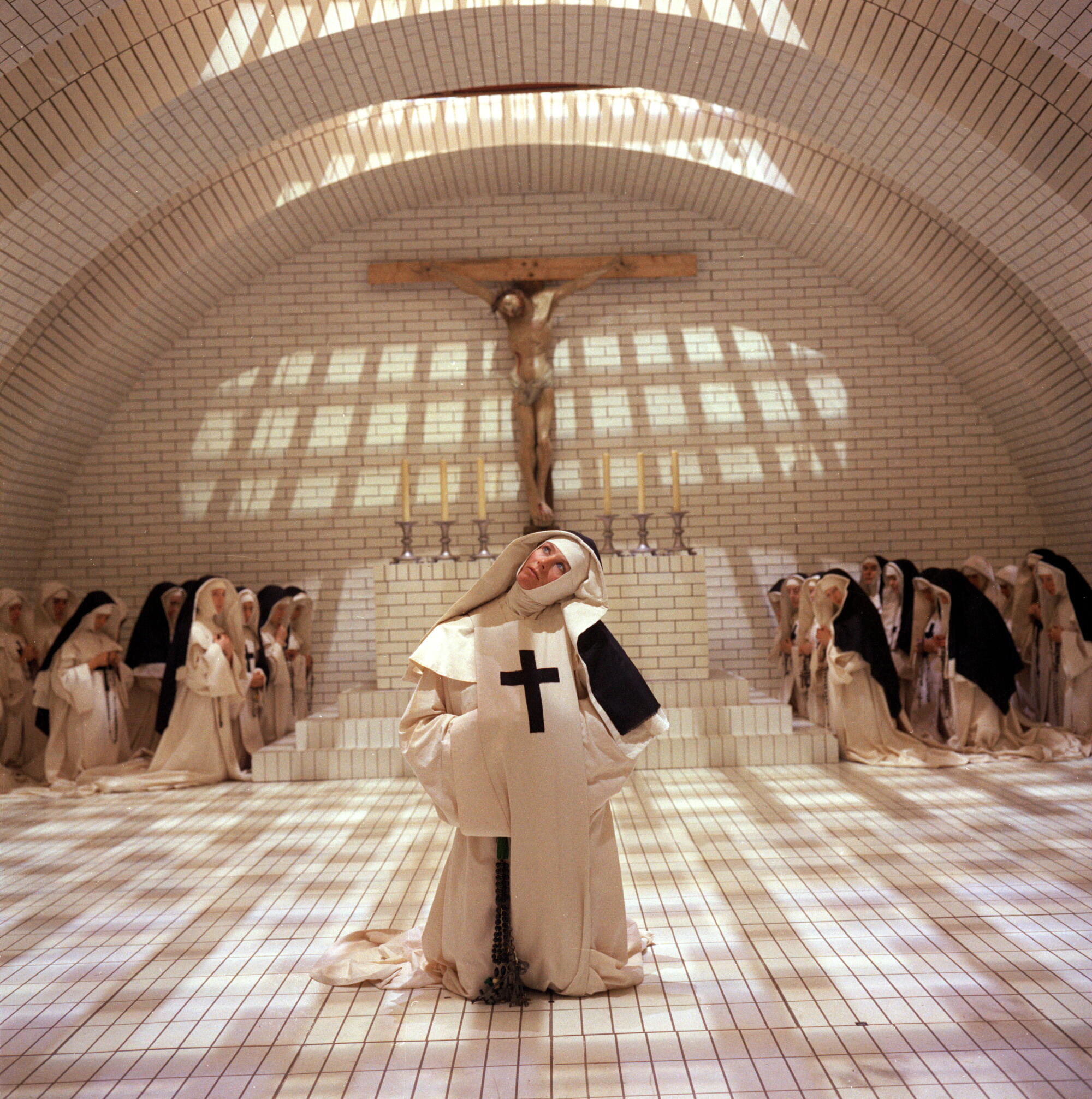
Both of these sequences have long been the Holy Grail for aficionados, but they are not the most impressive thing about this new version: That would be the immaculate re-conception of its visual splendor, which makes the movie dazzlingly sharp and new. The edges of Derek Jarman’s severe, anachronistically abstract sets are crisp and white again, the blood so very bloody and Oliver Reed’s eyes, which in the older, muddier versions look gray-brown, are suddenly so vivid they remind you that the hottest flames — hotter than the screaming orange conflagration that eventually consumes him — actually burn blue.

Hotness defines Reed’s Grandier beyond just his eyes and the smoky baritone in which he delivers his proclamations, prohibitions and occasional jokes. “Do you love the church?” asks Baron de Laubardemont (Dudley Sutton) as mad-eyed hipster Witchfinder Father Barre (Michael Gothard) drives another wedge between his mangled legs. “Not today,” grunts Grandier.

It’s hard to imagine any other actor being convincingly witty under torture and at other times quite silly (as when he fends off an attack using a stuffed crocodile that he happens to have just thrown out of a nearby window) while still radiating such charismatic cocksmanship that the local womenfolk invent sins just to confess to him. The mere mention of his name can send an entire hysteria of nuns into roiling spasms of sexual frenzy.

Nuns kneel under the figure of Christ in a white-tiled room.

Vanessa Redgrave, center, in the restored “Ken Russell’s The Devils.”

(Warner Bros. Clockwork)

But to glimpse Reed here, at his most beautiful, is to think: yup, plausible. And yet his towering performance is characterized by restraint, even more so as the ghastly climax arrives, and we realize that all of Reed’s brutish sensuality, all of Russell’s sensationalism and all of “The Devils’” chicanery, buffoonery and primping, preening vanity have been in service of a furious message that is as deadly serious as its presentation is garish.

That message — a howl of righteous anger at state corruption and the perversion of religion to serve the nefarious agendas of cruel, power-mad men — is what makes “The Devils” sacrilegious yet not apostate. It does not scorn God or faith, but the misuse of both by petty manipulators. Sure, Russell has a little dirty fun in doing so — OK, a lot of dirty fun. However, charges of “The Devils” therefore being an inherently sexist piece of work also don’t really stand up, and not only because of Redgrave’s fearlessly creepy, giggly performance of outré erotic obsession.

In fact, there’s a whole feminine tragedy written in one single monologue: “Most of the nuns here are noblewomen who have embraced monastic life because there was not enough money at home to provide them with dowries,” crows Jeanne crookedly, “Or they were unmarriageable because ugly and a burden to the family.” Remembering that the naked nuns are not cloistered because of some vocational dedication to Christ but because of their troublesome uselessness to the patriarchal order, they become that much more sympathetic. These women are just doing what they must to survive another day as the most expendable members of a grossly unequal society; who among us should begrudge them an orgasm or two while they’re at it?

The debauchery is the point. Just as Grandier’s ultimate sacrifice is only made meaningful by his history of repeated, lascivious indulgence in the fleshier sins, so can “The Devils” be an unapologetically maximalist exhibition of carnal depravity that is also quite profoundly moral. And that its morality involves speaking truth to power and resisting authoritarian control makes it shockingly relevant right now. Writing in the Los Angeles Times in 1971, critic Charles Champlin ended his elegant pan with the observation that “you weep not for the evils and the ignorance of the past, but the cleverness and the sickness of the day.” To that, as to many of the negative responses, especially in our peculiarly sickly times, it is possible simply to respond, “Yes, isn’t that great?”

Imagining the movie lying dormant all these years just waiting for the right moment to be reborn, it becomes irresistible to conflate that small section of the public who have been avidly anticipating its return with Sister Jeanne, clamoring for the elusive object of her lust through a barred window. And to once more conflate Grandier — the repentant sinner immolated on the pyre of mass delusion, political machination and religious intolerance only to be rehabilitated as a charismatic martyr for liberty — with “The Devils” itself, as it finally rises from the bone-ash of its contemporary reception to shock, titillate, corrupt and invigorate anew. What you choose to do with its charred femur is between you and your God.

‘Ken Russell’s The Devils’

Rated: NC-17, for sexual content/graphic nudity

Running time: 1 hour, 54 minutes

Playing: Opens Friday, Oct. 16 in limited release
Source link

Unauthorized repairs of Devil’s Backbone Trail near Mt. Baldy to be fixed

This summer, Southern California hiker Mark Orr spotted a hazard he struggled to stop thinking about: a crumbling, narrowing section of the Devil’s Backbone Trail near Mt. Baldy.

Orr wanted to help.

In early August, he trekked about 5.6 miles from the trailhead near Manker Flat campground to the site, hauling 85 pounds of gear with him over two trips. Orr first spent two hours digging out a wider route and then built what he dubbed an “anti-erosion fence” by installing 30-inch rebar stakes, stainless steel wire, clamps, aluminum flashing and zip ties. A few weeks later, Orr posted a video documenting his work to his YouTube channel, where he’d previously shared about hiking and other DIY projects. In the video, which Orr has since made private, he said he’d never performed trail work.

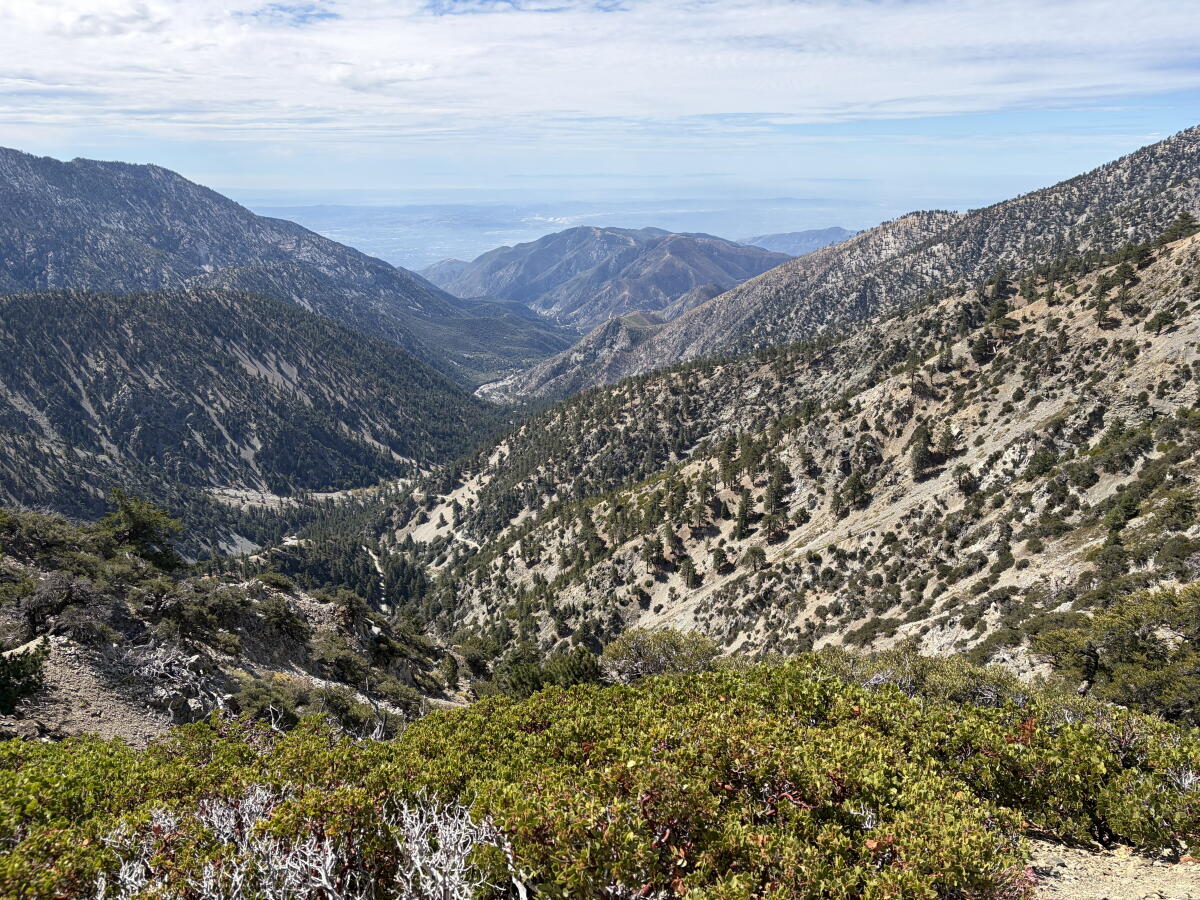
steep mountain sides covered in green conifer trees and shrubs

A view from Baldy Road leading up the Mt. Baldy Notch in the San Gabriel Mountains.

(Jaclyn Cosgrove / Los Angeles Times)

The people of the internet were initially grateful. “I can’t imagine doing this in my backyard let alone at 9,350 ft. You are THE MAN,” one YouTube user wrote. “I’ve hiked the backbone dozens of times and will remember you with gratitude every time I come across this section,” another person said. One person said his son was one of the three people who died while hiking the Backbone Trail in late December, and he wanted to connect with Orr.

But, as the video’s view count ticked up, concern over Orr’s work mounted into rage.

Two camps developed: Those who lauded Orr’s efforts and those who felt he should be held accountable for what they argued was damage to the trail. “I give this guy an A+ on his intentions and effort,” a Reddit user wrote on a post about Orr’s video. “If a section is dangerous, it should ‘look’ dangerous. To make it look safe, creates a bigger hazard as people will come to rely/trust in what is actually a DIY retaining wall. What happens when that eventually gives way? What if someone is hurt/killed as a direct result of this DIY project?”

You are reading The Wild newsletter

Sign up to get expert tips on the best of Southern California’s beaches, trails, parks, deserts, forests and mountains in your inbox every Thursday.

In this edition of The Wild, our weekly outdoors newsletter, I will report out the current status of the trail where Orr completed his work. I will discuss how we got here — where an individual, not the U.S. Forest Service, tackled a trail repair — and where we go from here, including how you can do your part without upsetting half the outdoors corner of the internet and violating federal policy.

First, let’s talk about Mt. Baldy and how people usually get there.

A segment of the Devil's Backbone Trail that hikers take to the Mt. Baldy summit.

A segment of the Devil’s Backbone Trail that hikers take to the Mt. Baldy summit.

(Jaclyn Cosgrove / Los Angeles Times)

Mt. San Antonio, commonly referred to as Mt. Baldy for its appearance, is a 10,064-foot peak in the San Gabriel Mountains and is the highest point in Los Angeles County.

Outside of winter, when much of the trail can become covered in snow and ice, most hikers reach Mt. Baldy via two routes. They start near the Manker Flat campground and walk Falls and Baldy roads until they either turn north-ish onto the Baldy Bowl Trail, often referred to as the “Ski Hut” route because hikers pass the Sierra Club’s green building, or hikers continue on Baldy Road until they reach the Mt. Baldy Notch. From here, hikers start the Devil’s Backbone Trail first by trekking up a fire road and then taking on a grueling, narrow 1.9(ish)-mile jaunt that gains about 1,500 feet and always makes me question my life choices about halfway through.

The Devil’s Backbone is named as such because of its shape, including segments where hikers walk a narrow stretch with steep drop-offs on both sides. This steepness is part of what makes it susceptible to erosion — and why only serious, well-equipped mountaineers should traverse it during the winter.

A steep ridge with a trail along its middle and trees and boulders on its sides.

The Devil’s Backbone Trail, per the U.S. Forest Service, is 3.24 miles long, starting at Baldy Notch and ends at Mt. Baldy Summit.

(Jaclyn Cosgrove / Los Angeles Times)

On Sunday, I headed up Baldy Road to see how Orr’s repairs were holding. I am active in the r/socalhiking Reddit community, where I first learned of the story, and had already seen images showing a hole developing at the start of Orr’s repairs.

But no one had pinpointed exactly where they were.

Once I reached the Devil’s Backbone, a hiker warned me about a particularly steep and narrow section he’d just traversed.

“Is this the part with the repairs?” I asked.

“No, that part is way up, and it is already breaking down,” he told me.

I then chatted with two high schoolers coming back from summiting Baldy, one of whom hopes to attend a University of California school to study environmental science. “A little bit of rain,” and it’s gone, he said of Orr’s repairs.

A piece of metal attached to two pieces of metal drilled into the side of a mountain with a gap between the metal and trail.

A segment of a repair performed by a local hiker that has started to fail.

(Jaclyn Cosgrove / Los Angeles Times)

Just over a mile into the Devil’s Backbone, I spotted the shiny aluminum of Orr’s anti-erosion fence. And I spotted the hole where fill dirt has fallen through. Before Orr started his work, the trail was narrow — his work did widen the route, but how long will it hold?

Alan Coles, a trail crew leader with the San Gabriel Mountains Trailbuilders, which maintains routes in the backcountry and Baldy area, told me the answer is probably not long, especially given the rain and snow we could get this winter from El Niño.

A narrow dirt trail on the side of a mountain with a hole between the trail and a piece of metal.

A segment of the Devil’s Backbone Trail where a hiker attempted to widen and repair the crumbly trail.

(Jaclyn Cosgrove / Los Angeles Times)

“Taking another look at the video, the problem with the trail may be due to a buildup of material washing down from above,” said Coles, who has 35 years of trail maintenance experience. “Often the best solution is to dig it out and lower the trail to the original alignment, which will also widen it. The problem with the repair is that the hardware he installed would make that difficult. In time, the material he used will come apart, and those stakes will get more exposed, leading to problems with people tripping on them, especially if there is snow.”

Coles said to begin work in Angeles National Forest, he must submit a list of trails that his organization wants to work on to the U.S. Forest Service. The agency’s archaeologist, biologist and other technical experts will review his list. If there are any issues with a particular trail that Coles has identified needs repairs — like if an endangered species is known to live in a creek next to the trail — the Forest Service could deny his request, thus leaving the trail unmaintained.

A hiker walks near the hole created by unauthorized repairs performed in early August.

A hiker walks near the hole created by unauthorized repairs performed in early August.

(Jaclyn Cosgrove / Los Angeles Times)

Coles said the Devil’s Backbone Trail is a “very difficult repair” for a lot of reasons, including its high altitude and the need for a crew to get permission to use the fire roads to shorten the distance they have to haul their gear. Coles said hikers often ask him when his crew will work on the Three T’s Trail, as the route has several downed trees and other issues, and his crew faces similar access issues.

Coles said he sympathizes with Orr’s reasoning for repairing the trail: People died in that area.

“His heart’s in the right place, but it really needs to be done with someone who says, ‘OK, here’s how you properly do a repair like that,’” Coles said.

It’s impossible when thinking about Orr’s repairs not to think about the old adage of, “The road to hell is paved with good intentions,” and the brutal irony is that, once you reach the Devil’s Backbone, you’re going to need more than that.

Two hikers are seen far down the ridgeline on a narrow steep route with drop-offs on both sides.

Two hikers navigate down the Devil’s Backbone Trail after summiting Mt. Baldy, the highest point in L.A. County.

(Jaclyn Cosgrove / Los Angeles Times)

When I spoke to Orr after my hike, he said he hopes that he can join the trail crew to remove what he did and repair the trail properly.

“The first thing is, it was nothing but well intentions by somebody who loves the mountain and wants it to be safer for everybody,” Orr said. “I totally get that my first crack at this, I didn’t do everything right, and I’m actively working with the San Gabriel Mountains Trailbuilders to get it right before this winter.”

The final challenge, though, will be getting officials at the U.S. Forest Service to approve the work plan. A spokesperson at Angeles National Forest did not respond to my request for a comment or an interview for this story.

Orr’s trail repairs come at a time when outdoors lovers are feeling particularly protective of public lands. The Trump administration has continued its efforts to peel back layers of environmental protections, like the Roadless Rule, raising the alarm of park advocates who fear not even Yosemite is safe from development.

The sun casts shades of orange, pink and yellow across the sky as the day ends, with the mountains below.

The sunset as viewed Sunday on a trail often referred to as the “Ski Hut” route.

(Jaclyn Cosgrove / Los Angeles Times)

At the same time, the U.S. Forest Service and National Park Service have both seen massive staffing cuts during Trump’s second term, and this comes after decades of underfunded trail construction and repair.

In the early 1980s, “each of the five Angeles Forest districts had a full-time, paid trail crew of eight to 10 members. Now there are only summertime crews with three to four members. Forest Service officials and the agency’s critics agree that if it were not for the volunteer corps of 700 trail builders, the mountain paths would not be repaired for years,” according to a 1993 Times story.

Those crews, Coles said, were one of the casualties from a swath of federal budget cuts in the 1980s. A 1986 Times story noted that, in just four years, “the amount of federal money allocated for trail maintenance nationwide and in Southern California … dropped about 50%.”

“For the most part, without the volunteers, you wouldn’t have a trail system today,” Angeles National Forest official Don Gilliland told The Times in 1993.

As the sun sets, the clouds above a group of mountains turn orange, pink and yellow.

The sun goes down, casting orange and pink hues through the clouds above the San Gabriel Mountains near Mt. Baldy Village.

(Jaclyn Cosgrove / Los Angeles Times)

The agency continues to rely heavily on volunteers. The U.S. Forest Service estimates that it has about $10.8 billion in deferred maintenance, including $241 million in deferred trail maintenance and almost $70 million in trail-bridge deferred maintenance, according to a recent budget document.

In an analysis of that backlog of work, officials with the U.S. Government Accountability Office heard from one regional official who told them that the trail maintenance program “is held together by Band-Aids and baling wire.”

If you’d like to be part of that baling wire, you can join Orr in joining a local trail crew. There are several who service the San Gabriel Mountains and their foothills.

It is easy to read about Orr’s efforts and point out the obvious mistakes he made. It’s another thing to take action, whether that’s donating to local trail crews or volunteering on their work days. I’ll see you out there, focusing on the latter.

A wiggly line break

3 things to do

A coyote laps up water from a paved path.

A coyote drinks water puddling near the golf course at Griffith Park.

(Mel Melcon / Los Angeles Times)

1. Document dicots and deer in L.A.
The Los Angeles Public Library, along with other city agencies, will launch this year’s L.A. Nature Quest at 9 a.m. Saturday at the Griffith Park Visitor Center. The L.A. Nature Quest is an annual monthlong effort to document as much of L.A.’s flora and fauna as possible using iNaturalist, a citizen science app. Attendees will be guided by rangers and other experts in a morning of outdoor exploration and nature journaling. Downloading iNaturalist beforehand is recommended. Register at eventbrite.com.

2. Sit down and spy birds in Pasadena
The Pasadena Audubon Society will host a seated birding experience at 8 a.m. Saturday on the Gamble House lawn (4 Westmoreland Place in Pasadena). Guests should bring water, sunscreen, a lawn chair or blanket, and a hat. Participants can bring their own binoculars, but there will be some to loan out for those without. Register at eventbrite.com.

3. Marvel at mushrooms in Monrovia
Monrovia’s Canyon Park Nature Center will host the opening reception for the Mushrooms of the San Gabriel Mountains at 10 a.m. Sunday. Mycologist Aaron Tupac will share with guests about how and why they photographed the specimens shown in the exhibit, along with sharing information about our local fungi populations. Learn more at Tupac’s Instagram page.

A wiggly line break

The must-read

Six people observe as two people in gloves kneel in the sand where they place eggs from a nest into a white container.

Biologists collect olive ridley sea turtle eggs from nests on Southern California beaches.

(Huntington Beach Police Dept.)

In mid-September, two heart-shaped olive ridley sea turtles made history when they dug nests on Seal and Huntington beaches, marking the first documented natural sea turtle nests on the U.S. West Coast. Times staff writer Corinne Purtill wrote that biologists and cheloniophiles barely had time to celebrate before realizing that these nests were at risk of being destroyed by incoming storm surges and high tides. Biologists recovered just over 200 eggs. “We had to make some quick decisions,” said biologist Jonathan Snyder of the U.S. Fish and Wildlife Service at the Aquarium of the Pacific in Long Beach on Friday. “This is the decision that we made, and I think it’s the best one for species recovery.”

Happy adventuring,

Jaclyn Cosgrove's signature

P.S.

Montrose Search and Rescue recently highlighted the perils of taking the wrong route to hike Strawberry Peak. Strawberry Peak, visible from several L.A. hikes, is the highest point in the front range of the San Gabriel Mountains. Montrose Search and Rescue recently rescued hikers, though, who’ve ended up on the mountaineering route. Their video highlights how crucial it is to know your route before you go — and to ensure you have a physical map with you in case you get lost. Stay safe out there, folks! (And don’t hike Strawberry Peak right now — it’s too hot.)

For more insider tips on Southern California’s beaches, trails and parks, check out past editions of The Wild. And to view this newsletter in your browser, click here.


Source link