Deutsche Lufthansa AG

Airline with the smallest seats measuring just 17 inches — not easyJet

Some airlines have smaller seats than others

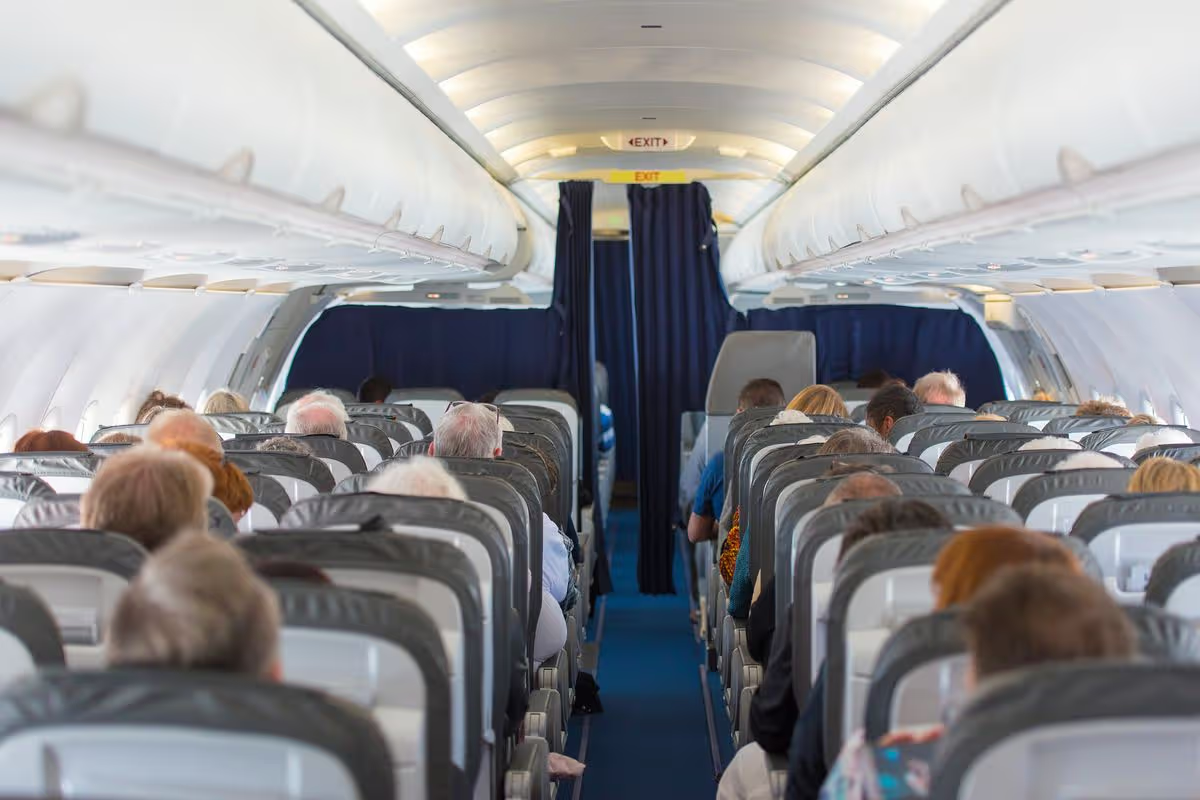
You’re embarking on your dream getaway, sailing through security and preparing to settle into your aeroplane seat when you spot it: a minuscule middle seat you’ll need to squeeze into for the entirety of your journey.

Fortunately, there’s now a method to determine which budget carrier offers the most spacious seats, sparing you from compromising your precious comfort.

Which? has worked out which airlines boast the largest seats, enabling you to ensure you’re getting maximum value for money.

Regarding short haul journeys, the seat width (the gap between each armrest) ranges from 17 to 18 inches, which might not seem substantial.

Yet, that additional inch can prove transformative when you’re packed in like sardines.

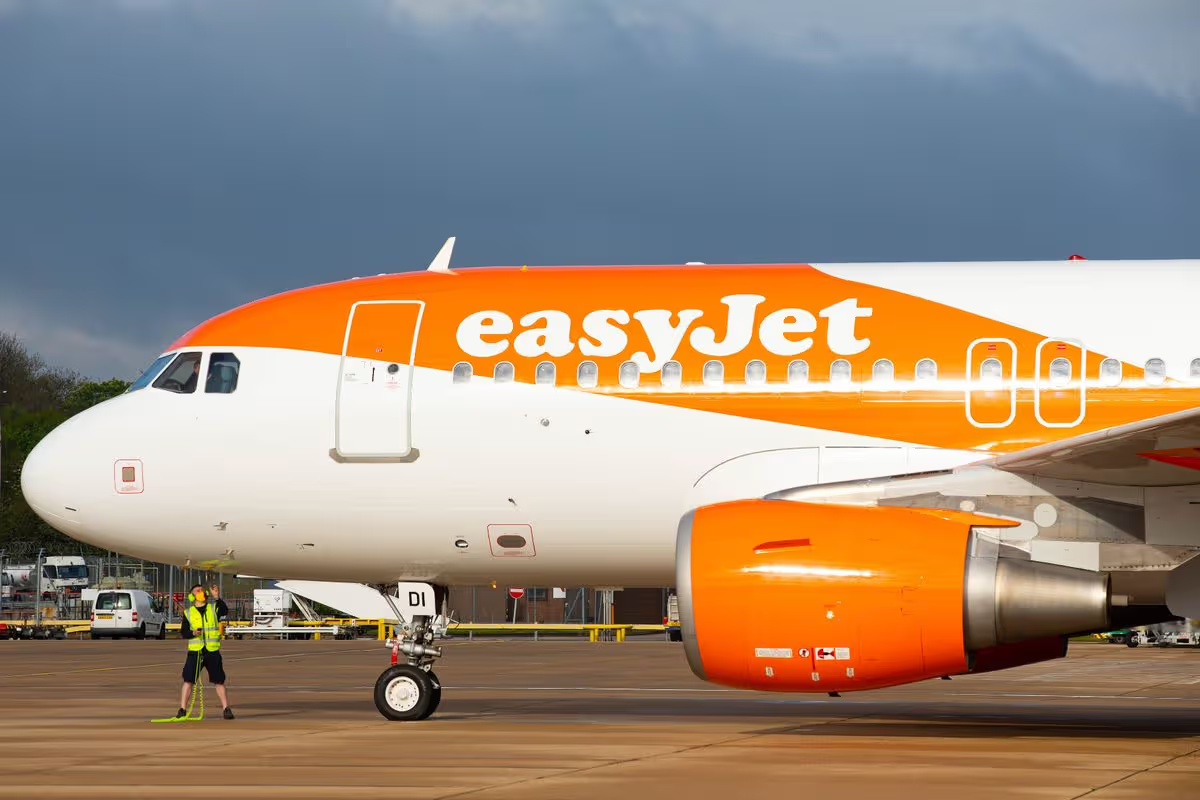
The carriers offering the most generous economy seats are Wizz Air, TAP Portugal, easyJet and Lufthansa, all measuring 18 inches across.

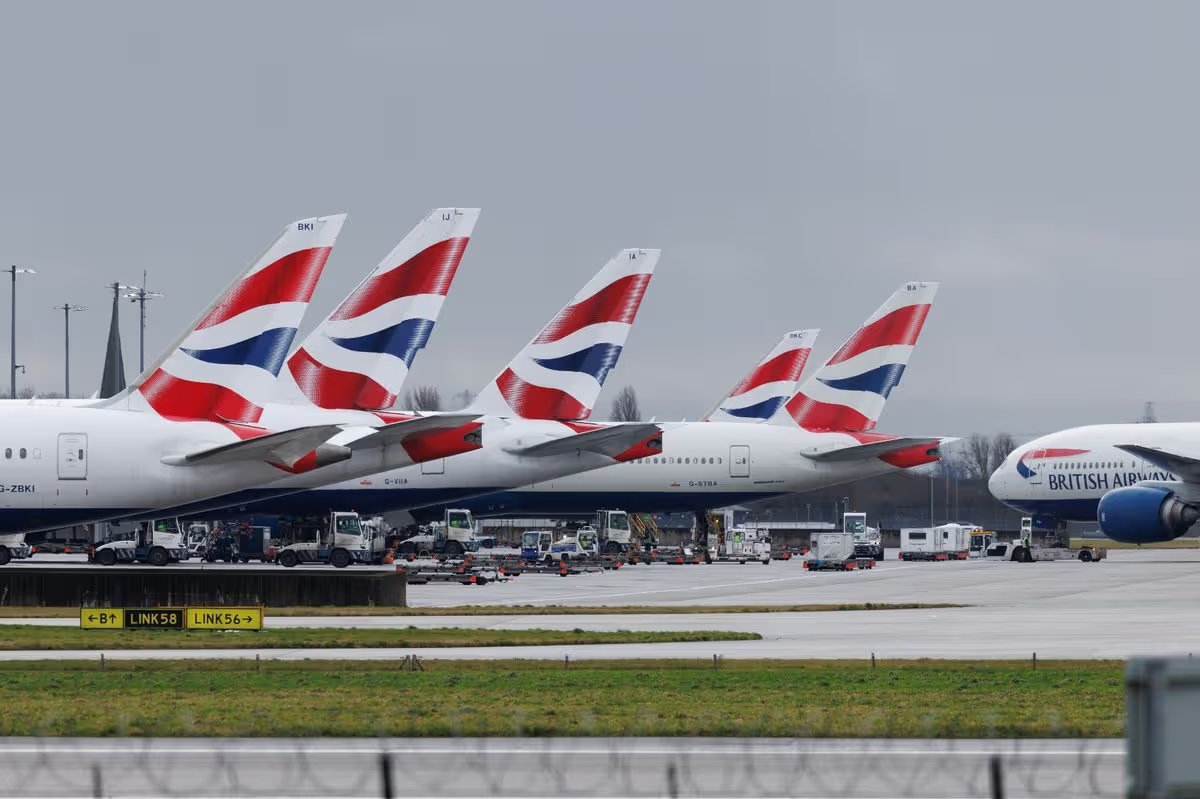
This means the airlines with the narrowest seat widths are British Airways, Jet2, KLM, Norwegian, Ryanair, Tui and Aer Lingus, all matching at 17 inches.

Meanwhile, Vueling sits in between with 17.5 inches.

Airlines seat width and legroom

Below are airline seat width and legroom in inches.

If you’re keen to secure additional space on your budget flight without parting with extra cash, there are several tricks you can employ.

The first involves booking a seat in the bulkhead – those positioned directly behind the walls, curtains or screens which divide the aircraft. With no seats ahead, you’ll have the freedom to fully extend your legs. However, these may be marginally narrower if tray tables are housed in the armrest.

If a bulkhead doesn’t appeal to you, select a seat towards the back of the aircraft where they narrow.

This can occasionally mean fewer seats per row – but naturally, you might find yourself beside the toilet queue which can prove somewhat disruptive.

If you’re on a flight which has already departed and you spot additional empty seats, you can always courteously ask the cabin crew if it would be feasible to relocate.

Bear in mind, if you don’t ask, you don’t get – and provided you’re polite there’s a possibility they’ll accommodate your request.

If you have particular requirements that would benefit from additional space, such as being tall or pregnant, you’ve got a reasonable chance of being relocated to a more spacious area.
Source link

Flight misery over for tall passengers as easyJet shares new seats with extra legroom

The new seat will be installed from 2028 on hundreds of easyJet’s new aircraft, providing an extra two inches of improved knee and shin clearance

As budget airlines attempt to cram more and more passengers onto flights, it can feel as if the seat in front edges slightly closer each time you board a plane.

However, a “next generation” economy seat is on the horizon, which its creators claim will provide travellers with additional legroom without compromising space for airlines.

The Kestrel seat from Mirus Aircraft Seating, a British manufacturer, will be fitted from 2028 on hundreds of easyJet’s new aircraft, delivering an extra two inches of “improved knee and shin clearance” for passengers. It will enable easyJet to provide more legroom than most of its short-haul budget rivals.

READ MORE: Britain’s biggest car park operator to close 22 sites within days – full listREAD MORE: Warning as tourist is detained for going on a walk in holiday hotspot

The seat reshapes a passenger’s back, enabling their hips and spine to sit further back on the cushion so their knees and legs gain additional space at the front.

The back is constructed from carbon fibre rather than the traditional moulded plastic, producing a slimmer seat that provides crucial extra inches for the person behind.

A “fixed recline” of 22 degrees naturally shifts the passenger to the most efficient position in the seat, Mirus claims. Customers cannot manually recline the seat to annoy the passenger behind them.

A standard easyJet seat typically provides between 28 and 29 inches of room, meaning anyone who is six foot or taller will touch the seat in front with their knees. Some airlines on longer haul economy flights offer up to 34 inches of space.

“We’ve always had very comfortable leg room in easyJet,” said Kenton Jarvis, the airline’s chief executive. “This product is exceptionally comfortable, exceptionally light and allows a configuration that creates more space for the customer in the cabin.”

He explained easyJet wouldn’t be retrofitting any of its estimated 350 aircraft, stating: “There’s an expense to ripping off perfectly good seats and putting in and buying new ones.” The seats will instead appear in new orders of the Airbus A320neo and A321neo from 2028.

Research conducted this year by consumer group Which identified the short-haul carriers offering the tightest economy-class seat layout, or pitch, as Jet2, KLM, Lufthansa, Ryanair, SAS, TAP Air Portugal, Vueling and Wizz Air. All featured at least some seats with a 28-inch pitch.

The group noted that seat comfort also hinged on quality factors such as padding. By that measure, easyJet’s current seats achieved two out of five.

David Morgan, easyJet’s chief operating officer, commented: “We are delighted to be introducing the Mirus Kestrel seat across our future fleet.

“On top of the sustainability benefits, the additional legroom and enhanced comfort these seats will provide will also deliver an improved onboard experience for our customers, which we know they’ll love.”

READ MORE: ‘Text four letters to five-digit code’ this week if you have a mobile phone

Source link

All of the UK flights cancelled today on Wednesday, March 11

Many airlines are operating restricted schedules due to airspace restrictions in the Middle East, with 21,915 of the 38,193 services scheduled to fly since February 28 cancelled

Dozens of flights to and from the UK have been cancelled today as the war in Iran continues.

Many airlines are operating restricted schedules due to airspace restrictions in the Middle East, with 21,915 of the 38,193 services scheduled to fly since February 28 cancelled.

On Wednesday morning, Dubai International Airport was forced to temporarily pause operations due to a drone strike nearby, which wounded four people. Authorities have confirmed that flights have since continued.

Emirates and Etihad are still operating limited schedules from Dubai and Abu Dhabi airports, respectively. Qatar Airways said it is “doing everything possible to support affected passengers and help reunite them with family and loved ones” while Qatari airspace remains closed.

The airline said that operations will resume“ once the Qatar Civil Aviation Authority confirms the safe reopening of Qatari airspace.”

Yesterday, British Airways announced that it has suspended all flights to and from Amman, Bahrain, Doha, Dubai, and Tel Aviv until later this month, while its services to and from Abu Dhabi are cancelled until later this year. The decision means hundreds of BA services will be cancelled over the coming months.

READ MORE: British Airways cancels hundreds of flights ‘until later this year’ with major cities impactedREAD MORE: Brand new sleeper train between two huge cities with £43 bed tickets launching this year

Flight data shared exclusively with the Mirror by analytics firm Cirium shows that 55 of the planned services due to fly today had been cancelled as of 12.45 pm, which is 2.49% of the total scheduled to fly into the UK from the Middle East and vice versa.

UK flights cancelled on March 11

Arrival Country: Flights; Cancelled; Cancel %

  • Qatar: 18; 17; 94.44%
  • United Kingdom: 493; 15; 3.04%
  • United Arab Emirates: 32; 11; 34.38%
  • Bahrain: 3; 3; 100.00%
  • United States: 113; 2; 1.77%
  • Jordan: 3; 1; 33.33%
  • Israel: 7; 1; 14.29%
  • Germany: 116; 1; 0.86%
  • Denmark: 29; 1; 3.45%
  • Cyprus: 20; 1; 5.00%
  • Uganda: 1; 1; 100.00%
  • Ireland: 121; 1; 0.83%

If you are due to fly from or to the Middle East in the coming days, make sure you check your airline’s website for instructions and the Foreign Office website for the latest advice.

What have the airlines said?

  • Aegean Airlines – Greece’s largest carrier cancelled flights to Tel Aviv until March 20; Beirut, Erbil and Baghdad until March 25; Dubai and Abu Dhabi until March 19; and Riyadh until March 14.
  • Air France–KLM – Air France cancelled flights to Tel Aviv and Beirut through March 13, and to Dubai and Riyadh until March 12. KLM suspended flights to Dubai, Riyadh and Dammam until March 10, and to Tel Aviv for the rest of the winter season.
  • Cathay Pacific – Cancelled all flights to and from Dubai and Riyadh until March 31.
  • Delta – Cancelled flights from New York to Tel Aviv until March 22 and from Tel Aviv to New York until March 23.
  • Emirates – Operating a reduced flight schedule but expects to return to full operations within days, depending on airspace availability and operational requirements.
  • Etihad Airways – Resumed a limited commercial flight schedule between Abu Dhabi and several key destinations.
  • Iberia Express cancelled all flights to and from Tel Aviv through March 10.
  • Lufthansa Group – Lufthansa, Austrian Airlines, Swiss and Brussels Airlines suspended Tel Aviv flights through April 2 and Beirut flights through March 28. Flights to Tehran are suspended until April 30, and to Amman, Erbil, Dammam, Dubai and Abu Dhabi until March 15.
  • Norwegian Air – Now plans to start flights to Tel Aviv and Beirut on June 15, instead of the previously scheduled April 1 and April 4.
  • Qatar Airways – Operating a limited schedule to and from Doha, with some flights resuming from March 9 following temporary authorisation from Qatar’s civil aviation authority.
  • Saudia Airlines – Suspended flights to Amman, Kuwait, Abu Dhabi, Doha and Bahrain until March 10, and to Moscow and Peshawar until March 15. Limited operations to Dubai have resumed.
  • Wizz Air – Suspended flights to Israel until March 29, and flights from mainland Europe to Dubai, Abu Dhabi, Amman and Jeddah until mid-September.

Source link