Syrians released from Israeli detention have described abuse including sleep deprivation, violent searches, and dog attacks, while dozens of others remain detained. Al Jazeera’s Heidi Pett met with some of them, who recounted the torture they suffered behind bars.
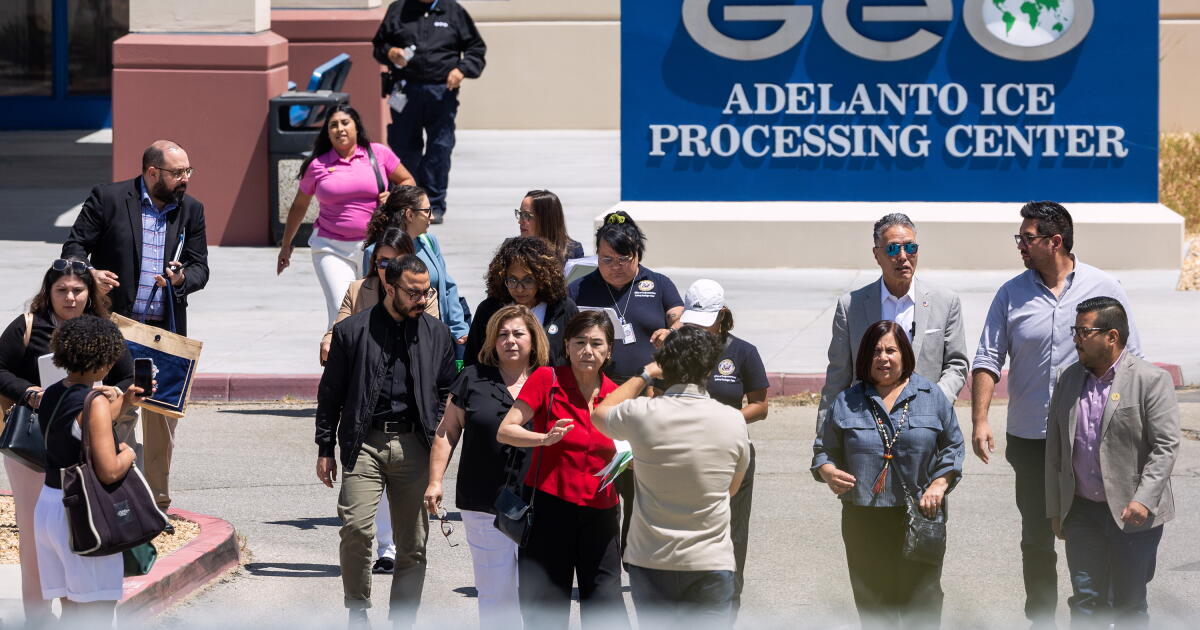
WASHINGTON — The Department of Homeland Security has purchased three immigrant detention facilities in Adelanto for $950 million, according to the private prison corporation that sold them.
The sale by the GEO Group, a Florida-based government contractor, follows an initial $1.5-billion sale over the summer of two other California detention facilities by GEO’s competitor, CoreCivic of Tennessee.
The facilities owned by GEO Group include the 1,280-bed Adelanto West ICE Processing Center, the 660-bed Adelanto East ICE Processing Center and 704-bed Desert View Annex.
In total, the federal government has now spent nearly $3.2 billion on detention facility purchases, the majority of them in California. CoreCivic sold off two other facilities, in Minnesota and Kansas, in August.
The sales were made possible by an infusion last year of $45 billion for immigration detention from President Trump’s One Big Beautiful Bill Act.
In its announcement, GEO Group sad it will continue managing daily operations at the facilities under the company’s existing contract with U.S. Immigration and Customs Enforcement, which is effective through Dec. 19, 2034.
The company said it is engaged in an “active process” with Homeland Security for the potential sale of multiple other facilities. Those sales hinge on GEO Group’s ability to continue managing those facilities under long-term contracts, the company wrote.
“We are pleased with the completion of these important asset sales to the U.S. federal government, and we look forward to continuing to provide high-quality secure support services under our existing long-term contracts with ICE,” George C. Zoley, the company’s CEO, wrote in a news release.
“We are proud of our 40-year public-private partnership with ICE, and we stand ready to continue to assist the federal government in meeting its immigration enforcement priorities,” Zoley added.
During a shareholder call in August, Zoley said ICE was contemplating buying more than 10 facilities, and that number “could continue to grow.”
“We believe we have two types of assets: the buildings and the businesses of providing support services,” he said on the call. “We are pursuing a potential sale of the buildings, but we want to retain the business. We consider ourselves primarily a support services operator, and will place particular importance on our ability to continue our support services at any facility sold to ICE.”
GEO Group said it anticipates receiving $705 million in proceeds from the sales, after taxes and transaction fees. The company wrote that net proceeds will reduce the company’s debt and facilitate the repurchase of company shares.
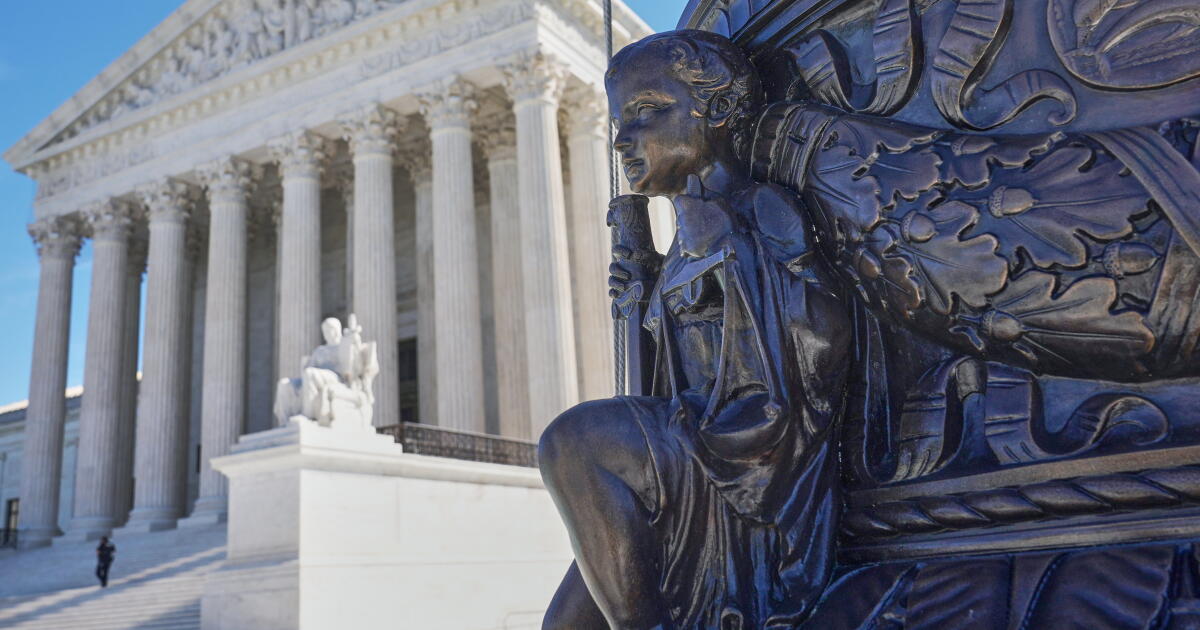
WASHINGTON — The Supreme Court on Thursday agreed to review a Trump administration policy denying bond hearings for immigrants as the government carries out a sweeping crackdown.
The justices will consider whether immigrants who have been living in the U.S. have a right to a hearing to determine if they should remain detained while challenging their possible deportation.
The case will test a key pillar of the Trump administration’s hard-line immigration agenda.
Most appeals courts to have considered the issue have found that it violates federal law to detain immigrants, including those living in the U.S. illegally, without a bond hearing. Those decisions conflict with rulings by the 5th and 8th circuits, which held that immigrants accused of illegally entering and remaining in the U.S. must be detained while their deportation cases are pending.
The high court agreed to hear the case of Ricardo Aparecido Barbosa da Cunha, a citizen of Brazil. Authorities say he entered the United States illegally two decades ago and applied for asylum in 2016. He sought a bond hearing after an immigration judge determined that his detention was mandatory following his September 2025 arrest.
He has never been charged or convicted of a crime, his attorneys said. The court is expected to hear the case in the coming months.
President Trump’s administration had urged the high court to take up a different but related case that involves the broader constitutional implications of the new policy.
Attorneys from the Republican administration argue the circuits’ split is “disrupting the orderly administration of immigration law.” They say the nation’s courts have been inundated with thousands of petitions filed by immigrants challenging the government’s legal interpretation.
“The result is an unworkable patchwork of inconsistent immigration enforcement, where aliens present without admission are subject to mandatory detention in some circuits but are entitled to bond hearings and often released in others,” lawyers for the administration wrote.
The plaintiffs are immigrants represented by the American Civil Liberties Union, which says hundreds of district court judges have joined most circuits in rejecting the Trump administration’s new reading of the statutes. Plaintiffs’ lawyers say the administration is trying to deny bond hearings for immigrants apprehended anywhere in the U.S. — no matter how long they’ve lived in the country — rather than limiting the restriction to noncitizens stopped at the border.
“Millions of noncitizens could be affected by the government’s new interpretation,” ACLU attorneys wrote.
The Trump administration says its new mandatory detention policy is legal under a 1996 immigration law. The policy change departs from the practices of prior administrations, which typically allowed most noncitizens without criminal records to request a bond hearing if they were arrested away from the border.
Israel imprisons hundreds of Palestinian children at a time, holding them indefinitely in military detention systems that traumatise the children. Their suffering was discussed during an event on the sidelines of the UN General Assembly High-Level Week.
The case is the latest dispute over US President Donald Trump’s sweeping immigration crackdown.
Published On 1 Oct 20261 Oct 2026
The United States Supreme Court has agreed to hear a case focused on the Trump administration’s policy requiring millions of undocumented immigrants to remain in detention while they fight deportation.
The case, accepted on Thursday by the justices, is the latest dispute over US President Donald Trump’s sweeping immigration crackdown to reach the nation’s highest court.
Recommended Stories
list of 3 itemsend of list
At issue is whether migrants already living in the US have a legal right to a hearing where a judge can decide whether they should be released on bond from Immigration and Customs Enforcement (ICE) detention while their deportation cases are pending.
In July 2025, the administration introduced new guidance directing federal immigration authorities to detain undocumented immigrants without a bond hearing for the duration of their deportation proceedings, which can last for years.
The new policy, which has divided lower courts, reverses a decades-old interpretation that allowed some immigrants in the US to be released while their cases were pending in immigration court, according to Reuters news agency.
Most US federal appeals courts have ruled that immigrants cannot be detained without a bond hearing. But the 5th and 8th US Circuit Courts of Appeals have found that immigrants accused of illegally entering and remaining in the country must remain detained while their deportation cases proceed.
Trump administration attorneys told the Associated Press the split is “disrupting the orderly administration of immigration law”.
“The result is an unworkable patchwork of inconsistent immigration enforcement, where aliens present without admission are subject to mandatory detention in some circuits but are entitled to bond hearings and often released in others,” the lawyers wrote.
Millions could be affected
The Supreme Court case stems from a 2nd US Circuit Court of Appeals ruling involving Ricardo Aparecido Barbosa da Cunha, a Brazilian national who entered the US around 2004 or 2005.
Immigration officers arrested him in September 2025 while he was driving to work in the US state of Massachusetts. He was initially denied a bond hearing under the administration’s policy but was later released on bond, according to court documents cited by Reuters.
The American Civil Liberties Union (ACLU), which is representing the plaintiffs, told the Associated Press the Trump administration is trying to deny bond hearings for immigrants apprehended within the US rather than limiting the restriction to noncitizens stopped at the border.
“Millions of noncitizens could be affected by the government’s new interpretation,” ACLU attorneys wrote.
The Supreme Court is expected to hear arguments on Monday, when its new term starts.
In May, when Samuel Gonzalez Terrones was diagnosed with depression and schizophrenia, he started seeing a therapist and taking medication that he hoped would finally alleviate the dark thoughts that had begun creeping up so frequently he would sometimes seek help by calling the police on himself.
A month later, his mom, Minerva Terrones Dominguez, 54, had just hopped off a bus on her way to a grocery store in San Bernardino when immigration agents arrested her for being in the country illegally. While she languished in detention, the family said, Samuel grew increasingly despondent.
To help pay for an immigration lawyer, his siblings and dad had taken up extra shifts at their jobs. But because Samuel’s condition meant he couldn’t hold a steady job, he spent more and more time alone at home in Rialto.
“My mom was the one who would take care of him when he would have those bad thoughts,” said his older sister Sari Gonzalez, 32. “Everybody would be at work or at school, so my mom was the only one that would be here to calm him down, to say, ‘Your siblings will be here in a bit, just wait.’”
The lawyer, Arturo Burga, had figured out a way to free Minerva from detention and allow her to stay permanently in the U.S. The legal pathway, called cancellation of removal, hinged on proving that her deportation would cause extreme hardship to a U.S. citizen: Samuel.
They never got to file the paperwork.
Samuel Gonzalez Terrones, 21.
(Gonzalez family)
At 3:55 a.m. on Aug. 12, San Bernardino police responded to a railroad crossing. Samuel was pronounced dead at the scene, according to a San Bernardino County coroner’s news release. He was 21.
In a letter Samuel wrote before his death, an excerpt of which was shared with The Times, he talked about his mother’s detention. He said her being taken away by Immigration and Customs Enforcement made him feel like he’d hit “one last wall.”
“To the ICE agent who took away my mother: I hope it was worth it,” Samuel wrote. “I can’t handle anymore injustices in this world.”
Suicide prevention and crisis counseling resources
If you or someone you know is struggling with suicidal thoughts, seek help from a professional or call 988. The nationwide three-digit mental health crisis hotline will connect callers with trained mental health counselors. Or text “HOME” to 741741 in the U.S. and Canada to reach the Crisis Text Line.
Motivations for suicide are often complex and unknowable, and it’s unclear how the Trump administration’s aggressive immigration policies may have moved an immigrant or family member to harm themselves. But immigrant advocates say they have heard of such deaths.
This month, a 20-year-old Haitian man in Springfield, Ohio, walked into oncoming traffic after the Trump administration ended his Temporary Protected Status and ICE fitted him with an ankle monitor.
In May, the Associated Press found that at least 10 detainees had died by suicide since President Trump took office — a pace that far exceeds the growth in the detainee population.
ICE did not respond to requests for comment.
Samuel’s family describes him, the second youngest of seven siblings, as a caring and generous person who, at his best, was quick to laugh, loved chocolate conchas and video games, and dreamed of becoming a graphic designer.
He kept a dark aesthetic, with a lip piercing and nails frequently painted black or red. But he also had a lighter side, Sari said, as evidenced by the Hannah Montana stickers decorating his bedroom wall.
When the siblings were younger, they worked out together and would challenge each other to see how many pull-ups they could do. They liked hanging out at a skate park, laughing as he guided Sari’s small dog, Polar, down a rail on a board.
His mental health struggles started in 2021, when he was a freshman at Cajon High School. Little by little, he lost his passion for the gym, Sari said, and everything else.
An undated photo of Samuel Gonzalez Terrones.
(Gonzalez family)
Sari said she and her siblings each played a different role in helping Samuel through his struggles. He and his younger sister played video games. Sari would talk to him about adulthood. Their older brother would take him to church. On good days, their father would bring him along to landscaping jobs.
“He really did try to get better,” she said. “He held on for a really long time, and I’m proud of him for being so strong.”
The day Minerva was detained, Samuel and Sari were at home.
According to a federal court petition seeking Minerva’s release from ICE custody, federal agents stopped her, said she “looked like someone” they were seeking and mocked her when they found her EBT card while searching her belongings.
Minerva has lived in the U.S. for 33 years, had never been arrested or convicted of a crime and had never been in removal proceedings, according to her lawyer.
Sari said an ICE agent called her and said she had an hour to pick up her mother’s things from the agency’s local office and to say goodbye before ICE moved her to a detention center.
Samuel was inconsolable. “I’ve never seen him cry like that,” Sari said.
Sari took up extra hours at the plastics factory where she works as a machine operator. On Sundays, her only day off each week, she would take Samuel and their youngest sister to visit their mom at the Adelanto ICE Processing Center. The drive was 45 minutes without traffic, but they’d always arrive three hours early to join other families on the wait list to see loved ones.
On the way to the facility, Samuel was visibly happy. But on the way home, Sari said, all would be crying.
Friends and relatives attend the graveside service for Samuel Gonzalez Terrones.
(Gina Ferazzi/Los Angeles Times)
The extra expense of legal representation left the family struggling to pay for bills and food. In the evenings, Samuel stopping spending time with his siblings and retreated to his bedroom.
Burga, the lawyer, alerted ICE of Samuel’s death via email and requested Minerva’s emergency release under humanitarian grounds. He said the ICE deportation officer who replied struck a softer tone than usual, offering sincere condolences to the family.
“Our office was devastated,” said Amber Burga, executive director of the law firm. “I thought to myself, it takes somebody committing suicide for them to have compassion.”
Sari waited two weeks to tell Minerva. She waited, in part, because her mom had an upcoming court hearing and she didn’t want grief to cloud her thinking.
Sari was given 10 minutes in a visitation room to break the news about Samuel’s death to her mother.
“It was just me, my aunt and the officer who was watching,” she said. “When I told her, they wouldn’t even let me hug her while my mom was crying. They told me, ‘You can’t hug her. You can’t touch her.’”
Three days later, on Aug. 31, a federal judge — who didn’t know about Samuel’s death — issued an order granting her petition for release from detention, finding that she had been held illegally “based solely on DHS’s mistake.”
In her ruling, U.S. District Judge Brianna Fuller Mircheff wrote that when Minerva was detained, another federal judge had already declared it unlawful for Homeland Security to require mandatory detention for people who, like her, had entered the U.S. illegally.
Minerva had been arrested without a warrant, and an immigration judge had not determined whether she was a flight risk or a danger to the public.
Referring to Minerva and similar cases, Mircheff wrote, “Hundreds, if not thousands of individuals were held without process that was owed to them.”
Lawyers for the federal government had argued that Minerva could simply wait until she had been detained for six months, at which point she’d be entitled to a bond hearing, court records show. That suggestion didn’t fly with Mircheff, either.
“It is beyond cruel to suggest that this Court would let her sit in custody another four months,” she wrote.
Minerva is still in deportation proceedings. Without Samuel, she no longer qualifies for the legal pathway her lawyers had built a case around. Sari said she’s now considering joining the U.S. military to access the immigration benefits available for undocumented parents of enlisted members.
The family started a fundraiser to cover the cost of Samuel’s funeral.
Samuel’s parents, siblings, and a few dozen other family members and friends arrived on Sept. 22 at noon to bury him at the Rialto Park Cemetery. Each person held a white, long-stemmed rose.
Sari sobbed. Minerva looked on at the black casket holding her youngest boy, the goofball who loved his family, the one who had longed for her support while she was detained.
Times staff photographer Gina Ferazzi contributed to this report.
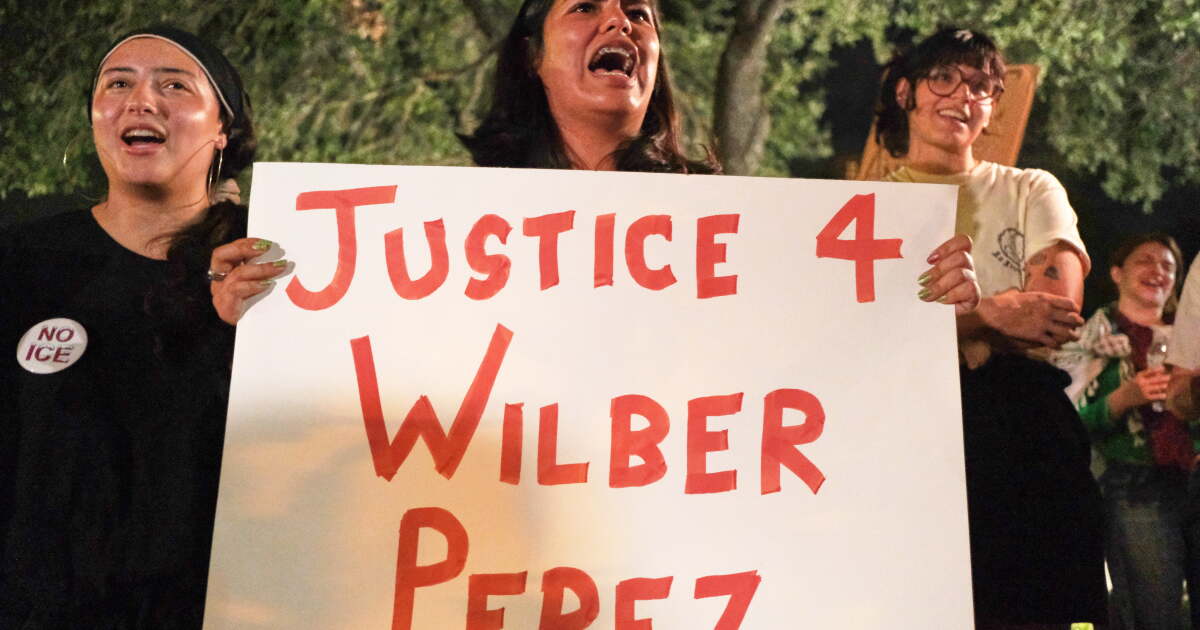
AUSTIN, Texas — A Venezuelan man shot by a U.S. Immigration and Customs Enforcement officer in Texas was back in a federal detention center Tuesday after being taken to a hospital for a second time with a bullet still lodged in his back, according to his attorney.
A federal judge also ordered Wilber Rafael Garces Perez, who was shot Sunday in Austin, to appear in court next week following a lawsuit that sought to stop his removal from the U.S.
Kate Lincoln-Goldfinch, Perez’s attorney, said in a video posted to social media Tuesday that the 28-year-old man was “still in a lot of pain.”
Perez was being held at a federal detention facility in the remote South Texas town of Pearsall, according to Texas Democratic U.S. Rep. Joaquin Castro, who has joined others in his party in sharply criticizing the shooting that occurred amid a surge in ICE enforcement during President Trump’s second term. The violent encounter has also sparked protests in Austin, including a gathering outside the Texas Capitol on Monday night.
Perez was making a DoorDash delivery Sunday afternoon when ICE officers in an unmarked truck sideswiped his car twice, Lincoln-Goldfinch has said. He was shot and taken to a hospital, then released into ICE custody with a bullet still in his back. Perez went back to the hospital Monday evening after complaining of pain and was taken back into ICE custody around midnight, Lincoln-Goldfinch said.
Court filings from Perez’s lawyers indicated he was forced to sleep on a cement floor at an ICE temporary processing center, and then at 4 a.m. Monday, ICE transferred him to the Pearsall facility. A temporary restraining order from his attorneys said he was also subject to interrogation without legal representation present.
Lincoln-Goldfinch wrote on social media that he was taken back to the hospital around 5 p.m. Monday after he began experiencing a loss of sensation in his arm.
The Department of Homeland Security, which oversees ICE, did not immediately respond to email messages Tuesday. The agency has released little information and has not said what prompted the shooting. In a statement early Monday, the department said it was investigating the shooting of a Venezuelan man in the U.S. illegally who “had a final order of removal.”
On Tuesday, the department responded on social media to a video of Texas Democratic U.S. Rep. Greg Casar saying Austin will be safer once ICE leaves, calling it a “ludicrous statement.”
“No amount of smears and false narratives will slow down ICE from doing its job by removing dangerous illegal aliens from our communities,” the agency posted.
On Monday, Perez called into a news conference and told reporters he had received no pain medication and slept on the floor.
Castro posted on social media that he planned to visit Perez on Wednesday to “check on his condition and demand his release.”
In response to the lawsuit, U.S. District Judge Orlando Garcia ordered Perez to appear in person at a hearing Sept. 30 in San Antonio.
A Venezuelan man who was shot by an ICE agent in Texas on Sunday says he is in a detention centre with a bullet still lodged in his back, after being released from hospital back into ICE custody.
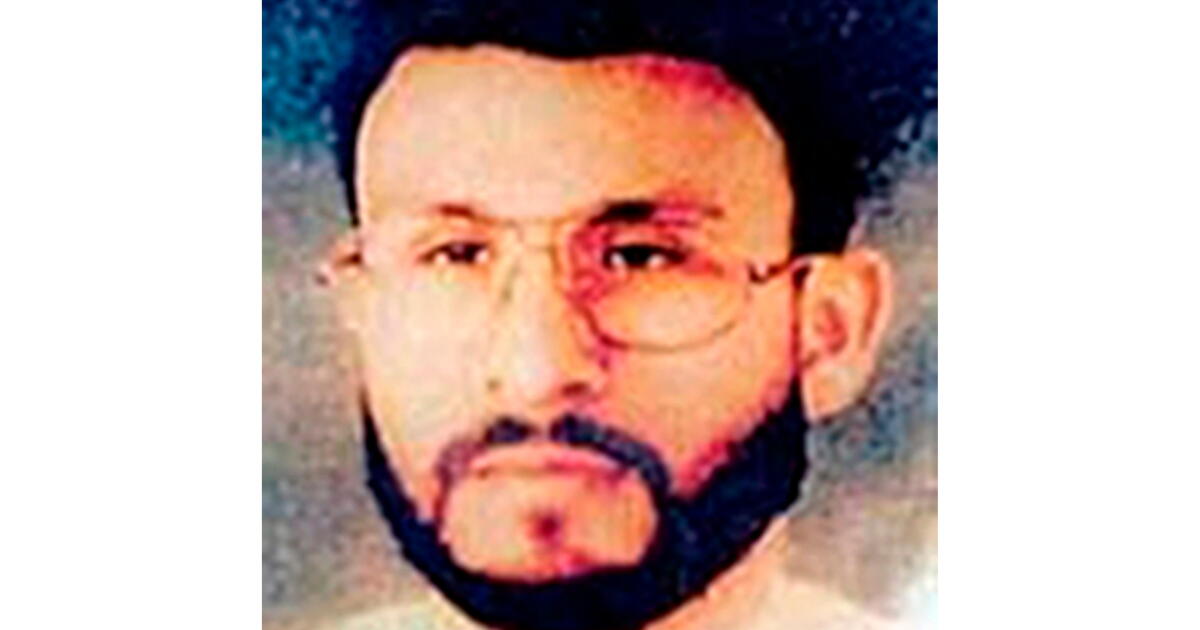
FT. MEADE, Md. — A man initially accused of being a high-profile Al Qaeda figure and who was tortured in CIA custody appeared Thursday at a hearing to review his detention at the U.S. military prison at Guantanamo Bay, Cuba, where he has been held for 20 years without charges.
A U.S. government official said Abu Zubaydah, who wore a neatly trimmed beard and glasses, had “probably” served as one of Osama bin Laden’s most trusted facilitators. The roughly 20-minute hearing offered rare visibility into the secretive military court proceedings of a suspect who had been tortured at CIA black sites during the U.S. war on terrorism and whose case still has not been resolved 25 years after the attacks of Sept. 11, 2001.
Zubaydah’s unidentified government-assigned representative and his private attorney, Annika Conrad, both acknowledged he had known Bin Laden, the 9/11 mastermind. But they said Zubaydah was never a member of the militant group that Bin Laden founded.
Conrad argued that Zubaydah poses no security threat to the United States and that it can no longer justify his detention. She said Zubaydah should be approved for transfer out of Guantanamo, which would kick off a multiyear process that includes finding a country to accept him.
Lawyer describes lasting injuries from torture and says Zubaydah could be monitored if released
Conrad said Zubaydah is prepared to accept a range of security measures, including continuous monitoring. Conrad said he has the financial and personal support of his family, has rejected any extremist views “and simply wants to live a life of peace.”
She also argued that a chief military prosecutor for U.S. military commissions, which oversees the 15 men still held at Guantanamo Bay, has said it is unlikely that Zubaydah will be charged. The Office of Military Commissions declined to comment.
Zubaydah’s attorney said the most the government can offer is a “probable association” to Bin Laden after more than two decades and noted that Zubaydah declined a direct request from Bin Laden to work for Al Qaeda.
Conrad also cited the torture that Zubaydah experienced, describing him as “a greatly injured man” who lost his left eye and his ability to write in English and “frequently struggles to recall words.”
Zubaydah’s detention is being reviewed by a U.S. government panel of senior defense, intelligence and homeland security officials. The Periodic Review Board was created under the Obama administration to evaluate prisoners and determine whether they could be released without posing a threat to national security.
The review panel did not immediately decide on the case
The review panel issued no immediate ruling Thursday. A live video feed of the unclassified portion of his hearing at Guantanamo was made available to reporters at Ft. Meade, an Army base in Maryland.
Detainees are not permitted to speak at their review hearings, and Zubaydah sat in silence next to his attorney and the government representative. Dressed in a gray suit jacket and patterned gray tie, he often pressed his left index finger to his left temple or fidgeted with something in his hands. A worn-looking book sat in front of him.
Zubaydah’s lawyers, Conrad and Ahmed Almudallal, said in a statement before the hearing that he may never face charges.
“For the first time in over two decades, the military’s chief prosecutor believes it is unlikely our client will ever be charged,” the attorneys said. “This is a major change in circumstances that warrants he be cleared for transfer.”
Almudallal and Conrad said Zubaydah has “no intent to engage in violence against the United States in the future.”
“Now, at 55 years old, he’s eager to reconnect with his family and live out the rest of his days as a free person,” they said. “Twenty-four years in prison plus being ‘patient zero’ in the U.S. government’s torture program has been punishment enough.”
He was first in the CIA’s ‘enhanced interrogation’ program after 9/11
Zubaydah was thought to be a high-ranking member of Al Qaeda when he was captured in Pakistan in 2002. A Palestinian born in Saudi Arabia, Zubaydah was tortured abroad before being transferred to Guantanamo in 2006.
The U.S. later dropped the claim that Zubaydah was one of the most senior figures in Al Qaeda, although it has continued to regard him as a security risk. Zubaydah’s lawyers have repeatedly said over the years that he was not an Al Qaeda member and point to waterboarding and other harsh treatment he experienced in the early 2000s.
Zubaydah was the first person in the CIA’s detention and interrogation program after 9/11 and subjected to what is now widely viewed as torture. He was held at CIA black sites in Poland and Lithuania, according to the European Court of Human Rights.
Zubaydah was waterboarded more than 80 times in a month at one point and confined over 11 days in a coffin-size box, among a raft of other mistreatment, a Senate report found.
In 2022, the Supreme Court dismissed a lawsuit by Zubaydah, who was seeking testimony from two former CIA contractors as part of an investigation into his treatment when he was held in Poland. The court rejected his case because the government said it would expose state secrets, despite much of the information having been widely reported.
In January, a lawyer for Zubaydah said the British government had agreed to pay a “substantial sum” to settle a lawsuit that said U.K. intelligence agencies were complicit in his torture. Attorney Helen Duffy said the confidential settlement was symbolically and practically significant for the “intolerable suffering” that Zubaydah endured.
A British parliamentary committee found in 2018 that U.K. security and intelligence services were aware Zubaydah was being tortured but continued to provide questions for the CIA to ask him without seeking assurances of his condition.