Judge rejects challenge to California attorney general’s description of voter ID measure
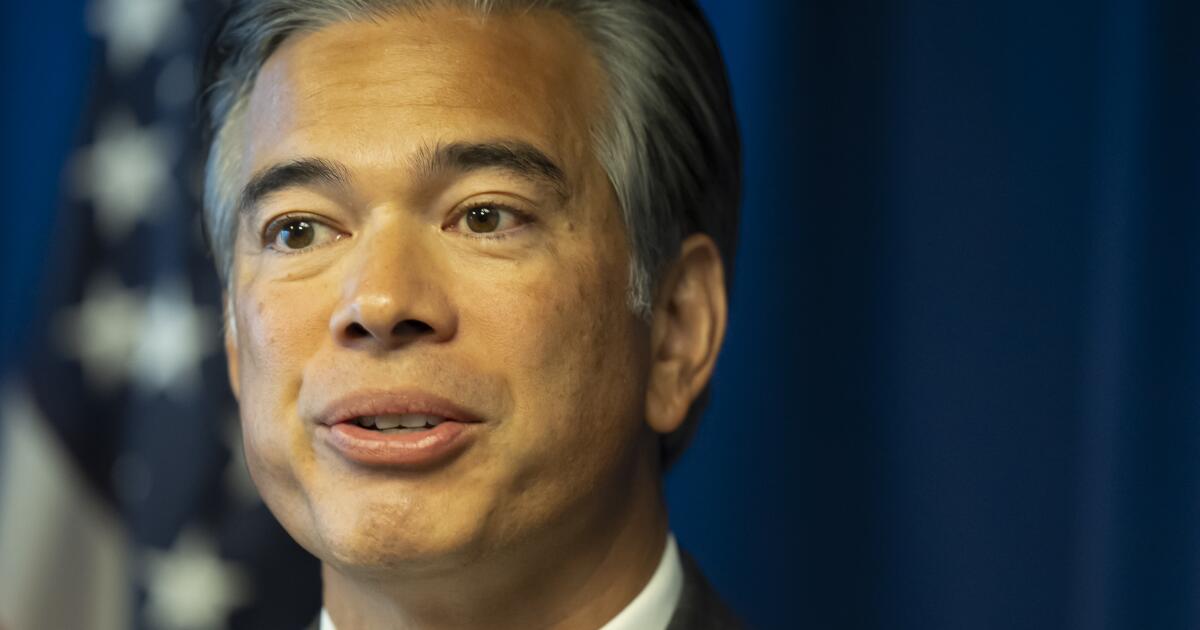
A state judge Thursday rejected a challenge to how California Atty. Gen. Rob Bonta’s office summarized a strict new voter ID measure on November ballots — ruling that the summary language accurately describes the measure’s effects were it to pass.
Another judge dealt the backers of the measure a second loss by tentatively finding that their description of the measure, submitted for the official state voter’s guide, was misleading. They had claimed that Proposition 39 would make voting easier.
In the first case, Sacramento Superior Court Judge Jennifer K. Rockwell ruled that the label, title and summary of the certified ballot measure accurately describe Proposition 39 as a measure that “prohibits citizens from voting” — language the measure’s backers specifically objected to — unless they provide a government-issued ID.
According to minutes from a Thursday hearing on the matter, Rockwell concluded that, to the extent the measure’s backers object to that language, they are objecting to “the provisions of the measure itself.”
Rockwell rejected the argument put forth by the measure’s backers that it would not prevent people without ID from voting, only their votes from being counted — a distinction the judge found lacking.
Both parties had asked the court to move quickly ahead of printing deadlines for November ballots.
The attorney general’s office is responsible for preparing titles and summaries for ballot measures, and is not required by law to use the same language as a measure’s proponents when gathering the necessary voter signatures to place the measure on the ballot.
Bonta’s office had argued in court that his office applied the same standard of review to the voter ID measure as every other ballot measure that has come before his office.
Bonta praised Rockwell’s decision on social media Thursday, writing that it “confirms what we have said from the start: the ballot materials at issue — the ballot title and summary and ballot label — give a true and impartial statement of Proposition 39’s chief purpose and points.”
“My office followed the law and fulfilled its duty to provide California voters with clear, accessible, and accurate information,” he wrote. “We’re pleased that the court agreed with us.”
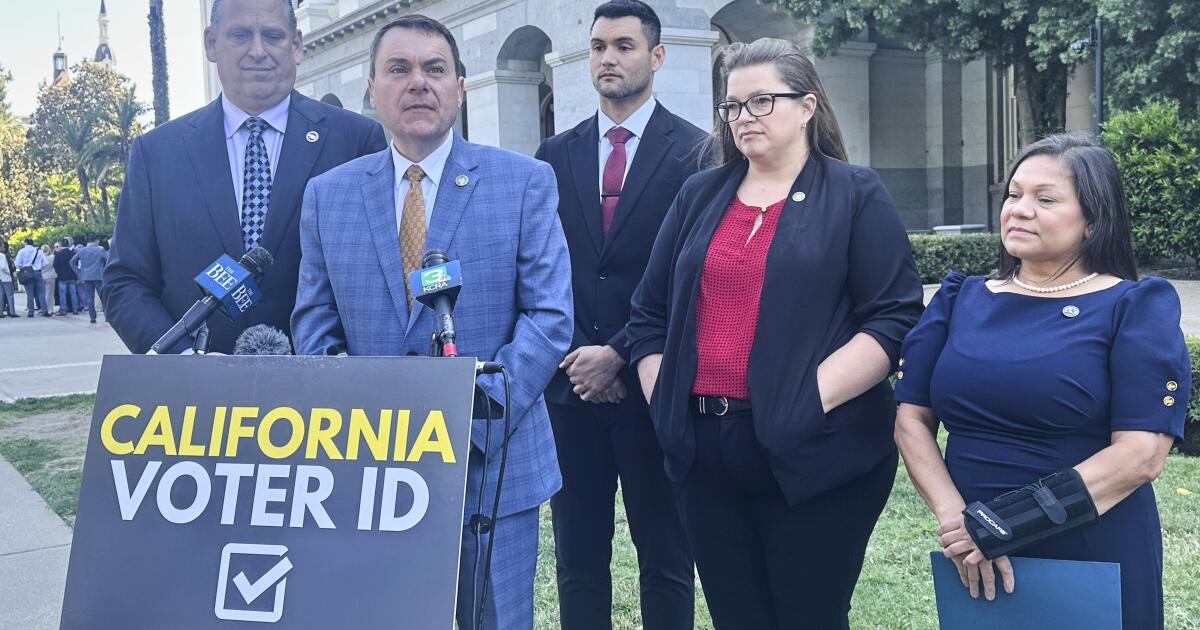
California Assemblymember Carl DeMaio (R-San Diego), the chief backer of the court challenge and chairman of the group Reform California, responded to the ruling with a video post to social media, writing that it was “expected” but nonetheless “disappointing.”
DeMaio accused Bonta of trying to “manipulate the vote” with “rigged” language, and Rockwell of being a “liberal judge” who had unsurprisingly decided that Bonta “gets to do corruptly what he wants to do.”
“It’s pissing me off,” DeMaio said in his video post.
DeMaio predicted that Proposition 39 will still pass, but that it will take “all of us spreading the word that the attorney general has tried to manipulate the title on the ballot measure.”
Voter ID requirements are being pushed by Republicans across the country — from President Trump down — as necessary to prevent voter fraud, including by noncitizens, despite elections experts saying that such fraud is exceedingly rare and that there is no evidence that it exists in volumes large enough to swing elections.
Democrats, including in California, have argued that states already have robust measures to ensure that only eligible voters cast ballots, including through existing security measures such as signature verification. They said stricter voter ID requirements would lead to eligible voters without ready access to documents being denied access to voting — including poorer, elderly and rural voters and married women who have changed their names.
A majority of California voters back stricter voter ID requirements, according to recent polls.
The Trump administration has been pressing for new voter ID requirements nationwide, including in Congress, without success.
Passage of Proposition 39 in liberal California would represent a massive win for the administration and a setback for California’s Democratic leaders. It would require substantial reforms to how the state accepts ballots both in person and through the mail — the latter being the preferred option for the vast majority of voters in recent California elections.
Backers of Proposition 39 also took a hit in a separate court proceeding Thursday, where another judge — siding with top Democratic lawmakers — issued a tentative finding that the measure’s backers were misleading voters by claiming in voter guide language that the measure would make voting easier in the state were it to pass.
“It is hard to conceive how it would be ‘easy’ or ‘easier’ to vote if a voter has to take the extra step of either bringing government-issued identification when voting in person or search for their government-issued identification and supply the last four digits if they vote by mail,” wrote Sacramento Superior Court Judge Shelleyanne Chang.
The voter guide language will need to change as a result.
California leaders who brought the challenge — including State Senate President Pro Tempore Monique Limón (D-Goleta) and Assembly Speaker Robert Rivas (D-Hollister) — praised the decision.
“Prop 39 is a MAGA-backed power grab by Donald Trump’s closest allies,” Rivas said in a statement. “As today’s ruling underscores, Prop 39 isn’t about election security or fair elections — the real goal of the MAGA activists who wrote Prop 39 is to make it harder for Californians to vote.”
DeMaio denounced the decision, accusing Chang of having “sided with the politicians” in California to “strike legitimate arguments on why Voter ID is needed to improve election integrity.”