deportees

U.S. has sent deportees to many African countries, the latest one being Liberia. Here’s why

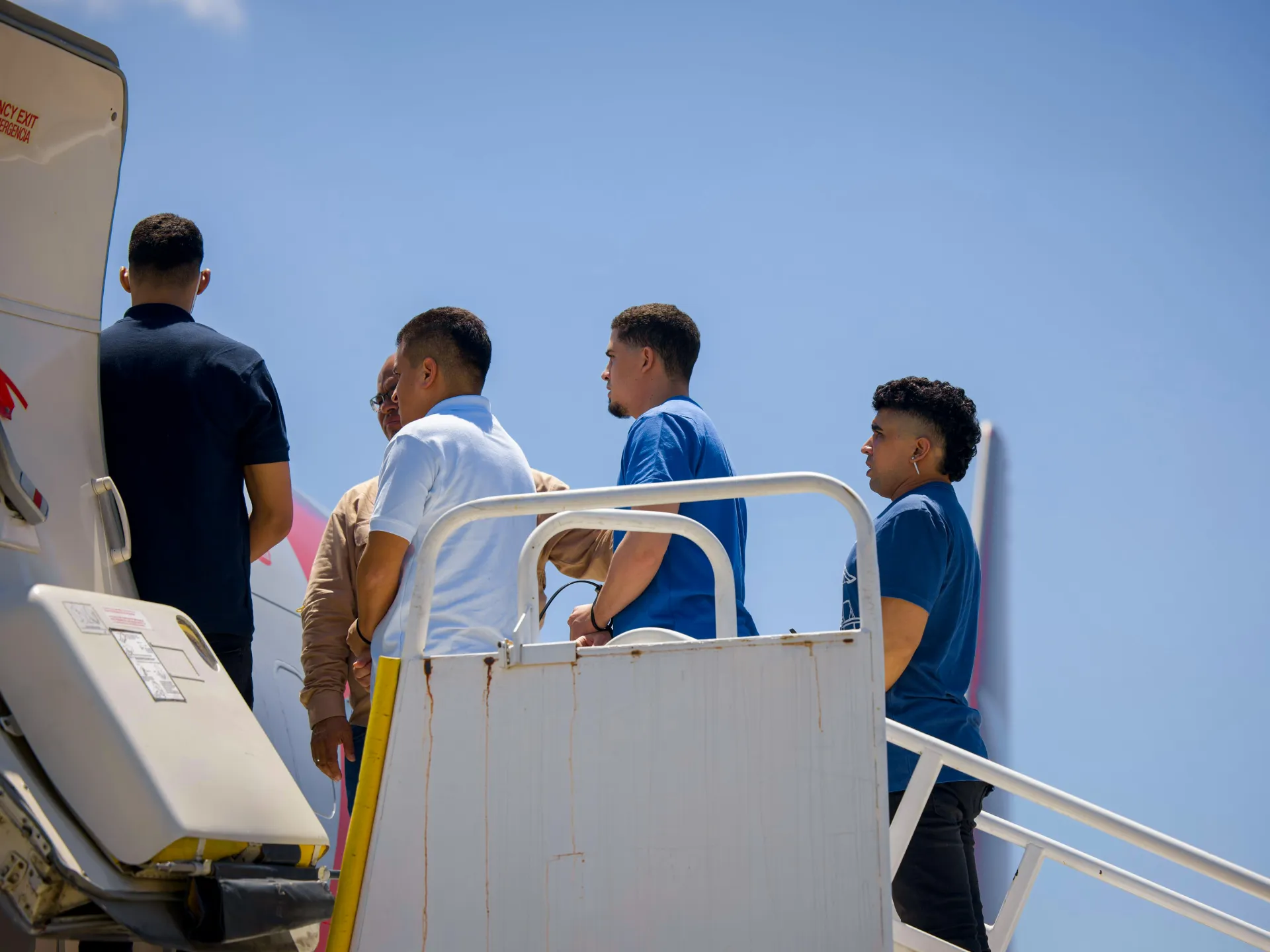
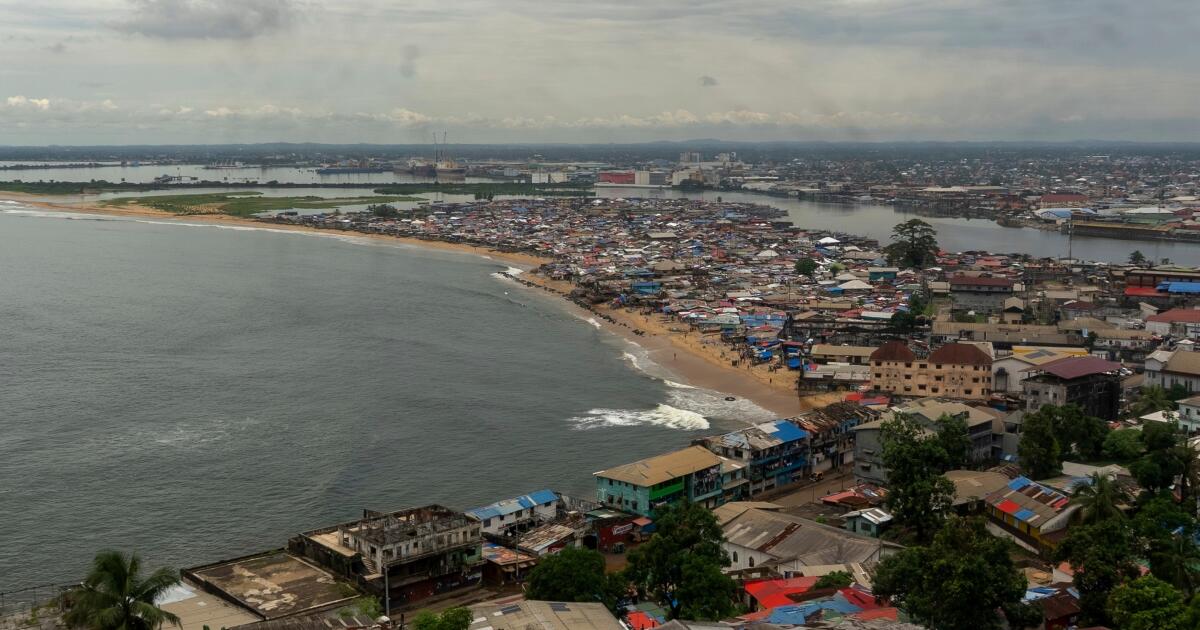
Twenty migrants deported from the United States arrived in Liberia on Thursday, the first group of an eventual 1,200 deportees that the West African country says it will receive from the U.S. under a new deal.

Under a series of often-secret agreements, the Trump administration has deported thousands of people to two dozen countries that aren’t their own, as it pushes ahead with its immigration crackdown, advocates say.

An estimated 11 of those agreements, nearly half the total, are with African countries and the Liberia-U.S. agreement involves one of the largest numbers of such third-country deportations

Immigration lawyers say the practice is being used as a legal loophole to indirectly return some asylum-seekers to countries they fled. Authorities in Liberia have said the deportees being welcomed in their country can seek asylum there or leave if they choose.

Here’s what to know about the deportations:

Why some African countries accept deportees

Other African countries that have received third-country deportees from the U.S. include South Sudan, Eswatini, Rwanda, Ghana, Equatorial Guinea, Cameroon, Congo, Uganda, Sierra Leone and the Central African Republic.

Some, like Ghana and Sierra Leone, are accepting deportees from their regions — in this case West Africa.

Many of the African countries approving the deals are among the worst hit by the Trump administration’s policies, including on trade, aid and migration. A good number of them also have authoritarian governments, raising questions about the lack of accountability and due process to ensure the protection of the deportees’ rights.

Details of most of the deals are never made public and some of the African nations, like Ghana’s government, have defended their actions as having been taken on humanitarian grounds.

The Trump administration had spent at least $40 million to deport about 300 migrants to countries other than their own, according to a February report by the Democratic staff of the U.S. Senate Foreign Relations Committee. More countries have entered the deal since then.

Congolese President Félix Tshisekedi has described his country’s agreement as an “act of goodwill between partners,” without financial compensation. The deal came as Washington increased pressure on neighboring Rwanda over its support for M23 rebels, a dynamic analysts say may help explain Congo’s willingness to cooperate.

Many are asylum-seekers

Early flights to Africa included people that the U.S. said had convictions for serious crimes. But later transfers have included asylum-seekers with U.S. court orders protecting them from being returned to their home countries because they could face persecution or torture.

Many say they’ve been sent to countries with which they have no ties and where they were not told about until hours into the deportation journey.

For instance, a gay Moroccan woman deported to Cameroon, where homosexuality is illegal, and an Iranian woman with U.S. court protection from returning to Iran who was sent to the Central African Republic.

Immigration lawyer Alma David called that an effective legal “loophole,” saying deportees can be left with “impossible choices” — remain in an unfamiliar country with little support or return to a country a U.S. judge found unsafe.

U.S. policy says that when a receiving government gives blanket diplomatic assurances that deportees won’t face persecution there, they can be removed without additional procedures, David told The Associated Press.

Conditions vary in different countries

Some of the deportees have recounted being shackled while some were held in full-body restraint straitjackets called the WRAP during flights that can sometimes last more than 16 hours.

Their conditions in the different countries vary. In Sierra Leone, the government hired private contractor Kenvah Solutions to provide housing, food and healthcare.

In Congo, the International Organization for Migration said it has provided “humanitarian assistance” and offered assisted voluntary return to the migrants’ home countries. But deportees told the AP their movements were tightly controlled. They were housed behind locked gates, could not leave alone and were allowed out roughly once a week accompanied by IOM staff.

In Equatorial Guinea, the AP found deportees confined in a hotel owned by the family of President Teodoro Obiang Nguema Mbasogo. Migrants said they were barred from leaving, had uneven access to medical care and faced repeated pressure to return home. Twenty-five of at least 32 people held there had been sent to their home countries by May.

Deportations have led to lawsuits and human rights concerns

Rights advocates say the third-country deportation program risks violating non-refoulement, the principle barring governments from sending people to places where they face persecution or torture.

An international coalition sued Ghana in June on behalf of 27 deportees, alleging most were quickly sent to their home countries, despite U.S. protection orders, and that some were held under armed guard in military camps, hotels and airport cells.

Rights lawyers have also brought a case against Equatorial Guinea before the African Commission on Human and Peoples’ Rights, alleging deportees were returned to countries where they faced persecution despite U.S. court protections.

Banchereau writes for the Associated Press.
Source link

U.S. sends more than 2,300 Mexican deportees to Guatemala and Honduras

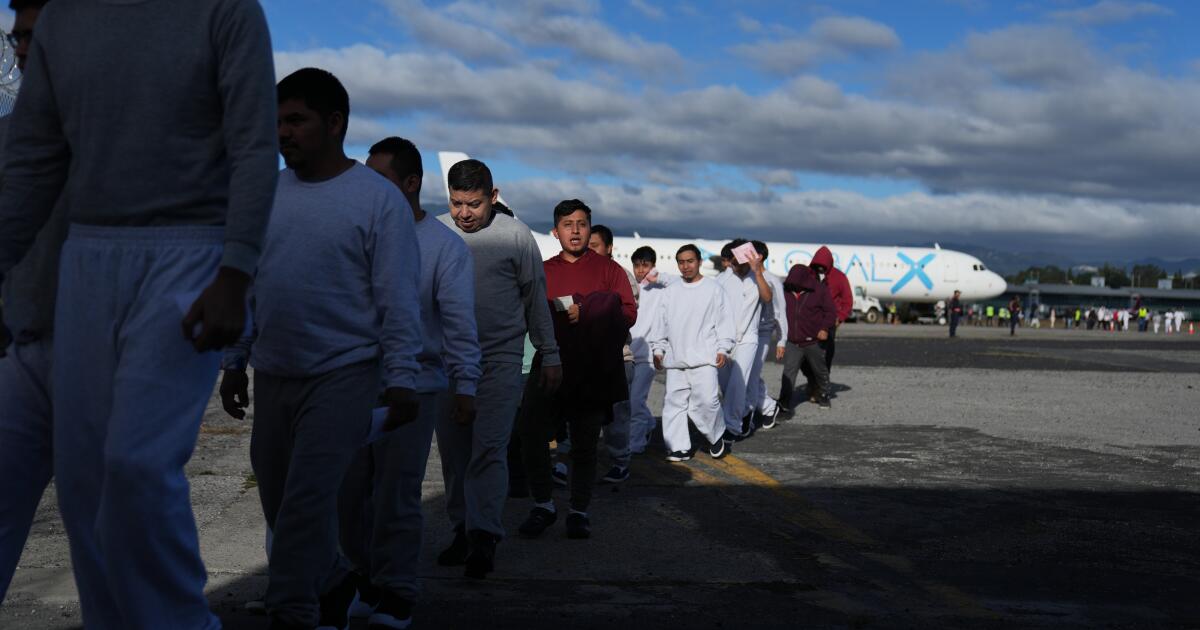
The United States has deported nearly 2,300 Mexicans to Guatemala this year and sent at least dozens more to Honduras, according to official data, a shift from the beginning of President Trump’s second term when such transfers were minimal.

Until now, Mexicans deported from the U.S. were sent almost exclusively back to their country by air and land. Only a handful arrived in other countries.

Some civil organizations believe this change reported in recent days is a way to increase pressure on Mexico, whose government has protested the deaths of 17 Mexicans in U.S. immigration custody or during enforcement operations. This also comes as Trump has expanded agreements with allied Latin American countries to conduct joint operations in the region against criminal groups and has increased U.S. security demands on Mexico.

Sent to Central America by plane and Mexico by bus

Guatemalan President Bernardo Arévalo confirmed Wednesday night that, so far this year, 2,284 Mexicans deported from the U.S. have arrived in the country as part of a “transit stopover” before being taken to Mexico as part of an “arrangement” with the Mexican government, and without these individuals being under any refugee or asylum status.

“They are arriving on planes carrying Guatemalan returnees, and what we have done is bring them in transit so that, in coordination with Mexican immigration authorities, we can return them to Mexican territory within 24 hours of their arrival in the country,” he explained at a news conference.

The costs of these operations are covered by the Mexican government or, in some cases, by U.S. funding, he added.

Mexico’s National Migration Institute confirmed to the Associated Press in a brief message that Mexicans have been deported by the Trump administration to Guatemala and Honduras, primarily since April, and are then transported by bus to southern Mexico.

“The reason is that the United States wants to prevent them from crossing back into its territory,” the institute said. It did not provide figures or further details.

Asked about why the Mexicans were sent to Central America and not their home country, and for more details, the U.S. Department of Homeland Security, which oversees immigration enforcement, said in an emailed statement that the administration “is utilizing all lawful options to carry out the largest deportation operation in history, just as President Trump promised.”

“The Mexican government has expressed its opposition to this practice to U.S. authorities and has reiterated that every Mexican citizen has the right to enter the country,” the Mexican foreign ministry said in a statement Thursday. It added that Mexico is coordinating with the countries involved to ensure the safe return of Mexican citizens.

Third-country deportations raise concerns for Mexican migrants

Historically, Mexico has always been willing to receive its deported citizens.

Since Trump’s first term, it has also accepted deportees from third countries, although the details of immigration agreements with Washington have usually been opaque. In 2025, Mexico received about 12,000 deported foreigners, mostly Cubans and Venezuelans, according to figures provided by Mexican President Claudia Sheinbaum. The government has not updated these figures since December although the practice has continued.

Authorities in Honduras also did not respond to requests for comment, but according to official documents from the country accessed by the Associated Press, 82 Mexicans deported from the U.S. arrived in the Honduran city of San Pedro Sula on two flights on Aug. 13 and Saturday. An additional 35 were scheduled to arrive Thursday.

An additional 165 Mexicans were deported to Honduras between May and mid-July, according to the website Third Country Deportation Watch, run by the nongovernmental organizations Human Rights First and Refugees International, which track U.S. deportation flights to third countries.

The website does not clarify the source of its nationality figures, but both organizations have expressed concern because these transfers could endanger migrants who possibly sought asylum in the U.S. or have few resources in an unknown country.

The deportation tactic “seems to be to put pressure on the Mexican government,” said Savitri Arvey of Human Rights First. “They really don’t want any Mexicans crossing the border.” Some of those deported arrived in Honduras on U.S. military flights, she added.

A recent change in the deportation pattern

At the beginning of his second term, with immigration control as one of his priorities, Trump reached agreements with Mexico, Guatemala, El Salvador, Honduras, Costa Rica and Panama to act as “bridge” or destination countries for migrants from third countries expelled from U.S. territory. These agreements gradually expanded to more countries, including some African ones, most recently Liberia.

Until recently, only a handful of Mexicans had been expelled from the U.S. to countries other than Mexico.

Arévalo said Wednesday that Guatemala received 15 Mexicans in 2025. As of February 2026, Honduras had officially reported the arrival of six. Costa Rica has received 11 Mexicans since Trump’s return to the White House, and according to local immigration authorities, they remain in the country. Presumably, these individuals may have requested to not be returned to Mexico out of fear.

Immigration lawyers believe that the Trump administration is using deportations to third countries as a legal loophole to indirectly force asylum seekers to return to Mexico when the government cannot send them there because it would violate court orders from immigration judges that recognize the dangers. Organizations and politicians both inside and outside the U.S. have also questioned the use of force by U.S. immigration authorities.

Pérez, Verza and González write for the Associated Press. Verza reported from Mexico City and González from Tegucigalpa, Honduras.

Source link

First group of US deportees, out of an expected 1,200, arrive in Liberia | Donald Trump News

A first group of deportees, out of an expected total of 1,200, has landed at the Roberts International Airport in Monrovia, Liberia, from the United States.

Thursday’s flight is part of an expanding trend of third-country deportations under the administration of US President Donald Trump, whereby foreign nationals are sent to countries that are not their own.

Recommended Stories

list of 3 itemsend of list

The inaugural flight carried 20 people, largely from Latin American countries like Venezuela and Cuba.

After landing, the group boarded a bus and was taken away by Liberian authorities without being allowed to speak to reporters.

The flight follows an agreement, announced on Tuesday, between the US and Liberia that will bring up to 1,200 deportees to the African country over the coming year.

Liberia is part of a growing list of countries striking agreements with the Trump administration.

Since taking office for a second term as US president in 2025, Trump has inked deals with at least 35 countries to accept third-country deportees, according to the nonprofit Human Rights First.

In exchange, some of those countries have received financial aid and trade deals. Senate Democrats in February estimated that at least $40m had been spent on such deals in the first year of Trump’s second term.

The US, for example, awarded Liberia $5m this year for “migration management activities”.

But in announcing the transfer deal earlier this week, Liberia’s Ministry of Information denied any reports that it agreed to the deportations for financial motives.

“The transfer of persons to Liberia is not a transaction with a quid pro quo,” the ministry said in a statement. “Liberia has not demanded or received any compensation or promise of reward in exchange for its consent to participate in the program.”

Liberia’s Information Minister Jerolinmek Piah also told the news agency Reuters that the International Organization for Migration and the United Nations refugee agency would help provide services for the deportees.

Those brought to Liberia will be allowed to apply for asylum and are “free to depart the country when they so desire”, according to Tuesday’s statement.

Liberia has said that the deportees are not “criminals and are not being prosecuted in any manner”.

“Liberia, the first black African independent nation on the African continent, has a long history of accepting people seeking refuge from political and other crises,” the ministry’s statement said.

“As a matter of fact, Liberia itself was founded as a refuge for freed slaves from the United States of America and other parts of the world.”

But critics have questioned whether smaller countries in Africa and elsewhere are being used as a “dumping ground” for US deportees, and whether the immigrants forcibly sent abroad will have adequate access to the resources they need.

Some have characterised such third-country deportations as excessively punitive, stranding migrants and asylum seekers in places where they sometimes cannot even speak the language.

The Trump administration, meanwhile, has framed the third-party deportations as necessary for immigrants whose home countries will not accept them. It has also framed the removals as a form of deterrence.

Guatemalan President Bernardo Arevalo on Thursday estimated that, this year alone, roughly 2,300 Mexican citizens have been deported from the US to his country, as opposed to being sent directly to Mexico.

Media outlets, including CBS News, have reported that the manouevre is part of an effort to disincentivize Mexican nationals from returning to the US without legal immigration status.

Arevalo explained, however, that such deportees are swiftly sent back to Mexico. “They are arriving in planes of Guatemalan returnees, and what we have done is process them as in transit, ‌in coordination with the Mexican immigration authorities,” he said.

Source link