The NFL confirmed Monday that it has asked the Department of Homeland Security to remove a video featuring hard-hitting highlights of Hall of Fame safety Brian Dawkins from a social media post in reference to a report about a caravan of immigrants approaching the U.S. border.
On Sunday afternoon, the verified X account of the DHS reposted another account’s report of the purported caravan, along with the comment, “Our time has come,” and a 39-second clip of the former Philadelphia Eagles and Denver Broncos star delivering one bruising hit after another.
“The league requested DHS take down the video,” NFL spokesperson Brian McCarthy told The Times in an email.
Dawkins told ESPN in a text that he had “very respectfully not given permission” for the DHS to use his video.
About two hours after the initial post went up, the DHS responded in the comment section with a still photo of Dawkins and the caption, “The Border Is Closed.” As of early Monday afternoon, both posts remained intact.
The Times reached out to the DHS by email and asked if it had initially sought the NFL’s permission to use the content, if it planned on taking down the content as the league requested and why it chose to use Dawkins’ imagery with the posts.
The department sent a statement in response that appears to refer to the nine-time Pro Bowl selection’s nickname “Weapon X.”
“DHS is playing lockdown defense at the border. We will use every Weapon at our disposal, from A to X, to keep Americans safe,” the department wrote.
“The United States Border Patrol is actively tracking a migrant caravan which departed San Pedro Sula, Honduras on September 20, 2026. USBP is closely engaged with its international partners to monitor their movement and any additional developments. USBP reminds migrants that under the leadership of President Trump and Homeland Secretary [Markwayne] Mullin, the border has remained closed and secured for the last 16 months.
“Migrants considering making the dangerous journey to our country should also be aware that the days of ‘catch and release’ are over, and [former President] Biden’s disastrous open border policy has been SEALED SHUT. Anyone attempting to illegally enter the United States will be apprehended, prosecuted, and removed from the country.”
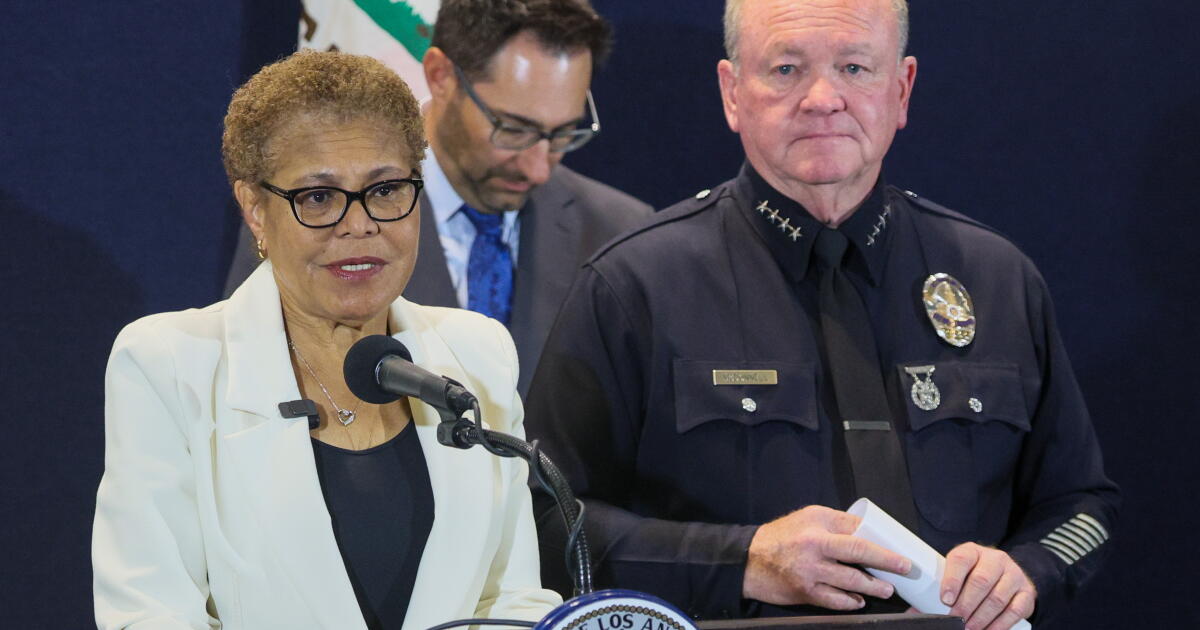
Mayor Karen Bass called the training that LAPD officers receive for handling mental health calls “woefully inadequate” and ordered an outside review of the department’s policies Thursday, saying recent shootings highlight continued shortcomings in how police deal with people in crisis.
Bass is particularly concerned by the relative lack of specialized intervention training for patrol officers who respond to the vast majority of service calls. While the SWAT team and other units receive such training, it is not standard across the Los Angeles Police Department.
“After the academy, they have spot training that is essentially videos that are played at roll calls,” Bass said in an interview week with The Times.
The mayor’s directive comes as she’s locked in a reelection fight with progressive challenger Nithya Raman, who, like Bass, has criticized the LAPD over shootings of mentally ill people.
“The ability of the city to respond to someone’s pleas for help is incredibly important in ensuring that we maintain the trust of the public,” Raman recently told The Times. “And right now, there is no alternative system besides LAPD to respond to many of the calls that are coming into 911 besides, of course, Fire Department calls.”
Polling by the UC Berkeley Institute of Governmental Studies, co-sponsored by The Times, shows Raman is favored by 39% of likely L.A. voters, compared to 28% support for Bass — with 33% still undecided.
LAPD officers have fired their weapons at people 16 times this year — down from 34 shootings in 2025, but recent incidents have highlighted how officers continue to turn to their guns when confronting individuals with mental illnesses. In years past, department statistics showed at least a third of all police shootings involved someone with obvious signs of emotional distress.
Bass was particularly disturbed by a July 29 incident in the Olympic patrol area in which police fatally shot a man who approached them with an aluminum bat.
Body-camera video captured officers approaching 33-year-old Alejandro Garcia as he was walking through traffic on Normandie Avenue underneath the 10 Freeway overpass. Officers ordered him to drop the bat, although it’s unclear whether he heard them. While Garcia could be seen holding the bat with both hands, the footage appeared to contradict an early LAPD account suggesting he swung at them.
The shooting could have been avoided if “the officers were trained differently or better,” Bass said, noting that one of the officers had been on the job for roughly five months.
The LAPD has yet to identify the officer or officers who opened fire.
Bass said it would have been appropriate for the department to deploy a unit that sends a social worker out with officers when responding to calls involving a person in crisis.
“You knew before that he had a bat and he was going around smashing cars,” she said.
About a week later, two officers shot and killed Canas Zimran, 44, in Boyle Heights after, department officials say, he approached officers with what was later determined to be a tree trimmer.
The shootings occurred despite policies that prioritize deescalation techniques and the use of “less-lethal” alternatives, such as bean bag rounds meant to subdue people without resorting to firearms.
Bass said the killings reflect, in part, a broader failure of the mental health system to get people the care they need. Also of concern, the mayor said, was the lack of training for officers on how to distinguish between symptoms caused by mental illness, physical and cognitive disabilities and drugs such as phencyclidine, or PCP, which seems to be having a resurgence on city streets.
Bass said her review would be a top-down evaluation that also scrutinizes the roles of dispatchers, supervisors and others involved in responding to reports of people behaving erratically.
She said the audit will examine calls from the last five years involving people with “with known histories of mental or behavioral health conditions” in which police officers avoided using force. The goal, Bass said, is to “identify common themes or best practices that successfully de-escalated the incident or allowed officers to gain compliance.”
Bass added that it’s also important to consider the needs of LAPD officers and ensure they “receive appropriate assistance” to cope with stress. She was struck by the willingness of younger officers to openly talk about the mental toll of the job, recalling a recent visit to a roll call in which an officer described feeling a lack of support after being involved in an on-duty shooting.
LAPD officials have said the department has made numerous changes in recent years to curb police shootings, including adopting deescalation training focused on slowing down volatile situations, particularly those involving people who may be mentally ill. Still, the agency’s critics pack police commission meetings each week to argue for removing police from such calls, saying that officers are too quick to fire on people — particularly those wielding knives.
Although the city has experimented with programs that send specialists to help deescalate such encounters, LAPD policy still requires armed patrol officers to clear a scene of any potential threats beforehand.
Bass said she always has been a proponent of approaches that don’t involve police, some of which are employed by her Office of Community Safety. But she said stabbings and other incidents that pose an immediate danger to the public still require a police response.
Beyond looking at how to avoid police shootings, Bass’ directive calls for further assessment of the department’s training for handling people who’ve been booked into jails and detention facilities, including how they are restrained and transferred to medical facilities.
Bass wanted to ensure the review was done by an outside body, hinting at her frustration with the inaction of department leaders and the police commission on addressing the issue.
WASHINGTON — A federal judge in Rhode Island struck down a Trump administration directive that would have barred some immigrants from accessing certain federal programs, including Head Start preschools, community health clinics and adult education initiatives.
U.S. District Judge Mary McElroy, who was appointed by President Trump in 2019, temporarily barred his administration from moving forward with the rule last year, so it never was implemented. On Monday, she made the injunction permanent.
Officials from the Republican administration had said the directive would stop “illegal aliens” from accessing federal benefits by reclassifying broad swaths of social services programs under a Clinton-era law, the Personal Responsibility and Work Opportunity Reconciliation Act.
But the rule also would have swept up many immigrants in the U.S. legally, including work and student visa holders. It also would have barred services from Temporary Protected Status holders, who are granted work permits if the U.S. government determines conditions in their home country are too dangerous to return, along with recipients of Deferred Action for Childhood Arrivals, who were brought to the country illegally as children and receive temporary protection from deportation and work authorization.
Those groups, which are considered “nonqualified aliens” under the law, already are unable to access full Medicaid benefits and federally funded food aid and cash assistance.
The Trump administration issued its directive in July 2025. Democratic attorneys general from 20 states and the District of Columbia sued.
They said the change upended three decades of policy allowing people to access community health clinics, domestic violence shelters and Head Start centers without proving their immigration status. They warned the harms could spread, deterring any immigrant from seeking services and throwing up barriers even for U.S. citizens unable to document their legal status. The new rules also would have put administrative burdens on underfunded social service agencies, including Head Start operators, which might have been forced to close if they were unable to comply with the directive’s new requirements, the lawsuit said.
In her ruling, McElroy declared the directive “unlawful” and said the Trump administration did not follow the proper avenues to rewrite the rules. She called the administration’s actions “procedurally invalid.” She added that the administration still could pursue rule changes through the federal notice-and-comment process, which officials bypassed when they issued the directive last year.
Requests for comment were sent to the departments named as defendants in the wide-ranging lawsuit. The Administration for Children and Families, a division of the Department of Health and Human Services that oversees Head Start, said it does not comment on ongoing litigation. The Labor Department referred inquiries to the Justice Department, which did not immediately respond to a request for comment.
In a statement, New York Atty. Gen. Letitia James, who was among those who sued, hailed the judge’s ruling.
“From cancer screenings to food banks to early childhood education, the federal government’s attempts to decimate the social safety net would have been catastrophic for working families,” James said.
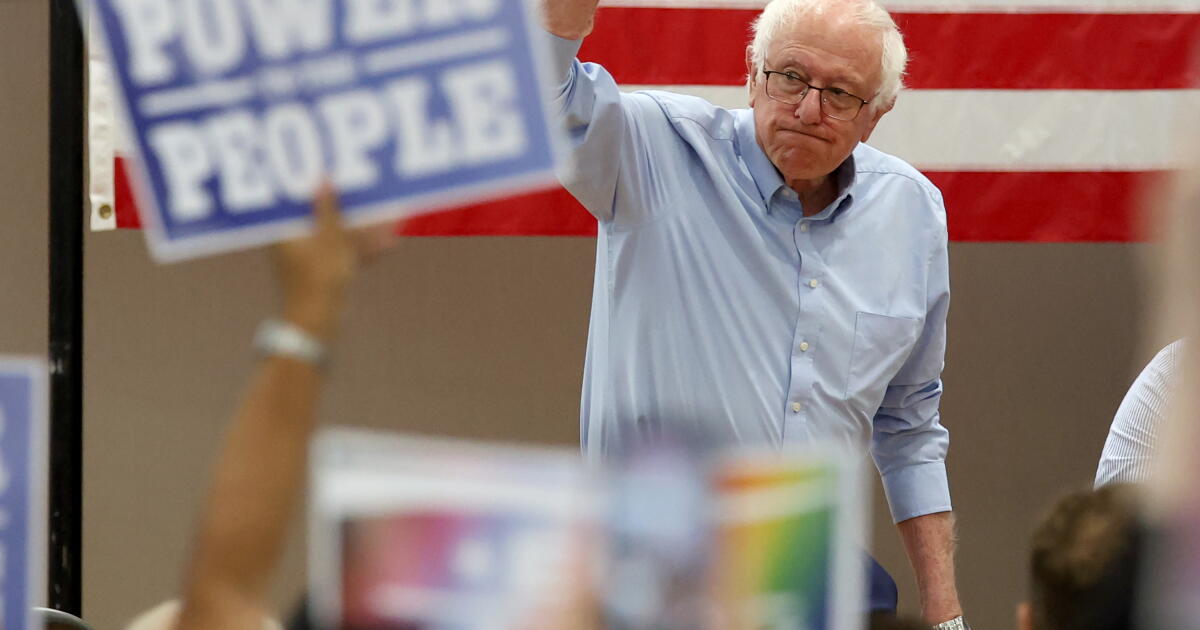
Washington — Two leading progressive lawmakers, Sen. Bernie Sanders and Rep. Greg Casar, are unveiling legislation Wednesday that would ban artificial superintelligence and create a federal agency to oversee advanced AI as some of the industry’s own leaders urge Congress to impose guardrails on the advancing technology.
The bill, provided first to the Associated Press, would also pause advanced AI development until guidelines are implemented while creating the Department of Artificial Intelligence. Multiple employees at leading AI companies are endorsing the bill.
“It doesn’t take a genius to say, ‘slow it down,’” Sanders, I-Vt., said in an interview with AP. “Do we really want to develop a super intelligence that when it becomes smarter than human beings could act independently of human control? I don’t think we do.”
Congress has so far done little to rein in the AI industry even as some of its most prominent leaders warn about potentially catastrophic risks. President Trump has resisted recent calls for greater government oversight, putting him at odds with tech leaders including Anthropic’s Dario Amodei, OpenAI’s Sam Altman and xAI’s Elon Musk.
The bill aims to dramatically slow down AI development
The legislation would permanently prohibit artificial superintelligence, which it defines as a system that exceeds human cognitive ability or has sufficient capabilities to plan and execute the destruction or disempowerment of humanity.
It would temporarily pause development of the most advanced AI systems until new federal safety rules are established by a new Department of Artificial Intelligence. Advanced AI systems would then need federal approval before they could be deployed. Violations could carry significant penalties, including up to 20 years in prison in some cases.
A number of current employees at AI companies and experts signed on in support of the bill, according to a statement shared with AP.
Juan Felipe Cerón Uribe, a researcher in OpenAI’s Safety Systems, said in a statement supporting the bill that “superintelligence could either go extremely right or extremely wrong” and that “we shouldn’t be playing such games.”
Swante Scholz, a software engineer at Google DeepMind who said he was not speaking on behalf of his employer, said on the current path of development, the “most likely outcome is an existential catastrophe for humanity.”
“A ban on superintelligence development would be a positive change for the foreseeable future,” Scholz said in a statement.
The bill faces long odds but draws a line in a growing fight
The bill from Sanders and Casar faces long odds in the Republican-controlled Congress, where lawmakers have struggled to coalesce around even less sweeping AI regulations.
But it offers a window into how the progressive wing of the Democratic Party is approaching AI regulation ahead of November’s midterms and a 2028 presidential campaign in which the technology is expected to be an increasingly prominent issue. Casar, a Democrat from Texas, is the chair of the Congressional Progressive Caucus.
Potential 2028 presidential candidates have rushed in recent weeks to release proposals showing they’re taking the issue seriously. Maryland Democratic Gov. Wes Moore announced a plan to regulate AI on Tuesday, while California Democratic Gov. Gavin Newsom signed an executive order to accelerate implementation of a California law that calls for independent oversight of AI companies last week.
Sanders, a two-time presidential candidate who is now 85, has especially focused on the issue in recent months. In June, he introduced legislation to create a sovereign wealth fund financed through a one-time tax on the stock of the largest AI companies. Last week, he hosted colleagues for a briefing with experts and also attended a conference focused on the issue alongside Republicans, including former White House adviser Steve Bannon.
The debate over AI regulations has scrambled political alliances both in Washington and for voters across the country.
The survey data say about half, 53%, of Americans are “extremely” or “very” concerned about artificial intelligence’s environmental impacts. That is up from 41% last year. Democrats are driving much of the increase in environmental concern, but the poll also reveals broader worries about the local impact of data centers, which power AI and cloud computing.
Trump has shown little interest in curbing AI risks
While some industry leaders have called for new safeguards, Trump has pushed in the opposite direction. On Tuesday, Trump told the United Nations General Assembly that artificial intelligence will be renamed “super intelligence.”
“I think Trump has very little understanding of what this issue is about,” Sanders said. “I think he’s mainly concerned about the economic implications of a slowdown.”
AI safety is expected to be a central part of talks between Trump and China’s Xi Jinping at the White House this week as the countries compete for dominance in the sector. The prospect of slowing development in the United States while China continues on has also been one of the central arguments against sweeping restrictions.
Sanders argued that avoiding the most dangerous forms of AI would ultimately require cooperation between the two countries, comparing the challenge to nuclear arms control during the Cold War.
“Ronald Reagan, arch-conservative, was smart enough to understand that he had to sit down with Gorbachev, a communist, and work out a nuclear treaty that protected humanity,” Sanders said. “I think we can do that again now.”
AUSTIN, Texas — A Venezuelan man shot by a U.S. Immigration and Customs Enforcement officer in Texas was back in a federal detention center Tuesday after being taken to a hospital for a second time with a bullet still lodged in his back, according to his attorney.
A federal judge also ordered Wilber Rafael Garces Perez, who was shot Sunday in Austin, to appear in court next week following a lawsuit that sought to stop his removal from the U.S.
Kate Lincoln-Goldfinch, Perez’s attorney, said in a video posted to social media Tuesday that the 28-year-old man was “still in a lot of pain.”
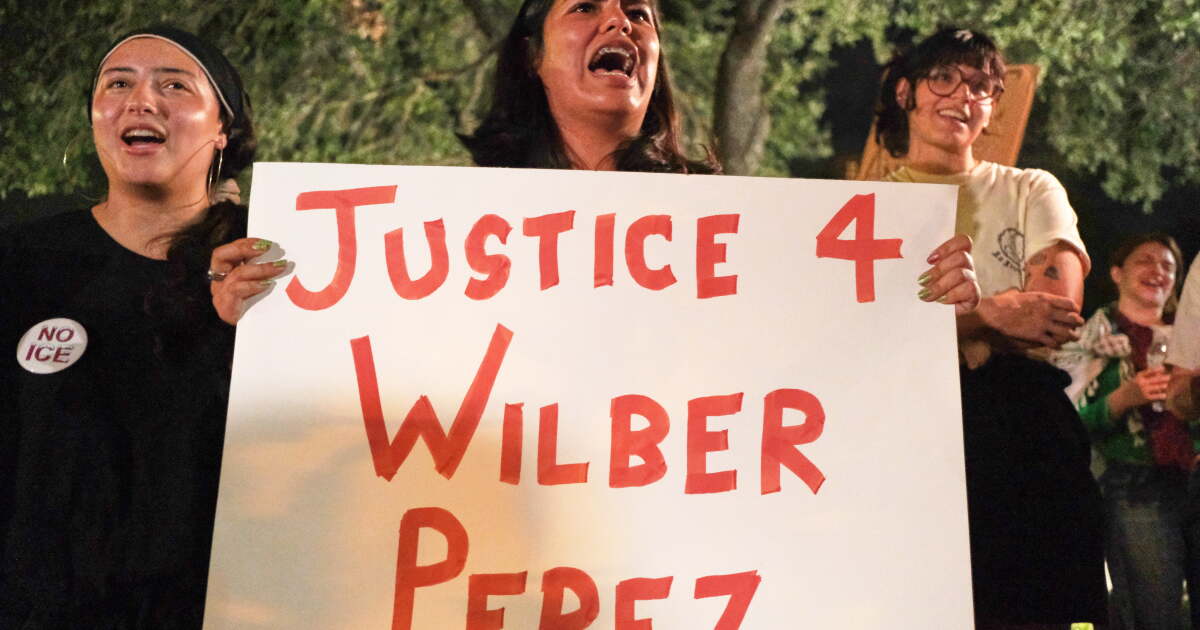
Perez was being held at a federal detention facility in the remote South Texas town of Pearsall, according to Texas Democratic U.S. Rep. Joaquin Castro, who has joined others in his party in sharply criticizing the shooting that occurred amid a surge in ICE enforcement during President Trump’s second term. The violent encounter has also sparked protests in Austin, including a gathering outside the Texas Capitol on Monday night.
Perez was making a DoorDash delivery Sunday afternoon when ICE officers in an unmarked truck sideswiped his car twice, Lincoln-Goldfinch has said. He was shot and taken to a hospital, then released into ICE custody with a bullet still in his back. Perez went back to the hospital Monday evening after complaining of pain and was taken back into ICE custody around midnight, Lincoln-Goldfinch said.
Court filings from Perez’s lawyers indicated he was forced to sleep on a cement floor at an ICE temporary processing center, and then at 4 a.m. Monday, ICE transferred him to the Pearsall facility. A temporary restraining order from his attorneys said he was also subject to interrogation without legal representation present.
Lincoln-Goldfinch wrote on social media that he was taken back to the hospital around 5 p.m. Monday after he began experiencing a loss of sensation in his arm.
The Department of Homeland Security, which oversees ICE, did not immediately respond to email messages Tuesday. The agency has released little information and has not said what prompted the shooting. In a statement early Monday, the department said it was investigating the shooting of a Venezuelan man in the U.S. illegally who “had a final order of removal.”
On Tuesday, the department responded on social media to a video of Texas Democratic U.S. Rep. Greg Casar saying Austin will be safer once ICE leaves, calling it a “ludicrous statement.”
“No amount of smears and false narratives will slow down ICE from doing its job by removing dangerous illegal aliens from our communities,” the agency posted.
On Monday, Perez called into a news conference and told reporters he had received no pain medication and slept on the floor.
Castro posted on social media that he planned to visit Perez on Wednesday to “check on his condition and demand his release.”
In response to the lawsuit, U.S. District Judge Orlando Garcia ordered Perez to appear in person at a hearing Sept. 30 in San Antonio.
Marvin Reid can’t say how many pedestrians he’s seen get hit while trying to brave the North Hollywood intersection of Magnolia Boulevard and Tujunga Avenue. He gave up keeping count long ago.
One afternoon last spring, he watched a man get run over while walking toward a 7-Eleven on the corner. Fortunately, the man popped to his feet “like nothing ever happened” and hustled into the store, Reid said. A week or two prior, he said, an out-of-control motorist nearly plowed into the statue of Amelia Earhart that sits next to a library bearing the famous aviator’s name.
“This is really a bad spot,” said Reid, who has helped run a Jamaican food pop-up at the busy street corner for the past five years. “It doesn’t matter if it’s an old lady crossing the street with a walker.”
The number of Angelenos who die in traffic crashes now regularly outpaces those killed by homicide. From 2016 to 2023, the annual traffic death toll rose nearly 29% overall, and pedestrian deaths jumped roughly 54%. Fatal crashes fell slightly last year, but deaths still exceeded 300 in each of the last three years.
The city is rolling out 125 speed cameras in school zones, known street-racing corridors and places where speeding has contributed to a high rate of collisions — including Reid’s intersection.
But for him, the cameras aren’t a replacement for police traffic enforcement, which he said seems virtually nonexistent.
Even though LAPD squad cars are posted up outside the library “everyday,” he says, they rarely do anything about the drivers who come careening off the exit ramps from the nearby 170 Freeway.
Similar complaints are being echoed around the city. Historically, Los Angeles — like other places across the U.S. — has relied on police stops to produce road safety. But in recent years, public pressure has compelled city leaders to think more critically about whether enforcement can continue without the historical harms that has come along with it.
LAPD data show the department is far less proactive than it used to be.
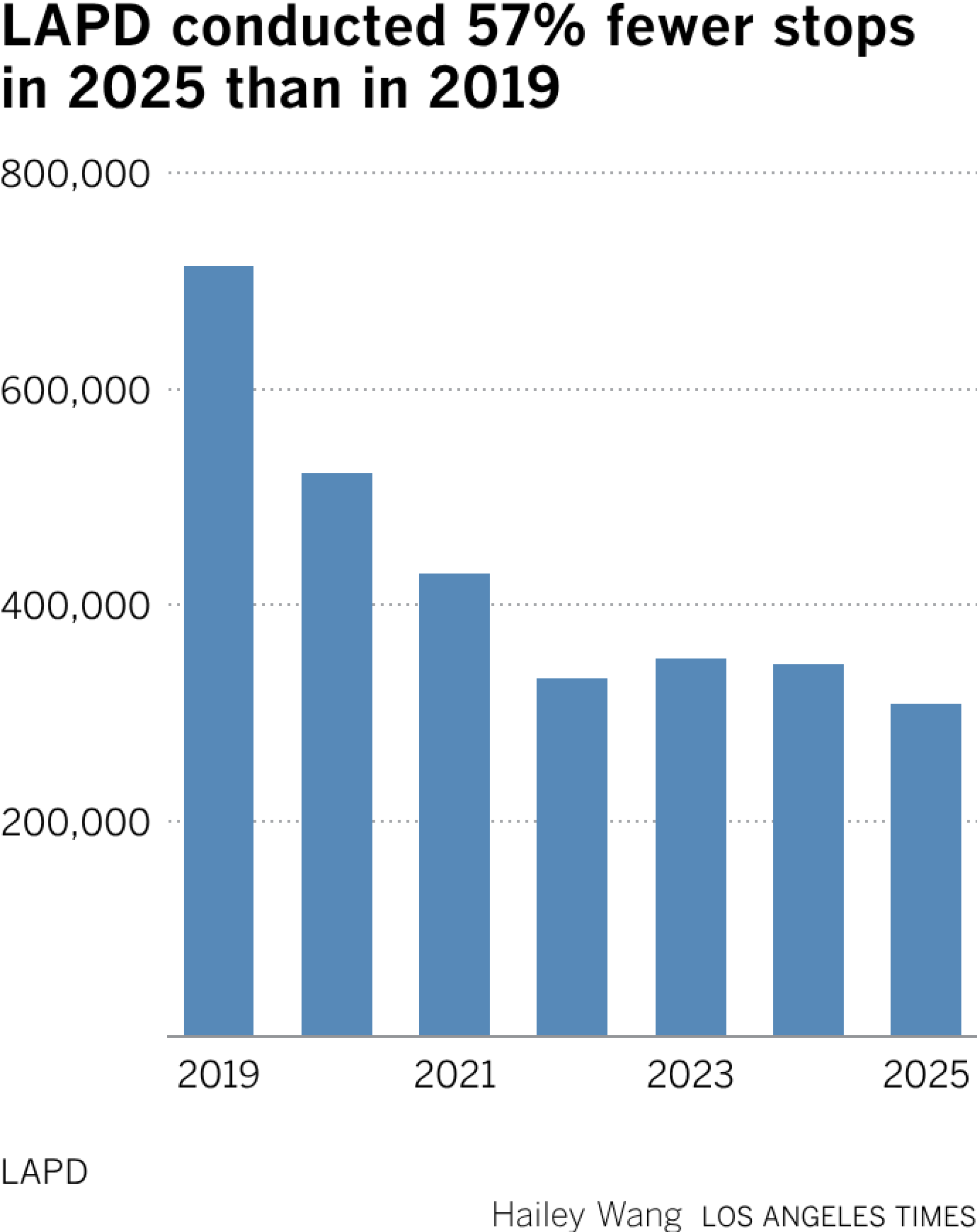
In 2019, LAPD officers made about 713,000 stops across the city; by 2025, that number had decreased to roughly 308,000 — a roughly 57% decline. A Times analysis of police stop data found that the drop-off was especially pronounced in the Central, West Valley, 77th Street and Southeast police divisions.
In some ways, the decline in stops is unsurprising. Other large U.S. cities have seen similar changes in enforcement strategies by police since the pandemic. As the department continues to shrink, LAPD commanders say they have fewer resources to devote to traffic duty. Officials have been under pressure to curb the use of so-called “pretext stops,” in which officers use a minor violation — a broken turn signal, say, or a cracked windshield — as justification to stop someone in order to investigate whether a more serious crime has occurred.
The largest declines were in the Central and 77th Street areas
Change in police stops, 2019 to 2025
LAPD
Hailey Wang LOS ANGELES TIMES
Reform activists and some city leaders argue the stops are fishing expeditions that lead to police abuses — while failing to deliver safer streets.
The practice of pulling over random vehicles, often based on little more than a hunch, has been a cornerstone of the city’s crime-fighting strategy for decades. The tactic is especially prevalent among the department’s elite Metropolitan Division and anti-gang units, several of which have come under investigation in recent years for failing to document the stops and improper searches.
Since 2019, when a Times investigation found significant racial disparities in LAPD crime suppression tactics, officials have slowed — but never abandoned — the practice of flooding neighborhoods with tactical officers to pull people over and search their vehicles.
Four years later, stops for minor violations began dropping again after LAPD overhauled its policies to limit the circumstances under which officers can make pretext stops, joining law enforcement agencies in cities like Philadelphia, Seattle and Berkeley, Calif.
Yet a report published last year found that officers are still disproportionately targeting Black and Latino drivers.
LAPD Chief Jim McDonnell and other department leaders have fought against more restrictions, arguing they risk losing an essential weapon against serious crime.
But in May, the Los Angeles City Council passed a measure urging the Police Commission, the LAPD’s policy-making body, to further limit arbitrary pull-overs for non-moving traffic violations.
While LAPD officials had acknowledged issues in a handful of police divisions, the latest audit found that gang units citywide routinely flouted the department’s rules on pretext stops, including by often failing to obtain proper consent to search the vehicles they stopped. The inspector general’s office also found that gang officers didn’t always turn on their body-worn or dashboard cameras as required during these encounters and at times failed to properly log who they were stopping — resulting in an undercount of “both the number of detentions and the enforcement actions taken,” the report said.
The review, based on a sample of 300 stops as well as interviews with current and former gang officers, also highlighted ongoing confusion about what the department expects its officers to do when pulling someone over.
The findings of the second report — which reviewed pretext stops by officers from other units in January — are expected to be presented at an upcoming commission meeting.
The Los Angeles Police Protective League, the union for rank-and-file officers, and other proponents of pretext stops argue that elected leaders don’t grasp the consequences of doing away with the tactic, which the U.S. Supreme Court has deemed lawful.
Reform advocates have fought to deploy unarmed civilians instead of LAPD officers for traffic enforcement — as the city has already started doing for certain mental health-related calls — but the union has warned that the work is too dangerous. A state bill that would have allowed trained civilian workers to make traffic stops failed to make it through the state assembly.
With the death toll from speeding on the rise, more enforcement is needed, not less, department leaders say. The city, they argue, can’t afford to wait on alternative programs that require study, money and public buy-in that could take years.
Amid the debate over how to proceed, LAPD enforcement hasn’t vanished completely.
Even though the department no longer dispatches officers to the scenes of minor accidents, LAPD statistics show that enforcement the department’s 308-member traffic bureau has gone up. As of July, the number of traffic tickets issued had climbed 44% from the same time last year — increasing to more than 14,600 from around 10,100. Citations for impaired driving have also risen, and the department continues to crack down on street takeovers.
Still, progress toward new, non-police approaches to traffic enforcement has been frustratingly slow in Los Angeles, advocates say.
Advocates have pointed to mounting research in other cities that showed road improvements along high-injury street corridors were more effective than police at changing driver behaviors, ultimately reducing the number of traffic-related deaths and serious injuries more than the threat of being ticketed.
Supporters of so-called “self-enforcing” roads say narrowing lanes can lead to a considerable decline in crashes as drivers reduce their speed and move more cautiously than when the road is less wide. Such changes also reclaim space for protected bike lanes, public transit lines, or safer walkways — after long prioritizing convenience for cars, advocates say.
Car accidents are dangerous for everyone involved, but they have become even more hazardous for pedestrians and cyclists.
Experts cite speeding and cellphone distractions as two of the biggest problems.
Another factor is the proliferation of larger vehicles — a phenomenon known as “autobesity” — which have bigger blind spots and more likely to seriously injure a pedestrian or bicyclist.
Andres Ramirez, executive director for the transportation advocacy nonprofit People for Mobility Justice, said he’s cautiously optimism that the mayor’s promise of a “No Car” 2028 Olympic Games will help fast-track some of the most pressing road safety projects.
“The streets needs to be a lot safer for pedestrians, for bicyclists, different modes,” Ramirez said. “The most obvious way is ensuring that infrastructure projects are prioritized in communities that have long been ignored.”
WASHINGTON — Atty. Gen. Todd Blanche is blurring traditional boundaries between politics and federal law enforcement with recent speeches at political events that mark a sharp departure from norms meant to protect the Justice Department from the appearance of partisan bias.
Blanche took the stage this week at an event for a Republican Senate candidate in North Carolina days after speaking at a GOP midterm convention, where he praised Trump and touted the administration’s tough-on-crime approach.
Blanche’s participation at the rallies has drawn scrutiny from critics who say it threatens to undermine public faith in law enforcement decisions that are supposed to be made free of political interference. It has added to critics’ concerns about Blanche’s loyalty to Trump and White House influence on Justice Department matters against the backdrop of investigations into numerous perceived foes of the president.
“It lends credence to the arguments that the Justice Department is hopelessly politicized,” said Richard Painter, who was a White House ethics lawyer in the George W. Bush administration. “And that’s not where we want to be right now.”
Blanche has brushed aside norms
Attorneys general have typically stayed away from political rallies and at arm’s length from the White House to prevent the appearance of law enforcement interference in elections and to protect the perception of impartiality in prosecutions.
Blanche, a former personal lawyer for Trump, has brushed aside such norms and fiercely defended the president’s interests in the department, which brought two criminal cases against Trump under President Joe Biden. Blanche has rejected allegations that the Trump administration has politicized the agency and accusations that the White House is improperly involved in department matters.
Blanche has used his speeches at the rallies to promote the administration’s efforts to bring down violent crime, illegal border crossings and drug trafficking as Republicans put their tough-on-crime policies at the center of the midterm elections. In another unusual move, he held a press briefing at the White House this week, fielding questions from reporters on a host of matters including the Iran war.
At an event Wednesday in North Carolina for Republican Senate nominee Michael Whatley, Blanche told the crowd, “More of your family, more of your friends, more of your community members, more of your loved ones are safer than they were just two years ago.”
“And that’s President Trump and Vice President Vance delivering on a promise that they made to you,” said Blanche, calling Trump “the greatest president of our generation.” His speech also veered into topics outside his law enforcement portfolio such as the stock market, inflation and wage growth.
Blanche says he is not endorsing candidates at political events
The Justice Department said Blanche’s appearances at political events are made in his personal capacity, and noted that his speeches have addressed the administration’s efforts broadly but do not get into agency policies or official business.
“His appearances are reviewed and cleared by the Department’s ethics officials,” spokesperson Kiersten Pels said in an email Thursday. “Travel expenses are reimbursed by the Attorney General in accordance with federal law, regulations, and policies.”
In a recent interview with The Associated Press, Blanche dismissed criticism about his appearance at a Long Island event where Trump sought to boost Republican candidates in closely contested races.
The watchdog group Public Citizen filed a complaint accusing Blanche of violating a law that limits political activity by government workers by participating in that event alongside Nassau County Executive Bruce Blakeman, the Trump-endorsed Republican challenging Democratic Gov. Kathy Hochul.
“I will always say yes to speak when the president of the United States asks me to,” Blanche told the AP last month. “I was there purely thanking cops, law enforcement, for doing their jobs. The idea that that’s turned into somehow criticism is laughable.” Blanche said he was not endorsing political candidates but instead “talking about the great work that President Trump is doing.”
Federal law and Justice Department policy limit political activity
The Hatch Act prohibits government officials from using their official positions to influence elections. That includes supporting candidates while acting in their official capacities. Watchdog groups have long complained that the law isn’t a strong deterrent and enforcement has been inadequate and uneven.
The Justice Department under Biden in 2022 tightened its restrictions on employees’ attendance at political events after then-Massachusetts U.S. Attorney Rachael Rollins attended a fundraiser that featured first lady Jill Biden. Attorney General Pam Bondi, who was fired by Trump in April, later rescinded those restrictions.
Rollins’ attendance at the fundraiser sparked an outcry from Republican Sen. Tom Cotton, who sought an investigation and wrote a letter asserting that U.S. attorneys are supposed to act as nonpartisan law enforcement officials rather than as partisan politicians. Rollins resigned in 2023 after the Justice Department’s internal watchdog accused her of broad misconduct.
Before those changes, longstanding department policy had allowed political appointees — who are hired under presidential administrations rather than making long careers at the agency — to attend political events in their personal capacities if they participated “passively” and obtained prior approval.
Biden’s attorney general, Merrick Garland, barred their attendance at fundraisers and other campaign events altogether, saying it was necessary to ensure that politics “both in fact and appearance” won’t affect how the law is enforced or inquiries are carried out.
The proposed deal, worth an estimated total cost of $24.3 billion, was announced as the Kingdom is in the midst of a fierce fight against the Houthi rebels of Yemen. It marks a major policy shift, with Washington previously being unwilling to export the advanced stealth fighters to Arab states and will likely serve as a reminder at a very challenging time for the Saudis of the unique security capabilities that only the U.S. can provide them.
In addition to the jets, which will be conventional takeoff and landing variants, Saudi Arabia has requested 49 Pratt & Whitney F135-PW-100 engines, support and other items.
Despite concerns from Israel that providing Saudi Arabia with the advanced fighters will tip the balance of power in the region, the proposed sale of this equipment and support “will not alter the military balance in the region,” the State Department noted.
The United States has a requirement to maintain Israel’s so-called qualitative military edge, which essentially guarantees that Israel will be prioritized for advanced U.S. weapons ahead of Arab states in the region. Among these advanced weapons, the stealthy F-35 is highly prominent.
You can read our past feature about the wide-ranging impacts of an F-35 sale to Saudi Arabia here.
Israeli Air Force F-35i fighters. (Israeli Air Force)
“This proposed sale will support the foreign policy and national security objectives of the United States by improving the security of a major non-NATO ally that is a force for political stability and economic progress in the Gulf region,” the State Department wrote. “The proposed sale will improve Saudi Arabia’s capability to deter current and future threats by strengthening its homeland defense, and improving interoperability with U.S. forces, and other regional and NATO forces. The proposed sale will also augment Saudi Arabia’s operational aircraft and enhance its air-to-air, and air-to-ground self-defense capability. The Kingdom of Saudi Arabia will have no difficulty absorbing this equipment and services into its armed forces.”
In November, “President Trump approved a major defense sale package, including future F-35 deliveries, which strengthens the U.S. defense industrial base and ensures Saudi Arabia continues to buy American,” according to the White House.
Trump has pushed for closer ties between Israel and Saudi Arabia and wants the Kingdom to join the Abraham Accords initiative. This is a set of agreements that establish normalized diplomatic relations between Israel and different Arab states. Doing so would be a major breakthrough, following the United Arab Emirates, Bahrain, Morocco, and others.
A Saudi F-35 deal was also discussed under the Biden administration, as part of a broader deal that sought to normalize the Kingdom’s relations with Israel.
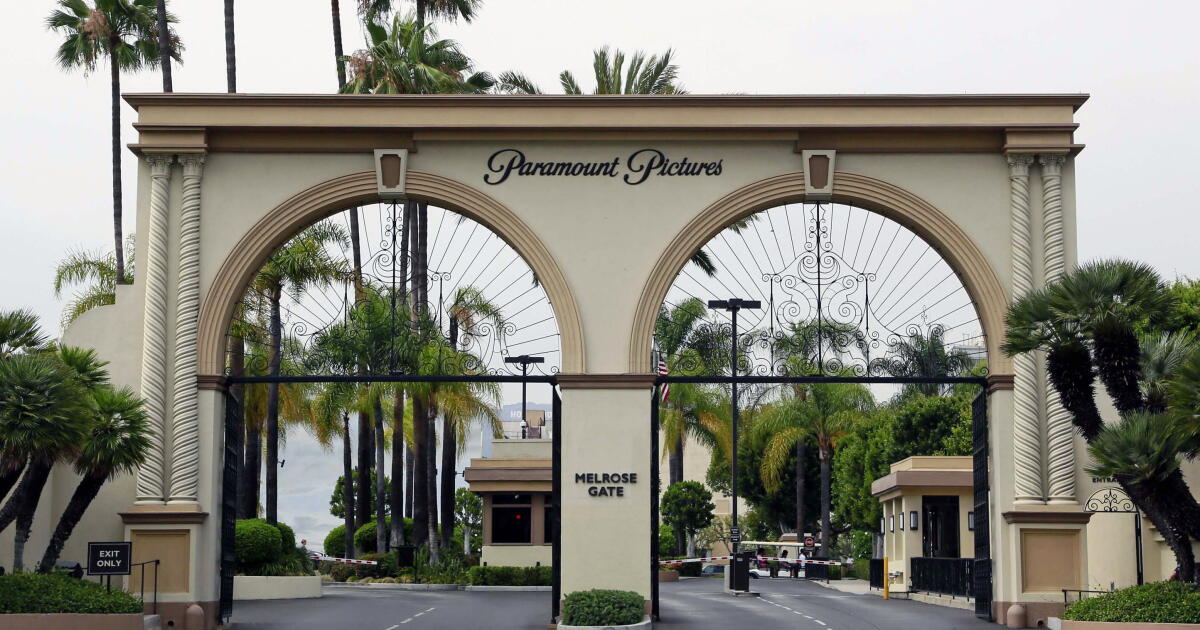
Paramount Skydance will meet with California Atty. Gen. Rob Bonta’s representatives next month for court-ordered settlement talks that could clear a path for David Ellison’s $111-billion takeover of Warner Bros. Discovery.
The two sides will convene for two days, Oct. 14 and Oct. 15, according to court documents filed this week.
The talks come as both sides look for ways to resolve the pitched battle over Hollywood’s industry-reshaping deal, which would put HBO, CBS, CNN, TBS, Food Network, Comedy Central and the Paramount and Warner Bros. studios under one roof. Bonta and 11 other Democratic state attorneys general sued in July to block it, and Ellison’s team has been stoking political pressure on Bonta to retreat.
Bonta canceled preliminary last month after details of a session on ground rules leaked, accusing Paramount of “playing games” by violating a confidentiality agreement and spreading misinformation.
Bonta’s Paramount case appears to have ruffled the Trump administration. He sued one month after the U.S. Justice Department blessed the merger without demanding concessions — a decision he said showed federal officials were not doing their jobs to enforce antitrust law. This week the department weighed in on Paramount’s side.
“The United States enforces the federal antitrust laws and has a strong interest in their correct application,” the Justice Department said in a Tuesday filing, describing its unique position to bring antitrust actions. Its “statement of interest” argued that the plaintiffs had sued as “private persons,” who must clear higher hurdles than the federal government.
The department also asked the judge to force California, the other states and the Writers Guild of America to post a $1.88-billion bond, covering fees Paramount would owe Warner Bros. Discovery shareholders if the deal isn’t finalized by Oct. 1. Paramount agreed to the so-called ticking fees earlier this year, confident the deal would sail through regulatory review. Bonta’s office said Wednesday it stands by its earlier filings arguing it should not have to post the bond. A hearing is set for Sept. 24.
Paramount’s chief legal officer, Makan Delrahim, has been quarterbacking the campaign for Warner Bros. Discovery. He served as Trump’s antitrust chief in his first administration, when he led an unsuccessful effort to block AT&T’s takeover of the company, then known as Time Warner Inc. That 2018 deal was the first of two acquisitions that saddled Warner Bros. with instability, strategic misfires and a mountain of debt, paving the way for the Paramount bid — which would mark the third time in a decade the storied studio has changed hands.
Trump has been eager for Ellison to shake up CNN, a Warner property, following his reboot of CBS News, which has coincided with diminished ratings at “60 Minutes”.
Ellison’s company has won approvals from more than 65 international regulators, and Paramount expects the Trump-appointed Federal Communications Commission leadership to sign off on a foreign ownership arrangement that would give Middle Eastern royal families a nearly 50% equity stake in the merged company. Bonta’s lawsuit is the remaining obstacle to closing.
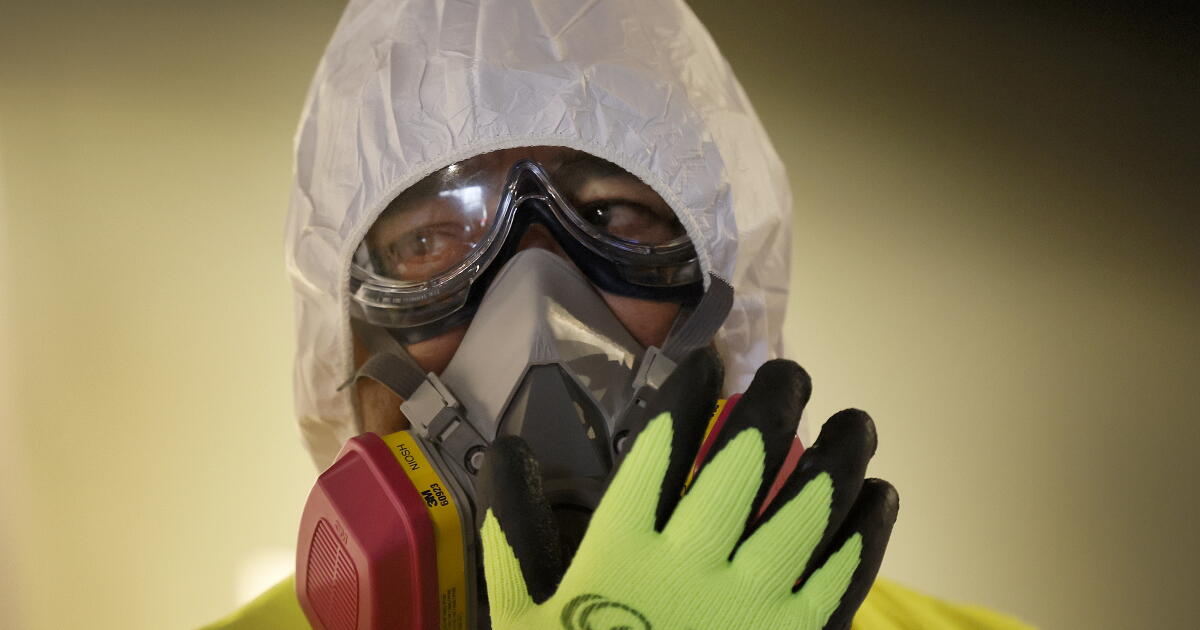
Thousands of Los Angeles homeowners faced a persistent problem long after the devastating wildfires in January 2025: While their homes were left standing, they had been infiltrated by heavy, toxic smoke and ash, and remained unsafe.
Residents were forced into lengthy battles with their insurance companies to prove contamination and get help paying for the cleanup and additional living expenses.
Backed by wildfire survivors and advocates in Altadena, California Gov. Gavin Newsom on Tuesday announced he had signed legislation to create new, first-in-the-nation standards to test and remediate homes damaged by wildfire smoke, and to require insurance companies to pay for the associated costs.
“California will not leave survivors to navigate recovery alone,” Newsom said. “These new protections will make insurer obligations clearer and give homeowners more financial flexibility when they need it most. As fire seasons across the West become a year-round reality, California’s commitment to recovery must be just as enduring.”
The January 2025 Eaton and Palisades fires were two of the deadliest and most destructive in state history. Together, they burned more than 16,000 structures and killed 31 people.
Assemblymember John Harabedian (D-Pasadena) authored Assembly Bill 1642 after hearing repeatedly from constituents concerned that the fires had left layers of ash contaminated with asbestos, lead and toxic materials in and around their homes.
The now-signed bill directs the state to create scientific standards for what constitutes a safe home and provide guidance on how to properly remediate residences.
Twenty months after Jane Lawton Potelle sat in a friend’s garage — already suffering from a cough and chest pain as her Altadena home stood contaminated with toxic smoke — she stood alongside Newsom as he signed the bill, which was championed by her advocacy group, Eaton Fire Residents United.
“Early days, we were told we were the lucky ones,” said Potelle, who founded EFRU as her neighbors shared concerning test results on Facebook — all while government agencies and insurers offered conflicting guidance and little support.
“To have this bill signed is acknowledgment that just because your home is left standing and looks fine, doesn’t mean that it’s actually safe to return,” she said.
The data EFRU collected in the months after the fire showed the vast majority of homes tested had lead levels beyond what the U.S. Environmental Protection Agency considers acceptable. With no clear guidance, haphazard and improvised efforts by companies to clean these homes left 6 in 10 residences still unsafe.
A companion bill signed by the governor, AB 1795, was born out of a Department of Insurance task force and requires insurers to abide by the AB 1642 standards in the insurance claims process and to do so in a timely manner.
If these laws had been in place when the Eaton fire broke out, “we’d all be home by now,” Potelle said.
Potelle’s home — like many others’ — remains contaminated as disputes with her insurance company drag on. Her Christmas tree, from 2024, is still up.
“Going forward, the question of whether a family can safely return home should be answered by science, not by an insurance company’s guesswork,” Harabedian said in a statement. “Families should not have to fight for the testing they need or be left trying to figure out on their own whether their homes are safe.”
More than 13,000 insurance claims filed after the fires involved homes that were damaged by smoke, not flames, according to an estimate from the Department of Insurance.
Newsom also signed legislation from Harabedian that will allow homeowners in the future to seek up to one year of mortgage forbearance if their home becomes uninhabitable due to the effects of a wildfire or other disaster. Another bill signed into law extends existing mortgage relief for those affected by the Palisades and Eaton fires for another year.
NEW YORK — A last-ditch Trump administration effort to hunt for noncitizen voters ahead of November’s elections is requiring federal employees to misrepresent themselves on voter lookup tools in a way that likely violates state laws, according to a federal whistleblower’s statement released Monday.
The Department of Homeland Security probe known as the “Unlawful Voter Initiative” also asks employees to create federal law enforcement records about voters based on unreliable data, the account warns. That could potentially wrongly implicate U.S. citizens in official documentation that could spur further investigation.
The anonymous, nearly 30-page disclosure was published Monday by Democratic Senate Minority Leader Chuck Schumer of New York and Democratic Sen. Alex Padilla of California, the ranking member of a Senate committee overseeing federal elections.
It features screenshots and transcripts of a DHS training for a group of U.S. Citizenship and Immigration Services staffers, who it says were forced in late August to drop their other work, complete a less than two-hour training session and begin running DHS-provided lists of individuals through state voter registration systems to find “unlawful voters.”
The whistleblower contends that agents have been asked to review 40 individuals per day, giving them about 12 minutes to determine whether each person is a legal voter and create federal records of anyone who is not.
Padilla and Schumer said Monday the initiative was an example of President Trump attempting to interfere in elections and the short timelines would impede officials from conducting proper investigations. They noted that the data DHS has on voters can be unreliable and differ from state records, making any federal findings based on that data potentially problematic.
“We just got more proof of Trump’s vile schemes to rig our elections,” Schumer told reporters in a news conference. “The lengths Trump will go to cheat, lie and steal in this upcoming election are simply beyond the pale.”
The White House did not immediately respond to a request for comment.
The Trump administration has been targeting noncitizen voting to allege it could be a source of significant fraud during the midterm elections, even as research shows voting by people who are not citizens is extremely rare. Trump has been pushing for the U.S. Postal Service to send mail ballots only to voters verified as U.S. citizens, and his Justice Department has sued to force the release of detailed voter data in 30 states and the District of Columbia, though it has not yet succeeded in those cases.
The whistleblower report details an effort by the federal government to work around a lack of data from the states by directing Citizenship and Immigration Services employees to pose as individual voters to access their state voter records.
Some states, such as Virginia, explicitly limit their voter lookup tools to individuals who attest under penalty of law that they are looking up their own records. In other states, like California, personally identifiable information such as a driver’s license number or partial Social Security number is needed to look up individual voter records.
The whistleblower said that when officers raised concerns about liability for searching the tools against state guidance, agency leaders told them to proceed with the searches anyway.
Schumer and Padilla on Sunday sent a letter to DHS Secretary Markwayne Mullin requesting more information about the initiative and demanding that it be stopped.
Asked about the whistleblower report, a DHS spokesperson said it is “laser focused on prosecuting and removing aliens who vote and preventing the dilution of the votes of U.S. citizens.”
“The department accessed publicly available data from states’ voter rolls and cross referenced them with known aliens in our systems,” the spokesperson said in an emailed statement. “It’s not rocket science; it’s an easy step to secure our elections.”
In response to complaints about the timing, limited training and quotas for agents, the spokesperson said that “far from being rushed or untrained, these investigative efforts are conducted diligently and professionally.”
The New York Times first reported on the DHS initiative in early September.
The whistleblower account released Monday was produced by the watchdog group Democracy Defenders Fund. The group, which said it represents the whistleblower as a client, said the person is anonymous because of “an extreme fear of retaliation but they feel an obligation to speak up about the misconduct and gross mismanagement they have witnessed.”
WASHINGTON — A federal judge has ruled that a plan by the Trump administration to slash staffing at the federal agency tasked with responding to disasters by 50% was unlawful.
The opinion issued late Friday marked a victory for labor groups who had sued the agency. The labor organizations had argued that plans by the Department of Homeland Security, which was then led by Secretary Kristi Noem, violated congressional protections that were designed to safeguard the independence of the Federal Emergency Management Agency.
The issue of the FEMA staffing was part of a much larger lawsuit filed by the American Federation of Government Employees and other labor groups, contesting efforts by the Trump administration to slash the federal workforce.
U.S. District Judge Susan Illston wrote in her opinion that top Homeland Security officials late last year directed FEMA’s leadership to submit a staffing plan that included a 50% staffing cut even though the agency’s own supervisors objected.
“Frankly, the FEMA staffing plan number appears as if pulled from thin air,” wrote Illston.
FEMA responded in a statement late Saturday saying that while it does not comment on personnel matters and ongoing litigation, “DHS and FEMA are ready for the 2026 hurricane season.”
“We’re ensuring workforce stability and a strong, deployable force for upcoming national events and potential disasters; making the agency leaner, faster and laser-focused on supporting state, local, tribal and territorial partners before, during and after disasters,” the statement said. “FEMA continues to maintain a roster of experienced leadership and support staff across headquarters and regional offices.”
The Department of Homeland Security did not immediately respond to requests for comment.
In the opinion, Illston wrote that it was clear that the government violated rules established after 2005’s Hurricane Katrina that put decisions on staffing levels squarely in the hands of FEMA, not the Department of Homeland Security, and that prevented Homeland Security from “substantially” reducing the “functions” of FEMA.
Illston didn’t order a specific remedy to carry out her opinion but directed the two sides to meet and decide on a course of relief.
Although FEMA has experienced terminations, the 50% staffing cuts ultimately were not carried out. In recent months, after top leadership changes at FEMA and the Department of Homeland Security, the agency has rehired some staffers who were let go.
FEMA was one of the agencies targeted for staff reductions in the federal government as part of a broad Trump administration plan to reduce the size of government. The embattled agency has been buffeted by mass staff departures, disruptions of grant programs and delays of disaster aid.
In May, a Trump-appointed FEMA Review Council submitted a final report recommending sweeping changes to how the agency supports states, tribes and territories in disaster.
The final version backed away from the recommendation to cut the FEMA workforce by 50%, which was included in a December 2025 draft reviewed by the Associated Press.
The council instead recommended the agency conduct a “strategic review” to determine “appropriate staffing levels.”
In an August report, the Government Accountability Office said it found that the departures of thousands of staff in 2025 resulted in a “loss of institutional knowledge and experienced personnel” and “exacerbated longstanding workforce challenges.”
More than 4,300 employees, or about 17% of FEMA’s workforce, separated from the agency in the 2025 budget year, with over 1,500 through voluntary reductions. The agency also made about 2,900 new hires.
The GAO recently recommended to Congress that it “consider requiring” FEMA to base “significant workforce decisions” on a more strategic planning process.
Without it, the GAO found, “FEMA cannot be assured that the agency is positioned to effectively meet its mission needs.”
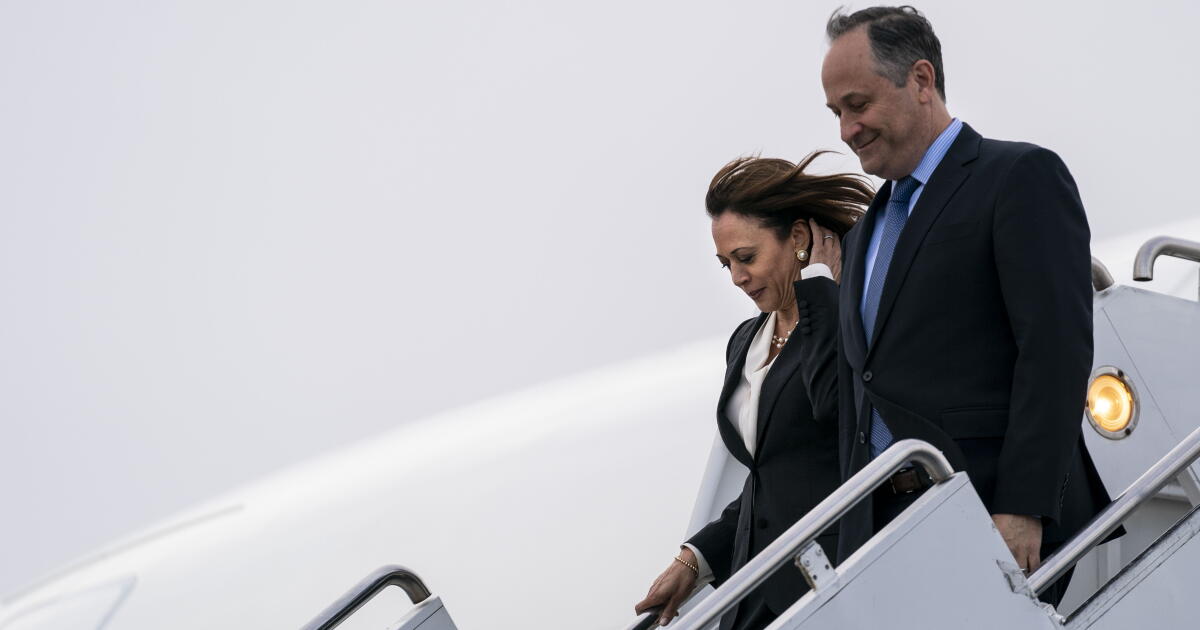
A trespasser tried to enter former Vice President Kamala Harris’ cliffside home in Malibu on Friday evening, according to the Los Angeles County Sheriff’s Department and a Harris spokesman.
Harris and her husband, Doug Emhoff, were not home at the time, according to Eduardo Negrón, a spokesperson for Harris. He did not respond to a question about the couple’s whereabouts.
“Last night, security personnel stopped an individual who illegally entered Vice President Harris and Second Gentleman Emhoff’s property before the individual reached the home,” he said in a statement. “They are grateful to the security and law enforcement personnel who responded swiftly.”
Harris’ on-site security contacted the Los Angeles County Sheriff’s Department, which has jurisdiction over Malibu.
Lt. Jason Duron, a watch commander at the Malibu/Lost Hills sheriff’s station, said his department was contacted by Harris’ security detail when a woman made it to Harris’ front door. Sheriff’s deputies responded around 10:30 p.m., and the woman, who has not been identified, agreed to leave voluntarily. She was not arrested.
“We are stepping up patrols of the property to be safe,” Duron said.
Harris’ level of security has previously been scrutinized. Former vice presidents typically receive six months of Secret Service protection after leaving office, but former President Biden extended the coverage. President Trump, who beat Harris in the 2024 election, revoked the extension in August 2025.
That led Los Angeles and California law enforcement agencies to scramble to protect Harris. The Los Angeles Police Department quickly discontinued its involvement amid criticism that shifting manpower to protect the former vice president was hampering the agency’s ability to fight crime.
It’s unclear whether the California Highway Patrol is still helping to guard Harris, or whether the security personnel who called the Sheriff’s Department were private guards.
WASHINGTON — The Department of Homeland Security drew backlash over an AI-generated social media post featuring a Sikh man facing off against a character made to look like Optimus Prime from the movie “Transformers.” The agency later deleted the image.
Posted Wednesday to the official X account for DHS, the image created by artificial intelligence depicted the “Transformers” character opposite a bearded man wearing a bandanna over his hair. The image, made to look like a movie poster, stated, “America for Americans.”
“Get off our roads, you don’t know how to drive Mr. Singh,” it continued.
The post was denounced as “racist propaganda” and “completely unacceptable.”
The administration and DHS make no effort to hide their obvious bigotry, casting suspicion on millions of Americans based on their background and appearance, in this case, the Sikh community.
DHS’s grotesque advertising campaign is hateful, disgraceful, and un-American. pic.twitter.com/zkYGTTfOjL
Other X posts by DHS that reference Transformers remain online.
Sikh Americans and elected officials condemned the image and accused the Trump administration of using racist imagery to stigmatize Sikhs while promoting its deportation campaign.
Hasbro, which owns the franchise, issued a statement saying the posts by DHS were made “without permission and do not represent the Transformers brand or Hasbro.”
Singh, which translates to “lion,” is the most common last name for Sikh men.
DHS said the post depicted Harjinder Singh, an Indian truck driver accused of causing a fatal crash last year that left three people dead after his 18-wheeler collided with their minivan in Florida. He has pleaded not guilty to vehicular homicide charges.
In photos released by DHS, Harjinder Singh wears similar clothes as the man in the now-deleted AI image.
In an emailed statement, a Homeland Security spokesperson, who did not identify themself, called criticism of the post “nonsensical drivel.” The spokesperson did not respond to a question asking why it had removed the post.
“Harjinder Singh is an illegal alien from India who should never have been in our country,” the statement said, adding that he had been granted a commercial driver’s license by California.
In its campaign against immigrant commercial drivers, the Trump administration has repeatedly pointed out Sikh and Indian truckers, who make up about 20% of that industry’s workforce.
The department recently cited California as a problem state that allows drivers who don’t speak sufficient English to obtain licenses. It also started a tip line asking members of the public to report truck drivers they suspect of being undocumented.
The press office of California Gov. Gavin Newsom, which shared the deleted image in its own X post, called the post “disgusting” and “racist propaganda.”
Noting that the Central Valley is home to a large Sikh community, Rep. David Valadao (R-Hanford) called the post “completely unacceptable” and said he’s glad it was removed.
“No American should be targeted because of their faith or their name,” Valadao wrote on X.
The Sikh Coalition noted that the DHS post comes as the country mourns the 25th anniversary of 9/11, after which Sikhs were targeted for hate crimes.
“We remain fearless in identifying as Sikhs — even when our government portrays us as enemies,” the coalition wrote on X.
A man was arrested this week near Kris Jenner’s home in Calabasas on suspicion of stalking. It wasn’t the reality TV star’s first brush with the alleged stalker.
Officers with the Los Angeles County Sheriff’s Department on Monday arrested the man, identified as 25-year-old Zenwilliam Robson, after he was detained by Jenner’s security in her neighborhood, The Times confirmed.
It was not clear whether Jenner was at home at the time of Robson’s arrest.
Robson was booked Monday evening and charged with one misdemeanor count of trespassing and refusing to leave private property, according to court records.
He is currently jailed at the Twin Towers Correctional Facility in downtown Los Angeles and is set to appear in court on Sept. 22. A representative for Robson could not immediately be reached for comment.
A representative for the “Keeping Up With the Kardashians” star declined to comment. But according to a source familiar with the case who was not authorized to speak publicly, Jenner’s team is aware of Robson and that he tried to contact the 70-year-old reality TV personality and businesswoman in the past.
Fox Corp.’s $22-billion acquisition of San José-based Roku, operator of streaming services and seller of hardware devices, seemed like a straightforward deal when it was announced in June: A growing media company was looking to bolster its presence in the fast-growing streaming industry.
But, on Wednesday, the Trump administration weighed in.
Fox Corp. and Roku said that the companies received requests from the Justice Department on Tuesday for additional information in connection with its review of the merger.
While Fox and Roku downplayed the requests, saying that they had expected the outreach, the timing of the move raised eyebrows among some analysts, who said it could signal further scrutiny of the transaction by the Justice Department.
“The president has been outspoken on the fact that he will take retaliatory action against networks that say things that he doesn’t agree with, or they do things that he doesn’t agree with,” said Rob Enderle, principal analyst at advisory services firm Enderle Group.
The action follows President Trump’s surprise over Fox’s ouster of anchor Maria Bartiromo. She was pushed out after she had shared internal company texts with the White House, which sources told The Times may have been the breaking point.
Trump said on social media that he couldn’t believe that Bartiromo will no longer have her shows on Fox. “Her fans, of which there are many, will not be happy,” he wrote on Truth Social on Sept. 3.
Associate Atty. Gen. Stanley Woodward said the Justice Department could not comment on pending matters but said in a statement: “We can affirm that this DOJ under President Trump’s leadership will continue to prioritize affordability for all Americans across our economy.”
Fox announced in June its plans to acquire Roku for $22 billion, which would give the company access to Roku’s 100 million households that use its platform to connect to different streaming services. The deal would benefit Fox’s advertising business, as well as make it less reliant on traditional pay TV platforms.
Fox and Roku said they expect the merger to be done by the first half of 2027, subject to regulatory and shareholder approval, according to a Sept 9 filings with the U.S. Securities and Exchange Commission.
“FOX and Roku will continue to work cooperatively with the DOJ in its review of the Mergers,” Fox said in its filing.
Some legal experts said it is fairly standard for the Justice Department to make an additional request for information.
“It doesn’t mean that their review is going to be more extensive than usual,” said Ray Seilie, an entertainment attorney at law firm Kinsella Holley Iser Kump Steinsapir.
For example, the Justice Department made a second request for information when it reviewed Paramount Skydance’s deal to buy Warner Bros. Discovery, he said. The merging companies typically send information that helps the government figure out what the market impact will be of a merger, he added.
The Justice Department ultimately approved Paramount’s planned acquisition, despite opposition from some industry stakeholders. State attorneys general and the Writers Guild of America have sued Paramount over the deal, raising antitrust concerns. Others have pointed out close ties between Trump and Larry Ellison, a financial backer of the deal, who has also donated money to a group that supports Trump. Ellison’s son, David, is chief executive of Paramount Skydance.
Legal experts and analysts said they don’t think the combination of Fox and Roku raises antitrust issues because they are not dominant players in streaming and have businesses that complement each other.
But one wild card is Trump.
“You never know what Trump is going to seize on and decide he wants to do,” said Bryan Sullivan, a partner with law firm Early Sullivan Wright Gizer & McRae on whether Trump will take retaliatory action through the Justice Department in the Fox-Roku deal. “It’s chaos in the federal government and it could very well happen because of that reason, but it could also just be a blip and not a big deal.”
Times staff writer Stephen Battaglio contributed to this report.
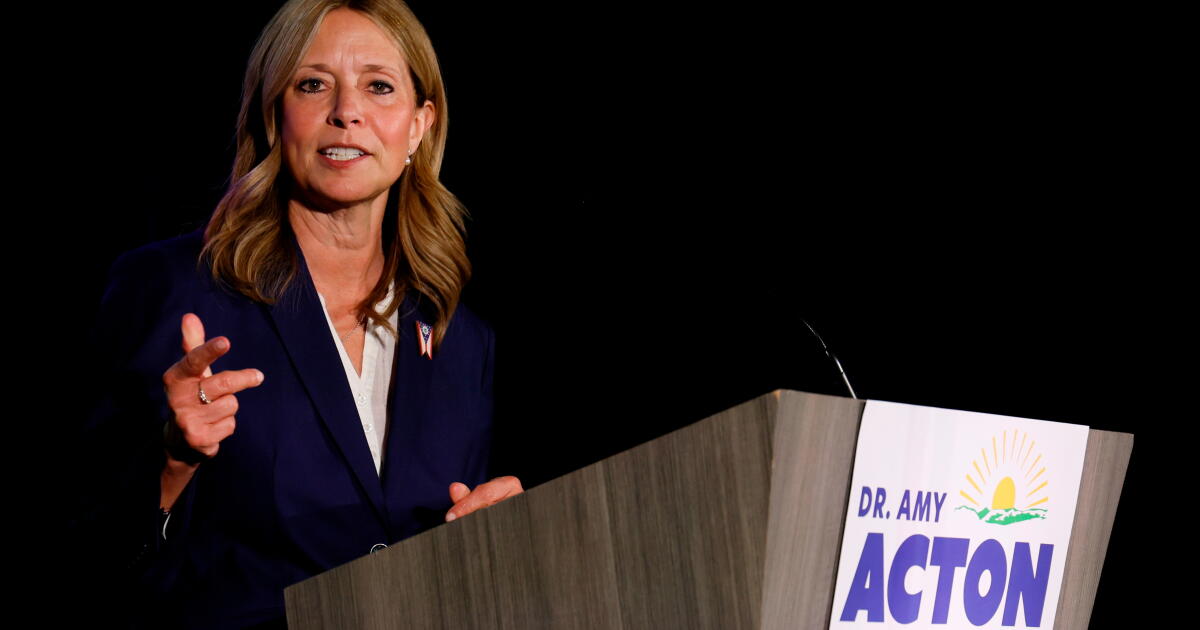
WASHINGTON — An armed assailant charged toward the Democratic candidate for Ohio governor, Amy Acton, on Sunday during a campaign stop at the Canfield Fair, injuring several people before he was stopped by troopers, the Ohio State Highway Patrol said.
The Highway Patrol said in a statement that a man it identified as Patrick Havas, 38, forced his way through a crowd, knocking over members of the audience as he moved toward Acton, the state’s former public health director. He had a taser and two pistols, the statement said.
The Mahoning County Sheriff’s Office said two handguns and a set of brass knuckles were recovered after his arrest, and “no weapons were ever brandished or even removed from their holsters.”
Havas was taken to the county jail and booked on charges of disorderly conduct and two counts of assault, the Highway Patrol statement said, adding that no other details were available pending an investigation. Online court records didn’t yet list the case, and it wasn’t clear as of Sunday night whether Havas has an attorney.
Republican Gov. Mike DeWine said in a statement that the man “tried to forcefully push himself” toward Acton as she was speaking at the fair in Canfield, in northeastern Ohio.
“Violence or the threat of violence at political or public events is always unacceptable,” DeWine added.
The attack is the latest act of political violence to roil the United States. The Ohio gubernatorial contest is one of the most high-profile races this year as the campaigns enter the final six weeks of campaigning before the election in November.
Acton is facing Republican Vivek Ramaswamy, who has parlayed his national name recognition from his 2024 presidential run, tech industry connections and alliance with President Trump into a record fundraising haul that he is tapping for advertising spots. He is using campaign rallies and advertising to criticize Acton.
Ramaswamy’s campaign called Sunday’s attack unacceptable.
“Candidates should be able to meet with voters without having to worry about threats or violence. What happened today is completely unacceptable and has no place in politics, and we hope that no one was hurt,” Ramaswamy’s communications director, Connie Luck, said in a statement Sunday.
Addie Bullock, communications director for Acton’s campaign, said in a statement that the assailant lunged at Acton. She said the candidate “will always stand up to the chaos, hate and vitriol that pits us against one another.”
The incident brought condemnation from Ohio Republican Sen. Jon Husted, who said on X that he and his wife were “disturbed by the attempted attack on Amy Acton today at the Canfield Fair. We are grateful for law enforcement’s quick response. There is no place for this kind of behavior, and it must never be tolerated.”
The country has seen a rise in political violence over the last decade, including assassination attempts against Donald Trump at a rally in 2024 and at the White House Correspondents Assn. dinner in April, and the Jan. 6, 2021, riot by a pro-Trump mob at the U.S. Capitol.
Other examples include a 2017 shooting at a Republican congressional baseball team practice in Alexandria, Va., a 2022 hammer assault on then-Speaker Nancy Pelosi’s husband at the couple’s San Francisco home, and the fatal shootings last year of a Democratic Minnesota state lawmaker and her husband and of conservative commentator Charlie Kirk in Utah.
Federal political committees spent more than $40 million on expenses labeled as security during the 2023-24 campaign cycle, the most recent one for which data are publicly available, according to a report released in April from the Public Service Alliance, a nonpartisan group that focuses on security for public officials.
Before running for governor, Acton had been recruited by DeWine in 2019 to lead the Ohio Department of Health while serving as an associate professor of public health at Ohio State University. As the COVID-19 pandemic ramped up in early 2020, she was thrown into the state and national spotlight — becoming a source of comfort to many viewers of the governor’s daily news conferences.
For her service as health director, Acton earned the John F. Kennedy Library Foundation’s Profile in COVID Courage Award, the Columbus Foundation’s Spirit of Columbus Award and Ohio State’s highest alumni honor, the Alumni Medalist Award.
Her position as the face of the DeWine administration’s aggressive stance against the coronavirus also earned Acton many enemies, among them statehouse Republicans and conservative Ohioans who opposed pandemic public health restrictions.
Fields writes for the Associated Press. AP writer Ryan J. Foley in Iowa City, Iowa, contributed to this report.
MCALLEN, Texas — A U.S. Immigration and Customs Enforcement officer falsely told investigators he was being attacked with a broom and shovel before he shot and wounded a Venezuelan man during the Minnesota immigration crackdown last winter, according to a federal indictment unsealed Friday.
Christian Castro is charged with six counts of making false statements to investigators in the first Justice Department prosecution of a federal officer for actions taken during this year’s massive Operation Metro Surge. The operation brought thousands of agents to the Twin Cities and led to sweeping protests, arrests and the fatal shootings of two U.S. citizens by federal officers.
The allegations in the federal indictment mirror those brought by Minnesota officials, who have separately charged Castro with assault and false reporting of a crime related to the nonfatal shooting of Julio Cesar Sosa-Celis in January.
Castro turned himself into federal authorities Thursday evening following his release from jail last week because Texas’ governor refused to immediately sign an extradition warrant to hand him over to Minnesota authorities.
According to the federal indictment, Castro told an FBI agent that a man grabbed a red broom off the front porch and began hitting him with it. Castro also claimed that another man hit him with a snow shovel. Castro said he opened fire while on the ground as the men ran away.
The indictment alleges that Castro had a short “physical interaction” with Sosa-Celis and another man, before the two ran into a home with a 1-year-old child inside. Castro then fired a shot through the front door while standing as the men began to close it, hitting Sosa-Celis in the leg, the indictment says.
“No person struck” Castro “with a broom as he described, and no persons wielded the broom and snow shovel as he described,” the indictment says.
No attorney is listed for Castro in the case brought by Minnesota and it was not immediately clear if he had a lawyer to speak on his behalf.
Federal prosecutors had initially charged Sosa-Celis and the other man, Alfredo Alejandro Aljorna, with assault but dropped the charges after video evidence showed the officer may have lied about the encounter. Castro was suspended from ICE in February while authorities pursued an investigation.
The federal investigation into Castro created turmoil inside the Justice Department, with a prosecutor on the case accusing higher ups of blocking efforts to bring more serious civil rights charges.
In an email obtained by ProPublica, the prosecutor told lawyers for Sosa-Celis and others that Castro would be charged only with making false statements over his “strongest objections,” adding the decision was “being directed by the Main Justice and the US Attorney.”
A person familiar with the investigation, however, told The Associated Press on Thursday that the civil rights probe is ongoing and that additional charges could still be brought.
The prosecutor, Matthew Evans, has since been fired and the Justice Department is now investigating whether he broke any laws during his handling of the case, said the person, who spoke on the condition of anonymity because they were not publicly authorized to discuss ongoing investigations.
An automatic email response from Evans’ Justice Department account said he was on leave, and other attempts to reach him were not immediately successful.
Sosa-Celis’ lawyer is pressing for Castro to face stiffer charges, saying in a statement on Thursday that Castro’s statements were made to “cover up the fact that he shot my client through the door of an occupied house without a self-defense justification.”
“Mr. Sosa Celis wants Mr. Castro to be held fully accountable for his crimes,” said the attorney, Robin Wolpert. The American Civil Liberties Union of Minnesota said Thursday that Sosa-Celis also plans to seek damages from the federal government.
Gonzalez and Richer write for the Associated Press. Richer reported from Washington.
WASHINGTON — The House passed a short-term measure Tuesday to fund the federal government into early December, a move designed to avoid a chaotic shutdown as lawmakers campaign for reelection.
Lawmakers needed to act before the fiscal year concludes at the end of September to avoid a funding lapse. They were determined not to bump up against that deadline during the campaign season following this past year’s historic shutdowns.
The House passed the bill by a vote of 370-48. The Senate has already overwhelmingly approved the measure, so it now moves to President Donald Trump’s desk for his signature.
“It gives the nation and our constituents certainty, certainty that the government will remain open, certainty that our service members will be paid,” said Rep. Tom Cole, the Republican chairman of the House Appropriations Committee.
A record 43-day shutdown occurred last fall when the two parties disagreed on renewing an expiring tax credit that lowers the cost of health coverage obtained through Affordable Care Act marketplaces. Then came the shutdown of the Department of Homeland Security, which lasted 76 days before lawmakers agreed to fund much of the department but not its immigration enforcement operations.
Lawmakers were wary of a repeat before voters go to the polls. They also blamed the other party for the recent impasses.
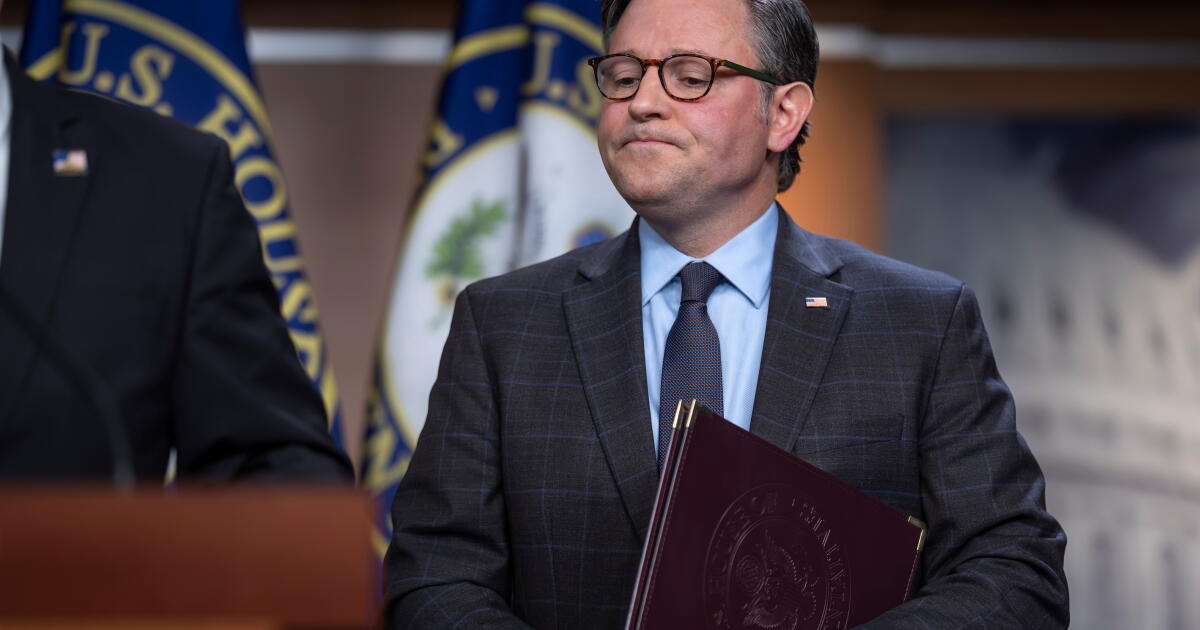
“We’re going to avoid the threat of another Democratic shutdown,” House Speaker Mike Johnson told reporters in advance of the vote.
Rep. Rosa DeLauro, the lead Democrat on the House Appropriations Committee, encouraged her Democratic colleagues to vote for the measure during a closed-door meeting Tuesday morning.
She said the bill was much improved from the product that passed the House earlier this summer on a mostly party-line basis. For example, she said it prevents the Department of Homeland Security from transferring funds to the Border Patrol, and it delays a proposed rule that would give political appointees in the Trump administration more authority to stop federal grants from going out for programs they view as not in line with the president’s agenda. Those changes were made when the Senate approved its version of the bill.
Democrats fear the administration will use the proposed regulation on grants to steer money away from Democratic-led states. DeLauro called the delay an important first step, but said more must be done to block the policy from taking effect.
“Whether a community receives disaster relief should not depend on who they voted for in the last election,” DeLauro said.
The short-term measure funds federal agencies generally at current levels through Dec. 11. It will give lawmakers more time to find compromise on a full-year measure, though that will likely be quite difficult.
Republicans are seeking hundreds of billions of dollars in additional spending for the military while cutting most non-defense programs. Democrats say that’s a non-starter and insist on a bipartisan approach that treats domestic programs with parity.