Department for Transport

Bank holiday ‘danger hour’ warning issued to Brits with millions expected to hit roads this weekend

New research shows where and when will be most dangerous for motorists this Bank Holiday weekend

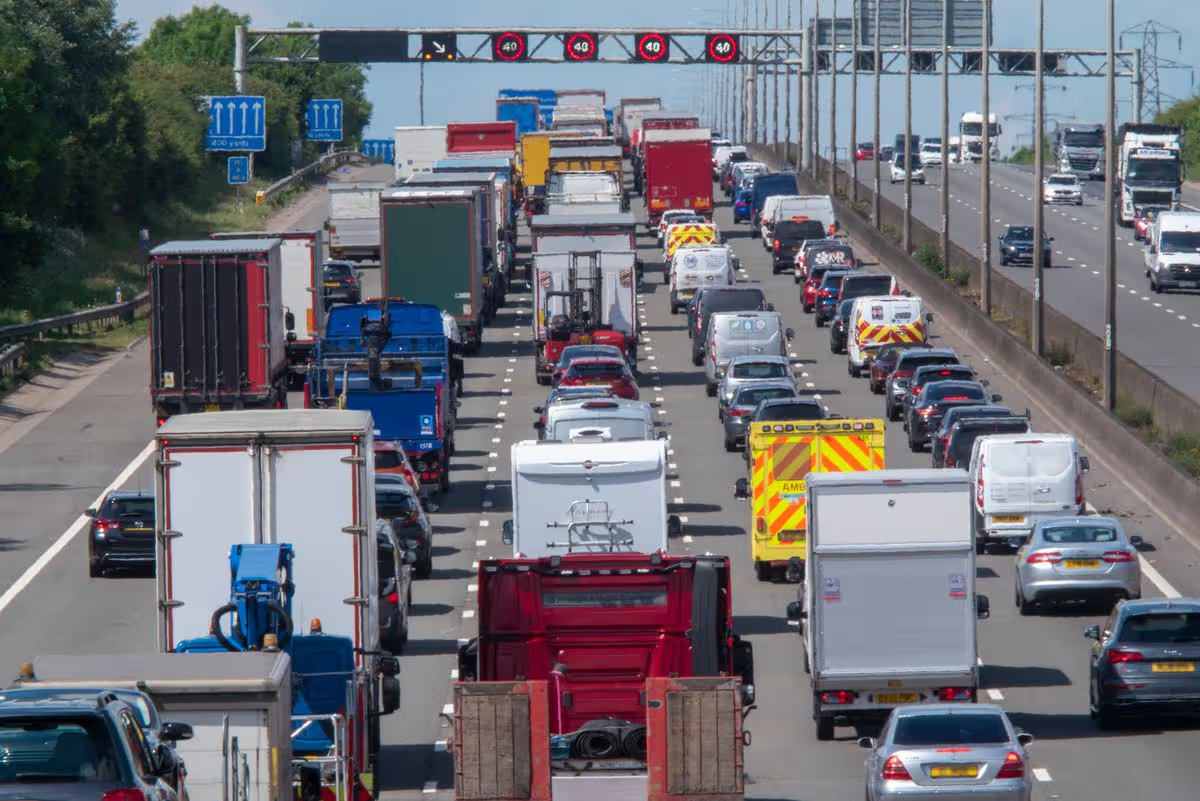
Most motorists reckon the roads are at their most treacherous during rush hour, when traffic is bumper-to-bumper and congestion is at its peak. But with millions of Britons set to hit the road this Bank Holiday weekend, fresh research suggests the greatest danger may lurk when the roads seem at their emptiest.

Fresh analysis by Confused.com appears to reveal the single most hazardous hour to drive in the UK, with motorists being urged to steer clear of this time slot where possible over the bank holiday weekend. Drawing on Department for Transport (DfT) traffic flow and collision data, Confused.com has developed an interactive Safety Index to work out the probability of being caught up in an accident relative to the volume of vehicles on the road.

Rhydian Jones, Confused.com car insurance expert, explains why the emptiest roads can often prove the most perilous, identifies the riskiest and safest times to drive in the UK, and offers guidance on how motorists can use Confused.com’s new Safety Index tool to plan safer journeys during the bank holiday exodus.

Whether you’re heading off for a long weekend away, popping to see relatives or making your way home after a day out, understanding when collision risk peaks could help you sidestep the most dangerous times to be behind the wheel.

Why Quiet Roads Can Be More Dangerous

It appears to defy logic. Fewer vehicles should surely mean fewer crashes. But experts suggest that emptier roads often encourage more reckless driving behaviour. Almost 1 in 3 motorists (29%) acknowledge they break speed limits at least from time to time, while more than 1 in 4 (27%) admit they’re more inclined to speed when traffic is lighter. Factor in poor visibility, driver fatigue and the heightened chance of encountering drink-drivers, and the hazard increases dramatically.

“Road safety relies on more than just how many cars are on the road. It depends on how conditions evolve through the day, and our analysis makes that pattern unmistakably clear. The late afternoon sees the highest number of collisions because the roads are busy. But when we look at the risk per vehicle, it’s the late-night and early-morning hours that are proportionately the most dangerous. That’s when visibility drops, fatigue sets in and roads are quiet enough that drivers may take more risks.

We know journeys become longer, traffic becomes heavier, and weather conditions get tougher. Our research shows many drivers already feel nervous, especially at night or in unfamiliar areas, and nearly a third admit to speeding when the roads look quiet. Our interactive ‘Safety Index’ tool can help drivers make informed decisions about when they travel, reducing risk and helping them stay safer behind the wheel.” Rhydian Jones, Confused.com car insurance expert.

READ MORE: Portugal 2.5-hour ‘wait times’ warning issued by RyanairREAD MORE: Motability CEO issues ‘Drive Smart’ update after use of black boxes ‘paused’

The Most Dangerous Hours to Drive

The analysis found that the hours with the highest collision risk relative to traffic volume are:

  • Sunday: 3am to 4am
  • Saturday: 2am to 3am
  • Friday: 11pm to midnight
  • Monday: 1am to 2am
  • Tuesday to Thursday: midnight to 1am

These findings suggest that the greatest danger is not necessarily when roads are busiest, but when drivers are most tired and conditions are less forgiving.

The Safest Times to Drive

By contrast, the safest times to drive are generally in the early morning. Weekdays between 5am and 7am were found to carry the lowest risk, with Wednesday 5am to 6am ranking as the safest hour of the entire week.

On weekends, the safest time shifts slightly later, with 9am to 10am emerging as the lowest-risk period. Experts believe these times are safer because traffic tends to be more predictable and speeds are generally lower.

Over Half of Drivers Have Witnessed or Experienced a Crash

The study also found that road accidents are a common experience for UK motorists.

  • 60% of drivers have either been involved in or witnessed a road accident.
  • 33% say the incident happened in the afternoon.
  • 39% say they have become more cautious and aware of other drivers afterwards.
  • 19% say they felt more nervous behind the wheel.

The emotional impact of accidents can have a lasting effect on confidence and driving behaviour.

The Driving Situations That Make People Most Nervous

The research revealed that many drivers feel uneasy in certain conditions:

  • 26% feel most nervous on inner-city roads.
  • 32% worry about encountering drivers under the influence of alcohol or drugs at night or on weekends.
  • More than 1 in 3 (37%) actively avoid driving at night.
  • 50% avoid driving in poor weather.
  • 41% leave earlier to avoid feeling rushed.

The UK Areas with the Most Collisions

When looking at total collisions rather than risk per vehicle, the busiest crash period is 5pm to 6pm, coinciding with school pick-ups and the evening commute.

During this hour, the councils with the highest number of reported collisions were:

  1. Kent – 265
  2. Surrey – 215
  3. Essex – 205

Nationally, there were 100,927 injury collisions recorded by police and logged by the Department for Transport over the last year.

Why This Hour Is So Dangerous

Several factors combine to make this the most hazardous hour of the week:

  • Drivers may be returning home after late nights out.
  • Fatigue is at its peak.
  • Reduced traffic can encourage speeding.
  • Visibility is poor.
  • There is a greater risk of drink-driving.

The result is a period where even a small mistake can have serious consequences.

In a bid to help motorists gain a clearer picture of road risks, Confused.com has unveiled an interactive Safety Index tool that highlights the safest and most dangerous times to drive on each day of the week.

By cross-referencing traffic volumes with collision statistics, the tool enables drivers to pinpoint lower-risk windows and make better-informed choices about when to set off.

For anyone considering a bank holiday road trip or a late-night drive home, the message couldn’t be more straightforward: quiet roads don’t necessarily mean safer roads.

Source link

Charming market town with famous abbey set to get incredible £32million regeneration

The beautiful town will see a total transformation with the multi-million pound regeneration project — and work is expected to kick off in full force at the end of May.

A northern town that’s home to a famous 950-year-old historic abbey is all set for a massive £32million regeneration this May.

The North Yorkshire town already has a ton going for it — a majestic abbey, artisanal shops, cute cafes, countless craft beer joints, and picturesque green trails along the River Ouse. Now, it’s set to see a total transformation with the multi-million pound regeneration project.

Selby in North Yorkshire will be undergoing massive change by the end of May, with the long-awaited Selby Station Gateway project finally kicking off in the latter half of the month according to latest updates.

Spearheaded by North Yorkshire Council with support from Department for Transport, York and North Yorkshire Combined Authority, Network Rail, Active Travel England, and Trans-Pennine Express, the £32million regeneration project is a joint effort aimed at boosting investment and encouraging sustainable travel in the town.

The project is being funded by the larger government-back Transforming Cities Fund, which was set up in a bid to encourage people to walk or cycle seamlessly between railway stations and town centres.

The multi-million pound regeneration will see the national civil engineering and highways contractor, Galliford Try Ltd, commence demolition work at the end of this month to make space for a brand-new car park and improved walking and cycling routes.

Demolition work of unused buildings around the site will start with James William House on Cowie Drive, followed by the former Railway Social Club and Selby Business Centre.

North Yorkshire Council’s executive member for highways and transport, local councillor Malcolm Taylor, said of the project: “It represents a major investment to enhance the area and improve routes leading to the railway station, and we are confident that the project will act as a catalyst for further investment for Selby.”

Taylor added: “I’m pleased to announce that after many months of development, and through close working with partners and the community, we are ready to begin the scheme. We will keep the public updated when details of further phases come forward.”

The station will also become equipped with new accessible platform access, a completely remodelled bus station and a brand-new plaza which will connect it to the neighbouring Selby Park.

Over the next year, the first phase of the regeneration scheme is expected to deliver:

  • New accessible platform access to the rear of the station building
  • A brand-new station car park.
  • A completely remodelled bus station.
  • Major improvements to local walkways and cycleways.

This phase, which comprises the removal of existing unused buildings, is expected to take roughly 12 months to complete. While the initial timelines had completion set for autumn 2028, the unexpected delays have made it difficult to pinpoint exactly when work is expected to finish.

The first public consultation on the regeneration project’s plans was held back in 2019, with work touted to commence in October last year, however those plans were delayed and postponed due to bats living on parts of the site. Plans were then put in place for the project to kick off in March 2026, however it was met with delays once again.

With this £32million regeneration project, the town of Selby hopes to boost its appeal to both visitors as well as residents.

Source link

ABTA gives May half term update after flights cancelled in fuel crisis

The Department for Transport has also given its latest advice

People from the UK heading abroad for the Spring Bank Holiday are being given the latest advice on holidays amid growing fears over jet fuel shortages and flight disruption. Travel experts say flights are continuing to operate “as planned” despite airlines across Europe drawing up contingency measures following soaring fuel prices linked to conflict in the Middle East.

Concerns have grown after reports that some airlines are preparing for possible refuelling stops on long-haul routes if shortages worsen. German airline Lufthansa has reportedly already begun contingency planning after one of its flights was forced to divert for fuel during a recent journey to South Africa.

The airline has also cut thousands of flights from its wider summer schedule as fuel costs continue to rise. However, travel industry figures insist UK holidaymakers should not panic.

Mark Tanzer, Chief Executive of ABTA – The Travel Association, said: “We really don’t want people worrying about their holidays; planes are taking off daily and people are continuing to get away on their holidays. The Government and airlines are clear that there isn’t a problem with fuel supply.

“If you have a holiday booked in for the coming months – including the May half term – we expect it to go ahead as planned.”

He added: “Whilst there have been reports about cancellations globally, these amount to less than one per cent of overall flights.”

According to aviation analytics firm Cirium, around 13,000 flights worldwide have reportedly been cut during May. Munich and Istanbul are believed to be among the worst-affected destinations.

The Department for Transport has also said there is currently “no need” for travellers to change their plans. Officials say UK airlines buy fuel in advance and airports continue to maintain reserves to help prevent disruption.

Passengers are still being advised to check flight updates with airlines before travelling and ensure they have suitable travel insurance in place. Some 120 flights from the UK this month have been cancelled, new figures show, as jet fuel prices surge and fears of shortages grow.

Cirium said airlines have axed 120 of the 22,613 departures initially scheduled from UK airports in May, equivalent to 0.53%. The number of outbound flights planned for June is 36 lower than a week ago. This represents a 0.2% reduction and means capacity for the month has fallen by 7,972 seats.

The final week of May is a peak period for holidays as it is half-time at many schools. For all flights globally, some 13,005 planned for May were cancelled between April 10 and April 21, equivalent to 1.5%. That reduced capacity by almost two million seats.

Julia Lo Bue-Said, chief executive of Advantage Travel Partnership, a network of independent travel agents, said airlines are “assessing poor performance flights and consolidating or cancelling as required”.

She added that UK departures to popular summer hotspots “remain unaffected” and insisted “customers can continue to book with confidence”. Paul Charles, founder of travel consultancy The PC Agency, said: “Airlines are now being forced to cut flights and make difficult decisions ahead of the peak season.

“It is better for them to cancel flights well in advance so that passengers are less inconvenienced than a last-minute change of plan. As the Iran conflict continues, there will need to be many more cancellations as the jet fuel supply is squeezed.”

Lufthansa’s airline group announced in April it would cancel 20,000 flights over the following six months to save fuel. Iran continues to have a stranglehold on tankers passing through the Strait of Hormuz, leading to a surge in oil prices and concerns of jet fuel shortages.

But on Sunday, Transport Secretary Heidi Alexander said summer holiday plans will not face major disruption because of the latter. She revealed that more fuel has been imported from America, while refineries have upped their production.

The Government has also introduced a temporary rule change allowing airlines to group passengers from different flights together on to fewer planes to save fuel.

Source link

Jet2, easyJet, Jet2, TUI passengers with flights booked warned of ’14 day rule’ change

The Department for Transport has announced it is consulting on major changes for holidays

Concerns have been raised about potential changes which will mean the end of a ‘14-day rule’ this summer with flights being changed or cancelled at the last minute. The Department for Transport has announced it is consulting on major changes to holidays amid uncertainties about jet fuel supplies as the Middle East crisis continues with no end in sight.

With intense pressure on jet fuel widely tipped to cause travel problems this summer, the government announced over the weekend that airlines will be allowed to group passengers from different flights onto fewer planes. This means that at the last minute, people could be switched to a different flight.

The DfT says it will help cut the likelihood of last-minute flight cancellations this summer in the event of significant disruption due to ongoing global uncertainty caused by the Middle East conflict. It lets carriers such as Ryanair, easyJet, Jet2, British Airways, Wizz Air UK, and TUI, consolidate flights on routes where there are multiple trips to the same destination on the same day.

However, consumer experts said that currently, passengers are protected by a 14-day rule, and it’s ‘not fair’ for people to be shifted at the last minute to suit airlines without compensation. Rory Boland, Editor of Which? Travel said: “Millions of Britons will have already booked their flights for this summer, often paying over the odds for flights at peak times.

“Existing rules already allow airlines to move customers to new flights so long as they give them more than 14 days’ notice and offer the choice between a new flight or a refund. It’s only for cancellations within 14 days that compensation is payable, rightly.

READ MORE: Ryanair, EasyJet, Jet2 and Wizz Air update on summer flightsREAD MORE: Martin Lewis’ urgent warning for TUI, Jet2 and Ryanair bookers ‘do it now’

“It’s not fair for the rules to now be bent in favour of airlines and potentially leave passengers holding the bill. Many passengers will understand that disruptions can occur and may be happy to travel a few hours or a day later, but for those on short trips or connecting flights it could mean the trip is no longer worthwhile.

“Before any changes are made, passengers need cast-iron assurances that their rights will not be weakened and that airlines cannot use reform as cover to shift the cost of disruption onto travellers.”

Conservatives say it could see passengers “herded on to a different plane, at a time of the airline’s choosing”. The DfT says, however, that the measure is designed to give passengers “greater confidence” by helping airlines to lock in their schedules earlier.

Heidi Alexander, the transport secretary, adds: “There are no immediate supply issues, but we’re preparing now to give families long-term certainty and avoid unnecessary disruption at the departure gate this summer.

“This legislation will give airlines the tools to adjust flights in good time if they need to, which helps protect passengers and businesses.”

The Department for Transport said the measures would:

  • help move passengers onto similar services much earlier, helping avoid stressful delays at the airport
  • prevent running flights which have not sold a significant proportion of tickets
  • reduce wasted fuel from flying near-empty planes

Current rules

If your flight is cancelled by the airline, you have a legal right to a choice between being re-routed or a refund. If a flight is subject to a significant delay – at least 2 hours for short-haul, 3 hours for medium-haul and 4 hours for long-haul – passengers are entitled to care and assistance, including food, drink and overnight accommodation where necessary.

Rob Bishton, Chief Executive of the UK Civil Aviation Authority, said: “Passengers in the UK are well protected by some of the strongest rights in the world, offering reassurance if disruption does occur.

“Airlines have a duty to look after their passengers when they face disruption, and should offer a choice between a refund or alternative travel arrangements, including with another airline, if a flight is cancelled.

“Relaxing the rules around slots at airports will allow airlines more flexibility and so we expect them to give passengers as much notice as possible of cancellations during this period.”

If notified of changes to their flights by airlines, passengers are advised to speak to their airline, travel agent or tour operator in the first instance.

Source link

TUI issues update today, April 26, for passengers who have paid for holidays

TUI, Jet2 and easyJet have all confirmed they will not add fuel surcharges to pre-booked or new package holidays and flights this summer

Airline TUI has this afternoon released a statement for passengers worried about being slapped with surcharges on holidays they’ve already booked. The conflict in the Middle East has disrupted oil deliveries, raising the prospect of serious jet fuel shortages.

This has also caused fuel prices to skyrocket, leaving those who’ve already secured their holidays – and those preparing to – anxious they’ll be asked to stump up extra cash to offset the soaring costs facing airlines.

Jet2 and easyJet confirmed over the weekend that they will not be passing on any price increases to passengers via surcharges. Now, this afternoon, airline and tour operator TUI has announced it will not charge passengers additional fees.

Neil Swanson, Managing Director at TUI UKandI, said: “We understand that customers want both confidence and clarity when booking a holiday. Our teams are here to support people who are thinking about booking, and those who have already booked with TUI can be reassured that their holiday price is fixed, with no fuel surcharges added.”

easyJet has issued a fresh statement confirming the airline and tour operator will not add surcharges to any pre-booked flights and package holidays, or future bookings. The company said travellers can book their package holidays with confidence thanks to its Best Price Guarantee and Ultimate Flexibility policy: “easyJet and easyJet holidays has confirmed that it will not introduce surcharges on its flights or package holidays, giving customers complete peace of mind when booking.

“No surcharges will apply to any pre‐booked easyJet holiday packages or to any new bookings for summer 2026.easyJet currently sees no disruption to its jet fuel supply and all flights and package holidays continue to operate normally.” Garry Wilson, CEO of easyJet holidays, said: “We know that holidaymakers may have questions about what recent global events might mean for their travel plans this summer so we are giving our customers absolute peace of mind that no surcharges will be added to their flights or package holidays.”

“Our operations remain unaffected, so customers can be confident that not only will their holiday go ahead as planned, but there will be no surprise extra payments, and they can enjoy their brilliant holidays at unbeatable prices.”

Jet2 has confirmed it won’t be slapping surcharges on any pre-booked flights or holidays to cover increased costs, including those related to jet fuel. In an effort to calm growing anxieties, the Department for Transport yesterday issued direct guidance to passengers with bookings through carriers such as Jet2, Ryanair, Wizz, easyJet and British Airways. Jet2 has axed surcharge provisions across all its flights and holidays, despite the carrier never having previously imposed them. The policy applies to all flights and holidays booked through any channel, be it online, via the mobile app, contact centre or independent travel agent. It does not cover tourist taxes, which are payable at the resort during the stay and are settled directly with the accommodation provider.

Steve Heapy, CEO of Jet2 said: “Holidaymakers should have every right to book their hard-earned break in the sun, without worrying about being hit with additional costs, and they can have that complete assurance when they book a flight or holiday with Jet2. As a result of today’s announcement, customers booking with Jet2 know that they are locking in their price without additional cost surprises later and we strongly believe that is the right thing to do by them. Ahead of a busy summer this is yet more evidence of why, on top of our incredible holidays and award-winning customer service, nothing beats a Jet2holiday.”

The DfT said on Friday: “There is no current need for passengers to change their travel plans. UK airlines buy jet fuel in advance, and airports maintain stocks to support their resilience. The government is working closely with the aviation industry to monitor risks and minimise disruption to passengers.

“If your flight is cancelled, you have clear legal rights, including the right to a full refund or re-routing. Read this factsheet for the full picture on the current situation and what it means for you.”

Meanwhile, IAG – the parent company of British Airways, Aer Lingus and Spain’s Iberia – has referred to “pricing adjustments to reflect these higher fuel costs”. A spokesperson commented: “We are not seeing jet fuel supply interruptions, but fuel prices have risen sharply and, despite our hedging strategy, which gives some shorter-term mitigation, we are not immune to the impact.”

Source link

Airline easyJet gives major new update to all passengers with holidays

Boss speaks out with pledge after big concerns about travellers being hit with ‘extra’ charges to cover soaring fuel

easyJet has issued a major announcement for all holidaymakers with flights booked this summer. Concerns are mounting that the Iran situation, which has seen the crucial Strait of Hormuz closed and severely disrupted global oil supplies, could significantly affect jet fuel availability.

EU energy commissioner Dan Jorgensen has warned ‘it’s very likely that many people’s holidays will be affected, either by flight cancellations or very, very expensive tickets’ because of the crisis. Fears are growing that travellers could face additional charges from airlines attempting to manage spiralling fuel costs.

On Friday, Jet2 confirmed it would not impose surcharges on passengers – and now easyJet has released a fresh statement pledging the airline and tour operator will not add surcharges to any pre-booked flights and package holidays, or future bookings.

The company said travellers can book their package holidays with confidence thanks to its Best Price Guarantee and Ultimate Flexibility policy: “easyJet and easyJet holidays has confirmed that it will not introduce surcharges on its flights or package holidays, giving customers complete peace of mind when booking.

READ MORE: Government issues new ‘cancellation’ update for airlines amid jet fuel stock concern

“No surcharges will apply to any pre‐booked easyJet holidays packages or to any new bookings for summer 2026.easyJet currently sees no disruption to its jet fuel supply and all flights and package holidays continue to operate normally.” Garry Wilson, CEO of easyJet holidays, said: “We know that holidaymakers may have questions about what recent global events might mean for their travel plans this summer so we are giving our customers absolute peace of mind that no surcharges will be added to their flights or package holidays.”

“Our operations remain unaffected, so customers can be confident that not only will their holiday go ahead as planned, but there will be no surprise extra payments, and they can enjoy their brilliant holidays at unbeatable prices.”

Jet2 has confirmed it will not impose surcharges on any pre-booked flights or holidays to offset rising costs, such as those linked to jet fuel. In a move to ease mounting concerns, the Department for Transport yesterday issued direct guidance to passengers booked with carriers including Jet2, Ryanair, Wizz, easyJet and British Airways.

Jet2 has scrapped the surcharge provision across all flights and holidays, despite the fact the airline has never previously applied them.

The policy covers all flights and holidays booked through any channel, whether online, via the mobile app, contact centre or independent travel agent. It excludes tourist taxes, which are payable at the resort during the holiday and are paid directly to the accommodation provider. Steve Heapy, CEO of Jet2 said: “Holidaymakers should have every right to book their hard-earned break in the sun, without worrying about being hit with additional costs, and they can have that complete assurance when they book a flight or holiday with Jet2. As a result of today’s announcement, customers booking with Jet2 know that they are locking in their price without additional cost surprises later and we strongly believe that is the right thing to do by them. Ahead of a busy summer this is yet more evidence of why, on top of our incredible holidays and award-winning customer service, nothing beats a Jet2holiday.”

The DfT stated on Friday: “There is no current need for passengers to change their travel plans. UK airlines buy jet fuel in advance, and airports maintain stocks to support their resilience. The government is working closely with the aviation industry to monitor risks and minimise disruption to passengers.

“If your flight is cancelled, you have clear legal rights, including the right to a full refund or re-routing. Read this factsheet for the full picture on the current situation and what it means for you.”

However, IAG – the parent company of British Airways, Aer Lingus and Spain’s Iberia – has spoken of “pricing adjustments to reflect these higher fuel costs”. A spokesperson said: “We are not seeing jet fuel supply interruptions, but fuel prices have risen sharply and, despite our hedging strategy, which gives some shorter-term mitigation, we are not immune to the impact.”

Source link

Government issues new ‘cancellation’ update for airlines amid jet fuel stock concern

Passengers have been advised to check with their airlines before they travel

The Government has said it is “closely monitoring” UK jet fuel stocks as airlines prepare for a potential shortage. UK airlines have insisted they are “not currently seeing a shortage of jet fuel” as they buy it in advance and airports maintain stocks, the Department for Transport (DfT) said in an update published on Friday evening.

But airports will also make it easier for airlines to cancel flights without running the risk of losing their allocated “slots” – scheduled times for take-off or landing which some UK airports assign to airlines – if fuel shortages prevent them from flying.

Passengers have been advised to check with their airlines before they travel – and ensure they have appropriate travel insurance, according to the DfT.

This comes as oil prices continue to soar on the back of the US-Israel war on Iran and the closure of the Strait of Hormuz.

“There is no current need to change upcoming travel plans,” the DfT statement said.

“Since the closure of the Strait of Hormuz, we have been closely monitoring UK jet fuel stocks and working with airlines, airports and fuel suppliers to ensure passengers keep moving and businesses are supported.

“Government regularly meets with industry to monitor risks, understand pressures and ensure clear communication with passengers, should circumstances change.”

It added: “We recognise that families may be concerned, and that aviation and tourism businesses are operating in challenging global conditions.

“We are working hand in hand with industry to help flights keep operating.”

The DfT said airlines will also no longer be required to follow the “use it or lose it” rule at UK airports, whereby airlines must use at least 80% of their allocated slots during a season to keep them for the following year.

“Airport Coordination Limited, the independent body that manages slot allocation at UK airports, has updated its guidance so that airlines will not lose their slots if fuel shortages prevent them from flying,” the DfT update said.

“Airlines can now apply for an exemption from the ‘use it or lose it’ rule in these circumstances.” A spokesperson for Jet2 said its flight schedule remains unaffected for the foreseeable future.

“We remain in continual dialogue with our fuel suppliers, as is standard practice,” the spokesperson said. “Based on the conversations we have been having, we see no reason not to look forward to operating our scheduled programme of flights and holidays as normal.”

The airline also confirmed there will be no surcharge on any booked flights or holidays to cover cost increases, including those linked to jet fuel.

“Amidst speculation that some airlines and travel companies may introduce such surcharges, which would mean their customers facing additional costs after making a booking, Jet2 has removed the surcharge provision across all flights and holidays, even though the company has never previously applied them,” the airline announced on Friday.

Steve Heapy, CEO of Jet2, said: “Holidaymakers should have every right to book their hard-earned break in the sun, without worrying about being hit with additional costs, and they can have that complete assurance when they book a flight or holiday with Jet2.

“As a result of today’s announcement, customers booking with Jet2 know that they are locking in their price without additional cost surprises later and we strongly believe that is the right thing to do by them.”

It is understood that Virgin Atlantic and easyJet are also expecting to operate as normal.

Source link

British Airways ticket price warning amid fuel crisis as holidaymakers on alert

The comment from the owner of BA comes after Jet2 said it would not introduce surcharges on any booked flights or holidays to cover cost increases

The parent company of British Airways has cautioned that airfares are set to climb as the closure of the Strait of Hormuz, triggered by the Iran conflict, has caused oil prices to surge dramatically.

International Airlines Group (IAG) announced on Friday that the ongoing Middle East crisis will push up the cost of flights to account for soaring jet fuel prices.

Airlines routinely purchase a portion of their fuel in advance at fixed rates to shield themselves from price fluctuations, a strategy commonly referred to as “hedging”.

Despite this, IAG warned that it remained “not immune” to the wider consequences of the Middle East conflict. The group insisted it had yet to experience any disruption to its jet fuel supply, amid growing concerns over potential future shortages as a result of the ongoing hostilities.

READ MORE: RAF fighter jets shoot down Russian drones over Ukraine as Putin launches attacksREAD MORE: Iran war live: Trump claims Tehran ‘making an offer’ as US team heads for talks

The government is “closely monitoring” fuel stocks as airlines brace themselves for possible shortages, with oil tankers still unable to navigate the Strait of Hormuz. It has also emerged that airports are set to make it simpler for airlines to cancel flights without jeopardising their allocated take-off and landing slots, should fuel shortages prevent them from operating. The Department for Transport (DfT) announced that airlines will no longer be obliged to adhere to the “use it or lose it” rule at UK airports, whereby carriers must utilise at least 80% of their allocated slots during a season in order to retain them for the following year. “Airport Coordination Limited, the independent body that manages slot allocation at UK airports, has updated its guidance so that airlines will not lose their slots if fuel shortages prevent them from flying,” the DfT statement confirmed.

“Airlines can now apply for an exemption from the ‘use it or lose it’ rule in these circumstances.”

Meanwhile, Jet2 has revealed it will not be imposing surcharges on any previously booked flights or holidays to offset rising costs, reassuring customers that the price they book is the price they will pay.

The policy covers all flights and holidays booked through any channel, whether online, via the mobile app, contact centre or through an independent travel agent. Steve Heapy, CEO of Jet2 said: “Holidaymakers should have every right to book their hard-earned break in the sun, without worrying about being hit with additional costs, and they can have that complete assurance when they book a flight or holiday with Jet2. As a result of today’s announcement, customers booking with Jet2 know that they are locking in their price without additional cost surprises later and we strongly believe that is the right thing to do by them. Ahead of a busy summer this is yet more evidence of why, on top of our incredible holidays and award-winning customer service, nothing beats a Jet2holiday.”

Source link

Department for Transport issues Friday afternoon statement amid jet fuel fears

Government spoke out to passengers booked with carriers like Ryanair, easyJet, Jet2 and Wizz Airs amid fears of fuel supply disruption and potential flight cancellations

The Government this afternoon issued a statement to passengers across the UK amid growing concerns over jet fuel shortages and the prospect of flight cancellations. The Department for Transport stepped in to respond following warnings from the European Union.

EU energy commissioner Dan Jorgensen said this week: “Unfortunately, it’s very likely that many people’s holidays will be affected, either by flight cancellations or very, very expensive tickets.”

He added: “Even if we do everything we can do, if the jet fuel is not there, then it’s not there. [Currently] it is primarily a crisis of prices and not yet a crisis of supply, but unfortunately we cannot be sure to prevent a crisis of supply, especially on jet fuel in the future, if the crisis continues.”

Earlier today, President Trump suggested the Iran situation could drag on for weeks, stating he ‘wouldn’t rush’ a deal. The DfT then issued direct guidance to passengers booked with carriers including Jet2, Ryanair, Wizz, easyJet and British Airways.

It said: “There is no current need for passengers to change their travel plans. UK airlines buy jet fuel in advance, and airports maintain stocks to support their resilience. The government is working closely with the aviation industry to monitor risks and minimise disruption to passengers.”

“If your flight is cancelled, you have clear legal rights, including the right to a full refund or re-routing. Read this factsheet for the full picture on the current situation and what it means for you.”

Is there a shortage of jet fuel in the UK?

DtT said: “UK airlines are clear that they are not currently seeing a shortage of jet fuel. It is typically bought in advance, with airports and their suppliers keeping stocks of bunkered fuel to support their resilience.”

Do you need to change your travel plans?

Officials explained: “There is no current need to change upcoming travel plans. Government regularly meets with industry to monitor risks, understand pressures and ensure clear communication with passengers, should circumstances change.

“We recognise that families may be concerned, and that aviation and tourism businesses are operating in challenging global conditions. We are working hand‑in‑hand with industry to help flights keep operating.

“We advise passengers to continue checking with their airlines before they travel, and to check the FCDO travel advice for the latest updates. You should also ensure you have appropriate travel insurance.”

How is the government protecting passengers?

Under UK law, if your flight is cancelled, you are entitled to either a full refund or to be booked onto an alternative flight if you:

  • depart from an airport in the UK on any airline
  • arrive at an airport in the UK on an EU or UK airline
  • arrive at an airport in the EU on a UK airline

For more information about your rights, you can:

What is government doing?

The UK Government said: “Since the closure of the Strait of Hormuz, we have been closely monitoring UK jet fuel stocks and working with airlines, airports and fuel suppliers to ensure passengers keep moving and businesses are supported.

“We continue to plan for a range of contingencies, while focusing on securing a long lasting and workable solution to get shipping flowing freely again through the Strait of Hormuz.”

How are airlines being supported?

In terms of carriers the DfT said: “At some UK airports, airlines are given scheduled times known as ‘slots’ in which to take off or land.

“Under normal rules, airlines must use at least 80% of their allocated slots during a season to keep them for the following year. If they fall below this threshold, those slots can be reassigned to another airline. This is known as the ‘use it or lose it’ rule.

“Airport Coordination Limited, the independent body that manages slot allocation at UK airports, has updated its guidance so that airlines will not lose their slots if fuel shortages prevent them from flying. Airlines can now apply for an exemption from the ‘use it or lose it’ rule in these circumstances.

“This means airlines can focus on minimising disruption for passengers, rather than feeling pressure to operate flights purely to protect their slots.”

Source link