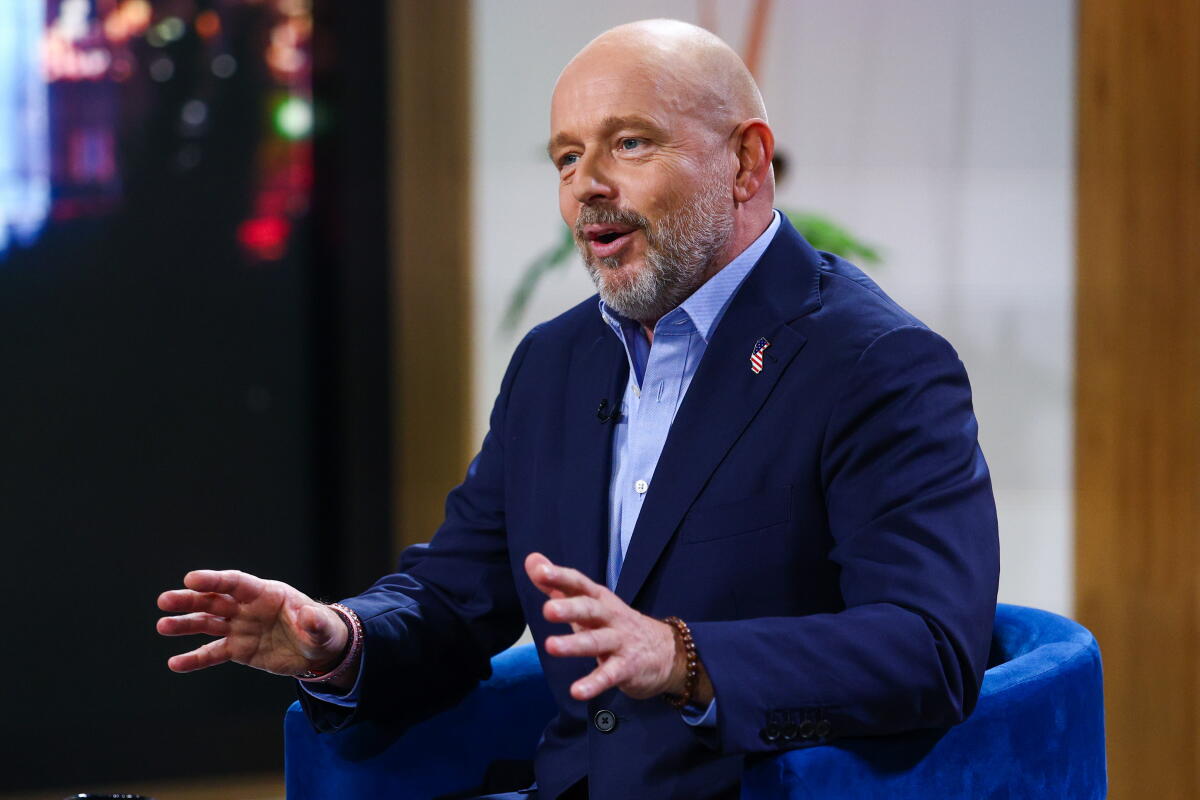
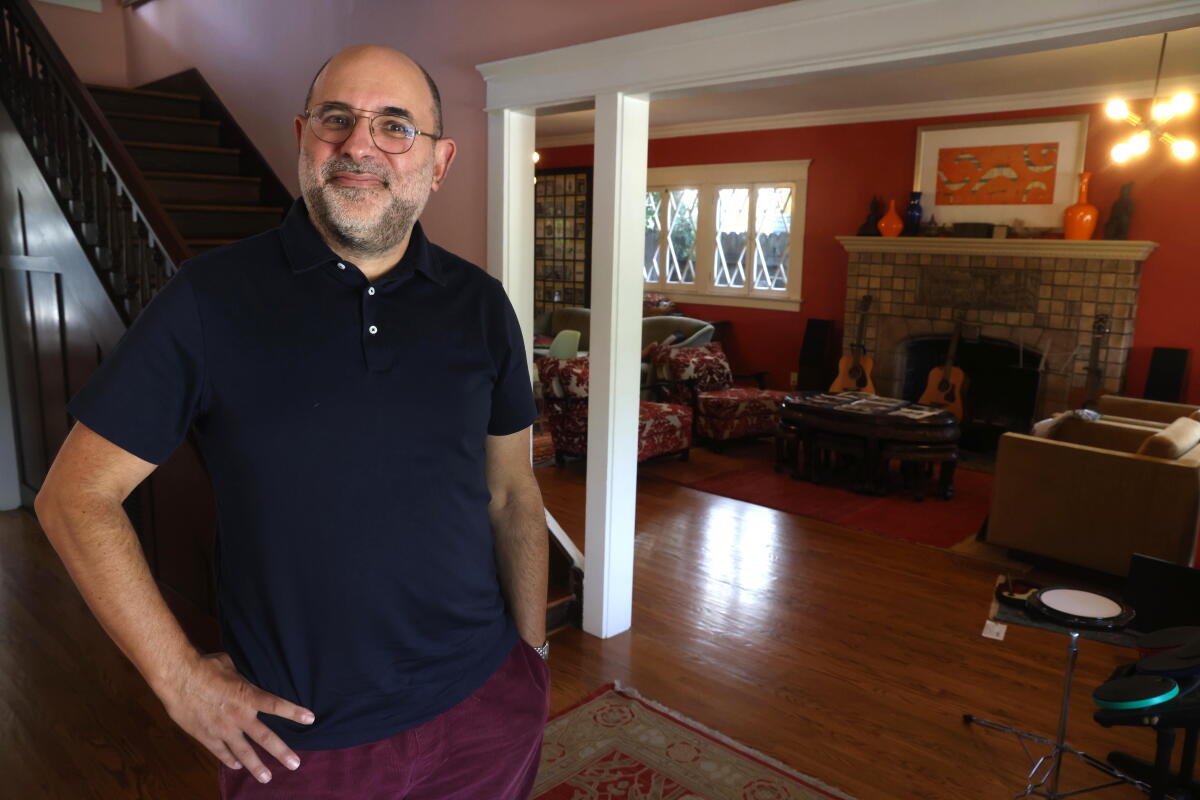
JUNEAU, Alaska — In the thick of Alaska’s primary election season this summer, independent Bill Hill took a break from his U.S. House campaign to return home to Bristol Bay.
The world’s biggest sockeye salmon run was beginning, and that meant he needed to get back to work.
“I told my team that I have got to fish,” he said, adding: “Commercial fishing is the way that we pay the bills.”
Hill, 57, grew up in a tiny southwest Alaska village where he said his family had no phone and had to haul water from a nearby lake for cooking and bathing. Today, while he no longer has to fetch water, his lifestyle is not much different. He lives in a remote fishing community of about 430 people that he has called home for nearly half his life.
A retired teacher and school administrator, Hill has positioned himself as a working-class candidate who can relate to Alaskans’ frustrations with high fuel and other costs. He has made affordability and pushing back against billionaires a central theme in his campaign against Republican Nick Begich, who’s seeking a second term in Congress.
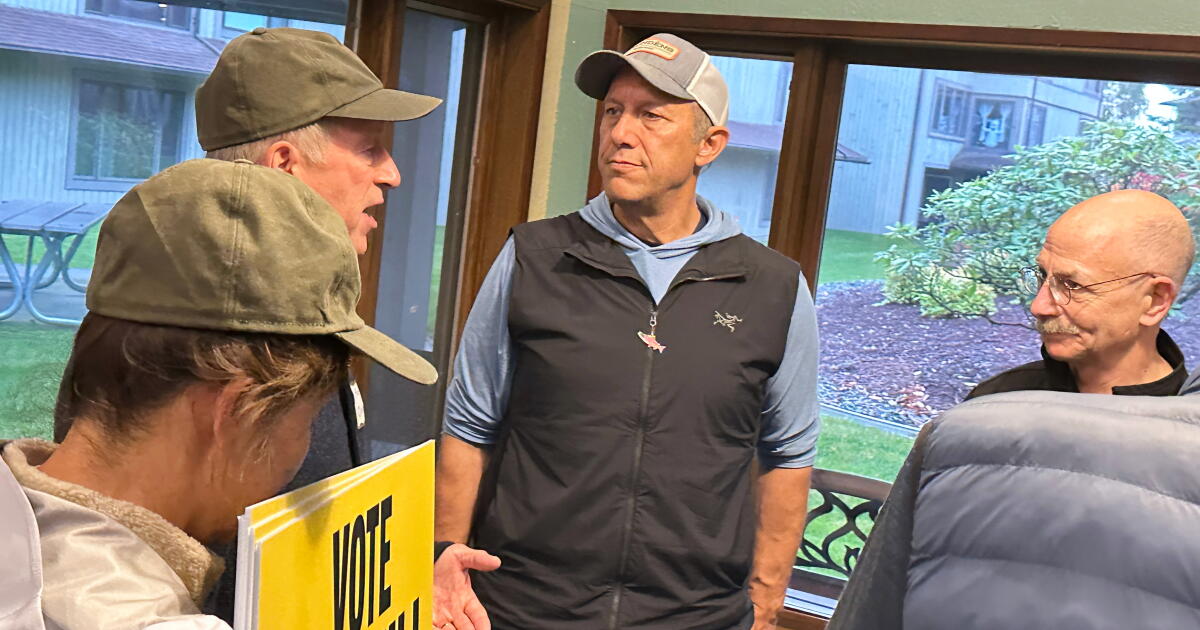
“We are pedal to the metal, making sure that every Alaskan knows about this campaign, every Alaskan knows what we stand for and every Alaskan knows that it’s really one of them going to Congress,” Hill told people at a campaign event this week in Juneau, wearing his standard campaign uniform of jeans, a zip-up vest and cap with a fishing company logo. “I need your help getting there.”
The race has become a concern for Republicans as they are trying to hold onto their majority in the U.S. House. Vice President JD Vance held a rally this week for Begich and Dan Sullivan, the U.S. senator who also is in a tight reelection race. President Trump is scheduled to do another in the coming week.
Begich and Republican political action committees have ratcheted up ad spending in the House race since the primary.
Planes, ferries and four-wheelers on the campaign trail
Hill, a first-time candidate who is Alaska Native, faces an incumbent from a prominent family long associated with the state’s politics. Begich’s late grandfather once held the state’s only U.S. House seat. Begich’s uncle Mark was a U.S. senator. Both were Democrats. Nick Begich is a lifelong Republican and has aligned himself with Trump, who has carried Alaska in his White House runs.
Hill’s campaign said he has traveled more than 20,000 miles in the state, including by plane, ferry and all-terrain vehicle, to introduce himself to voters and promote his message.
Begich’s name recognition presents a hurdle for Hill’s campaign, but some Democrats tried to clear a better path for Hill. One suspended his campaign before the August open primary and endorsed Hill. Two other Democrats with virtually no name recognition withdrew after the primary despite being in line to advance.
One candidate registered as a Democrat remains in the top four, Eric Hafner. He has no apparent ties to the state and is incarcerated in New York.
Hafner received 3.8% of the vote, enough to qualify for the ranked vote general election on Nov. 3. His submitted candidate biography appearing in state election materials makes no reference to his stint in federal prison, where he is serving time for making threats against police officers, judges and others.
Hill’s campaign has shared stickers showing Hafner in an orange jumpsuit and calling him a “fake ‘Democrat.’”
“We want to make sure that the Alaskan people are well-informed,” Hill said.
Begich gets support from Trump and the U.S. House speaker
The contest has received national attention, with spending by groups that include the National Republican Congressional Committee and House Majority PAC, which seeks to flip the U.S. House to Democrats.
In early August, U.S. House Speaker Mike Johnson, R-La., held a rally for Begich that was closed to reporters. Vance called Begich a “machine” and effective legislator during his rally in Fairbanks, where Vance also gave support to Sullivan, who faces a challenge from Democrat Mary Peltola, a former congresswoman.
Trump has cited Begich’s support of his signature package of tax breaks, social service cuts and immigration enforcement that was passed last year. The president plans to headline a rally Tuesday in Wasilla, hometown of Sarah Palin, the party’s 2008 vice presidential nominee.
Hill said the visits show Republicans are nervous.
“I was not going to get into this race to waste people’s time, to waste people’s money,” he said. “I did my due diligence before jumping in to ensure that there was a path to victory.”
Begich’s campaign did not respond to messages from the Associated Press. On social media, the campaign has highlighted events such as Begich’s visit to the Alaska State Fair and recently has taken swipes at Hill.
Zach Bannon, an NRCC spokesperson, said Begich has delivered “commonsense wins for Alaska,” including support of expanded oil and gas development. He called Hill a “far-left Democrat.”
Hill was endorsed by Democrats but asserts his independence
Hill, who was endorsed by the Alaska Democratic Party, said he is a lifelong independent. He said he will not be beholden to a “party boss” or party line, and he rankled some voters earlier in the campaign by not explicitly saying which party he would caucus with in the House if he were elected.
He has said he is willing to work with anyone on what is best for Alaska. He also has called for bans on congressional stock trading and for limiting the influence of money in elections.
Hill said he wants to help build coalitions, saying he “can be a big part of a small group that makes big changes.”
Democrat Bill Brown came to the Juneau event planning to vote for Hill but wanting to talk with him directly. He said they aligned on numerous issues, including support for the environment, schools and ending “forever” wars.
The retired economics professor said policy is important, but in this political moment he finds himself “most interested in the integrity of the candidate. Bill Hill convinced me on that issue.”
Hill, who is Dena’ina Athabascan, said the top concerns he hears about from Alaskans are the price of fuel and overall cost of living. He said he had to fly home earlier this year and pump fuel oil from the textile manufacturing business he runs with his wife and bring it back to his house in a barrel because the community had run out.
He said fuel prices jumped from about $6.70 per gallon to about $9 per gallon after a barge shipment to his town earlier this year. Prices also have been higher elsewhere, particularly in communities accessible only by air or water. On social media, Hill’s campaign calls out Begich for his support of the Iran war as it posts photos of fuel prices around the state.
Steve Davis, a voter at Hill’s Juneau event this week, called him authentic and a “really good dude.” He said he was drawn to Hill in part because he wants to see Congress reclaim its oversight role. Hill drew applause during the gathering when he said Congress must reassert itself as a separate but equal branch of government.
“We don’t need a unified executive, we don’t need kings,” Davis said. “We need a Congress that actually functions.”
In rural Modoc County, in California’s remote northeast corner, Republican gubernatorial candidate Steve Hilton donned a beige cowboy hat and climbed atop a horse.
Riding through a grassy field, with his dress shoes in the stirrups, Hilton lamented to a camera that California was “completely being ruined by killjoy bureaucrats” who put too many rules on fun stuff like beach fire pits and bars that stay open extra late.
In coastal San Luis Obispo County, Hilton boarded a bright yellow dune buggy at the Oceano Dunes State Vehicular Recreation Area and called the California Coastal Commission “idiots” for trying to end off-road beach driving.
And in the Central Valley, he waved the ceremonial green flag at a stock car race at the Madera Speedway, where he was named grand marshal of the annual Harvest Classic. (The designation caused a minor uproar, prompting the operator of the racetrack to make a fake online concession menu that offered a hot dog and soda for $6 for Republicans and $17.50 for Democrats.)
If it seems like Hilton — the British immigrant and former Fox News talk show host — is just about everywhere, taking just about every media interview that comes his way, well, that’s the point, he says.
He has logged thousands of miles on the proverbial campaign trail, visiting all 58 counties in his quest to lead the nation’s most populous state, where no Republican has been elected to statewide office in 20 years.
Meanwhile, his heavily favored — and far more staid — opponent, Democrat Xavier Becerra, has kept a comparatively low profile, agreeing to just one debate with Hilton and holding few public events, mostly in urban areas.
In a phone interview while driving through Los Angeles, Hilton said: “Whether I’m in Humboldt or Del Norte or Siskiyou County, my joke is, when people say, ‘Where do you live?’ I say I live in the Hampton Inn somewhere in California because we’re basically in a different place every night.”
The odds are against him.
Sure, California produced GOP presidents Richard Nixon and Ronald Reagan. But today, Democrats outnumber Republicans nearly 2 to 1 in the state, and the current White House occupant shares a mutual disdain with the vast majority of Golden State voters.
Hilton was endorsed during the primary by President Trump, who suggested at a campaign rally this month that Iran could “take out” Los Angeles and San Diego, drawing swift outrage from both Democrats and Republicans.
Hilton has tried to walk a fine line, appealing to the 6 million Californians who voted for the president in 2024 while simultaneously downplaying Trump’s support.
This summer, Hilton took out full-page ads in The Times and the San Francisco Chronicle asking: “Can you be anti-Trump and still vote for me?”
“Yes, I’m the Republican,” it said. “The ‘Fox News guy.’ Endorsed by Trump. But this election is not about who you hate in Washington. It’s about what you love here.”
Corrin Rankin, chairwoman of the California Republican Party, said that 16 years after the state’s last Republican governor, Arnold Schwarzenegger, left office, “it’s safe to say Democrats own all the problems in California.”
“You can’t blame Trump for what’s going on here in California,” she said. “We feel really good about Steve Hilton’s campaign. He is working so hard, up and down the state.”
Hilton has blasted California Democrats as entitled, saying they assume Becerra will cruise to victory in the race to replace termed-out Gov. Gavin Newsom simply because he has a “D” beside his name on the Nov. 3 ballot.
Hilton frequently quotes a September podcast interview by Los Angeles’ Democratic mayor, Karen Bass, who mocked his British accent and said: “The governor’s race right now is over. Our governor’s name is Xavier Becerra. You don’t need an election on Nov. 3. A Republican cannot win in this state.”
Hilton told The Times that Democrats “feel they don’t have to earn your vote. … They can deliver results that are bad as ever, and they don’t need to work hard to deliver results for people or earn their support. And I think it’s that attitude that is going to be their downfall.”
Steve Hilton has the support of 33% of likely California voters, according to a recent poll, while rival Xavier Becerra has 58%.
(Jason Armond / Los Angeles Times)
Becerra is a former member of Congress who represented Los Angeles, and he was the California attorney general and U.S. Health and Human Services secretary under President Biden. He has the backing of 58% of likely California voters, compared with 33% who support Hilton, according to a poll released late last month by the UC Berkeley Institute of Governmental Studies and co-sponsored by The Times.
The poll showed that voters’ top concern was reducing the state’s high cost of living — followed by fighting Trump administration policies.
“Hilton is trying to win an election, so he tries to frame himself as someone who can appeal to the broader electorate,” Underland said. “But at the end of the day, he has the albatross around his neck, which is Trump, who is openly hostile to California.”
Hilton cuts a colorful and pugnacious figure on the campaign trail. He eschews ties and jackets, favoring T-shirts with punchy phrases like, “$ave With Steve” and “WAKE UP” superimposed on a California license plate — a reference to his proposal to eliminate the state’s Department of Motor Vehicles and slash vehicle registration fees, which would cut billions in state revenue.
He wears one bracelet with the name of slain right-wing activist Charlie Kirk, whom he called an “incredibly close friend.” Another reads, “Save Girls’ Sports,” calling back to this spring, when he traveled to the state high school track and field championship in Clovis to protest the participation of a transgender athlete.
Republican nominee Steve Hilton protests transgender athletes’ participation in girls’ sports during a May 29 news conference in Clovis, Calif.
(Tomas Ovalle / For The Times)
Hilton, 57, was born in London to parents who fled conflict in their native Hungary during the 1956 uprising against the Soviet-controlled communist government and later anglicized their surname, Hircsák, to Hilton.
He was a senior advisor to British Prime Minister David Cameron, a member of the Conservative Party, though the men’s once-close friendship never recovered from Brexit, Britain’s withdrawal from the European Union. Hilton supported it; Cameron did not.
Hilton earned a reputation as eccentric but savvy, pushing the Conservative Party to embrace same-sex marriage and more climate-friendly policies. Dubbed “the barefoot revolutionary” for his refusal to wear shoes, Hilton was satirized on the BBC political sitcom “The Thick of It” as Stewart Pearson, the Tories’ “eco-friendly, media-savvy, blue-sky-thinking” communications director.
He and his family moved to California in 2012 after his wife, Rachel Whetstone, was promoted to lead global communications at Google. For six years, he hosted “The Next Revolution,” a weekly Fox News show from which Trump regularly tweeted clips.
In 2015, the couple purchased their home in the Silicon Valley city of Atherton, one of the wealthiest ZIP Codes in the U.S., for $12.5 million, property records show.
Whetstone now leads communications for Sierra, an AI startup founded by OpenAI board Chairman Bret Taylor and Clay Bavor, who met while working at Google. Hilton and Whetstone’s 2024 tax returns show they had a combined household income of $7.5 million, which included his reported earnings of $250,000 from Fox News and her $6.7 million from her then-employer, Netflix.
Hilton became a U.S. citizen in 2021 and last year renounced his British citizenship.
He finished second in the June 2 primary behind Becerra. Under California’s top-two primary system, the first- and second-place finishers, regardless of party, advance to the general election.
The pack of Democratic candidates was so large that party leaders initially urged struggling candidates — including Becerra — to drop out to avoid splitting the vote. Becerra shot to the top of the polls when then-Rep. Eric Swalwell, a front-runner at the time, dropped out of the race after he was accused of sexual assault and misconduct.
Republicans coalesced around Hilton after the president endorsed him over his GOP rival, Riverside County Sheriff Chad Bianco, a staunch Trump supporter who later said the endorsement made Hilton unelectable.
Kim Nalder, director of the Project for an Informed Electorate at Sacramento State, said it is exceedingly difficult for Hilton to distance himself from Trump and the Fox News brand.
“If you had a different brand of Republican they might have a shot,” given the discontent in the state over myriad issues, she said. “But Trump is so politically radioactive in California right now that it is an effective technique to tie this particular candidate to him.”
California’s population growth is stagnant after years of pandemic-era losses, with immigration lagging amid the Trump administration’s crackdown and many residents leaving the state for more affordable parts of the country.
Greg Perrone, past president of the conservative Greater Bakersfield Republican Assembly, said he was impressed with Hilton’s policy knowledge and the amount of detail in his economic plans.
Steve Hilton, right, chats with Sir Richard Branson before a White House dinner with then-British Prime Minister Cameron and President Obama in 2012. Hilton was an advisor to Cameron.
(Susan Walsh / Associated Press)
“There’s a real concern that the current state of the economy is worse than people expected,” Perrone said. “A lot of people hung their hat on Donald Trump saying he was going to bring down prices, and that just has not happened. There’s a lot of angst.”
Perrone said he remains a Trump supporter, though he has been frustrated by the frenetic roll-out of tariffs that, he said, hurt many businesses. While he has been annoyed that Becerra, in his view, has focused more on the president than laying out his own detailed economic plans, he acknowledged that the strategy plays well in blue California.
Christopher Cole, former chairman of the Lassen County Republican Party, said that in his rural corner of the state, he has seen Trump banners that have hung since 2016 start to come down because people are angry about the Iran war, the high cost of fuel and the economy.
“When Trump stupidly endorsed Hilton, it was the kiss of death for any down-ticket Republican,” said Cole, whose county voted for Trump on 76% of the ballots in 2024, the highest percentage in the state, and was the only one to support Bianco in this year’s primary.
“Hilton is a carnival barker and a very wealthy man,” said Cole, who supported Bianco. “You can’t run a multimillionaire when people are struggling to put food on the table.”
Hilton has made a slew of campaign promises to lower the cost of living, including having no taxes on income below $150,000, lowering energy bills by slashing climate-friendly regulations imposed by Democrats, and having $3 gasoline (though governors cannot directly set the price at the pump, which is driven largely by global crude oil supply and demand).
He has tried to channel the state’s discontent into persuading voters to “try something different” by voting Republican.
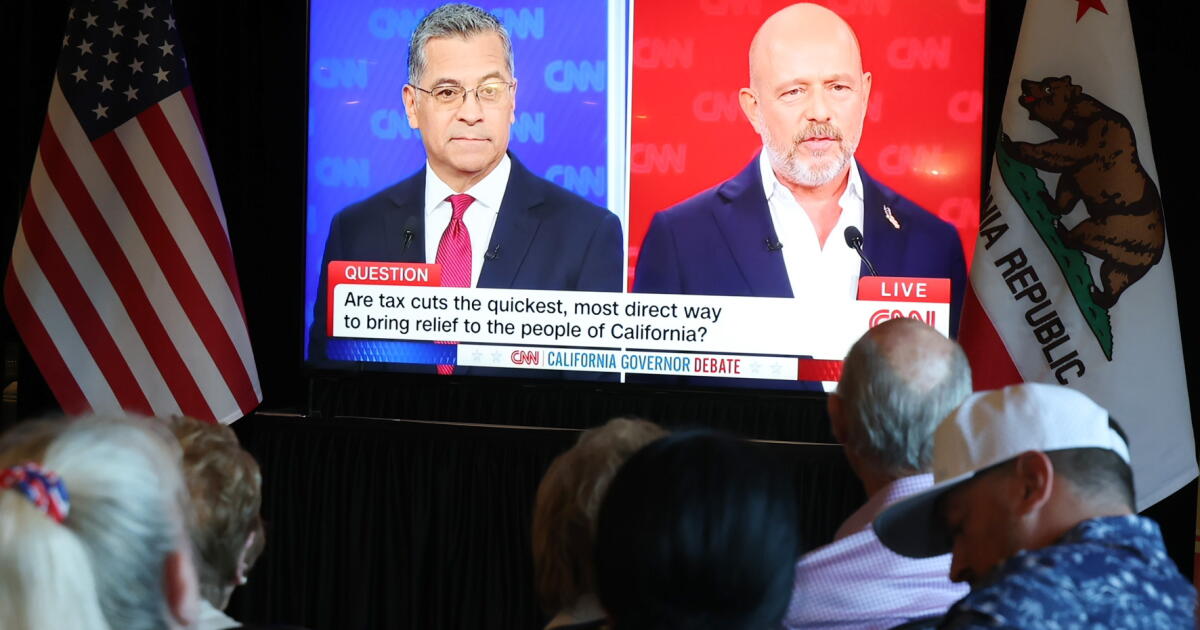
During the gubernatorial race debate on CNN last month, Hilton quoted a former Biden domestic policy advisor who reportedly called Becerra a “bitch-ass,” and his campaign promptly launched a website, bitchassbecerra.com, outlining alleged failures of the politician known for his calm demeanor and decades of government experience.
“I think Hilton got dealt a bad card with Becerra making the runoff,” said Rob Stutzman, a Republican strategist who was Schwarzenegger’s spokesman. “It’s difficult to get anyone outraged about Becerra because he is perfectly boring. He worked for Joe Biden — maybe that upsets some people? — but you can’t associate him with any bizarre, woke policies like you could Kamala Harris or Gavin Newsom.”
Hilton’s campaign this month released a provocative, sexually suggestive ad titled “Just Try It!” in which two young women sit on a bed in a candlelit room. An LGBTQ+ pride flag hangs on the wall, and they’re seemingly talking through one’s first romantic encounter with another female.
In a recent poll, voters rated California’s high cost of living as their top concern, followed by fighting Trump administration policies. Above, people gather in North Hollywood to watch the Sept. 30 gubernatorial debate.
(Jason Armond / Los Angeles Times)
Wearing a T-shirt that says, “RESIST,” the anti-MAGA mantra, the first-timer nervously says: “I’ve just never done anything like this before. Like, what if my dad finds out?”
The other woman holds her hand as she fills out a ballot for Hilton then says, “Now lick it,” referring to the mail ballot envelope.
Some conservatives condemned the ad, saying it promoted lesbianism. Liberals criticized it, too, saying it was insensitive to the LGBTQ+ community.
The day the ad launched, he told The Times: “I think there’s a very strong sense that things aren’t working in California, and my argument is: ‘OK, let’s try something different.’”
Later, he said he never meant to offend anyone with the risqué ad, which did, after all, do its job in racking up millions of views online — coveted and invaluable publicity for a long-shot California Republican.
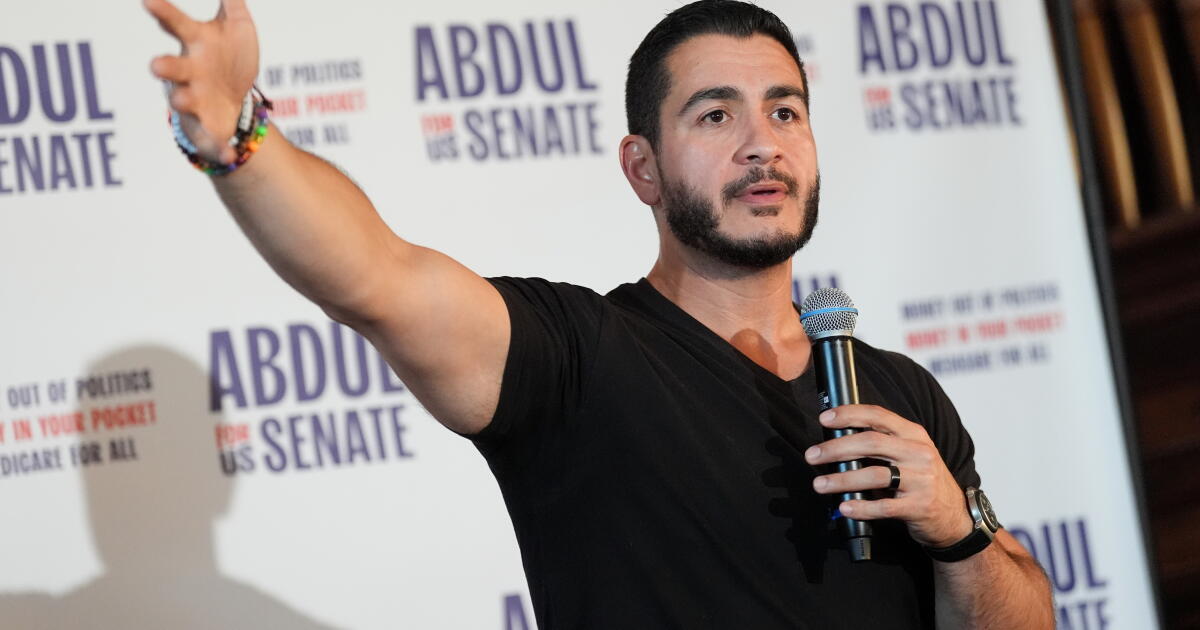
PORT HURON, Mich. — Abdul El-Sayed, holding a microphone and wearing his signature V-neck black T-shirt, slowly shook his head as a woman at his town hall described how she burned through her savings after undergoing emergency brain surgery.
“I’m really sorry for your experience, and I hope that you’re on the mend,” said El-Sayed, the Democratic nominee for U.S. Senate in Michigan, after outlining proposals for guaranteed healthcare and paid leave.
Later that night, while talking to reporters in the basement below the theater, his tone was far different. El-Sayed called his Republican opponent, Mike Rogers, a “coward” and said President Trump was “afraid” to visit the state, and he dismissed as “dumb” a question about whether Iran or Israel posed a greater threat to the United States.
The exchanges captured two sides of a candidate who is the central figure in one of the nation’s most consequential Senate races. El-Sayed would be the country’s first Muslim senator, and he’s crisscrossing the state to counter a Republican effort, fueled by tens of millions of dollars, to portray him as a dangerous radical. But he has also embraced his confrontational side by mocking and taunting Trump and Rogers.
“If they want to make me the main character in the midterms, I’m not shying away from it,” El-Sayed said in an interview. “Run against me. See how well that works out for you.”
El-Sayed’s resolute confidence rubbed some Democrats the wrong way during a divisive primary against Rep. Haley Stevens. The former public health official has shown little interest in toning it down, defending his progressive agenda and adversarial approach toward Republicans, emboldening supporters who believe he’s the right candidate for an angry electorate that has lost faith in the political establishment.
But his doubters fear he’ll cost Democrats control of the Senate by failing to unite his party’s disparate factions ahead of November.
“If you want their votes, you have to make nice with those people, and he’s not really doing that,” said Michigan political strategist Adrian Hemond, who supported Stevens. “Maybe he doesn’t have to. The entire theory of this candidacy has been he can remake what the electorate looks like.”
A Republican target
Even though Michigan backed Trump twice in his three presidential campaigns, no Republican has won a Senate race in the state since 1994.
The political landscape is no friendlier this year. Trump started an unpopular war with Iran, leading to higher gas prices and related inflation. Rogers has opted for a low-key campaign with fewer public events than El-Sayed as he tries to make the race all about his Democratic opponent.
As of Saturday, Republicans had outspent Democrats by $78 million to $63 million in the Michigan Senate race, according to AdImpact, which tracks political advertising. Around $40 million in Republican spending has gone toward negative advertisements, compared with around $20 million from Democrats.
The ads portray El-Sayed as “dangerously radical” and “too extreme,” highlighting his past calls to defund the police and relax immigration enforcement. Others tie him to Hasan Piker, a popular online streamer with whom El-Sayed has appeared and who has drawn criticism for past comments, including saying that “America deserved 9/11.”
On Friday, Rogers appeared alongside Louisiana Sen. John Kennedy, who told reporters that El-Sayed “sleeps in a Bin Laden jersey.” Rogers laughed.
Vice President JD Vance has called El-Sayed “evil.” In one social media post, Trump shared a photo of himself with First Lady Melania Trump alongside a photo of El-Sayed and his wife, who wears a hijab, with the caption: “Two VERY DIFFERENT America’s.”
Late Wednesday, Trump referred to El-Sayed as “Mohammed” and said he “goes back to the days of the Jihad.”
El-Sayed has hardly backed down. At the campaign stop in Port Huron, he taunted Trump and invited him to visit Michigan, suggesting Rogers and other Republicans were afraid the president would hurt their chances.
“Donald, if you’re watching, don’t wuss out, man,” El-Sayed said.
And he responded to Kennedy’s attack by suggesting the Republican is in the Ku Klux Klan.
“That’s rich coming from someone who wears his bed sheets out at night,” El-Sayed posted on social media.
A personal touch with voters
Before the Port Huron town hall, El-Sayed worked his way down a line of people who couldn’t fit inside the theater, shaking hands, taking photos and stopping for conversations.
Jeff Petrucella and his wife, Alice, traveled from Macomb County to see El-Sayed. They described themselves as politically “middle of the road” and said they had voted Republican in the past.
“I’m pretty done with the Republicans right now,” Jeff said.
Alice said she was “looking for a change that is better for my granddaughters,” pointing to El-Sayed’s support for Medicare for All. Nor was she put off by his more confrontational appearances on Fox News.
“I think he expresses himself well. You can tell he’s a well-spoken, educated man,” she said.
Pat Kreiner was among those who waited nearly an hour to see El-Sayed. Her children had persuaded her to support him in the Democratic primary.
“My son said to me, ‘I have been living with this trickle-down economy since the day I was born,’” Kreiner said. “‘It doesn’t work for me.’”
Kreiner also expressed anger about Trump’s trade war with Canada, just across the river from Port Huron.
“We are heartsick about our neighbors,” she said. “They used to come over a lot. We don’t see them now.”
Visiting smaller towns such as Port Huron has become central to El-Sayed’s campaign, with his team recently saying he’s held more than 500 events in over 100 cities across the state.
“Go everywhere. Talk to everyone. That’s what we do,” El-Sayed said in an interview.
The personal approach has not erased all the skepticism surrounding El-Sayed, including within his party.
His criticism of Israel and association with Piker have raised concerns among some Jewish Democrats. El-Sayed has held a series of private gatherings with undecided Jewish voters as he works to win their support.
He has also sought to strengthen his standing with Black voters. In the Democratic primary, Stevens drew more support in Wayne County, home to Detroit and its large Black population.
Ahead of Thursday’s debate, El-Sayed attended two events with Black leaders before stopping at a Black barbershop, where he moved from chair to chair talking with customers. He stopped at one point to speak with a pregnant woman, congratulating her and asking when her baby was due.
“November 8th? Make sure you vote early, huh?” the candidate joked.
A race about more than just Michigan
While El-Sayed has spent much of his campaign trying to win over Michigan voters, his candidacy has taken on significance far beyond the state. Republicans have made him a symbol of what they say is an increasingly radical Democratic Party, while progressives see his campaign as a chance to prove their politics can win in a closely divided state.
At a New York City fundraiser on Oct. 5, Rep. Alexandria Ocasio-Cortez cast his campaign as a test for progressives nationwide.
“If Abdul can win in Michigan, anybody can win anywhere,” said the New York Democrat, a potential presidential candidate.
Ocasio-Cortez plans to campaign with El-Sayed in Michigan this week, followed by former President Obama on Oct. 24.
The national stakes have also drawn renewed opposition. United Democracy Project, a super PAC affiliated with the pro-Israel group AIPAC, disclosed an initial $94,000 expenditure against El-Sayed on Friday, after spending nearly $30 million to oppose him in the Democratic primary.
And El-Sayed, while maintaining that the election should focus on Michigan voters and their economic struggles, has also embraced the larger implications of his candidacy.
“I am grateful for your support,” he told the audience at the New York fundraiser, according to remarks obtained by the Associated Press. He said he had two goals: “pick up a U.S. Senate seat” and “change the nature of our politics for the better.”
At the Republican Party’s midterm convention, President Trump said he would make his crusade against transgender rights a major campaign issue ahead of the Nov. 3 election — calling the message that “men should not be playing in women’s sports” one of his party’s “great sound bites of all time.”
During a recent campaign trip, Gov. Gavin Newsom, a longtime LGBTQ+ advocate and likely Democratic contender for president in 2028, stood by his remark last year that allowing transgender athletes to compete in girls’ sports is “deeply unfair,” saying, “I haven’t been able to figure out how to make it fair from my perspective.”
For the second election cycle in a row, the rights of transgender people have taken center stage politically, despite their accounting for only about 1% of the U.S. population and many voters identifying other issues as far more important — splitting Republicans and Democrats, but also Democrats among themselves and putting the party on the defensive.
Transgender athlete AB Hernandez, third from right, sits with other athletes at the CIF State Track Championship finals in Clovis on May 30, 2026.
(Tomas Ovalle / For The Times)
The politics are part of a much broader, international battle playing out in education, sports and the law, from local California classrooms and high school sports to the Olympic stage and the U.S. Supreme Court. Polling for years has shown most Americans oppose discrimination against transgender people, but also that a majority — including a substantial portion of Democrats — oppose transgender athletes participating in girls’ sports and children receiving gender-affirming care such as surgery or puberty blockers.
Republicans are pushing a well-funded message that transgender rights should be dismantled across the board, in healthcare, education, sports, the military and public spaces such as restrooms. Conservative mega-donors such as Elon Musk have spent millions amplifying that message in competitive races from Alaska to Ohio to Texas.
And to some degree, those tactics have worked. While many Democrats have ardently defended transgender rights, particularly in California, others in the party have sided with Republicans or softened their support.
Democratic Senate candidate James Talarico appears with Jeffrey Epstein abuse survivors in Dallas on Sept. 10.
(Anja Schlein / Dallas Morning News )
James Talarico, the Democratic U.S. Senate candidate in Texas, backpedaled from past votes by saying young transgender athletes shouldn’t be allowed to play “if it risks safety or fairness,” while others including Rob Sand, a candidate for Iowa governor, and Rep. Marcy Kaptur (D-Ohio) have said they shouldn’t play.
Such messaging has dismayed transgender people and their families, as well as LGBTQ+ rights groups who have been trying to refine Democratic messaging on trans issues since Vice President Kamala Harris — another longtime LGBTQ+ advocate from California — responded to Trump’s anti-trans attacks in 2024 with a message some considered muddled.
Imara Jones, a transgender journalist and founder of TransLash Media, a platform built to spotlight trans people’s own experiences, said the party’s conflicting messaging “underscores the degree to which the Republicans have actually successfully weaponized trans issues.”
“You’re seeing a really sharp political calculus among Democrats,” Jones said, with those “in tight races, where they need to have Republican votes,” bending one way, and others who “want to make a statement about principle” and defending LGBTQ+ rights moving in the other.
Many Democrats in California say they believe the issue is a moral one and that Democrats only hurt themselves by ceding ground on human rights.
A volunteer for Toni Atkins, the former president pro tempore of the California State Senate, is silhouetted holding a Pride flag at the Harvey Milk Coachella Valley Diversity Breakfast, at the Palm Springs Convention Center in Palm Springs Thursday, May 8, 2025.
(Allen J. Schaben / Los Angeles Times)
“The solution is not to be ambiguous, but to be firm that we support basic human rights and the basic humanity of trans people,” said state Sen. Scott Wiener (D-San Francisco), a leader on pro-LGBTQ+ legislation running to replace retiring Rep. Nancy Pelosi (D-San Francisco). “Then go on to talk about the big issues facing our country, like this illegal war, like the fact that Congress has done nothing to regulate AI, like the explosive cost of energy and child care and housing.”
A national conversation
Trump has signed executive orders to bar transgender athletes from competing in girls’ sports, prohibit federal funding for gender-affirming care for youth, oust transgender service members from the military and deny recognition of transgender and nonbinary identities on critical documents such as passports.
The Justice Department has sued California and other states over their trans-inclusive sports policies, and successfully threatened large hospitals into ending gender-affirming care programs. The Centers for Medicare and Medicaid Services barred federal Medicaid spending on gender-affirming medication or surgeries for minors.
Martin Makary, commissioner of the Food and Drug Administration, speaks at Health and Human Services headquarters in Washington on Dec. 18, 2025.
(Stefani Reynolds / Bloomberg)
Trump campaigned on such policies, and he and other Republicans clearly see them as helpful in the midterms. In his convention speech, Trump said he’s been surprised more Democrats haven’t abandoned transgender rights given polling showing a majority of Americans oppose transgender athletes in girls’ sports.
“They say it’s an 80/20 issue,” Trump said, in an apparent reference to a January 2025 New York Times/Ipsos poll that found 79% of respondents believed transgender athletes should not be allowed to compete in women’s sports. More recent polls have shown a smaller majority opposed.
Demonstrators at a Rainbow Families Action march in Emeryville, Calif., on Dec. 8, 2025.
(Jessica Christian / San Francisco Chronicle )
Arne Johnson, a Bay Area father of a transgender child who helps run the advocacy group Rainbow Families Action, said being targeted by Republicans is scary, but watching Democrats “find ways to be more flexible about the rights of human beings” has been profoundly disappointing.
But he said he’s also been encouraged by some more recent polling showing Americans moving back toward the middle on transgender rights, which he believes is in part due to people being deluged with anti-trans ads getting frustrated that the political conversation isn’t focused on issues they care more about, like affordability and healthcare.
Ramiro Sarmiento, a spokesperson for the Human Rights Campaign, which has tracked at least $50 million in anti-trans political ads this cycle, agreed, saying, “MAGA wants to talk about trans kids because they’re losing the conversation voters actually care about.”
Conservative groups reject that framing. Many deny tht transgender people exist, while others say they are working to protect cisgender children or defend religious beliefs. They have also scoffed at Democrats who have changed their positions in the lead-up to the election, with the conservative American Principles Project accusing Talarico of only pretending to shift away from his “gender radicalism” on sports in order to win votes.
Allison Schuster, a White House spokesperson, said the Biden administration “spent four years pushing a radical agenda” of gender-affirming care for children, while Trump “pledged to restore common sense” and has since “delivered by consistently taking strong action to protect children from these dangerous, life-altering medical practices.”
The fight in California
In California, transgender athletes competing in youth sports has been raised as an issue in the governor’s race, where Republican hopeful Steve Hilton has rallied against their inclusion, and featured prominently in the races for the next state attorney general and the next state superintendent of public schools.
Transgender athlete AB Hernandez competes for Jurupa Valley High School at the 2025 CIF state track and field championships.
(Tomas Ovalle / For The Times)
Several Democrats running for Congress in the state have been criticized for their records on transgender rights, including San Diego City Councilmember Marni von Wilpert, who is seeking the redistricted congressional seat of departing Rep. Darrell Issa (R-Bonsall), as well as Reps. Adam Gray (D-Merced) and Derek Tran (D-Orange).
Christian Martinez, a National Republican Congressional Committee spokesperson, has accused Von Wilpert of having a “perverted agenda [that] pushes hormone treatments on kids,” and Gray of being “for they/them, not for Californians.”
Marni von Wilpert, a Democratic candidate for California’s 48th Congressional District, canvasses in a neighborhood Friday, May 29, 2026, in San Marcos, Calif.
(Gregory Bull / Associated Press)
California Atty. Gen. Rob Bonta’s office is fighting on multiple fronts to protect gender-affirming care and successfully rebuffed a Justice Department lawsuit over the state’s transgender sports policies. But pressure is coming not only from the Trump administration.
The California Interscholastic Federation, which oversees high school athletics, also revised its rules to ensure that transgender athletes in individual sports do not displace cisgender ones from rankings or medal podiums. And after local California teachers sued, the U.S. Supreme Court in March ruled against a controversial California student privacy law that precluded teachers from revealing a child’s interest in presenting in gender nonconforming ways in school to their parents if the child requested confidentiality, finding that the policy infringed on parents’ rights and the free exercise of religion.
Meanwhile, state lawmakers just passed at least a dozen measures aimed at bolstering LGBTQ+ rights, including by restoring an LGBTQ+ youth suicide and crisis hotline; helping discharged LGBTQ+ service members find housing and jobs; requiring California gender-affirming healthcare providers who are subpoenaed to inform Bonta’s office if they intend to respond; improving access to HIV prevention care and enhancing LGBTQ+ data privacy.
Newsom signed all those measures into law — his office said California “will not stand” for Trump’s “all-out assault on the LGBTQ community” — but vetoed a bill that would have barred future governors from allowing the extradition of abortion or gender-affirming care providers in California to states where such care is illegal, citing concerns about reduced executive discretion.
The 2026-27 state budget appropriated $66 million for gender-affirming care, including up to $30 million for underinsured patients in the Uncompensated Care Program, $26 million to assist organizations that provide such care and $10 million to cover care for poor children who lost it under the new Medicaid rules. Wiener called the latter a “short-term solution” that will protect kids while the state figures out a more permanent billing pathway under Medi-Cal.
A.W., a Bay Area mother of a transgender teenager who requested anonymity because she fears being targeted by the Trump administration, said her child’s gender-affirming care — a lifeline for him in recent years — was disrupted by the Medicaid rule change, and the state’s temporary fix was too little, too late.
A.W. said families like hers “shouldn’t have to make medical decisions based on politicians in Washington,” particularly for care so critical to her son and other kids. “If he had not had access to gender-affirming care, I don’t know where we would be,” she said. “It scares me to think about it.”
Times staff writer Dakota Smith contributed to this report.
WASHINGTON — With the midterm elections just over three weeks away, the fight for control of the U.S. Senate is intensifying in battleground states, as Democrats push into red regions and Republicans pour money into key contests.
Campaigns are entering a crucial stretch for persuading the independent voters who will probably determine outcomes in swing races. Nearly all of the most competitive Senate races are in states with significant swaths of people unaffiliated with either major party — the “kingmakers” in these high-stakes midterms, said Jeremy Gruber, an independent-voting expert.
“Independent voters are going to be deciding this election in every respect,” said Gruber, senior vice president of Open Primaries, an organization that advocates for states to open primary elections to unaffiliated voters.
The urgency around courting nonaligned voters has been on display at recent debates, in ads flooding the airwaves and in the campaign money pouring into key states. For Republicans, it has become an effort to put distance between themselves and President Trump; for Democrats, it’s often a rhetorical shift toward the center and away from the far left.
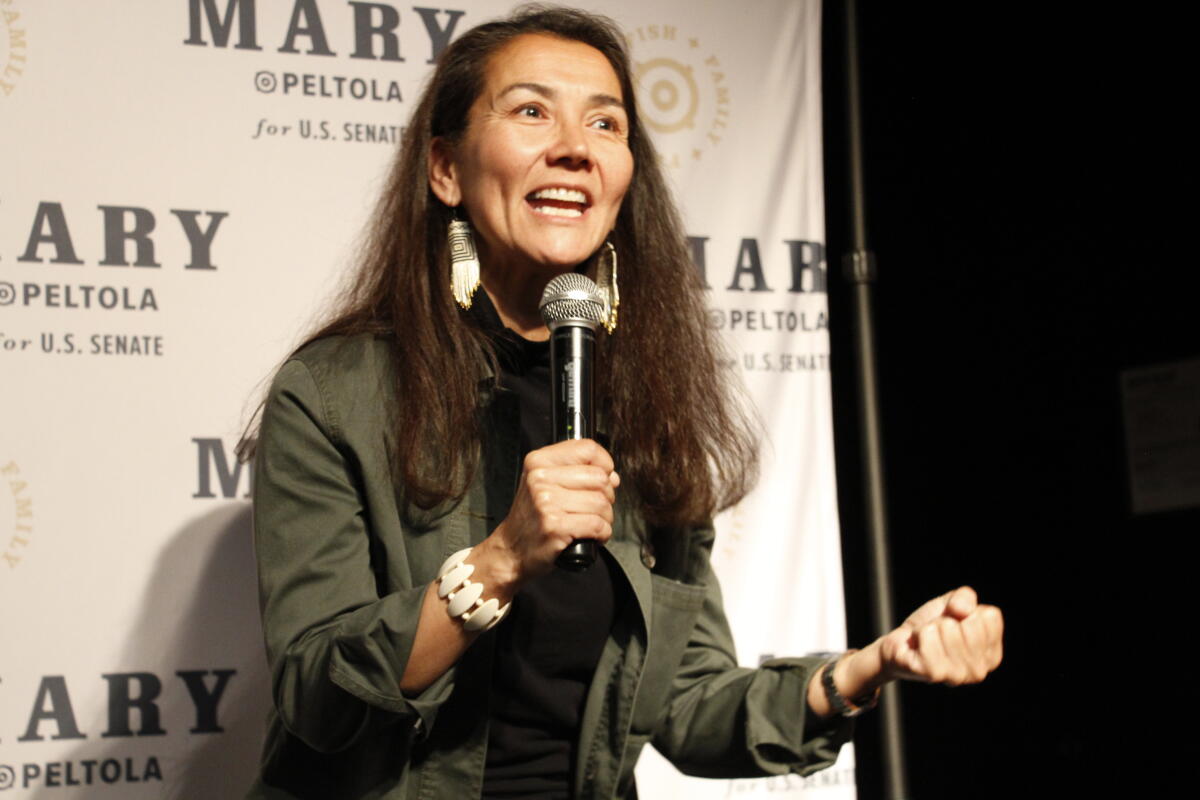
In Iowa, Republican Ashley Hinson used a Wednesday night debate to emphasize her willingness to break with Trump. In Kansas, Democrat Adam Hamilton is circulating a video in which he describes himself as both liberal and conservative. In Alaska, a GOP-backed ad blitz launched last week aims to persuade voters that Democrat Mary Peltola isn’t independent-minded.
Mary Peltola, a Democrat running for the U.S. Senate seat in Alaska, addresses supporters at an election watch party on Aug. 18 in Anchorage.
(Mark Thiessen / Associated Press)
Though many unaffiliated voters have made up their minds, those who remain undecided will begin making decisions soon, as mail ballots go out and early voting begins in some states.
“For Republicans who are running behind and are looking at a potentially devastating midterm election performance, what they really need to do is target the independents who lean Republican,” said Karen Kedrowski, an Iowa State University political scientist. “For Democrats in some place like Iowa … what they need to do is make it seem safe [to independents] to vote for a Democratic candidate.”
Unaffiliated constituents have long been key to victory in swing states, particularly where races are traditionally decided by small margins. They have been viewed as particularly persuadable this year, as public dissatisfaction with Trump’s economic policies puts the votes of swing voters who backed him in 2024 up for grabs.
Forecasters predict that Democrats are on track for the House majority and could hold a majority of gubernatorial seats for the first time since 2010. Though Senate control remains a toss-up, Democrats’ chances are viewed by forecasters to have significantly improved since the summer.
A set of New York Times/Siena polls reported last week showed Democratic candidates for the Senate ahead in Texas, Michigan, Alaska and Ohio and neck-and-neck in Kansas and Iowa — all states Trump carried in 2024. Republicans, meanwhile, are feeling increasingly bullish about their chances in Maine, New Hampshire and Minnesota, all states that went blue in the last presidential election.
Republicans hold a significant fundraising advantage, however, and party donors are pouring money into key races, hoping the spending can cut into the Democrats’ edge. By September’s end, GOP advertisers had more than doubled their spending compared with August, outstripping Democrats, according to tracker AdImpact. Among the nine Senate races considered the tightest by forecasters, Republicans have outspent Democrats in all, AdImpact reported.
But on Friday, the Cook Political Report, a leading election forecaster, moved 18 House races in Democrats’ direction, saying that heavy ad spending by Republicans has not begun to move the needle in their favor.
Democrats view themselves as in their “strongest position yet” to win the majority, Sen. Kirsten Gillibrand (D-N.Y.), who chairs the Democratic Senatorial Campaign Committee, said in a statement last week.
“In this final stretch of the election, Democrats will continue to vigorously campaign and fight for every vote across the expanded map,” Gillibrand said.
Republicans are confident about their ability to persuade voters in key states, said Bernadette Breslin, a spokesperson for the National Republican Senatorial Committee.
“Republicans will defend the Senate majority across key battlegrounds that have trended reliably red,” Breslin said, “with candidates like Mike Rogers [in Michigan] and Roger Marshall [in Kansas] winning over independents by exposing their Democratic opponents’ radical, unaffordable agendas.”
Along with the decisions of independent and swing voters, the midterm outcomes could also hinge on the level of turnout within each party, analysts say. If a portion of the party faithful stay home in a given place — for instance, disillusioned conservatives in Kansas or frustrated Black Democrats in Michigan — that could swing individual races, analysts said.
The number of independent voters reached a record high this year, with 45% of American adults identifying as political independents in Gallup polling. Equal shares identified as Republicans and Democrats, 27% for each party. The trend is partly driven by majorities of millennial and Gen Z voters choosing to be unaffiliated with either party, according to Gallup research.
Such voters make up a majority in Alaska and between 30% and 40% of all registered voters in Maine, Iowa, New Hampshire, North Carolina and Ohio. They account for about 29% in Kansas and about 16% in Texas and Michigan, according to state data compiled by the Independent Voter Project.
Across recent polls, independent voters have favored Democrats and expressed dissatisfaction with Trump. In a late September poll from Emerson College Polling, 66% of independents said Trump has done worse than expected during his second term in office.
State Rep. James Talarico, Democratic U.S. Senate candidate, listens at a food drive at the Frederick Douglass Human Services and Justice Center on Sept. 9 in Dallas.
(Julia Demaree Nikhinson / Associated Press)
In Texas, Democrat James Talarico led Republican Ken Paxton among independents by 32 points in a September poll by Texas Public Opinion Research. The Democratic candidate in Ohio, Sherrod Brown, led Republican Sen. Jon Husted by 27 points among independents in a CNN poll released Thursday.
In Kansas, where the Senate race has become unexpectedly close amid economic-driven anger with Trump, disapproval of the president’s performance among independents appears to be rubbing off on incumbent Sen. Roger Marshall, the Republican seeking reelection.
Fifty-two percent felt unfavorably toward Marshall and 62% disapproved of Trump’s performance, according to a recent Emerson College/Nexstar poll.
In those battleground red states, that creates a tough fight for both parties, analysts said. With control of the Senate hanging in the balance, candidates are duking it out in fundraising and on the campaign trail to win every last vote.
“Both campaigns are raking in ridiculous amounts of money … and they’re spending every penny because [they] have to,” said Wichita State University political science professor Alexandra Middlewood, referring to the Kansas Senate race. “We see that they’re really going to have to fight it out all the way to the end.”
Debates are another tool for candidates to reach independent voters, said Corwin Smidt, a political science professor at Michigan State University.
Democrat Abdul El-Sayed, left, and Republican Mike Rogers meet in a Michigan Senate debate Thursday night in Grand Rapids.
(Paul Sancya / Pool Photo)
In Michigan, where the Senate candidates sparred in their first debate Thursday evening, Rep. Mike Rogers, the Republican Senate nominee, has distanced himself from Trump twice in recent weeks, first calling for an end to the war in Iran and then releasing an ad last week denouncing the tariffs against Canada. Democrat Abdul El-Sayed, meanwhile, announced a rally with former President Obama, an appeal to mainstream voters.
“They’ve got to try to both win over people who have been paying attention, but also introduce themselves to the ones who haven’t been paying attention,” Smidt said.
Winning unaffiliated voters can require a tightrope walk for candidates who are faced with the dual tasks of appealing to their party base while persuading independent constituents.
In the final stretch of the campaign, candidates seeking independent votes should telegraph a willingness to admit their party’s flaws and an understanding that voters are turned off by partisan rhetoric, said Chad Peace, legal strategist at the Independent Voter Project, which advocates for open primaries.
“They have to communicate to those folks and try to meet them where they’re at,” Peace said. “[Independents] want the campaigns of persuasion, they don’t want to hear you tell me how bad the other candidate is.”
And, Gruber said, they want to be engaged with, not ignored.
“Independent voters,” he said, “are going to be responding to those candidates and parties that actually talk to them.”
ATHENS, Greece — U.S. Secretary of State Marco Rubio flatly refused to comment on a new report alleging that U.S. Ambassador to Greece Kimberly Guilfoyle engaged in improper and possibly illegal conduct before taking up her post.
Rubio told reporters that he would not discuss the allegations contained in a Wall Street Journal story that said Guilfoyle had asked a donor and supporter of President Trump to pay a $100,000 credit card bill just before her confirmation hearing, promising him access to administration officials if he did.
He spoke before leaving Greece, where he delivered a speech calling for European countries to return to what he described as their civilizational roots.
Rubio said he was aware of The Wall Street Journal’s report, which was published late Wednesday, but had no idea if it was true and he would not address it.
“You guys walk around thinking that because some source told you something and you reported it, it’s the gospel. It’s not the gospel. It’s not the gospel for me. That’s not the way we do things,” he said at the foot of his plane as Guilfoyle, who was there to see him depart Greece, looked on.
At a joint news conference with the Greek foreign minister on Wednesday, Rubio said he would not address the allegations while visiting a foreign country, but added, “Suffice it to say our embassy here is doing a great job. Our ambassador has been a strong ambassador here.”
The top two Democrats on the House Foreign Affairs and Senate Foreign Relations committees have called for an investigation into Guilfoyle, but Rubio would not say if he was prepared to open one.
Congressional Democrats already were looking into claims reported last month by the Wall Street Journal that Guilfoyle acted improperly while serving as the top U.S. envoy to Greece.
The Journal reported that Guilfoyle told guests at a reception that the U.S. could undermine the Greek government if it chose to, promoted the business interests of one particular Greek construction and energy company, and allowed its lobbyist into private diplomatic meetings.
Guilfoyle, a former Fox News Channel host and California prosecutor who was once engaged to Trump’s son Donald Jr., has denied any wrongdoing and Rubio has defended her before.
The Democratic National Committee has filed a lawsuit against United States President Donald Trump over television advertisements that were publicly funded and allegedly used to promote his political policies.
Ken Martin, who heads the Democratic Party’s leadership body, suggested in a statement on Wednesday that the ads were designed to bolster Republican odds in the upcoming November 3 midterm elections.
Recommended Stories
list of 3 itemsend of list
“Donald Trump is misusing millions of taxpayer dollars to fund pure propaganda ads in a last-ditch attempt to save Republicans in November,” Martin said.
Later that day, Common Cause, a democracy watchdog group, filed a second lawsuit over the same set of ads.
It argued that the ads were “overtly political” and therefore ran afoul of laws that bar public funds from being used for political propaganda.
“These ads are not public-service announcements,” Common Cause said in its lawsuit, citing a justification Trump has offered for the television spots. “They are personal publicity and political propaganda through and through.”
Both lawsuits argue that, to create the ad campaign, Trump directed the White House to repurpose $20m in funds that Congress allocated for commemorative activities related to border security, including for those killed in the line of duty.
That manoeuvre, they argue, violates the separation of powers established in the US Constitution.
“The founders made clear more than 200 years ago that the executive can spend money only according to Congress’s direction,” Common Cause’s lawsuit said.
The two lawsuits also point to a provision Congress includes in its appropriations bills barring the use of taxpayer funds for “publicity or propaganda purposes”.
Both complaints seek to have the ads declared illegal, and the expenditures stopped. They also call for steps to be taken to recover any money already spent on the ads.
The Democrats’ lawsuit was filed in Washington, DC, while the Common Cause complaint will be heard in the Southern District of New York.
Trump has faced mounting criticism over the ads, which began airing in September.
So far, the advertising campaign has cost more than $12m to run, according to the media tracking firm AdImpact.
The $20m Trump tapped for the ads comes from a $175m package Congress assigned to the Department of Homeland Security as part of Trump’s immigration enforcement agenda.
Critics have pointed out that one of the ads appears nearly identical to a television spot Trump used in his 2024 re-election campaign.
Three ads have aired so far. In one, a choir sings “love me” over a montage of Trump as he declares the US will “never be a communist country”. Another uses images of Mount Rushmore as Trump heralds a new “golden age of America”.
The third is darker: Trump walks towards the camera in black and white, warning of a “final battle” against the “deep state” and other perceived enemies.
On Wednesday, the news agency Reuters and the research firm Ipsos released a poll showing the ads are highly unpopular. Some 86 percent of the Americans surveyed, including four out of five Republicans, said it was inappropriate for Trump to have used public money for them.
Trump has defended the ads as “promotion for the country”, and he has argued they were similar to public outreach campaigns put out by previous administrations.
But after a bipartisan backlash, Trump said on Monday that taxpayer funds would no longer be used for future ads.
He did not, however, commit to paying back the money already spent on the existing ads.
Members of Trump’s Republican Party have been among those speaking out against the ad campaign.
Senator Thom Tillis, a Republican from North Carolina, said the advertisements resembled something former Hungarian leader Viktor Orban would put out.
Senate Majority Leader John Thune, meanwhile, indicated he agreed with the message in one of the advertisements, but he emphasised that “it shouldn’t be paid for with taxpayer dollars”.
WASHINGTON — Republicans are entering the final month of the midterm campaign increasingly anxious that the $1 billion at their disposal may not be enough to fend off sweeping losses as the party reckons with President Trump’s unpopularity, persistent cost concerns and the fallout from the war in Iran.
The cash advantage, spread out across a half-dozen groups, is driven largely by the Trump-aligned MAGA Inc., which had nearly $416 million in cash on hand at the end of August and began stepping up its spending on critical races in September.
But that money may have come too late, forcing the president’s group to pay much higher rates because of the shrinking availability of air time. Four Republican Senate campaign officials said groups that reserved advertising time last spring paid much lower rates than MAGA Inc. and its affiliated groups.
Instead, by waiting until September, Trump-connected organizations are sometimes paying more than five times what they would have spent if they acted earlier.
A representative of MAGA Inc. familiar with the group’s strategy said its spending has allowed Republicans to keep races more competitive than they would have been otherwise. In some cases, the group has been the only one on the air criticizing Democratic candidates.
The MAGA Inc. representative and the Republican Senate campaign officials spoke on condition of anonymity to discuss internal strategy.
The challenge is acute in places like Texas, where Trump will travel on Wednesday for the second time in a week to stump for Republican Ken Paxton’s Senate campaign. The state hasn’t elected a Democratic senator since 1988, yet MAGA Inc. has spent more than $22 million in the past month, according to the ad tracking firm AdImpact.
Another group, Texas PAC, which is aligned with Senate Majority Leader John Thune, has spent more than $83 million on advertising in the past month, an extraordinary amount to protect what’s normally a safe Republican seat.
One of those advertisements, which featured Paxton’s estranged wife saying she’s supporting the full Republican ticket, aired across the United States last weekend during a football game between the Dallas Cowboys and the Houston Texans.
Candidates are charged a lower advertising rate than outside groups, so the late infusion of super PAC cash has come at a steep price.
MAGA Inc., which is running ads primarily on streaming services, has been charged roughly $894 per airing, according to AdImpact, while Texas PAC has been charged roughly $809 for a mix of broadcast and streaming. That compares with about $290 for Democratic nominee James Talarico’s campaign, also on broadcast and streaming.
Those averages mask some of the more glaring disparities. For example, during a football game last month, Texas PAC was charged $450,000 to air a single spot in the Austin market. Talarico’s campaign paid $50,000 for a spot during the same game in the same market, according to AdImpact.
Elections are a referendum on the power of money
The 2026 campaign is shaping up as a referendum on the power of money in American politics. Democrats freely acknowledge their disadvantage, relying instead on anti-Trump sentiment among voters and targeted messaging on issues like corruption. Some Republicans, meanwhile, are open about the challenge of trying to spend their way out of a tough campaign at this late stage.
Neil Newhouse, a longtime Republican pollster, echoed concerns that his party was deploying its cash too late.
“After the votes are counted, I think we’re going to find the most effective advertising in terms of communicating message and moving voters and poll numbers, the most effective time was advertising that happened well before Labor Day, not after it,” he said. “A million dollars of advertising in October is a drop in the bucket.”
Thune’s group began pulling back in North Carolina last week, a sign of the party’s challenge in the Senate race there. The state’s outgoing Sen. Thom Tillis has been increasingly vocal about his party’s vulnerabilities and recently said that, even with a strong cash advantage, “in the last month, you pretty much have to place your bets.”
“If we have endless resources, then we should spend endlessly in every state,” he said. “Absent endless resources, you’ve got to make data-driven decisions about where you can win.”
The midterms mark the first national election since the Supreme Court in June erased limits on how much political parties can spend in coordination with candidates for Congress and president, injecting even more money into a political system already awash in cash.
Money alone doesn’t translate into victory
There’s plenty of evidence that money alone doesn’t translate into victory.
Democrat Kamala Harris entered the final stretch of the 2024 campaign with significantly more money than Trump but went on to lose every critical swing state and the White House. Elon Musk’s $25 million didn’t lift his preferred candidate to a Wisconsin Supreme Court seat last year. And Tom Steyer didn’t advance to the general election in the California governor’s race despite pumping $216 million of his own money into the campaign.
The $1 billion that Republicans have amassed compares with roughly $579 million held by a comparable collection of major Democratic groups.
Senate Democratic leader Chuck Schumer said his party is facing an “obscene” amount of spending that could swamp them in the midterms.
“We’re never going to have as much money as them,” he said in an interview. “I sum up the election in this sentence: Can a massive Republican advantage in money beat a massive Democratic advantage in better candidates and political climate? I bet it can’t.”
In addition to Texas, Democrats have mounted competitive Senate campaigns in states like Ohio, Maine, Iowa and Michigan. A similar dynamic has emerged in governors’ races from Florida and Georgia to Wisconsin, Ohio and Nevada.
Former President Barack Obama is stepping up his involvement in the midterms and will headline a fundraiser for Senate candidates on Wednesday.
In the House, Democrats are growing so confident they can retake the majority that they’re expanding their targets deeper into traditionally Republican districts in Arkansas and Tennessee. But a lack of money could limit their gains.
“We absolutely need to spend enough to get our message out,” said Rep. Suzan DelBene of Washington, who chairs the Democratic Congressional Campaign Committee. “And district by district, we are.”
Trump turns to his bond with supporters
From his earliest days as an unlikely political figure, Trump has consistently overcome expectations. Facing daunting prospects heading into the final weeks of his last midterm, he’s betting he can again outwit political gravity, relying in large part on the deep bond he’s built with supporters.
He has stepped up his campaign rallies in recent weeks, traveling to deep red territory to galvanize the party faithful. At events like the one this past weekend in Vandalia, Ohio, the crowd was enthusiastic and cheered at the lines that have become Trump staples over the years, particularly when he dips into profanity. The high school gymnasium that held the event was packed, though crowds began emptying out about halfway through the 90-minute rally.
In the closing minutes of a speech Monday in Grand Island, Nebraska, the president revived his plea that supporters who have stood so fervently by him pretend as if he is on the ballot one more time.
“In a true way, I am running,” he said. “We have to keep it going.”
Sloan and Beaumont write for the Associated Press. Beaumont reported from Des Moines, Iowa. AP writers Seung Min Kim in Vandalia, Ohio, and Mary Clare Jalonick in Washington contributed to this report.
California Republican gubernatorial candidate Steve Hilton dove deep into his housing platform and lobbed a few attacks at his Democratic opponent, Xavier Becerra, during a town hall with Los Angeles news outlets Tuesday.
Hilton also pointed to some disagreements with President Trump, providing daylight between himself and a president who remains deeply unpopular in California, during the event hosted and livestreamed by the Los Angeles Times and LAist.
Democratic Gov. Gavin Newsom’s final term ends in early January, providing California voters the opportunity to select a new governor at a time of conflict between the state and the Trump administration over environmental policies, immigration, healthcare and other pressing issues.
Ballots already have started to arrive in California voters’ mailboxes ahead of the Nov. 3 election.
Here are the top takeaways from the discussion with Hilton:
Walking the tightrope on Trump
Republicans running for statewide office already have an uphill battle because of California’s heavily Democratic electorate. It’s an acute challenge this year, campaign experts say, because many Democratic voters are itching to help their party regain control of Congress and neutralize Trump’s agenda.
Trump endorsed Hilton in April, which helped the former Fox News host pull ahead of his GOP rival, Riverside Sheriff Chad Bianco, and secure the second-place spot in the primary election, behind Becerra.
On the campaign trail, Hilton has remained supportive of Trump and said Democratic policies, not the war in Iran, are to blame for high prices.
The Republican said those differences are rooted in his strong support for states’ rights.
“The broader point I want to make, and you can track this back to the commentary and what I’ve written over the years, is I’m a strong believer in decentralizing power,” he said. “I think there’s far too much involvement of the federal government in our affairs in California, and I’m going to be a very strong advocate for bringing those powers back in all sorts of ways.”
Gas prices, taxes and housing permits
Hilton described California’s cost of living as “a nightmare” and a major contributor to residents and businesses moving out of the state.
He laid out an affordability plan, which he refers to as “Califordable,” that he would prioritize if elected governor. His plan includes:
Ending income taxes for Californians who earn $150,000 or less.
Slashing oil industry regulations and clean energy mandates for utility companies to achieve $3 gas and lower electric bills.
Ushering in a new construction boom of single-family homes, including by developing 10 new cities around the state, and capping government fees on newly constructed houses.
He blames the state’s affordability woes on Democrats, who have controlled the state legislative seats and held every elected statewide office since 2009.
“It’s not just that it’s time for some change in California, it’s time for balance. It’s time to try something different after 16 years of doing it the same way,” he said.
Republican gubernatorial candidate Steve Hilton said he does have some policy differences with President Trump during a town hall at the Los Angeles Times Building on Tuesday in El Segundo.
(Ronaldo Bolanos/Los Angeles Times)
Hilton said he would stop enforcing laws requiring communities to meet housing production goals and instead focus on building in undeveloped areas of the state that want new homes.
“We’ve got this attitude that the only place you can build is inside what’s currently developed, and that’s motivated by a desire to stop traffic and sprawl and all these things. But the consequence of that is that you end up finding [it] almost impossible to build anything” because of permitting battles and lawsuits, he said. “My plan is to open that up so that we build outwards, not just upwards, increasing the amount of space we use for housing.”
How he would pay for it all
Hilton said that Newsom and Democratic lawmakers have gotten accustomed to spending big and that he wants to return California’s state budget to its pre-pandemic size.
Earlier this year Newsom signed a budget just shy of $352 billion. His first budget as governor, in 2019, clocked in at nearly $215 billion.
The growth occurred during a time “when around 2 million people on net have moved out of the state,” Hilton said. “So we’re spending twice as much for a big reduction in population and worse results.”
He said he could offset the tax cuts by ending funding for high-speed rail, trimming state agencies by 5% and cracking down on Medicaid fraud. Together, he estimates those cuts would save about $25 billion annually. He has also promised to end state-funded healthcare for undocumented immigrants and to hollow out agencies that regulate the state’s air quality and coastlines.
Another round of attacks on Becerra
While he largely stayed focused on policy, Hilton criticized Becerra’s record as U.S. Health and Human Services secretary and dinged him for skipping the town hall.
“Looking forward to perhaps one day having another chance to sit down with my competitor in this race, Xavier Becerra. We’ve had one debate. He promised that there would be debates, plural. Not to be today. But hopefully we can have that conversation because Californians deserve a conversation about the future of our state,” he said during his opening remarks.
On Monday, Hilton attacked Becerra for having “pulled out” of the debate, though the Democratic candidate never agreed to attend a debate proposed by The Times and LAist. Becerra’s spokesperson said the campaign declined the invitation because of a full campaign schedule.
In the weeks following the June primary election, Becerra made himself scarce on the campaign trail and attended few public events. In August, he told reporters there would be multiple debates. He and Hilton faced off last week in an hourlong debate on CNN but no other debates have been announced.
Offshore wind projects “grotesque,” Hilton says
At a time when the Trump administration has systematically dismantled climate and environmental policies, Hilton took care to cast himself as an environmentalist who is concerned about climate change.
He criticized many of the policies favored by Democrats, however, as a “very one-dimensional way of thinking” and offered a more business-friendly approach to addressing climate change:
Planting 3 billion trees and restoring wetlands.
Expanding the use of climate-friendly geothermal energy near places such as the Salton Sea and Sonoma and Modoc counties.
Expanding oil production in California, which he said reduces the need to import foreign oil on tanker ships that spew carbon emissions.
“So that’s a way of reducing carbon emissions that doesn’t burden working people and small businesses with the highest energy costs in the country. We’ve got to get the balance right,” Hilton said.
Hilton aligns with Trump’s vehement opposition to offshore wind projects, a potential source of abundant renewable energy. This year, the Trump administration announced deals to pay wind project developers billions to abandon U.S. wind leases off the coasts of California, North Carolina, New York and New Jersey.
“I think offshore wind is an absolute abomination. I mean, you look at beautiful Morro Bay or Humboldt up in the northern part of our state,” Hilton said. “The industrialization of our coastline that offshore wind would create, I think, is just grotesque, and I’m dead against it.”
Working across the aisle
When asked how he would work with a Democratic majority in the state Legislature, Hilton said he has experience doing it — as an advisor to former United Kingdom Prime Minister David Cameron, he shared an office with a member of the opposite party.
“We worked together very well. Didn’t agree on everything,” he said. “That would be my attitude. I’m very open. I’m not tribal. I’m not particularly partisan. I’m a pragmatic, problem-solving kind of person, and I’m looking forward to working with the Legislature.”
He said he would press the Legislature to cut spending and “the endless number of bills that they pass every year. … But I want to work together to reduce costs for Californians.”
Hilton also found alignment with Democrats who ran in the gubernatorial primary, including former Orange County Rep. Katie Porter, San José Mayor Matt Mahan and former Los Angeles Mayor Antonio Villaraigosa.
“Katie Porter in the primary … actually endorsed my tax plan. Matt Mahan and I agree on a lot of things to help” cut costs and speed up housing constriction, he said. “Antonio Villaraigosa, we agreed on a lot of things to do with energy policy. So I think there are Democrats who we’ll be able to work with to get consensus on some of the things that we need to get done.”
There are few people, if any, who’ve tracked U.S. elections for longer or in greater depth than Charlie Cook.
Ever since 1984, when he started his eponymous political newsletter, Cook and his stellar crew of nonpartisan analysts have plumbed many thousands of races — for president, Congress, governor — following the money, sussing out the candidates, watching their ads and assaying the campaign landscape at a granular level.
What’s unusual, Cook suggested, is the prospect of big Democratic gains when Republicans started out this election season with so many advantages. (And that was before the GOP set off on a gerrymandering jag at Trump’s behest.)
Roughly two-thirds of the Senate seats up in November are in states Trump carried in 2024. Five of the seven toss-up races are in states Trump won, several by double digits.
On the House side, Republicans maintain control by an exceedingly narrow margin, meaning there aren’t a lot of low-hanging districts for Democrats to aim for. As Cook rightly noted, “A party cannot lose a seat they don’t have.”
We’ll get to predictions in a moment. (Patience, dear reader.)
First, let’s hear from Nathan Gonzales, another longtime election handicapper. He’s been tracking political contests nationwide for more than 25 years and edits and publishes Inside Elections — formerly the Rothenberg Political Report — another nonpartisan field guide to campaigns. Like Cook, he traffics in clear-eyed, dispassionate analysis, not partisan wish-casting or political spin.
A detail of the exhibit in the Epstein Files Bookmobile during a campaign stop for Democratic House candidate Bob Brooks at the United Steelworkers of America office in Bethlehem, Pa. Brooks is challenging Republican incumbent Ryan Mackenzie (R-Pa.) in Pennsylvania’s highly competitive 7th Congressional District in the upcoming midterm election.
(Alex Wong / Getty Images)
Trump’s performance — his approval rating is flirting with record lows — “has inspired Democrats, turned off independents and created a group of apathetic Republicans,” Gonzales said, “and those are the ingredients for a good or great Democratic year.”
He noted Democrats don’t need a big wave to seize control of the House. A pickup of just three seats would flip the House, marking the seventh straight midterm election in which one chamber or the other changed partisan hands.
(For the record, there is no authoritative definition of a wave election, though it’s generally agreed the term applies to an election in which one party or the other gains a large and lopsided number of House and Senate seats.)
It’s beginning to feel a lot like 2006, Gonzales said.
Gonzales and his team of experts believe the House is most likely gone for Republicans, forecasting a Democratic gain of seven to 15 seats, unless the bottom falls out for the GOP and their losses climb much higher.
In the Senate, where Democrats need to pick up four seats to take control, Gonzales sees the chamber teetering on a knife’s edge, forecasting a Democratic gain of three to five seats.
“It’s too late to fundamentally change the trajectory of this election,” Gonzales said. “But if Republicans can boost Republican turnout, it might be enough to save the Senate.”
For his part, Cook agrees that Mike Johnson may be nearing the end of his speakership. The best-case scenario for the GOP would be keeping its losses to 25 House seats or less, Cook said, which is right around the average for midterm elections going back well over half a century.
“It starts getting into eyebrow-raising territory if it gets north of 35,” Cook said, “because that shouldn’t be possible with the few competitive districts we have now.”
As for the Senate, he suggested the best Republicans can hope for is a net loss of two seats, keeping the GOP barely in control. (A loss of three would mean a 50-50 split, leaving Vice President JD Vance poised to be the tiebreaker on close votes — and wouldn’t he love having to drop off the 2028 campaign trail to be on hand, just in case.)
Of course, there’s still an election to be held, votes to be cast and ballots to be counted.
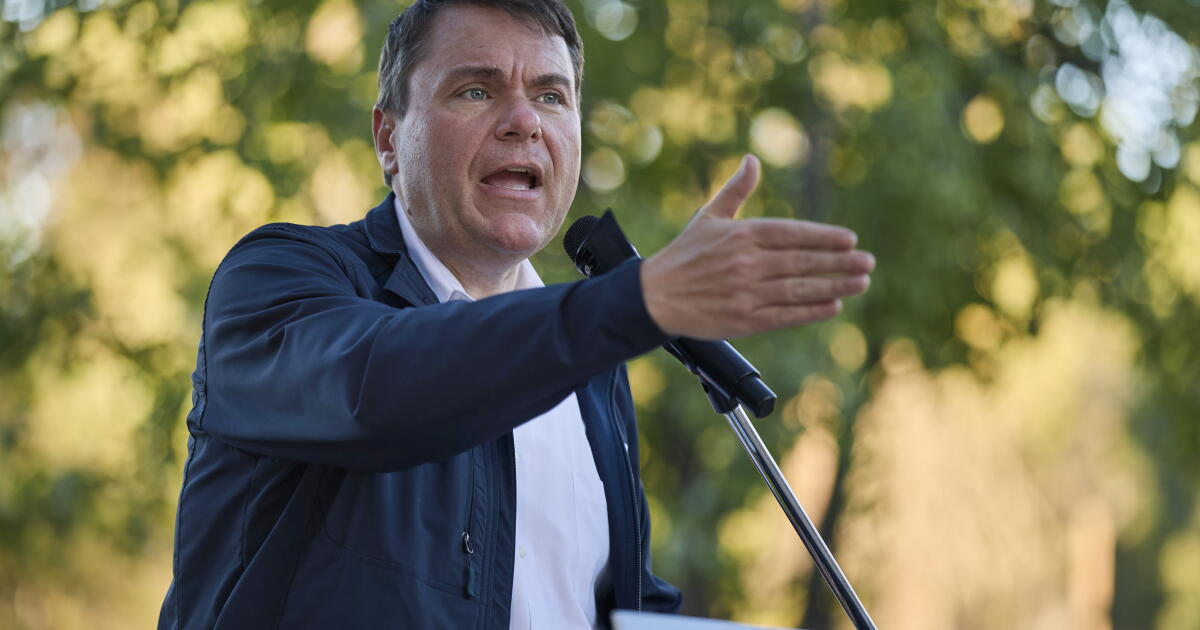
SACRAMENTO — Supporters of a high-profile Nov. 3 ballot measure that would require Californians to show identification when they vote accused state Democratic leaders of falsely stating that President Trump has endorsed the initiative.
Republican Assemblymember Carl DeMaio of San Diego, one of the measure’s authors, on Thursday called Democratic gubernatorial candidate Xavier Becerra a “bald-face liar” over comments he made during Wednesday’s gubernatorial debate hosted by CNN.
Becerra said during the debate with Republican Steve Hilton that Trump was instrumental in the voter ID measure, Proposition 39, qualifying for California’s November ballot. Trump for years has tried to cast doubt about American elections, and unsuccessfully pushed Congress to pass a strict voter ID and proof of citizenship measure known as the SAVE America Act.
“Prop. 39 is an initiative that is backed by Donald Trump,” Becerra said during the hourlong debate. “He couldn’t get his SAVE Act out of Congress, which tries to interfere in elections. So he’s gone around the country and put initiatives on the ballot. In California, it’s Prop. 39.”
Though Proposition 39’s provisions are less restrictive than those in the SAVE America Act, its proponents echo Trump’s unsubstantiated claims that voter fraud and noncitizen voting are widespread in California and therefore stricter ID measures are needed.
DeMaio said the ballot measure qualified for the ballot because of strong support from California voters, including many Democrats and independents. Supporters collected more than 1 million petition signatures in support of the measure, surpassing the 874,641 needed to qualify.
“It was not put on the ballot by Donald Trump,” said DeMaio, who also founded the conservative advocacy group Reform California.
Becerra is “showing that he’s not willing to be truthful with California voters,” DeMaio said.
Meredith Shields, press secretary for the Yes on Prop. 39 committee, reiterated that Trump hasn’t taken a position on the initiative.
“The opposition will do anything to advance their cause and protect their power,” Shields said. “It will come as a surprise to no one that career politicians don’t always tell the truth, and they certainly aren’t telling the truth here.”
The White House didn’t immediately respond to a request for comment about Trump’s position on Proposition 39.
The measure would require anyone voting in person in California to present a government-issued ID, and those voting by mail ballot to include the last four digits of the ID number provided when they registered to vote. State and county election officials would be required to verify the U.S. citizenship of registered voters using government data and publicly report the findings.
The ballot measure is backed by DeMaio and several deep-pocketed Trump supporters. Julie Luckey, director of the group Californians for Voter ID, is the mother of billionaire tech entrepreneur Palmer Luckey, a major Trump fundraiser and Republican donor. Richard Uihlein, chief executive of the shipping and packing supplies company Uline, has given the campaign $17 million.
Representatives for Becerra and the No on Prop. 39 campaign on Thursday argued that Trump pushed for voter ID in California before Proposition 39 officially qualified for the ballot, pointing to a March 11, 2025 news release on Reform California’s website acknowledging Trump’s support.
In January 2025, Trump endorsed “CA Voter ID” as a “condition” for continued federal funding to the state, according to the release, which was updated this year with an editor’s note to clarify that Proposition 39 hasn’t been endorsed by Trump.
“Carl DeMaio knows Prop. 39 is central to Trump’s voter suppression playbook, and he’s doing everything he can to hide that from voters,” said Jonathan Underland, spokesperson for Becerra’s campaign.
The No on Prop. 39 campaign repeatedly has sought to link Trump to the measure, which has not been a surprise given that the Republican president remains extremely unpopular among a majority of Californians.
“The fact that Donald Trump has endorsed it tells you everything you need to know,” Assembly Speaker Robert Rivas (D-Hollister) and Senate pro Tempore Monique Limón (D-Santa Barbara) said in a statement released by the “No” campaign this year.
U.S. Sen. Alex Padilla (D-California) suggested to reporters at a rally organized by the “No” campaign last month that Trump is behind Proposition 39.
“Carl DeMaio has been the face of this in California, but don’t be fooled into thinking this has nothing to do with Donald Trump and the MAGA agenda nationally,” Padilla said.
Separately, DeMaio on Thursday accused Secretary of State Shirley Weber, another Democrat, of falsely stating that Proposition 39 would end California’s vote-by-mail system. The vast majority of Californians use mail-in ballots.
Weber, in a television interview that aired this week on KCRA in Sacramento, said the state already requires ID for those who register to vote.
“But if you tell me everybody has to take their ID to the poll, Californians should be concerned because 90% of them don’t want to do that,” she said. “They want to vote by mail, and you would effectively eliminate vote by mail.”
DeMaio questioned whether Weber understood what Proposition 39 proposes.
“If she truly is concerned about trust and confidence in our elections, she should start with her own behavior by refraining from spreading misinformation about Prop. 39 and our election,” he said.
Weber, when asked about her statement this week, said in an email to The Times that Proposition 39 would “cause disruption” in the state’s mail-in voting system because it would require voters “to write private personal information on the ballots.”
A Weber campaign spokesperson followed up with another response Thursday.
“What Dr. Weber actually said was that, if passed, this very poorly drafted proposition could cause people to decide not to vote by mail because it creates unnecessary and burdensome steps,” the spokesperson said.
WASHINGTON — A pro-Israel Democratic advocacy group on Thursday released a framework intended to help the party better articulate its vision for the U.S. relationship with Israel, an issue that has deeply fractured Democrats this year and could lead to further divisions heading into the next presidential campaign.
Democratic Majority for Israel is calling on the party to continue providing security and military assistance to the country while supporting a negotiated path to statehood for both Israelis and Palestinians and a future for Gaza that doesn’t include Hamas.
It notably does not insist on unyielding support for Israel, acknowledging that “Israel’s security does not require support for every decision made by an Israeli government.” The document also calls on Israel to “act decisively against settler threats, intimidation, and violence.”
The framework is being released at a sensitive moment for Democrats following a primary season in which voters from New York to Michigan embraced candidates who backed positions including ending military aid to Israel. If Democrats retake control of the U.S. House or Senate in next month’s elections, these candidates could play a significant role in shaping the debate over America’s posture toward Israel.
The issue could also play prominently in the early stages of the next presidential campaign, which could begin shortly after the midterms.
Democratic Majority for Israel’s chief executive, Brian Romick, said his goal is to provide a “helpful guide for our mainstream Democratic candidates on how to engage with a complicated issue.”
“It’s important to remind Democrats and Americans that there’s value in the U.S.-Israel relationship,” he said. “We thought it was important to kind of lay out a forward-looking vision.”
The question is whether such a framework will go very far in shaping the views of Democrats, who are increasingly skeptical of Israel.
About 58% of Democrats said the U.S. is “too supportive” of the Israelis, according to a June survey by The Associated Press-NORC Center for Public Affairs Research, up from 45% in January 2024. Roughly half of Democrats believe that Israel has committed genocide against Palestinians during the war with Hamas, an accusation Israel rejects.
Former Obama administration chief of staff Rahm Emanuel, who has argued Democrats need to return to the political center ahead of launching a potential presidential bid, went to Israel in July and delivered a blistering speech warning the country was at risk of becoming a “territorial pariah.” He specifically called out Prime Minister Benjamin Netanyahu, who has closely aligned himself with President Trump, a Republican.
Emanuel, who’s also a former congressman, Chicago mayor and U.S. ambassador, blamed Netanyahu for driving Israel to a “dead end,” emboldened by poor decisions from American leaders.
The framework from Democratic Majority for Israel takes a less strident view on Netanyahu, who faces another election this month. “Support for Israel,” the group argued, “transcends any one Israeli government.”
The group took a similarly long view on military and security assistance for Israel, arguing it shouldn’t be stopped now even as it acknowledged the possibility of change in the future.
“Over time, and by mutual agreement, today’s partnership should be capable of evolving beyond the traditional assistance framework toward an increasingly reciprocal relationship centered on joint investment, innovation, and technological advantage,” the framework reads. “The objective should be to build the partnership both countries will need to confront the threats and seize the opportunities of the coming decades.”
Daniel Shapiro, the former U.S. ambassador to Israel under President Barack Obama, acknowledged “strong, passionate views” on the issue.
“Clearly, not everyone will agree with every aspect” of the framework, he said. “But I think there’s a lot there that many Democrats would find speaks to them.”
Two Democratic lawmakers are said to have called for independent probes into taxpayer-funded TV ads featuring President Donald Trump running ahead of the November midterm elections.
Representative Jamie Raskin, the top Democrat on the House Judiciary Committee, and Representative George Whitesides, asked the Government
Democrat Xavier Becerra and Republican Steve Hilton debated for 60 minutes Wednesday night on a soundstage in Burbank. Times columnists Gustavo Arellano, Anita Chabria and Mark Z. Barabak watched the gubernatorial match-up and weigh in.
Arellano: Steve Hilton came in with next to no chance of becoming the next California governor, but maybe if he focused on touting the feel-good messages he’s been spouting since launching his campaign in front of the Huntington Beach Pier earlier this year — Make California Gold Again! Califordable! I’m a Legal Immigrant with a British Accent! — he might’ve convinced at least a few voters to go with him.
Instead, Hilton debated like someone already preparing to launch a podcast or beg for his old Fox News job back after he gets walloped. When your solution for solving California’s housing crisis is building 10 new cities, you’re not running for California governor — you’re angling for an influencer job with the Irvine Co.
He whined and grumbled and grinned and quoted someone calling Becerra a “bitch ass,” which would’ve been a funny dig if he wasn’t running to run the greatest state on Earth. Hilton is charming in person, in the way all British people inevitably, initially come off as to Americans, and he has traveled to every California county — and especially to Latino-majority cities. He should’ve shared some of the many stories of hardship that I’m assuming he’s heard over the last year.
Nope! Instead, Hilton attacked Becerra again and again — why? California is a super-blue state, Latino Trump supporters notwithstanding, so Hilton should’ve tried to at least offer a reason for voters to choose him instead of saying — not completely inaccurately — that the problems Californians deal with are the fault of Democrats.
But blaming the other side only gets you so far — just ask Democrats how it worked out with them in 2024.
“We’ve got to try something different,” Hilton said in his concluding remarks. Californians agree — and his name is Xavier Becerra, who last I heard isn’t Gavin Newsom, no matter how much the California GOP is trying to convince people otherwise.
Becerra, meanwhile, didn’t offer much in terms of vision, mostly because he played defense most of the evening. But he didn’t have a major flub, except maybe raising a CNN coffee cup a few too many times. Why, Becerra sometimes even smiled — proof that he’s not some Chicano automaton. He hasn’t agreed to any more debates with Hilton — but after this blowout, Becerra should take the both of them on the road to make Hilton the next John Cox.
Chabria: Becerra came out as more of a fighter than we’ve seen before, even in the earlier Democratic debates. He held his own against Hilton, who is a skilled orator and attacker with a pointed wit and slick accent. But please, for the love of God, Hilton, button that shirt. This is not a casino.
Becerra was the clear winner, and to be honest, Hilton — usually a nimble pugilist — came across flat too much of the time. Maybe he’s already signed his Fox contract, as Gustavo suggests.
But Becerra also failed to lay out any kind of vision for the future of California. He did a good job of fending off Hilton’s attacks, but never told us what a vote for him will bring to the average Californian. There was some talk about housing, about protecting health insurance, but no big picture of what the California Dream of the future is and how we deliver it for the next generation.
I walked away from this debate certain that Hilton hadn’t gained a single voter, and equally certain Becerra hadn’t lost one. But also certain that Californians are rightfully disenchanted with this political moment because it offers little for the people who are voting. Becerra is going to ghost-coast into leading the most powerful state in the nation, and none of us will know what that will mean or why we should care one way or another.
Yes, there is a strong Legislature that will certainly keep the next governor focused on Democratic priorities. But what Becerra stands for remains a mystery that only the next four years will reveal. Let’s hope it has to do with our collective well-being.
Becerra exited the stage a little over an hour later, still the overwhelming favorite to become California’s next governor.
As the Democratic nominee in a state where Democrats enjoy big numerical, structural and political advantages — and have for decades — Becerra needed only to show up at CNN’s Burbank studio, field some questions alongside Hilton and avoid a Bidenesque disaster. (Even that might not have mattered.)
It was an exceedingly low bar, and one Becerra easily surmounted.
He was authoritative, crisp and kept on the offense most of the night, which raises the question of why his campaign handlers have been sheltering him up to now. Yes, it did get a bit repetitive when the Democrat’s response to so many questions amounted to: Trump, Trump, Trump! But that’s hardly surprising in a state where the president is about as popular as $6-a-gallon gas and $10-a-pound hamburger.
What was surprising was Hilton’s failure to do more to unshackle himself from the ball-and-chain sitting in the White House.
He allowed a smidgen of daylight here and there, but not enough to doff the MAGA mantle Becerra has draped around him. If anything, Hilton yoked himself even closer to Trump, sounding at times like his wacky Health secretary, Robert F. Kennedy Jr,. as he talked about vaccines — Hilton said he was for them, but also favored more parental discretion — and re-litigated masking and other pandemic policies from the Biden administration.
Hilton’s most effective moments came when he asked why unhappy California voters should expect anything different if they keep electing Democrats. Not an unreasonable question. Trump Lite, however, doesn’t seem like the remedy most are looking for.
Little to nothing seems likely to change as a result of Wednesday night’s encounter. Still, it was important to give California voters an opportunity to take the measure of the two gubernatorial hopefuls side by side and hear — in something more than a 30-second commercial — how they would lead the state.
It’s far more probable than not Becerra will be the candidate voters choose on Nov. 3. But for those who don’t like Becerra’s vision, his record, Democratic affiliation or, heck, his glasses or salt-and-pepper hair, Hilton offered an alternative — albeit more of a grouchy one than the happy warrior who’s appeared on the campaign trail.
Hilton gave it his best shot. Becerra ably deflected him.
House Speaker Mike Johnson plans to visit California on Wednesday to stump and fundraise for Republican candidates in a state that could determine control of the U.S. House of Representatives during President Trump’s final two years in office.
Johnson (R-La.) plans to visit the Central Valley and the Inland Empire, a sign of the importance of California congressional contests in the November midterm election.
David Wasserman, a congressional forecaster for the nonpartisan Cook Political Report, said that Johnson is attempting to mitigate the aftermath of Proposition 50, the redrawing of California’s congressional districts that voters approved in November in response to Trump’s efforts to tilt districts in his favor elsewhere in the nation, notably Texas.
“If it weren’t for Republican efforts to redraw Texas, Proposition 50 wouldn’t have seen the light of day,” said Wasserman, who predicts Democrats will win control of the House, and said that Republicans would have a better chance at holding more seats if they hadn’t prompted the redistricting fight.
Redrawing congressional districts typically happens once a decade after the U.S. Census, and in California, voters in 2010 decided to hand the power of crafting the state’s districts to an independent commission. After Trump pushed Texas to redraw its congressional boundaries to increase GOP representation in Congress last year, California Democrats responded by persuading voters to reshape its districts to favor Democrats, who already dominate the state’s 52-member congressional delegation.
“California Republicans are on the verge of extinction because of the White House action,” Wasserman said.
In Chowchilla, Johnson is scheduled to hold a fundraiser and a rally in support of former Stockton Mayor Kevin Lincoln, who is trying to topple Rep. Adam Gray (D-Merced) in one of the most competitive congressional races in the nation. He is expected to be joined by Republican National Committee chairman Joe Gruters, California Republican Party Chair Corrin Rankin and Congress members from Texas and Michigan.
He is also holding a get-out-the-vote event in support of Rep. David Valadao (R-Hanford), a longtime Democratic target given the voter makeup of his Central Valley district. Johnson is also holding an evening fundraiser in Riverside for Jim Desmond, a member of the San Diego County Board of Supervisors who is running in the district being vacated by longtime Rep. Darrell Issa (R-Vista).
Issa decided to retire after his congressional district was redrawn because of Proposition 50. He has endorsed Desmond to represent the new district, which spans San Diego and Riverside counties.
The California trip is part of Johnson’s plans to campaign in 22 states in an effort to help Republicans retain control of the House before the Nov. 3 election.
Despite California’s sapphire tilt — registered Democratic voters outnumber Republicans nearly two-to-one — the state’s residents are often the largest donors to politicians on both sides of the aisle. Democrats headed here in coming days include gubernatorial candidates Amy Acton of Ohio, Deb Haaland of New Mexico and Gina Hinojosa of Texas.
Trump sent followers a fundraising appeal Tuesday focused on Democrats’ ability to win control of Congress, which would upend his agenda during his final two years in office.
“I’ve never asked for sympathy. I’ve never asked this country to feel sorry for me. I’ve never asked for anything,” he said in the email. “That changes today. With less than 45 days until midterm elections, the left is ready to put the final nail in my coffin.”
Christian Martinez, a spokesman for the National Republican Congressional Committee, pointed to the pivotal role California will play in determining control of Congress.
“California’s House races will decide whether working families keep fighters like David Valadao, James Gallagher, Kevin Lincoln, and Jim Desmond or get more of the same from Democrats who raised costs, left the border wide open, and made communities less safe,” Martinez said. “Californians are done paying more, waiting longer, and living with less safety so corrupt Sacramento and Washington Democrats can protect their socialist agenda.”
Anna Elsasser, a spokesperson for the Democratic Congressional Campaign Committee, shot back that the policies and beliefs of Desmond, Lincoln and Valadao have deeply harmed California families, including high gas prices and the cost of living.
“That’s why Mike Johnson is swooping in to try and save their fledgling campaigns. Voters won’t forget who sold them out to hand massive tax breaks to billionaires and wealthy corporations by gutting health care and food assistance, championing chaotic tariffs, and refusing to rein in a costly war that has sent gas prices soaring,” she said. “Californians are ready for change, not another two years of Mike Johnson and DC Republicans’ status quo.”
After being securely held for nearly four decades by one of the most preeminent politicians in California history, the House seat to represent bright blue San Francisco in Congress is up for grabs in November — and dividing the Democratic Party.
Rep. Nancy Pelosi (D-San Francisco), 86, the powerful former House Speaker who’s held the seat since 1987, announced last year that she would not run again. In May, she passed over state Sen. Scott Wiener (D-San Francisco) — a prolific California legislator long considered a potential successor — to endorse San Francisco Supervisor Connie Chan, a local progressive with less legislative experience but strong support from labor.
Pelosi’s endorsement sent Chan, who had been languishing in polls, surging past Democratic tech millionaire Saikat Chakrabarti in the June primary. Chan finished with nearly 30% of the vote and Chakrabarti took 18%. Wiener won, with nearly 41% of the vote.
Both Wiener, a gay man and staunch advocate for the city’s large LGBTQ+ community, and Chan, who immigrated to the city from Hong Kong at age 13 and has deep ties to its large Chinese and immigrant communities, would make history by winning. Wiener would be the first out LGBTQ+ person to represent the city in Congress, and Chan the first Asian American immigrant woman.
The race has sharply divided the state’s Democratic establishment as a rare intraparty showdown between a deft legislator who has driven liberal California policy for years and a rising progressive with the powerful imprimatur of the icon they seek to replace.
Both acknowledge they would take the same or similar positions on many issues, and fiercely oppose President Trump’s agenda. But they also say San Franciscans face a real choice between them that will help define the city for years.
“There is a clear cut between the two of us,” Chan said. “He has long enjoyed establishment support and industry support, and we’ve been grassroots, on the ground, [Asian American and Pacific Islander] community, working people and labor unions — in collaboration and coalition building.”
“We need Democrats who are willing to fight — to fight in a smart way, and to fight in an aggressive way, to defeat Donald Trump and to lower the cost of living,” Wiener said. “We are past the time where we need Democrats in office who were just going along to get along, or who, like Connie Chan, are just part of the status quo.”
Wiener is a MAGA target
Wiener, 56, has lived in the Castro neighborhood since 1997 and was a deputy city attorney and local Democratic Party chair before being elected to the Board of Supervisors in 2010. He was elected in 2016 to the state Senate, where he’s had a massive influence, authoring more than 100 bills that have been signed into law. Allies and critics say he is a workhorse, and at times both effective and divisive.
Wiener has been endorsed by the state and local Democratic parties; a slew of state leaders including California Atty. Gen. Rob Bonta, state Senate President Pro Tempore Monique Limón (D-Santa Barbara) and Assembly Speaker Robert Rivas (D-Hollister); various queer and labor groups including AFSCME; more than half the city’s supervisors; and various members of Congress.
Wiener has passed some of the state’s most progressive laws on LGBTQ+ rights, including protections for gender-affirming care, and challenged federal immigration agents in California. He has also pushed progressive laws — backing safe injection sites, extending bar hours until 4 a.m., decriminalizing psychedelic drugs — that have put some of his fellow Democrats in uncomfortable spots when forced to vote on the controversial issues.
Some in San Francisco label him a moderate, though that designation would draw laughs elsewhere in the country and even in Sacramento. Wiener is one of the most reviled state politicians on the conservative right nationally, and has received scores of death threats for his work, particularly on transgender issues. His website touts a laundry list of profane and homophobic attacks from MAGA loyalists — Elon Musk called him a “scumbag,” former Rep. Marjorie Taylor Greene called him a “communist groomer” — that he wears as a badge of honor.
On housing, Wiener has pushed for deregulation and development near transit hubs statewide to solve the housing and affordability crises, riling some homeowners averse to increased density and some progressives who say his plan favors developers and threatens existing rent-controlled housing. On tech, Wiener has pushed for artificial intelligence regulation but also been criticized for taking a technocratic approach with buy-in from wealthy tech leaders.
Wiener has passed laws protecting net neutrality, capping prescription costs and mandating mental health parity, ending mandatory minimum sentences for nonviolent drug offenders, and requiring corporations disclose their greenhouse gas emissions. He has received substantial financial support from tech leaders and opposes Proposition 40, the ballot measure that seeks to impose a one-time tax on the state’s billionaires.
Rep. Robert Garcia (D-Long Beach), also gay and a former Long Beach mayor, said he considers Wiener a friend but also a generational legislator who has “led the country” on LGBTQ+ rights and housing policy. “I don’t think there’s a better legislator in the United States on housing,” Garcia said.
Rep. Laura Friedman (D-Glendale), who worked with Wiener for years in the state Legislature, said he has been a champion for many issues important to Californians — including the environment — while holding big industry accountable and backing labor. She said while many politicians decide to either rack up easy wins with legislation that barely moves the needle or focus on “progressive value signaling” without accomplishing much of anything, Wiener “takes on some of the most difficult and controversial progressive issues and really gets them done.”
Nancy Tung, the local Democratic Party chair, said many San Francisco politicians “recede” from the city’s raucous local policy debate once they reach higher office, but Wiener is “still is in the knife fight,” especially on housing and affordability issues — showing he cares about the city and making him “such a good fit” for Congress.
Tung said she understands the appeal of sending a fellow Asian American woman to Congress in this political moment, but that Chan “just does not have the legislative record that Scott has.”
Chan for ‘working people’
Chan, 47, who lived in a rent-controlled Chinatown apartment after immigrating with her mother and younger brother, now lives with her firefighter husband and son in the Richmond neighborhood. She was a community and legislative aide for years — including for then-Dist. Atty. Kamala Harris — before being elected to the Board of Supervisors in 2020. She has served as budget chair since 2023 and has centered her campaign, largely funded by Pelosi’s network, around what she calls her “career fighting for working people.”
Chan has been endorsed by a host of Congress members, including Pelosi and Sen. Adam Schiff (D-Calif.); major labor groups including the California Federation of Labor Unions and the California Teachers Assn.; various progressive organizations and fellow and former supervisors; former mayor and S.F. power broker Willie Brown; and Chakrabarti, who since the primary has shared his campaign staff and funding with her.
Chan, who supports Proposition 40, has helped create a $400-million reserve fund in San Francisco to make up for federal cuts to Medicaid and housing subsidies. She also passed a supplemental budget to fund immigration defense services for people targeted by the Trump administration and passed various labor-friendly measures, including a minimum wage increase for in-home workers and cost-of-living adjustments for city service workers.
Pelosi said Chan “understands that budgets are statements of our values,” has “championed justice and progress for working families” and “brings an important lived experience to this moment” as an immigrant woman. Schiff said Chan has impressed him as “a very powerful voice for those who are disenfranchised” and someone with “the potential of growing into” a leader like Pelosi.
Kim Tavaglione, executive director of the San Francisco Labor Council, said she encouraged Pelosi to endorse Chan because Chan “supports San Francisco values,” listens to labor and is a great strategist.
Cleve Jones, the San Francisco activist who has fought for gay political representation since Harvey Milk’s historic 1977 election to the Board of Supervisors, said Wiener “has done some very good things, particularly around LGBTQ issues and HIV/AIDS,” but also angered some in the LGBTQ+ community by repeatedly showing up to an annual Trans March that organizers ask politicians not to attend.
Wiener, who is Jewish, was aggressively heckled at this year’s march, namely for his stance on the Israeli war in Gaza, which he was slower than other progressives to label a genocide. Conservatives mocked him for being targeted by his base, and Wiener ended up fundraising off the incident — which Jones said was “so cynical.”
He said Wiener’s “loyalty is to big developers, big tech and big real estate,” and that he “doesn’t really see the urgency of yet another white man elected to Congress” when San Francisco can send a stronger message by electing Chan, an immigrant woman of color.
Affordability and Trump
Chan said she is a “pragmatic” progressive who has balanced the city’s budget while protecting “healthcare, education, immigration resources” and other working-class priorities. She said Wiener is focused on deregulation for market-rate housing development, whereas she has prioritized tenants’ rights and protecting existing rent-controlled housing in her push for affordable units.
Chan said she will “walk and chew gum at the same time” in Washington by working for affordability while battling Trump, including by reversing his healthcare cuts, expanding Medicaid, providing affordable childcare, abolishing U.S. Immigration and Customs Enforcement and finally figuring out meaningful immigration reform.
“I’m not sugarcoating it as if it’s easy. But we gotta be able to find ways to work together to push those things forward,” she said.
Wiener said he and Chan share the goal “of getting Trump and MAGA out of office, and then making sure that people never feel tempted to flirt with authoritarianism again.”
But he said the way to do that is to advance policies that will “lower people’s cost of living and make people’s lives more sustainable” — including by passing universal healthcare, building millions of new homes, creating low-cost child care and leading a clean energy transition — and that he is the only candidate in the race with a proven ability to do that.
“This is a race to succeed the most effective and operational member of Congress in modern American history,” Wiener said. “San Francisco should send someone who actually has a track record, a proven track record, of being able to deliver.”
Political strategist Celinda Lake says that young voters don’t usually cast their ballots in midterm elections, but they’re ‘very unhappy about the war’ and the rising cost of living in the US. Democrats see the youth vote as a key trigger to flip power in Congress.
DOTHAN, Ala. — People crowded shoulder to shoulder upstairs in a south Alabama coffee shop, in a region sometimes called the reddest in the heavily conservative state.
They were there to hear Doug Jones, the Democratic nominee for governor and the last Democrat to hold statewide office in Alabama.
“Alabama has been under Republican control for almost two decades. We’re not getting any better,” said Jeff Scroggins, 61, a government contractor from Slocomb who was part of the crowd that came to Mural City Coffee Company and said he is voting for the Democrat.
Scroggins, who usually votes Democratic, called himself the “black sheep of the family” in supporting Jones this fall against Republican U.S. Sen. Tommy Tuberville, but said there are more Democrats and “stubborn independents” in the state than people realize.
Jones and other Democrats running in Alabama and neighboring states are banking on it.
“People want change,” Jones said after an hour of talking with people who came to see him. “That is the real key. People are not satisfied with their government of Alabama.”
Democrats sense a shift among voters
Deep South Democrats, largely absent from statewide offices, are aiming for a comeback this year. They are seeking to mobilize Black voters who are angered about the Republican moves to dismantle minority congressional districts, as well as voters who are frustrated with high gas prices, the Iran war, data centers and other issues.
Jones is trying to win a rematch with Tuberville after the Republican ousted him in a 2020 Senate race. Jones would be the first Democrat since 1998 to win an Alabama governor’s race.
In Mississippi, prosecutor Scott Colom is trying to unseat Republican Cindy Hyde-Smith and become the state’s first newly elected U.S. senator since 1946. In Georgia, former Atlanta Mayor Keisha Lance Bottoms is trying to reverse a losing streak in races for governor that began for Democrats in 2002. Elsewhere, Democrats are trying to pull off U.S. Senate upsets in Louisiana and South Carolina.
In Alabama, Jones’ town halls have attracted hopeful Democrats, some independents and even a few Republicans. Their concerns mirror those of voters nationwide: the rising cost of living, worries over data centers and the affordability of healthcare, issues they say have gone unaddressed by the Republicans who control the state.
Some said state policies, including an abortion ban that makes no exemption for rape, have been too extreme. Others said some comments by Tuberville, such as calling Islam “a cult,” are embarrassing to the state.
Still, the math across the Deep South has been difficult for Democrats. Other than Jones’ victory in the special U.S. Senate election, the last Democrat holding statewide office in Alabama was defeated in 2012. Statewide Democratic candidates have hit a ceiling of around 40% of the vote in recent elections.
The results are similar in most other Deep South states. In Georgia, U.S. Sens. Raphael Warnock and Jon Ossoff, who is seeking reelection this year, offer a bright spot for Democrats.
Jones noted that Alabama saw a surge in the number of people voting in the Democratic primary. While about 58% of primary voters were Republican, the Democratic primary vote doubled since 2022. Some counties, including a tech hub in north Alabama, saw more Democratic votes than Republican.
Optimistic about their chances, Democrats are running candidates in all major state races for the first time in years.
“The numbers are there,” Jones said. “It’s a question of getting those voters out.”
Republican gerrymandering creates a backlash
In nearby Troy, a crowd gathered on the campus of Troy University to hear Jones speak alongside Shomari Figures, one of Alabama’s two Black U.S. House members. The district was substantially redrawn by Republicans after the U.S. Supreme Court earlier this year gutted the Voting Rights Act.
Figures said there is an excitement he has not felt since Jones’ 2017 Senate victory. Figures won election two years ago after a federal court ruled that Alabama had been illegally diluting the voting power of Black Alabamians and ordered new district lines. The Supreme Court’s reversal this year allowed state Republicans to reshape the district and substantially reduce the percentage of Black voters who align with Democrats.
Figures said the goal of the redraw was obvious: to reduce Black representation.
“But we are going to win it in November,” he said.
Figures has often emphasized the economic needs of the district at a time when affordability is one of the main topics of the midterms. He noted that the individual median income in Alabama is $34,000.
“Let that sink in — $34,000 before taxes, before rent, before water, before lights, before gas, before cellphone, before health insurance, before car insurance, before childcare, before food,” he said.
Alabama is one of 10 states that did not expand Medicaid under the Affordable Care Act, a decision that Jones and Figures said leaves thousands of working people without access to healthcare coverage.
Figures faces Trump-endorsed Republican Rhett Marques, a state lawmaker. Marques framed the race as “common sense” versus “craziness.” Both have raised about $1.3 million so far.
In Mississippi, Colom looks to make history
Colom echoes many of Jones’ and Figures’ arguments in his bid against Hyde-Smith.
“We’ve been gifted an opportunity,” he said, pointing to Mississippi’s large base of Black Democratic voters, Hyde-Smith’s relatively low profile in her first full Senate term and voters’ frustrations over the economy.
With the largest share of Black voters of any state, Mississippi’s general elections have been closer for years than its immediate Southern neighbors. Trump won by double digits in each of his three presidential contests, but in 2023 Republican Gov. Tate Reeves managed to win reelection by a margin of just 3 percentage points.
Colom insists he can close the gap by increasing Black turnout and peeling off enough disenchanted white voters from Republicans. It is the same kind of electoral math that propelled Ossoff and Warnock in Georgia.
“For me, it can’t be just about getting a Senate majority,” Colom said. “It’s got to be about having a party that represents rural America again, suburban America, urban America — a party that makes sure we actually deliver for voters in ways that make their lives better, and we don’t come up with excuses as to why we can’t do it.”
Republicans say they aren’t worried
Alabama’s Republican Party chairman, Scott Stadthagen, said Democratic priorities, in his opinion, “are far outside the views of conservative Alabamians.” He said there has been previous chatter of a Democratic resurgence, and “each election cycle, we remain the brightest red state in the decidedly conservative southeastern United States.”
Tuberville has declined Jones’ challenge to debate. Expressing confidence about November, Tuberville said he is running “against an ideology that’s not very compatible with the people of Alabama.” He will appear with Trump at a rally in Mobile next week.
“I’ve been representing Alabama for six years, and we’ll turn it over to the voters here in about six, seven weeks and see what they say,” Tuberville told reporters.
As the November election draws closer, Democratic candidates are attracting impressive crowds.
To Sam Phillips, who attended the rallies in Dothan and Troy, the crowds and energy felt different from previous election years.
“It doesn’t get any redder than here, and there was a whole lot of excitement in both places,” the 67-year-old said. “So I feel optimistic.”
Gwendolyn Davis, a 67-year-old retired special education teacher, left the town hall in Troy with an armful of yard signs for Figures and Jones. She said she is determined to reach people who have been sitting out elections.
“If we don’t get people out to vote, it will be kind of heartbreaking,” she said.
Chandler and Barrow write for the Associated Press. Barrow reported from Atlanta.
WASHINGTON — California is sometimes described as the ATM of Democratic politics.
That’s certainly been the case in the most divisive Democratic races this year.
Donors from California have given more to far-left candidates and their moderate opponents in congressional races and U.S. Senate contests than donors from any other state — more than $17 million combined, according to a Times analysis of the most recently available campaign finance filings.
More of that money — nearly $11 million — went to more progressive candidates. That giving came from more than 95,000 individual donors, which was more than double the number of California donors who gave to their more moderate opponents. That includes 18,000 donors who gave to both progressive and moderate candidates.
There was a geographic divide in giving by Californians. The largest share of cash to progressive candidates came from donors in the Bay Area, while the largest share of financial backing to moderate candidates came from donors in the Los Angeles area.
The Times looked at competitive races outside California in which one of the candidates had been endorsed by either the Justice Democrats or the Democratic Socialists of America, or DSA, as well as key Senate races in Michigan, Minnesota, Florida and Maine that featured a stark ideological divide between top Democratic contenders.
Although these races represent a small fraction of the electoral contests across the country, they were the races in which the future ideological direction of the Democratic Party was most fiercely contested.
Progressive candidates fared better in the majority of these contests.
California donors helped fund the Senate primary victories of progressives Abdul El-Sayed in Michigan and Peggy Flanagan in Minnesota — second only to in-state donors in providing cash to each of those candidates.
Progressive House candidates such as Melat Kiros in Colorado and Darializa Avila Chevalier in New York were able to defeat more moderate incumbents with heavy support from California donors.
Their efforts weren’t always successful, however.
Former Rep. Cori Bush raked in more cash from California donors than in-state supporters in her bid to unseat incumbent Rep. Wesley Bell in Missouri’s 1st Congressional District, the seat she had held previously. But Bell easily cruised to victory in this year’s primary.
And then there was Graham Platner.
California donors gave nearly $2.5 million to his Senate campaign in Maine before he withdrew after he was accused of sexual assault by a former girlfriend. He has denied the accusation.
The Times analysis looked at direct contributions to campaigns, which are capped at $7,000 per election cycle. It did not include contributions to party committees or independent committees that could also be spending in these races. The analysis included both bigger contributions required to be disclosed by campaigns as well as small-dollar contributions through the Democratic fundraising platform ActBlue.
Flipping the script
Progressive donors said they were motivated to give to candidates who would shake up the Democratic Party’s status quo.
“The Democratic Party has to understand that they can’t keep doing the same thing,” said Rehan Alvi, a real estate investor in El Dorado Hills.
He gave the maximum allowable to support the campaigns of El-Sayed and Bush, and also supported Junaid Ahmed’s failed primary bid in the Illinois 8th Congressional District, as well as Platner’s campaign.
Harry Saddler, a retired designer who lives in San Francisco, said that the state of the party is “enraging.”
“That leads me to think about people who can actually flip the script,” he said.
Joshua Saltman, shown in his Los Angeles home, is one of many Democratic donors from California who have given in divisive Democratic races across the country.
(Genaro Molina / Los Angeles Times)
Saddler has written checks to a number of more progressive candidates, including Flanagan, Chevalier, Ahmed and Nida Allam, who lost her primary bid to unseat incumbent Rep. Valerie Foushee in North Carolina’s 4th Congressional District, though he has also supported some moderate candidates in other races he sees as crucial to Democrats chances at retaking control of one or both chambers of Congress.
That pragmatic approach is part of the reason Joshua Saltman said he has supported a number of moderate candidates.
“The reality of the map is that if Democrats are going to retake the House, it’s not just winning super blue districts,” said Saltman, a former entertainment industry lawyer who now runs a Broadway music festival.
Saltman said that he considers himself to be a more moderate Democrat and is also inclined to give to moderate candidates who he believes “get a little less love” from other donors, particularly in California.
He has written checks to Rep. Haley Stevens, who lost to El-Sayed in Michigan; Rep. Angie Craig, who lost to Flanagan in Minnesota; Bell in Missouri and Gov. Janet Mills in Maine, who was Platner’s main competition in the Democratic primary before dropping out of the race.
Alan Burye, a retired accountant who lives just outside San Diego, said he prefers more moderate candidates because he thinks they are more productive politicians.
“The ones who are out on the edges, like Bernie Sanders, really don’t get much done,” Burye said.
He cut checks to Craig in Minnesota and Stevens in Michigan.
Israel’s impact
American support for Israel — in the wake of wars in Gaza and Iran — has been a major point of division among more progressive and moderate candidates and is a key fault line among many donors.
Progressive candidates have been increasingly critical of the actions and influence of the Israeli government as the public, broadly, has adopted a more negative view of the Israeli government.
Politicians who have drawn support in the past from the American Israel Public Affairs Committee, or AIPAC, have been a particular target of progressive challengers.
“The problem with the Democratic Party is that they’re all just beholden to AIPAC and to corporate interests,” said Alvi, the real estate investor in El Dorado Hills. “I want a candidate who has the courage to speak.”
In Michigan, El-Sayed described AIPAC’s support of Stevens, his moderate opponent, as “legalized bribery.”
El-Sayed has made no secret of his criticism of American foreign aid for Israel and said that he “doesn’t believe in ethno-states” in response to a question in the summer about whether he supports the right of Israel to exist.
El-Sayed’s comments and similar sentiments expressed by other more progressive candidates are part of the reason some donors have given to moderate candidates.
“I feel that people who fundamentally aren’t big fans of Israel aren’t necessarily people I want to give money to,” said Saltman, who gave to Stevens.
Saltman, who was born in Michigan, said that he would still vote for El-Sayed if he lived in the state.
Other donors said they were inspired to give to moderate candidates because of concern that anti-Israel rhetoric could veer into attacks on Jews more broadly.
Los Angeles investor Steve Emerson said his motivation in writing checks to moderate Democrats such as Stevens is “to fight antisemitism.”
El-Sayed, for his part, said in the summer that his criticism of Israel is about foreign policy, not Jewish people.
“Judaism and the Jewish people are a light onto the world,” he said.