It is an old market saying, but it has never felt more apt: when people are worried about the future, they buy gold — when they are worried about the present, they sell it.
ADVERTISEMENT
ADVERTISEMENT
While the Iran war has raised longer-term concerns over energy security and global stability, the immediate fallout, in the form of surging oil prices and renewed inflation fears, has forced investors to prioritise liquidity and higher-yielding assets over metals.
Gold hit an all-time high of $5,602 (€4,873) at the end of January and looked to be heading higher still in early March, but has since dropped nearly 25% to a low of $4,100 (€3,567), trading around $4,500 (€3,915) at the time of writing.
The decline marks a dramatic pullback from gold’s extraordinary performance last year.
In 2025, the metal delivered one of its best annual gains in decades, rising more than 60% to record levels as central banks accumulated reserves and investors sought protection amid economic uncertainty.
The drop in 2026 has triggered a swift unwinding of leveraged positions in futures and exchange-traded funds which were riding last year’s tremendous rise.
This sharp reversal defies the traditional role of the metal as a refuge during geopolitical turmoil, with a stronger US dollar and rising bond yields proving far more influential.
Macroeconomic forces override safe-haven appeal
Rising US Treasury yields and a firmer US dollar have been the dominant headwinds for precious metals.
Higher oil prices stemming from the Iran war have lifted inflation expectations, prompting markets to price in fewer Federal Reserve rate cuts or even the possibility of tighter policy for longer, including potential hikes that were previously unexpected.
This has increased the opportunity cost of holding non-yielding gold, while the US dollar’s strength has made it more expensive for international buyers.
The result has been a classic “flight to liquidity” rather than the expected flight to quality risk assets, as leveraged traders facing margin calls accelerated the sell-off.
The correction for metals has been one of the sharpest in recent memory.
Silver shares in gold’s downturn
Silver, which often amplifies gold’s moves, followed with an even bigger drop.
The white metal reached an all time high of $121 just one day after gold, on 29 January, but it has since dropped roughly 50% to as low as $61.
At the time of writing, it is trading at around $70.
Silver enjoyed an even more spectacular rally than gold in 2025, surging roughly 145% thanks to robust industrial demand from solar panels, electronics and electric vehicles, combined with investment buying.
In 2026, however, it has also declined sharply amid the same pressures of US dollar strength and higher yields, although its industrial fundamentals continue to offer longer-term support.
THERE’S a Caribbean island that is booming in demand but barely any Brits go.
New research conducted by TravelSupermarket has seen a number of Caribbean destinations surge in demand, caused by the ongoing conflict in the Middle East.
Sign up for the Travel newsletter
Thank you!
Turks & Caicos is seeing a huge boom in searches, according to the expertsCredit: GettyThere are amazing floating bars tooCredit: Visit Turks & Caicos IslandsI visited the islands back in 2024 when Virgin launched flightsCredit: Supplied
And the research found that searches to Turks & Caicos were up 119 per cent, when looking at the first two weeks of March compared to the previous two weeks.
The islands are lesser visited by Brits, with the majority of tourists being Americans, with famous as celebs such as Kylie Jenner, Will Smith and Bill Gates visiting too.
This is likely to due to the lack of direct flights.
One of the main draws are the stunning beaches – so beautiful in fact they are often named some of the best in the world.
I spent my jet-lagged mornings walking the length of Grace Bay, with powder soft sand and quiet sunrises.
Even in the evening they were just as beautiful with pink sunsets ending the day.
And there is not just one, but two floating bars.
One of the most popular is Captain Oak’s Tiki Bar, which has even welcomed celebs such as Drake and Jake Harlow.
Tourists have to pay $20 to get there by boat or jet ski.
Otherwise there is the more vibey Noah’s Ark, which has a floating dance floor as well as sea swings.
If you want to stay on land, head to Da Conch Shank on a Wednesday (also named one of the world’s best beach bars) to join the 14-man marching band playing live music throughout the tables.
Captain Oak’s Floating Bar has even been visited by DrakeCredit: Visit Turks & Caicos IslandsSave time for Da Conch Shack, one of the world’s best beach barsCredit: TripAdvisor
Our favourite Caribbean holidays
If you click on a link in this box, we will earn affiliate revenue.
Hotel Capriccio Mare, Dominican Republic
Facing the calm, crystal waters of the Caribbean Sea, Hotel Capriccio Mare looks like a bright white island villa. The hotel’s position on Bavaro’s coastline is perfect for exploring the popular resort town of Punta Cana. Whether it’s strolling the sands to grab a fresh coconut with a straw, or venturing out on a catamaran trip to Saona Island, this dreamy Caribbean resort is not one to miss.
This friendly, family-run hotel is a slice of Caribbean paradise. This hotel sits smak-bang on a sugar-white beach with warm turquoise waters. Enjoy both the beaches of Barbados and its plethora of rum bars – there are about 1,500 of them on the island.
Set on the quiet side of St Kitts’ Frigate Bay, the boutique Sugar Bay Club offers superb value and wonderful views of the Atlantic Ocean. Staff are on hand to assist with island tours, from catamaran cruises to scenic railway excursions.
Amazing Antigua has 365 beaches – one for every day of the year – as well as a fascinating history. This resort in Falmouth Harbour is perfect for exploring the beautiful local area, including Pigeon Point, Nelson’s Dockyard and English Harbour.
Splash out on the Selling Sunset-esque villages if there is a group of you, complete with slides into the ocean and access to the Caribbean’s first ocean-water pool.
(Seven-night deals can be found for just under £3k each if travelling later this year).
The best way to get there is changing in the US with Virgin Atlantic, with flights around 12 hours.
Other airlines including Finnair, American Airlines and JetBlue also have connecting flights.
Otherwise we’ve found seven night holidays with return flights for as little as £1,569 each with loveholidays.
Stay at Wymara Resorts’ villas is you want your own slide into the waterCredit: 2022 Gary James OwnerHoliday packages can be found for under £1,300 eachCredit: Alamy
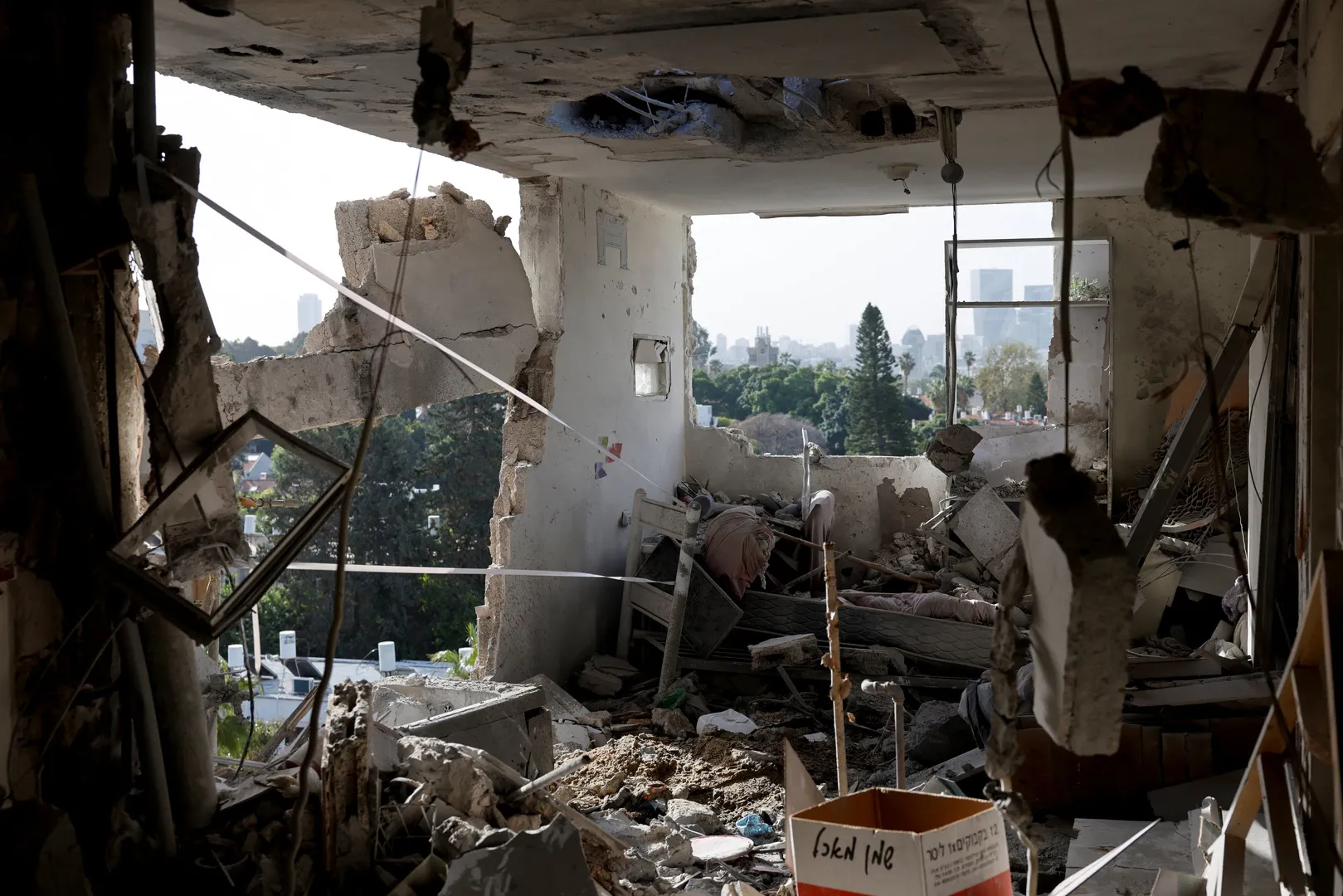
At least 15 people have been killed by attacks in Israel since the war on Iran started late last month. Israel operates a network of shelters to keep people safe, but not all Israeli citizens enjoy the same level of protection.
WASHINGTON — The State Department says it is adding 12 countries to an expanding list of nations whose citizens must post bonds of up to $15,000 to apply for U.S. visas.
Effective April 2, passport holders from Cambodia, Ethiopia, Georgia, Grenada, Lesotho, Mauritius, Mongolia, Mozambique, Nicaragua, Papua New Guinea, Seychelles and Tunisia will be required to pay the bond, which is refunded if the visa application is denied or, if granted, the person adheres to the terms of the visa.
After April 2, there will be 50 countries whose citizens are subject to the requirement, which was rolled out by the Trump administration last year as it cracked down on visa overstays and more broadly moved to curtail illegal migration.
Under the program, visa applicants from designated countries, many of which are in Africa, that have high overstay rates, have to post bonds of $5,000, $10,000 or $15,000 depending on their circumstances and the discretion of the consular officer processing the application.
“The visa bond program has already proven effective at drastically reducing the number of visa recipients who overstay their visas and illegally remain in the United States,” the department said, adding that almost 97% of the nearly 1,000 people to have posted the bond had not overstayed their visa.
WITH the Iran crisis continuing, it’s no surprise that Brits are changing their holiday plans.
Destinations like Dubai and Doha remain off the travel list, and Brits are avoiding certain long-haul destinations that involve stopovers in the Middle East – but TUI says that other holiday spots are on the rise instead.
Sign up for the Travel newsletter
Thank you!
TUI has revealed the holiday destinations on the rise this yearCredit: AlamyThe islands avoid the Middle East crisis as flights will cross the North Atlantic OceanCredit: Alamy
TUI has revealed that there’s been a change in demand when it comes to Brits booking holidays.
Instead, certain locations are being favoured as a result – in particular, two Caribbean islands.
TUI’s UK&I Managing Director Neil Swanson said: “We’re seeing particularly strong demand for our direct long-haul flights to the Caribbean – especially the Dominican Republic and Jamaica – where point‑to‑point routes give customers added confidence and help them keep their holiday plans on track.”
The islands are popular year-round with Brits thanks to their sunshine, high temperatures and beautiful coastlines.
Flights to the islands are direct and take between eight and ten hours.
They also don’t pass through the Middle East as they head over the North Atlantic Ocean instead.
TUI offers holidays to Jamaica from £899 per person.
In Jamaica, a popular spot is Negril, which is the capital of the island that sits along the western tip.
Over the years it has been visited by famous faces likes Bob Marley and even The Rolling Stones.
It has the Seven Mile Beach, which offers visitors to ride across the sand on horses, and go snorkelling.
TUI offers holidays to Montego Bay too, a destination which is known for being popular with tourists with all-inclusive resorts, white-sand beaches, and nightlife.
It also has breaks to Ocho Rios which has lots of green spaces like the Dunn’s River Falls, the Blue Hole – a natural limestone sinkhole that’s considered a hidden gem.
The Dominican Republic is one of the cheapest islands in the Caribbean to visit tooCredit: Alamy
When it comes to Jamaica, the best months to visit are December through to April when it is at its warmest and most dry.
The best time to visit the Dominican Republic is the same, and TUI offers breaks from from £899 per person.
Laura Evans Fisk, Head of Digital & Engagement at eurochange said: “As we’ve seen transactions for the Dominican peso surge this year ahead of any other currency, we can definitely expect to see the Dominican Republic at the top of travel bucket lists for UK tourists in 2026.
Beaches are beautiful all around the island, but the Dominican Republic also has two of the best in the world – Canto de la Playa and Bahia de las Aguilas.
Canto de la Playa in the Dominican Republic is one of the world’s best beachesCredit: Alamy
Santo Domingo is the island’s capital, where there are find plenty of bars – and average price of a local beer is 150DOP (£1.86).
Other destinations that are on the rise for travellers include Thailand’s Phuket and Goa in India.
He said the reason is that the long-haul flights from TUI “offer customers reassuring alternatives that avoid transiting through the region.”
Neil Swanson added: “Closer to home, destinations across Europe and the Mediterranean continue to perform well, with Spain, Portugal, Greece and Cape Verde seeing increased demand in recent days.”
Weekly insights and analysis on the latest developments in military technology, strategy, and foreign policy.
Members of the NATO alliance are denying U.S. President Donald Trump’s demand that they send warships to help protect shipping in the Strait of Hormuz after frequent Iranian attacks. As we noted yesterday, the president said that “If there’s no response or if it’s a negative response I think it will be very bad for the future of NATO.”
“This is not our war; we did not start it,” German Defense Minister Boris Pistorius told reporters in Berlin on Monday. “We want diplomatic solutions and a swift end to the conflict, but sending more warships to the region will likely not help achieve that.”
WATCH: German Defence Minister Boris Pistorius:
We did not start this war.
What does the world expect, what does Donald Trump expect from a handful or two handfuls of European frigates to achieve there in the Strait of Hormuz, which the powerful American Navy cannot manage… https://t.co/lO4WR2zly3pic.twitter.com/MWwu3U4xyS
German Foreign Minister Johann Wadephul doesn’t see NATO playing a role in dealing with the blockade of the Strait.
“I don’t see that NATO has made any decision in this direction or could assume responsibility for the Strait of Hormuz,” he said Monday ahead of a meeting of European Union foreign ministers in Brussels. “If that were the case, then the NATO bodies would address it accordingly.”
Wadephul added that despite the volatile situation in the Middle East, Ukraine remained Europe’s top security priority, the BBC noted. When the prices for oil and gas rise, he explained, it contributes to Russia’s war chest.
Germany’s Foreign Minister Wadephul on Iran War:
Will we soon be an active part of this conflict? No.
We will not participate in this conflict.
We want to participate in negotiations, because security for the Strait of Hormuz and the Red Sea will only be achieved through a… pic.twitter.com/J6cJNxXWsO
“Blackmail is not what I wish for,” he stated, adding that NATO is there to react when members are attacked, not for all defensive or military requests, Bloomberg News noted.
“I want to remind that none of us has been directly attacked,” he said. “There are no grounds for now to invoke Article 5,” he added, referencing the alliance’s collective defense clause.
Germany and Luxembourg joined Japan and Australia in rejecting Trump’s call for help in reopening the Strait, at least for now.
“Let me be clear, that won’t be, and it’s never envisioned to be, a NATO mission,” he said, adding that Britain will not be “drawn into the wider war.”
Britain “is working with allies on a collective plan to reopen the Strait of Hormuz and restore freedom of navigation in the Middle East but it will not be easy, ” Starmer posited, according to Reuters.
“Ultimately, we have to reopen the Strait of Hormuz to ensure stability in the (oil) market. That is not a simple task,” Starmer told reporters.
Britain and Germany, after Australia, become the latest allies not jumping to send warships to protect the Strait of Hormuz, as Trump wants. https://t.co/wxDkAnoIa4
Some nations are willing to listen to any plan Trump might present to NATO.
“We have to look into it and consider it,” Lithuanian Foreign Minister Kestutis Budrys told Bloomberg TV in an interview in Brussels. “I would look for an in-depth debate within NATO.”
Polish Foreign Minister Radoslaw Sikorski concurred.
“If there is a request with NATO to discuss the issue, we will of course consider it out of respect and sympathy for our allies,” he said.
EU foreign policy chief Kaja Kallas encouraged member states to consider expanding their Aspides naval mission, originally launched in 2024 while Houthis attacked shipping in the nearby Red Sea.
“If we want to have security in this region, it would be easiest to already use the operation we have in the region and maybe change a bit,” Kallas said.
The closure of the Strait of Hormuz hurts the global economy and helps Russia fund its war.
It is affecting our partners in the region and is dangerous for global energy supplies.
Today, EU Foreign Ministers will discuss how to better protect shipping in the region, including… pic.twitter.com/iJSVdT7FqA
While the Aspides vessels are currently allowed to navigate in the Strait of Hormuz, its mandate doesn’t allow more than that,” Bloomberg News posited, adding that EU countries would have to unanimously agree to change those directives, which could be difficult.
“There is no change to Aspides mission or posture,” Lt Colonel Socrates Ravanos, an Aspides spokesman, told us on Monday. “EUNAVFOR ASPIDES continues to carry out its mandate, ensuring the protection and security of commercial maritime traffic within its area of operations.”
The operation’s “assets in the area of operation monitor the situation closely and remain vigilant,” he continued. “Maritime security developments in the region are continuously assessed in coordination with partners and relevant maritime authorities.”
Concern over Iranian attacks in the Strait date back many decades. Back in 2012, The Washington Institute estimated that clearing the Strait of Hormuz could require up to 16 Avenger-class (mine counter measure) MCM vessels.
The Washington Institute estimated years ago that clearing the Strait of Hormuz could require up to 16 Avenger-class MCM vessels.⁰ The Navy has three MCM-equipped LCS in the region. https://t.co/vFTRppfdwL
As we previously reported, however, the last four of those decommissioned vessels left Bahrain in January aboard a larger heavy lift vessel.
The Navy has three MCM-equipped Littoral Combat Ships in the region, Hunterbrook noted. As we reported yesterday, two Independence class Littoral Combat Ships configured for mine-sweeping duties that were previously deployed to the Middle East showed up in port in Malaysia. Both the USS Tulsa and USS Santa Barbara had arrived in Bahrain in the past year or so to take the place of a group of now-decommissioned Avenger class mine hunters. You can read more about that in our story here.
In Washington, White House press secretary Karoline Leavitt on Monday reiterated that the administration is forming a naval coalition to escort tankers through the Strait of Hormuz.
“The president is speaking with our allies in Europe and also many of our partners in the Gulf and Arab world to encourage them to step up and do more to open the Strait of Hormuz, and our NATO allies especially need to step up,” she told Fox News. “President Trump has been very frank with our friends in NATO for a very long time… now he’s calling on them to do the right thing.”
White House Press Secretary Karoline Leavitt on the administration forming a naval coalition to escort tankers through the Strait of Hormuz: “The president is speaking with our allies in Europe and also many of our partners in the Gulf and Arab world to encourage them to step up… pic.twitter.com/SgxvPSExab
In his latest update on Epic Fury, CENTCOM commander Adm. Brad Cooper on Monday said attacks are “zeroed in on dismantling Iran’s decades old threat to the free flow of commerce through the Strait of Hormuz, through a combination of air, land and maritime capabilities. We have successfully destroyed over 100 Iranian naval vessels, and we aren’t done.”
Iranian attacks on shipping seem to have tapered off.
Between the start of Epic Fury on Feb. 28 and March 12, The United Kingdom Maritime Trade Operations (UKMTO) office received 20 reports of incidents affecting vessels operating in and around the Arabian Gulf, Strait of Hormuz, and Gulf of Oman. There were 16 attacks on ships, and four reports of suspicious activity. There have been no verified reports of attacks since March 12, according to UKMTO.
Amid the debate on how to protect Strait shipping, the first non-Iranian ship has transited the Strait with its AIS transponder on, according to the MarineTraffic open-source tracking site. Several observers have noted how close to the Iranian shore these ships are traveling. This could be due to Iranian mines, even though Trump on Monday repeated the assertion that Epic Fury attacks have destroyed all Iran’s mine-laying ships. Mines can be laid by small boats and Iran has practices doing exactly this in the past. This could also just be a safe deconfliction corridor Iran is using for safe passage.
The U.S. is “fine” with some Iranian, Indian and Chinese ships getting through the Strait of Hormuz for now, Treasury Secretary Scott Bessent told CNBC on Monday.
The closure of the Strait has forced several nations to alter their energy policies. Japan started the largest-ever release of oil from its strategic reserves on Monday, according to the Japan Times. The 80 million-barrel effort comes as the Strait of Hormuz stays effectively closed amid the U.S.-Israeli war with Iran and crude oil prices continue to soar.
“The release — 15 days’ worth of domestic demand from mandatory private reserves and one month from national reserves — was the seventh ever conducted in the nation,” the publication noted.
BREAKING Japan says it is beginning the release of its strategic oil reserves after the International Energy Agency indicated that the release would begin in Asia and Oceania before other regions.
South Korea is also taking action in the wake of the Strait of Hormuz closure. It is lifting a cap on coal-fired power generation (until now set at 80% of capacity) to offset the loss of LNG, explains Bloomberg energies and commodities columnist Javier Blas in a post on X.
South Korea is lifting a cap on coal-fired power generation (until now set at 80% of capacity) to offset the loss of LNG
The flexibility of Asia to performan gas-to-coal switching (and its enormous coal-fired fleet) provides a layer of insulation that Europe didn’t have in 2022
— איתי בלומנטל 🇮🇱 Itay Blumental (@ItayBlumental) March 16, 2026
An Indian-flagged crude tanker had a close call when the UAE’s Fujairah port came under attack on Saturday while it was loading crude at the oil terminal, according to the Times of India. The vessel sailed out safely the next day with everyone onboard unhurt.
JAG LAADKI an Indian flagged Crude Oil Tanker is being escorted out of the Gulf of Oman by the Indian Navy as maritime security in the region remains tense pic.twitter.com/0YdR06QxDJ
Iran has asked India to release three tankers seized in February as part of talks seeking the safe passage of Indian‑flagged or India‑bound vessels out of the Gulf via the Strait of Hormuz, Reuters reported on X, citing three sources with knowledge of the matter.
(Reuters) – Iran has asked India to release three tankers seized in February as part of talks seeking the safe passage of Indian‑flagged or India‑bound vessels out of the Gulf via the Strait of Hormuz, three sources with knowledge of the matter told Reuters.
In a brief chat with PBS News, Trump repeated his stance, since denied by Tehran, that Iran wants to negotiate.
“We’re doing very well,” he told the outlet, reiterating comments about destroying Iran’s military. He added: “They want to make a deal but they’re not ready to make a deal in my opinion.”
Just had a brief phone call with @potus this morning and asked him several questions about Iran. He noted when he answered that it was not a good time to chat because he was in the middle of a “very important meeting” about it – but said the following:
In addition to frequent conversations with Israeli leaders, Trump is also talking regularly to Arab leaders, particularly Mohammed bin Salman, the Saudi crown prince.
“According to several officials, the advice Mr. Trump is getting from the prince is to keep hitting the Iranians hard — essentially repeating the advice that King Abdullah of Saudi Arabia, who died in 2015, repeatedly gave to Washington: “Cut off the head of the snake, according to The New York Times.
Just as the war is poised to escalate this leak could be adding fuel to fire. According to @nytimes “Mr. Trump is talking regularly to Arab leaders, particularly Mohammed bin Salman, the Saudi crown prince. According to several officials, the advice Mr. Trump is getting from the…
Axios reported that “some key officials around Trump were reluctant or wanted more time” before an attack on Iran.
“He ended up saying, ‘I just want to do it,’” the source told the outlet. “He grossly overestimated his ability to topple the regime short of sending in ground troops.”
A source close to the administration said some key officials around Trump were reluctant or wanted more time.
“He ended up saying, ‘I just want to do it,'” the source said. “He grossly overestimated his ability to topple the regime short of sending in ground troops.” https://t.co/lJWB1SyOhM
The America class amphibious assault ship USS Tripoli is continuing to speed toward the Middle East after the Pentagon ordered a Marine Expeditionary Unit (MEU) to bolster forces in the region.
The vessel, along with two Arleigh Burke class guided missile destroyer escorts, was last seen about 420 miles from Manilla, pushing deep into the South China Sea, according to open-source investigator MT Anderson.
“Running an aviation-optimized amphibious assault ship at high speed with a dedicated twin-destroyer escort is a heavily protected, offensive posture,” Anderson assessed. “They are moving with purpose, bringing a major Integrated Air and Missile Defense (IAMD) umbrella with them as they sprint toward the theater.”
HIGH-SPEED TRANSIT: USS Tripoli Flanked by Heavy Escorts
OSINT Update (Mar 15 imagery): Tracking the USS Tripoli (LHA-7) as she continues her rapid push toward the Middle East for Operation Epic Fury. She is not making this run alone.
The Israel Defense Forces (IDF) said Monday it had begun a “targeted ground operation against key targets” in southern Lebanon, pushing more forces deeper into the area as part of an expanded buffer zone, The Times of Israel reported. The move came after Hezbollah began attacking Israel earlier this month amid the US-Israeli war with Iran.
Defense Minister Israel Katz said the operation would continue until Hezbollah no longer poses a threat to the residents of northern Israel, and said displaced Lebanese would not return to their homes until then.
IDF’s 401st Brigade troops of the 91st Division carry out precision raids in southern Lebanon against Hezbollah’s terror infrastructure. pic.twitter.com/eYwjr2jwXG
Hezbollah reportedly used its Almas missiles for the first time in this conflict. You can read more about these weapons in our story here.
#Lebanon: Hezbollah has used its first Almas missile amid ongoing conflict with Israel.
While Hezbollah primarily uses anti-tank missiles such as the Konkurs and Kornet, the Iranian-made Almas (a copy of the Israeli Spike) offers more advanced capabilities.
The IDF also said it attacked an Iranian space-related compound that researcher Fabian Hinz said was used to conduct research on exoatmospheric guidance.
The Iranians were conducting a lot of research and development work on exoatmospheric guidance technologies as part of their missile and SLV programs. Would not be surprised if they were eventually aiming to develop direct-ascent anti-satellite capabilities as well. https://t.co/sugj1KrDPq
China’s Foreign Ministry is calling for an immediate halt to military operations in the Middle East, warning that further regional escalation could hit the global economy, Al Jazeera reported on X.
BREAKING: China’s Foreign Ministry is calling for an immediate halt to military operations in the Middle East, warning that further regional escalation could hit the global economy. pic.twitter.com/rWyDn2DxgV
Online flight trackers say a Qatari Air Force C-17A strategic military transport plane flew to Rzeszów, Poland, earlier last week, following a similar flight the week before.
The nature of these flights is unclear. However, with Rzeszów serving as the primary hub for military aid being transshipped to Ukraine, it is possible the flights may have been delivering air defense interceptors originally intended for Ukraine or transporting Ukrainian counter drone specialists. We just don’t know.
A Qatar Air Force C-17A strategic military transport plane flew to Rzeszów, Poland, earlier last week.
A UAE Air Force C-17A also carried out a similar flight to the same destination last week.
Rzeszów is the primary hub for military aid being transshipped to Ukraine, so the… pic.twitter.com/o5JjxEulpc
The flow of videos out of Iran, already greatly reduced because of the regime’s internet blockage, has slowed even further.
“There’s been a notable drop in the number of videos coming out of Iran in the last 24 hours. I’ve now heard from multiple sources inside Iran that the government has further tightened its imposed internet blackout by closing loopholes and targeting those with Starlink access,” BBC journalist Shayan Sardarizadeh noted on X.
There’s been a notable drop in the number of videos coming out of Iran in the last 24 hours.
I’ve now heard from multiple sources inside Iran that the government has further tightened its imposed internet blackout by closing loopholes and targeting those with Starlink access. https://t.co/KOCGBS5fXr
Still, some videos are making it out, like this one purporting to show Iranian Basij paramilitary forces hiding in a school.
Basij forces and government security agents had gathered inside a school, a citizen who sent a video to Iran International said. pic.twitter.com/RkEjEtMCMK
— Iran International English (@IranIntl_En) March 16, 2026
UPDATES:
We have concluded our rolling coverage for the day.
UPDATE: 5:48 PM EST –
Iranian Foreign Minister Araghchi pushed back on claims that he has established backchannel communications with U.S. envoy Steve Witkoff.
My last contact with Mr. Witkoff was prior to his employer’s decision to kill diplomacy with another illegal military attack on Iran.
Any claim to the contrary appears geared solely to mislead oil traders and the public.
With speculation rife that is he is badly wounded or perhaps even dead, new Iranian Supreme Leader Mojtaba Khamenei will reportedly give a television speech in the coming days. Khamenie, who Iranian officials have admitted was wounded in an airstrike, has not been seen in public since.
An Iranian Foreign Ministry Advisor tells Lebanese Al-Jadeed that the new Supreme Leader, Mojtaba Khamenei, will deliver a televised speech “in the coming days.”
The advisor stated that Khamenei is in direct contact with military and political leaders, “and the reason for his…
— Ariel Oseran أريئل أوسيران (@ariel_oseran) March 16, 2026
Speaking to reporters at The White House, Trump extolled the virtues of the B-2A Spirit stealth bomber.
“Let me hug that little sucker,” he said while asking an aide to hand him a model of the aircraft the president keeps in the Oval Office.
UPDATE: 5:24 PM EST –
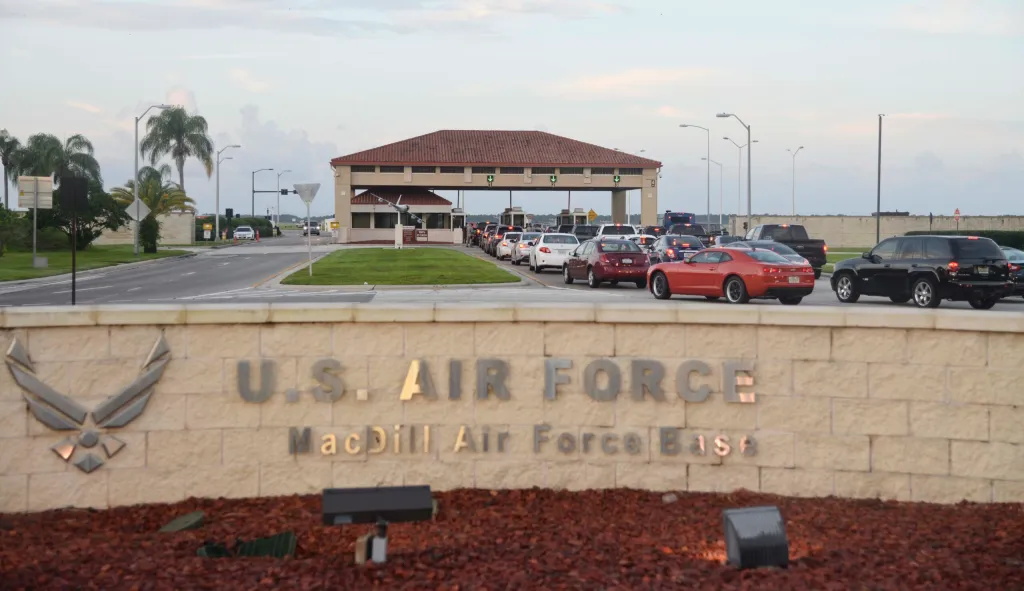
MacDill Air Force Base in Tampa, Florida, home of the command running the war in Iran, is reopening its main gate after a bomb scare earlier today, a spokesman for the 6th Air Refueling Wing, the base host unit, confirmed to The War Zone.
“The incident has been terminated and we are ready to open the main gate and visitor center,” the spokesman told us. The base, however, was not on lockdown.
MacDill is home to CENTCOM, U.S. Special Operations Command as well as the 6th Air Refueling Wing (6th ARW) and the 927th Air Refueling Wing and dozens of other mission partners. Last week, three airmen assigned to the 6th ARW were among six killed in a crash of a KC-135 aerial refueling tanker.
Today’s situation unfolded this afternoon when a suspicious package was found at the Visitors Center near the Dale Mabry entrance gate, according to the FBI. The bureau sent its Special Agent Bomb Techs to the scene, who worked it along with Tampa Police, the FBI said in a post on X.
The main gate at MacDill Air Force Base in Tampa, Florida, was reopened Monday afternoon after a bomb scare. U.S. Air Force photo by Senior Airman Vernon L. Fowler Jr MacDill Air Force Base in Tampa is home to both U.S. Central Command and U.S. Special Operations Command. U.S. Air Force photo by Senior Airman Vernon L. Fowler Jr.
UPDATE: 4:23 PM EST –
Talking to reporters on Monday, Trump seemed surprised that Iran would actually attack its neighbors if it came under fire.
The president was responding to a question about whether he was briefed about possible Iranian strikes on nations like the UAE, Saudi Arabia, and Qatar.
Trump on Iran:
I heard they were sending missiles to the UAE. I said, “That’s strange, you know? The UAE is like the banker for Iran.” They’re sort of the banker. Qatar, their neighbors — they got along okay.
A direct communications channel between U.S. envoy Steve Witkoff and Iranian Foreign Minister Abbas Araghchi has been reactivated in recent days, Axios reported, citing a U.S. official and a source with knowledge.
🇮🇷📲🇺🇸A direct communications channel between Iranian Foreign Minister Abbas Araghchi & U.S. envoy Steve Witkoff has been reactivated in recent days, according to a U.S. official & a source with knowledge. Read the story by @MarcACaputo & me on @Axioshttps://t.co/izoFpwZV5m
Araghchi lashed out at comments made by U.S. War Secretary Pete Hegseth that America would show “no quarter” in Epic Fury.
“When the U.S. Secretary of War declares ‘no quarter.’ he doesn’t project strength,” Araghchi stated on X. “He conveys moral bankruptcy and ignorance about law of armed conflict. We advise him to review the Hague Convention and Rome Statute of the ICC, unless he aspires to join Netanyahu as war criminal.”
When the U.S. Secretary of War declares “no quarter”, he doesn’t project strength. He conveys moral bankruptcy and ignorance about law of armed conflict. We advise him to review the Hague Convention and Rome Statute of the ICC, unless he aspires to join Netanyahu as war criminal.
The IDF Chief of the General Staff approved plans to continue operations in the Northern Command.
“The impact of the strike and the weakening of the radical regime in Iran is also felt in the campaign against Hezbollah,” said Lt. Gen. Eyal Zamir. “To date, the Northern Command has eliminated more than 400 Hezbollah terrorists.”
הרמטכ״ל באישור תוכניות להמשך בפיקוד הצפון: ״ההדף של הפגיעה והחלשת המשטר הרדיקאלי באיראן מורגש גם במערכה מול חיזבאללה; עד כה פיקוד צפון חיסל למעלה מ-400 מחבלי חיזבאללה״
״אנו נערכים להמשך ומתגברים את פיקוד הצפון בכוחות נוספים על מנת להרחיב את הפעולה הצבאית, להעמיק את הפגיעה… pic.twitter.com/HrBMLk9LFf
CENTCOM spokesman Capt. Tim Hawkins confirmed to The War Zone that more than 200 troops have been wounded or injured across seven countries since the start of Epic Fury. The injuries took place in Bahrain, Iraq, Israel, Jordan, Kuwait, Saudi Arabia and the UAE.
“The vast majority of these injuries have been minor, and more than 180 troops have already returned to duty,” he explained, adding that 10 troops were seriously injured.
In addition to the wounded, seven U.S. troops have been killed in Iranian attacks, the most serious being March 1 when six Army soldiers were killed in an Iranian drone attack on Kuwait. Another six Air Force airmen died when their KC-135 refueling plane crashed in Iraq, reportedly after colliding with another KC-135.
CENTCOM released its latest Epic Fury update, saying it struck more than 7,000 targets, flew more than 6,500 combat sorties and damaged or destroyed more than 100 Iranian ships.
CENTCOM
Baghdad continues to be hit.
In what looks like a scene from a video game, a counter rocket, artillery, and mortar C-RAM system is seen engaging with a drone over Baghdad.
C-Ram successful interception of a drone/rocket launched by Iranian-backed militias in Baghdad this evening. The Target was the U.S embassy. pic.twitter.com/EuHGx705gR
Footage of a reported coalition interception of an Iranian drone can be seen in the following video.
Not all the interceptions apparently worked. A drone reportedly slammed into the Royal Tulip al-Rasheed hotel in the Iraqi capital.
The Spanish Ministry of Defense confirmed on Sunday that it temporarily transferred its special forces from Iraq due to worsening safety and failure to conduct missions securely.“The Special Operations Task Group was relocated to safe areas because the security situation prevented it from continuing training operations with Iraqi forces,” according to the ministry.
GPS interference in and around the Strait of Hormuz has continued to rise since the crisis began, suggesting a persistent and geographically dispersed campaign of electronic disruption, according to Kpler.
Hormuz GPS disruption continues
GPS interference in and around the Strait of Hormuz has continued to rise since the crisis began, suggesting a persistent and geographically dispersed campaign of electronic disruption. This interference is triggering false AIS positioning,… pic.twitter.com/VXiaxHwFat
Wild video was posted on X of an Israeli interception of an Iranian ballistic missile. No injuries were reported, according to Times of Israel military correspondent Emanuel “Mannie” Fabian.
No injuries are reported in Iran’s latest ballistic missile salvo on Israel, the sixth since midnight, and the first in some six hours.
A small number of missiles were launched, which were likely intercepted, according to initial military assessments.
— Emanuel (Mannie) Fabian (@manniefabian) March 16, 2026
UPDATE: 2:42 PM EST –
The war with Iran is expected to last at least another month, according to Israel media, citing a senior Israeli official.
“Israel is reportedly preparing for an extended phase of fighting as it seeks to further weaken the Iranian regime and capitalize on what it views as signs of internal instability within the country’s leadership,” The Times of Israel reported. “According to the source, U.S. President Donald Trump supports Israel in continuing the campaign.”
We reached out to the White House for comment.
❗️ Senior Israeli source: Iran war will continue for longer than expected; we’re preparing to fight for another month at least; Trump is on board.
NATO responded to our query about debate over sending warships to the Strait of Hormuz.
“Allies have already stepped up to provide additional security in the Mediterranean,” a NATO official told us. “We are aware that individual Allies are talking with the US and others on what more they might do, including in the context of security in the Strait of Hormuz.”
In the first 96 hours of Epic Fury, the US-led coalition “expended approximately 5,197 munitions across 35 types,” according to a new report from the Foreign Policy Research Institute (FPRI).
“This carries a munitions-only replacement bill of $10–$16 billion in four days,” FPRI posited. “This represents a significant industrial burden for replacing some munitions that cannot be replenished in 4 days, 4 weeks, or even 4 months. Worse, those estimates do not include combat losses of warfighting assets or damage to bases and the high-end air defense enabling architecture.”
We have an important new analysis of munitions used in the first 96 hours of the war with Iran out at the @FPRI (Foreign Policy Research Institute).
In the first 96 hours, the US-led coalition expended approximately 5,197 munitions across 35 types. This carries a munitions-only…
Video has emerged showing intense flames at Dubai International Airport’s fuel storage area after an Iranian attack.
CENTCOM posted additional video of its attacks on Iranian targets.
Thousands of Iranian military targets have been struck by U.S. forces to neutralize threats posed by the Iranian regime now and into the future. pic.twitter.com/dE4VNxjjW1
MT Anderson provided an update on the location of the Tripoli. The ship was spotted on AIS North of the Riau Archipelago, transiting the southern South China Sea at 18 knots.
The Iraqi armed faction Kataib Hezbollah announced the death of its spokesperson, known as Abu Ali al-Askari. He was reportedly killed in a U.S. airstrike after a wave of attacks against U.S. facilities in Iraq.
بسم الله الرحمن الرحيم بكل فخر ورضا بقضاء الله وقدره، نزف لكم نبأ استشهاد الحاج أبو علي العسكري إلى جنات الخلد. ذلك الصوت الشجاع الذي لم يخرس أمام الظلم، واللسان الصادق الذي زرع في نفوس المجاهدين معاني الإباء والصمود. لقد كان الشهيد شريان التواصل بين ميادين التضحية ومنصات…
— صابرين نيوز – Sabereen news (@sabreenS11) March 16, 2026
Six people were injured in a Hezbollah rocket attack in Nahariya, according to medics. The town is located about eight miles south of the Lebanese border.
Six people are injured in a Hezbollah rocket strike on a home in Nahariya, medics say.
Magen David Adom says it treated two adults and four minors with signs of smoke inhalation. They are all listed in good condition.
— Emanuel (Mannie) Fabian (@manniefabian) March 16, 2026
Turkey’s Foreign Affairs Ministry (MFA) condemned the latest Israeli incursion into Lebanon.
“The Netanyahu government’s collective punishment and genocidal policies in Lebanon will lead to a new humanitarian catastrophe in the region,” the MFA said in a statement on Monday. “We reaffirm our solidarity with Lebanon amid these attacks, which violate its sovereignty and territorial integrity.”
UPDATE: 1:50 PM EST –
Speaking at a board meeting of the Trump Kennedy Center, the president claimed he predicted that Iran would attack shipping in the Strait.
NOW – Trump says he predicted Iran would weaponize the Strait of Hormuz, adding, “I predicted all of it. I predicted Osama bin Laden would knock out the World Trade Center. I made that prediction a year before he did it.” pic.twitter.com/6VqkvzamW0
The president added that he does not know Iran mined the Strait.
He also said the U.S. has hit 7,000 targets since launching Epic Fury.
Trump on Iran:
Since the beginning of the conflict, we struck more than 7,000 targets across Iran; these have been mostly military and commercial targets. pic.twitter.com/ppiyztSRDj
France has reportedly boosted its deployment of Rafale fighters to Jordan and UAE to 24, more than double the usual 10, according to French defense observer Tom Antonov. The jets have already intercepted dozens of Iranian drones, he added in a post on X.
The MQ-9 Reaper drones have played a big role in the war, and have been heavily targeted by Iran. To date, the U.S. has lost about a dozen Reapers, including one accidentally shot down by an ally, according to The Wall Street Journal.
NATO is considering boosting its ballistic missile defense capacity in Turkey against threats from neighboring Iran, Bloomberg News reported, citing people familiar with the matter
“The military alliance already deployed a battery in eastern Turkey to protect an early-warning radar used to track missiles across the Middle East,” the outlet stated. “It’s now considering sending another Patriot missile-defense system to bolster an airbase where American troops are stationed.”
NATO is looking into reinforcing further its ballistic missile defense capacity in Turkey against threats from neighboring Iran, according to people familiar with the matter. https://t.co/eQzealf1qp
President Volodymyr Zelensky has said Ukrainian drone experts will arrive in the Middle East this week to help Gulf states under attack from Iran.
In recent days, Iran has fired a number of Shahed drones across the Middle East – and some air defences in the region have struggled to cope.
Ukraine has spent the last four years inventing cheap but effective ways of defending their skies from similar Russian strikes, and now some countries have come knocking on their door to ask for help.
The BBC’s Diplomatic Correspondent, James Landale, is in Ukraine and has been to see the latest anti-drone technology the country has to offer.
Aimee Zambrano is a Venezuelan anthropologist, researcher, and consultant who has made significant contributions to the struggle against gender-based violence in the country. She is currently pursuing a master’s degree in Women’s Studies. She is the founder of the Utopix Femicide Monitor, a platform that collects data on femicides from open sources. In this interview, Zambrano sheds light on the main challenges to advance a feminist agenda in Venezuela.
How has gender-based violence evolved in Venezuela in recent years?
It is difficult to answer precisely because there are no official figures. The former Attorney General, Tarek William Saab, presented some figures, but he did not break them down; rather, he spoke in general terms about a period during his tenure. So it is very difficult to assess what changes have occurred, especially in quantitative terms.
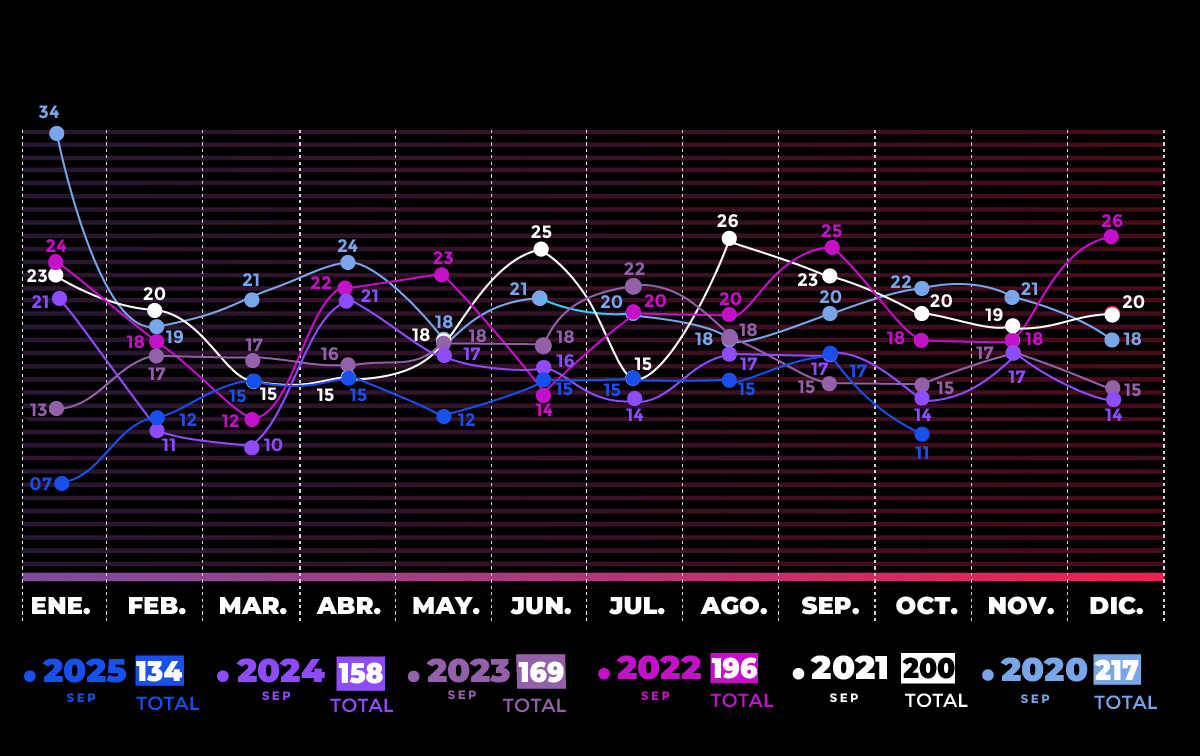
We undertake a partial registry based on cases that appear in the media, so these are not official figures. But it is enough to see patterns emerging. We have been monitoring since 2019 and saw an increase in femicides in 2020 due to the lockdown caused by the COVID-19 pandemic, which also led to an increase in all types of gender-based violence, not only in Venezuela but in most countries around the world. In 2019, when we began monitoring, we recorded 167 femicides, then in 2020 we recorded 256. In 2021, there was a decrease and we counted 239 cases. In 2022 and 2023, there were 240 and 201, respectively. In 2024, we recorded 188 femicides, and for 2025, we estimate that the figure will be around 165.
Utopix’s Femicide Monitor has tracked femicides from open sources. (Utopix)
There has been a decrease in the number of perpetrated femicides. However, when we look at other forms of violence, such as attempted femicides, we are seeing an increase compared to previous years. This is a warning sign because these are attempts to murder women that leave physical, psychological, and social consequences on both the survivor and her environment. We have also seen an increase in femicides of Venezuelan women abroad year after year. We are also witnessing a large number of cases of sexual abuse, especially child sexual abuse and trafficking, both abroad and in our country. Similarly, here in Venezuela, the disappearance of women is not classified as a type of gender-based violence, but according to various investigations we have carried out, disappearance or abduction, in the specific case of women, girls, and teenagers, is directly related to gender-based violence, and many of these disappearances are associated with femicides where the bodies are hidden, or cases of gender-based violence where the aggressors end up confining the victim. At the same time, we have seen a large number of cases of vicarious violence, where the aggressor inflicts violence on children, family members, or even pets.
So, a decrease in the number of femicides does not mean that other forms of violence are not on the rise. It is also important to talk about political violence. In the context of the July 2024 presidential elections, two femicides occurred and we saw threats against many community leaders by right-wing groups, who persecuted and harassed them. The same goes for media violence, social media, and artificial intelligence. In fact, there need to be changes in the laws so that these new forms of violence can be punished.
How does the lack of official and updated figures from the Venezuelan government affect the implementation of effective public policies to combat gender-based violence?
It has a huge impact. It’s not that there are no figures, but that they are not public. In fact, several public programs such as the Mamá Rosa Plan for Gender Equality and Equity, the various homeland plans, and even the Organic Law on Women’s Right to a Life Free of Violence, mandate that the state must create an observatory for gender-based violence.
The absence of data means that we cannot measure the efficacy of the public policies that are being enacted. Statistics could also allow organizations to develop proposals, not only legislative ones, but also from women’s groups, which must also participate in the elaboration of these policies.
“How many more must die?” poster in a feminist rally. (Archive)
It is often said that the deterioration of living conditions in Venezuela disproportionately affects women, but what does this mean in practice? Does it also impact the number of femicides?
Yes. We were affected by the rentier culture, the crisis, and economic sanctions. It has been a multifactorial phenomenon. The rentier culture did not change, public policies depended on oil revenues, and a series of US-led unilateral coercive measures were imposed on us that affected all aspects of life. In crises, it is always women’s bodies that pay the price. Currently, we have to work four or five jobs, usually informal ones, to make ends meet. For those of us with children, it is even worse, because we also have the burden of unpaid work in the home. The same is true for the care of the elderly or people with disabilities, which always falls on our shoulders.
In Venezuela, the vast majority of heads of households are women, who are either alone or part of extended families of women living together and raising children. In addition to this, women are the ones who make up a large part of the social fabric, they are grassroots leaders. At the same time, the country is experiencing a crisis in services, electricity, water, and gas, which further increases the burden of care work. Women have to figure out how to get water for cooking, washing, and bathing their children, how to cope when there is no electricity, or how to cook without gas, especially in the interior of the country, where public services are in a more dire state.
Does this have an impact on the number of femicides? It does. Violent, aggressive men find themselves in the midst of an economic crisis, where there is unemployment or underpaid work, they become increasingly frustrated, and where do they take out all this frustration? On women, their partners, their families, their homes. It would be interesting to see if GDP figures or periods of high inflation correlate with peaks in femicides.
With the US attacks on January 3, we saw the kidnapping of Cilia Flores and also the rise to power of the first female president, albeit in an acting capacity, Delcy Rodríguez. How can this be interpreted from a feminist perspective?
The bombing of Venezuela was a flagrant violation of international law, but we also saw how National Assembly Deputy Cilia Flores appeared during the arraignment hearing in New York with bruises on her face and body. Her attorney requested medical attention, which indicates that during the operation she was the victim of violence by the US military. This, of course, is indicative of what foreign powers do when they bomb and invade other countries, especially in the Global South, where they do so to extract natural resources.
Talking with friends, I have realized that many of us feel violated, as women, by everything that has happened. Now the acting president, Delcy Rodríguez, has a very difficult task: to take the reins of the state with a gun to her head. It takes a lot of courage to face this. In addition, after the bombing, Trump’s threat to her was very direct: do what I want or you will be worse off than Maduro. It is difficult to take on that role and have the responsibility of preventing more lives from being lost.
Zambrano argues that the lack of official data hamper gender-equality policies. (Archive)
In the current context, what are Venezuela’s main challenges in terms of the feminist agenda? You have suggested, for example, the need to create a structural feminist emergency plan. What would that look like?
The first thing is to define what that feminist agenda is, because in Venezuela there are different grassroots movements and organizations with different political stances, and polarization sometimes makes it very difficult to unify the points. Sometimes we try, but the efforts can get fragmented again due to specific political events. I would say that there is the issue of gender violence and also the decriminalization of abortion in Venezuela, as common ground that unifies many of us. We also demand a justice system that has a gender and feminist perspective because the current one is built from an androcentric, patriarchal perspective; that is, it is a justice system created by men and for men. An amnesty law is currently being implemented, so this has to be included in it.
By a feminist emergency structural plan, we mean that the Ministry for Women and Gender Equality should not be the only institution responsible for public policies relating to women and the LGBTIQ+ population. It should rather involve the entire state. I am not saying anything new because this already appears in the Organic Law on Women’s Right to a Life Free of Violence and also in the Mamá Rosa plan, which was supposed to culminate in 2019, but almost nothing that was stipulated ended up being implemented. All ministries, all affiliated entities, all state institutions, including governors’ and mayors’ offices, must address gender issues, and a robust budget is needed for this. For example, the Ministry of Communication must run ongoing campaigns in the media and on social networks about the different forms of violence and the telephone hotlines and websites where incidents can be reported. The Ministry of Housing must focus on creating shelters for victims. The Ministry of Education must review the curriculum to include gender studies, comprehensive sexuality education, and different types of violence, as well as implement protocols for care in schools, high schools, and universities. In addition, all state officials have a duty to educate themselves on the issue.
How do you assess the retreat of the state in certain areas and the growing “NGOization” leveraged by Western funding?
It’s complex because initiatives, activities, marches, etc., require resources, and many of our organizations don’t have them. In addition, there is another factor at play here, which is the proliferation of religious groups, especially Pentecostal evangelicals, who have grown significantly in Venezuela, have a presence within the state and within political parties, and are also very wealthy, which allows them to carry out campaigns, mobilizations, etc. Feminist movements face many obstacles because most of us also have to work several jobs and take care of our homes and communities. So it is difficult to keep up with evangelical and conservative right-wing groups.
I think we need to identify who the enemies are, who targets our rights, and then assess the contradictions and coordinate women’s and feminist movements. I make the distinction because there are women’s organizations that do not necessarily identify as feminist. But we have to grow, see what issues unite us, and begin a series of actions. I always make this call: despite our political differences, let’s try to unite around an agenda that unites us all.
Despite a downturn in femicides, other forms of gender violence have been on the rise in Venezuela, Zambrano argues. (Archive)
How does social media influence the proliferation of violence, and gender violence in particular?
I believe that violence has always been present, but now it is exposed because some forms of violence that we used to consider normal or common have been explained or denormalized. In addition, social media and the internet allow us all to learn about different cases in different parts of the world. But, on the other hand, we have the issue of anonymity and lack of accountability, meaning that people can say outrageous things, threaten, insult, and commit violence facilitated by technology. Social media also allows virtual groups to come together to commit violence, and there are also certain influencers on Instagram, YouTube, and TikTok spreading crazy ideas. Guys like El Temach in Mexico, who speak to you from their machismo, what some call “toxic masculinity” but I call “the healthy descendant of patriarchy.”
There is also another point here: the algorithm. For example, a teenager starts searching for content about exercise, and soon after, the algorithm will introduce them to these influencers, thus creating mass communities such as incels, which organize themselves through forums like Reddit. This also breaks down the entire social fabric of face-to-face interactions, and people end up isolated but believing they are “accompanied on social media.” All of this leads to disorders such as anxiety and depression. In addition, teenage girls and women become caught up in the aspirational idea of having a certain type of body, aesthetic violence, etc. In short, I’m not saying this from a moralistic point of view, but social networks have encouraged a lot of violence. Besides, who owns these networks? What ideology do they profess? What are they using them for? We have to investigate so we can arm ourselves and fight this battle.