Delhi

Cockroach Janta Party rallies at New Delhi for youth protests | Politics News

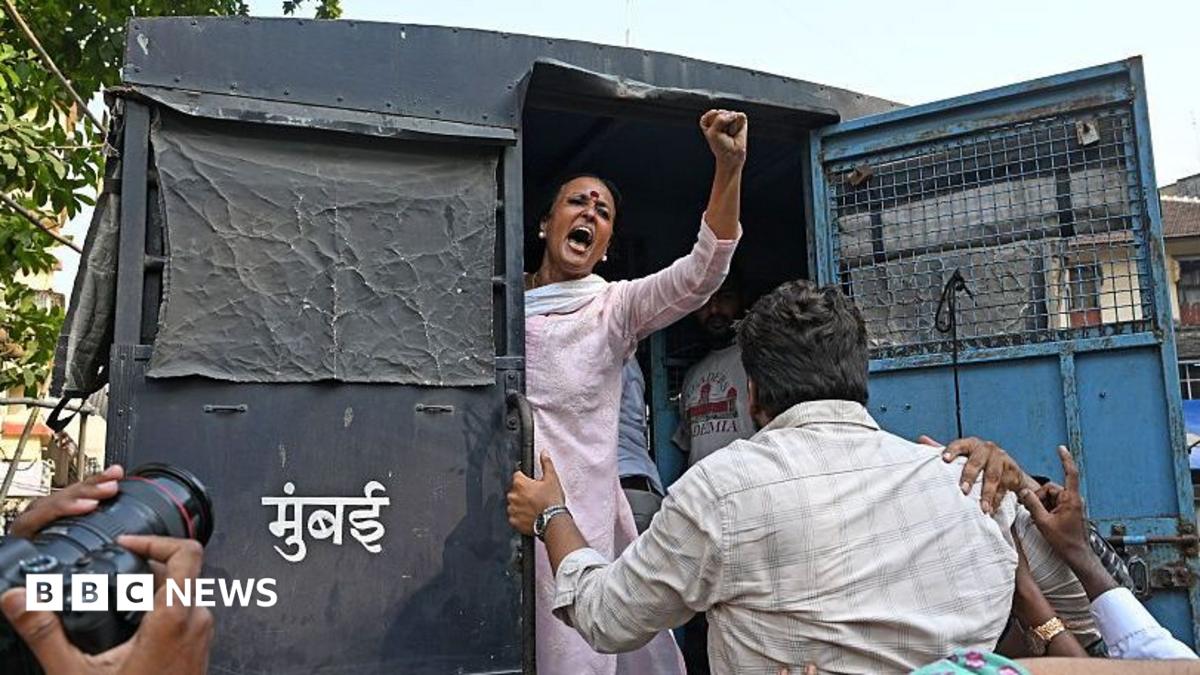
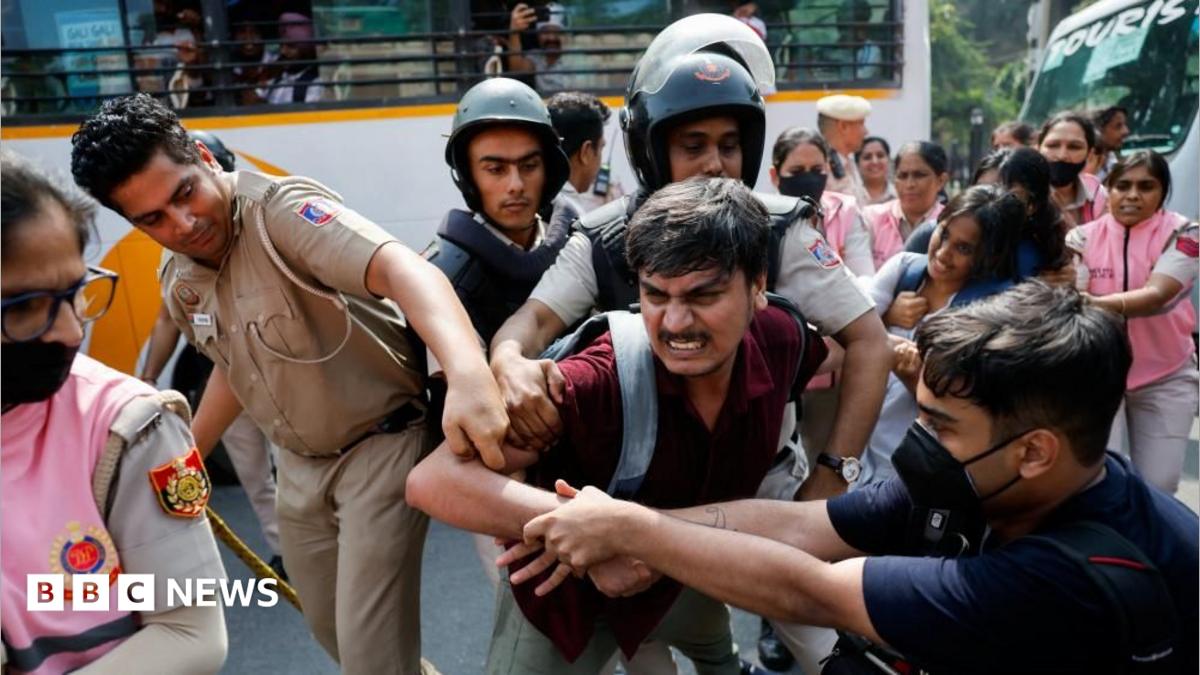
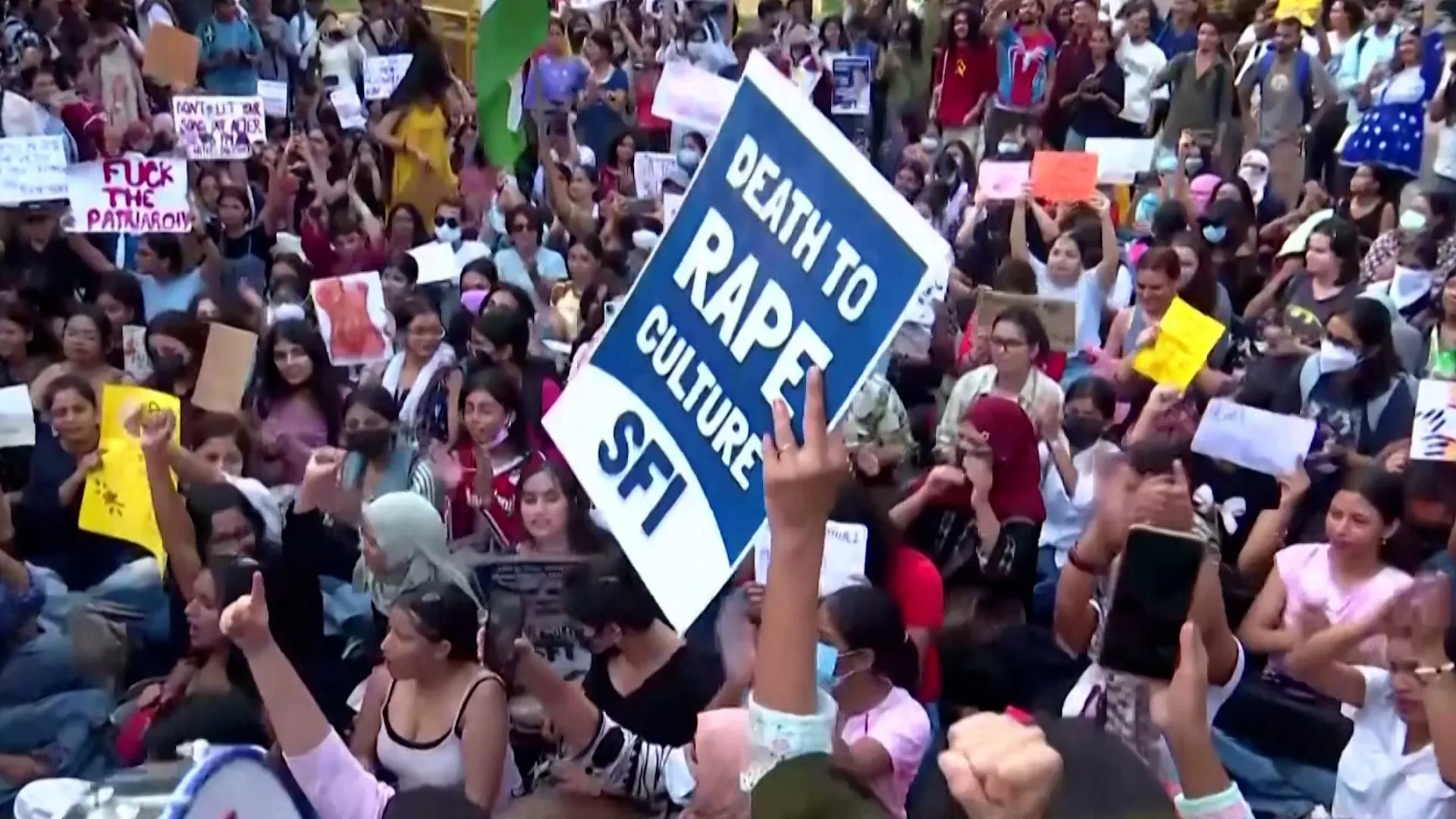
At New Delhi’s Jantar Mantar, India’s most famous protest strip, hundreds of mostly young people in cockroach masks and with dog-eared exam guides in hand tried to turn an online joke into a real-world force.

They call themselves the Cockroach Janta Party (CJP) – a satirical “people’s party” born barely three weeks ago after India’s chief justice reportedly likened government critics and unemployed youth to “cockroaches” and “parasites”.

What began as a parody account and meme factory has since exploded into a channel for anger over exams, jobs and a fraying sense of economic promise.

On Saturday, that digital discontent stepped off the screen. Waving India’s national flag and clutching schoolbooks, the protesters demanded the resignation of Education Minister Dharmendra Pradhan after a string of exam paper leaks, technical glitches and cancelled tests.

For many, the fiasco over the NEET medical entrance exam – and reports of student suicides – symbolises a system young Indians say has no credibility left.

The CJP’s founder, 30-year-old political strategist and Boston University graduate Abhijeet Dipke, flew in from the United States to lead the rally, telling supporters that “cockroaches don’t ever fear.”

Police in riot gear and steel barricades underscored the risks of dissent in an era when large protests have often been met with crackdowns and criminal cases.

With more than 20 million followers on Instagram, CJP has already outgrown many mainstream parties online.

Its first street protest now tests whether self-deprecating memes and satire can be converted into a lasting organisation – and whether India’s anxious, hyper-connected youth can find a new political language for their frustration.

Source link

Supporters of the Cockroach People’s Party hold protest in New Delhi | Politics News

CJP organisers rally supporters to demand the resignation of Education Minister Dharmendra Pradhan.

Hundreds of supporters of the Cockroach Janta Party (Cockroach People’s Party, or CJP), a satirical social media movement in India, have gathered in New Delhi after weeks of grabbing news headlines.

The party, a play on Prime Minister Narendra Modi’s Hindu-nationalist Bharatiya Janata Party (BJP), has attracted millions of online followers and widespread support among young Indians.

Recommended Stories

list of 3 itemsend of list

On Saturday, hundreds gathered in New Delhi’s protest zone near parliament, with some participants wearing cockroach masks.

Last month, India’s Chief Justice Surya Kant likened young people who criticised the government to “cockroaches” and “parasites” during a court hearing.

Kant later said his comments were taken out of context. But Abhijeet Dipke, a political communications strategist and Boston University student, used the insult as inspiration for a parody political party.

Within a week of launching a website and social media accounts, CJP’s Instagram page soared and by Saturday had amassed more than 22.2 million followers, with the slogan: “A political front for the youth, by the youth, for the youth.”

For Saturday’s march, CJP organisers rallied supporters to demand the resignation of Education Minister Dharmendra Pradhan, after an exam irregularity controversy in May that quickly transformed into frustration over India’s education system and limited job opportunities.

CJP supporters chanted slogans including: “Cockroaches are coming, Dharmendra Pradhan is going!”

Organisers of the march encouraged participants to bring India’s national flag and a book, which they said symbolised the right to education and equal opportunity for all. They also urged demonstrators to remain peaceful and avoid any confrontations with police.

Ahead of the protest, Indian police tightened security at the airport and the Jantar Mantar protest site, setting up steel barricades at key points.

Cockroach Janta Party (CJP) founder Abhijeet Dipke (C) shouts slogans during a protest over alleged irregularities in the country's major examinations, in New Delhi on June 6, 2026.
Cockroach Janta Party (CJP) founder Abhijeet Dipke, centre, shouts slogans during a protest over alleged irregularities in the country’s major examinations, in New Delhi [AFP]

The group’s rise echoes a similar trend across South Asia, where youth movements born out of social media have been crucial in antigovernment protests, particularly in Sri Lanka, Bangladesh and Nepal.

With the cockroach now a symbol of endurance, CJP supporters have jokingly described themselves as unemployed and perpetually online.

While young people in India make up more than a quarter of the population, they face limited job opportunities, leading to rising unemployment and growing disillusionment with traditional politics.

Some supporters of Modi’s party have dismissed the CJP as nothing more than a social media gimmick. They argue that the parody party’s social media success might not translate into political street mobilisation and that its rapid rise will likely be fleeting.

Source link

Indian PM Modi meets Myanmar military gov’t leader in New Delhi | Narendra Modi News

India says it will continue engaging with Myanmar after Prime Minister Narendra Modi spoke with Min Aung Hlaing, the leader of the country’s military government, in New Delhi.

Indian Foreign Secretary Vikram Misri told reporters on Monday that India’s policy is “not intended to be a commentary on the internal political arrangements” in Myanmar and that New Delhi believes engagement is the best way forward.

Recommended Stories

list of 3 itemsend of list

Western nations have sought to isolate Myanmar’s military rulers since they overthrew the elected government of Aung San Suu Kyi in a 2021 coup that triggered a crackdown on opponents and a brutal civil war.

The conflict began when the country’s army leader, Min Aung Hlaing, ousted the government and detained civilian leaders, including Nobel Peace Prize laureate Aung San Suu Kyi.

Some critics and human rights groups have said Min Aung Hlaing’s visit to India risks lending legitimacy to the military-backed government.

“We have always proceeded on the principle that sustained dialogue is what is important,” Misri said, adding that isolating Myanmar would be counterproductive.

“History has shown that disengagement doesn’t give us any results that are better than engagement.”

The visit is Min Aung Hlaing’s first to India since he was sworn in as president in April following an election that critics say was designed to cement his hold on power. His last visit to India was in 2019, when he served as Myanmar’s military chief.

He arrived in India on Saturday, first in the eastern state of Bihar, with a visit to the Buddhist pilgrimage site of Bodh Gaya, where believers say that the Buddha attained enlightenment.

India shares a 1,643-kilometre (1,020-mile) border with Myanmar and a maritime boundary in the Bay of Bengal.

epa13008316 Indian Prime Minister of India Narendra Modi (R) with Myanmar President Min Aung Hlaing (L) prior to their meeting at Hyderabad House in New Delhi, India, 01 June 2026. Myanmar's President Min Aung Hlaing is on a five-day state visit to India. EPA/RAJAT GUPTA
Narendra Modi (right) with Min Aung Hlaing (left) prior to their meeting at Hyderabad House in New Delhi [Rajat Gupta/EPA]

Strategic partnership

Myanmar is also strategically important to India’s security interests. The two countries have cooperated on border security and intelligence sharing to combat armed rebel groups.

Modi and Min Aung Hlaing did not address the media after their meeting, as usually occurs after most bilateral talks involving visiting heads of state or government in New Delhi.

But Misri said the two leaders discussed trade, defence and security cooperation, border management, and regional issues, with talks also focusing on expanding economic and technology ties. He said both sides agreed to deepen collaboration across sectors, including trade, energy and critical minerals, and to accelerate major connectivity projects.

Min Aung Hlaing is expected to hold talks with business representatives during his five-day visit, and will travel to the financial hub, Mumbai.

Bilateral trade was $1.95bn in 2025-2026, according to New Delhi.

The leaders also discussed cooperation against cybercrime and human trafficking, issues that have affected thousands of Indians lured to scam centres in the region.

Misri said India and Myanmar have worked together to rescue more than 2,400 Indian nationals over the past 18 months.

Resistance groups formed after the 2021 coup have captured swaths of Myanmar. Others sought out and fought under the leadership of ethnic armies in exchange for training and weapons with which to fight the military.

These resistance groups, known as the People’s Defence Force (PDF), nominally operate under the leadership of the National Unity Government (NUG), a shadow government formed by Myanmar lawmakers removed by the military coup.

Zin Mar Aung, the foreign minister of the NUG, wrote a letter to Subrahmanyam Jaishankar, the minister of external affairs for India, on May 28, expressing concern about the visit.

“Since the military coup of 2021, which overturned the democratic will of the people, Myanmar has endured prolonged conflict, instability, and immense humanitarian suffering,” she said.

“India has long championed democratic governance, the rule of law, and regional stability. We therefore urge the Government of India to weigh carefully the broader implications of formal engagement that may normalise or legitimise military rule in Myanmar.”

Source link

Iran Conflict Tests BRICS Unity at Delhi Foreign Ministers Meeting

The ongoing Iran conflict is expected to dominate discussions at the BRICS foreign ministers meeting in New Delhi, placing pressure on the expanded bloc to find common ground on one of the world’s most divisive geopolitical crises.

The two day meeting brings together foreign ministers and representatives from BRICS member states, including Brazil, Russia, India, China, South Africa, Iran, Egypt, Ethiopia, Indonesia, and the United Arab Emirates.

India, which holds the BRICS chairmanship for 2026, faces the difficult task of balancing competing interests within the group while attempting to secure a joint statement.

Iran Pushes for Stronger BRICS Position

Iran has urged BRICS members to condemn the actions of the United States and Israel in the Gulf conflict through a unified statement.

Iranian Foreign Minister Abbas Araqchi is expected to participate in the meeting as Tehran seeks diplomatic support from emerging economies and Global South nations.

The conflict has become a major test of BRICS cohesion because member states hold differing positions on the war and regional security issues.

Divisions Emerge Within the Bloc

The sharpest disagreements are reportedly between Iran and the United Arab Emirates, which are aligned on opposing sides of the regional conflict.

Tensions have increased following reports of military strikes involving Gulf states and Iran, complicating efforts to draft a consensus statement acceptable to all members.

Indian officials previously acknowledged the difficulty of forging unity within BRICS because some member states are directly involved in the conflict.

Despite the divisions, India remains hopeful that ministers can still agree on a joint declaration after negotiations during the meeting.

Russia and China Maintain Key Roles

Russian Foreign Minister Sergey Lavrov is expected to attend the gathering, reinforcing Moscow’s active role within BRICS diplomacy.

China, however, will not send Foreign Minister Wang Yi because of scheduling conflicts linked to U.S. President Donald Trump visiting Beijing this week.

Instead, China will be represented by Ambassador Xu Feihong.

Beijing has largely maintained a neutral public position on the Iran conflict while preserving close ties with both Iran and Gulf Arab states.

Energy Prices Add Economic Pressure

The war’s impact on global energy markets has become a major concern for BRICS economies, many of which are heavily dependent on imported oil and vulnerable to rising inflation.

Several BRICS nations, including India, have introduced emergency economic measures to shield consumers and industries from soaring fuel costs caused by the conflict.

The economic fallout is likely to strengthen calls within BRICS for diplomatic solutions and greater coordination among emerging economies.

India Attempts Diplomatic Balancing

India is seeking to use the BRICS platform to strengthen its leadership role among developing nations while avoiding direct alignment with any side in the conflict.

Analysts say New Delhi’s challenge lies in preserving BRICS unity despite deep geopolitical differences among member states.

Former Indian diplomat Manjeev Singh Puri described the participation of nearly all BRICS foreign ministers as a positive sign for dialogue and coalition building among emerging economies.

Analysis

The BRICS meeting in New Delhi highlights the growing difficulty of maintaining unity within an expanded bloc that now includes countries with competing regional interests and conflicting geopolitical priorities.

The Iran conflict has exposed the limits of BRICS as a coordinated political platform. While the group shares common interests in promoting a multipolar world order and strengthening the Global South, its members remain divided on security issues and regional conflicts.

India’s role as chair becomes especially sensitive because it must balance relations with Iran, Gulf Arab states, Russia, China, and Western powers simultaneously.

The absence of a strong unified Chinese diplomatic presence may also reduce the likelihood of a major breakthrough or coordinated BRICS response.

At the same time, the meeting demonstrates that BRICS is evolving beyond an economic grouping into a broader geopolitical forum where emerging powers increasingly debate global security and diplomatic issues.

Whether the bloc can produce a joint statement on the Iran war may become an important indicator of its future credibility and effectiveness as an alternative voice in global governance.

With information from Reuters.

Source link

IPL 2026: Abhishek Sharma hits 135 not out for Sunrisers against Delhi Capitals

India opener Abhishek Sharma hit the fifth-highest score in Indian Premier League history in Sunrisers Hyderabad’s 47-run win against Delhi Capitals.

The 25-year-old left-hander, who is number one in the men’s T20 batting rankings, batted throughout the innings for 135 not out from 68 balls in the hosts’ 242-2.

He peppered the straight boundaries with powerful drives, hitting 10 sixes and 10 fours, and reached three figures in 47 deliveries.

His score has only been bettered in the IPL by West Indies great Chris Gayle (175 not out), Brendon McCullum (158 not out), Abhishek’s 141 on the same ground last year and Quinton de Kock’s 140 against Kolkata Knight Riders in 2022.

It was also Abhishek’s ninth T20 century, taking him joint fourth on the all-time list.

Delhi made 195-9 in reply with seamer Eshan Malinga taking 4-32.

Source link