delcy rodríguez

Trump leaves Venezuela’s opposition sidelined and Maduro’s party in power

Venezuela’s opposition supporters have long hoped for the day when Nicolás Maduro is no longer in power — a dream that was fulfilled when the U.S. military whisked the authoritarian leader away. But while Maduro is in jail in New York on drug trafficking charges, the leaders of his repressive administration remain in charge.

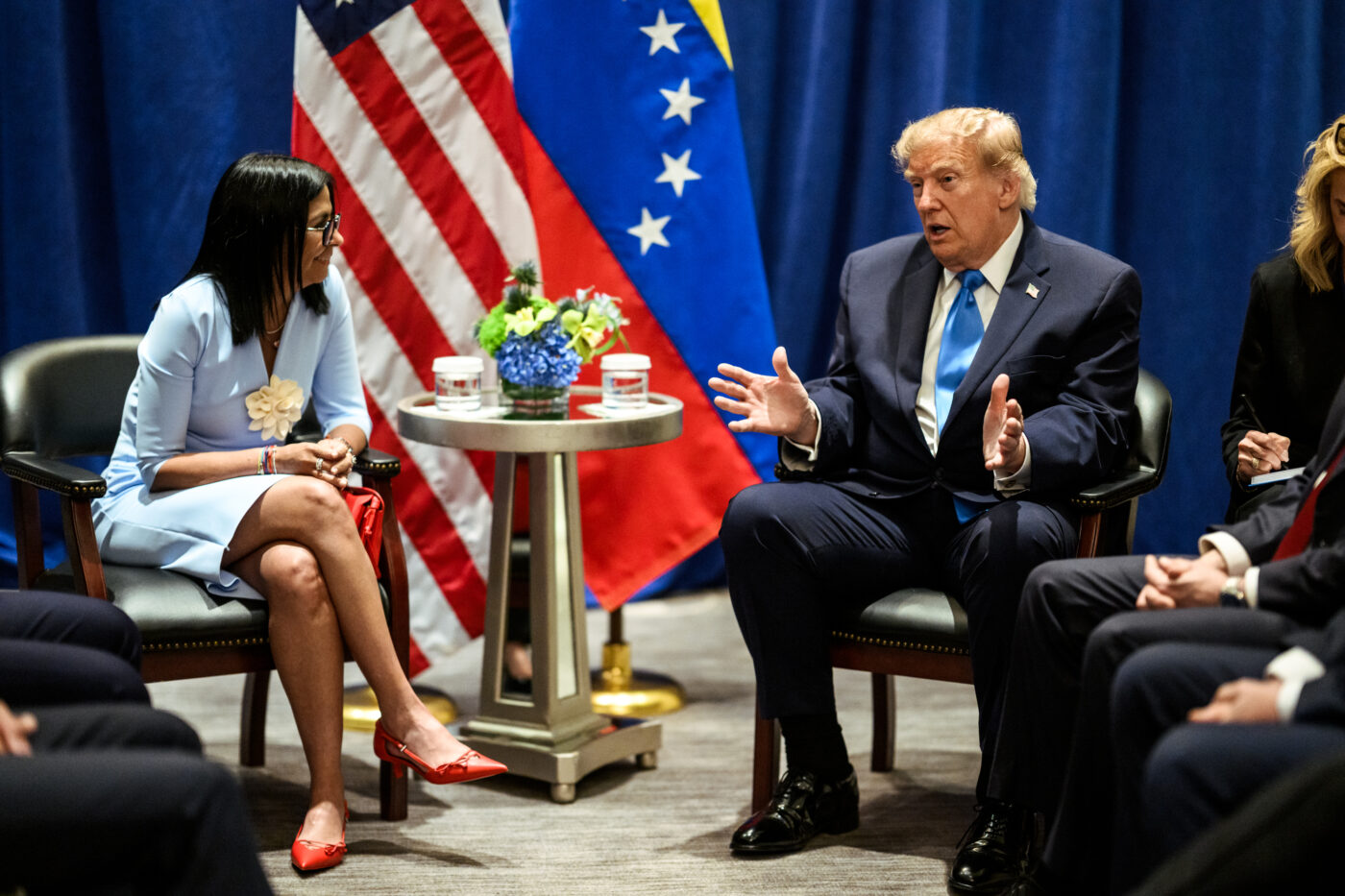
The nation’s opposition — backed by consecutive Republican and Democratic administrations in the U.S. — for years vowed to immediately replace Maduro with one of their own and restore democracy to the oil-rich country. But President Trump delivered them a heavy blow by allowing Maduro’s vice president, Delcy Rodríguez, to assume control.

Meanwhile, most opposition leaders, including Nobel Peace Prize winner María Corina Machado, are in exile or prison.

“They were clearly unimpressed by the sort of ethereal magical realism of the opposition, about how if they just gave Maduro a push, it would just be this instant move toward democracy,” David Smilde, a Tulane University professor who has studied Venezuela for three decades, said of the Trump administration.

The U.S. seized Maduro and first lady Cilia Flores in a military operation Saturday, removing them both from their home on a military base in Venezuela’s capital, Caracas. Hours later, Trump said the U.S. would “run” Venezuela and expressed skepticism that Machado could ever be its leader.

“She doesn’t have the support within, or the respect within, the country,” Trump told reporters. “She’s a very nice woman, but she doesn’t have the respect.”

Ironically, Machado’s unending praise for the American president, including dedicating her Nobel Peace Prize to Trump and her backing of U.S. campaigns to deport Venezuelan migrants and attack alleged drug traffickers in international waters, has lost her some support at home.

The rightful winner of Venezuela’s presidential election

Machado rose to become Maduro’s strongest opponent in recent years, but his government barred her from running for office to prevent her from challenging — and likely beating — him in the 2024 presidential election. She chose retired ambassador Edmundo González Urrutia to represent her on the ballot.

Officials loyal to the ruling party declared Maduro the winner mere hours after the polls closed, but Machado’s well-organized campaign stunned the nation by collecting detailed tally sheets showing González had defeated Maduro by a 2-to-1 margin.

The U.S. and other nations recognized González as the legitimate winner.

However, Venezuelans identify Machado, not González, as the winner, and the charismatic opposition leader has remained the voice of the campaign, pushing for international support and insisting her movement will replace Maduro.

In her first televised interview since Maduro’s capture, Machado effusively praised Trump and failed to acknowledge his snub of her opposition movement in the latest transition of power.

“I spoke with President Trump on Oct. 10, the same day the prize was announced, not since then,” she told Fox News on Monday. “What he has done as I said is historic, and it’s a huge step toward a democratic transition.”

Hopes for a new election

U.S. Secretary of State Marco Rubio on Sunday seemed to walk back Trump’s assertion that the U.S. would “run” Venezuela. In interviews, Rubio insisted that Washington will use control of Venezuela’s oil industry to force policy changes, and called its current government illegitimate. The country is home to the world’s largest proven crude oil reserves.

Neither Trump nor Rodríguez have said when, or if, elections might take place in Venezuela.

Venezuela’s constitution requires an election within 30 days whenever a president becomes “permanently unavailable” to serve. Reasons listed include death, resignation, removal from office or “abandonment” of duties as declared by the National Assembly. That electoral timeline was rigorously followed when Maduro’s predecessor, Hugo Chávez, died of cancer in 2013.

On Tuesday, U.S. Sen. Lindsey Graham, a close Trump ally who traveled with the president on Air Force One on Sunday, said he believes an election will happen but did not specify when or how.

“We’re going to build the country up – infrastructure wise – crescendoing with an election that will be free,” the South Carolina Republican told reporters.

But Maduro loyalists in the high court Saturday, citing another provision of the constitution, declared Maduro’s absence “temporary” meaning there is no election requirement. Instead, the vice president — which is not an elected position — takes over for up to 90 days, with a provision to extend to six months if approved by the National Assembly, which is controlled by the ruling party.

Challenges lie ahead for the opposition

In its ruling, Venezuela’s Supreme Court made no mention of the 180-day limit, leading to speculation that Rodríguez could try to cling to power as she seeks to unite ruling party factions and shield it from what would certainly be a stiff electoral challenge.

Machado on Monday criticized Rodríguez as “one the main architects of torture, persecution, corruption, narco-trafficking … certainly not an individual that can be trusted by international investors.”

Even if an election takes place, Machado and González would first have to find a way back into Venezuela.

González has been in exile in Spain since September 2024 and Machado left Venezuela last month when she appeared in public for the first time in 11 months to receive her Nobel Prize in Norway.

Ronal Rodríguez, a researcher at the Venezuela Observatory in Colombia’s Universidad del Rosario, said the Trump administration’s decision to work with Rodríguez could harm the nation’s “democratic spirit.”

“What the opposition did in the 2024 election was to unite with a desire to transform the situation in Venezuela through democratic means, and that is embodied by María Corina Machado and, obviously, Edmundo González Urrutia,” he said. “To disregard that is to belittle, almost to humiliate, Venezuelans.”

Cano writes for the Associated Press.

Source link

How Delcy Rodríguez courted Donald Trump and rose to power in Venezuela

In 2017, as political outsider Donald Trump headed to Washington, Delcy Rodríguez spotted an opening.

Then Venezuela’s foreign minister, Rodríguez directed Citgo — a subsidiary of the state oil company — to make a $500,000 donation to the president’s inauguration. With the socialist administration of Nicolas Maduro struggling to feed Venezuela, Rodríguez gambled on a deal that would have opened the door to American investment. Around the same time, she saw that Trump’s ex-campaign manager was hired as a lobbyist for Citgo, courted Republicans in Congress and tried to secure a meeting with the head of Exxon.

The charm offensive flopped. Within weeks of taking office, Trump, urged by then-Sen. Marco Rubio, made restoring Venezuela’s democracy his driving focus in response to Maduro’s crackdown on opponents. But the outreach did bear fruit for Rodríguez, making her a prominent face in U.S. business and political circles and paving the way for her own rise.

“She’s an ideologue, but a practical one,” said Lee McClenny, a retired foreign service officer who was the top U.S. diplomat in Caracas during the period of Rodríguez’s outreach. “She knew that Venezuela needed to find a way to resuscitate a moribund oil economy and seemed willing to work with the Trump administration to do that.”

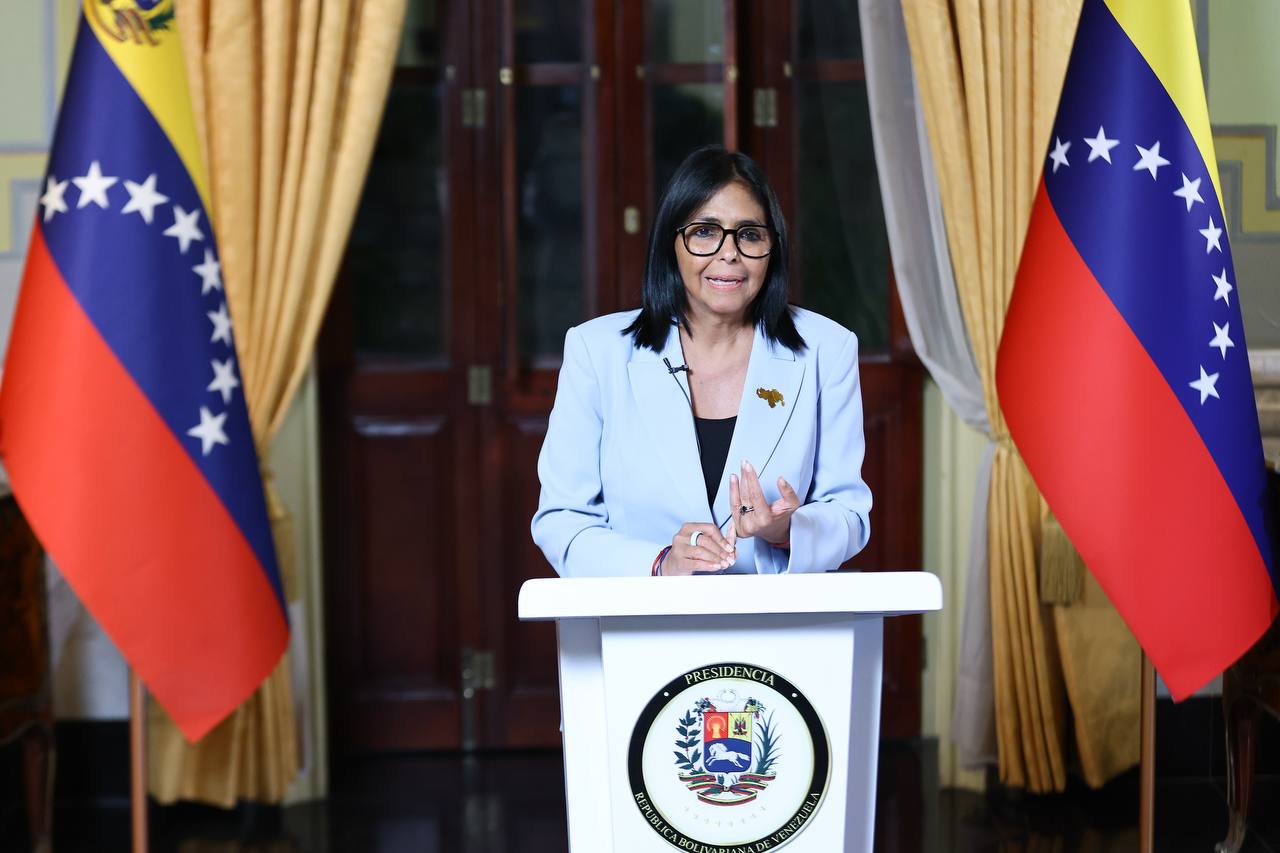
Nearly a decade later, as Venezuela’s interim president, Rodríguez’s message — that Venezuela is open for business — seems to have persuaded Trump. In the days since Maduro’s stunning capture Saturday, he’s alternately praised Rodríguez as a “gracious” American partner while threatening a similar fate as her former boss if she doesn’t keep the ruling party in check and provide the U.S. with “total access” to the country’s vast oil reserves. One thing neither has mentioned is elections, something the constitution mandates must take place within 30 days of the presidency being permanently vacated.

This account of Rodríguez’s political rise is drawn from interviews with 10 former U.S. and Venezuelan officials as well as businessmen from both countries who’ve had extensive dealings with Rodríguez and in some cases have known her since childhood. Most spoke on the condition of anonymity for fear of retaliation from someone who they almost universally described as bookishly smart, sometimes charming but above all a cutthroat operator who doesn’t tolerate dissent. Rodríguez didn’t respond to AP requests for an interview.

Father’s murder hardens leftist outlook

Rodríguez entered the leftist movement started by Hugo Chávez late — and on the coattails of her older brother, Jorge Rodríguez, who as head of the National Assembly swore her in as interim president Monday.

Tragedy during their childhood fed a hardened leftist outlook that would stick with the siblings throughout their lives. In 1976 — when, amid the Cold War, U.S. oil companies, American political spin doctors and Pentagon advisers exerted great influence in Venezuela — a little-known urban guerrilla group kidnapped a Midwestern businessman. Rodriguez’s father, a socialist leader, was picked up for questioning and died in custody.

McClenny remembers Rodríguez bringing up the murder in their meetings and bitterly blaming the U.S. for being left fatherless at the age of 7. The crime would radicalize another leftist of the era: Maduro.

Years later, while Jorge Rodríguez was a top electoral official under Chávez, he secured for his sister a position in the president’s office.

But she advanced slowly at first and clashed with colleagues who viewed her as a haughty know-it-all.

In 2006, on a whirlwind international tour, Chávez booted her from the presidential plane and ordered her to fly home from Moscow on her own, according to two former officials who were on the trip. Chávez was upset because the delegation’s schedule of meetings had fallen apart and that triggered a feud with Rodriguez, who was responsible for the agenda.

“It was painful to watch how Chávez talked about her,” said one of the former officials. “He would never say a bad thing about women but the whole flight home he kept saying she was conceited, arrogant, incompetent.”

Days later, she was fired and never occupied another high-profile role with Chávez.

Political revival and soaring power under Maduro

Years later, in 2013, Maduro revived Rodríguez’s career after Chávez died of cancer and he took over.

A lawyer educated in Britain and France, Rodríguez speaks English and spent large amounts of time in the United States. That gave her an edge in the internal power struggles among Chavismo — the movement started by Chávez, whose many factions include democratic socialists, military hardliners who Chávez led in a 1992 coup attempt and corrupt actors, some with ties to drug trafficking.

Her more worldly outlook, and refined tastes, also made Rodríguez a favorite of the so-called “boligarchs” — a new elite that made fortunes during Chávez’s Bolivarian revolution. One of those insiders, media tycoon Raul Gorrín, worked hand-in-glove with Rodríguez’s back-channel efforts to mend relations with the first Trump administration and helped organize a secret visit by Rep. Pete Sessions, a Texas Republican, to Caracas in April 2018 for a meeting with Maduro. A few months later, U.S. federal prosecutors unsealed the first of two money laundering indictments against Gorrin.

After Maduro promoted Rodríguez to vice president in 2018, she gained control over large swaths of Venezuela’s oil economy. To help manage the petro-state, she brought in foreign advisers with experience in global markets. Among them were two former finance ministers in Ecuador who helped run a dollarized, export-driven economy under fellow leftist Rafael Correa. Another key associate is French lawyer David Syed, who for years has been trying to renegotiate Venezuela’s foreign debt in the face of crippling U.S. sanctions that make it impossible for Wall Street investors to get repaid.

“She sacrificed her personal life for her political career,” said one former friend.

As she amassed more power, she crushed internal rivals. Among them: once powerful Oil Minister Tareck El Aissami, who was jailed in 2024 as part of an anti-corruption crackdown spearheaded by Rodríguez.

In her de-facto role as Venezuela’s chief operating officer, Rodríguez proved a more flexible, trustworthy partner than Maduro. Some have likened her to a sort of Venezuelan Deng Xiaoping — the architect of modern China.

Hans Humes, chief executive of Greylock Capital Management, said that experience will serve her well as she tries to jump-start the economy, unite Chavismo and shield Venezuela from stricter terms dictated by Trump. Imposing an opposition-led government right now, he said, could trigger bloodshed of the sort that ripped apart Iraq after U.S. forces toppled Saddam Hussein and formed a provisional government including many leaders who had been exiled for years.

“We’ve seen how expats who have been outside of the country for too long think things should be the way it was before they left,” said Humes, who has met with Maduro as well as Rodríguez on several occasions. “You need people who know how to work with how things are not how they were.”

Democracy deferred?

Where Rodríguez’s more pragmatic leadership style leaves Venezuela’s democracy is uncertain.

Trump, in remarks after Maduro’s capture, said Nobel Peace Prize winner Maria Corina Machado lacks the “respect” to govern Venezuela despite her handpicked candidate winning what the U.S. and other governments consider a landslide victory in 2024 presidential elections stolen by Maduro.

Elliott Abrams, who served as special envoy to Venezuela during the first Trump administration, said it is impossible for the president to fulfill his goal of banishing criminal gangs, drug traffickers and Middle Eastern terrorists from the Western Hemisphere with the various factions of Chavismo sharing power.

“Nothing that Trump has said suggests his administration is contemplating a quick transition away from Delcy. No one is talking about elections,” said Abrams. “If they think Delcy is running things, they are completely wrong.”

Goodman writes for the Associated Press.

Source link

CIA advised Trump against supporting Venezuela’s democratic opposition

A highly confidential CIA assessment produced at the request of the White House warned President Trump of a wider conflict in Venezuela if he were to support the country’s democratic opposition once its president, Nicolás Maduro, was deposed, a person familiar with the matter told The Times.

The assessment was a tightly held CIA product commissioned at the request of senior policymakers before Trump decided whether to authorize Operation Absolute Resolve, the stunning U.S. mission that seized Maduro and his wife from their bedroom in Caracas over the weekend.

Announcing the results of the operation on Sunday, Trump surprised an anxious Venezuelan public when he was quick to dismiss the leadership of the democratic opposition — led by María Corina Machado, last year’s Nobel Peace Prize laureate, and Edmundo González Urrutia, the opposition candidate who won the 2024 presidential election that was ultimately stolen by Maduro.

Instead, Trump said his administration was working with Maduro’s handpicked vice president, Delcy Rodríguez, who has since been named the country’s interim president. The rest of Maduro’s government remains in place.

Endorsing the opposition would probably have required U.S. military backing, with the Venezuelan armed forces still under the control of loyalists to Maduro unwilling to relinquish power.

A second official said that the administration sought to avoid one of the cardinal mistakes of the invasion of Iraq, when the Bush administration ordered party loyalists of the deposed Saddam Hussein to be excluded from the country’s interim government. That decision, known as de-Baathification, led those in charge of Iraq’s stockpiles of weapons to establish armed resistance to the U.S. campaign.

The CIA product was not an assessment that was shared across the 18 government agencies that make up the U.S. intelligence community, whose head, Director of National Intelligence Tulsi Gabbard, was largely absent from deliberations — and who has yet to comment on the operation, despite CIA operatives being deployed in harm’s way before and throughout the weekend mission.

The core team that worked on Absolute Resolve included Homeland Security Advisor Stephen Miller, Defense Secretary Pete Hegseth, Secretary of State Marco Rubio, Chairman of the Joint Chiefs of Staff Dan Caine and CIA Director John Ratcliffe, who met routinely over several months, sometimes daily, the source added.

The existence of the CIA assessment was first reported by the Wall Street Journal.

Signs have emerged that Trump’s team was in communication with Rodríguez ahead of the operation, although the president has denied that his administration gave Rodríguez advance notice of Maduro’s ouster.

“There are a number of unanswered questions,” said Evan Ellis, who served in Trump’s first term planning State Department policy on Latin America, the Caribbean and international narcotics. “There may have a been a cynical calculation that one can work with them.”

Rodríguez served as a point of contact with the Biden administration, experts note, and also was in touch with Richard Grenell, a top Trump aide who heads the Kennedy Center, early on in Trump’s second term, when he was testing engagement with Caracas.

While the federal indictment unsealed against Maduro after his seizure named several other senior officials in his government, Rodríguez’s name was notably absent.

Rodríguez was sworn in as Venezuela’s interim president Monday in a ceremony attended by diplomats from Russia, China and Iran. Publicly, the leader has offered mixed messages, at once vowing to prevent Venezuela from becoming a colonial outpost of an American empire, while also offering to forge a newly collaborative relationship with Washington.

“Of course, for political reasons, Delcy Rodríguez can’t say, ‘I’ve cut a deal with Trump, and we’re going to stop the revolution now and start working with the U.S.,” Ellis said.

“It’s not about the democracy,” he said. “It’s about him not wanting to work with Maduro.”

In an interview with Fox News on Monday, Machado said she had yet to speak with Trump since the U.S. operation over the weekend, but hoped to do so soon, offering to share her Nobel Peace Prize with him as a gesture of gratitude. Trump has repeatedly touted himself as a worthy recipient of the award.

“What he has done is historic,” Machado said, vowing to return to the country from hiding abroad since accepting the prize in Oslo last month.

“It’s a huge step,” she added, “towards a democratic transition.”

Source link

To ‘run’ Venezuela, Trump presses existing regime to kneel

Top officials in the Trump administration clarified their position on “running” Venezuela after seizing its president, Nicolás Maduro, over the weekend, pressuring the regime that remains in power there Sunday to acquiesce to U.S. demands on oil access and drug enforcement, or else face further military action.

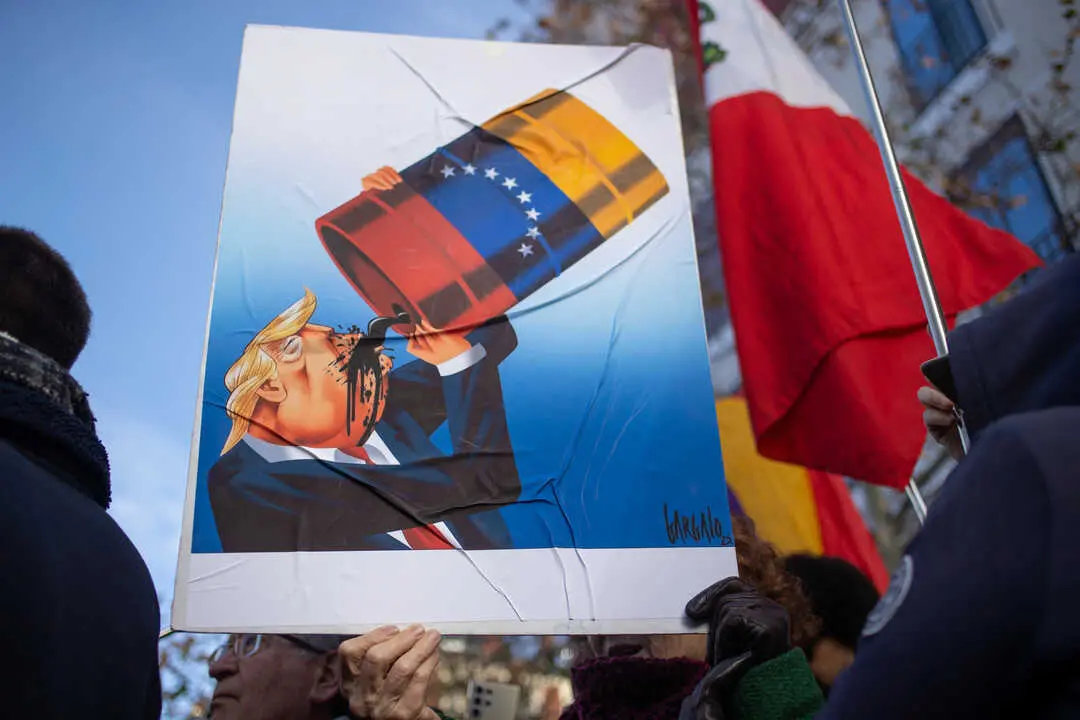
Their goal appears to be the establishment of a pliant vassal state in Caracas that keeps the current government — led by Maduro for more than a decade — largely in place, but finally defers to the whims of Washington after turning away from the United States for a quarter century.

It leaves little room for the ascendance of Venezuela’s democratic opposition, which won the country’s last national election, according to the State Department, European capitals and international monitoring bodies.

Trump and his top aides said they would try to work with Maduro’s handpicked vice president and current interim president, Delcy Rodríguez, to run the country and its oil sector “until such time as we can do a safe, proper and judicious transition,” offering no time frame for proposed elections.

Trump, Secretary of State Marco Rubio and Homeland Security Secretary Kristi Noem underscored the strategy in a series of interviews Sunday morning.

“If she doesn’t do what’s right, she is going to pay a very big price, probably bigger than Maduro,” Trump told the Atlantic, referring to Rodríguez. “Rebuilding there and regime change, anything you want to call it, is better than what you have right now. Can’t get any worse.”

Rubio said that a U.S. naval quarantine of Venezuelan oil tankers would continue unless and until Rodríguez begins cooperating with the U.S. administration, referring to the blockade — and the lingering threat of additional military action from the fleet off Venezuela’s coast — as “leverage” over the remnants of Maduro’s regime.

“That’s the sort of control the president is pointing to when he says that,” Rubio told CBS News. “We continue with that quarantine, and we expect to see that there will be changes — not just in the way the oil industry is run for the benefit of the people, but also so that they stop the drug trafficking.”

Sen. Tom Cotton (R-Ark.), chairman of the Senate Select Committee on Intelligence, told CNN that he had been in touch with the administration since the Saturday night operation that snatched Maduro and his wife from their bedroom, whisking them away to New York to face criminal charges.

Trump’s vow to “run” the country, Cotton said, “means the new leaders of Venezuela need to meet our demands.”

“Delcy Rodríguez, and the other ministers in Venezuela, understand now what the U.S. military is capable of,” Cotton said, while adding: “It is a fact that she and other indicted and sanctioned individuals are in Venezuela. They have control of the military and security forces. We have to deal with that fact. But that does not make them the legitimate leaders.”

“What we want is a future Venezuelan government that will be pro-American, that will contribute to stability, order and prosperity, not only in Venezuela but in our own backyard. That probably needs to include new elections,” Cotton added.

Whether Rodríguez will cooperate with the administration is an open question.

Trump said Saturday that she seemed amenable to making “Venezuela great again” in a conversation with Rubio. But the interim president delivered a speech hours later demanding Maduro’s return, and vowing that Venezuela would “never again be a colony of any empire.”

The developments have concerned senior figures in Venezuela’s democratic opposition, led by Maria Corina Machado, last year’s Nobel Peace Prize laureate, and Edmundo González Urrutia, the opposition candidate who won the 2024 presidential election that was ultimately stolen by Maduro.

In his Saturday news conference, Trump dismissed Machado, saying that the revered opposition leader was “a very nice woman,” but “doesn’t have the respect within the country” to lead.

Elliott Abrams, Trump’s special envoy to Venezuela in his first term, said he was skeptical that Rodríguez — an acolyte of Hugo Chávez and avowed supporter of Chavismo throughout the Maduro era — would betray the cause.

“The insult to Machado was bizarre, unfair — and simply ignorant,” Abrams told The Times. “Who told him that there was no respect for her?”

Maduro was booked in New York and flown by night over the Statue of Liberty in New York Harbor to the Metropolitan Detention Center in Brooklyn, where he is in federal custody at a notorious facility that has housed other famous inmates, including Sean “Diddy” Combs, Ghislaine Maxwell, Bernie Madoff and Sam Bankman-Fried.

He is expected to be arraigned on federal charges of narco-terrorism conspiracy, cocaine importation conspiracy, possession of machine guns and destructive devices, and conspiracy to possess machine guns and destructive devices as soon as Monday.

While few in Washington lamented Maduro’s ouster, Democratic lawmakers criticized the operation as another act of regime change by a Republican president that could have violated international law.

“The invasion of Venezuela has nothing to do with American security. Venezuela is not a security threat to the U.S.,” said Sen. Chris Murphy, a Democrat from Connecticut. “This is about making Trump’s oil industry and Wall Street friends rich. Trump’s foreign policy — the Middle East, Russia, Venezuela — is fundamentally corrupt.”

In their Saturday news conference, and in subsequent interviews, Trump and Rubio said that targeting Venezuela was in part about reestablishing U.S. dominance in the Western Hemisphere, reasserting the philosophy of President James Monroe as China and Russia work to enhance their presence in the region. The Trump administration’s national security strategy, published last month, previewed a renewed focus on Latin America after the region faced neglect from Washington over decades.

Trump left unclear whether his military actions in the region would end in Caracas, a longstanding U.S. adversary, or if he is willing to turn the U.S. armed forces on America’s allies.

In his interview with the Atlantic, Trump suggested that “individual countries” would be addressed on a case-by-case basis. On Saturday, he reiterated a threat to the president of Colombia, a major non-NATO ally, to “watch his ass,” over an ongoing dispute about Bogota’s cooperation on drug enforcement.

On Sunday morning, the United Nations Security Council was called for an urgent meeting to discuss the legality of the U.S. operation inside Venezuela.

It was not Russia or China — permanent members of the council and longstanding competitors — who called the session, nor France, whose government has questioned whether the operation violated international law, but Colombia, a non-permanent member who joined the council less than a week ago.

Source link