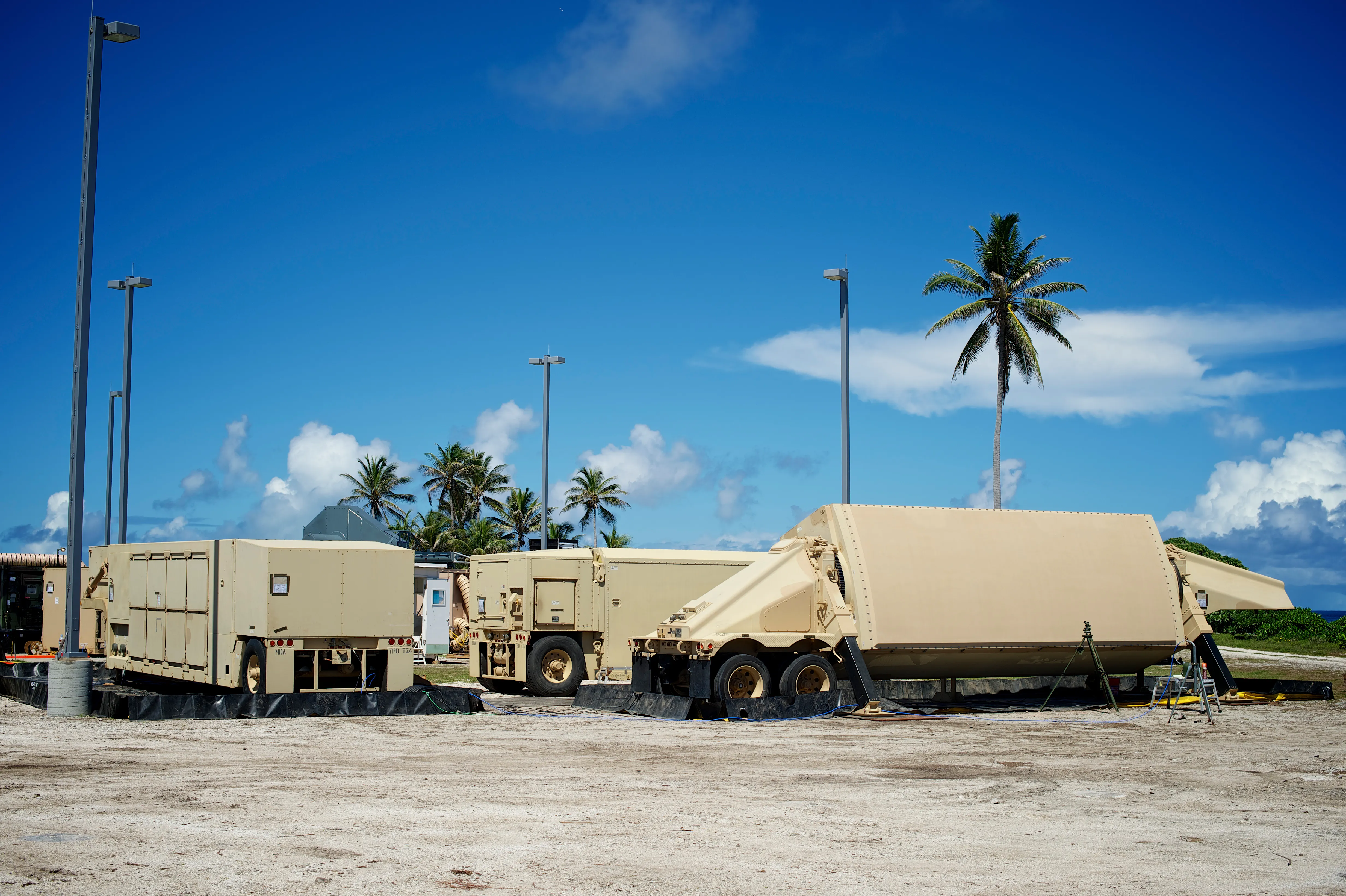
Iranian Attacks On Prized Missile Defense Radars Are A Wake-Up Call
As expected, Iran has repeatedly targeted prized missile defense radars across the Middle East in retaliation for the joint U.S.-Israeli air campaign that is ongoing. Iran’s attacks on high-value radars that enable the region’s missile defense capabilities appear to have succeeded on multiple occasions. The irony that lower-end long-range kamikaze drones are perhaps the biggest threat to extremely advanced radars capable of providing telemetry for intercepting targets traveling at hypersonic speeds, sometimes in space, is glaring. The losses of the radars and/or damage to their facilities should finally serve as a stark wake-up call regarding the vulnerability of these critical but largely static assets.
Based on the information at hand, it appears that Iran has been able to destroy one U.S. AN/TPY-2 radar in Jordan and damage the massive American-made AN/FPS-132 phased array radar in Qatar, prompting immediate concerns about available radar coverage to help respond to further barrages. There are strong indications that a number of other similar systems have been destroyed or damaged, as well.

For over a decade, TWZ has drawn attention to the threat of drones to America’s critical military capabilities and infrastructure. And more recently, we specifically discussed the glaring vulnerability of strategic radar systems after a Ukrainian drone attack nearly two years ago on a Russian early warning radar site, as well as after being first to report drone incursions over a U.S. missile defense site on Guam back in 2019.
For some general context to start, Iran and/or its regional proxies have hit targets in a total of 12 countries since the start of the current conflict. Iranian retaliatory attacks utilizing ballistic and cruise missiles, as well as long-range kamikaze drones, have significantly declined in recent days, but are still being carried out. Countries in the region are so far claiming very high interception rates of incoming threats, but some missiles and drones are clearly making it to their targets.
Iran has attacked a wide array of different targets, military and non-military, but there has been a clear concerted effort to go after air and missile defense radars in the region as part of the retaliatory campaign. This is to be expected given that the loss of key radars, even temporarily, risks degrading further efforts to intercept Iranian missiles and drones, hence these weapons can succeed at a higher rate. Taking out missile defense radars at very high-value sites can leave those areas far more vulnerable to follow-on attacks, as well. Striking these radars also reduces their user’s general situational awareness in the region, and can even have strategic implications beyond the region, too.
It’s also worth noting that these radars are extremely expensive and take years to replace.
Iran’s attacks on radars so far
This past week, CNN obtained imagery from Planet Labs showing an AN/TPY-2 radar damaged, or even possibly destroyed, following an Iranian attack on Muwaffaq Salti Air Base in Jordan. Muwaffaq Salti has long been a major regional hub for U.S. operations, and is being very actively utilized in the current conflict. It has the greatest concentration of U.S. tactical aircraft in the region, and thus is an extremely important target, where even one ballistic missile landing on an apron could destroy multiple prized fighter aircraft and take the lives of U.S. service members.
The Wall Street Journal reported yesterday that the U.S. military was rushing to replace the AN/TPY-2 at Muwaffaq Salti, lending credence to the assessment that damage from the Iranian attack was at least substantial. There is a picture, seen below, circulating on social media that is said to show the AN/TPY-2 at Muwaffaq Salti having been clearly knocked out, but it remains unverified and, in an age of increasingly impressive AI fakes, should be treated as such.
The active electronically-scanned array AN/TPY-2 is primarily associated with the U.S. Terminal High Altitude Area Defense (THAAD) anti-ballistic missile system, but it also has a demonstrated ability to feed data to Patriot surface-to-air missile systems. THAAD is a key upper-tier defensive system deployed to the Middle East that is capable of swatting down Iran’s most capable missiles from the end of their midcourse stage of flight and through their terminal stage. AN/TPY-2 radars can also be deployed as standalone sensors in a larger integrated air defense network. The radar is trailer-mounted and technically road mobile, but is not designed to be used on the move or very rapidly relocated from one place to another.

CNN has reported that additional Planet Labs imagery indicates that AN/TPY-2 and their infrastructure were also at least targeted and possibly damaged in Iranian attacks on THAAD batteries belonging to the United Arab Emirates (UAE), one at Al Ruwais and another at Al Sader, and another one in Saudi Arabia near Prince Sultan Air Base. The New York Times also obtained satellite imagery showing that the site at Al Ruwais had at least come under attack. The full extent of the damage at any of these sites remains unclear.
Satellite imagery from Planet Labs, obtained by the Middlebury Institute of International Studies at Monterey, has also confirmed that the very large, fully static AN/FPS-132 radar in Qatar was damaged in an Iranian attack on the first day of the conflict. At least one of the radar’s three arrays was hit, and there are also signs of a possible fire.
There are multiple versions of the giant AN/FPS-132, all of which are fixed-site solid-state phased array radar systems primarily to provide early warning of incoming ballistic missile strikes. As noted, the one in Qatar has three faces, offering 360-degree coverage, but there are also variants with only two faces. The AN/FPS-132 is part of a larger group of broadly related strategic early warning types that are also in U.S. military service at multiple sites in the United States, as well as in Greenland. The Royal Air Force (RAF) in the United Kingdom operates another one of these radars at its RAF Fylingdales base.

Since the first day of the current conflict, claims have been circulating that Iran was able to at least damage a U.S. AN/TPS-59 active electronically-scanned array ballistic missile defense radar in Manama, Bahrain. This appears to be based on the video below, showing a kamikaze drone hitting a large spherical radome at Naval Support Activity (NSA) Bahrain, a U.S. Navy facility in the country that is home to the headquarters of the U.S. Fifth Fleet.
However, Planet Labs imagery that The New York Times subsequently obtained has been assessed to instead show damage to what are understood to be large satellite communications terminals at NSA Bahrain. Like larger radars, these terminals also often sit inside spherical radomes. There are clear signs that communications arrays like this have been a major target of Iranian retaliation strikes on bases across the Middle East, as well.
Yesterday, Iran’s PressTV claimed that the Iranian Navy had launched a kamikaze drone attack targeting “strategic carbon-based radar installations at the Sdot Micha facility.” While TWZ cannot independently confirm whether such an attack was launched, let alone was successful, it does highlight continued Iranian targeting of key missile defense radars. Sdot Micha Air Base in Israel hosts Arrow-series anti-ballistic missile defense systems. Elta’s Green Pine, which is analogous in some very broad respects to AN/TPY-2, is the main radar associated with these anti-missile systems.
Costly losses of key capabilities
Concerns have been raised about the immediate impacts from the loss of the AN/TPY-2 and damage to the AN/FPS-132, given that Iranian retaliatory attacks have significantly slowed, but not stopped. There are claims now, said to have originated from a report from Channel 14 in Israel, that malfunctioning and/or damaged U.S. radars have caused delays in early warning alerts about incoming Iranian missiles. TWZ has been unable to find an original source for these assertions, and they remain very much unconfirmed at this time. Regardless, it is hard not to see how losses of these systems could cause at least some degradation in total coverage, even if other land based and sea-based systems (Aegis BMD) can help with filling in some coverage.
The United States, Israel, and Gulf Arab states do have other air and missile defense radars positioned in the Middle East, or that could otherwise help fill any resulting gaps. At the same time, there are only a small number of systems that are at all equivalent to the AN/TPY-2, let alone the AN/FPS-132. Only 16 AN/TPY-2s are understood to have been produced to date, in total, for all customers. The current cost of one of those radars is generally pegged at around $250 to $300 million. When the U.S. government approved the sale of the AN/FPS-132 radar, as well as various ancillary items and services, to Qatar in 2013, that entire package had an estimated value of $1.1 billion, or just over $2.1 billion today when adjusted for inflation. Any of these systems takes years to procure.
Furthermore, the U.S. military and its allies have spent years (and billions of dollars) building a regional missile defense shield, with AN/TPY-2s and the AN/FPS-132 in Qatar being core components thereof. Though Iran and its expanding ballistic missile arsenal have been the driving factors behind those efforts, the U.S. government also sees these assets as being a key element of its global missile defense architecture. As noted, the Qatari AN/FPS-132 provides 360-degree coverage that is not limited to scanning for threats emanating from Iran. Houthi militants in Yemen to the south, long backed by Iran, have amassed a substantial arsenal of ballistic missiles, as well as cruise missiles and long-range kamikaze drones, and have used it to attack Gulf Arab states in the past. As an aside, the UAE was the first to employ THAAD in combat back in 2022, using the system to knock down an incoming Houthi ballistic missile.

More serious ramifications
Strategic air and missile architectures, in general, exist in a world now where the threats they face are not limited to very-long-range standoff capabilities possessed only by peer or near-peer adversaries.
It used to be, generally, that you had to fire a ballistic missile or high-end cruise missile in an attempt to strike one of these systems. Now, long-range one-way-attack drones, as well as increasingly capable cruise and ballistic missiles, continue to proliferate steadily, including to smaller nation-state armed forces and even non-state actors. An attack could even come from a small drone with a C4 charge launched from a fishing trawler 10 miles away from one of these critical radar installations. The threat of these kinds of near-field attacks has largely been overlooked for years, even as the low-end drone threat has exploded and ‘democratized’ precision-guided weaponry, as they did not fit the established aerial threat matrix and the countermeasures used to repel those threats.
Though we have not seen it yet in the course of the current conflict with Iran, the threat of more localized attacks by smaller weaponized drones, in particular, is very real and only set to grow. This was definitely shown by Ukraine’s Operation Spiderweb’s unprecedented covert attacks on multiple airbases across Russia last year. Israel also employed near-field drone and missile attacks to destroy Iranian air defenses in the opening phases of the 12 Day War last June. These operations were massively successful and knocked out Iran’s most critical air defenses, allowing for long-range munitions to strike their targets unimpeded. TWZ had been calling attention to this issue for years beforehand, including back in 2019 after drones were reportedly spotted over the U.S. Army THAAD site, with its AN/TPY-2 radar, on Guam.
CBS News also reported this past week that quadcopter-type drones may have been surveilling the Shuaiba port in Kuwait before all-out hostilities erupted. Six U.S. service members were killed, and more were wounded, in an Iranian retaliatory attack on a U.S. logistics operations center at Shuaiba on March 1.
Large, high-value, static and semi-static radars are fragile, to begin with. Domes and other structures can be built around them to help protect them from the elements, but they still need to allow for signals to be sent out and received. This inherently limits options for more physical hardening. Since these radars are typically fixed in place permanently or semi-permanently, their locations are also easier to determine and then target using a set of basic map coordinates. This is highlighted by how quickly news outlets have been able to locate these sites and then assess damage to them from commercially available satellite imagery.
The fragility of large radars also means that what might seem to be minor damage to the casual observer could actually be enough for a mission kill that takes the system offline, or at least degrades its functionality greatly, for a protracted period of time. Depending on the radar, it might not take a very large munition at all to cause a sufficient degree of damage. Just a small drone packing a grenade-sized explosive can punch a hole in one of these fragile arrays, putting it out of action for a very long period of time.
As TWZ wrote back in 2019 in the context of reported drone incursions over Guam:
“With that said, America’s preeminent adversaries in the entire region would make taking out the THAAD battery on Guam a top priority during a conflict or even as part of a limited demonstration of force. Why barrage it with ballistic missiles or attempt a cruise missile launch from a forward-deployed submarine or even a clandestine commando raid when you can just fly a drone loaded with explosives into it? And no, you don’t need some high-end drone system to do this as real-world events have highlighted many times over. Drug cartels are now whacking their enemies with off-the-shelf drone-borne improvised explosive devices and even U.S. allies are actually manufacturing hobby-like drones just for this purpose. Somewhat more sophisticated types can be launched from longer distances and can even home in on radar or other RF emissions sources, like THAAD’s powerful AN/TPY-2 Radar and data-links, autonomously, beyond just striking a certain point on a map.”
“Simply put, ‘shooting the archer,’ in this case an advanced anti-ballistic missile system that protects America’s most strategic base in the entire region, via a relatively cheap drone is both an absurdly obvious and terrifyingly ironic tactic—the U.S. can shoot down ballistic missiles, but the critical systems used to do so remain extremely vulnerable to the lowliest of airborne threats—cheap drones.”

The scale and scope of Iran’s retaliatory attacks so far, while clearly threatening, pale in comparison to what one would expect to see in a major high-end fight between the United States and China in the Pacific. The overall ramifications would also be more severe.
Beyond the more immediate impacts of losing this kind of strategic radar coverage, there are far larger implications. In some cases, these radars are designed to provide critical early warning and verification of incoming nuclear strikes, or other large-scale attacks by a major adversary, targeting a nation’s home soil. They are critical parts of the nuclear deterrent. As such, losing these sensors can have major downstream impacts on strategic decision-making cycles based on concerns about what suddenly is not being seen. Fewer radars also means fewer ways to double-check that a track is not a false positive in a scenario where the total available decision-making time could be seriously truncated, to begin with. These are concerns TWZ explicitly highlighted after Ukraine’s attack on the Armavir Radar Station in Russia in 2024.

A need for deeply layered defenses
It should be clear at this point that threats to strategic radar systems that Iran’s attacks in the past week have thrust into the public eye are not new. Similarly, this highlights how the United States, and others globally, remain behind the curve when it comes to establishing deeper, layered defenses to better protect these prized assets. This was already evidenced by Ukraine’s attack on the Armavir Radar Station in Russia in 2024.

A notable exception is Taiwan’s Leshan radar station, which houses an AN/FPS-115 Pave Paws phased array early warning radar that would be a top target for Chinese forces during any cross-strait conflict. It is protected by an array of defensive capabilities, including a ground-based Phalanx Close-in Weapon System (CIWS), which is more typically found on warships. Even so, Iran’s attacks on radars this past week have still notably resonated in Taiwan.

Even a layered defense posture might not be enough, especially in the face of a large volume and/or complex attack involving multiple types of missiles and/or drones. Those threats could also be coming from very different vectors at once, and fired from very disparate launch points on land, at sea, or in the air. Achieving overmatch against fixed defenses is also a glaring vulnerability. An enemy can calculate how many munitions, and what mix of munitions, are required to overwhelm known defenses at a key location. This is especially true for largely static defensive arrangements. Once critical terrestrial sensors are taken out, attacking other targets that were under the defensive umbrella they helped enable can become far easier.
New eyes in space
Perhaps the biggest takeaway here is that the combat actions by Iran this week provide heft to the arguments for migrating missile tracking capabilities outside of the atmosphere. While advanced and resilient missile tracking layers in space may not replace all their terrestrial counterparts, they would provide much-needed redundancy and augmentation of their capabilities.
The U.S. military does have space-based early warning sensors that are integrated into its existing ballistic missile defense architecture, and have been for decades. But these warn of launches, they don’t track a weapon throughout its flight cycle. For some years now, work has been underway to substantially expand on those capabilities, to include the start of the fielding of a new satellite constellation to help track ballistic missiles, as well as hypersonic boost-glide vehicles and other threats, during the mid-course portion of their flights.

The U.S. Air Force and U.S. Space Force are also very eager to move most, if not all, of the airborne target warning sensor layer into orbit, and to do the same when it comes to persistent tracking of targets on the ground and at sea. Relevant space-based capabilities are still years away from becoming a reality, at least at the required scale.
Shifting the focus to sensors in orbit is not without its own risks, either. U.S. officials regularly highlight ever-growing threats to assets in space, and are now openly talking about the need for satellites to be able to fight back, as you can read more about here. As part of its work on new space-based sensor infrastructure, the U.S. military has been investing heavily in new distributed constellations with large numbers of smaller satellites to increase resiliency to attacks.
Regardless, the Pentagon is very bullish in moving missile tracking into orbit, and doing so with more resilient constellations than with a handful of traditional satellites. Work is deeply underway in proving out this technology, which would enable the entire missile defense architecture globally. President Trump’s Golden Dome initiative will need this capability in order to accomplish its lofty goals. But accelerating the development and deployment of this kind of capability is very costly and we may see a major boost in funding for it after this war ends.
Overall, more details about the scope and scale of damage to radars and other assets from Iranian retaliatory attacks are likely to continue to emerge. What we’ve already seen points to a need for a further reassessment of the vulnerabilities of critical strategic air and missile defense radars and what is needed to adequately defend them, including moving them outside of the Earth’s atmosphere.
Contact the author: joe@twz.com