The documentary is now available to stream on BBC iPlayer, but there is a strong viewer warning
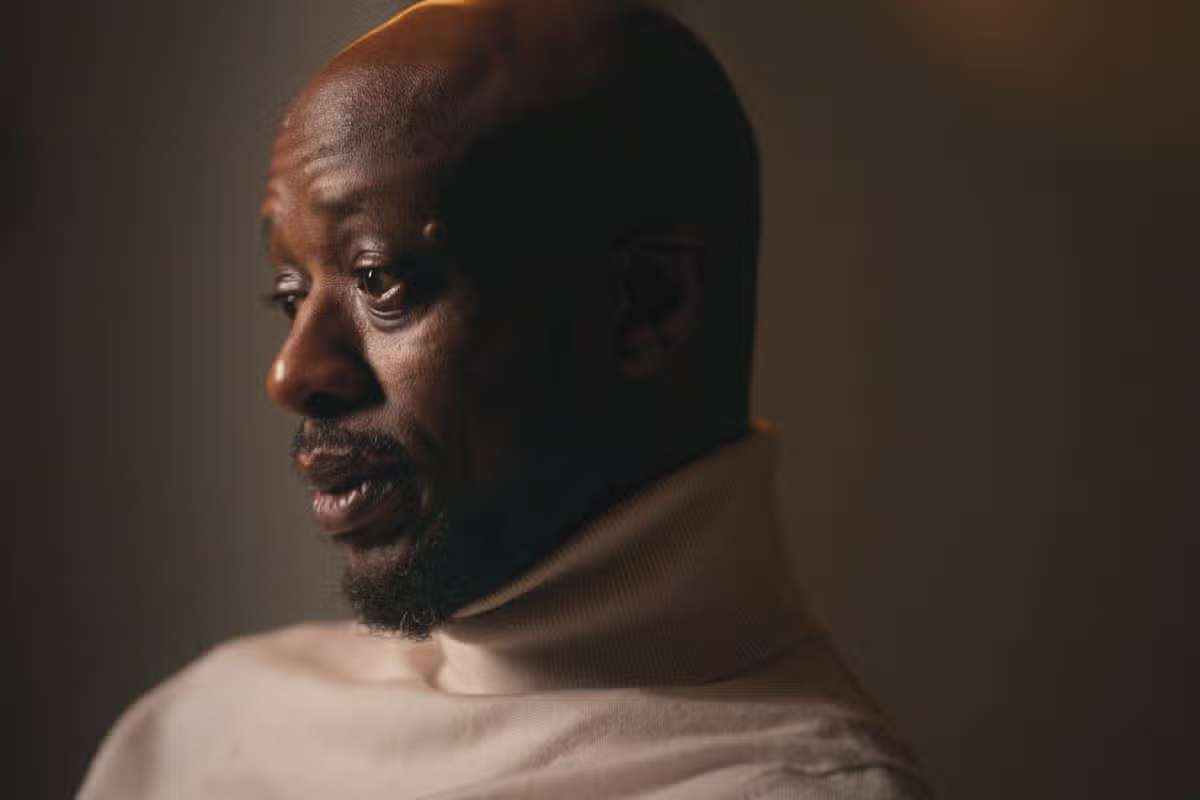
The BBC documentary has been dubbed a hard watch as it hears from family and friends including Tunde Taylor (Image: BBC/Optomen TV)
BBC viewers have struggled to watch a heartbreaking documentary that they say “cuts deep” as a strong warning has been issued.
Just last night (Monday, October 5), BBC Two took viewers back to 2000 in a cast that shocked the UK. Damilola Taylor was just 10 years old when he was stabbed and killed in what became one of the country’s most high profile killings.
He was stabbed in the leg just metres from his home whilst leaving an after school club. For the first time for some, Damilola’s friends and family speak out about that tragic event, sharing previously unheard testimony, including that from Star Wars actor John Boyega.
Damilola: The Untold Story revisits the young boy’s killing, 26 years on as it premiered on BBC Two last night (October 5). However, for those that missed it, it can be streamed on BBC iPlayer, but viewers have warned it is a hard watch.
Taking to X, one person wrote: “I watched the documentary on bbc (yes bbc) on the senseless murder of Damilola Taylor, Rip poor little lad, heart breaking, although the documentary was focal on Damilola and the those immediately impacted, it also drew the lens back to show the amount of kids murdered.”
Another said: “I’m not sure I have it in me emotionally to watch this Damilola Taylor documentary”, as a third admitted: “That Damilola Taylor documentary is so heart wrenching.”
A fourth added: “This Damilola Taylor documentary cut deep. Imagine stabbing a 10 year old innocent boy and leaving him to bleed to death. Those two brothers are evil with so much hate in their hearts.”
A fifth replied: “It was a very hard watch. I had to pause a few times. RIP Damilola, Mr Richard and Mrs Grace Taylor.” Another penned: “The ending of the Damilola Taylor documentary, I can count my family members and school friends in that montage of lost souls. I started watching the doc as a mother, ended it as a child, if that doesn’t speak to the cycle… and its longevity then idk what does.”
Taking to TikTok to share the recommendation, one true crime fan admitted it was a “heartbreaking watch”, adding: “Be warned because it’s quite shocking.”
One person replied: “Just watched this last night… so sad.” Another commented: “Absolutely heartbreaking you’re right, so incredibly sad.” A third wrote: “This will be a hard watch.”
Taking viewers back to the final 24 hours of his life, the documentary also explores the years it took to bring a conviction. Two brothers, who were themselves aged 12 and 13 at the time, were convicted of manslaughter.
An official synopsis reads: “Made 26 years after the murder of 10-year-old Damilola Taylor shocked Britain, this documentary returns to his story with new testimony that sheds fresh light on what happened to him.
“Actor John Boyega, who was eight when Damilola died and was one of the last people to see him alive, joins Damilola’s childhood friends to return to his final months and the years of youth violence that followed his death.”
Damilola: The Untold Story can be streamed on BBC iPlayer
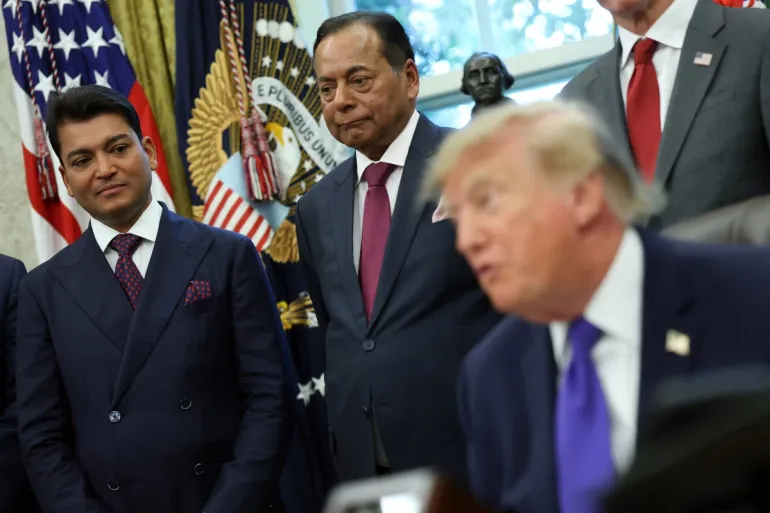
As US President Donald Trump announced a $15bn steel megaplant while seated at his Oval Office desk on Monday, he had a lineup of mostly US politicians standing behind him – from cabinet members to elected representatives from Iowa, where the mill is to be built. There was one exception: an Indian man with a receding hairline and a lilac pocket handkerchief, standing behind the US president’s right shoulder.
Ravi Ruia is a cofounder of the Essar Group, which owns Mesabi Metallics, the Minnesota-based firm that’s building the steel mill, which is expected to be the United States’s largest once it is complete. A decade earlier, in October 2016, his brother Shashi was in the photo frame with a different president during the signing of another major deal: Russian leader Vladimir Putin.
Steel and metallics aren’t Essar’s only association with minerals and natural resources. The conglomerate had been involved for years with oil, before it sold one of India’s largest private oil refineries to a Russian-led consortium in 2016 for nearly $13bn. Essar Oil was rebranded as Nayara Energy.
Today, Nayara Energy is half-owned by Russian gas major Rosneft, which is under heavy US and European sanctions over Moscow’s war on Ukraine. Nayara has also emerged as a supplier of petroleum products to Russia at a time when the country is facing a fuel crisis following multiple Ukrainian attacks on its oil and gas depots.
And as part of a 99-year deal, Nayara is continuing to use Essar’s branding in India, where the company runs thousands of petrol stations. Nayara is under European Union sanctions.
The White House is touting the Iowa steel project, unveiled just before the US midterm elections, as a major economic win for Americans, promising hundreds of jobs and billions of dollars in revenue. And there is no evidence that the steel project is in violation of any Russia-specific US sanctions.
But Trump’s announcement of a mega project with an Indian firm closely tied to Russian investments under Western sanctions underscores how the US has struggled to isolate Moscow economically despite an unprecedented economic pressure campaign.
And the timing of the steel mill announcement raises questions, because it comes days after Trump signed a law that empowers him to punish countries that buy Russian oil with up to 100 percent tariffs. India is Russia’s second-largest oil buyer. But the legacy Indian conglomerate that best epitomises the country’s links to Russian energy is now also behind the US’s biggest steel factory.
Rewant Ruia, left, chairman of Mesabi Metallics, and Ravi Ruia, centre, board member of Mesabi Metallics and director of Essar Capital, listen as US President Donald Trump delivers remarks in the Oval Office at the White House on September 28, 2026, in Washington, DC [Kevin Dietsch/Getty Images]
What’s the steel factory project about?
The new project would integrate its iron ore mining operations in Minnesota’s Mesabi Iron Range with the upcoming steel complex in Iowa.
The White House and the company’s announcements said that the Iowa steel plant is expected to create at least 1,750 permanent jobs – “while continuing to work with suppliers and businesses throughout Iowa and the Midwest” – and support up to 6,000 construction jobs.
Washington also noted that the mill will produce 7.5 million tonnes of steel per year in its first phase, expected to rise to 10 million tonnes. First steel production is expected in 2030.
The first phase of the project is expected to generate $95bn in total economic impact during construction and its first 10 years of operation, according to the White House.
Trump’s commerce secretary, Howard Lutnick, told the reporters that “these are your 232 tariffs, the steel tariffs at work.” He added: “Without those tariffs, this mine and steel plant doesn’t get built.”
Trump chipped in, too. “Soon after my inauguration, I imposed powerful 50 percent tariffs on all foreign steel, and now our steel industry is roaring back to life,” Trump said. “Everyone’s building their plant here because they don’t want to pay tariffs.”
But the steel project is also evidence of how countries and companies have skirted US economic pressure – and how it gives them leverage to continue to do so.
An Essar petrol station with pumps showing no fuel in Stanley, County Durham, UK, September 27, 2021 [Lee Smith/Reuters]
What are Essar’s ties to Russia?
Essar Oil, the group’s energy arm, began refining crude in 2008 at its refinery in Vadinar on the coast of the western Indian state of Gujarat.
But by 2016, the company was in deep debt, listed as a defaulter by the Reserve Bank of India, the country’s central bank, and desperately looking for a buyer who would take over its oil operations. The timing was opportune. President Putin in Russia was at the time trying to get Rosneft, his country’s energy giant, to offload some stakes in exchange for foreign capital.
Indian Prime Minister Narendra Modi played matchmaker, helping stitch together a series of deals between 2014 and 2016 that helped Rosneft and Essar. First, Indian public sector oil majors bought stakes in Rosneft, giving it the cash it needed. Rosneft, in turn, joined hands with other investors to buy the Vadinar refinery, freeing Essar from its debts.
Essar Oil became Nayara Energy – a company in which Rosneft owns a 49 percent stake, and United Capital Partners, a Russian asset management company, owns another 49 percent. The buyers paid Essar $12.9bn for the deal. As part of the agreement, Nayara got to use Essar’s branding – including on thousands of petrol stations across India – for 99 years.
Logo of Nayara is seen at its fuel station on the outskirts of Ahmedabad, India, November 16, 2022 [Amit Dave/Reuters]
Is Nayara under Western sanctions?
Yes. The European Union imposed sanctions on Nayara in July last year as part of the broader 18th package of sanctions against Russian oil.
The sanctions banned the import of petroleum products processed using Russian crude oil and restricted the refinery’s access to EU shipping insurance, as well as financial and other services.
Nayara’s Vadinar refinery in western India has been processing only Russian oil since other suppliers backed out following the sanctions. Since then, Nayara has relied on international traders to import crude and export refined fuels.
In July this year, Nayara Energy sold petroleum to Russia as Ukrainian attacks targeted oil refineries across the country, triggering a fuel crisis.
In recent months, Ukrainian forces have targeted Russian oil facilities, setting them ablaze and causing long lines for fuel across the country, including in the capital, Moscow. The fuel crisis, unprecedented for Russia, a country that is one of the world’s biggest energy producers, has led to rationing in many regions.
These Russian links have brought Nayara Energy under wider scrutiny, prompting companies, including SAP, to suspend services to the refiner, citing sanctions and obligations under EU law.
Nayara challenged the move in the Delhi High Court, which ordered SAP India to restore its services earlier this month.
Are Essar or the steel plant violating any sanctions?
While Nayara is under EU sanctions, Essar does not face any US or EU sanctions.
In October 2016, after Essar struck its deal with Rosneft and United Capital Partners to sell the Vadinar refinery, the US – at the time under the Barack Obama administration – said that the agreement was not in violation of any sanctions.
“I don’t think we see any violation of any US-EU sanctions stemming from this deal,” State Department spokesperson Mark Toner said at the time. Essar also said that the deal was compliant with US sanctions.
There is no evidence of any sanctions breach in Essar’s investment in Mesabi, or in the planned investment to set up the steel factory in Iowa.
But Essar’s relations with Russia have nevertheless attracted scrutiny, including in the United Kingdom, where the Ruia brothers have long had major investments.
At the time of the sale of the Vadinar refinery to Russian buyers, the Russian bank VTB also gave Essar a $3.9bn loan for debt reconstruction.
The bank was hit by major US and EU sanctions in February 2022, right after Russia’s full-fledged invasion of Ukraine. Essar, reporting published in April 2026 by The Guardian and investigative journalism platform SourceMaterial, showed, moved the VTB loan to Mauritius, a tax haven, allegedly to avoid the sanctions. Essar owns the Stanlow oil refinery in the UK.
US President Donald Trump waves as he walks to board Marine One as he departs from the South Lawn of the White House in Washington, DC, on September 26, 2026 [AFP]
Why is the timing of the steel plant announcement significant?
Trump’s Republican Party is heading for crucial midterm congressional elections in November, while his approval rating has been plumbing all-time lows in the face of voter concerns about inflation, the cost of living, and the war on Iran.
In his second term, Trump has made tariffs and a revival of US manufacturing a cornerstone of his economic vision, claiming that higher barriers to imports will drive investment back to the US.
Moreover, Washington introduced legislation that would allow the president to impose tariffs of up to 100 percent on imports from countries that continue economic engagement with Russia or Iran, aiming to put pressure on countries that continue buying Russian energy.
New Delhi is particularly exposed since it became one of the largest buyers of discounted Russian crude after the invasion of Ukraine in 2022. Trump imposed an additional 25 percent tariff on Indian imports in 2025 over the issue, before removing it in February 2026 after India committed to stop buying Russian crude.
Russia has remained India’s largest source of crude, although purchases have declined as the threat of US penalties has grown. The news agency Reuters reported that India imported approximately 2.1 million barrels per day of Russian crude in August.
There is also a recent parallel to underscore the incentives for investment in Trump’s US. In May this year, Washington moved to dismiss the criminal fraud and bribery charges against Indian billionaire Gautam Adani, while his lawyers had told the Justice Department that Adani was prepared to invest $10bn in the United States. A federal judge subsequently dismissed the criminal case in August.
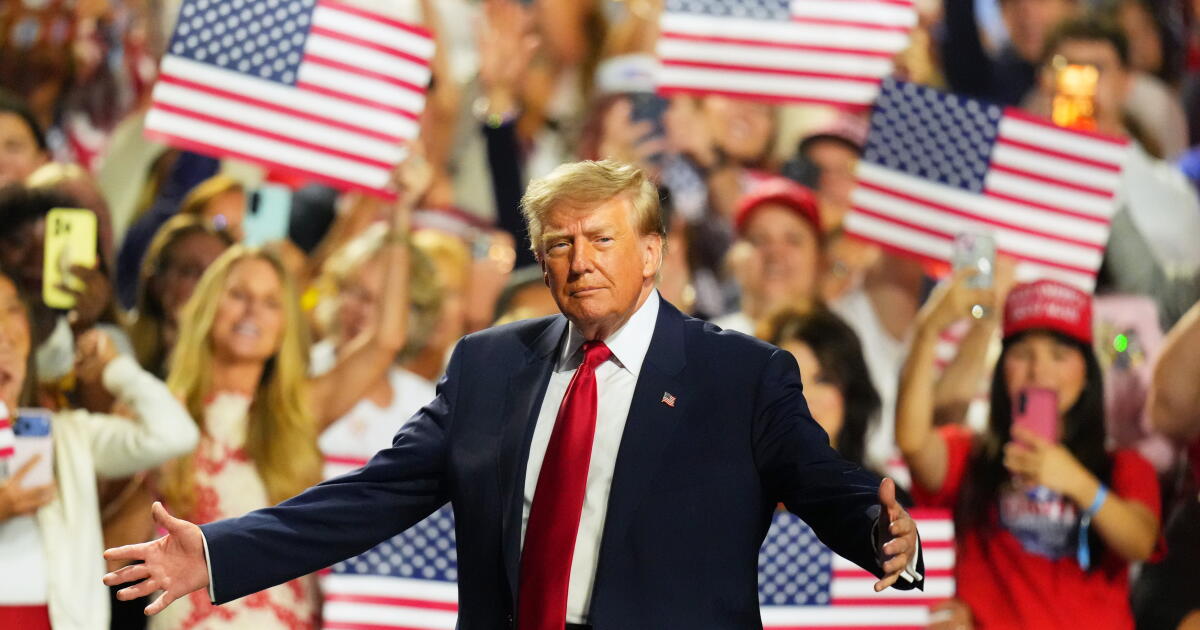
MONTGOMERY, Alabama — President Trump vowed to campaign in 35 of the most competitive battleground districts in the final sprint to November’s midterm elections.
Instead, he will begin October by stumping in Alabama and Oklahoma, two of the most Republican states in the nation. His events are sure to draw enthusiastic crowds of fans, but his choice of destinations is a reminder of his deep unpopularity in much of the country during a campaign season he’s sought to make all about himself.
Trump will hold rallies Thursday in Durant, Okla., and Friday in Mobile, Ala., where he is sure to draw crowds, but also has raised eyebrows.
While organizers insist the rallies are in locations with media markets that span state lines and they will help bolster broader turnout, Trump’s itinerary is yet another sign of the uphill fight that his party faces. Republicans already have been pouring money into red states once considered safe as they try to shore up candidates facing an unhappy electorate that has soured on Trump and his polices.
Some Republicans also have been distancing themselves from the president in recent weeks as they try to appeal to voters beyond Trump’s “Make America Great Again” base. They’ve removed or downplayed references to the president on their websites and increasingly voiced opposition to his unpopular war with Iran.
But Trump’s events next week are likely to deliver something he craves: adoring crowds. He is almost guaranteed to fill the venues with the kind of die-hard supporters who fueled his political rise, projecting excitement as he tries to bolster enthusiasm and rally Republicans.
“The President’s ability to engage with and activate low-propensity voters is unmatched. That’s why he’ll be barnstorming the country to activate the voters we need to win in November,” Republican National Committee spokesperson Natalie Baldassarre said, promising more October rallies.
Democrats, meanwhile, celebrated the announcement. “The political floor is falling out from underneath Trump and Congressional Republicans, forcing them to scramble to spend and campaign in deep red territory in the final weeks,” said Viet Shelton, spokesperson for the Democratic Congressional Campaign Committee.
The RNC noted that Durant is on the Texas border and next to the Dallas-Fort Worth media market and will draw Republicans in Texas, which has emerged as one of the most critical states on the map. Scandal-plagued Atty. Gen. Ken Paxton, whom Trump backed over incumbent Sen. John Cornyn, is locked in a tight race against Democrat James Talarico. Gov. Greg Abbott also is facing a stronger-than-expected challenger in Democrat Gina Hinojosa.
Mobile is next to Florida’s panhandle, a Republican stronghold where high turnout can help bolster Trump-backed candidates running for Senate and governor. However, Florida Republican Sen. Ashley Moody is not expected to attend.
In Oklahoma, Trump will be stumping for Mike Mazzei, whom he backed as the Republican nominee for governor during a competitive primary. Mazzei is running against Oklahoma’s Democratic House Minority Leader Cyndi Munson.
“This race continues to get more competitive — and national Republicans are right to be worried about Mazzei,” Democratic Governors Assn. spokesperson Kevin Donohoe said in a statement.
Alabama, meanwhile, holds deep nostalgia for Trump and his early supporters. He held his first mega-rally in Mobile more a decade ago, drawing some 30,000 people to a college football stadium. The crowd made clear to skeptics of his campaign that he was more than a celebrity novelty.
“It’s very natural that he would host a rally here as he is gearing up for the midterm elections,” said John Wahl, the Republican candidate for lieutenant governor and former chair of the Alabama Republican Party.
Although Republicans remain the heavy favorites in Alabama’s statewide campaigns, they face a more challenging political landscape.
Former Democratic Sen. Doug Jones is mounting a vigorous campaign for Alabama governor against one of Trump’s most vocal allies, Republican Sen. Tommy Tuberville, who welcomed the president’s visit.
Republican Rep. Barry Moore, running to replace Tuberville in the Senate with Trump’s backing, said the president’s rally “will be the jet fuel we need to win big in Alabama.”
Mobile is also near Alabama’s 2nd Congressional District, which leans red after its lines were redrawn but is not a slam dunk for Republicans as they try to dislodge Democratic Rep. Shomari Figures.
Figures has been criticizing the president’s plan to lower import tariffs on foreign beef in an appeal to cattle ranchers as he tries to fend off a challenge from his Trump-backed opponent, State Rep. Rhett Marques.
Trump has promised to ramp up his campaigning in the election’s final stretch and had said he would visit all of the most competitive districts .
“It’s all about 35 races,” he said at a recent Rose Garden dinner attended by Republican lawmakers. “I’m going to go to every one of those 35 places and we’re going to see if we can get everyone elected.”
Colvin and Chandler write for the Associated Press. Colvin reported from New York. AP reporter Bill Barrow in Atlanta contributed to this report.
The moon is an impostor. Swimming backstroke beneath its surface, I look up at craggy hollows in close relief. White rock undulates in all directions, a forest of peaks rising next to a desert of craters. Every time I trick myself into thinking I’m somewhere celestial, the sound of children splashing brings me back to earth.
This is no lunar landscape but Helsinki’s underground swimming hall, excavated from granite bedrock and officially opened in 1993. These days, Itäkeskus uimahalli is one of the Finnish capital’s most visited leisure facilities, welcoming 400,000 people a year. Local people mingle with tourists, I will discover, during a week exploring Helsinki’s subterranean metropolis.
My visit was one of 12 research trips I made over three years to better understand how cities are being reimagined. It turned into a book, How to Build a City, for which I travelled to locations that are testing the frontiers of urban living in response to an increasingly uncertain world.
Many global cities feature a version below ground, but Helsinki’s is thought to be the only one transformed for peace. As urbanisation increased the population, a more efficient solution was needed for heating plants and telecoms cables. You could scatter them around in expensive pockets of land, digging up the streets and sacrificing parks. Or you could tuck them away beneath ground level, by adding to bomb shelters first carved out during the second world war.
And that’s what Helsinki did. By 2010, its city council approved the world’s first officially masterplanned underground city, home to hundreds of vast human-made caves and tunnels up to 90 metres deep. Itäkeskus pool was opened 17 years before this space allocation plan was approved.
In peacetime, the caves function as shopping malls, playgrounds, a go-karting track and subway stations, all connected by almost 200 miles (293km) of tunnels. In the event of war, however, each can be transformed into a bomb shelter, part of a network capable of accommodating 900,000 Finns.
Tourists explore the roof of Helsinki’s underground art museum, Amos Rex. Photograph: Paavo Turtiainen/Alamy
Itäkeskus swimming hall alone could house almost 4,000 people. In less than 48 hours it can be drained and fitted with decontamination showers. For the rest of the time, there are no clues as to its defence nature. Only the comforting hallmarks of the public pool: the tang of chlorine in my nose and the warmth that cloaked my skin.
I arrived in Helsinki on the morning of the spring solstice, although the ground was still dusted with greying snow and I was grateful for the heated carriages on my 25-minute Metro ride from the city centre. At Itäkeskus station, past a school surrounded by Soviet-style tower blocks, silver birches trailed bare branches over cars. From the outside, a municipal glass building gave an uninspiring welcome, but inside, I found a different world entirely.
A broad staircase swept me down steeply, framed by rocky, whitewashed walls. After paying (entry to all four of Helsinki’s public swimming halls is €6 for adults and €3.30 for children, making it popular with families as well as budget-conscious travellers), I disrobed in changing rooms spun off from a cathedral-tall granite core. Signs were in Finnish, but the space was easy for non-natives to navigate. Staff spoke excellent English.
At one side of the colossal hangar, men grimaced as they lowered themselves into a triangle of freezing water. On the other, a postmodern dreamscape was revealed, a large pool lined in lavender, canary yellow and burgundy tiles, with huge plastic triangles in cerulean and lilac suspended overhead. The only windows were set into a lifeguard’s tower next to a waterfall that filled the air with the roar of water in motion.
Swimming under the ersatz moon was an otherworldly experience. After 50 lengths, I’d earned my reward. Included in the entry fee is access to a gym, which I did not visit, plus a hot tub, steam room and two saunas, which I did. A graphic on the door showed a swimming costume crossed out in red and I gingerly removed mine, sliding into place on the bench and reminding myself that prudishness is a uniquely British affliction. Inside, it was so dark I could barely make out other bodies. The low light created the effect of a confession booth.
Temppeliaukio church is half-buried in the Töölö neighbourhood. Photograph: Danny Lehman/Getty Images
Around me, conversations bubbled in Finnish, American English and German. The quotidian details of living emerged. I joined in, asking a stranger for dinner recommendations and whether I should brave the plunge pool. If you don’t dwell on it, you could forget the true purpose of this place.
It was something I kept returning to over the following days as I wandered through experimental installations at Helsinki’s underground art museum Amos Rex (from €20; children go free), whose antennae-like skylights popped up on concrete stalks from the pavement near the chichi shopping district of Kluuvi. And in the Töölö neighbourhood’s exquisite Temppeliaukio church (€8; children go free), half-buried in a giant mound of rock.
All were examples of a supremely responsive city. All were bomb shelters, too. Evidence that you can design for the future with verve and beauty. Helsinki shows it is possible to do it all.
How to Build a City: Journeys into the Urban Future by Gabriella Bennett is published by Headline (£25). To support the Guardian buy a copy at guardianbookshop.com. Delivery charges may apply.



![US President Donald Trump waves as he walks to board Marine One as he departs from the South Lawn of the White House in Washington, DC, on September 26, 2026 [AFP]](https://i0.wp.com/occasionaldigest.com/wp-content/uploads/2026/09/1790693783_407_afp_6ab7d4f7ee67-1790432503.jpg?w=640&ssl=1)