debt

In Argentina, locals are taking loans to buy food | Debt

Buenos Aires, Argentina: Diego Nacasio, 43, works full time as a salesman at a large hardware store in Florencio Varela, a city in the greater Buenos Aires area. He says he doesn’t need a calendar to know what day of the month it is. By the time his salary and that of his wife, who also works full time in a shop, run out, it is around the 15th.

From then on, they look for extra jobs, find things to sell, use their credit cards, and get small loans to pay for basics, including food, until the next paycheques arrive.

“I have never experienced anything like this,” Nacasio told Al Jazeera. “Over the past 25 years, we have worked hard, and our jobs allowed us to build a house from scratch, buy a car and give our 17-year-old son a decent life. Now, we have better jobs than we did then, and still cannot even afford food for the whole month.”

“Living on credit puts you in a very dangerous cycle. It’s very easy to fall behind with payments, and then it is a matter of chasing your own tail. Most people I know are in the same situation. We are living in a constant state of stress and anxiety, and it feels like there’s no way out.”

Nacasio’s story has become increasingly common in Argentina, where nearly half of the people say they are using savings, selling belongings or borrowing money from banks or relatives to cover basics, according to a report by Argentina Grande based on the latest official figures available. Another report, from Fundacion Pensar, found that 63 percent of Argentines have cut down on activities or services to make ends meet.

“The current situation in Argentina is extremely concerning. It is particularly worrying to see that even people who have one or several jobs are getting loans not to buy a house, a car or white goods [appliances], but to buy food,” Violeta Carrera Pereyra, sociologist and researcher at the Argentina Grande Institute and one of the authors of the report, told Al Jazeera.

A tale of two cities

Argentina’s President Javier Milei, who took office in December 2023, says his austerity economic plan, based on achieving fiscal balance while building up reserves of United States currency through drastic cuts to public spending, has revitalised the economy and lifted millions of people out of poverty. He is backed by the International Monetary Fund, which, despite Argentina’s record levels of foreign loans, projects an economic growth of four percent in 2026 and 2027.

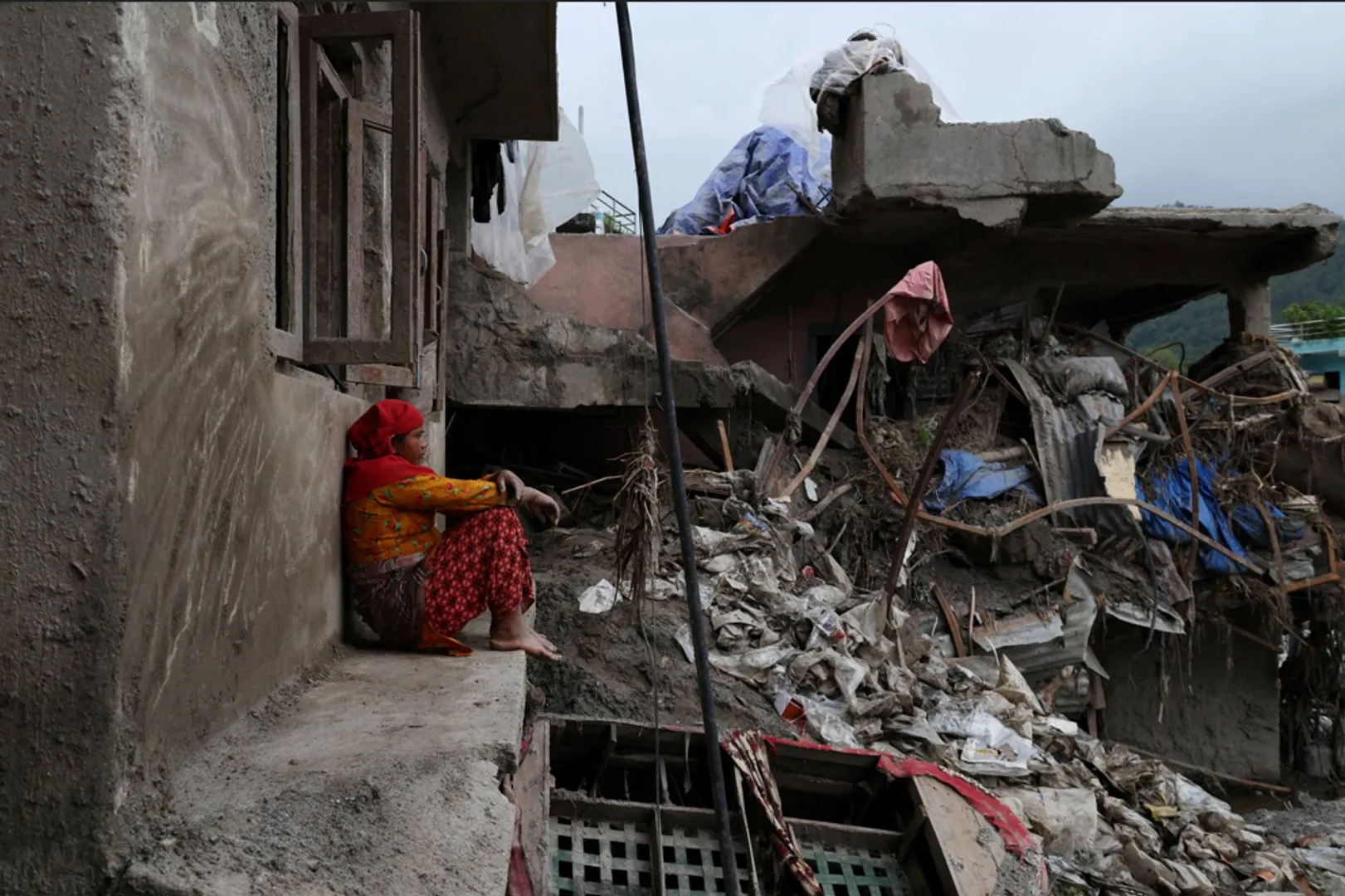
Diego Nacasio works full time as a salesman at a large hardware store in Florencio Varela in Argentina
Diego Nacasio works full time as a salesman at a large hardware store in Florencio Varela, but needs to take loans to make ends meet [Patricio A Cabezas/Al Jazeera]

But a closer look at the figures shows a different, more sombre, picture.

While economic activity in Argentina has increased overall, growth has been uneven. In November 2025, the most recent month for which data is available, sectors such as banking and agriculture saw growth, but manufacturing and commerce experienced sharp declines, with many factories and shops closing due to falling demand. Consumption, particularly of food, has been falling, with a 12.5 percent drop reported by independent food retailers.

Then there’s inflation, a key variable that in Argentina needs to be kept at bay in order to access essential foreign credit.

While Milei’s shock economic plan managed to significantly reduce inflation from record-high figures when he first took office in late 2023, experts say his administration has taken some controversial measures to keep it low. This includes forcing salaries to remain stagnant and under the rate of inflation, and opening the country up to cheaper imports. These policies have left many without money to spend and forced thousands of factories and small businesses to close.

Critics also say inflation figures are not representative of real price fluctuations. The tool used to measure inflation in Argentina, a sample basket of goods people consume, was developed in 2004 and does not reflect current consumption patterns, including the percentage that items like electricity and fuel – two areas that have seen price hikes considerably higher than inflation – represent in people’s real spending habits.

Carrera Pereyra says that figures also show that the rapid changes in Argentina’s economy have widened inequalities.

“On the one hand, we see that some sectors are able to consume more, so we see a rise in the sales of properties, cars, motorbikes, some as a result of the opening of imports,” she said. “But on the other hand, items like food and medicines are decreasing. So, some people can buy more things than before, while others are struggling to put food on the table.”

An obstacle course

Many Argentines who spoke with Al Jazeera said that making ends meet has become nothing short of an obstacle course. Juggling multiple demanding jobs, selling used items such as clothing, borrowing from relatives, seeking shark loans and bargain hunting have become a regular part of daily life.

“Shopping for food has become a job in itself,”  said Veronica Malfitano, 43, a teacher and trade unionist, whose salary was cut by a quarter when Milei slashed public spending. “I team up with relatives or people I work with, and we buy in bulk. I use my credit card or get small loans. This month, for the first time, I have only paid the credit card’s minimum, something I had never done before. It’s all very stressful. Everybody I know is in the same situation.”

Research confirms Malfitano is not alone. Nearly half of supermarket purchases in Argentina are paid with credit cards, a record, according to recent official data.

A street advertisement in Argentina offering loans outside the banking system with very high interest rates
A street advertisement in Argentina offers loans – one sign of the proliferation of informal lenders, which experts say has created a ‘dangerous situation’ [Patricio A Cabezas/Al Jazeera]

Both borrowing and default rates have increased. It is estimated that around 11 percent of personal loans are unpaid, the highest rate since the Central Bank of Argentina began keeping records in 2010, according to Central Bank data.

Griselda Quipildor, 49, who lives with her husband, two daughters and two grandchildren, says that even though several people in her family work, money usually runs out by the 18th of every month and they have to start taking loans.

“At the start of the month, we pay debts, the bills and then the money runs out and we have to start borrowing again. It’s an endless vicious circle, one that is very difficult to get away from. We borrow from people we know and people we don’t know. It wasn’t like this before.”

Lucia Cavallero, an analyst, economics expert, and member of Movida Ciudad, told Al Jazeera that even though Argentina’s economic problems are longstanding, their impact on people’s homes is worsening.

“Debt has long been a serious problem in Argentina, and it has now become a crisis,” she said. “The proliferation of informal lenders has created a dangerous situation, leaving many people with no other options.”

In response, a political party has proposed a bill that would help people in lower-income sectors unify their loans and apply for a long-term payment plan at lower rates.

Cavallero says there are some positive aspects to the initiative, but that it largely misses the central point.

“It is good to see the political class recognising that debts are a serious problem for people,” she said. “However, this approach follows the logic of borrowing to pay off debt. While it may provide temporary relief, deeper structural changes are needed.

“Just as banks are bailed out, we are calling for families to be supported. A more sustainable solution is for wages to keep pace with the cost of the basic basket, so that people do not have to go into debt just to afford food,” Cavallero told Al Jazeera.

Despite all the challenges he and his family face, Nacasio says many people like himself still count themselves lucky.

“At least we own our house,” he said. “If we didn’t and we had to pay rent, I don’t know what we would do. I just need things to change, for us and for everybody. Things cannot continue like this.”

Source link

CBO: US Federal deficits and debt to worsen over next decade | Government News

The nonpartisan Congressional Budget Office’s 10-year outlook projects worsening long-term United States federal deficits and rising debt, driven largely by increased spending, notably on Social Security, Medicare, and debt service payments.

Compared with the CBO’s analysis this time last year, the fiscal outlook, which was released on Wednesday, has deteriorated modestly.

Recommended Stories

list of 4 itemsend of list

The CBO said that the deficit for fiscal 2026 – President Donald Trump’s first full fiscal year in office – will be about 5.8 percent of GDP, about where it was in fiscal 2025, when the deficit was $1.775 trillion.

But the US deficit-to-GDP ratio will average 6.1 percent over the next decade, reaching 6.7 percent in fiscal 2036 – far above US Treasury Secretary Scott Bessent’s goal to shrink it to about 3 percent of economic output.

Major developments over the last year are factored into the latest report, including Republicans’ tax and spending measure known as the “One Big Beautiful Bill Act,” higher tariffs, and the Trump administration’s crackdown on immigration, which includes deporting millions of immigrants from the US mainland.

As a result of these changes, the projected 2026 deficit is about $100bn higher, and total deficits from 2026 to 2035 are $1.4 trillion larger, while debt held by the public is projected to rise from 101 percent of GDP to 120 percent — exceeding historical highs.

Notably, the CBO says higher tariffs partially offset some of those increases by raising federal revenue by $3 trillion, but that also comes with higher inflation from 2026 to 2029.

Rising debt and debt service are important because repaying investors for borrowed money crowds out government spending on basic needs such as roads, infrastructure and education, which enable investments in future economic growth.

CBO projections also indicate that inflation does not hit the Federal Reserve’s 2 percent target rate until 2030.

A major difference is that the CBO forecasts rely on significantly lower economic growth projections than the Trump administration, pegging 2026 real GDP growth at 2.2 percent on a fourth-quarter comparison basis, fading to an average of about 1.8 percent for the rest of the decade.

Trump administration officials in recent weeks have projected robust growth in the 3-4 percent range for 2026, with recent predictions that first-quarter growth could top 6 percent amid rising investments in factories and artificial intelligence data centres.

CBO’s forecasts assume that tax and spending laws and tariff policies in early December remain in place for a decade. The government’s fiscal year starts on October 1.

While revived investment tax incentives and bigger individual tax refunds provide a boost in 2026, the CBO said that this is attenuated by the drag from larger fiscal deficits and reduced immigration that slows the growth of the labour force.

Jonathan Burks, executive vice president of economic and health policy at the Bipartisan Policy Center said “large deficits are unprecedented for a growing, peacetime economy”, though “the good news is there is still time for policymakers to correct course.”

‘Urgent warning’

Lawmakers have recently addressed rising federal debt and deficits primarily through targeted spending caps and debt limit suspensions, as well as deploying “extraordinary measures” when the US is close to hitting its statutory spending limit, though these measures have often been accompanied by new, large-scale spending or tax policies that maintain high deficit levels.

And Trump, at the start of his second term, deployed a new “Department of Government Efficiency”, which set a goal to balance the budget by cutting $2 trillion in waste, fraud and abuse; however, budget analysts estimate that DOGE cut anywhere between $1.4bn to $7bn, largely through workforce firings.

Michael Peterson, CEO of the Peterson Foundation, said the CBO’s latest budget projection “is an urgent warning to our leaders about America’s costly fiscal path.”

“This election year, voters understand the connection between rising debt and their personal economic condition. And the financial markets are watching. Stabilising our debt is an essential part of improving affordability, and must be a core component of the 2026 campaign conversation.”

Source link

Venezuela: Creditors Hunger for 170B Debt Renegotiation

Venezuela is looking to access $4.9 billion in IMF-issued special drawing rights. (Xinhua)

Caracas, January 28, 2026 (venezuelanalysis.com) – International creditors have shown growing optimism to collect on defaulted Venezuelan debt in the wake of the January 3 US military strikes and kidnapping of President Nicolás Maduro.

According to Bloomberg, the volume of Venezuelan bonds traded increased tenfold since the start of the year. Securities have rallied to around 40 cents on the dollar, having hit lows of 1.5 cents on the dollar in the past.

A combination of defaulted bonds, unpaid loans and arbitration awards is estimated to total up to US $170 billion after years of accruing interest. The Maduro government began defaulting on debt service in 2017 as US sanctions crippled the Caribbean nation’s economy and ultimately blocked financial transactions altogether.

The Venezuelan Creditor Committee (VCC) expressed “readiness” to discuss a debt restructuring deal when authorized. The group brings together creditors including GMO, Greylock Capital, Mangart Capital, and Morgan Stanley, which hold over $10 billion in sovereign and state oil company PDVSA bonds.

Elias Ferrer Breda, financial analyst and director of Orinoco Research, told Venezuelanalysis that the “enthusiasm” means creditors feel a debt restructuring deal is “closer,” but warned that any agreement will hinge on US recognition of the Venezuelan government.

“The recognition, along with the lifting of primary sanctions, is the final obstacle,” he said. “There have been steps to reopen the US embassy in Caracas and a Venezuelan delegation headed by Félix Plasencia also visited DC.”

The first Trump administration recognized the self-proclaimed “interim government” led by Juan Guaidó as Venezuela’s legitimate authority in 2019, prompting Caracas to break diplomatic relations. After the parallel Guaidó administration dissolved in 2022, Washington transferred the recognition to the opposition-majority National Assembly whose term expired in 2021.

The small group of US-backed politicians retains control over Venezuelan-owned assets in the US. For its part, the Venezuelan government headed by Acting President Delcy Rodríguez has advocated a renewed diplomatic engagement with Washington. The two administrations have taken steps to reopen the respective embassies.

Ferrer, who also directs the Guacamaya media outlet, suggested that the State Department has no immediate plans to change its formal recognition of the defunct parliament. 

“However, there is a de facto recognition of the Rodríguez acting government being built,” he went on to add. “This will become de jure sooner or later; it could be a few months or even a couple of years.”

Venezuela’s inability to sustain debt service, including settlements with creditors, as a result of sanctions, saw many corporations pursue legal avenues to collect. Crystallex, ConocoPhillips and several other companies are set to benefit from the proceeds of the forced judicial auction of Venezuela’s US-based refiner CITGO.

Washington’s formal recognition of the Rodríguez acting administration could also pave the way for Venezuela to access about $4.9 billion in “special drawing rights” issued by the International Monetary Fund (IMF). The IMF created the liquidity instruments in 2021 to help governments deal with the Covid-19 pandemic but blocked Venezuela from accessing its share as it followed Trump’s lead in not recognizing the Nicolás Maduro government.

According to reports, US Treasury Secretary Scott Bessent recently held meetings with the heads of the IMF and the World Bank to discuss a possible re-engagement with the South American country.

For their part, Venezuelan authorities have expressed a willingness to engage with creditors in the past, but US sanctions preempted any meaningful engagement.

Caracas’ debt also includes long-term oil-for-loan agreements with China. However, with Washington’s naval blockade recently blocking China-bound crude shipments, Beijing has reportedly sought assurances of the repayment of debts estimated at $10-20 billion.

Source link

Who Had More National Debt?

The national debt passed the $36 trillion threshold in November for the first time ever, as the combined debt held by the U.S. public and the federal government grows.

At that sum, the U.S. national debt is approximately equal to the value of the economies of China, Germany, Japan, India, and the U.K. combined, the Peter G. Peterson Foundation found. 

National debt is the total amount of money the U.S. federal government owes its creditors. The American public primarily holds the largest share of federal debt, followed by foreign governments and U.S. banks and investors. The government gathers funds by collecting taxes on personal and corporate income, payroll earnings, and borrowing. The government then spends the money on programs such as Social Security, education, health care, national defense, and more, and takes on debt by borrowing to cover the expenses that accumulate over time. 

But which political party has historically added more to the national debt—Democrats or Republicans? The answer depends on how you slice the data.

Key Takeaways

  • The national debt passed the $36 trillion threshold in November 2024 for the first time ever, as the combined debt held by the U.S. public and the federal government grows.
  • Republican presidents have added slightly more to the national debt per term than Democratic presidents, according to inflation-adjusted data from the U.S. Treasury Department and the Bureau of Labor Statistics dating back to 1913.
  • Looking at U.S. presidents since 1913, Republican presidents added about $1.4 trillion per four-year term, compared to $1.2 trillion added by Democrats.

Republican Presidents Have Added More to the National Debt Per Term—But Democratic Presidents Added More Debt Overall

Inflation-adjusted data from the U.S. Treasury Department and the Bureau of Labor Statistics would suggest that per term, Republican presidents have added slightly more debt to the U.S. national debt than Democratic presidents. Looking at U.S. presidents from 1913 through the end of the federal fiscal year 2024, Republican presidents added about $1.4 trillion per four-year term, compared to $1.2 trillion added by Democrats. 

However, Democratic presidents added more inflation-adjusted debt overall. That could be because Democratic presidents were in power for nine more years than Republican presidents in the period since 1913. Overall, Democratic presidents have added a total of $18 trillion to the national debt since 1913 (adjusted for inflation), while Republicans have added $17.3 trillion.

How Does a President and Their Administration Affect Debt?

Historically, the way a president has responded to major events has added significantly to the national debt. For example, funding wars and spending on government relief during recessions are some reasons presidents have added to the national debt.

While national debt isn’t entirely in a president’s control, a president and their administration’s fiscal policies do affect it. Federal spending can be out of a president’s control in times of war, natural disasters, or a public health crisis.

During the COVID-19 pandemic in 2020, then-President Trump signed the $2.2 trillion CARES Act stimulus bill into law in response to the sharp rise in unemployment during the pandemic. Later, President Biden signed the $1.9 trillion American Rescue Plan Act to provide more relief to Americans and businesses as they continued to recover from the pandemic.

President Obama signed the American Recovery and Reinvestment Act (ARRA) in 2009 when the economy was experiencing the worst recession since the Great Depression. Former President George W. Bush added significantly to the national debt during his term after launching the invasion of Afghanistan and the War on Terror following the Sept. 11 terror attacks. The Iraq and Afghanistan wars cost an estimated $8 trillion over 20 years, ending in 2021. 

How Would the 2024 Election Candidates’ Economic Plans Affect U.S. National Debt?

The national debt was also a leading issue for 2024 presidential election voters. October data from a poll by the Peterson Foundation found that more than nine in 10 voters across seven key swing states said it was important for candidates to have a plan for national debt. 

However, a report by the nonpartisan Committee for a Responsible Federal Budget (CRFB) found that both candidates were likely to significantly increase the national debt under their current spending plans. High levels of national debt can slow down the economy, increase interest rates, and generally increase the risk of a fiscal crisis. 

Tallying what economic proposals the candidates had made, Harris’ spending plan would increase the national debt by about $3.95 trillion through 2035, while President-elect Trump’s plan would increase the debt by $7.75 trillion, according to an estimate by the CRFB.

Which President Added the Most National Debt Per Term? 

Former President Trump added the most national debt per term, adding an estimated $7.1 trillion to the national debt during his term from 2016 to 2020.

The Bottom Line

Looking at U.S. presidential terms since 1913, Republican presidents have added slightly more debt to the U.S. national debt than Democratic presidents per four-year term. However, Democratic presidents added more inflation-adjusted debt overall, though there have also been nine more years of Democratic presidents since 1913 compared to Republican presidents.

Source link

Paramount outlines plans for Warner Bros. cuts

Many in Hollywood fear Warner Bros. Discovery’s sale will trigger steep job losses — at a time when the industry already has been ravaged by dramatic downsizing and the flight of productions from Los Angeles.

David Ellison‘s Paramount Skydance is seeking to allay some of those concerns by detailing its plans to save $6 billion, including job cuts, should Paramount succeed in its bid to buy the larger Warner Bros. Discovery.

Leaders of the combined company would search for savings by focusing on “duplicative operations across all aspects of the business — specifically back office, finance, corporate, legal, technology, infrastructure and real estate,” Paramount said in documents filed with the Securities & Exchange Commission.

Paramount is locked in an uphill battle to buy the storied studio behind Batman, Harry Potter, Scooby-Doo and “The Big Bang Theory.” The firm’s proposed $108.4-billion deal would include swallowing HBO, HBO Max, CNN, TBS, Food Network and other Warner cable channels.

Warner’s board prefers Netflix’s proposed $82.7-billion deal, and has repeatedly rebuffed the Ellison family’s proposals. That prompted Paramount to turn hostile last month and make its case directly to Warner investors on its website and in regulatory filings.

Shareholders may ultimately decide the winner.

Paramount previously disclosed that it would target $6 billion in synergies. And it has stressed the proposed merger would make Hollywood stronger — not weaker. The firm, however, recently acknowledged that it would shave about 10% from program spending should it succeed in combining Paramount and Warner Bros.

Paramount said the cuts would come from areas other than film and television studio operations.

A film enthusiast and longtime producer, David Ellison has long expressed a desire to grow the combined Paramount Pictures and Warner Bros. slate to more than 30 movies a year. His goal is to keep Paramount Pictures and Warner Bros. stand-alone studios.

This year, Warner Bros. plans to release 17 films. Paramount has said it wants to nearly double its output to 15 movies, which would bring the two-studio total to 32.

“We are very focused on maintaining the creative engines of the combined company,” Paramount said in its marketing materials for investors, which were submitted to the SEC on Monday.

“Our priority is to build a vibrant, healthy business and industry — one that supports Hollywood and creative, benefits consumers, encourages competition, and strengthens the overall job market,” Paramount said.

If the deal goes through, Paramount said that it would become Hollywood’s biggest spender — shelling out about $30 billion a year on programming.

In comparison, Walt Disney Co. has said it plans to spend $24 billion in the current fiscal year.

Paramount also added a dig at Warner management, saying: “We expect to make smarter decisions about licensing across linear networks and streaming.”

Some analysts have wondered whether Paramount would sell one of its most valuable assets — the historic Melrose Avenue movie lot — to raise money to pay down debt that a Warner acquisition would bring.

Paramount is the only major studio to be physically located in Hollywood and its studio lot is one of the company’s crown jewels. That’s where “Sunset Boulevard,” several “Star Trek” movies and parts of “Chinatown” were filmed.

A Paramount spokesperson declined to comment.

Sources close to the company said Paramount would scrutinize the numerous real estate leases in an effort to bring together far-flung teams into a more centralized space.

For example, CBS has much of its administrative offices on Gower in Hollywood, blocks away from the Paramount lot. And HBO maintains its operations in Culver City — miles from Warner’s Burbank lot.

Paramount pushed its deadline to Feb. 20 for Warner investors to tender their shares at $30 a piece.

The tender offer was set to expire last week, but Paramount extended the window after failing to solicit sufficient interest among Warner shareholders.

Some analysts believe Paramount may have to raise its bid to closer to $34 a share to turn heads. Paramount last raised its bid Dec. 4 — hours before the auction closed and Netflix was declared the winner.

Paramount also has filed proxy materials to ask Warner shareholders to reject the Netflix deal at an upcoming stockholder meeting.

Earlier this month, Netflix amended its bid, converting its $27.75-a-share offer to all-cash to defuse some of Paramount’s arguments that it had a stronger bid.

Should Paramount win Warner Bros., it would need to line up $94.65 billion in debt and equity.

Billionaire Larry Ellison has pledged to backstop $40.4 billion for the equity required. Paramount’s proposed financing relies on $24 billion from royal families in Saudi Arabia, Qatar and Abu Dhabi.

The deal would saddle Paramount with more than $60 billion of debt — which Warner board members have argued may be untenable.

“The extraordinary amount of debt financing as well as other terms of the PSKY offer heighten the risk of failure to close,” Warner board members said in a filing earlier this month.

Paramount would also have to absorb Warner’s debt load, which currently tops $30 billion.

Netflix is seeking to buy the Warner Bros. television and movie studios, HBO and HBO Max. It is not interested in Warner’s cable channels, including CNN. Warner wants to spin off its basic cable channels to facilitate the Netflix deal.

Analysts say both deals could face regulatory hurdles.

Source link