debate

Kamala Harris and Joe Biden face off over race at Democratic debate

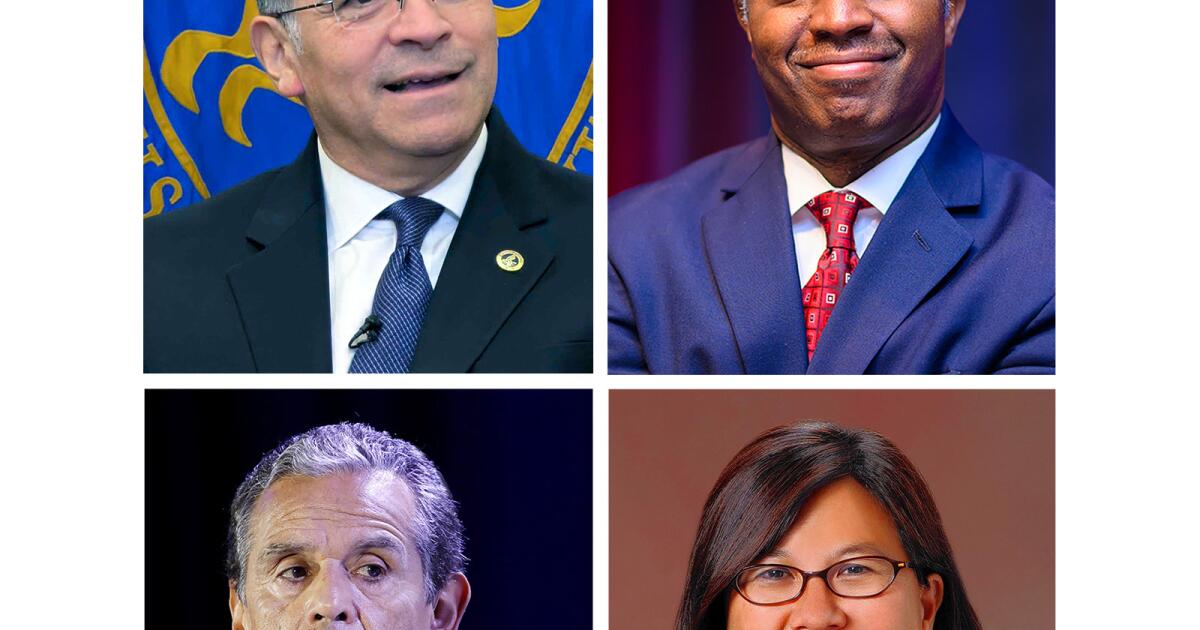
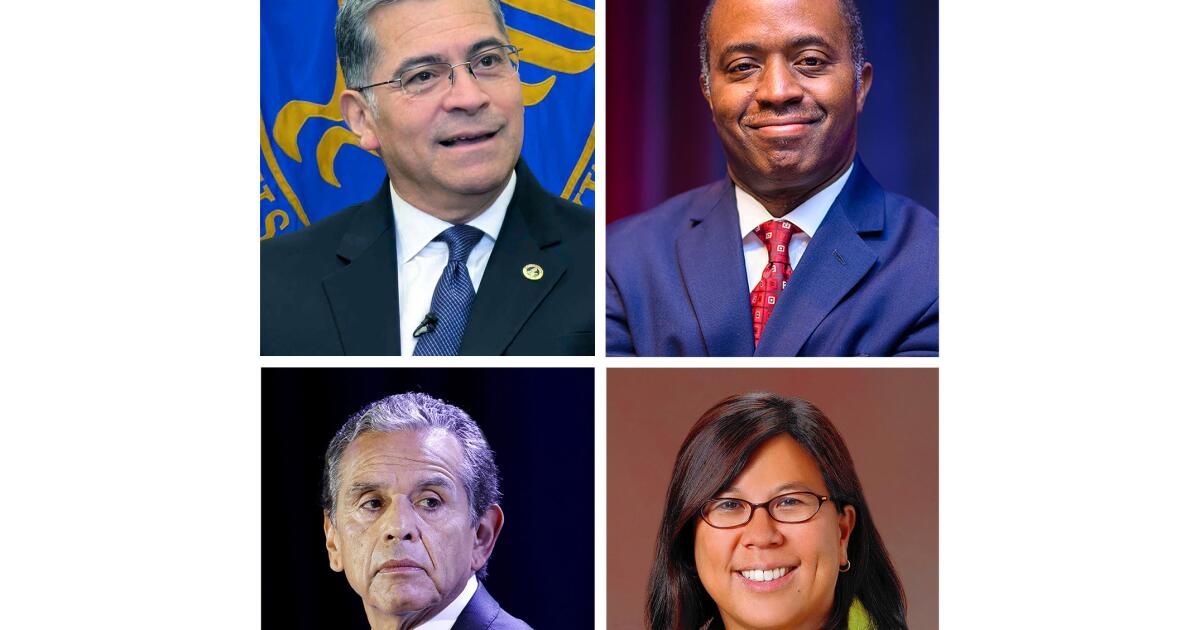
Sen. Kamala Harris aggressively challenged Joe Biden on his nostalgic comments about working with segregationists and his record on school integration during an often contentious debate between Democratic presidential candidates.

“It was actually very hurtful to hear you talk about the reputation of two United States senators who built their reputations and career on the segregation of race in this country,” Harris said, her voice thick with emotion, to the former vice president and senator. She noted she was the only black person on the debate stage and drew on her own experiences.

“You also worked with them to oppose busing,” the California senator said. “And there was a little girl in California who was part of the second class to integrate her public school, and she was bused to school every day. And that little girl was me.”

The exchange between two Democrats fighting to occupy the same lane in the presidential nominating contest was a pivotal moment in Thursday’s debate from Miami, the second night of the event.

Harris was referring to the Biden’s remarks this month about lost “civility” in the nation’s capital, including being able to work with segregationist Sens. James O. Eastland of Mississippi and Herman Talmadge of Georgia, even though he disagreed with them.

Biden said his position was being mischaracterized, that he did not praise racists; he pointed to his work with President Obama without mentioning him by name.

This is not your father’s Democratic Party: Debate shows how leftward it has moved »

Biden also said he did not oppose busing, but rather believed it was an issue that should be handled by the states rather than the federal government.

“You would have been able to go to school the same exact way because it was a local decision,” he said.

Harris noted that such states’ rights arguments were used to fight integration in certain parts of the country.

“That’s why the federal government must step in,” Harris said. “That’s why we have the Voting Rights Act, that’s why we have the Civil Rights Act, that’s why we need to pass the Equality Act. That’s why we need to pass the ERA, because there are moments in history when states fail to preserve the civil rights of all people.”

Biden noted his support for the Equal Rights Amendment and the Voting Rights Act before noting that he had run out of time.

Harris clearly came prepared to go after Biden on this issue. Her campaign tweeted a picture of her as a schoolgirl shortly after the exchange.

Source link

Nuclear Power Injects a Spark in N.H. Debate : Democrats: Four rivals attack Tsongas’ support of this energy source in last such forum before the primary.

In their last joint appearance before Tuesday’s high-stakes New Hampshire primary, the five major Democratic presidential candidates Sunday coasted through a generally desultory debate enlivened only by attacks on former Massachusetts Sen. Paul E. Tsongas for his support of nuclear power.

Tsongas, who leads in state polls, repeatedly came under attack for his staunch backing of nuclear power–a controversial position in a state where many Democratic activists have long opposed the Seabrook nuclear power plant. Each of Tsongas’ four rivals said they would decrease the nation’s reliance on nuclear energy.

“We’re not all trying to gang up on you, we’re not trying to say you’re wrong all the time,” Nebraska Sen. Bob Kerrey said to Tsongas at one point. “But on this particular issue I think you are. . . . Nuclear power, it seems to me, is fatally flawed.”

The focus on nuclear power–an issue that until recently has played virtually no role in the campaign–underlined the shift in Tsongas’ position from a long-shot who had been gently patronized to a front-runner worthy of pummeling. But other than the criticism of his energy policy–an issue that has not been high on the list of voter concerns here in recent years–Tsongas ran this last gantlet before the vote virtually unscathed.

Early in the debate, former California Gov. Edmund G. (Jerry) Brown Jr.–who later grilled Tsongas most aggressively on his support for nuclear power–even embraced him as a fellow outsider committed to “the politics of the future” as compared to the three current officeholders in the race.

Brown then mildly distanced himself from Tsongas, saying the former senator “represents a more conservative, business-oriented view of the future.”

In fact, the tone of the debate was strikingly low-key, with all of the candidates focusing more of their fire on President Bush than their rivals. Tsongas took the lead, employing the front-runner strategy used earlier by Arkansas Gov. Bill Clinton. At every opportunity Tsongas stressed his agreements with his rivals and his differences with Bush.

In the debate, sponsored by Cable News Network and the League of Women Voters, the candidates were hampered by a format so disjointed and at times unstructured that twice Clinton felt compelled to suggest questions to moderator Bernard Shaw.

After weeks of focusing on the bread-and-butter concerns of voters in this economically ravaged state, the candidates Sunday found themselves exploring international population control, the destruction of the rain forests, utility pricing reform and whether the nation needs a better class of light bulb.

In this alternately esoteric and disengaged atmosphere, the only energy was generated by the issue of nuclear power.

One by one, each of Tsongas’ rivals insisted they would reduce reliance on nuclear power. Harkin declared that a program “of developing solar . . . for the future” would allow the nation to avoid “going to the nuclear option that Paul Tsongas wants to move to.”

Brown said he would move to phase out all nuclear power plants over the next decade.

Clinton said: “I do not favor anything that will accelerate the building of nuclear power plants. If you have major incentives to the utilities to engage in conservation, if you have a major attempt to convert to natural gas wherever you can. . . . I do not think you are going to see a need for new nuclear power plants.”

Tsongas–after characterizing nuclear power as part of “the third tier” of his preferred energy options for the country–argued in response to the persistent jabs that a reduction in reliance on nuclear power would require greater use of fossil fuels, raising the threat of global warming through the greenhouse effect.

“If you take out all of your nuclear power plants by definition, you are going to have more fossil fuel burning and add to the greenhouse effect,” Tsongas said. “I take the position that the threat long term is global warming.”

Though Tsongas forcefully held his ground, he bristled under the attacks–which were among the most pointed he has endured. “If I could, I would like . . . to characterize my positions myself and not have others do it,” he said.

After the debate, aides to the other candidates maintained that Tsongas had been weakened by the focus on an issue. “I don’t think his position has been laid out before as it was here tonight, so I think it will hurt him,” said Frank Greer, Clinton’s media adviser.

Thaleia Schlesinger, Tsongas’ sister, countered: “People understand his position was based on his fear of global warming.”

When not arguing over whether to split atoms for energy, the candidates managed to make some points about the economy. To a greater degree than usual, Tsongas declared that his approach–which relies heavily on increasing capital incentives for business and rejects a tax cut for the middle class–offered struggle as well as reward.

“There are two roads,” he said in closing remarks. “One is easy, one is comfortable, but it is downhill. The other is the road to economic prosperity. . . . That road is steeper and it’s harder, but it’s more noble and it’s more worthy.”

Harkin reiterated his support for cutting the defense budget in half over 10 years to support infrastructure investments and other programs at home. And he took a harsh line on trade issues, promising to stand up to Japan and prevent former government trade negotiators from lobbying for foreign governments. “I’m saying trade has to be a two-way street, not a one-way bridge,” he said.

As he has in recent days, Clinton sought to differentiate himself from Tsongas by emphasizing his experience as chief executive in Arkansas and his plans to reform government. “I think we have to have a more activist government,” he said, “but it also has to be more community-based, less bureaucratic and provide more citizen choice.”

Like Harkin, Kerrey insisted that America needed to get tougher with Japan on trade. But he called for the establishment of “new trading structures so that we can expand trade into the rest of the world, trying to convert . . . old enemies into new customers.”

Tsongas, who has taken the strongest free-trade position, urged voluntary protectionism, saying that as President he would ask Americans to shun Japanese imports if Japan doesn’t open its markets. “If the Japanese are not willing to be reasonable,” he said, “you have to play hardball.”

For most of this encounter, though, hardball was apparently the last thing on the minds of the five Democrats chasing the White House. With Tuesday’s pivotal vote in sight, they seemed less like contenders stepping into the ring than weary fighters embracing at the end of a bruising match.

Times political writer Robert Shogan contributed to this story.

Source link

Metro board won’t debate the Dodger Stadium gondola

When community members crowd into a Metro meeting room next Thursday to argue for and against the proposed Dodger Stadium gondola, the board of directors will listen before they vote on whether to proceed with the project.

Will the directors speak?

In a public meeting, officials often explain their position on a high-profile issue. In the Metro meeting next week, the board of directors could vote on the gondola without any of the board members saying a word about it.

Metro released the meeting agenda late Tuesday night. The agenda includes the gondola vote as part of what public agencies call the consent calendar — that is, a package of items that can be approved with one vote, and without any discussion among the officials doing the voting.

The items on any consent calendar generally are routine. Based on a staff report, Metro considers the gondola approval to be routine too: Metro approved the gondola last year, a judge ordered fixes to the environmental impact report, and all Metro needs to do now is rubber-stamp the fixes. The gondola project still would need approvals from the Los Angeles City Council and various state agencies.

At a committee meeting last week — one week after the council had urged Metro to kill the project — Los Angeles Mayor and Metro board member Karen Bass put it this way: “Just real quickly, I just wanted to reiterate or clarify that what the vote is about today is about certifying the EIR, certifying the project’s environmental documents under CEQA, nothing more.”

Two other board members — county supervisors Janice Hahn and Hilda Solis — did address the concerns raised by the public speakers. Hahn voted no on the gondola; Solis voted yes.

Whether Hahn, Solis or any of the other 11 voting board members decide to speak up next Thursday remains to be seen. All it takes is one member to remove the item from the consent calendar and demand discussion on the issue.

The gondola, first pitched by former Dodgers owner Frank McCourt in 2018, would carry fans from Union Station to Dodger Stadium. Gondola proponents have not announced any financing commitments for a project with a construction cost estimated at $500 million and proposed as privately funded.

Source link

Is the global public tuning out the climate change debate? | Climate Crisis

Divisions mark the last days of the UN climate summit in the Brazilian city of Belem.

Division marked the COP30 climate summit in Brazil as countries struggled to reach a consensus on several sticking points, including a push to phase out fossil fuels.

As the world seeks to address the climate crisis, experts say scientists, politicians, media and business all have a role to play in keeping the public engaged.

Recommended Stories

list of 3 itemsend of list

But are they succeeding?

Presenter: Neave Barker

Guests:

Professor John Sweeney – Contributor to the Intergovernmental Panel on Climate Change’s (IPCC) Nobel Peace Prize-winning assessment report

Professor Allam Ahmed – Leading scholar in sustainable development and the knowledge economy

Michael Shank – Climate communication expert and former director of media strategy at Climate Nexus

Source link

Should they stay or go? UCLA greats weigh in on the Rose Bowl debate

Those who want to stay at the Rose Bowl describe the place as iconic, an ode to everything that’s great about college football. They say it oozes history and tradition. Just the sight of the glowing neon sign is enough to give them goosebumps.

Those who want to go call the place a dump. They say it’s old and decaying by the day, a shell of its former greatness. Why hold on so hard when a futuristic stadium in Inglewood could provide not only a home closer to campus but also an infusion of cash as part of a more favorable lease?

Going into what could be UCLA’s last home game ever at its century-old stadium Saturday night, some with deep ties to the school say they understand each of the dueling perspectives in the debate over a possible move to SoFi Stadium.

“The concern is, are you gonna lose part of your identity, which has been in peril lately already?” said Kris Farris, a former All-America offensive tackle with the Bruins who was among the more than half-dozen former greats and current recruits who spoke with The Times about the situation. “So it’s like you’re taking away another special part of UCLA, but of course everyone understands the upside financially and what the program needs to do in the arms race of college football right now.”

Officially, nothing has been decided. School officials have released two statements in recent weeks, both acknowledging the uncertainty of the situation. It’s believed that if UCLA decided to make a move to SoFi Stadium, the Bruins would want to do so before the 2026 season.

But the courts could have the final say. The Rose Bowl Operating Co. and the City of Pasadena have commenced a legal battle with hopes of forcing the team to stay. Having called the stadium home since moving in before the 1982 season under legendary coach Terry Donahue, UCLA committed to a lease that doesn’t expire until the summer of 2044.

“I just really feel if Terry was here, I think he’d say, ‘What’s the hurry?’ ” said Pat Donahue, one of the late coach’s brothers. “You have a lease, why don’t you underwrite what the issues are and if you feel you made a bad deal, go renegotiate. You know, I just don’t know what the hurry is and it seems to me that UCLA has a lot bigger football problems than the Rose Bowl, right? I mean, the building’s on fire and you wanna remodel the garden.”

Only one thing seems certain: UCLA will not play home games on campus, as so many have proposed over the years. A movement to build a football stadium on the spot now occupied by Drake Stadium died in 1965 amid opposition from students, political leaders and local homeowners. Not only did the University of California regents rebuff the stadium bid, they also decreed that no structure built on the Drake Stadium footprint could later be enlarged into a football stadium.

Thus the current dilemma. Does UCLA keep its word and fulfill a Rose Bowl lease in which it loses millions of dollars annually in opportunity costs because it does not take in suite or sponsorship revenue? Or do the Bruins head to SoFi Stadium for a new beginning flush with cash, if not tradition?

“In the long term, if you look at the UCLA program, SoFi makes a whole lot more sense whether you like it or not,” said former Bruins quarterback Gary Beban, who led the team to an upset of top-ranked Michigan State in the 1966 Rose Bowl and won the school’s only Heisman Trophy in 1967.

Beban played for UCLA teams that called the Coliseum home, long before the Bruins moved to the Rose Bowl. He said initially wasn’t a supporter of UCLA playing in Pasadena because of a 26.2-mile commute from campus, acknowledging the issue seemed to be largely offset by wild early success the team enjoyed while appearing in five Rose Bowl games between 1983 and 1999.

With the Bruins stuck in a decadelong funk, making that long commute has become more burdensome, leading to dwindling attendance at a stadium that’s roughly twice the distance from UCLA than SoFi Stadium.

“It’s a convenience issue for the people at the campus and over a longer period of time,” Beban said, “I think eventually SoFi just makes more sense than the Rose Bowl. … Right now, this is being looked at at a time when the program needs a lot of fresh air. Regardless of how big of a supporter you are, there are a list of things that need to be advanced and this is just one of them. Maybe it’s time to start all over in all directions and try to get going in the right direction.”

One of Beban’s teammates favors holding on more tightly to the past. Jim Colletto, co-captain of the 1966 Rose Bowl champions, said standing on that field makes one feel like he’s playing or coaching with the ghosts of legends.

Before his return to the Rose Bowl as UCLA’s offensive line coach in 2006, Colletto walked to the two-yard line, where former teammate Bob Stiles had made a goal-line stand 40 years earlier by stopping Michigan State fullback Bob Apisa on a potential game-tying two-point conversion.

“I closed my eyes,” Colletto said, “and it all came alive again.”

Which stadium do possible future UCLA players want to call home?

Kenneth Moore III, a wide receiver from St. Mary’s High in Stockton who has verbally committed to the Bruins, said he’d prefer to play at SoFi Stadium. As far as he’s concerned, the stadium that opened in 2020 is closer to campus and would create a better environment than the team has experienced at the Rose Bowl, where it’s averaging only 37,099 fans this season.

“I feel it’ll be more involvement from the fans after going to SoFi,” Moore said, “to have more packed-out stands.”

Cooper Javorsky has remained a constant presence at the Rose Bowl even after decommitting from UCLA in the wake of coach DeShaun Foster’s dismissal. The offensive lineman from San Juan Hills High who is still considering the Bruins has developed an affinity for the place based on his many weekends spent on the sideline watching games.

“I don’t think I’m really in a position to have an opinion,” Javorsky said, “but who wouldn’t think it’s cool to run out at the Rose Bowl on a Saturday?”

One widespread lament is the possible loss of unfettered tailgating on a sprawling golf course and surrounding parking lots. Farris said throwing a football on the grass and cooking food in an open space was the part of the gameday experience that his kids looked forward to most when they were younger.

“At SoFi, just having attended some professional games there, they just don’t have the tailgating experience,” Farris said. “The tailgating at the Rose Bowl is special, it’s unique. You know, it’s not a paved parking lot with a small little stall.”

Hearing that UCLA’s game against Washington on Saturday could be the team’s last one inside the stadium he once called home has motivated Farris to make the drive from Orange County. It could represent one final memory for someone who was part of the last Bruins team to play in a Rose Bowl game.

“There’s nothing like it,” Farris said of the place. “I’ve played in a lot of different stadiums and obviously the backdrop and the size and scale of the Rose Bowl, the history of the Rose Bowl, the energy coming from the fans and just the history in that building and to be able to call it your home as a program and that’s your home field and being able to dominate in that time like we were able to do as a team, I wouldn’t trade that for the world.”

Nearly everyone who weighed in the stadium debate agreed that winning would solve many of UCLA’s problems regardless of where it played, drawing more fans and revenue. But Dave Ball, a former Bruins All-America defensive end, said there was a caveat that should be attached to that sentiment.

“Yes, winning solves everything,” Ball said, “but it’s like to me, the resources are the thing, especially now, that are going to promote winning. It’s like, man, you need to have the players and to have the players you need big budgets and an environment that is like swooning over the kids and Ohio State has that, Alabama has that, a lot of the SEC schools have that, and so a great coach who starts to get the program going will instill more excitement and more money, but you do need a lot of the budget and the resources to get that top-tier coach and those top-tier athletes.

“This thing is a game of moving onto the next and what matters to everybody is, do you win football games, championships, bowl games or not?”

Source link

As vice president during 9/11, Cheney is at the center of an enduring debate over U.S. spy powers

Dick Cheney was the public face of the George W. Bush administration’s boundary-pushing approach to surveillance and intelligence collection in the years after the Sept. 11, 2001, attacks.

An unabashed proponent of broad executive power in the name of national security, Cheney placed himself at the center of a polarizing public debate over detention, interrogation and spying that endures two decades later.

“I do think the security state that we have today is very much a product of our reactions to Sept. 11, and obviously Vice President Cheney was right smack-dab in the middle of how that reaction was operationalized from the White House,” said Stephen Vladeck, a Georgetown University law professor.

Prominent booster of the Patriot Act

Cheney was arguably the administration’s most prominent booster of the Patriot Act, the law enacted nearly unanimously after 9/11 that granted the U.S. government sweeping surveillance powers.

He also championed a National Security Agency warrantless wiretapping program aimed at intercepting international communications of suspected terrorists in the U.S., despite concerns over its legality from some administration figures.

If such an authority had been in place before Sept. 11, Cheney once asserted, it could have led the U.S. “to pick up on two of the hijackers who flew a jet into the Pentagon.”

Law enforcement and intelligence agencies still retain key tools to confront potential terrorists and spies that came into prominence after the attacks, including national security letters that permit the FBI to order companies to turn over information about customers.

But courts also have questioned the legal justification of the government’s surveillance apparatus, and a Republican Party that once solidly stood behind Cheney’s national security worldview has grown significantly more fractured.

The bipartisan consensus on expanded surveillance powers after Sept. 11 has given way to increased skepticism, especially among some Republicans who believe spy agencies used those powers to undermine President Trump while investigating ties between Russia and his 2016 campaign.

Congress in 2020 let expire three provisions of the Patriot Act that the FBI and Justice Department had said were essential for national security, including one that permits investigators to surveil subjects without establishing that they’re acting on behalf of an international terror organization.

A program known as Section 702 of the Foreign Intelligence Surveillance Act, which permits the U.S. government to collect without a warrant the communications of non-Americans located outside the country for the purpose of gathering foreign intelligence, was reauthorized last year — but only after significant negotiations.

“I think for someone like Vice President Cheney, expanding those authorities wasn’t an incidental objective — it was a core objective,” Vladeck said. “And I think the Republican Party today does not view those kinds of issues — counterterrorism policy, government surveillance authorities — as anywhere near the kind of political issues that the Bush administration did.”

As an architect of the U.S. invasions of Afghanistan and Iraq, Cheney pushed spy agencies to find evidence to justify military action.

Along with others in the administration, Cheney claimed Iraqi President Saddam Hussein was developing weapons of mass destruction and had ties to al-Qaida. They used that to sell the war to members of Congress and the American people, though it was later debunked.

The faulty intelligence used to justify the invasion of Iraq is held up as a significant failure by America’s spy services and a demonstration of what can happen when leaders use intelligence for political ends.

The government’s arguments for war fueled a distrust among many Americans that still resonates with some in Trump’s administration.

“For decades, our foreign policy has been trapped in a counterproductive and endless cycle of regime change or nation building,” Tulsi Gabbard, the director of the Office of National Intelligence, said in the Middle East last week.

Many lawmakers who voted to support using force in 2003 say they have come to regret it.

“It was a mistake to rely upon the Bush administration for telling the truth,” Sen. Ed Markey, D-Mass., said on the invasion’s 20th anniversary.

Expanded war powers

Trump has long criticized Cheney, but he’s relying on a legal doctrine popularized during Cheney’s time in office to justify deadly strikes on alleged drug-running boats in Latin America.

The Trump administration says the U.S. is engaged in “armed conflict” with drug cartels and has declared them unlawful combatants.

“These narco-terrorists have killed more Americans than Al-Qaeda, and they will be treated the same,” Defense Secretary Pete Hegseth said Oct. 28 on social media. ”We will track them, we will network them, and then, we will hunt and kill them.”

After 9/11, the Bush-Cheney administration authorized the U.S. military to attack enemy combatants acting on behalf of terror organizations. That prompted questions about the legality of killing or detaining people without prosecution.

Cheney’s involvement in boosting executive power and surveillance and “cooking the books of the raw intelligence” has echoes in today’s strikes, said Jim Ludes, a former national security analyst who directs the Pell Center for International Relations and Public Policy at Salve Regina University.

“You think about his legacy and some of it is very troubling. Some of it is maybe what the moment demanded,” Ludes said. “But it’s a complicated legacy.“

Vladeck noted an enduring legacy of the Bush-Cheney administration was “to blur if not entirely collapse lines between civilian reactions to threats and military ones.”

He pointed to designating foreign terrorist organizations, a tool that predated the Sept. 11 attacks but became more prevalent in the years that followed. Trump has used the label for several drug cartels.

Contemporary conflicts inside the government

Protecting the homeland from espionage, terrorism and other threats is a complicated endeavor spread across the government. When Cheney was vice president, for instance, agencies like the Department of Homeland Security and the Office of the Director of National Intelligence, or ODNI, were established.

As was the case then, the division of labor can still be disputed, with a recent crack surfacing between Director Kash Patel’s FBI and the intelligence community led by Gabbard.

The FBI said in a letter to lawmakers that it “vigorously disagrees” with a legislative proposal that it said would remove the bureau as the government’s lead counterintelligence agency and replace it with a counterintelligence center under ODNI.

“The cumulative effect,” the FBI warned in the letter obtained by The Associated Press, “would be putting decision-making with employees who aren’t actively involved in CI operations, knowledgeable of the intricacies of CI threats, or positioned to develop coherent and tailored mitigation strategies.”

That would be to the detriment of national security, the FBI said.

Spokespeople for the agencies later issued a statement saying they are working together with Congress to strengthen counterintelligence efforts.

Tucker and Klepper write for the Associated Press.

Source link

Commentary: From far away, an L.A. couple grapples with all-too-familiar debate after Dodgers win

Out in Wisconsin’s state capital, where the orange leaves are falling and every other person seems to wear the red and white of the University of Wisconsin Badgers, the pride and pain of rooting for the Dodgers in 2025 played out in the household of Carolina Sarmiento and Revel Sims.

They’re urban planning professors, Southern California natives — he’s from Eagle Rock, she’s from Santa Ana; they met at UCLA — and longtime friends of mine who have lived in Madison for a decade but are still involved in immigrant and anti-gentrification activism back home. I visited them recently as part of a speaking tour of Midwestern colleges and found myself in the middle of a debate that passed through the lives of too many people we know back home.

It’s one that’s unlikely to completely fade away no matter how many rings and parades the Boys in Blue rack up:

Is it OK to, well, revel, in this year’s World Series champs?

On one hand the Dodgers won back-to-back titles for their first time ever and became the first team to do so in a generation. The squad looked like Los Angeles at its best: people from across the world who set aside their egos to win and bring joy to millions of Angelenos in a most difficult year for the City of Angels.

L.A., a city long synonymous with winning — the weather, the teams, the people, the food — has suffered a terrible losing streak that started with the deadly and catastrophic Eaton and Palisades fires and continues with mass deportations that the Trump administration vows to escalate.

That’s where the rub came for Sarmiento and other Dodgers fans. For them, the actions and inactions of the team this year have been indefensible.

“For me, it started when the Dodgers went to the White House,” said the 45-year-old as we drove to their blue-and-white house. She especially took issue with shortstop Mookie Betts, who skipped a White House visit in 2019 when he was with the World Series-winning Boston Red Sox but shook Trump’s hand this time around, describing his previous snub as “very selfish.”

“Who got in his ear?” she exclaimed, bringing out dried mangoes for us to snack on as we waited for Sims to come home. “Since when has standing up for injustice been about you?”

Sarmiento didn’t grow up a Dodgers fan but bought into the team once she and Sims became a couple. They and their two young sons usually attended Dodgers games on trips back home and regularly caught the Dodgers in Milwaukee whenever they played the Brewers. One time, manager Dave Roberts “happily” signed a jersey for them when the family ran into him at a hotel, Sarmiento said.

In Madison, she long wore a Dodgers sweatshirt emblazoned with the Mexican flag that Sims bought for her because “it was a way to represent home. But not anymore. I tell Revel, ‘Babe, I’m not asking you to boycott the Dodgers forever, but they gotta give us something back.’”

Sure, the Dodgers blocked federal agents from entering the Dodger Stadium parking lot in June just after la migra raided a Home Depot facility. Shortly after, the team donated $1 million to the California Community Foundation to disburse to nonprofits assisting families affected by Trump’s deportation Leviathan.

But as the summer went along, Sarmiento grew frustrated that only Dodgers outfielder Kiké Hernández spoke out against immigration raids and Trump’s deployment of the Marines and National Guard. She also wondered why Dodgers chairman Mark Walter wouldn’t address charges that companies he has investments in do business with Trump’s deportation machine. One has a stake in a private prison company that contracts with the federal government to run immigrant detention centers; another has a joint venture with Palantir, which ICE has contracted to create data surveillance systems that would make the Eye of Sauron from “The Lord of the Rings” series seem as innocuous as a teddy bear.

“After a while, it’s like a woman who knows her partner is a cheater but keeps saying, ‘He’s not a cheater, he’s not a cheater’ and then gets upset when he cheats on her again. At that point, all you can say is, ‘Girl…‘”

I brought up how many Dodgers fans I know saw the team’s World Series win as a giant middle finger to Trump.

The heroes of Games 6 and 7, outfielders Kiké Hernández and second baseman Miguel Rojas, come respectively from Puerto Rico and Venezuela, a commonwealth Trump has neglected and a country he’s salivating to invade. The team’s most popular player, Shohei Ohtani, still proudly speaks in his native Japanese despite being in the U.S. for eight years and knowing some English. Tens of thousands of fans came out for the Dodgers victory parade and celebration at Dodger Stadium, many of them undoubtedly immigrants.

Isn’t it OK to let folks be happy?

“It’s like community benefit agreements,” Sarmiento responded, referring to a tactic by neighborhood groups that sees them win commitments from developers on issues like open space, union contracts and affordable housing with the threat of protests and lawsuits. “You know what’s coming, so you try to get something out of it. This year was a political moment that fans could’ve taken and they didn’t, so the Dodgers gave nothing.”

We greeted Sims as he walked in. The two of us walked down to the basement, where he watched the World Series in exile on a big-screen TV.

“It’s a little lonely being a Dodgers fan out here,” joked the 48-year-old, although he was heartened to have seen a fellow University of Wisconsin professor decked out in a Freddie Freeman jersey earlier in the day. Sims grew up going to Dodger Stadium with his father and remembered going to games on his own in the mid-2000s “when it wasn’t a pretty time.”

He brought up the Dodgers’ owner from that era: Frank McCourt, who raised ticket and concession prices seemingly every year and who still partially owns the parking lots surrounding Dodger Stadium. Fans responded to his disastrous regime by protesting before and during games. “It was disheartening to not see that in the stadium this year, when there was an even bigger problem going on.”

Sims felt “conflicted” rooting for the Dodgers this year. He watched every game he could but admitted he found the team celebrating ethnic pride nights “hollow” as raids increased across Los Angeles and the Trump administration attacked the rights of groups that the Dodgers were honoring.

“It would’ve been easy [for the Dodgers] to make a bland statement — ‘We’re a team full of immigrants in a city of immigrants and we’re proud of us all’ — and you wouldn’t have to go any further. They have a historical obligation to do that because of their history.”

But not rooting for the Dodgers was never an option.

Yoshinobu Yamamoto stands onstage at the Dodgers' World Series celebration

Pitcher Yoshinobu Yamamoto stands onstage at the World Series celebration at Dodger Stadium on Monday.

(Carlin Stiehl / For The Times)

“I want to see L.A. people happy. The parade! It’s a free holiday. People just ditch work and don’t get in trouble for it. We’re the only city — not New York, not Boston, not San Francisco — with a chant against us. We’re despised and misunderstood. So if the Dodgers win, L.A. wins.”

Sarmiento joined us. “She’s my better political half,” Sims cracked. “Caro said to pick another sport.”

“No I didn’t!” she kindly replied. “I just said to take a pause, just for now. A political pause.”

Sims admitted that that a vintage jacket that he used to bring out every October as the Dodgers made another playoff run and Wisconsin turns cold was still in the closet. “I haven’t worn any gear all year.”

“When you went to the game!” Sarmiento shot back, referring to a visit to Milwaukee earlier this year with his local softball team.

“I went with a Valenzuela jersey to represent L.A.,” Sims responded as Sarmiento shook her head.

He laughed.

“I love the team. I just don’t like this team for not saying anything. But it’s what I signed up for.”

Source link