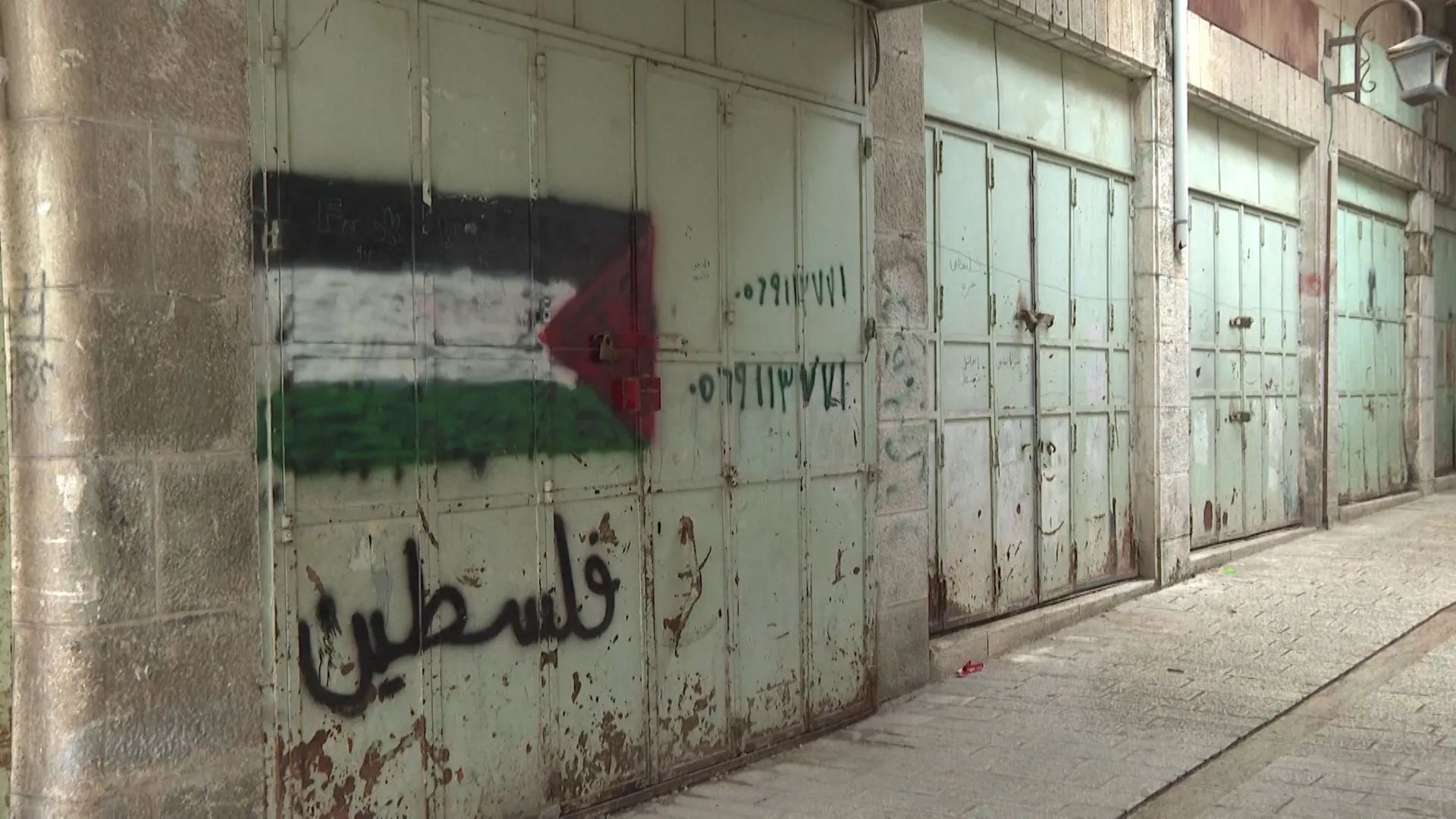
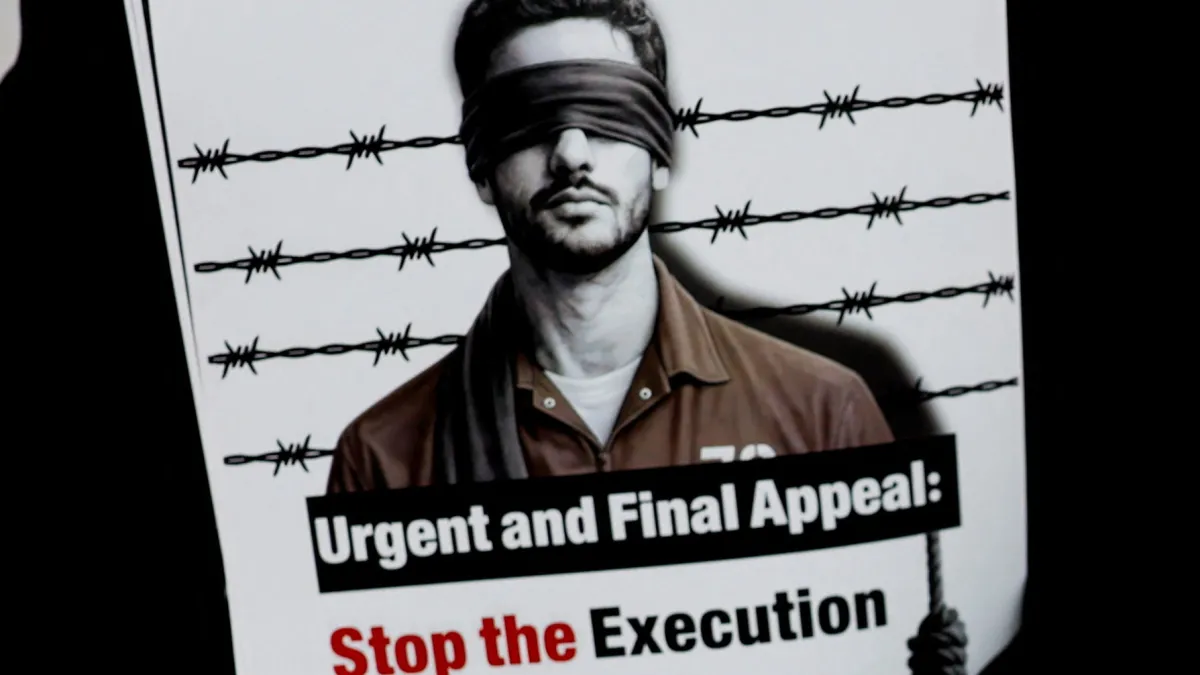
A general strike swept the occupied West Bank after Israel passed a death penalty law that only targets Palestinians, sparking international condemnation and protests.
When the world is topsy-turvy, the theatergoing public seeks explanations. Arthur Miller provides something better: moral intelligence. He doesn’t tell his audience what to think but challenges them to think harder.
There’s clearly a hunger right now for Miller’s work. His plays are back in high demand in Los Angeles, New York and London.
A new revival of “Death of a Salesman,” starring Nathan Lane and Laurie Metcalf, is in previews on Broadway. And a less starry production of Miller’s masterpiece opened last weekend at Pasadena’s A Noise Within.
“All My Sons,” Miller’s breakthrough play about capitalism’s warped ethics in the guise of a domestic drama, just finished a successful run at Antaeus Theatre Company in Glendale. And National Theatre Live will screen the recent London production, starring Bryan Cranston and Marianne Jean-Baptiste, in April and May courtesy of Boston Court Pasadena and L.A. Theatre Works. (Late last year, I caught a screening at the Wallis of another London revival, the 2019 production starring Bill Pullman and Sally Field.)
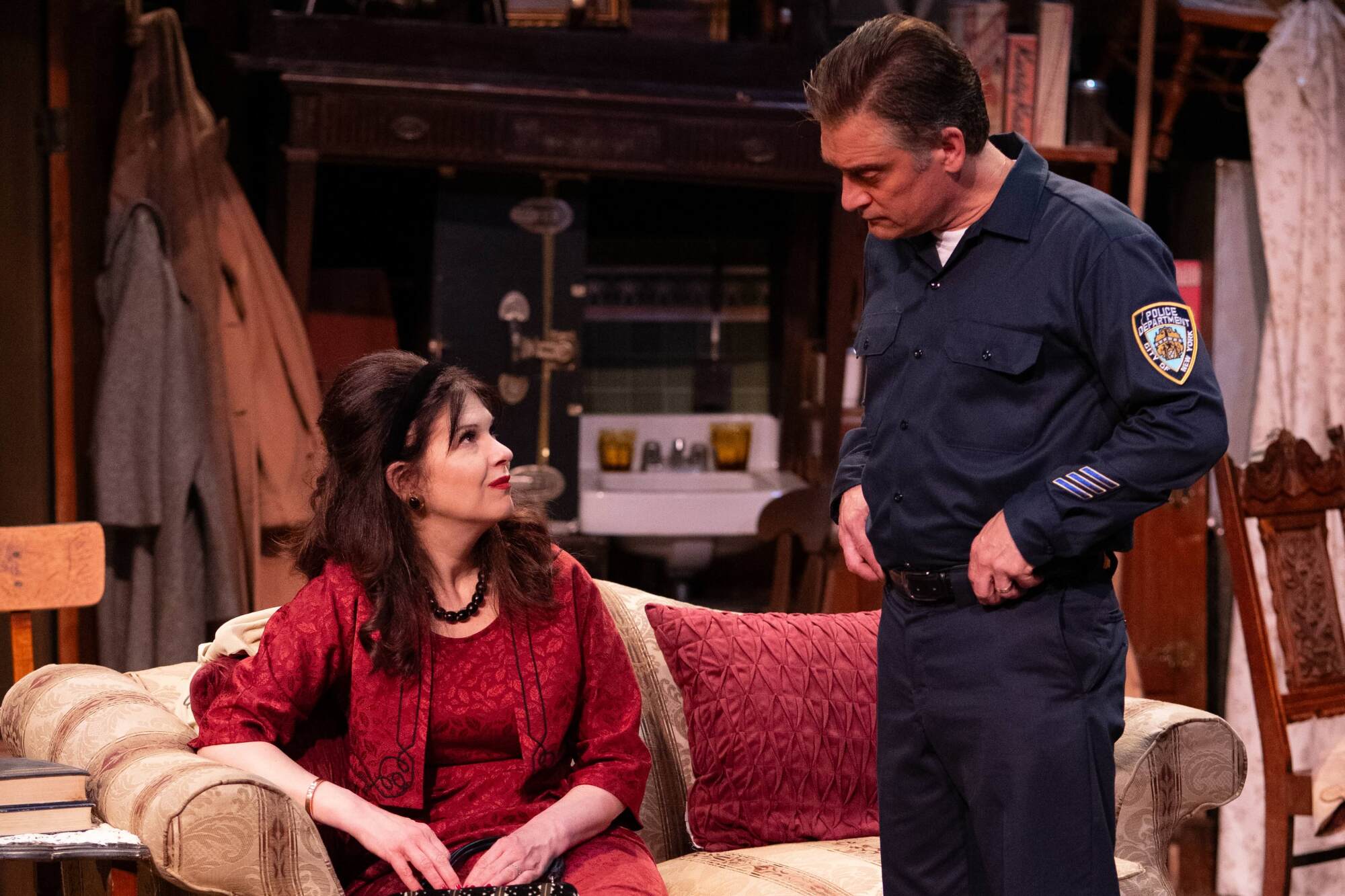
Dana Dewes and Scott G. Jackson in “The Price” at Pacific Resident Theatre in Venice.
(Ian Cardamone)
“A View From the Bridge,” a play whose revenge plot hinges on a tip to immigration authorities, could hardly be more timely. The same could just as unnervingly be said about “The Crucible,” Miller’s parable about the McCarthy witch hunts. The play, always front of mind when power is being abused, has given rise to a modern feminist riposte, Kimberly Belflower’s thrilling “John Proctor Is the Villain,” which is coming to the Mark Taper Forum next year.
Not to be missed right now is a small, exquisitely acted production of “The Price” at Pacific Resident Theatre. Miller’s 1968 play, written during the agonizing days of the Vietnam War, concerns the disposition of the remains of a once-illustrious estate. As two estranged brothers working with an 89-year-old appraiser try to put a price on the antiques and personal effects their father — a casualty of the Great Depression — left behind, the family history they both tried to bury explodes.
Miller’s plays compel theatergoers to connect the dots not only between the past and the present but also between the political and the personal. His dramas set domestic conflicts against the backdrop of societal systems that insidiously warp the playing field for their characters.
Miller is often contrasted with Tennessee Williams. And while it’s true that Miller is more of a social realist and Williams is more of a dramatic poet, Miller’s carefully carpentered plays are emotionally supple and Williams’ lyrical dramas are acutely mindful of the power dynamics of our collective life.
The realism of “The Price” is as heavy as the old wooden furniture that the Franz brothers, Victor (Scott G. Jackson) and Walter (Jason Huber), are trying to profitably offload.
(Ian Cardamone)
Director Elia Kazan was drawn to both playwrights because he understood that they were as interested in the stories of individual Americans as they were in the larger tale of America itself. Kazan found in both writers more than enough poetry and grit to satisfy the new breed of realistic actor he was showcasing on stage and screen.
“Death of a Salesman” and “The Price” are vastly different plays. The former, which Miller once considered calling “The Inside of His Head,” is fluidly constructed, playing fast and loose with time as it tracks the disintegrating mental life of down-and-out salesman Willy Loman. “The Price,” by contrast, is set inside what looks at first glance to be a crowded antique shop but turns out to be the apartment once inhabited by the Franz family after the market crash changed everything.
The realism of “The Price” is as heavy as the old wooden furniture (stacked and sorted on Rich Rose’s eye-catching set) that the Franz brothers, Victor (Scott G. Jackson) and Walter (Jason Huber), are trying to profitably offload on a shrewd antique dealer named Gregory Solomon (Richard Fancy). “Salesman” is more limber in its dramaturgy, shifting locations and blurring chronologies. But it too depends on the ability of actors to embody the biographical weight of its finely detailed characters.
Arthur Miller’s 1968 play “The Price,” written during the Vietnam War, concerns the disposition of the remains of a once-illustrious estate.
(Ian Cardamone)
“The Price,” directed by Elina de Santos, thrives in the intimacy of Pacific Resident Theatre’s main stage. There’s not a moment in the play that isn’t deeply inhabited by a cast that understands the value of listening.
The drama builds toward a confrontation between Victor, a cop who dropped out of college to support his dad, and Walter, a wealthy doctor who made no such sacrifices and resents the guilt that he’s spent a lifetime trying to elude. Miller gives both characters some claim on the truth, making the twisting argument that breaks out between the brothers enthralling to follow.
But just as insightfully handled are the complicated emotional dynamics between Victor and his wife, Esther (Dana Dewes), who is frustrated by her husband’s resignation and blunted ambition but loyal to him and prepared to fight for his due. As for Solomon, the scene-stealing appraiser who dispenses old world wisdom while toting up an estimate for the furniture haul in between bites of a hard-boiled egg, is deliciously brought to life by Fancy, who has starred in both “All My Sons” and “Death of a Salesman” at PRT and enlivens this production with his veteran experience.
I saw “The Price” on Sunday after having been dismally disappointed at the Saturday night opening of “Death of a Salesman” at A Noise Within. That production, directed by Julia Rodriguez-Elliott, seems completely deracinated on a set by Frederica Nascimento that registers no Brooklyn ZIP Code or locatable address anywhere.
Deborah Strang, Ian Littleworth, David Nevell and Geoff Elliott in “Death of a Salesman” at A Noise Within.
(Craig Schwartz)
But the bigger problem is that the performances are ungrounded. Geoff Elliott, who shares the title of producing artistic director at A Noise Within with wife Rodriguez-Elliott, doesn’t so much play Willy Loman as try on various accents, none of them remotely convincing to this native Brooklynite. Are the Lomans meant to be Irish immigrants or is that a Boston dialect that is being affected when the cartoonish New Yorkese takes a breather?
The house needn’t be fleshed out to be made to seem real, but since it plays such an important role in the play, its presence onstage ought to at least be palpable to the characters. At one point near the play’s tragic climax, Willy is feverishly planting seeds in the backyard, but Elliott gives no credibility to any of his character’s actions. Willy might as well be delivering newspapers or mopping the kitchen floor, so disconnected are his gestures.
It’s true he’s not in his right mind, but it’s just another instance of the casual disregard of the character’s moment-to-moment reality. Willy’s world never comes into being onstage, and the rest of the cast seems to wander in the limbo that’s left behind.
“Death of a Salesman” is more limber in its dramaturgy, shifting locations and blurring chronologies.
(Craig Schwartz)
As Linda Loman, Deborah Strang, normally so reliable, tries to follow the lead of husband Willy, but that turns out to be a dead end. Ian Littleworth’s Happy, the dissolute son always looking for an easy way out, seems unsettled not only in his bearings but in his command of the script.
David Kepner’s Biff, the prodigal son who rediscovers the reasons he ran off in the first place, delivers the most centered performance. It’s at least possible to believe what his character is supposed to be feeling, but the placelessness of the production doesn’t give him enough to dig into. The emotional combustion of his climactic scenes with Willy fail to reach cathartic levels.
Still, I found myself listening attentively to the warning Miller was issuing about buying into the salesman ethos. Willy’s belief that good connections matter more than skill and that blarney and bluff can substitute for hard work explains a good deal about our current national disorder.
David Kepner, who delivers the most centered performance, and Ian Littleworth in “Death of a Salesman.”
(Craig Schwartz)
But Miller’s dramatic vision requires actors to relive the experiences of their characters, the way they do in De Santos’ production. “The Price” might not be an indisputable masterpiece like “Death of a Salesman,” but its solid construction reveals tremendous complexity when the human story is scrupulously observed and the societal forces shaping our lives are suddenly thrust into view.
The Israeli parliament’s approval of a legislation that seeks the death penalty for Palestinians convicted of deadly attacks has stoked fears among the Palestinians and drawn condemnation from the international community, dismayed at the further entrenching of what rights groups have long described as Israel’s “system of apartheid”.
The law, which does not apply to Jewish citizens of Israel, was met with jubilation among its backers in the country’s far right.
Recommended Stories
list of 4 itemsend of list
France, Germany, Italy and the United Kingdom have all raised concerns over what many describe as the overtly racist nature of the bill, whose nature and wording appear to exclusively target Palestinians.
“We are particularly worried about the de facto discriminatory character of the bill. The adoption of this bill would risk undermining Israel’s commitments with regards to democratic principles,” the foreign ministries wrote in a joint statement on Sunday.
Rights groups have also criticised the bill, with Amnesty International in February saying the legislation would make the death penalty “another discriminatory tool in Israel’s system of apartheid”.
Human Rights Watch (HRW) on Tuesday called the law discriminatory as it would primarily, if not exclusively, be applied to Palestinians.
“Israeli officials argue that the imposing the death penalty is about security, but in reality, it entrenches discrimination and a two-tiered system of justice, both hallmarks of apartheid,” Adam Coogle, deputy Middle East director at Human Rights Watch, said in a statement.
“The death penalty is irreversible and cruel. Combined with its severe restrictions on appeals and its 90-day execution timeline, this bill aims to kill Palestinian detainees faster and with less scrutiny.”
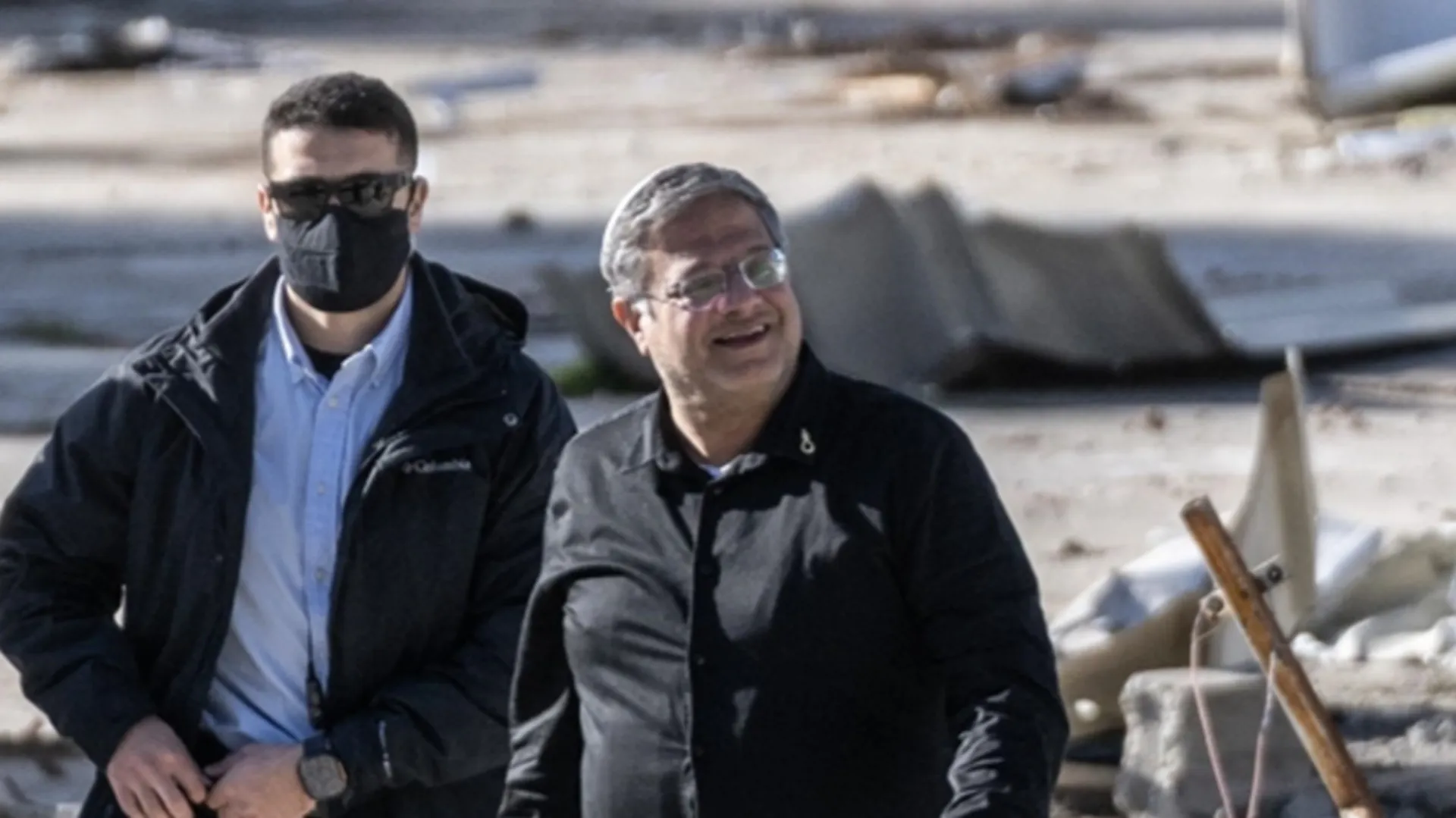
Nevertheless, on its successful passage through parliament, amidst the celebrating lawmakers, the legislation’s principal champion, far- right National Security Minister Itamar Ben-Gvir – who has previous convictions for far-right “terrorism” – was seen brandishing a champagne.
Israeli Prime Minister Benjamin Netanyahu, who had attended the chamber to support the bill, could also be seen congratulating lawmakers on its passage.
So, how can Israel pass a law targeting one ethnic group and not others? Is that legal, and is this the first time Israel has passed legislation that deliberately discriminates against Palestinians?
Here’s what we know.
How does the law target Palestinians and not Israelis?
By limiting the bulk of the legislation to the military courts that only try Palestinians under occupation.
Under the new legislation, anyone found guilty of the killing of an Israeli citizen within the occupied West Bank will, by default, be sentenced to death by the military courts overseeing the occupied territory.
While the courts do not regularly publish statistics on convictions, in 2010, the court system did concede that, of the Palestinians tried for offences committed in the occupied West Bank, 99.74 percent were found guilty.
In contrast, Israeli settlers, who have killed seven Palestinians in just the weeks following the start of their country’s war on Iran in late February, are tried in civilian courts in Israel. According to an analysis by the UK’s Guardian newspaper in late March, Israel has yet to prosecute any of its citizens for killing Palestinians in the occupied West Bank since the start of this decade.
Under the new legislation, Israel’s civilian courts are granted an extra degree of leniency in sentencing Israelis found guilty of killing Palestinians in the occupied West Bank, with judges having the option to choose between the death penalty and life imprisonment.
Sentences for the military courts trying Palestinians, in contrast, carry an automatic death penalty, with life imprisonment only available under extreme circumstances.
According to a study by the Israeli rights group, Yesh Din, conviction rates for settlers found guilty by civilian courts of committing crimes against Palestinians in the West Bank (excluding East Jerusalem) between 2005 and 2024 ran to about 3 percent. Some 93.8 percent of investigations into settler violence were closed at the end of an investigation with no indictment filed, the group noted.
Underpinning much of this is Israel’s 2018 Nation State law, which, in the eyes of many, codifies Israel’s apartheid system of government, defining Israel as the exclusive homeland of the Jewish people and prioritising Jewish settlement as a national value.
Critics argue that it downgrades the status of Palestinian citizens, who make up about 20 percent of the population, by omitting any guarantee of equality.
How is that even legal?
According to many, it isn’t.
Despite the best efforts of Prime Minister Netanyahu and his Finance Minister Bezalel Smotrich – who has administrative power over the occupied West Bank – to annex the Palestinian territory, it remains a foreign territory under military occupation.
According to Amichai Cohen, a senior fellow at the Center for Security and Democracy of The Israel Democracy Institute, international law does not permit Israel’s parliament to legislate for the West Bank, since the area is not legally part of Israel’s sovereign territory.
In September 2024, the United Nations General Assembly overwhelmingly called for end to Israeli occupation of the occupied West Bank and East Jerusalem within a year. The UNGA resolution backed an advisory opinion by the International Court of Justice (ICJ), which called Israeli occupation “unlawful”.
Similarly, the Association of Civil Rights in Israel announced it had already taken the matter to Israel’s highest court only minutes after the bill was approved. The group argued that the measure was “discriminatory by design” and that lawmakers had no legal authority to impose it on Palestinians living in the occupied West Bank, who are not Israeli citizens.
Is this the first time Israel has been accused of using its legal system to target Palestinians?
Far from it.
Human rights groups – including HRW and Amnesty International – have long argued that the legal systems applying to Palestinians and to Israeli settlers in the West Bank are fundamentally unequal.
Palestinians live under military law, while settlers fall under Israeli civil law, creating two parallel systems in the same territory.
According to rights groups, this structure enables discriminatory detention practices, such as administrative detention (where people can be held indefinitely without charge), dramatically unequal protections under the law, and the selective enforcement of those laws, which have all underpinned widespread accusations of apartheid.
As of March 2026, approximately 9,500 Palestinians are detained in Israeli prisons under harsh conditions, with about half held under administrative detention or labelled “unlawful combatants”, denied trial and unable to defend themselves.
Legislation relating to the treatment of children in custody has led to concern among many international observers and rights groups. Palestinian minors can be interrogated without parental present and are often denied timely access to legal counsel in defiance of Israel’s own and international law, the HRW noted.
Another key area of international concern is the ongoing demolition of Palestinian homes built without permits, which are nearly impossible for Palestinians to obtain. Unauthorised settler outposts, in contrast, are rarely troubled and increasingly retroactively legalised.
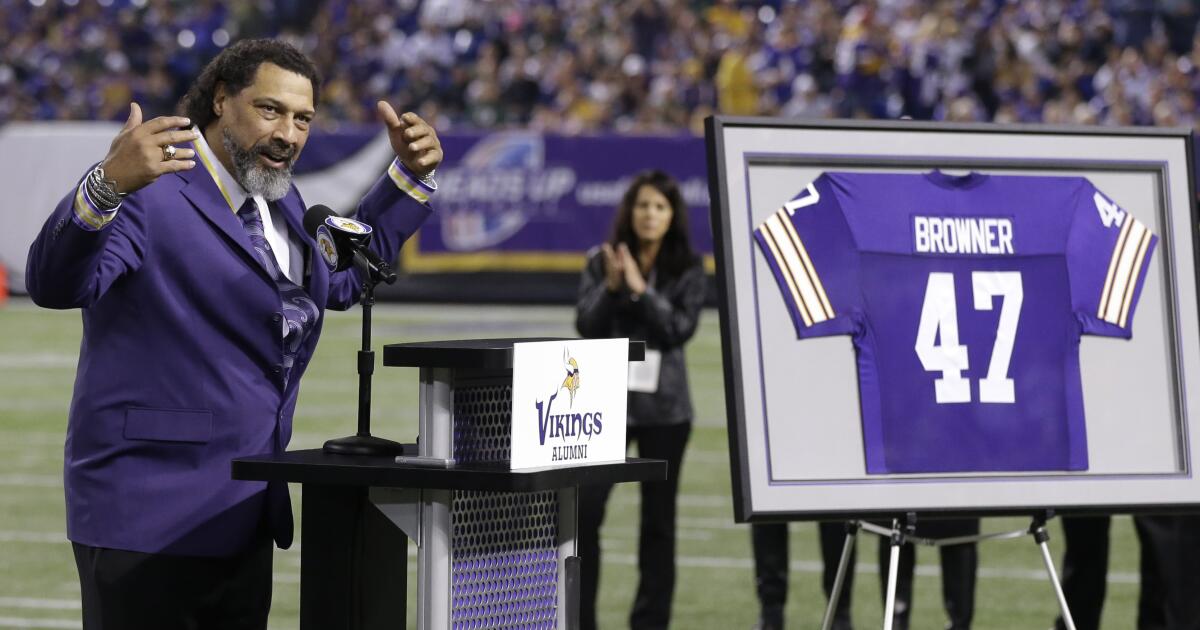
Joey Browner, a star defensive back at USC and a six-time NFL Pro Bowl selection, has died. He was 65.
“The Vikings are mourning the loss of Ring of Honor member Joey Browner,” the team said Sunday in a statement. “Browner will be deeply missed by former coaches and teammates, as well as many others he impacted throughout his life.”
The Vikings added in a separate post: “He helped define what it is to be an NFL safety.”
No cause of death was given. In August, former Minnesota quarterback Tommy Kramer organized a fundraiser for Browner, who Kramer said was “battling through some serious health issues.”
On Sunday, Kramer wrote about Browning on Facebook: “Not only a great player, a great person. Rest in peace my friend.”
Browner was one of six brothers, all of whom played college football and four of whom went on to play in the NFL. Younger brother Keith Browner, who also played at USC and spent five seasons in the NFL, died in November at age 63 after a sudden illness.
Oldest brother Ross Browner, who played 10 NFL seasons for the Cincinnati Bengals and Green Bay Packers, died in 2022. Another older brother, Jim Browner, who played two seasons for the Bengals, died in 2024.
A high school standout in football, basketball and track and field, Browner played at USC from 1979-1982. He was named team MVP his senior year and finished his college career with nine interceptions and 40 pass deflections, as well as one punt return for a touchdown.
In the 1983 draft, Browner became the first defensive back to be selected by the Vikings in the first round (19th overall). He went on to play nine seasons in Minnesota, making the Pro Bowl six times (1985-1990), and spent his final NFL season with the Tampa Bay Buccaneers.
Browner finished his career with 37 interceptions, 17 forced fumbles and 17 fumble recoveries. He was named to the NFL 1980s all-decade team, as selected by the Pro Football Hall of Fame, and inducted into the Vikings’ Ring of Honor in 2013.
Sean Salisbury, a former quarterback whose career intersected with Browner’s in college and the NFL, was one of many in the football community paying their respects to the four-time All-Pro player.
“This is a major gut punch,” Salisbury wrote on X. “I was blessed to be his teammate at USC and with the Vikings! Phenomenal player and loved by so many. One of the best players I’ve ever played with in both college and the NFL. Very grateful to have called him a good friend. God Bless him and his family.”
Former tight end Steve Jordan, who played nine seasons with Browner in Minnesota, recently visited his former teammate in the Twin Cities, according to a Vikings news release.
“We’ve lost a great friend and one of the best Vikings teammates,” Jordan said in a statement released by the team. “God blessed Joey with phenomenal talent and a big heart to love people and be a beacon of positivity. Truly, he will be missed.”
Former quarterback Rich Gannon, who played five seasons with Browner in Minnesota, wrote on X: “Sad to hear about the passing of my former teammate Joey Browner. On the football field he was one bad dude, off he was a kind soul!”
Retired punter Greg Coleman wrote on X that “one of the happiest moments of my time with the Vikings” was learning that Browner was going to be added to the punt team.
“One of the best teammates you could have and a man I called Friend!” Coleman wrote. “Prayers up for his family. RIP JB!”
Current Vikings cornerback Dwight McGlothern wrote on X: “Dang, I had a chance to meet him my rookie year & I was wearing #47 at the time during camp & hearing about his accomplishments, I’m grateful to [have] had the chance to meet him & [represent] the # he wore with the Vikings !! Everytime I walk in the DB room I always see greatness on the wall !!”
WASHINGTON — President Trump threatened Monday to destroy vital Iranian energy and water infrastructure if a peace deal is not reached, as Tehran continued to deny negotiations were taking place and said it was preparing for a ground invasion following the arrival of thousands of American troops in the region.
If a ceasefire agreement is not reached quickly, the president said in a social media post, “We will conclude our lovely ‘stay’ in Iran by blowing up and completely obliterating all of their Electric Generating Plants, Oil Wells and Kharg Island (and possibly all desalinization plants!).”
The threats came within hours of the president insisting on Sunday night that diplomatic efforts would “probably” lead to a deal soon, and that Iran had allowed 20 more oil cargo ships to pass through the Strait of Hormuz as a “sign of respect.”
Trump said the United States is in “serious discussions with A NEW, AND MORE REASONABLE, REGIME in Iran” but offered no details.
Iran, however, continued to throw cold water on the negotiations Monday when Esmail Baghaei, the foreign ministry spokesperson, dismissed the Trump administration’s terms as “unrealistic, unreasonable and excessive.”
“I do not know how many people in the United States take American diplomacy claims seriously. Our mission is clear, unlike the other side, which constantly changes its position,” he said in comments carried by the semi-official Iranian agency Tasnim News.
Baghaei said that there have been no direct negotiations, but only messages through intermediaries stating that the U.S. wants to confer.
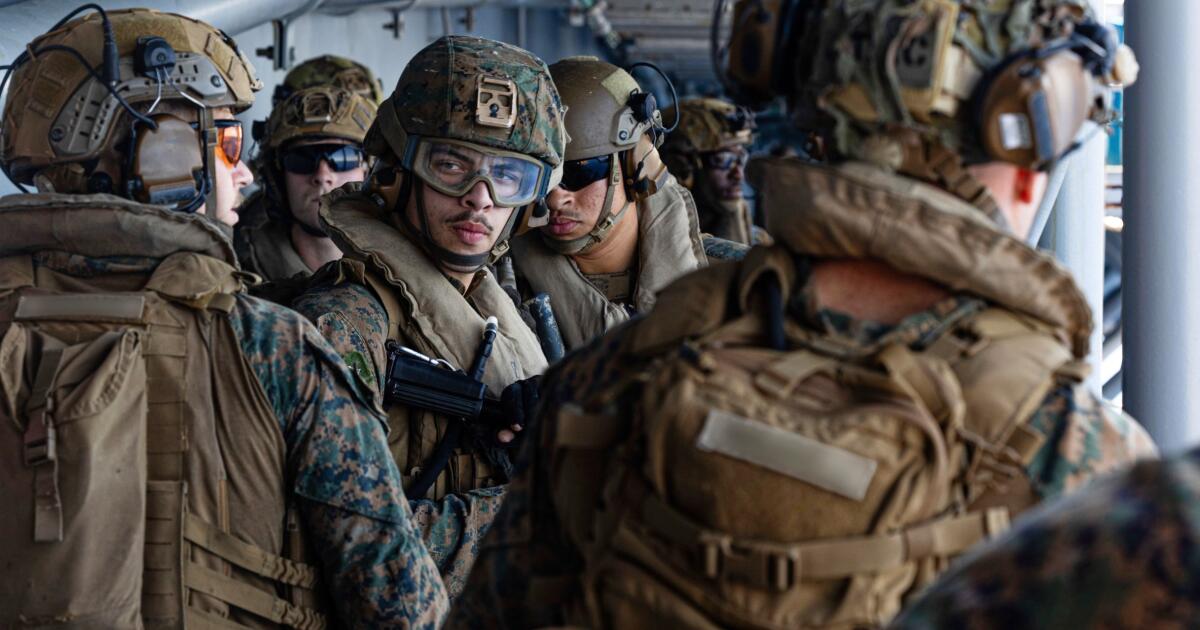
On Saturday, the USS Tripoli, a naval warship, arrived in the Middle East carrying about 3,500 sailors and Marines and a transport of fighter planes. Earlier this month, the San Diego-based USS Boxer and two warships from the 11th Marine Expeditionary Unit departed from Camp Pendleton to join the buildup of troops in the region.
The deployments have made Iranian diplomatic envoys even more dubious that American peace efforts are sincere.
“The enemy publicly sends messages of negotiation and dialogue while secretly planning a ground offensive. [They] are nothing more than a cover to hide preparations for a land invasion,” Iran’s top lawmaker, Mohammad Bagher Qalibaf, said in a statement Sunday.
He added that Iranian forces were waiting for the arrival of American troops on the ground to “set them on fire” and “punish their regional partners forever,” according to state media.
As officials in both Washington and Tehran strike increasingly hard lines, neighboring countries are desperate for a truce.
Egyptian President Abdel Fattah Sisi pleaded with Trump to stop the war during a speech at an Egyptian energy conference on Monday.
“I tell President Trump: Nobody can stop the war in our region in the gulf but you,” Sisi said.
“Please, Mr. President, please. Please help us stop the war. You are capable of doing so.”
Egypt, though not directly involved in the war, has contended with its repercussions on energy, fertilizer and food prices, not to mention disruptions to shipping income Cairo receives through the Suez Canal.
“Wealthy countries might be able to absorb this, but for middle-income and fragile economies, it could have a very, very severe impact on their stability,” Sisi said, noting that predictions of oil reaching $200 per barrel were “not an exaggeration.”
Egypt and Israel signed a peace treaty in 1979, which saw Israel return territory it seized during the 1967 war. Though the agreement is deeply unpopular with most Egyptians, it has held despite escalating tensions during Israel’s campaign against Hamas.
In December, the two nations formally announced a $35-billion agreement expanding Israel gas exports to Egypt. But the war with Iran has disrupted supplies, tripling the cost of imports, according to Egyptian officials.
Last week, the government ordered energy-saving measures for a one-month period, including early closing times for most commercial establishments as well as reductions in street lighting and allocations for government vehicles.
Jordan, another U.S. regional ally that is also energy-starved, took similar steps, enacting bans on air conditioning in government offices and private use of government vehicles.
Despite talks of negotiations, the fighting showed little sign of abating.
Trump’s call for peace followed a fresh round of U.S. and Israeli airstrikes on Iran Monday. Tehran retaliated by hitting a major water and power facility in Kuwait, and Saudi Arabia and the United Arab Emirates said they intercepted incoming Iranian missiles.
Two U.N. peacekeepers were killed on Monday when an “explosion of unknown origin” hit their vehicle near the village of Bani Hayyan, in south Lebanon.
The deaths mark the second fatal incident in two days involving the United Nations Interim Force in Lebanon, known as UNIFIL, a peacekeeping force established in 1978 and which later monitored cessation of hostilities between the two nations.
UNIFIL also reported a peacekeeper was killed Sunday night when a projectile exploded in a UNIFIL position.
“We do not know the origin of the projectile. We have launched an investigation to determine all of the circumstances,” a UNIFIL statement on Monday said.
Meanwhile, Israel continued its bombardment of Lebanon, hitting areas near the capital and in the country’s south. One strike targeted a Lebanese army checkpoint, killing a soldier, the Lebanese military said. Lebanese authorities said on Monday that the death toll since hostilities broke out between Hezbollah and Israel earlier this month continues to rise.
The Israeli military said one of its soldiers was killed in a Hezbollah anti-tank missile attack in southern Lebanon, which also wounded four other soldiers. Six soldiers have been killed since Israel restarted its campaign in Lebanon.
Hezbollah rockets also killed two civilians, according to Israeli health authorities.
Israel’s fire and rescue service said a fuel tanker and a building at the oil refinery in the northern city of Haifa were hit by debris from an intercepted missile, according to a report from Israeli daily the Times of Israel.
It was unclear whether the missile was launched by Iran, the Lebanese Shiite group Hezbollah or Yemen’s Houthi rebels.
Deaths from the conflict continue to rise, with 1,900 people killed in Iran, over 1,200 in Lebanon, 19 in Israel and 13 U.S. military members. Millions of people have been displaced from their homes in Iran and Lebanon.
Ceballos and Quinton reported from Washington, Bulos from Beirut.
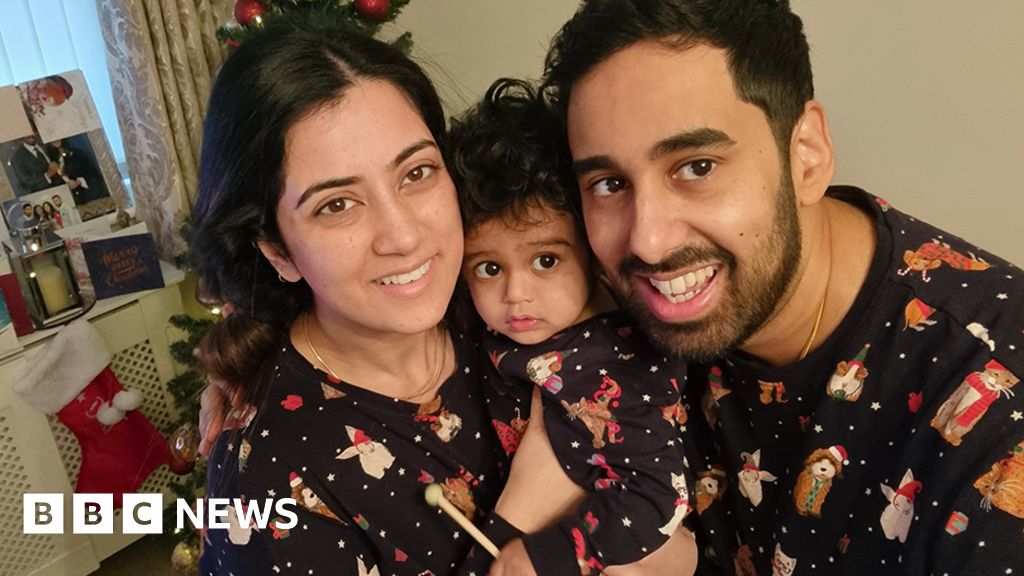
Tom Frith tragically died in July last year from the brain swelling condition, encephalitis. However, he spent a month in the hospital before his death after he was first admitted with flu-like symptoms and confusion.
Initially, Julia claims her husband spent over 30 hours in a corridor bed as A&E was overrun. His family was told he wasn’t able to have a vital MRI scan because it was the weekend. Tragically, after he eventually had an MRI scan, it confirmed Tom had a brain clot, and he died weeks later.
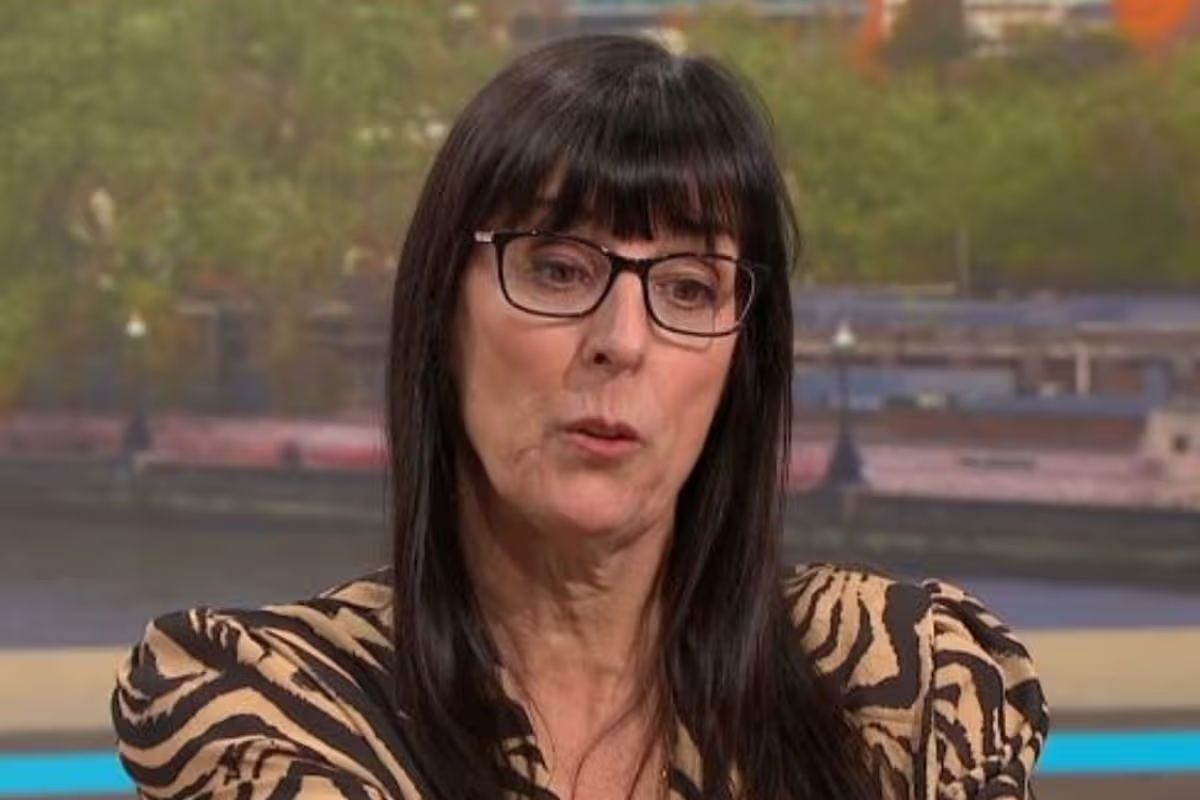
Speaking to ITV stars Kate and Paul on Good Morning Britain, Julia broke down in tears, speaking about her grief and anger at the care her husband didn’t receive. She commented, “I’m doing my best, I’m trying to find a new normal.
“I have to have a voice for Tom, because he’s not here. I’m learning to live with Tom here (her heart) rather than here (physically), and when you take that away, that’s a big hole to fill. He was the love of my life, and yeah, he was failed, I think.
“He might not have survived encephalitis, but if he’d been given a fighting chance, he could have. He was in critical care for seven weeks after that, but the damage was done, the damage was done in the first week. It was too late.”
As she became overcome with emotion speaking about Tom, Kate was seen grabbing for tissues to give to Julia as she wiped her tears away.
However, while speaking to the ITV stars, Julia shared that her anger isn’t with the NHS staff, as she told the duo that it takes a certain person to take on a caring role.
She said: “When they’re in an environment where they can’t deliver that, without the resource, the personnel, the finance, it must be absolutely demoralising for them.
“I saw the look on the nurses’ faces there. On Sunday afternoon, I left Tom for half an hour, and I asked a nurse to watch him for me because he couldn’t go to the toilet on his own.
“He was getting very agitated. I left and came back, and he was leaning against the side of the bed. He’d ripped his ID band off, and he’d relieved himself in his jeans, a grown man. I said to a nurse, ‘What is this?’
“She said, ‘I’m so sorry’, and she had tears in her eyes. I said, ‘This isn’t care’. He didn’t get a bed until the Monday morning.”
Now, Julia is taking legal action against the trust for medical negligence.
Kate read a statement from Dr Clare Hammell, the Chief Medical Officer and Deputy Chief Executive Officer at Mid Cheshire Hospitals NHS Foundation Trust, who said, “My thoughts are with Tom’s family and loved ones.”
It said: “We are very sorry for the distress that they’ve experienced as a legal claim has now been issued, it wouldn’t be appropriate for the Trust to comment on the specific circumstances of Mr Frith’s care or the allegations that have been raised.”
Good Morning Britain is available to watch on ITV weekdays from 6am.
Tony Maudsley is best known for his role as George Shuttleworth on Coronation Street and away from the soap he lives a far less dramatic life
Joe Crutchley Screen Time Reporter
10:49, 28 Mar 2026
Coronation Street George actor’s life from his family to heartbreak over co-star’s death
Tony Maudsley is a beloved figure on Coronation Street – but what do we know about his life off the set?
Tony joined the ITV soap in 2020, portraying George Shuttleworth, the son of the late funeral director Archie (Roy Hudd). Since then, he’s won over viewers and has been involved in numerous major plotlines.
Off-screen, actor Tony leads a far less dramatic life. Here, we delve into the accomplished star’s personal world.
Tony’s Hollywood Stardom
In addition to Corrie, Tony has featured in Queer As Folk, Emmerdale and also starred in the popular ITV sitcom Benidorm, playing hairdresser Kenneth Du Beke from 2011 to 2018.
Moreover, Tony made an appearance in the Harry Potter series in Harry Potter and the Order of the Phoenix, portraying Hagrid’s half-brother, Gawp.
Reflecting on his time in Harry Potter, Tony remarked: “It was one of the hardest jobs I’ve ever done. I was weighed down with these huge monster feet that were so heavy, that I could never get into the canteen and back in time.”
Tony also shared screen space with Johnny Depp in the film Sleepy Hollow – but had an awkward encounter with the Hollywood icon. He revealed to Soap Inside magazine: “Very early on in my career, I worked with Johnny Depp on the film Sleepy Hollow.
“At the time, I’d stopped smoking for three years – but Johnny invited me for a roll-up round the back of the set, and I couldn’t say no! So, there I was trying to look cool with Johnny, while choking on a cigarette. It’s been a pretty lovely career.”
Tony’s private family life
Content cannot be displayed without consent
Tony regularly keeps his devoted following of 77,000 Instagram fans informed about his daily activities. Earlier this year, he offered supporters an uncommon glimpse into his personal world when he posted multiple pictures of his beloved dog following a grooming session.
He wrote alongside the post: “Took Bosie to a new groomers today in Worsley Village and they did a great job! They even cleaned his teeth (well the few he’s got left!)”
And in March, Tony honoured his seldom-seen mother after sharing a photograph of them together for Mother’s Day. In the image, Tony appeared delighted standing next to his mum. He wrote with the post: “Happy Mother’s Day from me and mine.”
Tony’s grief following tragic loss
In January 2024, Tony expressed his devastation after his friend Michael McGarrigle – who collaborated with Tony on ITV’s Benidorm – had died.
Tony initially requested assistance from his followers to locate costume supervisor Michael who had disappeared, but days afterwards he confirmed the tragic news that Michael had passed away.
Posting a photo with Michael, Tony shared a heartfelt tribute to his mate: “Thank you so much to everyone for all your efforts in reposting our appeal to find Michael yesterday. I’m so sad to say that we found out late last night that we’ve lost our beautiful friend.
“Our whole Benidorm family is devastated and we’ll miss him hugely. RIP Michael.”
In addition to Benidorm, Michael served as the costume supervisor on programmes such as Prisoners Wives Maternal, The Larkins, DCI Banks, Whitechapel, Mrs Biggs, Annika and The Fear. He was also the co-owner of a musical theatre and cabaret bar in Brighton, Bar Broadway.
Coronation Street airs Monday to Friday at 8:30pm on ITV1 and ITVX
President Trump on Thursday continued projecting confidence in the U.S. war effort in Iran, suggesting online and during a high-level Cabinet meeting that Iran has been “obliterated,” that its leaders were “begging” for a deal, and that the U.S. is “roaming free” over Iran and “NEEDS NOTHING” from its European allies.
His description of the war as all but finished — he actually said “we’ve won” — stood in contrast to the facts on the ground, where Iran continued to launch attacks and threaten oil tanker traffic in the vital Strait of Hormuz, and the U.S. continued sending troops and warships to what is already the largest U.S. military buildup in the Middle East in decades.
Trump’s framing of the conflict also contrasted with that of Iranian officials, who have remained publicly defiant, downplayed negotiations and outwardly rejected several of Trump’s conditions for ending the war — as Trump himself acknowledged, accusing them of saying one thing in private and another in public.
“They better get serious soon, before it is too late,” the president wrote on social media, “because once that happens, there is NO TURNING BACK, and it won’t be pretty.”
“They are begging to make a deal, not me,” Trump reiterated later Thursday, while hosting his first Cabinet meeting since the war began. “Anybody that sees what is happening understands why they are begging to make a deal.”
Trump asserted that Iran’s military capabilities have been destroyed, and that the American mission is “ahead of schedule.” He said American forces were operating without opposition over Iran, and “there’s not a damn thing they can do about it” because they’ve been “beat to s—.”
Trump’s outward confidence, a defining feature of the war campaign that has been consistently echoed by Secretary of Defense Pete Hegseth and other administration loyalists, continued despite growing concerns this week in Congress — and not only from Democrats.
Several Republicans emerged from a classified war briefing Wednesday clearly frustrated with the administration for not providing a clearer picture of the path out of the now monthlong war, or clear answers on whether it planned to deploy ground troops.
“We want to know more about what’s going on,” said Rep. Mike Rogers (R-Ala.), chairman of the House Armed Services Committee. “We’re just not getting enough answers.”
“I can see why he might have said that,” said Sen. Roger Wicker (R-Miss.), chairman of the Senate Armed Services Committee.
Democrats have hammered the president — contrasting the war and its massive budget with rising fuel costs for average Americans and lamenting the deaths of U.S. service members.
“Thirteen American lives lost and tens of billions of taxpayer dollars spent in just three weeks since Donald Trump plunged us into war without congressional authorization. There is still no plan, no clear justification, and no end in sight,” Sen. Alex Padilla (D-Calif.) said. “Americans called for lower prices, not endless wars.”
For weeks, Trump, Hegseth and other war leaders such as Gen. Dan Caine, the chairman of the Joint Chiefs of Staff, have focused on U.S. wins in the conflict — tallying up Iran’s sunken ships and grounded planes, assassinated leaders and undermined missile capabilities.
In recent days, Trump has suggested that, because of those wins, Iran is buckling and its leaders reaching out for a deal. He has said the U.S. is pushing a 15-point plan that will forever block Iran from developing a nuclear weapon or threatening the U.S. or its allies. And he and others in his administration have accused the media of ignoring tremendous battlefield wins to harp on losses instead.
Israel, America’s major partner in the conflict, has projected similar confidence while showing no signs of slowing its attacks on Iran. On Thursday it announced it had killed several senior Iranian naval commanders, including Commodore Alireza Tangsiri, the head of Revolutionary Guard’s navy.
Israel’s Defense Minister Israel Katz said the deaths should send a “clear message” that Israel will continue to hunt down top Iranian military officials. Iran did not immediately acknowledge Tangsiri’s death.
The head of U.S. Central Command, Adm. Brad Cooper, praised Tangsiri’s killing, said U.S. strikes would continue, and called on Iranian fighters to “immediately abandon their post and return home to avoid further risk of unnecessary injury or death.”
Meanwhile, death, destruction and environmental and economic damage from the war spread far beyond Iran, where officials recently increased their estimated death toll to nearly 2,000.
Israel was fighting off a barrage of incoming missiles Thursday, with booms heard in Tel Aviv and Jerusalem and an impact reported in the central town of Kafr Qassem. Iraqi Defense Ministry spokesman Maj. Gen. Tahsin al Khafaj on Thursday said 23 people had been wounded in a Wednesday strike on a military clinic in western Iraq’s Anbar province.
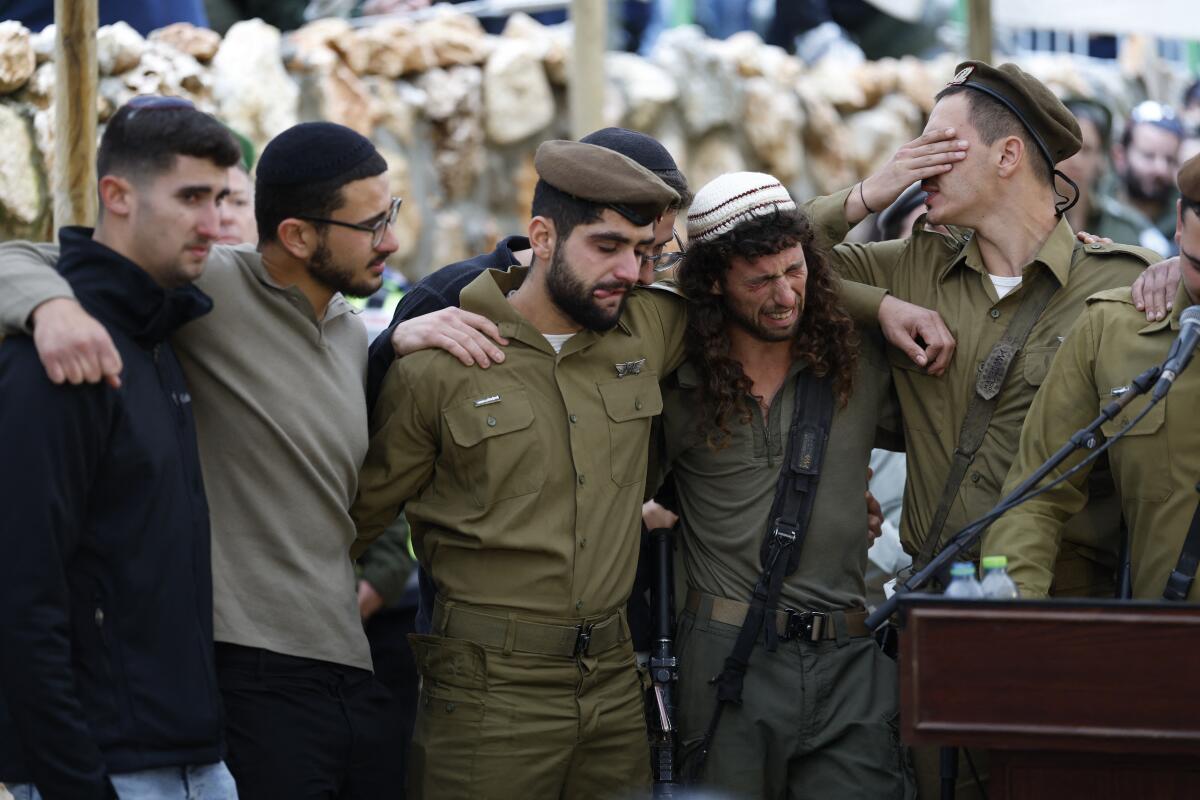
Israeli soldiers grieve during the funeral of Staff Sgt. Ori Greenberg, 21, at the Mount Herzl military cemetery in Jerusalem on Thursday.
(Odd Andersen / AFP via Getty Images)
Thousands of additional U.S. troops are on their way to the region, while many of the tens of thousands already stationed there have been displaced into hotels and other temporary housing — diminishing their war-fighting capabilities — by Iranian attacks that have left the 13 regional military bases they normally live on “all but uninhabitable,” the New York Times reported.
Iran announced Thursday that it had launched drone and missile attacks on a U.S. military base in Kuwait and a separate air base used by American forces in Saudi Arabia.
Jasem Mohamed al-Budaiwi, the secretary-general of the Gulf Cooperation Council, accused Iran of charging fees for ships to safely transit the Strait of Hormuz, continuing the economic toll on global oil supplies. Environmental experts warned of massive pollution from burning oil and gas fields.
Russia, emboldened by the Iran war, which has drawn resources away from Ukraine and led the U.S. to ease sanctions on Russian oil, has launched a renewed spring offensive against Ukraine.
The distance between U.S. and Iranian messaging about the war and their negotiations to end it — which foreign officials have said are occurring through intermediaries — has contributed to the tensions and the reluctance of allies to get involved, with some citing similar frustrations as Republicans in Congress this week.
Many allies have largely stayed out of the conflict despite Trump vacillating between demanding their help and insisting it isn’t necessary.
In one of his posts to social media Thursday morning, Trump blasted allies in the North Atlantic Treaty Organization, or NATO, for having “DONE ABSOLUTELY NOTHING TO HELP” in the conflict, and said the U.S. would “never forget.”
During his Cabinet meeting, Trump said that when the “right deal” is made with Iran, the Strait of Hormuz will reopen — while insisting that Iran no longer has any “mine droppers” that would threaten merchant vessels passing through the key oil route.
Steve Witkoff, one of Trump’s top advisors leading the negotiations in the Middle East, said the Iranians were looking for an “offramp,” that Pakistan is serving as a mediator between Washington and Tehran, and that the U.S. has presented a 15-point plan that “forms the framework for a peace deal.”
“These are sensitive, diplomatic discussions and you have directed us to maintain confidentiality on the specific terms and not negotiate through the news media, as others do,” Witkoff said. “We will see where things lead and if we can convince Iran that this is the inflection point, with no good alternatives for them other than more death and destruction.”
Trump has also declined to say whom Washington is negotiating with in Iran, but described them as “very smart,” “not fools,” and “very lousy fighters, but great negotiators.”
He also said he knows they are “the right people” for the U.S. to be dealing with because they had given him a “present” — and proved they are in control — by allowing “eight big boats of oil” travel through the strait this week.
Asked if he intended to send U.S. troops into Iran to take its enriched uranium, he called it a “ridiculous question” that he wouldn’t answer.
Treasury Secretary Scott Bessent said he is confident that more merchant vessels will soon be able to safely pass through the Strait of Hormuz. He also told the president that he believed the oil market is currently “well supplied” and that once the war ends, energy prices will drop.
Hegseth repeatedly slammed the media for falsely framing the war effort as floundering or unfocused, saying Iran’s “air defenses are gone,” its leaders hiding in “underground bunkers,” and its fighters losing morale.
He said Iranian officials in private are admitting “very heavy losses,” and that the U.S. and the world are benefiting from having Trump, whom he called the “ultimate deal maker,” working toward a peace deal.
In the meantime, he said, the U.S. military will “continue negotiating with bombs.”
MEL Schilling’s “heartbroken” MAFS co-star John Aiken has admitted he is “struggling to breathe”, as he broke his silence on her death.
The Australian relationship expert, 55, revealed his immense grief after Mel tragically died aged 54 following a brave battle with colon cancer.
Sign up for the Showbiz newsletter
Thank you!
MAFS Australia expert John Aiken penned an emotional tribute to Mel Schilling following news of her deathCredit: InstagramJohn said he was ‘struggling to breathe’ following his friend’s passingCredit: InstgramMel and John appeared on the Aussie MAFS together for ten yearsCredit: Nine
Today her MAFS Aus co-star John shared a picture of him with his pal from 2016 and one from the recent series, and penned an emotional message which read: “It’s with great sadness and heavy heart that today I lost my dear friend and fellow MAFS expert Mel Schilling.
“I am heartbroken, devastated and finding it hard to breathe.
“It was a privilege and an honour to sit beside her on the MAFS couch and watch her shine. She was warm, supportive and honest, and she deeply cared about all our participants. I had a front row seat to her remarkable skills and she truly believed in the experiment. At her core she loved love.”
John also talked about their relationship off screen, and the “fun” they would have when the cameras weren’t rolling.
“And when her illness struck she never complained. She kept her challenges to herself and continued to deliver time and time again. She was an inspiration, a fighter, a leader,” the grief stricken star said.
“It’s not fair that my partner in crime is gone. She was one of the good ones. I am unravelling just thinking about it. I wanted to sit on our couch together forever. She knew my rhythms and I knew hers. But it’s simply not to be.
John admitted he was “distraught” that he had to accept she was now gone, and ended the heartfelt message with: “I love you and I miss you gorgeous.. xx”.
Mel and John were incredibly close having worked on MAFS Australia together for ten years, including the latest series which is airing right now on E4.
John said he was ‘heartbroken’ by Mel’s sad deathCredit: Channel 4
Alongside touching pictures of Mel, he said: “Melanie Jane Brisbane-Schilling passed away peacefully today, surrounded by love.
“In her final moments, when I thought cancer had taken away her ability to speak, she ushered me closer and whispered a message for Maddie and me that will sustain me for the rest of my life.
“It took all of her remaining strength, and that gesture summed up our wee Melsie perfectly. Even then, her only thought was for Maddie and me.”
He continued: “This is a woman who became a new mum and a TV star at 42 — and nailed both.
Mel’s husband Gareth Brisbane announced the heartbreaking news today in an emotional Instagram postCredit: Instagram
“This is a woman who, through two years of chemotherapy, when she could barely lift her head from the pillow, never complained and never stopped showing courage, grace, compassion and empathy, and never missed a day of filming.
“To most of you, she was Mel Schilling — matriarch of MAFS and queen of reality TV. To Maddie and me, she was our wee Melsie: an incredible mum, role model, and soulmate.”
Channel 4hailed Mel as a friend who “radiated joy, warmth and optimism”.
Issuing a statement, it said: “Our thoughts and condolences are, first and foremost, with her family and loved ones.
“We’re privileged to be the channel that is home to Mel’s work, which was at the heart of Married At First Sight‘s phenomenal success, both in the UK and Australia.
“It reflected so much about her – her fierce advocacy for other women, her passion for healthy relationships and her mission to unite people in love.
“For many who work for Channel 4, Mel was not just a colleague but a friend, someone who radiated joy, warmth and optimism, who energized every room she walked into, with humour and positivity.
“Everyone who knew her will miss all this about her and much more. We share in the sorrow that we’re sure many viewers will now feel at this terrible loss.”
Mel had been battling colon cancerCredit: Instagram
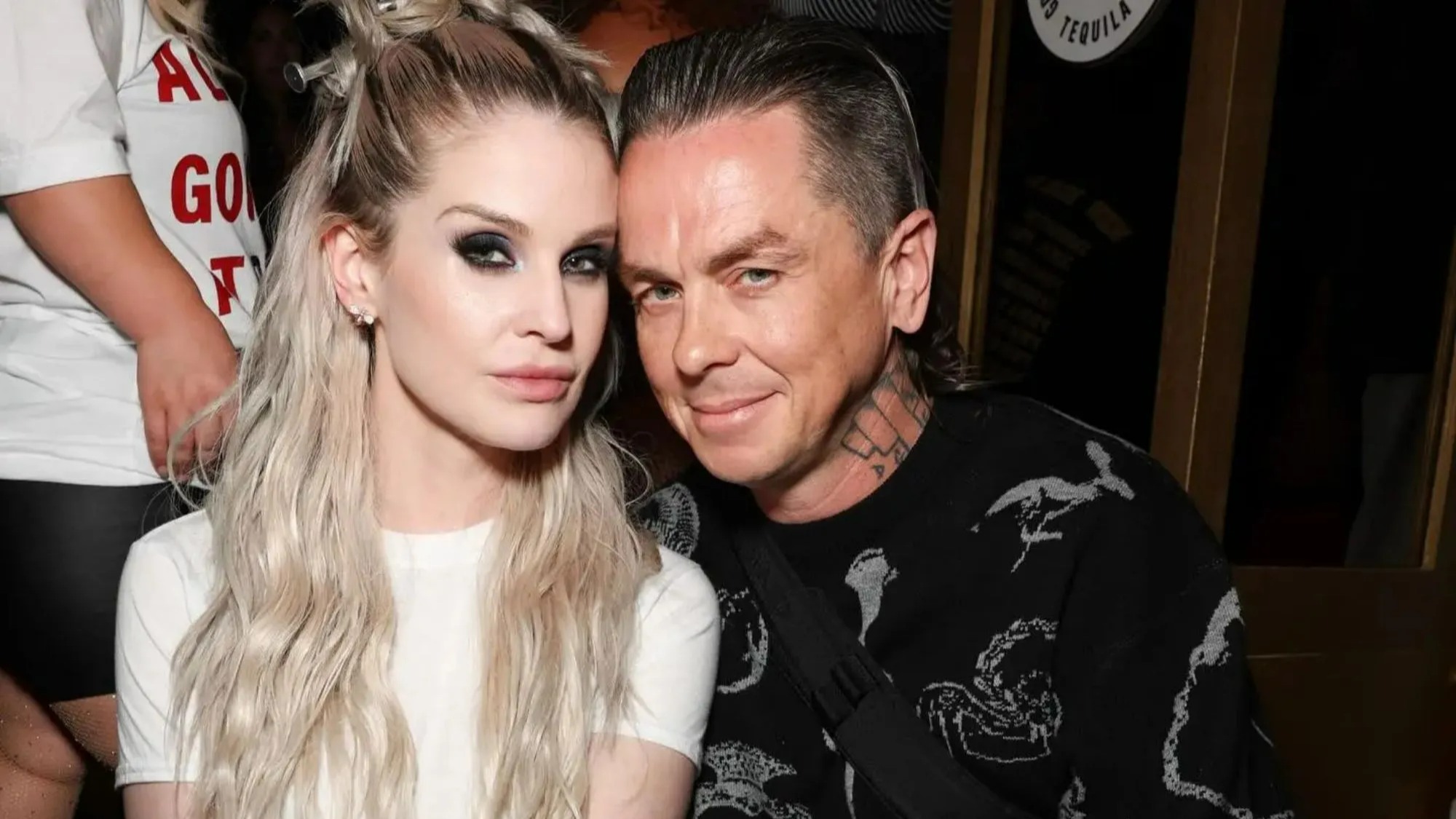
IT was supposed to be her happy ending, but just months after the death of her beloved father, Kelly Osbourne has been left mourning again.
From the outside, Kelly’s split from fiancé Sid Wilson looked like a cruel twist in increasingly fragile star’s life, but those close to Kelly have now shed some light on her apparently shock decision to end things with the Slipknot keyboard player, telling me what really sparked the break-up.
Kelly Osbourne and Sid Wilson have called time on their relationship – and insiders have now revealed whyCredit: instagramKelly has been going through a particularly tough time following the death of her dadCredit: GettyKelly was very close to dad OzzyCredit: MTV
An insider explained: “After her dad Ozzy died it put everything into perspective, the main thing being, she’s realised how she wants to be treated, and what she deserves.
“Things haven’t been right for a while and she realised she needs to prioritise herself.
“She’s so fragile because of everything that’s gone on with her father and is in need of something more. She didn’t want to pour into cups that don’t pour into hers.”
She’s realised how she wants to be treated, and what she deserves.
Insider
Kelly, who shares three-year-old son Sidney with the rocker, has been spending a lot of time in the UK following Ozzy’s death in July last year, having been diagnosed with Parkinson’s disease in 2019.
More than ever she became her mum Sharon’s rock as they navigate this incredibly difficult time, but it’s taken its toll on Kelly.
Her latest appearances have sparked concern not just from her fans but those close to her.
The once bubbly looking star has drastically shrunk in size, which has led to her being called gaunt and some even saying she ‘looks like a dead body’.
My insider added: “Kelly is of course aware she looks different but has found the trolling really tough.
“Her friends have really rallied around her and are determined to make sure she is ok. Of course everyone is doing what they can to help her be happy and healthy. They are providing the light in all the dark at the moment. The last thing anyone wants is for her to lose any more weight.
“It’s a worrying time for everyone but the fact that Kelly has taken the step to end her engagement suggests she is ready to move on and start really living again.”
Concerns were raised following her appearance at the Brit Awards with mum Sharon, as dad Ozzy was honoured posthumously.
The trolls were particularly vicious, and Kelly hit back to “defend herself”,. In a message to her 4.4 million followers she wrote: “There is a special kind of cruelty in harming someone who is clearly going through something.
“Kicking me while I’m down, doubting my pain, spreading my struggles as gossip, and turning your back when I need support and love most.
‘Hardest time’
“None of it proves strength; it only reveals a profound absence of compassion and character.
“I’m currently going through the hardest time in my life. I should not even have to defend myself. But I won’t sit here and allow myself to be dehumanised in such a way.”
Kelly and Sid first met in 1999 at Ozzfest, a music festival founded by her parents.
Kelly and her ex fiance Sid are parents to a little boy called SidCredit: GettySid popped the question in front of her dad Ozzy at his final ever gigCredit: instagram/kellyosbourne
They were friends for over two decades before their relationship turned romantic at the end of 2021. It seemed like the perfect match.
On Valentine’s Day in 2022, Kelly gushed: “After 23 years of friendship, I can’t believe where we have ended up. You are my best friend, my soulmate, and I am so deeply in love with you, Sidney George Wilson.”
They welcomed their son Sid in January, 2023 and being a mother changed everything for Kelly.
But cracks started to show between the pair and Kelly later recalled they had the “biggest fight” shortly after Sid was born.
I can never ever forgive him for that.
Kelly on her biggest row with Sid
She said on The Osbournes podcast: “I wanted our son to have both of our last names, and [Sid] wouldn’t let me, and we had a huge fight.”
“I feel that I was forced into doing something that I didn’t want to do. I can never ever forgive him for that, but we can move on.”
They started to have couple’s therapy – there were some “eye opening conversations” and eventually they agreed to change their son’s last name to feature both Osborne and Wilson.
Kelly explained: “We both made our child so he should have both of our last names. Not one is more important than the other.”
Meanwhile Ozzy was becoming increasingly unwell. He returned to the UK to perform for one more time and live out his final days at his beloved family home – a Grade-II listed Georgian mansion in Buckinghamshire.
Kelly, her brother Jack and older sister Amy spent most of their childhood in the UK, where they attended several private schools before moving to LA and starring in their hit reality show The Osbournes.
Sid and Kelly were friends for two decades before they started datingCredit: GettyKelly is keen to be with someone who shows her the respect she feels she deservesCredit: instagramKelly has been supporting her mum through the very difficult timeCredit: Splash
It was at Ozzy’s last ever Black Sabbath gig at Villa Park in July of last year that Sid proposed – with her whole family around her.
Sid pulled out all the stops and proposed to Kelly with a bespoke custom-designed ring from Los Angeles based jewellers, Mouawad.
He designed the ring with the team through various one-on-one meetings in order to ensure it was right for Kelly.
Sid chose to curate a dazzling 18K yellow gold ring adorned with both white and yellow diamonds, as well as citrine accents.
The centrepiece is a stunning 2.5 carat round brilliant-cut diamond with the ring being nicknamed the Honeybee – Kelly’s personal nickname.
It couldn’t be missed on Kelly’s tiny hands but in recent weeks, the bling was absent as she came to terms with her decision.
Kelly, who is currently still in the UK, is said to still be on speaking terms with Sid – who is based in the US and is determined to co-parent their son as best as possible.
Moving on?
For the time being anyway she plans to stay by her mum’s side, and with Sid not yet starting school, there’s no immediate decision needed about where to live.
Sharon is said to still be undecided about whether she’ll remain in the UK – although Ozzy is buried in the grounds of the family home.
We previously told how Sharon is currently playing to split her time evenly between her historic UK home, Welders, and a new apartment in Los Angeles, spending “half the year at least” on the sun-drenched West Coast.
If Kelly and young Sid join her or set up home for good in the UK, is yet to be seen, but one thing is for sure though, Kelly has found her voice and she won’t let decisions be made on her behalf.
Ozzy passed away in July shortly after his final ever gig in BirminghamCredit: @RossHalfin
MAFS star Charlene Douglas has revealed the heartbreaking “final days” she spent with her late friend Mel Schilling following her tragic death.
The relationship expert said she was left “devastated” as she opened up about their last moments together.
Sign up for the Showbiz newsletter
Thank you!
MAFS expert Charlene Douglas remembers her final moments with Mel SchillingCredit: Instagram/@charlenedouglasofficial/Charlene said she will “forever treasure” the memories they sharedCredit: Instagram/@charlenedouglasofficialThey both apppeared on Married at First Sight UK alongside Paul BrunsonCredit: Channel 4
Alongside touching pictures of Mel, he said: “Melanie Jane Brisbane-Schilling passed away peacefully today, surrounded by love.
“In her final moments, when I thought cancer had taken away her ability to speak, she ushered me closer and whispered a message for Maddie and me that will sustain me for the rest of my life.
“It took all of her remaining strength, and that gesture summed up our wee Melsie perfectly. Even then, her only thought was for Maddie and me.”
He continued: “This is a woman who became a new mum and a TV star at 42 — and nailed both.
“This is a woman who, through two years of chemotherapy, when she could barely lift her head from the pillow, never complained and never stopped showing courage, grace, compassion and empathy, and never missed a day of filming.
“To most of you, she was Mel Schilling — matriarch of MAFS and queen of reality TV. To Maddie and me, she was our wee Melsie: an incredible mum, role model, and soulmate.”
Channel 4hailed Mel as a friend who “radiated joy, warmth and optimism”.
Issuing a statement, it said: “Our thoughts and condolences are, first and foremost, with her family and loved ones.
“We’re privileged to be the channel that is home to Mel’s work, which was at the heart of Married At First Sight‘s phenomenal success, both in the UK and Australia.
“It reflected so much about her – her fierce advocacy for other women, her passion for healthy relationships and her mission to unite people in love.
“For many who work for Channel 4, Mel was not just a colleague but a friend, someone who radiated joy, warmth and optimism, who energized every room she walked into, with humour and positivity.
“Everyone who knew her will miss all this about her and much more. We share in the sorrow that we’re sure many viewers will now feel at this terrible loss.”
Tributes have poured in for the TV star since the tragic announcementCredit: Channel 4Mel was previously diagnosed with colon cancer in 2023, which later spread to her lungs and brainCredit: Channel 4Her husband Gareth Brisbane announced the heartbreaking news today in an emotional Instagram postCredit: Instagram
The couple’s solicitor, Catherine Lee, from legal firm Irwin Mitchell, added: “Whilst the trust has recognised the severity of the failings Aarav suffered and the need for improvements, it’s now vital that staff are supported to uphold the highest standard of care at all times.”
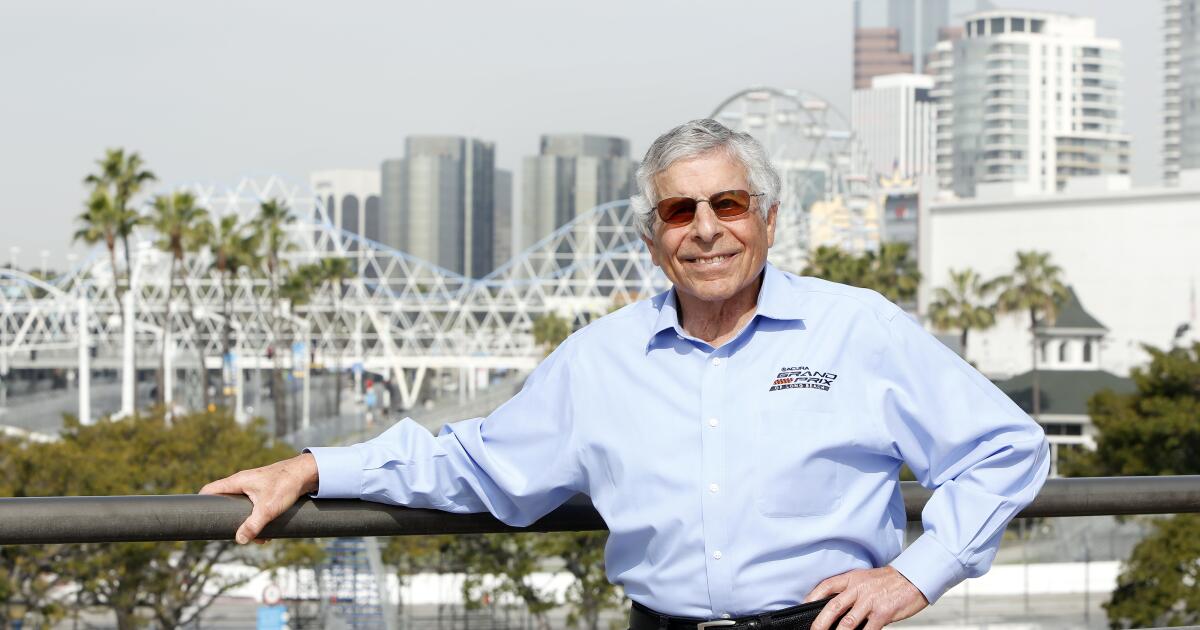
Jim Michaelian, the race car driver who helped launch the annual Acura Grand Prix of Long Beach, has died. He was 83.
The Grand Prix Assn. of Long Beach confirmed his death on Saturday, just weeks before this year’s race, which is scheduled for April 17-19.
Michaelian joined the Grand Prix Assn. of Long Beach in 1975, a then-fledgling competitive race, and grew it into one of the most popular street racing events in the world. The annual three-day event draws thousands of race car enthusiasts and brings tens of millions of dollars into the city of Long Beach.
“Jim was a leader of a small, passionate group who believed in the concept of bringing elite open-wheel competition to Long Beach in the 1970s,” said Roger Penske, Penske Corporation chairman, in a statement. “His vision and energy surrounding this great event remained boundless for 50 years.”
Penske Entertainment acquired the Grand Prix Assn. of Long Beach in 2024.
Michaelian was a competitive sports car racer for more than 25 years, competing in endurance events at tracks including Le Mans, Daytona Beach, Nürburgring, Dubai and Sebring in Florida. He told The Times in 2019 that he was still racing sports cars at 76.
“As long as I can achieve some level of success, I’m going to continue doing it until they tell me I can’t anymore,” he said then.
A native of Monterey Park, Michaelian (pronounced meh-KAY-lee-un) graduated from UCLA with a bachelor’s degree in physics. But he turned his attention to business and went on to earn an MBA there. Driven by a love of motor racing, Michaelian eventually talked his way onto the staff of the Long Beach Grand Prix.
He served as the association’s controller and chief operating officer before being appointed president and chief executive in 2001. During his 51-year tenure, Michaelian transformed Long Beach into an iconic stop in the world of motor racing.
A variety of races are run during the three days on the city’s seaside streets, culminating with a big-league IndyCar Series race Sunday. The races feature different types of cars, and one is for trucks, to appeal to a broad audience.
But the Long Beach Grand Prix is more of a festival that’s been built up around the racing. There are concerts, a lifestyle expo, a kids’ zone with go-karts and other activities, along with an array of food and drink spots, all centered on the Long Beach Convention Center and Shoreline Drive.
Michaelian said he kept the pulse of the crowd by constantly walking the track to monitor how the grand prix’s fans were enjoying the activities. He would survey for problems that might need fixing or whether changes needed to be made for the following year.
“Many young people don’t want to sit in the seats now,” he told The Times in 2019. “They’re out taking selfies, they’re chronicling their experience at Long Beach, and the only way to do that is for them to get around.
“So, if they’re moving around, I’m moving around” by creating more places where they can gather, listen to music and having food options nearby, he said then.
Last year, Michaelian was inducted into the Long Beach Motorsports Walk of Fame.
“Jim was a racer’s racer and a dear friend to IMSA and the motorsports community at large,” John Doonan, president of International Motor Sports Assn., said in a statement. “We will sorely miss his presence at Long Beach and racetracks everywhere.”
The Grand Prix Assn. of Long Beach did not release his cause of death.
Michaelian is survived by his wife, Mary, and his sons, Bob and Mike.
Former Times staff writer James F. Peltz contributed to this report.
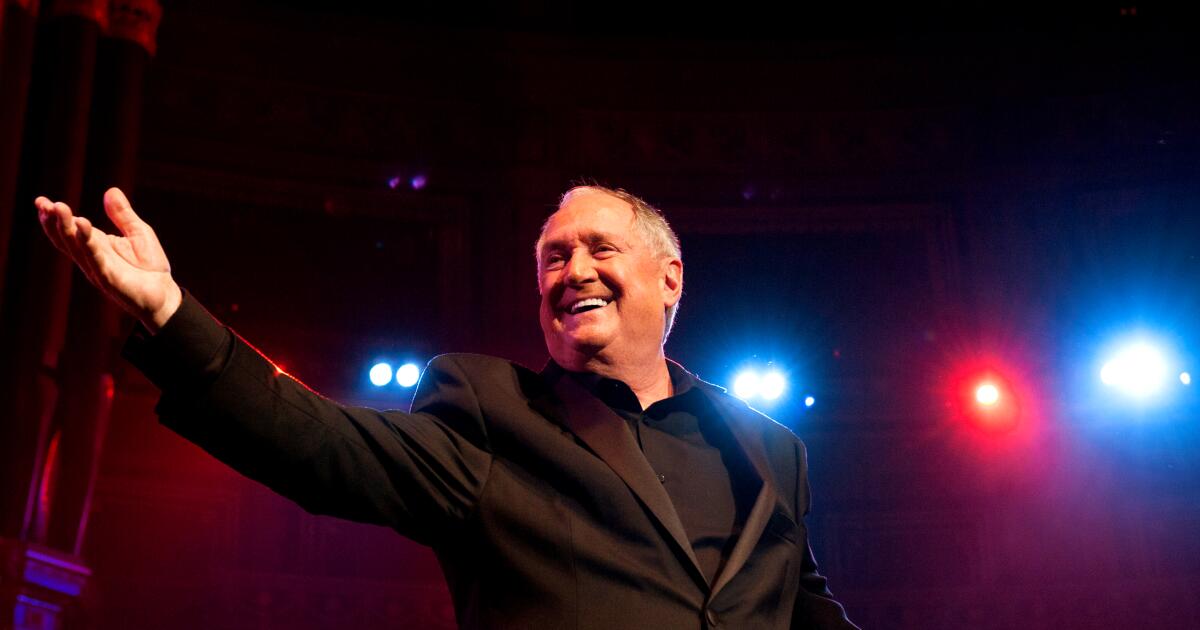
Neil Sedaka, the singer and songwriter whose signature hits include “Calendar Girl” and “Breaking Up Is Hard to Do,” died of atherosclerotic cardiovascular disease.
The condition is caused by the buildup of plaque — meaning fats, cholesterol and other substances — in and on the artery walls, which can lead to events such as heart attacks, strokes and aneurysms. According to the American Heart Assn., atherosclerotic cardiovascular disease is the leading cause of death worldwide.
The musician’s death certificate, published Wednesday by the New York Post, also listed kidney failure as a contributing factor.
Sedaka died Feb. 27 in Los Angeles at age 86. The songwriter’s family previously told The Times that his death was sudden.
“Our family is devastated by the sudden passing of our beloved husband, father and grandfather, Neil Sedaka,” their statement read. “A true rock and roll legend, an inspiration to millions, but most importantly, at least to those of us who were lucky enough to know him, an incredible human being who will be deeply missed.”
Born and raised in Brooklyn, N.Y., Sedaka was a Juilliard-trained classical pianist who translated his skill to pop stardom in the 1960s. His popularity as a performer waxed and waned over the years, but he maintained a steady career writing hits for other artists for decades, collaborating with lyricists such as Howard Greenfield.
“Songwriting is a difficult undertaking that gets harder and harder because you have to top your past work,” Sedaka told The Times in 1996. “You have to keep proving yourself. … It’s wonderful to sing ‘Calendar Girl’ and ‘Breaking Up Is Hard to Do,’ but you need more than that. You have to break new ground. As an artist, I have to choose what I feel is good and hope that the public will go along with it.”
Sedaka is survived by his wife Leba; children Dara and Marc; and three grandchildren.
It’s been an eventful 12 months for Gogglebox’s Siddiqui family – from celebrating a big birthday to suffering a heartbreaking loss
Joe Crutchley Screen Time Reporter
18:00, 20 Mar 2026
Gogglebox Siddiqui family’s rollercoaster 12 months from tragic death to hospitalisation(Image: Channel 4)
The Siddiqui family are one of Gogglebox’s original stars – but the clan have had an up-and-down past 12 months away from the programme.
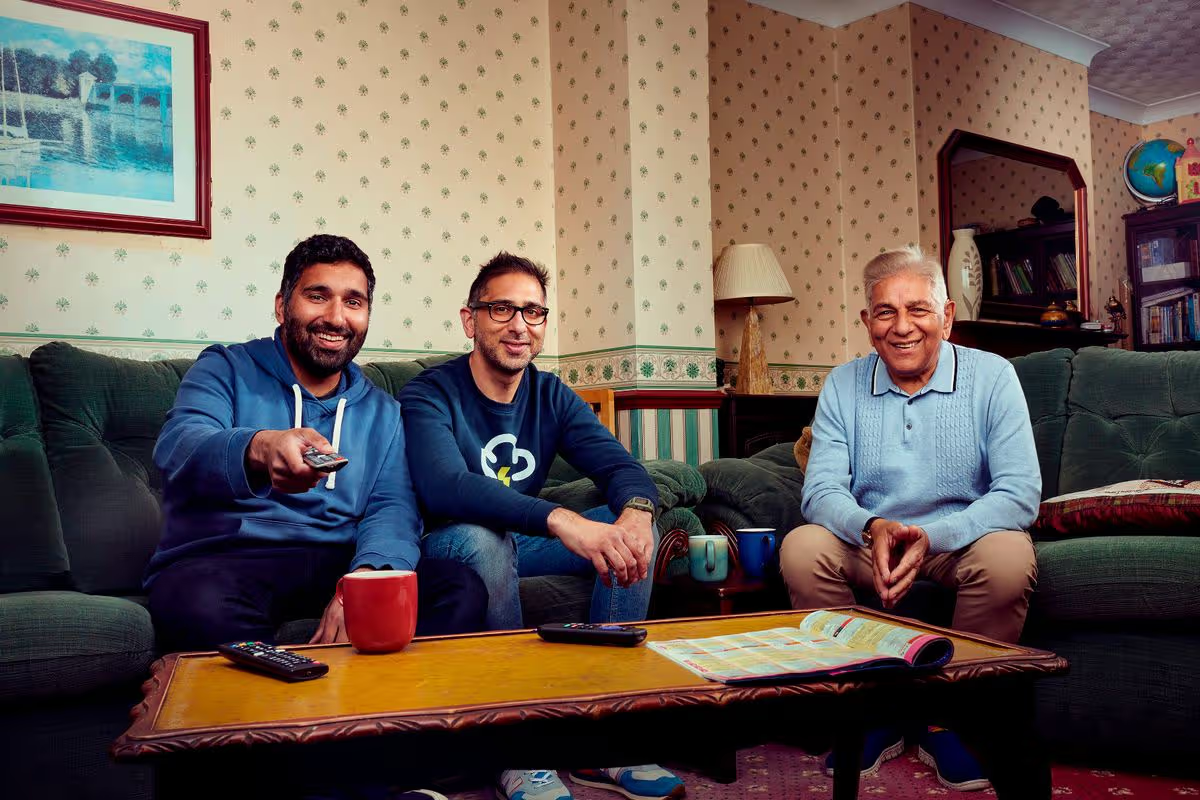
The beloved family joined the very first series of the Channel 4 show back in 2013, and consists of Baasit and his two brothers, Umar and Raza, as well as their father Sid. The mum, Nasreen, however, has not appeared on the show.
And it’s fair to say it didn’t take the Siddiqui family – who live in Derby – long to become firm favourites with fans.
However, the past 12 months have no doubt been a tough time for the family: from a sad death to member of the family being hospitalised.
The Siddiqui family suffers tragic death
In September 2025, the Siddiquis shared an emotional post on Instagram, revealing that their beloved cat Poppy had passed away. Alongside an image of a grey cat the caption read: “Sleep Tight Little One. Our little Diva Poppy – nearly 14 years and still didn’t feel long enough.
“A lifetime of memories we will all never forget. We hope you are reunited with your big brother Rufus and are both chasing rainbows together. Pets leave paw prints on our hearts, and memories in our souls. Sleep tight, little one.” The family received messages of sympathy from supporters following the tragic announcement.
Baasit and Mel’s anniversary
The Siddiquis had something to celebrate in October 2025 though, as Baasit and wife Mel hit a major wedding milestone. Posting on the Siddiqui family’s official Instagram account, Baasit wrote: “13 years married today, 16.5 years together – forever to go.
“Happy Anniversary to the absolute best, couldn’t do life without you. Love you xxx #weddinganniversary #anniversary #love.”
Baasit and Mel have been together for several years and are parents to a daughter named Amelia and a son named Theodore.
Raz’s horror fall
More recently, in February 2026, the family revealed that Raza had ended up in hospital and would be absent from the episode at the time. They upload a series of pictures of the TV star in hospital. In some images, he was hooked up to breathing machines.
And to explain his absence from the show, the post read: “For you eagle-eyed Goggleboxers, you may have noticed that Raza (@razathefaint) hasn’t joined us on the sofa so far this season. Sadly he had a bit of a fall, a few weeks back and cracked some ribs.”
The post said they fully expect him to return in a few weeks as he is recovering well. It went on: “He’s absolutely smashing his recovery, staying positive and keeping himself entertained with walks, telly, reading and nephew cuddles with Theodore.
“I know you guys reaching out and sending your well wishes will put a bigger smile on his face than morphine ever could. Can’t wait for all four Siddiquis to be back on team @c4gogglebox with the rest of the fab families.”
Sid’s 81st birthday
The Siddiquis celebrated a special day last month to mark dad Sid’s 81st birthday. They uploaded several family photos from over the years to Instagram, and captioned the post: “Happy Birthday Day aka Sid. Wishing you the most wonderful day! We love you xxx.”
Sid’s daughter-in-law Mel, who is married to Baasit, shared her well-wishes in the comments section, writing: “Happy birthday Sid AKA grandad. Have the best day!”
Supporters were also quick to express their affection, with one follower commenting: “Have a Wonderful Happy Birthday, may your day and year be filled with those you love, things that matter and above all joy.”
The crime drama from Death in Paradise’s creator has returned to screens with its third season and viewers were delighted
The Marlow Murder Club returns for a third season this week(Image: UKTV)
The beloved mystery drama, The Marlow Murder Club, made its comeback to our TV screens with the eagerly awaited third series and viewers have declared the opening instalment “brilliant”.
Adapted from the novels by Death in Paradise creator Robert Thorogood, the programme unfolds in the charming Buckinghamshire town of Marlow.
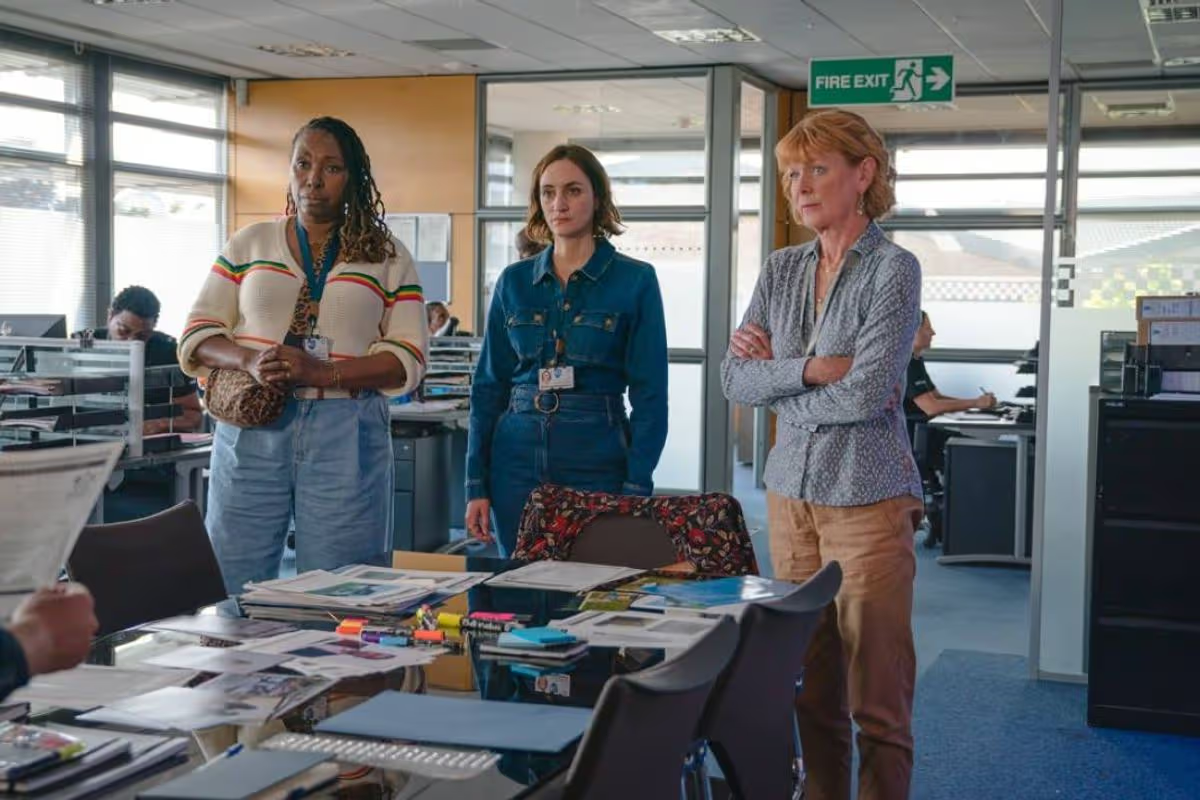
Where retired archaeologist and amateur detective Judith Potts (Samantha Bond) joins forces with dog walker Suzie Harris (Jo Martin) and vicar’s wife Becks Starling (Cara Horgan) to crack a series of captivating crimes.
Every series has featured an array of famous faces, with the likes of Peter Davison (The Gold, Gentleman Jack), Tony Gardner (The Larkins, Last Tango in Halifax) as well as the comedy icon Harry Enfield making a guest appearance in the newest series, reports Hello.
In season three, Judith, Suzie and Becks confront a new batch of baffling mysteries, assisted by Marlow Police’s senior detective, Tanika Malik (Natalie Dew).
The synopsis reads: “From the sudden death of the town’s beloved mayor – the nicest man in Marlow – to a celebrity chef found dead at the launch of his cookbook with half the town in attendance.
“The team will be working under the watchful eye of the Marlow community.
“They’ll also be called to action at a university reunion in an eerie manor house where, in a surprising twist, Becks finds herself amongst the suspects. Could this case threaten our amateur sleuths’ roles as civilian advisors?”
This gripping drama represents cosy crime at its finest. With absorbing mysteries, ingenious plot twists and abundant charm, it’s hardly surprising that The Marlow Murder Club has become such a firm favourite with audiences.
Sharing their reaction on social media, fans have praised the programme’s much-anticipated third run as “brilliant”.
One viewer posted on X: “Last night’s #MarlowMurderClub series 3 premiere was off to a great start, brilliant stuff from Samantha bond, Cara Horgan, Jo Martin, Natalie Dew.”
Whilst another commented: “So pleased this is back on. I love it.” A third audience member commended the show as a “brilliant crime drama,” whilst another applauded the “beautiful scenery and laugh out loud moments”.
Meanwhile, the programme has garnered favourable reviews from television critics, with The Times likening the drama to “the TV equivalent of a garden wallow listening to birdsong whilst enjoying a nice cup of tea,” in its three-star assessment.
Awarding four stars, the Daily Mail praised the show as “cosy crime at its snuggest and most comforting”.
All six episodes of The Marlow Murder Club Season 3 are now available to stream on U and Channel 4.
JORDAN Wright’s death has been shrouded in mystery as the Towie star was seen pacing erratically before he was found in a drainage canal.
The beloved TV personality, whose new iPhone was found nearby, also checked in to a luxury hotel alone before his tragic passing.
Sign up for the Showbiz newsletter
Thank you!
Jordan Wright was found dead on March 14Credit: Instagram/@jordanwrightsHis body was found in a drainage canal in ThailandCredit: Asia Pacific Press via ViralPress
It also remains unclear how long Wright, who used to date Vicky Pattison, had been missing for – or whether he was under the influence of intoxicants.
Wright was due to check out of his room on March 13, according to staff at Hotel COCO Phuket Bangtao where he was believed to have been staying.
But employees told police he never did check out – meaning he could have been missing for days.
It is currently unclear who the last person to see Wright was or how long he had vanished for.
Cops said they were led to Hotel COCO due to the key card inside Wright’s pocket at the time he was found.
He was reportedly seen pacing frantically shortly before his death, but it has not been confirmed whether anyone saw Wright at this time in person.
Why was he pacing around on CCTV?
Despite footage reportedly showing the ITV star looking restless before he was found dead at 12.30pm local time – it is not clear why he was in this alleged frantic state.
Cops said: “CCTV footage showed that he appeared restless and was moving back and forth in front of the hotel before leaving the area.”
An autopsy is currently being carried out to determine his cause of death.
But it will also conclude whether drugs or alcohol were involved.
No signs of physical assault or struggle were found on his body, authorities confirmed.
There were also no signs of forced entry or disturbances at his hotel room.
Police have launched an investigation into the case to probe the full circumstances of Wright’s death.
He had checked in at Hotel COCO in PhuketCredit: Coco PhuketWright pictured with Vicky PattisonCredit: Fame Flynet
When did he end up in the canal?
It is also unclear when exactly Wright entered the canal drain.
He was said to have been wearing a grey shirt and black trousers but no shoes on when he was found.
Authorities said Wright had been in the canal for some time, but didn’t elaborate on how long he was in there.
They only said the Brit star was believed to have been dead for no longer than two days.
Police said: “His movements eventually led to the location where his body was later discovered.
“We are still waiting for the autopsy results from Vachira Phuket Hospital to determine whether drugs were present in his system.”
Why was his phone left on a nearby bank?
Police explained that Wright’s new iPhone 17 was found on a nearby bank.
It was not in his trouser pockets, unlike the hotel key card police discovered.
Both Wright and the location of his phone are about a 20-minute walk away from Hotel COCO.
The Towie and Ex On The Beach star had posted photos online of his life in Thailand in the weeks leading up to his tragic death.
His “new life” showed him enjoying beach trips and taking part in martial arts classes.
It is unclear why the popular TV personality, from Basildon, Essex, had left the smartphone behind.
The star was best known for Towie and Ex On The BeachCredit: ITVTributes have poured in for the late starCredit: MTV
Why did he check into the hotel alone?
Wright had also checked into a hotel room alone before he was found dead on Saturday.
It is not understood why Wright checked into the luxury hotel alone, and what day he checked in.
He was reportedly seen in security camera footage outside the hotel.
But police have said: “CCTV footage related to the incident is part of the case file and cannot be released at this stage.”
They also confirmed: “Hotel records showed that he had checked in alone and was due to check out on March 13, but staff reported that he never checked out.”
Did he have drugs or alcohol in his system?
The star’s autopsy will determine whether or not Wright had any drugs or alcohol in his system.
Wright was seen pacing frantically before his death, but it is unclear what caused him to do this.
Pictures showed police scouring the scene in the aftermath of his death.
Several reality TV figures have paid their respects to Jordan online, including his The Only Way is Essex co-stars.
Fellow Towie star Chloe Brockett wrote in an emotional tribute “Rest in peace Jordan” followed by a red heart emoji.
While Love Island star Chloe Crowhurst also took to the comments, penning “Rest in peace Jord” with a white heart and cloud emoji.
Before Wright was named, an FCDO spokesperson said: “We are supporting the family of a British man who died in Thailand and are in contact with the local authorities”.
Wright pictured in uniform as a firefighter at the age of 19Credit: Instagram/@jordanwrights
Israel’s National Security Minister has filmed himself in front of gallows at a Jerusalem museum, threatening the death penalty for “terrorists”. Itamar Ben-Gvir is leading a campaign to expand the grounds for execution, which human rights groups have slammed as discriminatory.
This countryside spot is steeped in folklore about a monstrous Barghest that legends claim crushed victims – making for an atmospheric hiking spot
The hidden gorge is thought to house an evil being (Image: BerndBrueggemann via Getty Images)
Nestled within an abandoned mining region, hidden away in the Wharfedale valley of the Yorkshire Dales, lies a collapsed limestone ravine, brimming with historical tales, folklore and even a potentially terrifying resident.
Unless you’re aware of its existence, the enigmatic cavern is virtually invisible from view, concealed just off the roadside, making it a genuine secret treasure for ramblers.
Troller’s Gill is a legendary location beloved by keen walkers who venture to the region hoping to witness its splendour, as it packs considerable natural beauty into a compact trail.
The difficulty level for the path is fairly moderate, largely due to a handful of sections requiring scrambling, with a total distance of 2.6 km. It’s a trek that typically takes around one hour and can therefore be combined with any other walking or exploration activities you’ve planned during your stay in the Dales.
Save on the best holiday cottages in Yorkshire
This article contains affiliate links, we will receive a commission on any sales we generate from it. Learn more
Famous for its dramatic landscapes, historic cities, hearty food, and rich cultural heritage Yorkshire is just waiting to be explored. Sykes Cottages has a large number of properties to choose from with prices from £31 per night.
To access this captivating destination, you can leave your vehicle on New Road, where parking is free, before discovering this luminous green treasure.
Upon arrival, you’ll understand why it’s such a frequently discussed location and observe its rocky brook, which seems to emerge from nowhere.
Approximately a 15-minute stroll from where you’ve parked, you’ll spot a disused mine, the former operations of Gill Heads Mine, which has remained dormant since the early 1980s.
The entrance features a substantial gate with rockfall partially obstructing it, and visitors are strongly advised against entering the mine itself due to potential hazards, including potholes and collapse risks.
Legends and myths
Since its existence began, Trollers Gill has been cloaked in mystery but there’s one talethat particularly stands out from the rest. The location is thought to have been haunted by a Barghest, a massive hound with large luminous eyes.
According to ancient folklore, encountering the creature was far from fortunate but rather a harbinger of death, as those who crossed paths with the fearsome beast were frequently crushed to death or ripped apart, tales suggest.
One legend recounts the story of a man, John Lambert of Skirethorns, who bragged in a local pub about what he’d do to the enormous hound, which involved ‘giving it a good thrashing’ if he were to ever come across it. However, legend has it, he encountered the dog on his journey home, and it fatally crushed him.
John Henry Dixon from Grassington may have been the first individual to document such tales when he contributed a poem to a book published in 1827, William Hone’s Table Book.
In the ballad he describes a courageous man who ventures out to visit the Gill hoping to summon the mighty Barghest.
As he entered the gorge, he sensed the spirit of the stream warning him to turn back, but he disregarded it. He drew a protective magic circle around himself “with charms unblest”.
In his brief tale, the stream swelled and thundered, accompanied by a powerful wind, sweeping down the valley. He glimpsed the enormous shadow of the growling dog, its eyes illuminating the gorge walls.
The ferocious creature launched itself at the man and seized him as its next victim, dragging him to the valley floor, where his remains were subsequently discovered.
Various mythical creatures and supernatural entities have been reported inhabiting the ravine, which quite literally takes its name from trolls. It’s believed that Trollers’ Gill originates from ‘Troll’s Valley’, drawing from the Scandinavian tongue of those who made this area their home.
Their traditions and legends indicate that the term ‘troll’ encompasses any supernatural creatures, ranging from hulking giants to goblins, and naturally ‘trolls dwelling beneath the bridge’.
Meanwhile, the term ‘trolldom’ was understood to signify witchcraft and therefore implies the name stems from the notion of the valley being cursed, enchanted or inhabited by otherworldly beings.
An acclaimed author and historian of the libertarian movement fell to his death last week, his employer confirmed.
The body of Brian Doherty, 57, senior editor of the libertarian magazine Reason, was found Thursday “after a fall” in the Battery Yates park portion of the Golden Gate National Recreation Area, the publication wrote.
The National Parks Service law enforcement agency confirmed it responded to an incident at Battery Yates on Thursday “involving a male visitor who reportedly fell from the cliffside into the water.”
“The individual was recovered and pronounced dead,” said Scott Carr, parks service spokesperson, in an email. “We do not have any further information to share at this time.”
The Golden Gate Bridge is seen from the Fort Baker Marina in the Golden Gate National Recreation Area in San Francisco. Doherty was found in the Battery Yates park portion of the recreation area.
(Los Angeles Times)
Doherty was the author of several books, with Reason saying his most notable work was the 2007 study “Radicals for Capitalism: A Freewheeling History of the Modern American Libertarian Movement.”
“Doherty has rescued libertarianism from its own obscurity,” the Wall Street Journal wrote of the work, “eloquently capturing the appeal of the ‘pure idea.’”
Libertarianism’s role in gun control and the courts was the subject of his works, and Doherty had no shortage of admirers.
Loren Dean, chair of the Libertarian Party of California, said it was Doherty’s work at Reason that brought him into the liberty movement.
“Brian Doherty was the best kind of libertarian: one who holds true to the principles of liberty as they are,” Dean said in an email. “He was a tireless champion of both gun rights and police reform who wrote books on both [former U.S. Rep.] Ron Paul and Burning Man; his work did not sit on either the ‘left’ or ‘right’ side of the authoritarian box, but delightfully outside that tired frame, where libertarian principles truly sing.”
“What I liked most about Brian was his abiding interest in things happening on the margins of American culture, politics, and thought, and his deep appreciation for the prodigious bounty that markets deliver reliably and without moralizing,” Gillespie wrote in his farewell to Doherty, who had many opinion pieces published in The Times.
Far from just heady subjects, Doherty covered “both libertarian and whimsical” subcultures, according to the obituary, including New Hampshire’s Free State Project and the Seasteaders, a growing community of individuals dedicated to living on the seas.
The Seasteading Institute tweeted its condolences and noted the group had “appreciated his coverage of seasteading over the years.”
Doherty was a native of Queens, majored in journalism at the University of Florida and joined the college’s libertarian group in 1987, according to Reason’s obituary.
He moved to Los Angeles in the mid-1990s and joined a group known as the Cacophony Society, a gang who “inspired or created phenomenon ranging from the novel/movie Fight Club to urban exploration, billboard alteration, the Yes Men, flash mobs, and ‘Santa Rampages,’” according to the obituary.
One of those projects translated into the formation of the annual Burning Man festival, the obituary stated. Doherty later chronicled the famed artsy, hippie-like festival in his book “This Is Burning Man.”
“Libertarians talk a lot about freedom and responsibility. Brian embodied both,” Reason Editor-in-Chief Katherine Mangu-Ward said in his obituary. “His weird, colorful life — filled with comics and festivals and music and books — was a model of life lived freely and openly.”