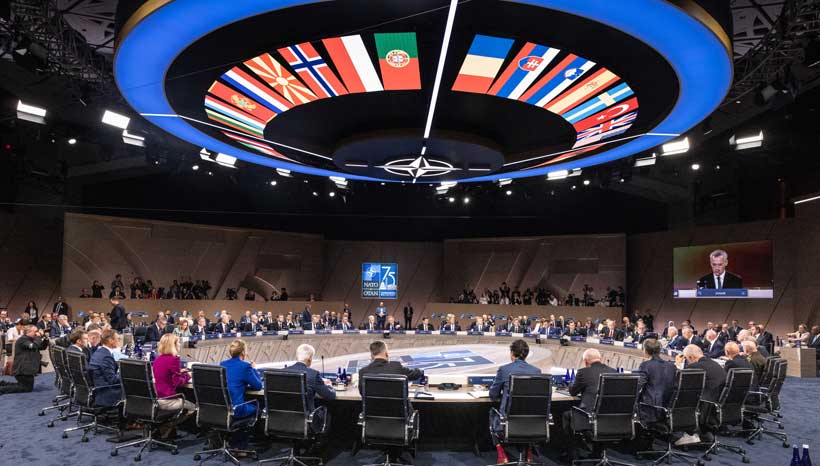
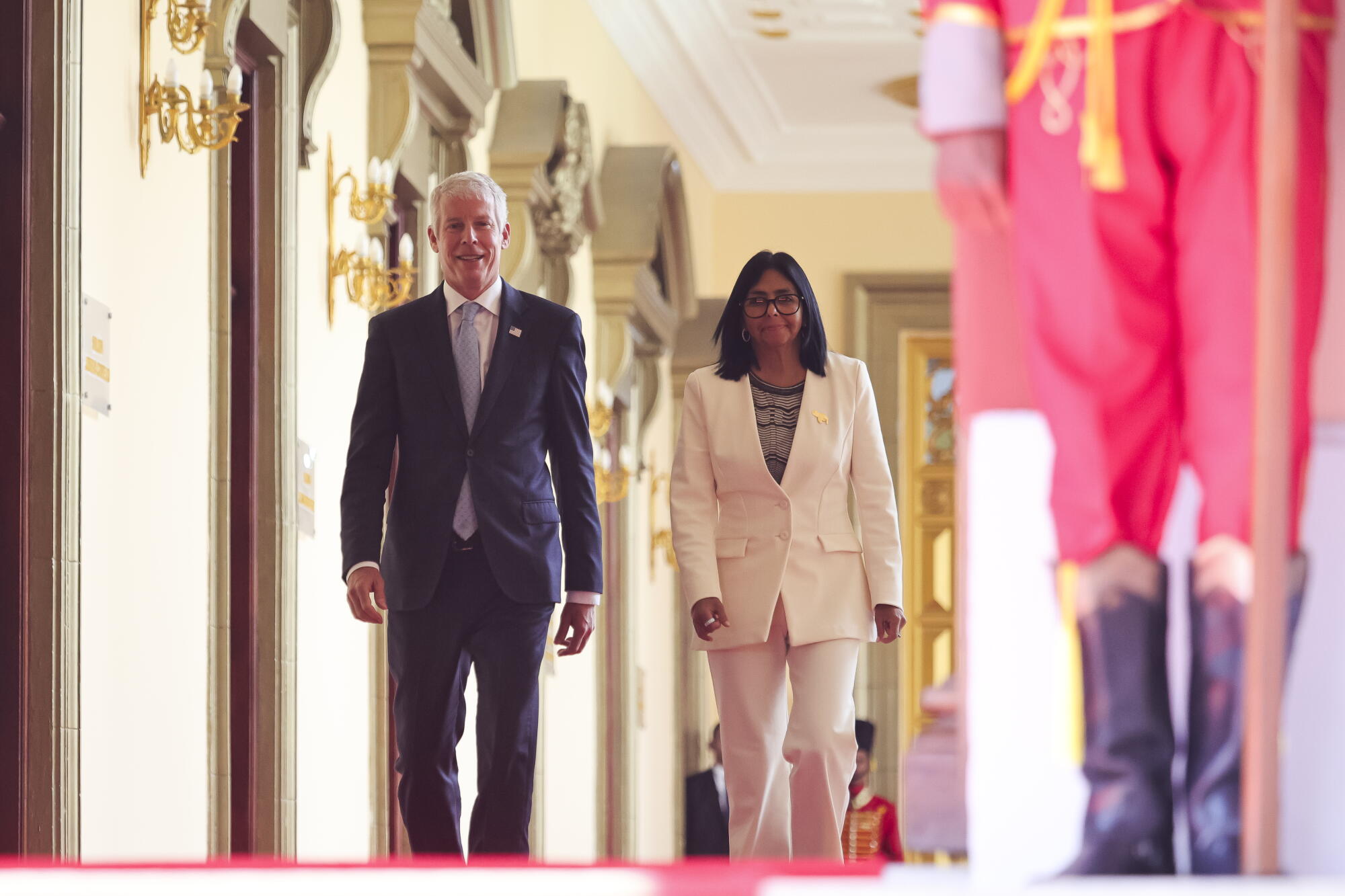
Denmark, Greenland and the United States are set to sign a security agreement that Copenhagen says will give NATO a larger role in protecting the Arctic, potentially shifting responsibility beyond the United States and Denmark alone.
The agreement is expected to be signed at the United Nations General Assembly in New York on Tuesday. Its full contents have not been made public, although US President Donald Trump has described it as giving Washington “permanent control” over Greenland’s security.
Denmark and Greenland have not endorsed Trump’s description. Both have said the agreement will benefit Greenland while respecting the island’s sovereignty.
The deal follows months of pressure from Trump, who has repeatedly argued that the United States should control Greenland and at times declined to rule out military or economic measures to acquire the semi autonomous Danish territory.
Stay ahead of the geopolitical week.
MD Briefing delivers expert analysis across five global fronts — the Indo-Pacific, energy, geoeconomics, European security, and the Middle East — every Monday morning. Free.
His demands triggered a diplomatic crisis within NATO and pushed Copenhagen and Nuuk into negotiations with Washington to address US security concerns while maintaining Greenland’s status within the Kingdom of Denmark.
A broader NATO role
Danish Foreign Minister Lars Lokke Rasmussen said the agreement would change the way Arctic security is handled.
“It will be in a form where responsibility for security in the Arctic is not only Danish or American,” Rasmussen told Danish broadcaster TV2 on Sunday. He added that NATO would play a major role in protecting the region.
A NATO spokesperson said the alliance welcomed the agreement, describing it as a step that could advance security, stability and cooperation in the Arctic.
Rasmussen travelled to New York for the signing but has declined to disclose the agreement’s details.
He said Denmark had been open from the beginning to addressing what he described as legitimate US security interests.
The negotiations therefore appear to have focused on finding a framework that can accommodate Washington’s strategic concerns without formally transferring Greenland’s sovereignty to the United States.
Trump’s claim raises questions
Trump has offered a different description of what the agreement means.
In a post on Truth Social on Friday, he said the deal gives the United States “permanent control over security, and all other needs” in Greenland. He also said no US adversary would be able to establish a base or military presence on the island without Washington’s written approval.
Copenhagen has not publicly responded to that characterization.
The difference between Washington’s description and Denmark and Greenland’s public statements leaves important questions about the agreement unresolved.
Among the most significant is whether it changes the 1951 US Denmark defence agreement, which provides the legal basis for the American military presence in Greenland.
The document’s provisions on US access, military infrastructure and the role of NATO have not been made public.
Greenland at the centre
The agreement comes as Denmark acknowledges that it underinvested in Greenland’s defence for decades.
Copenhagen has since pledged to increase its military presence on the island and strengthen Arctic surveillance, including through greater NATO involvement.
Greenland’s government has sought to reassure residents that the negotiations do not compromise the island’s sovereignty.
Erik Jensen, an opposition lawmaker in Greenland, said on Facebook that he had read the draft agreement and felt reassured by its contents. He also praised Greenland’s foreign minister for handling the negotiations.
For Greenland, the issue is particularly sensitive because the island has extensive autonomy within the Kingdom of Denmark and has long maintained a political debate over eventual independence.
What the agreement could mean for the Arctic
The deal could mark a significant change in the security architecture of the Arctic.
Greenland occupies a strategically important position between North America and Europe, making it valuable to the United States and NATO as competition over the Arctic increases.
A larger NATO role could provide a multilateral framework for responding to concerns about military activity and strategic infrastructure in the region. At the same time, the agreement’s precise legal and operational arrangements will determine how far that shift actually goes.
Until the text is released, it remains unclear whether the agreement represents a substantial restructuring of Greenland’s defence arrangements or primarily a political framework for closer cooperation.
What is clear is that the negotiations have moved Arctic security from a dispute centred on US ambitions for Greenland toward a broader discussion about NATO’s collective role in one of the world’s increasingly contested strategic regions.
WTW (WTW) has signed a global agreement with Zurich Insurance Company to deploy its Radar rating and analytics software across the Swiss insurer’s retail markets worldwide.
This new global agreement, which follows a rigorous selection process, builds on and significantly expands the two
Paramount Skydance (PSKY) is in advanced talks with state attorneys general to allow its $110 billion purchase of Warner Bros. Discovery (WBD) to be completed, though not all of the state AGs are on board.
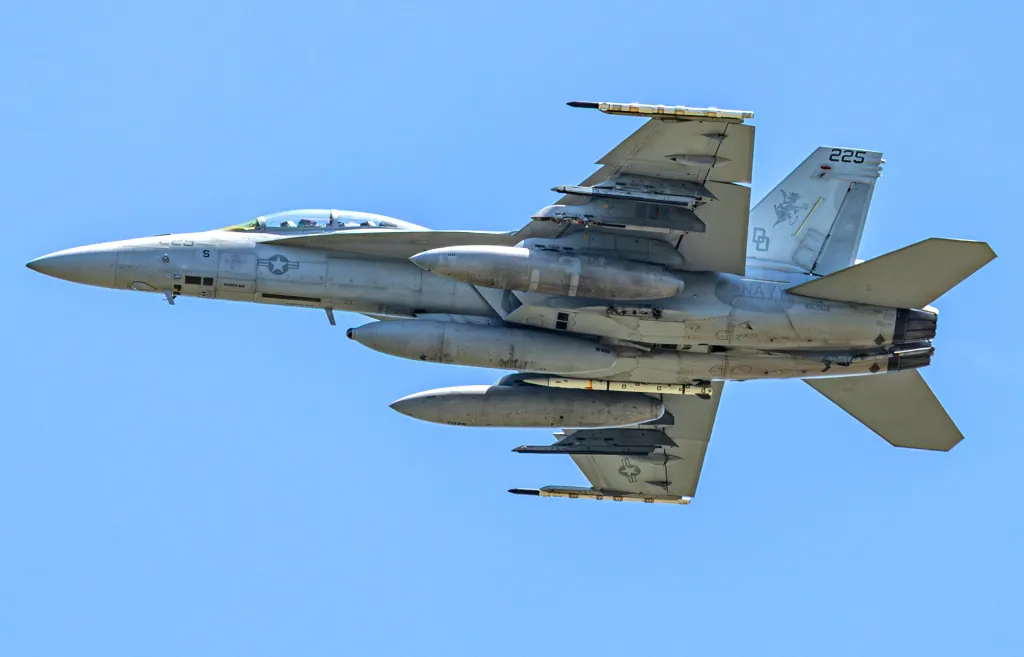
The Pentagon has reached an agreement with Lockheed Martin to lay the groundwork for stepped-up production and delivery of new AIM-260 Joint Advanced Tactical Missiles (JATM) to the U.S. military and allied air arms in the coming years. The AIM-260 is still in development, but the head of the Air Force Test Center also touted efforts to further accelerate that work just earlier this week. From the start, the U.S. military has presented JATM as especially critical for ensuring China, with its own growing array of longer-range air-to-air missiles, does not gain an edge in future air combat.
The new framework agreement announced today “is critical to ensuring long-term demand signals flow to key suppliers, allowing Lockheed Martin and the munitions supply chain to invest in manufacturing capacity, workforce, and production efficiencies,” according to a Pentagon press release. “It establishes a framework for future Multi-Year Procurement (MYP) of JATM, executing congressional authority to secure the nation’s highest-priority missile systems.”
“This agreement forms the foundational agreement for a multiyear procurement contract, pending Congressional approval, that provides long-term demand to strengthen and expand the defense industrial base for the program,” according to a separate release from Lockheed Martin.
A US Navy F/A-18F Super Hornet seen carrying an AIM-260 Joint Advanced Tactical Missile (JATM). Jonathan Tweedy/ @flightline_visuals
In response to questions from TWZ, the Pentagon declined to comment on the projected number of JATMs covered under this agreement, as well as estimated costs and delivery schedules.
A rendering depicting an F-22 Raptor firing an AIM-260 JATM. USAF
The releases today from the Pentagon and Lockheed Martin confirm that the new framework deal also includes planned foreign military sales of AIM-260s. Australia, one of America’s top allies, is the first confirmed international customer for the JATM, and plans to integrate the missiles on its F/A-18Fs, F-35As, and EA-18G Growler electronic warfare jets. The Royal Australian Air Force’s MQ-28 Ghost Bat CCA-type drones, initial versions of which are already capable of firing AIM-120s, might be another AIM-260 launch platform in the future.
Uncrewed MQ-28 Ghost Bat showcases its combat capability
The AIM-260 remains in development, with the Navy and Air Force test communities supporting that work.
“We are accelerating weapons development from high-end air dominance weapons like the JATM to hypersonic strike systems like the Hypersonic Attack Cruise Missile,” Air Force Brig. Gen. Mark Massaro, head of the Air Force Test Center (AFTC) at Edwards Air Force Base in California, told TWZ and other outlets at a media roundtable yesterday. The roundtable took place at the Air & Space Forces Association’s (AFA) 2026 Air, Space & Cyber Conference.
“We’re actively testing JATM, and it’s progressing along its program path. In test, we are working through the development stages there,” Massaro added. “So, we’re testing it in [sic] the ground with models, like I mentioned. We’re testing it in the air on aircraft. So, from a performance standpoint, I’ll hold on to that from an operational security perspective. But we’re happy seeing where it’s going, and we expect that to be a key piece of capability for our warfighters to have.”
“Just from a testing perspective, we’re always looking at making sure that we’ve got the throughput,” he added when asked if he could talk about challenges or other issues AFTC has run up against in work on the AIM-260. “So, from a test perspective only, infrastructure and throughput to make sure that we can get things out … and make the testing happen. But I’m not, from a capabilities perspective, worried about the system.”
Another look at the AIM-260 loaded on the Navy Super Hornet. Jonathan Tweedy/ @flightline_visuals
It is unclear when the first operational AIM-260s may begin entering the U.S. inventory. When the program was first disclosed to the public in 2019, the stated goal was to start fielding the missiles in 2022. There were also reports in late 2025 that funding issues had caused a three-month delay, based on a fact sheet distributed to some members of the U.S. House Committee on Armed Services. The committee later said that the information was incorrect.
Work to date on JATM has been conducted under a heavy veil of secrecy, with the existence of the program only being announced in 2019. The first public glimpse of the missile only emerged in May of this year. Beyond the aforementioned size requirement and that the new missile will offer significantly greater engagement range over the AIM-120, details remain limited. Readers can learn more about what we do know so far here.
The AIM-260 is not the only longer-ranged air-to-air missile known to be in development in the United States, either. In 2024, the Navy revealed it had begun fielding an air-launched version of the surface-launched Standard Missile-6 (SM-6), called the AIM-174B Gunslinger, at least on a limited level. Just in August of this year, the service disclosed the existence of another very long-range air-to-air missile, the AIM-424 Malice, which has already reached the flight testing phase of development.
A US Navy F/A-18F Super Hornet test jet with four AIM-174B missiles under its wings. point_mugu_skiesA US Navy Super Hornet test jet carrying a load of AIM-424 Malice missiles. USN
An Air Force spokesperson told Air & Space Forces Magazine last month that the service was “closely following” the Navy’s work on the AIM-424. In June, the Air Force itself shared details about another potential future air-to-air missile, dubbed the Air Force Long Range Weapon (AFLRW), including a target requirement for a maximum range of at least 1,000 nautical miles.
Based on past experiences with public disclosures about the AIM-260, AIM-174B, and AIM-424 programs, additional work on advanced longer-range air-to-air missiles is certainly ongoing in the classified realm.
Today’s announcement about the new framework agreement, together with Brig. Gen. Massaro’s brief update yesterday, makes clear there is a continued commitment to JATM amid a still-growing field of new, longer-range air-to-air missiles.
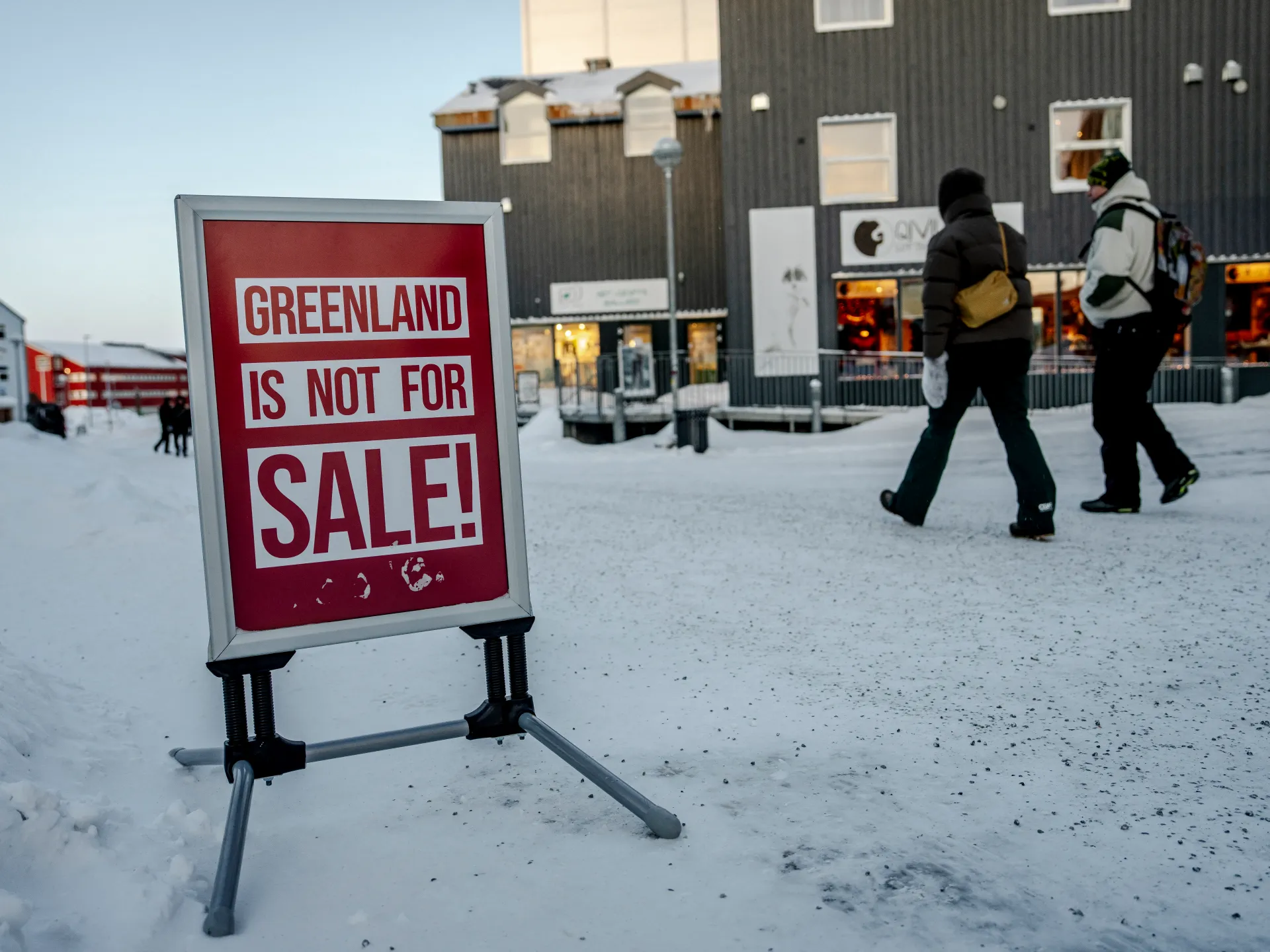
Trump has wanted a foothold in Greenland for some time, as a strategic battle unfolds for supremacy in a warming Arctic.
Published On 19 Sep 202619 Sep 2026
Denmark has hailed a “binding” deal by United States President Donald Trump to give Washington “permanent control” over Greenland’s security and bar Russian and Chinese military bases from the Arctic territory.
But Denmark and Greenland – an autonomous Danish territory – said on Saturday that any deal with the US would not compromise Greenland’s sovereignty, and the two countries would sign the agreement next week at the United Nations General Assembly in New York.
Recommended Stories
list of 4 itemsend of list
“A long period of uncertainty will hopefully be replaced by a binding agreement that strengthens security in the Arctic and North Atlantic, and thereby our shared security within NATO and Europe – while respecting the [Danish] Kingdom’s red lines,” Danish Foreign Minister Lars Lokke Rasmussen said in a social media post.
Since returning to the White House in January 2025, Trump has repeatedly insisted that Washington needed to control Greenland for strategic reasons, alarming NATO ally Denmark and sparking fierce pushback from the alliance.
Key details of the agreement have not been made public, including the scale of the US military presence in the self-governing Danish territory and whether any formal power over foreign policy and resources would be ceded to Washington.
Greenland’s Prime Minister Jens-Frederik Nielsen said the agreement “recognises Greenland’s interests” and is “to the benefit of us all”.
Denmark’s Prime Minister Mette Frederiksen said it is “great for NATO and Europe”, as it “strengthens our common security in the Arctic and the North Atlantic Area”.
‘I have mixed feelings’
But in Greenland’s capital Nuuk, residents had mixed feelings.
“I don’t know exactly what the agreement is or what has been signed. But whenever the US and Trump are mentioned, I have mixed feelings. I’m not entirely comfortable with how much attention Greenland has right now,” Soren Kreutzmann, a 29-year-old hairdresser, told the AFP news agency.
“We hope the leaders have made a good agreement, because our country needs to be protected, both from the air and sea. Denmark had not given that enough attention for many years,” said Bibbi Kleist Jepsen, a 64-year-old educator.
Trump, who had previously said the US needs “ownership” of Greenland, announced that Washington would immediately start building up a large military presence in the territory.
“From now on, no US adversary can EVER have a base in Greenland, have a military presence in Greenland, or make sensitive investments in Greenland, without our express written approval”, he said.
Trump has repeatedly warned of Russia and China trying to establish a foothold in Greenland as a strategic battle unfolds for supremacy in the warming Arctic region. The State Department left no doubt that they would not be allowed to do so.
“This agreement guarantees that China and Russia cannot have a base in Greenland, they cannot send troops to Greenland and the necessary mechanisms are in place to prevent investment in sensitive sectors,” a State Department official said.
Richard Weitz, a senior fellow at the NATO Defense College tells Al Jazeera that the new US-Denmark security deal over Greenland gives US President Trump a diplomatic agreement without delivering his earlier ambition to annex the territory.
US President Donald Trump says the US will gain ‘permanent control over security’ in Greenland under a deal reached with Denmark. The agreement is expected to be signed next week, following months of Trump’s threats to ‘take’ the Danish territory.
Denmark and Greenland plan to sign a US defence pact next week, pending approval from both parliaments.
Published On 18 Sep 202618 Sep 2026
United States President Donald Trump claimed on Friday that Washington has entered into an agreement with Denmark and Greenland that gives the United States “permanent control over security and all other needs”.
In a post on his Truth Social platform, Trump said, “At my direction, we worked with representatives of Denmark and Greenland to guarantee that the US will FOREVER have the complete ability to do what is necessary in Greenland”.
Recommended Stories
list of 3 itemsend of list
He added that US adversaries will be barred from establishing military bases or personnel in Greenland unless they receive written authorisation from the United States.
Trump alleged that plans will begin immediately to build a significant US military footprint in suitable areas across Greenland, noting there are numerous potential locations.
Denmark and Greenland released a joint statement on Friday indicating that a pact with the US is set to be signed during next week’s high-level United Nations General Assembly summit.
The statement added that the agreement remains subject to formal parliamentary approval in both Nuuk and Copenhagen.
Denmark’s Prime Minister Mette Frederiksen said the agreement “recognizes the sovereignty and territorial integrity of the Kingdom and the right of the Greenlandic people to self-determination.”
The Federal Communications Commission on Thursday granted Paramount Skydance’s request to allow Middle Eastern royal families to hold a substantial stake in a merged Paramount-Warner Bros. Discovery.
The sovereign wealth funds of Saudi Arabia, Qatar and Abu Dhabi are slated to indirectly own nearly 50% of the equity in David Ellison’s proposed mega-studio, Paramount-Warner Bros. That will give them a hefty stake in CBS, CNN, Comedy Central, HBO and two historic Hollywood film studios.
As part of the Communications Act of 1934, Congress placed restrictions on foreign ownership of broadcast outlets because of concerns about national security. Current rules prevent foreign investors from owning more than 25% of a company that holds a U.S. broadcast license — unless the FCC determines that foreign ownership would serve a public interest.
CBS owns more than two dozen TV stations with FCC licenses, including KCBS-TV Channel 2 and KCAL-TV Channel 9 in Los Angeles.
“Upon review of [Paramount’s] Petition and consideration of the record of this proceeding, we find that the public interest would be served by granting the Petition,” FCC said in its ruling, noting that Paramount has said the proposed ownership changes would “not result in a transfer of control of Paramount.”
Instead, “Ellison family will retain a majority of the voting interests and control of Paramount,” the FCC said.
FCC Chairman Brendan Carr, an appointee of President Trump, has been supportive of Paramount’s takeover of Warner Bros. Trump and his lieutenants, including Defense Secretary Pete Hegseth, have been cheering for Ellison to control CNN, a Warner property.
Anna M. Gomez, the lone Democratic FCC commissioner, slammed the agency’s decision, saying it “just let some of the most repressive governments in the world indirectly control nearly all of a combined Paramount-Warner Bros.”
“An investment this large in one of America’s biggest media companies doesn’t just buy equity, it secures influence over what gets said and what gets made,” Gomez said. “That’s why I called for this new and novel issue to go to a full commission vote given what’s at stake. Instead, the FCC snuck this ruling out as a staff-level decision, with no public vote and no accountability for a call of this magnitude.”
Ellison’s billionaire father, Oracle co-founder Larry Ellison, in February agreed to personally guarantee the $47 billion in equity needed to buy out Warner Bros. Discovery’s existing shareholders for $81 billion. Ellison and longtime Skydance investor, RedBird Capital Partners, then entered into agreements to assign some of their purchase rights to the sovereign wealth funds.
The funds plan to invest $24 billion in the Paramount-Warner deal. Saudi Arabia’s Public Investment Fund is set to contribute $10 billion while the Qatar Investment Authority and Abu Dhabi’s L’imad Holding Co. will separately add $7 billion.
Paramount has separately lined up debt financiers to help pull off the leveraged buyout of Warner Bros. Discovery — Hollywood’s biggest merger in decades. The deal has been stalled by an antitrust challenge brought by California Atty. Gen. Rob Bonta and 11 other Democratic attorneys general, representing such states as New York, New Jersey, Colorado, Nevada and Oregon.
The foreign ownership rule was adopted nearly a century ago because members of Congress wanted to make sure that hostile foreign players were barred from using U.S. airwaves to spread propaganda, particularly in times of war.
“We appreciate the FCC’s careful review and are pleased that it has granted Paramount’s petition,” Paramount said in a statement, adding the Trump administration’s Committee for the Assessment of Foreign Participation in the United States Telecommunications Services Sector had separately recommended approval of the deal, subject to several conditions to protect the data of the company’s U.S. based consumers.
Paramount said that, once the deal closes, the Ellison family and RedBird would “collectively hold the largest equity stake in the combined company and 100% of the voting shares, with no other equity participant having any governance rights.”
Paramount has two classes of stock — an ownership structure that will be replicated in a merged Paramount-Warner Bros.
The Ellison family owns 77.5% of Paramount’s voting Class A common stock. RedBird indirectly holds the remaining 22.5% of the Class A shares. The Ellison family separately has 40% of the non-voting Class B shares.
“At a time when the media industry faces unprecedented competitive pressure from dominant big tech companies, a combined Paramount-WBD will have the scale and resources necessary to compete, invest, innovate, and deliver premium content to audiences worldwide,” Paramount said in its statement.
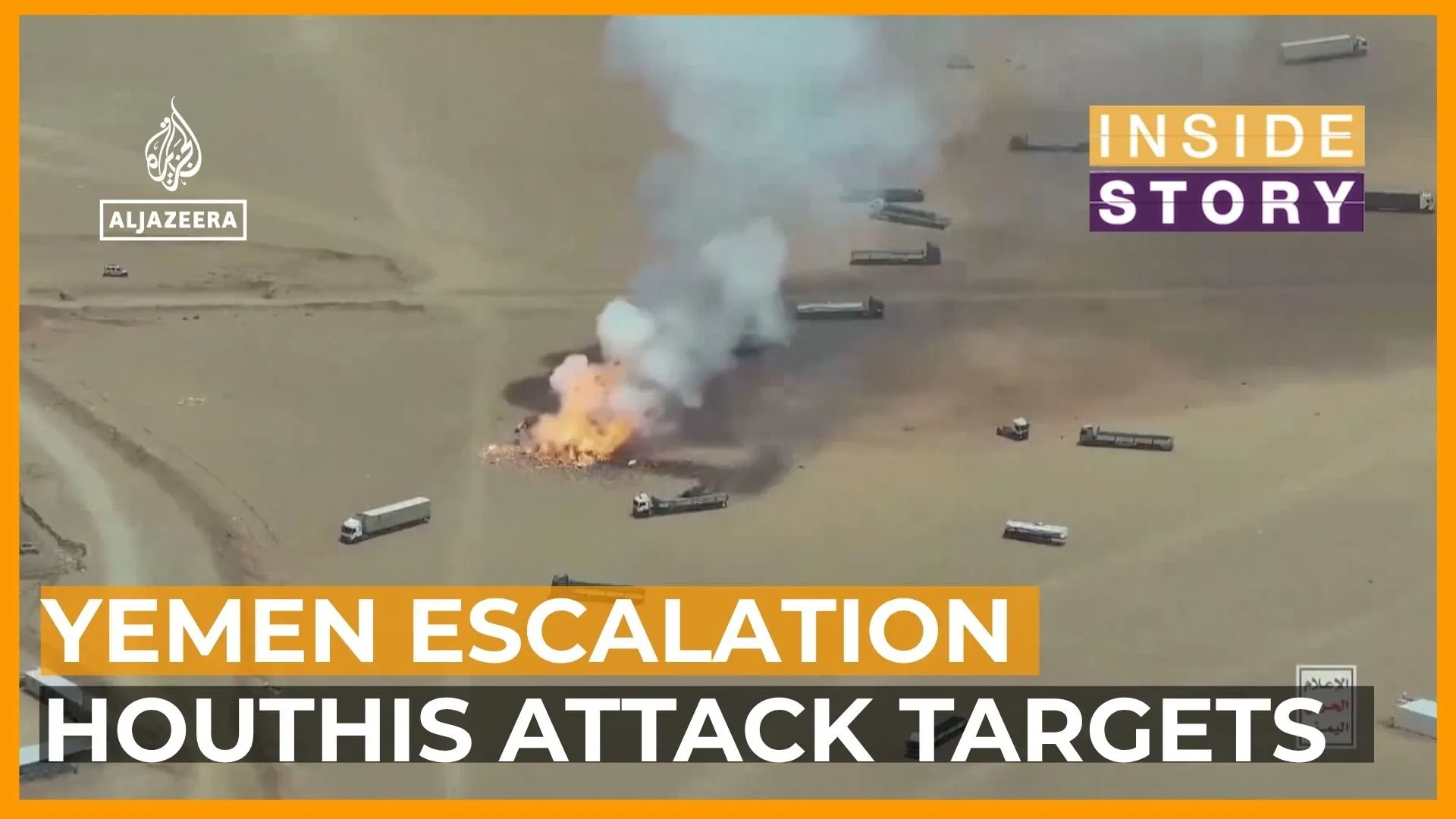
Yemen’s Houthis have agreed to allow US shipping unfettered Red Sea access if Washington refrains from direct military involvement in the Saudi-led war. That’s according to US reports which say the two sides struck the deal amid a Houthi offensive along Yemen’s Red Sea coast.
EU Trade Commissioner Maroš Šefčovič will visit Manila next week to finalise a trade agreement with the Philippines, the European Commission confirmed to Euronews on Monday.
ADVERTISEMENT
ADVERTISEMENT
The agreement is nearing conclusion as Brussels has increasingly looked to the Asia-Pacific over the past year to diversify its trade ties.
Since the return to power of US President Donald Trump, the global trade order has been shifting, with the EU seeking new markets for its exports.
The latest round of EU-Philippines trade talks took place in May, with access to public procurement emerging as the final sticking point. An agreement would mark a shift for the Philippines, which has so far kept public contracts closed to foreign bidders.
The Commission told MEPs earlier this month that the rest of the agreement was ready. The aim is to lift trade barriers between both partners in most sectors.
An official from the EU executive also told MEPs that sanitary and phytosanitary rules for food products were “ambitious”, alongside automotive standards that would improve EU manufacturers’ access to the Philippine market. The official added that the EU and the Philippines were “complementary” in both industrial goods and agriculture.
The deal is an important one for Manila, which has been hit by US tariffs in 2025 and by the war in Iran, which heavily impacted energy prices in the country.
However, the Philippines also reached “upper-middle-income country” status in August, granted by the World Bank, which makes it a promising market — “One of the most dynamic economies in the East Asia Pacific region since 2010,” the World Bank said.
Bilateral trade in goods between the EU and the Philippines amounted to €16.8 billion in 2024. That same year, the EU was the Philippines’ fourth-largest trading partner, accounting for 7% of the country’s total trade in goods, while the Philippines was the EU’s 39th-largest trading partner, accounting for 0.3% of the EU’s total trade in goods.
After the Philippines, the Commission aims to conclude talks with Thailand, making 2026 a strong year for EU trade deals across Asia and the Pacific, with agreements already reached with Australia and India.
The oil “mega-deal” signed between the US and Venezuela has caused major repercussions on plenty of themes: from the legality and timeframe of the agreement to the economic and political implications and, last but not least, the controversial role of Alejandro Betancourt.
A couple of issues are also missing from recent discussions: the effects of these new deals on Venezuela’s environment and its implications for the global climate crisis.
One exception was the coverage made by the NPR’s “All Things Considered” program, where energy and climate correspondent Julia Simon interviewed Paasha Mahdavi, a political science professor at University of California, Santa Barbara, who has this to say about what the new Orinoco Belt developments by major oil company Chevron could do.
“This expansion is effectively a carbon bomb. And so if Chevron does produce this field, that’s roughly 52 million tons of carbon dioxide equivalent per year additional. That is a huge number.”
On September 2nd, the same day those deals were signed in Miraflores Palace, the United Nations Environmental Program released the report “Limiting Overshoot,” which indicates that the 1.5° threshold to limit global warming established in 2015 by the Paris Climate Accords was already crossed and therefore the world must prepare for the fallout.
But in the last few days, several Venezuelan environmental NGOs and other civil society groups are sounding the alarm about the negative consequences that those agreements could produce here. Mongabay published this map about the areas that are impacted by oil extraction in Venezuela.
Venezuelan NGOs Clima 21 and Provea made public a joint statement in which they say that “the economic recovery cannot be made at the expense of environmental human rights. No economic interest can prevail over the constitutional and international right to a healthy, safe and sustainable environment…”
They proposed five points of commitment for all involved, which include transparency and public information, effective enforcement of environmental obligations, urgent management of oil spills, protection of vulnerable communities and a transition to a sustainable model for the country.
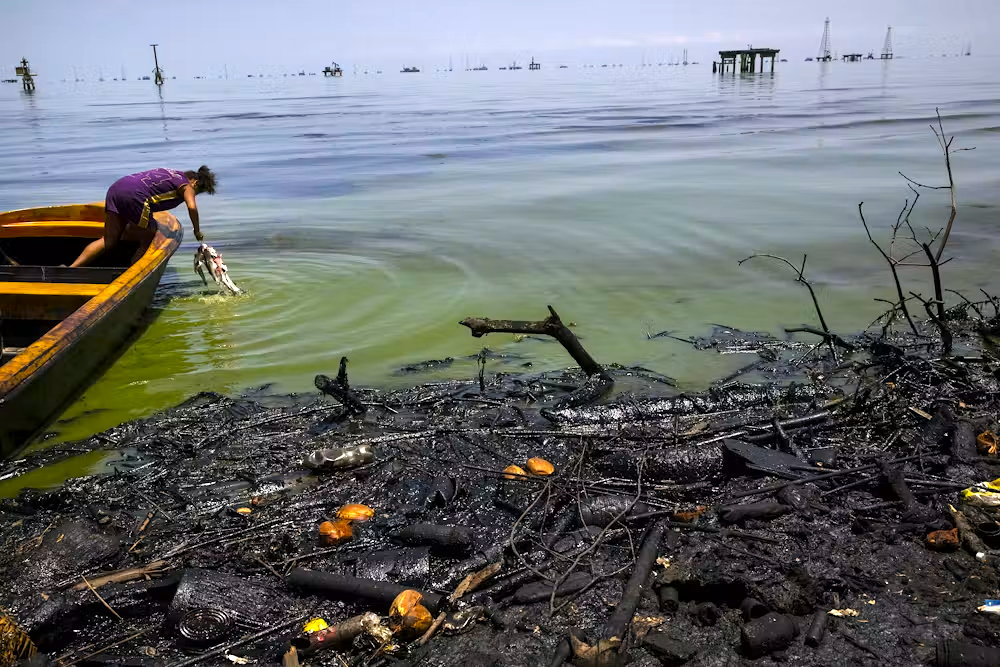
Local NGO Azul Ambientalistas claimed that in recent months there have been visible signs of spills and gas leaks in the Lake Maracaibo area, which increased after the reactivation of activities there earlier this year.
Alejandro Alvarez, director of NGO Clima 21 told Caracas Chronicles about what this overall commitment could entail: “It must take into a medium-to-long term strategic plan of reducing the fiscal dependence of the oil rent through investment in areas not related to the extraction and use of fossil fuels. There are already forecasts that could define alternative economic areas to generate currency without the extraction of petroleum.”
In similar terms, Transparencia Venezuela mentioned the need to adjust any oil investment and development to what’s established in Article 129 of the Constitution, including “environmental and socio-cultural impact studies” and “the obligation to preserve the balance…”
But some went further and openly denounced the US-Nabep deal as the surrender of our national sovereignty and civic rights, as Venezuelan sociologist Emilianio Teran-Mantovani wrote in an article for the Venezuelan Observatory of Political Ecology, an organization that he co-founded.
“The new Oil Agreement is the result of this process of political decomposition that has been unfolding in Venezuela for years; and it is the crowning achievement of the capitulation and dismantling of oil nationalism, which had already begun under Maduro and is now being fully unleashed through U.S. intervention…
“Ultimately, this means that Venezuelans themselves have no place. They hardly matter. Their decisions, expressed, for example, in the July 28, 2024 elections, do not matter. Neither do their social and labor rights. And the environment is even less relevant, an area that has been rendered completely invisible in this conflict.”
“There is no National Policy, National Strategy, nor a National Plan of Adaptation and Mitigation to Climate Change. There’s neither a Climate National Budget nor a National System for an Inventory of Greenhouse Gases…”
Besides these statements, the issue of how this oil deal will affect our surroundings has taken a backseat to other concerns while clouded by a lack of details and overall uncertainty around it, despite the promises of a prosperous recovery made by government officials in Caracas and Washington.
In the meantime, the problem of incidents like oil spills continues to be present to this day, with the most recent one occurring on the coast of Lake Maracaibo near Cabimas, as local NGO Azul Ambientalistas claimed that in recent months there have been visible signs of spills and gas leaks in the lake, which increased after the reactivation of activities in the area earlier this year.
Oil spills have sadly become commonplace over time, but reliable data on the matter is hard to come by, with NGOs like Clima 21 and the Venezuelan Observatory of Political Ecology filling the gap that the State is not providing.
“This possible impact (of the pollution produced by the projects of the oil deals) would add to the systemic chronic environmental crisis of the Venezuelan oil industry, which has a very high accident rate because of the abandonment of safety protocols and protections to the communities and ecosystems in the most affected areas. Our concern is the absence of guarantees in those agreements that these problems will be attended to and solved.”
And then there’s the concern of climate change and its already visible effects around the world. At the moment, the ongoing El Super Niño climate event is exacerbating temperatures, causing historical heatwaves like the recent one in Europe and creating serious worries about food crops and other essential natural resources in many nations, including here in Venezuela.
Evidence of how climate change has directly affected Venezuela can be found in the second academic report on climate change (DRACC), which was formally presented last December by the Venezuelan Academy of Physics, Mathematics and Natural Sciences. In its findings is the acknowledgment that the average temperature in the country has risen 0,22 °C per decade between 1980 and 2015, while global warming is responsible for anomalies in rainfall.
But the most damning conclusion is the complete disregard coming from the Venezuelan State.
“This is an important theme in which the government has made failed or incomplete advances” Alvárez, mentioning two failed projects: wind farms in Paraguaná and solar panels for an indigenous community in Amazonas state, which ended up abandoned.
“There is no National Policy, National Strategy, nor a National Plan of Adaptation and Mitigation to Climate Change. There’s neither a Climate National Budget nor a National System for an Inventory of Greenhouse Gases… …the climate institutional weakness accentuates the vulnerabilities of the national territory to the physical threats of the current climate change…”
“The climate change issue has completely disappeared from the Venezuelan political agenda. We have no information on the position of the government in the next international meetings on the matter,” Alvarez told us. He added that “in any case, we need a commitment of the State to fulfill the obligations of the Paris accords and the COP30 (the most recent UN’s climate change conference held in Brazil in November 2025) that promote an energy transition outside of fossil fuels.”
Given this assessment and the Trump administration’s doubling-down on the exploitation of fossil sources of energy, this oil deal could simply make those physical effects even worse.
Parallel to this is the inclusion of how clean energy sources like solar or wind could not only assist in alleviating the electricity shortage but create new opportunities for our economy. Now, it seems like the only one considered is the hydroelectric power that we largely depend on.
“This is an important theme in which the government has made failed or incomplete advances” Alvárez, mentioning two failed projects: wind farms in Paraguaná and solar panels for an indigenous community in Amazonas state, which ended up abandoned.
Overall, any discussion about the environmental consequences that this controversial oil deal could have for all Venezuelans is not at the forefront. It is not entirely erased from view, however.
The short-term argument also brings a long-term one that our society has been dodging for many years: finding a suitable compromise between the needs of our economic apparatus that require immediate attention and that our hydrocarbon industry can provide, while keeping safe basic things like the air we breathe or the water we use and even trying to preserve the natural wonders that this beautiful country of ours offers.
Gulf foreign ministers plan to meet their Iranian counterpart in a push by Oman and Iran to secure buy-in for a temporary deal to manage shipping through the Strait of Hormuz, the Financial Times reported on Friday. The gathering is scheduled to be held on Monday in the Omani coastal city of Salalah, the report said, citing two people briefed on the matter.
SHE’S in her eighth decade but Chaka Khan has no intention of slowing down.
In fact, the legendary singer, 73, is about to release her 13th studio album, a record she describes as “ageless music”.
Legendary singer Chaka Khan in a photo shoot for her new album ChakzillaCredit: Nick NelsonKhan with Snoop on set for the Boogie’s In My Soul videoCredit: Vincent Nolan
Called Chakzilla, she believes it can connect with “everybody, every age”.
And after 50-plus years of making music, when asked about her proudest achievements, the Grammy-winning star says: “My legacy is that I stayed alive and that I’m still here. That’s a big deal.”
Sign up for the Showbiz newsletter
Thank you!
She is chatting from her home in Georgia where she is resting on her 80-acre farm before she heads back to the UK.
Tomorrow she headlines Radio 2 In The Park in Stirling, a week before the release of her new album, her first in seven years.
“I didn’t plan it, or anything like that,” she says. “It just happened. I was just working — you know, working hard with my band.
“We were doing a lot of gigs, and that’s always fun. Everybody’s happy because they’re getting paid. And in that time, it just so happened that I met Sia.”
Sia is the Australian singer-songwriter behind huge hits such as Titanium and Unstoppable, who Khan met through her sister and manager Tammy McCrary. McCrary is a huge fan of Sia, who became central to the album’s creation.
“I didn’t have to work hard at all,” says Khan. “It was just easy for me and for her. She loves to write poetry and she’s a brilliant lyricist.
Khan and Sia on stage in 2023Credit: GettyChaka Khan is still going strong at 73, with a new album and no plans to slow down after more than five decades in musicCredit: Getty
“I haven’t met anyone like her ever. I’m just happy that she’s my goddaughter now.”
The pair clicked so well creatively, they became family after Sia asked her to be her godmother and Khan agreed.
“I’m just happy that we’re together and that we’re part of each other’s life,” says Khan. “I’m really, really blessed.”
And it was this close relationship that started Chakzilla, with Sia bringing in celebrated producer Greg Kurstin to shape the album’s sound.
Khan says: “Greg did some writing with Sia and when she played these songs to me, it was just the most beautiful thing. I mean, she gets me. She knows me.
“And Tammy and I listened to the album a lot in the car. We keep playing it over and over again. We don’t get tired of it.
“When I am not tired of listening to my own music, that says a great deal because I often get tired quickly. That’s deep. That’s a beautiful thing.
“It’s fun for me to sing. All the songs are so good. My background singers and my band feel the same way. Everybody loves it. We’re feeling really special about this.
Chaka has teamed up with stars including Sia, Snoop Dogg and Lenny Kravitz on her new album ChakzillaCredit: GettyAlexandra Burke stars as Chaka in the hit musical I’m Every Woman — The Chaka Khan MusicalCredit: Getty
“So, I think people are going to feel the same way and they’re going to discover songs they like.
“They’re very sincere songs and very true about me. Heart Of Gold is the sweetest song and Dreamy Stuff is really true about me too. Curious Subject is another good one — because I am. That’s what my family is always saying about me.”
That sense of fun also runs through the album’s title, Chakzilla, inspired by Khan’s lifelong love of monster movies.
“I’ve loved horror and monster films my whole life,” she says. “I’ve been watching Godzilla and Mothra (the giant moth-like creature from the Japanese Godzilla films) since I was a little girl and I never got tired of them.
“I loved the fact there were good monsters and bad ones — the ones that tore things up and the ones that fixed things.
“So, I thought, ‘OK, I could be the Zilla that comes and fixes everything up. A positive monster, because I’m not a curlicue, I’m not a sweetie pie, so it works for me.
“Chakzilla is something I really love.”
The new record is packed with collaborations. The sultry Cool U Down sees Sia guest, while the joyous Boogie’s In My Soul has Snoop Dogg. The funky Bring The Party featuresLenny Kravitz on guitars and vocals.
When not on stage, Chaka is embracing life on her Georgia farm, where she grows her own food and enjoys spending time with her familyCredit: GettyChaka has reunited with stars including Patti LaBelle and Gladys Knight for her Queens tourCredit: Getty
“Sia told me she wanted to write a song called Boogie’s In My Soul and I thought, ‘Oh that sounds horrible’,” Khan says honestly.
“Then I heard what she had in mind and thought, ‘This is brilliant’. She said, ‘All we need is a good rapper’. And I thought, ‘Oh yeah, I know just the guy’.
“I really admire Snoop. He’s so smart and such a great guy, so it was perfect. And the words are brilliant. She says, ‘Show the world your light. Show the world of joy’.
“I thought, ‘Yes, right on, sis’. It’s beautiful. It’s like old school.”
Snoop opens the track with a playful nod to Khan’s 1984 Prince-penned hit I Feel For You, echoing Grandmaster Melle Mel’s famous “Chaka Khan” chant.
Khan says: “Yeah, it sounds great, even though I’m so sick of that song. But it fits. It fits.
“I’m just glad he’s not saying ‘Chaka, Chaka, Chaka, Chaka Khan, Chaka Khan’, like the start of that record.”
Straight-talking with a larger-than-life personality, Khan is refreshingly honest when asked whether it was fun making the video with the rapper.
“No, I worked my ass off. Let me tell you that thing went on until the night.”
Working with old friend Lenny Kravitz on Bring The Party was long overdue, she says, as he is someone who shares much of her outlook on life.
“I’ve known Lenny for many years,” says Khan. “I have friends, but I don’t really have friendships in the way I’d like to because of the life I lead.
“He pulled up some songs from an album he did over 20 years ago. It was some old rock and it was brilliant, and I sang on some of that old stuff with him. I guess he’s going to bring some of it into the future now.
“So, he then played guitar and sang with me on this cut. It was great to bring in some friends that I love and do good work.
“And Lenny lives a lot like I do. If I wanted to go and hang out with him, it would be easy and vice versa. We live in similar ways.
“He’s living on an island (Kravitz, lives part of the year on the Bahamian island of Eleuthera), growing beautiful plants and food, with a great studio in the middle of it all.
“He’s moved, like I am, by being in the real world and loving what God has put here for us.” Around four years ago, Khan left California for Georgia, where her grandma was from and where she lives a very different life.
She says: “I came back to Earth, to the trees and lakes and plants, to real living, with no sirens and craziness around me. It’s brilliant.
“I can look at the sky every morning when I wake up. I look at my lake every day, my animals, and I’m eating right.
“My sister and I are in the middle of opening a plant-based restaurant, and I’m growing my own food. I’ve got greenhouses and I’m learning how to live on the planet and from the planet, rather than having to go to stores and buy crap.”
Georgia has given Khan space, peace and proper time with her family.
“I really am enjoying it,” she tells me. “I’ve never felt so happy to come home off the road before.
“Touring is hard work. It always has been. But now I come home, close the gate and it’s really nice. My family can come and stay for a week or two and we get proper quality time together.
“I just spent a whole month with all my grandchildren and great-grands. They wore me the hell out but I had the best time ever.”
Last year Khan joined soul legends Patti LaBelle, Gladys Knight and Stephanie Mills for the historic Queens tour, which had extra dates in May this year.
“It was an amazing feat that we finished it,” says Khan. “I took it on because I thought, ‘This is a one-time thing — Gladys, Patti, Stephanie and myself. A one-off.
“It was an amazing show. It was tough because we were working like back in the day.
“Stevie Wonder came to the opening night and sang with me, which was lovely.
“We were really cool. Nobody was tripping, there was no drama. It was beautiful. And between the four of us, you could imagine how diverse the audience was. I saw families, I saw men bringing their sons. It was really special.”
Earlier this year, I’m Every Woman — The Chaka Khan Musical opened in London starring Alexandra Burke as Khan.
Did Burke nail the role?
“What could Alexandra do wrong? She’s amazing. She’s really something. I didn’t realise she was already such a big star. She’s no joke.
“I was amazed by her staying power. She and the whole cast had stamina like you’ve never seen.
“Nia Hill, who wrote the book for the show, is an old friend. She knows me inside out. We’ve had very deep conversations, and she’s been there for me through some really hard knocks.
“She would ask me which songs we should use, and I suggested songs that people don’t often get to hear.
“That’s what I’m trying to do now, bring back songs I did years and years ago that I still love.
“I’m going to do a show with that old stuff. Young kids today are so savvy, they know a good song when they hear one.”
Khan’s admiration for younger generations also connects back to her own political awakening.
As a teenager in Chicago, she was involved with the Black Panther Party and says the battles facing young people today feel both familiar and far broader.
She says: “It was crazy then too, but in a different way. With the Panthers, the focus was mostly on fundamental racism. Today, it’s that and so much more that these kids are dealing with. My heart goes out to them because they’re not afraid. They’re fearless, beautiful beings and they get it. They understand what’s right and what’s wrong.
“I’m really happy about young people today. I love that they’re not afraid, because fear will tear it all down.”
With our time up, Khan says how much she is ready to return to the UK this weekend.
“I love Scotland and love the big shows, I can’t wait. I’m going to play the favourites. Absolutely.
“It’s important to keep the music going. I’m still here. Yeah, in every way.
“We lost Prince, and the big stars like Aretha and Whitney.
“There are not a lot of those musicians and artists like that any more. So, I’m enjoying that I’m still making new music and playing shows.
“I’m up for the challenge. Absolutely, that’s how I live. That’s me.
“I love that line, ‘I may be small, but I’ve got this’.
“It doesn’t matter what size you are, it’s what you’ve got.”
Chaka Khan headlines Radio 2 In The Park on Saturday night and the set will be broadcast on BBC iPlayer and Radio 2, and at 10pm on BBC Two. The album Chakzilla is released on September 18.
Chaka’s new album Chakzilla is released on September 18
Acting President Rodríguez has pursued trade opportunities with the Modi government and associated business groups. (Presidential Press)
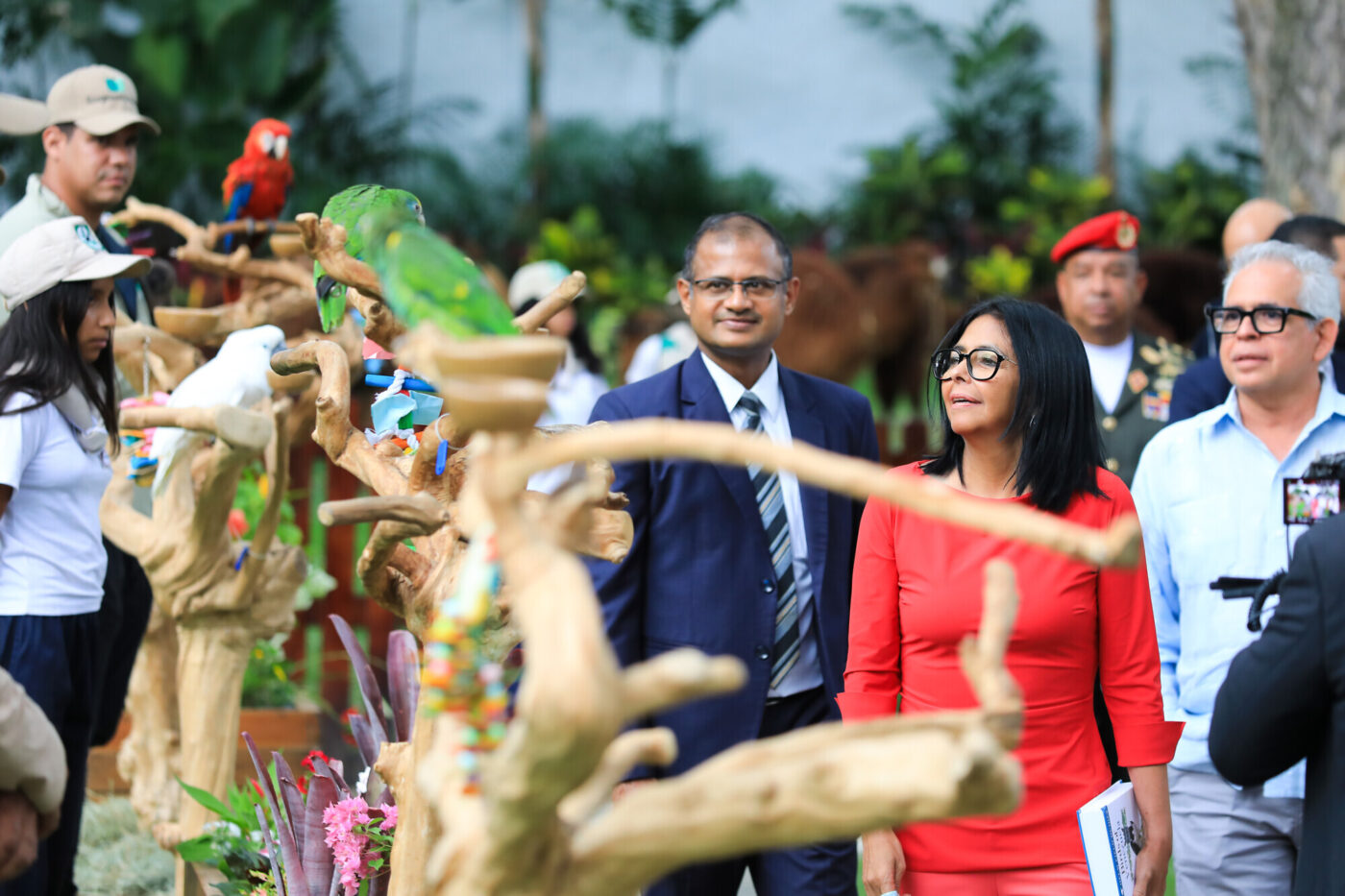
Caracas, September 10, 2026 (venezuelanalysis.com) – Venezuelan Acting President Delcy Rodríguez presided over the signing of a memorandum of understanding between the Ministry of Ecosocialism and India’s Greens Zoological Rescue and Rehabilitation Centre (GZRRC) to “modernize and strengthen” Venezuela’s network of zoos, bioparks, and wildlife conservation centers.
GZRRC is the operating entity of the global conservation initiative Vantara, based in the Indian state of Gujarat.
According to the Venezuelan leader, Greens will provide “technical assistance, training, and technology to raise the standards for the management and protection of Venezuela’s biodiversity.”
“Our professionals will be able to attend courses in India,” she added during the televised event on Saturday, September 5.
Rodríguez noted that Venezuela has 16 zoos and aquariums, 12 breeding centers, and four rescue centers. She also announced that the agreement involves “incorporating an aquarium, a wildlife conservation center, a veterinary center, and a wildlife hospital into the master plan for the recovery of La Guaira State” in the wake of the June 24 double earthquake.
The initiative with Vantara, which has a five-year time frame, also includes exchange programs for veterinarians, biologists, and other professionals involved in wildlife management and conservation.
Days earlier, Venezuela enacted the Law Approving the Framework Agreement for the Establishment of the International Big Cat Alliance (IBCA), which will focus on protecting seven feline species considered among the planet’s most representative. Venezuela is home to six of the world’s most important feline species, accounting for 14 percent of global feline biodiversity.
The legislation stems from a proposal put forward by India in 2023, which currently has the backing of 13 member states and applications for membership from more than 25 others.
During the recent ceremony, Rodríguez thanked Indian Prime Minister Narendra Modi, Ambassador P.K. Ashok Babu, Vantara, and the wealthy Ambani family for “all their support.”
Venezuela’s Acting President held a four-day visit to India in June to offer investment and trade opportunities to major Indian companies, including the Tata Group, Amul, and Reliance. The latter has been a major importer of Venezuelan crude in recent months.
Vantara is backed by Reliance Industries, a major conglomerate owned by the Ambani family, with a major presence in multiple economic sectors, including energy, telecommunications, financial services, and retail. Its wildlife rescue center is located within the Jamnagar refining complex in Gujarat, the largest in the world. The facility, which covers approximately 3,500 acres, is managed by businessman Anant Ambani, the youngest son of India’s richest man, Mukesh Ambani.
Despite Vantara’s declared wildlife conservation mission and philanthropic endeavors, the company has faced controversy in recent years.
Various environmental groups and international organizations have accused it of operating as “a large-scale private zoo,” managing wildlife as commodities around the world, and taking advantage of loopholes in international regulations that seek to ensure that the trade in wild animals and plants does not threaten their survival.
In 2024, India’s Supreme Court appointed a panel of retired judges to investigate the alleged illegal acquisition of animals by Vantara, particularly elephants, as well as possible violations of wildlife regulations and money laundering allegations. The court ultimately dismissed the complaint filed by the Karanartham Viramah Foundation.
However, criticism that Vantara is breeding exotic animals for trade, as well as environmental concerns over setting up a wildlife sanctuary in the vicinity of an oil refinery, have persisted.
Venezuela had dealings with the Indian group before the latest memorandum of understanding. A joint investigation by Süddeutsche Zeitung and Venezuelan outlet Armando.info claimed that at least 39,000 wild animals from all over the world had been transferred to Vantara’s facilities by the end of 2024.
The identified transfers included over 5,000 animals from Venezuela, among them members of protected species such as the Orinoco crocodile, harpy eagle, lowland tapir, giant anteater, jaguars, and spider monkeys.
Tanzanian striker Clara Luvanga has joined the Washington Spirit from Saudi Arabian club Al-Nassr in a deal believed to be one of the most costly in the history of women’s football.
The fee paid by the National Women’s Soccer League side has not been officially disclosed.
Some are reporting it to be $2.3m, external (about £1.7m), which would make Luvanga the most expensive female footballer in history.
BBC Sport has not been able to verify this figure, although a well-placed source said they believed it ranked in the top five most expensive signings in the women’s game.
The Spirit declined to comment on the fee involved when contacted by BBC Sport.
Luvanga, 21, has signed a contract running to the end of the 2029 NWSL season.
If the reported record figure is correct, it would mean the fee passes the £1.4m that London City Lionesses are said to have paid to Paris St-Germain for Grace Geyoro last year.
However, the Geyoro fee has been disputed, further illustrating how transfer figures in the women’s game are often kept private.
With her move, Luvanga becomes the first Tanzanian player in NWSL history.
Luvanga won the Saudi Women’s Premier League in all three of her seasons with Al-Nassr, as well as the Saudi Women’s Cup, Saudi Women’s Super Cup and West Asian Football Federation (WAFF) Women’s Clubs Championship.
She also claimed the league’s golden boot last season after scoring 24 goals in 14 appearances.
The Washington Spirit are owned by Michele Kang, who also owns London City Lionesses.
London City made a series of high-profile signings during the summer transfer window, including two-time Ballon d’Or winner Alexia Putellas who arrived from Barcelona on a three-year deal.
Luvanga made her senior international debut for Tanzania in 2024. Before joining Al-Nassr in 2023, she played for DUX Logrono in Spain, having developed through the youth system at Tanzanian club Yanga Princess.
When discussing her new club, Luvanga said: “I am very excited to join the Washington Spirit and to take on this new challenge in the NWSL.
“I know I am arriving with the season already under way, but I’m really excited to play in a new league and a new country.”
Spirit sporting director James Hocken said: “Clara adds an exciting new dimension to our attack as we head toward the play-offs.
“Despite her young age, she has demonstrated the ability to score goals in different ways and has the profile to be very successful in this league.”
Fox Corp.’s $22-billion acquisition of San José-based Roku, operator of streaming services and seller of hardware devices, seemed like a straightforward deal when it was announced in June: A growing media company was looking to bolster its presence in the fast-growing streaming industry.
But, on Wednesday, the Trump administration weighed in.
Fox Corp. and Roku said that the companies received requests from the Justice Department on Tuesday for additional information in connection with its review of the merger.
While Fox and Roku downplayed the requests, saying that they had expected the outreach, the timing of the move raised eyebrows among some analysts, who said it could signal further scrutiny of the transaction by the Justice Department.
“The president has been outspoken on the fact that he will take retaliatory action against networks that say things that he doesn’t agree with, or they do things that he doesn’t agree with,” said Rob Enderle, principal analyst at advisory services firm Enderle Group.
The action follows President Trump’s surprise over Fox’s ouster of anchor Maria Bartiromo. She was pushed out after she had shared internal company texts with the White House, which sources told The Times may have been the breaking point.
Trump said on social media that he couldn’t believe that Bartiromo will no longer have her shows on Fox. “Her fans, of which there are many, will not be happy,” he wrote on Truth Social on Sept. 3.
Associate Atty. Gen. Stanley Woodward said the Justice Department could not comment on pending matters but said in a statement: “We can affirm that this DOJ under President Trump’s leadership will continue to prioritize affordability for all Americans across our economy.”
Fox announced in June its plans to acquire Roku for $22 billion, which would give the company access to Roku’s 100 million households that use its platform to connect to different streaming services. The deal would benefit Fox’s advertising business, as well as make it less reliant on traditional pay TV platforms.
Fox and Roku said they expect the merger to be done by the first half of 2027, subject to regulatory and shareholder approval, according to a Sept 9 filings with the U.S. Securities and Exchange Commission.
“FOX and Roku will continue to work cooperatively with the DOJ in its review of the Mergers,” Fox said in its filing.
Some legal experts said it is fairly standard for the Justice Department to make an additional request for information.
“It doesn’t mean that their review is going to be more extensive than usual,” said Ray Seilie, an entertainment attorney at law firm Kinsella Holley Iser Kump Steinsapir.
For example, the Justice Department made a second request for information when it reviewed Paramount Skydance’s deal to buy Warner Bros. Discovery, he said. The merging companies typically send information that helps the government figure out what the market impact will be of a merger, he added.
The Justice Department ultimately approved Paramount’s planned acquisition, despite opposition from some industry stakeholders. State attorneys general and the Writers Guild of America have sued Paramount over the deal, raising antitrust concerns. Others have pointed out close ties between Trump and Larry Ellison, a financial backer of the deal, who has also donated money to a group that supports Trump. Ellison’s son, David, is chief executive of Paramount Skydance.
Legal experts and analysts said they don’t think the combination of Fox and Roku raises antitrust issues because they are not dominant players in streaming and have businesses that complement each other.
But one wild card is Trump.
“You never know what Trump is going to seize on and decide he wants to do,” said Bryan Sullivan, a partner with law firm Early Sullivan Wright Gizer & McRae on whether Trump will take retaliatory action through the Justice Department in the Fox-Roku deal. “It’s chaos in the federal government and it could very well happen because of that reason, but it could also just be a blip and not a big deal.”
Times staff writer Stephen Battaglio contributed to this report.
Rodríguez and Obregón have praised the oil agreement with Trump and NABEP. (PDVSA)
Caracas, September 9, 2026 (venezuelanalysis.com) – The president of Venezuelan state oil company PDVSA, Héctor Obregón, backed the recent agreement with the Trump administration as a “win-win relationship” on Monday.
“We signed Productive Participation Contracts where we put forward crude reserves and qualified personnel. What were we missing? Foreign capital,” he said in an interview with Unión Radio.
Productive Participation Contracts (CPP) are concession-type agreements whereby energy projects are turned over to private corporations which run operations and commercialization while paying a negotiated portion of proceeds to the Venezuelan state.
The recent oil deal, hailed by Trump as “the biggest in history,” will see Venezuela transfer 17 prime oilfields, containing 65 billion in proven crude reserves, to private operator NABEP. The projects are split between extra-heavy crude fields in the Orinoco Oil Belt and mature light- and medium-crude ones in the Lake Maracaibo basin.
Obregón insisted on the mutual benefits, explaining that Venezuela will collect taxes and royalties while the US will be able to supply its domestic demand. Regarding the agreement’s timeline, which the White House has claimed to span 100 years, Obregón stated that the concession is for 25 years but may be renewed for similar periods “as many times as necessary.”
After initially vowing that NABEP would invest US $100 billion in the oilfields, a figure repeated by Venezuelan officials, the Trump administration changed the pledge to “more than $10 billion.”
According to a White House “fact sheet” on the deal, the US State Department will be able to secure 20 percent of the NABEP’s output at cost and have a right of first refusal over the remaining 80 percent.
Obregón suggested that Washington could secure additional benefits, indicating that a reference $65 barrel would have a $15 “sales discount.” The oil official likewise estimated capital and operational expenditures at $12-15 and stated that NABEP would never secure a smaller portion of proceeds than the Venezuelan state, with the percentage increasing for greenfield projects.
The $19 revenue estimate offered by Venezuelan officials as the government’s take for a reference $65 barrel is significantly lower than the benchmarks established under the 2001 Hydrocarbon Law approved by former President Hugo Chávez and subsequent reforms. Under the previous framework, only PDVSA or PDVSA-majority joint ventures were allowed to operate oilfields, with the Venezuelan state securing as much as $0.80 for every $1 of oil proceeds in the latter case.
NABEP, owned by Venezuelan oil mogul Alejandro Betancourt, will grant a 35 percent stake at no cost to the Pentagon’s Office of Strategic Capital (OSC). Washington will likewise have veto power over NABEP’s board of directors. Betancourt has faced corruption accusations in Venezuela, with authorities issuing an arrest warrant in 2022 that was later dropped. For its part, the Trump administration has sought to halt money laundering investigations against the Venezuelan businessman both in the US and in Switzerland.
Obregón went on to acknowledge that Venezuelan export revenues are currently deposited in a US Treasury account before US officials decide on the disbursement amounts and timings back to Caracas.
“There is a state-to-state agreement to receive Venezuelan funds in Treasury accounts,” he disclosed, echoing Washington’s assertion that its seizure of Venezuelan export proceeds aims to protect them from potential creditor claims.
“The channeling of revenues through the US Treasury could be considered a protection measure, since there are debt claims against PDVSA and creditors could target our accounts,” he argued.
Neither US nor Venezuelan authorities have disclosed the amount of revenue collected and disbursed back to Caracas. Luigi Pisella, an advisor to Acting President Delcy Rodríguez, claimed that the Trump administration is deducting the costs of its January 3 military operation against Venezuela from the country’s funds.
The costs of goods and services supplied by US-based exporters to Venezuela are also being directly deducted from the funds held in the Treasury accounts.
Apart from controlling export earnings, US officials have publicly participated in a pro-business overhaul of the Caribbean nation’s hydrocarbon law and regulations, including reviewing drafts of the legislation.
The Trump administration has maintained sanctions on the Venezuelan oil industry while issuing licenses for select Western corporations. US Energy Secretary Chris Wright oversaw the signing of agreements with Chevron, Eni, and smaller US-backed energy firms during a visit to Caracas earlier this month.
WASHINGTON — President Trump has locked in a deal to develop Venezuela’s vast oil resources, an arrangement the White House says will bring a country battered by years of economic collapse to a “place where elections are possible.”
But the agreement — backed by acting President Delcy Rodríguez, a holdover from the Nicolás Maduro government that Washington deems “illegitimate” — is raising new uncertainty about how entrenched the unelected government may become.
In January, when the U.S. military captured Maduro, Trump did not say how long a democratic transition would take but said Rodríguez was “gracious” and “essentially willing to do what we think is necessary.”
Asked by The Times on Wednesday what was stopping him from demanding Venezuela set a firm election date, Trump was blunt: “I just don’t think they are ready yet.”
“It’s very new. We took them out of a dictatorship and we’re getting along great with the government,” Trump said. But he said an election would happen “soon.”
U.S. Secretary of Energy Chris Wright walks alongside Venezuela’s interim president, Delcy Rodríguez, after a news conference on the deal to develop 17 oil fields in the country.
(Jesus Vargas / Getty Images)
Under the deal, the U.S. government is partnering with an oil producer to create a new company, North American Blue Energy Partners, to develop 17 fields with a proven potential of 65 billion barrels. NABEP will have rights to the fields for 100 years.
For many Venezuelans, the lack of urgency around elections — set against a deal that gives the United States majority control over roughly a third of the country’s oil reserves — is starting to feel like a broken promise.
“They tell us we have to wait two years, maybe more, while in the meantime they do business with a government that wasn’t elected, that was imposed on us, and that we don’t want,” Carlos Pérez, a 23-year-old automotive mechanics student, told The Times.
Antonio Marchetti, a 45-year-old plumber and electrician, said that while he sees the removal of Maduro as a “good thing,” the oil deal makes it seem as though Trump’s plans were those of a “cowboy, the invader John Wayne,” all along.
“We were expecting elections,” Marchetti said. “This pact with Trump entrenched the dictatorship that he himself declared war on. But to get rid of Maduro, he left the rest and did business with them. It disgusts me.”
A man holds a sign that reads in Spanish, “Yankee out, murderers” during a protest in Caracas on Aug. 29 against President Trump’s deal giving the United States a stake in Venezuela’s oil reserves.
(Pedro Mattey / Associated Press)
The frustrations go beyond Venezuela. In Washington, Republican lawmakers have praised the oil deal, while calling Rodríguez an “interim dictator” who cannot be trusted.
María Corina Machado, the exiled leader of the Venezuelan opposition and a recipient of the Nobel Peace Prize, on Thursday raised her own worries about what the oil deal means for the future of Venezuela.
In a video message, Machado stopped short of criticizing Trump’s oil deal, but acknowledged concerns about a pact negotiated with an “illegitimate” government.
“Venezuelans know that there can be no development without strong institutions and a government elected by popular vote,” she said. “That is the only real guarantee of success and stability for any large-scale investment.”
A plan in the works
Trump administration officials have characterized the deal as an economic lifeline that will eventually stabilize a country and prepare it for free and fair elections.
Secretary of State Marco Rubio said last week that the United States is facilitating talks between Venezuela’s interim government and Dinorah Figuera, an opposition figure leading Venezuela’s 2015 National Assembly, the last democratically elected legislature recognized by the United States.
Machado has been left out of those talks. They are expected to resume in mid-September.
Rubio says that for any election to be “credible,” the voting system will require an overhaul and political parties will need time to organize. Steps also must be taken to ensure the country has a free press.
Echoing Rubio’s comments, the White House said Friday that Trump wants elections held at the “right time,” but that his top priority is to bring Venezuela “back from the dead and rebuild the country after it was incompetently ruled by a nasty dictatorship.”
U.S. Energy Secretary Chris Wright meets with Venezuelan acting President Delcy Rodríguez at Miraflores presidential palace in Caracas on Sept. 2.
(Pedro Mattey / Ap Photo/pedro Mattey)
On Wednesday, while Energy Secretary Chris Wright visited Caracas, Rodríguez declined to set a firm date for an election, but added, “I have worked tirelessly to ensure that Venezuela is ready and prepared when the time comes for its electoral process, which will take place — have no doubt about that: There will be an electoral process.”
The open-ended approach to holding an election, however, has drawn criticism from former Trump administration officials, who argue the lack of a timeline essentially lets Rodríguez govern indefinitely.
“Here’s my fear: It makes us Delcy’s partner, and gives the president a reason to want her to remain in power,” Elliott Abrams, who served as U.S. special envoy to Venezuela during Trump’s first term, told The Times.
He contended that the White House so far appears to prefer a pliant interlocutor, and Rodríguez, he says, will do “whatever Trump tells her to do.”
If an election is to take place in Venezuela, a nine-month runway for preparation is likely to be expected, Abrams said.
People shop for produce at a market in Maracaibo, the heart of Venezuela’s oil industry. .
(Ariana Cubillos / Associated Press)
In Washington, some Republican lawmakers have continued to call for elections in Venezuela, arguing that Rodríguez cannot be trusted.
“The only way we will have a prosperous Venezuela is with the end of the murderous regime and the return of democracy,” Rep. Carlos A. Gimenez (R-Fla.) wrote on social media. He also called Rodríguez an “interim dictator.”
In an interview with NBC News’ “Meet the Press,” Sen. Ted Cruz (R-Texas) said he does not necessarily think elections should happen before the oil agreement is finalized, but he said they “need to proceed rapidly.”
“I believe they should proceed no later than midway through next year,” he said.
Sen. Rick Scott (R-Fla.) said he is working with Trump and Rubio to ensure “free, fair and transparent elections as soon as possible.” He did not, however, say what would constitute “soon.”
Mixed views on economic hope
In the Lake Maracaibo region, an area that would see renewed investments under the oil agreement, Junior Araujo — a 47-year-old oil worker — sees a “wonderful opportunity to be reborn.”
Araujo, the father of three, is in desperate need of a better economic outlook. He works 120 hours a week and earns only $20. For his family, food alone usually costs about $150 a week.
“We have to get creative and find new ways to make ends meet through side jobs like selling clothes and making yogurt,” he said. “That’s our real financial situation.”
Venezuelans watch oil tankers anchored in Lake Maracaibo on Sept. 4. Much of the country’s oil industry is centered in the Maracaibo region.
(Humberto Matheus/Sipa USA via Associated Press)
For Araujo, the hope for a better economy does not take away his frustrations with the government.
“We’re neither happy nor dancing here, all our benefits have been taken away from us,” he said. “Our main problem is the current government; we need to restore our institutions.”
Nazareth Lezama, a 35-year-old teacher, also sees the oil deal as an economic opportunity but remains concerned that the current government may not have negotiated the best price or conditions for Venezuela. She added this has happened in the past.
“We must be clear that this regime destroyed the oil industry,” she said, adding that Venezuelans “need elections to choose leaders based on merit.”
Marchetti, the plumber from Caracas, says the oil deal is a “100-year chain” on Venezuelans imposed by Trump. He said it has become the “last straw” for him, and he has decided to leave Venezuela and emigrate to Europe.
“With all the pain in my heart, I will leave everything behind. I have a European passport; it won’t be easy to start a life from scratch, but there is no hope left here,” he said.
He does not know where he will land yet. But he knows he needs to leave Venezuela.
“This ship is sinking,” he said.
Times staff writer Ceballos reported from Washington. Special correspondent Mogollón reported from Caracas.
REBEKAH Vardy is to swap the dolce vita of Italy for Burnley FC after hubby Jamie joined the Clarets yesterday.
The Wag, 44, will have to pack up her glam dresses to make the move from their £2million villa in Salò, Lake Garda, where former England striker Jamie played for Cremonese last season.
Rebekah Vardy is swapping the dolce vita of Italy for Burnley FCCredit: InstagramThe Vardys will be leaving their £2million villa in Salò, Lake Garda, picturedCredit: Alamy
It means he is likely to relocate to the Lancashire town — 137 miles north of the family home in Grantham, Lincs.
Sign up for the Showbiz newsletter
Thank you!
It is hoped he will revive the Clarets after a bad start to the season.
Jamie, 39, said: “This club has a proper footballing history and passionate fans who deserve a team that represents them and their town. I can’t wait to get going on the pitch and help the team move in the right direction.”
Jamie has signed for Burnley FCCredit: AlamyBecky is a regular at his games and previously spoke about getting more nervous than hubby Jamie does during matchesCredit: Instagram
Rather than move full-time to Burnley, it is expected Becky will remain at their Grantham home near to where their children, Sofia and Ella, go to school.
She faces a two-and-a-half-hour drive to Turf Moor to see Jamie in action.
Becky is a regular at his games and previously spoke about getting more nervous than he does during matches.
She said: “Jamie is so laid back about football, he doesn’t get nervous.
Vardy on pitch for CremoneseCredit: Getty
“The only time I get nervous is when he has to take a penalty.
“It’s anxiety-inducing and I’m always so relieved when he hits the back of the net.”
Becky faced a public backlash after losing her 2022 “Wagatha Christie” High Court libel case with Coleen Rooney, over leaked Instagram stories.
Germany, Austria, Greece, Denmark and the Netherlands did not outline where the centres would be located.
Published On 4 Sep 20264 Sep 2026
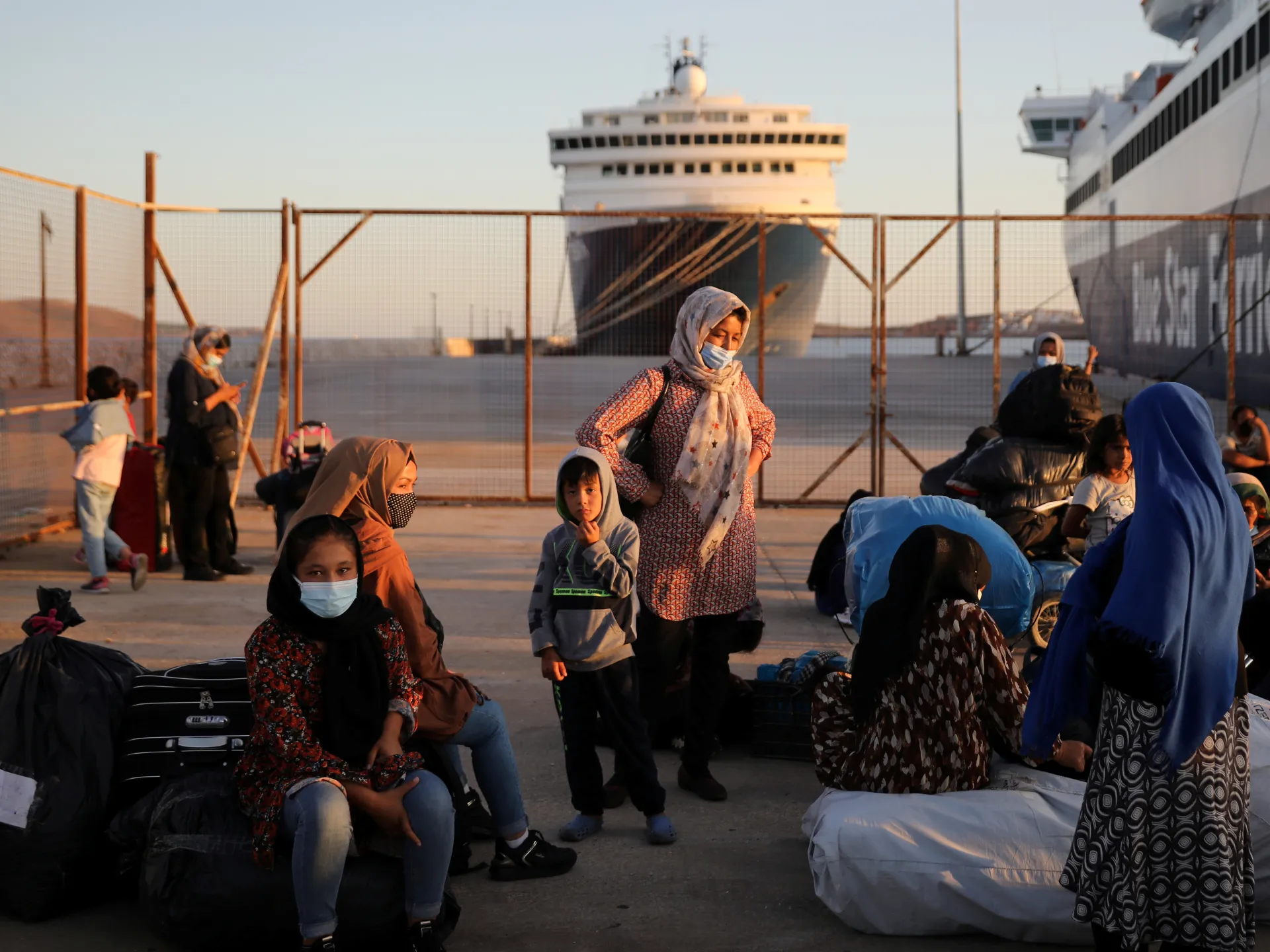
Five European nations have agreed on concrete steps towards a deal with an unspecified non-European Union country to host migrant return facilities, senior officials said, in a sign of mounting determination to counter immigration.
Germany, Austria, Greece, Denmark and the Netherlands, known as the Group of Five, aim to sign deals this year to send migrants without legal residency to countries outside the European Union. The nations expected to host return centres have not been named.
Recommended Stories
list of 3 itemsend of list
“Around New Year, we expect to have a common understanding with a partner country outside of the European Union,” Danish Immigration and Integration Minister Morten Bodskov told reporters on Friday at a news conference in Copenhagen, without elaborating.
“It’s a new chance to have a life in a partner country,” he said, adding that the five nations would be in dialogue with the International Organization for Migration and the United Nations Refugee Agency (UNHCR) on their next steps.
A spokesperson for UNHCR said the agency had not been approached with details of the proposal and therefore could not comment.
The Group of Five is set to reconvene in Munich, Germany, at the end of September to advance the plan.
German Interior Minister Alexander Dobrindt confirmed that the group wants “to reach an agreement with third countries this year that will enable the establishment of return hubs”.
The European Parliament in June approved an overhaul of migration policy aimed at speeding up deportations and allowing member states to set up centres abroad, in what some critics of the policy say could weaken safeguards for asylum seekers.
The Council of Europe, a non-EU body that promotes human rights, democracy and the rule of law, said in July that the proposed return hubs posed “considerable human rights risks”.
Danish Refugee Council Secretary-General Charlotte Slente said a better policy would be to implement the EU Pact on Migration and Asylum, which focuses on stricter border screening, faster return procedures and expanded digital systems for managing asylum claims.
“Return hubs focus on a small number of returns; they will not stop people from taking even more dangerous routes, and they could violate basic human rights,” she said.