New U.S. sanctions target Iran’s tech, gold, and shipping sectors, pressing global intermediaries.
The U.S. Department of the Treasury invoked the memory of approximately 160,000 Allied soldiers storming a 50-mile stretch of Normandy’s coast when it published its latest round of secondary sanctions against Iran on Aug. 24. However, rather than capturing Gold, Juno, Omaha, Sword, and Utah beaches, the sanctions seek to hobble Iran’s digital assets, technology, gold, aviation, and shipping sectors.
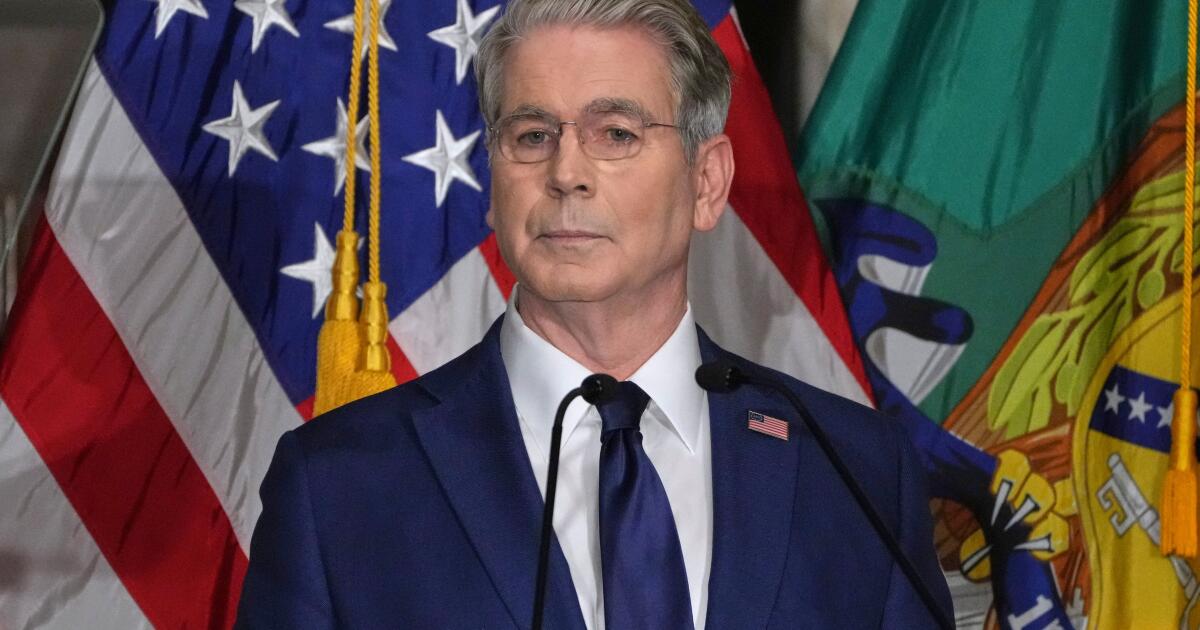
“In the Second World War, D-Day marked the historic beginning of a campaign with our allies to target and drive the enemy from its positions, including those in third countries,” U.S. Treasury Secretary Scott Bessent posted on the social media platform X, formerly Twitter. “Today, in that same spirit, we are launching an economic onslaught against Iran’s financial connections around the globe. Our objective is to sever every economic lifeline that sustains this tyrannical regime until Tehran stands alone.”
The Treasury, Department of State, and the rebranded Department of War personnel have worked with their counterparts to convey expectations for immediate action on the sanctions.
“Every country will be given a defined timeline to shut down the Iran-related activity we have identified,” the Treasury said in a prepared statement. “If they fail to act, the Treasury will act. Any entity that facilitates money laundering or sanctions evasion on behalf of Iran risks being cut off from the U.S. financial system.”
The new sanctions may deter international companies from doing business in Iran, but their immediate effect may be over-compliance due to the Treasury’s new designations, Kari Heerman, Brookings senior fellow and Director of Trade and Economic Statecraft, told Global Finance.
The harder question is how much additional pressure the latest sanctions have on Iran’s economy.
“Years of sanctions have pushed Iran’s remaining trade toward firms and financial channels more willing or able to tolerate U.S. sanctions,” she added. “That makes evasion more expensive for Iran, but it also makes each successive round of enforcement more difficult for the United States.”
Sanction Penalties
Besides blocking transactions involving property and property interests owned directly or indirectly by designated individuals located in the U.S. or in the possession or control of a U.S. person, they prohibit financial institutions from making any contribution, provision, or receipt of funds, goods, or services by, to, or for the benefit of any designated individual no matter their location.
At the time of the announcement, the Treasury had already sanctioned more than 60 entities, individuals, and vessels located in China, Europe, Hong Kong, Singapore, Switzerland, the United Arab Emirates, and other regions that have worked with Iran’s Ministry of Defense and Armed Forces Logistics and its Ministry of Intelligence and Security.
As the newly minted sanctions target entities further up Iran’s supply chains, they stop short of reaching major Chinese financial institutions that have been Iran’s lifelines.
“Targeting a major Chinese bank could have a much larger deterrent effect than sanctioning smaller intermediaries, but it could also provoke Chinese retaliation and affect other U.S. objectives, including the economic issues Washington, D.C., hopes to address at next month’s Trump-Xi summit,” said Heerman. “Bessent’s comment that he does not want to ‘blow up the global financial system’ acknowledges the most powerful sanctions tools can also be the most costly to use.”
Weekly insights and analysis on the latest developments in military technology, strategy, and foreign policy.
There is a report of a new ship attack in the Strait of Hormuz, highlighting the difficulty of ending hostilities with Iran. The strike came hours after the Trump administration on Monday unleashed the threat of harsh new sanctions to further isolate the Islamic Republic. Though details were sparse, and no deadlines were issued, the goal was to compel the Iranians to return to negotiations by inducing additional economic pain instead of through bombardment. Originally touting the announcement as an “economic D-Day” against Iran, Treasury Secretary Scott Bessent’s lack of firm timelines presented Monday doesn’t seem to match that initial rhetoric.
Monday evening, the United Kingdom Maritime Trade Operations center (UKMTO) said it “received a report of an incident 9NM northeast of Ash Shishah, Oman.”
“The Master of an oil tanker reports the vessel has been struck by an unknown projectile causing damage to the engine room and disabling the vessel,” UKMTO reported on X. “Crew are reported safe. Environmental impact is unknown at time of report. Vessels are advised to transit with caution and report any suspicious activity to UKMTO. Authorities are investigating.”
UKMTO didn’t assign blame, but it’s obviously extremely likely the attack was carried out by Iran.
Hours before Bessent’s sanctions announcement, the Houthi rebels of Yemen also attacked another Saudi ship in the northern Red Sea. These strikes are a stark reminder that the war launched on Iran by the U.S. and Israel on Feb. 28 is still sending kinetic shockwaves around the region and roiling the global economy.
At a press conference in Washington, Bessent formally announced the broad outlines of a new list of measures to cut Iran off from global trade. The move comes as the Iranian economy, which was reeling even before the war broke out, continues to suffer after months of war and an ongoing U.S. naval blockade of its ports.
“We are level-setting with every country to tell them our expectations. We know who they are. They know who they are,” Bessent told reporters. “So when the hammer of U.S. Treasury actions falls upon them, they will have no one to blame but themselves.”
Dubbed “Operation Economic Outcast,” the plan calls for every country to “be given a defined timeline to shut down its Iran-related business activity,” Axios noted. “If it fails to do so, the U.S. will impose secondary sanctions.”
As part of this effort, the Treasury Department “issued determinations against five critical sectors––digital assets, technology, gold, aviation, and shipping––that the Iranian regime uses to try to prop up its failing economy,” it explained. In addition, the Office of Foreign Assets Control (OFAC) “sanctioned nearly 60 entities, individuals, and vessels in multiple jurisdictions that enable the Iranian regime’s recklessness, including illicit nuclear and missile technology procurement, cyber operations, and oil‑revenue generation networks.”
OFAC also “suspended several general licenses that previously authorized certain remittance payments to Iran and Iranian access to the U.S. cultural and academic system,” Treasury noted. “OFAC issued additional guidance on the sanctions risks of bowing to Iranian demands related to shipping in the Strait of Hormuz.”
Asked by a reporter what actions the U.S. might take against China, Bessent hinted that Beijing is not exempt. China has been a major importer of Iranian oil and its banks have helped support Tehran’s economy.
“We want to make clear here today that no one is above the reach of U.S. sanctions,” Bessent responded. “That if they facilitate transactions and are part of the ecosystem that turns Iranian oil into money, into repression, they will be targeted.”
BIG: Bessent on China and Iran:
We want to make clear here today that no one is above the reach of U.S. sanctions.
That if they facilitate transactions and are part of the ecosystem that turns Iranian oil into money, into repression, they will be targeted. pic.twitter.com/hVuFLlgaZa
Bessent did not offer any further specifics. He was equally vague about any timelines for this effort.
“We are giving everyone the opportunity to remedy bad behavior,” Bessent told reporters. “Why would I want to blow up the global financial system?”
For their part, the Iranians dismissed Bessent’s plan and promised their own harsh response to the new sanctions.
“Americans know that no one buys their bombast; the United States is not in an economic position to further restrict its relations with other countries,” Mohammad Bagher Ghalibaf, speaker of the Iranian parliament, stated on X. “Iran’s trading partners, both in the media and through messages sent to us, have made it clear that they don’t take these statements into account anywhere.”
آمریکاییها میدانند که کسی گُندهلافیهای آنها را باور نمیکند؛ آمریکا از لحاظ اقتصادی در شرایطی نیست که بخواهد روابط خود با دیگر کشورها را محدودتر از این کند. شرکای تجاری ایران، هم در رسانهها و هم با ارسال پیام به ما اعلام کردهاند که این اظهارات را به هیچ جا حساب نمیکنند.
— محمدباقر قالیباف | MB Ghalibaf (@mb_ghalibaf) August 24, 2026
Baghaei did not offer specifics, but Iran still possesses missiles and drones that it can use to strike U.S. and allied interests in the region. In addition, Tehran still maintains a large degree of control over shipping in the Strait of Hormuz. Even the threat of additional attacks could affect the flow of oil through the strategic chokepoint.
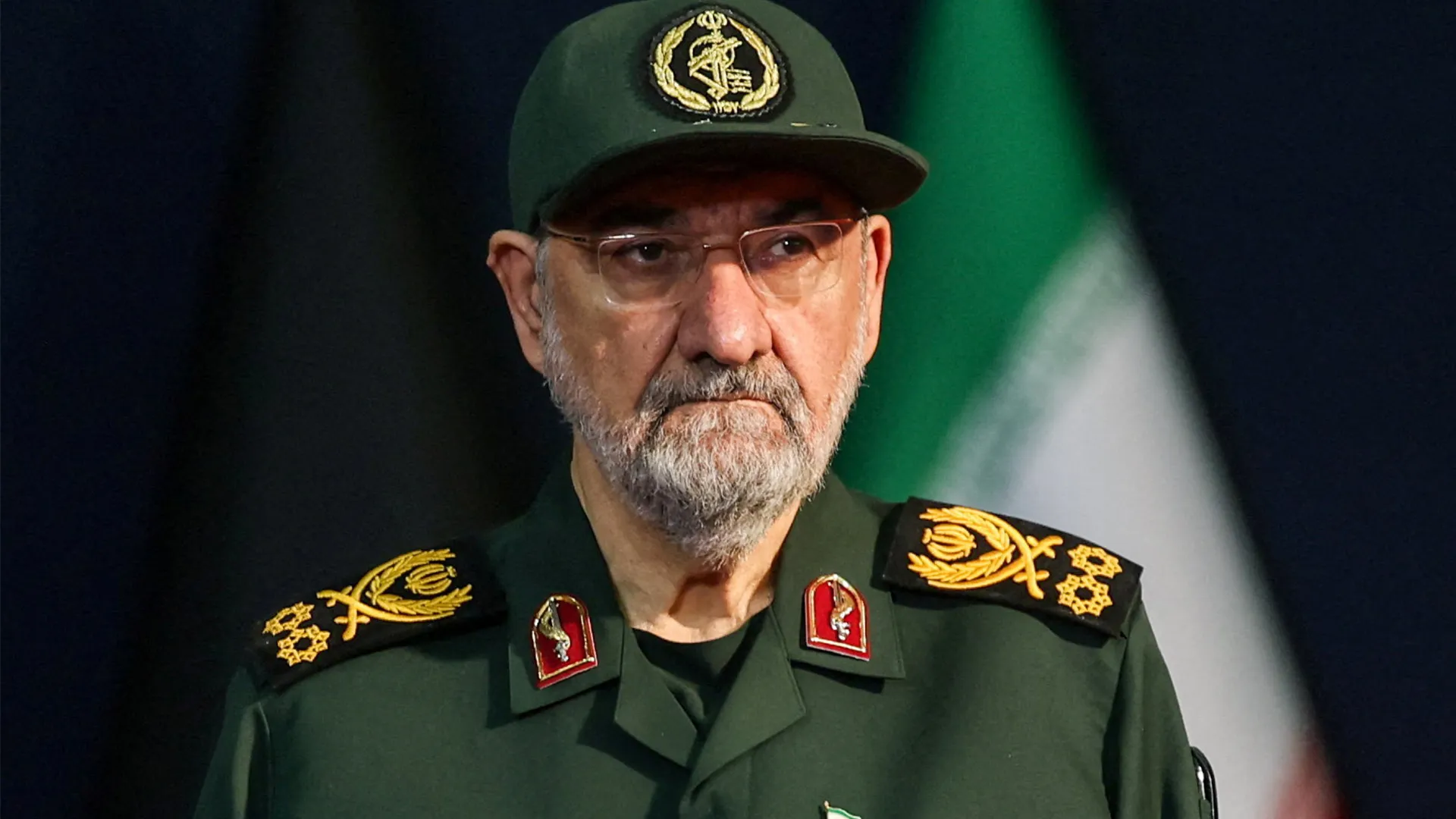
In addition, on Saturday, Mohsen Rezaei, the head of Iran’s national security council, threatened to attack U.S. businesses, The Telegraph reported. He also warned allies of the U.S. that they would be considered enemies, and their interests harmed if they joined Trump’s economic warfare. Cyberattacks on U.S. water systems that officials suspect may be linked to Iran-backed hackers have been reported in at least a dozen states, CBS News reported earlier this month. Iranian-linked hackers are also suspected of forcing a small British power generator offline for four days last month. Aside from that, there are still many U.S. business interests in the Middle East, and especially energy firms, with major facilities right across the Persian Gulf.
While the U.S. and Iran trade threats, the Houthis carried out a fresh strike on Saudi shipping as we noted earlier in this piece.
The Iranian-backed group claimed it hit the oil tanker Amzan off the coast of Yanbu. That’s the kingdom’s key port on the northern Red Sea, about 600 miles north of Houthi territory.
🔺Ansarallah says it struck the Saudi oil tanker Amzan with a ballistic missile off Yanbu in the northern Red Sea, declaring the attack part of its maritime blockade on Saudi Arabia and its “blockade for blockade” campaign.
Both the UKMTO and the Ambrey maritime security company confirmed the attack, which took place about 64 nm west of Yanbu, Ambrey noted.
After the vessel was hit, “the Egyptian Navy was reported to have responded and was transiting to the area of interest to conduct a rescue operation,” Ambrey stated. “At the time of the attack, the vessel was not transmitting its AIS signal. Its previous AIS transmission was recorded at 02:33 UTC on 8 August.”
The ship attack was the latest Houthi strike against the Saudis. The Yemen-based group had already struck Saudi ships in the southern part of that body of water and refineries along the northern portion after imposing a blockade on the Bab al-Mandeb Strait (BAM), leading several oil tankers in the Red Sea to avoid that route in favor of the Suez Canal. The expansion of the Houthi campaign against Saudi shipping began earlier this month with an attack off the port of Yanbu on the NCC Wafa, a Saudi oil tanker.
Bab al-Mandeb Strait. (Google Earth)
Though both the Strait of Hormuz and the BAM remain under pressure, ship traffic ticked upwards in both chokepoints last week, according to the Kpler global trade intelligence firm. Those numbers alone, however, don’t paint the full picture, Kpler cautioned.
“Traffic edged higher through the Strait of Hormuz and Bab el-Mandeb last week, but headline volumes obscure contrasting risk signals,” Kpler cautioned on X. “Hormuz crossings rose 2.5% to 121, while laden transits fell 27% and sanctioned crossings increased from 9 to 16. Use of Iran’s unilateral routing scheme also climbed to 46.3% of crossings.”
“Bab el-Mandeb traffic rose 3.1% to 269 crossings,” the firm added. “Dark transits declined, but sanctioned and shadow fleet crossings remained broadly flat at 74 combined. The data suggest commercial substance is weakening at Hormuz even as overall traffic holds up, while Bab el-Mandeb remains resilient despite an active threat environment.”
Hormuz traffic masks rising risk
Traffic edged higher through the Strait of Hormuz and Bab el-Mandeb last week, but headline volumes obscure contrasting risk signals. Hormuz crossings rose 2.5% to 121, while laden transits fell 27% and sanctioned crossings increased from 9 to… pic.twitter.com/iHKsCigEJL
While the U.S. is threatening further moves to hurt the Iranian economy, doing so has inherent risks. For decades, Iran has weathered sanctions and isolation and yet the regime has persevered. It withstood mass protests against it earlier this year with bloody crackdowns that played a big role in moving U.S. President Donald Trump to take military action.
Iran continues to wield the cudgel of threatening the U.S. by resuming attacks on its assets in the region as well as against allies. In July, Tehran took rare initiative with a surprise attack on U.S. forces in Jordan, a contrast to its previous pattern of responding to strikes.
For the U.S., continued conflict risks further expenditure of its stocks of high-end offensive and defensive weapons and strain on its troops and equipment. It would also add new economic pressure. To help mitigate gasoline prices that shot up during the war, the Trump administration began releasing a large amount of oil from the strategic petroleum reserve. That move set off a cascade of downstream effects.
“Stocks of crude oil in the U.S. Strategic Petroleum Reserve (SPR) fell by about 3.7 million barrels to 289.7 million barrels last week, the lowest level since November 1982,” Reuters reported, citing data from the Department of Energy. “The drawdowns are part of a U.S. agreement to release 172 million barrels from the facility.”
Barchart, the global market data and technology firm, offered a stark assessment of the state of the SPR.
“The U.S. has just 41 days of crude oil inventory left, the lowest level in half a century,” Barchart noted on X.
While that doesn’t mean gas pumps in the U.S. are about to shut down, the alarm bells are ringing.
Earlier this month, the president said his new strategy was to be “low-keying it” in Iran, a suggestion wants to avoid further major military action. However, in addition to global and domestic economic pressure, there are other factors weighing on Trump as he decides what to do next with regard to Iran.
The war is unpopular and the midterm elections are fast approaching. The White House and Republican leadership remain keenly aware that the conflict dragging on until November won’t help the party’s bid to hold onto control of both the Senate and the House.
We will have to see if the Treasury’s plan is actually enacted and what Iran’s response will be. As it sits now, the administration is clearly hoping the threat of such economic isolation will press them to the negotiating table, but Iran has shown no signs yet that it will.
WASHINGTON — The United States unveiled plans Monday for new sanctions against Iran that Trump administration officials said are designed to sever Tehran from the global financial system as the nearly six-month conflict between the two countries drags on.
Treasury Secretary Scott Bessent, who previewed the announcement last week as “economic D-Day,” described the measures as the opening of an all-out financial assault on the Iranian government and its trade partners — a group that includes China, India, Turkey and the United Arab Emirates.
“To those who enable Tehran, do not discount the cost of testing Washington’s resolve,” Bessent said at a news conference. “No nation should expect to enjoy the rewards of our system while helping those who seek to destroy it.”
Bessent said it was time for world leaders to “make a decision” between “America and Iran,” adding that President Trump has already been calling foreign leaders to make specific requests ahead of the new sanctions.
But when asked whom the president had been talking to, Bessent said he would not “name names.” He also said the secondary measure would not take effect immediately, arguing that the administration is trying to give “everyone the opportunity to remedy bad behavior.”
“Why would I want to blow up the global financial system?” Bessent said when a reporter pressed him on why the sanctions weren’t immediate. “We believe that it is important to level set and give people a cure period, but they should know that that will move very quickly and that we are serious.”
The pressure campaign will build on a naval blockade and other sanctions the Trump administration has already imposed in its effort to force Tehran into a deal that ends the war on U.S. terms.
Trump’s latest economic push against Iran revives a familiar strategy from presidents of both parties, using financial leverage to pressure Tehran toward more serious negotiations over its nuclear program. Sanctions helped bring Iran to the table before a 2015 nuclear deal brokered by President Obama, but the agreement was widely criticized as weak by Republicans. After Trump withdrew from the agreement in his first term, a new “maximum pressure” campaign failed to secure a new deal.
Trump’s decision to return to a strategy of economic coercion has signaled to Iran that the fighting phase of the war is probably over, for now, with the U.S. administration choosing a path “neither of war nor of peace,” Masoud Pezeshkian, Iran’s president, said this week.
Iranian officials, who had been anticipating the move, pushed back on Washington’s strategy even before Bessent began speaking Monday.
Foreign Minister Abbas Araghchi told Iranian state media over the weekend that the sanctions amounted to a repackaged version of decades-old American pressure tactics that Tehran has already learned to withstand. Esmail Baghaei, Iran’s foreign ministry spokesman, warned of “grave consequences” for any countries cooperating with what he said was “illegal behavior” by the United States. And Mohsen Rezaei, the secretary of Iran’s Supreme Security Council, suggested that the economic pressure could shut down oil exports through the Strait of Hormuz, a threat that would ripple through global energy markets.
That defiance underscores the central gamble of Washington’s strategy. Rather than aiming sanctions at Iran alone, Bessent’s plan to potentially squeeze major economies like China and India over their ties to Tehran could pose a diplomatic risk to the U.S.
The fallout could also reach beyond foreign diplomacy as a hit to global markets also risks compounding Trump’s troubles at home ahead of the midterm elections, as Americans grow unhappy with the economy and their support for the conflict in the Middle East plummets. The Iran sanctions also land as the administration wages a separate trade fight with Canada, adding uncertainty to global and domestic markets.
Whether Washington will be able to apply pressure on Iran’s trade partners remains an open question.
China alone shares nearly $10 billion in bilateral trade with Iran, and paid roughly $31.2 billion for unreported Iranian crude oil imports in 2025, according to the U.S.-China Economic and Security Review Commission. That makes China the largest buyer of Iranian crude oil by a wide margin, accounting for more than 90% of Iran’s oil exports, according to the commission.
It is unclear whether Trump has spoken to China’s leader, Xi Jinping, about the sanctions. But the two leaders are set to meet in Washington next month, adding to the diplomatic dynamics of the moment.
Other trading partners have already made some moves.
Afra Al Hameli, a spokesperson for the Emirati Ministry of Foreign Affairs, said in a post on Aug. 18 on X that all trade, commercial exchanges and financial transactions with Iran have been halted until further notice. She added that the Emirates was “firmly committed to safeguarding the integrity of the international financial system.”
Bessent said Monday that he expects other countries will “take similar actions as we continue our engagement.”
In an opinion article written for the Financial Times last week, Bessent has cast the new measures as the “single greatest financial offensive ever marshalled against an adversary.”
Bessent wrote that countries that “sever Iran’s remaining financial and commercial connectivity” will see their economies reinvigorated, and those who don’t will experience the end of their “lasting prosperity.”
“Any nation that serves as a financial artery of a withering regime should expect to share in its isolation,” he wrote. “To become a sanctuary for terror is to become, in the eyes of the United States, a global pariah.”
Ahead of the announcement Monday, Trump posted on Truth Social that Iran was “completely collapsing.”
Meanwhile, Iran’s central bank governor, Abdolnaser Hemmati, said the U.S. had already done all that it can against Iran and that the central bank had been shoring up its foreign currency reserves for months. Last week, he said Iran’s crude exports had “virtually stopped.”
“[The Americans] have done everything, so what else can they do?” he said in an interview with Tasnim News.
Despite his assurances that the central bank was working on preventing a devaluation of the Iranian rial, the currency has struggled to remain above a black market exchange rate of 2 million per dollar — a record low. The Central Bank rate stands at roughly 1.5 million rial to the dollar.
Though experts question the effectiveness of additional economic pressure on Tehran, Bessent’s threat to target Iran’s trading partners — especially the UAE, China and Turkey, who together comprise almost three-quarters of Iran’s foreign imports — will undoubtedly be painful for Iranians.
For example, Iran uses the UAE as a reexport hub and buffer, and receives vehicle spare parts from China, according to the Observatory for Economic Complexity. Iranian economic experts say both the agricultural and pharmaceutical sectors also rely on imports from countries such as Brazil and Turkey.
Ceballos reported from Washington and Bulos from Beirut.
US President Donald Trump’s administration has said it aims to sever “every” economic lifeline sustaining Iran in what officials have warned will be the toughest sanctions campaign ever seen.
The threat, if followed through, would mean putting China, Iran’s biggest trade partner, squarely in the crosshairs of US sanctions.
Recommended Stories
list of 4 itemsend of list
That would be a risky proposition for Washington due to the likelihood of severe blowback from Beijing – so much so that some analysts doubt that the Trump administration’s measures, set to be announced on Monday, will match its rhetoric in scope or severity.
While the Trump administration has yet to provide details about what it has dubbed “economic D-Day”, US officials have made it clear that Iran’s trade partners are in their sights.
In an op-ed in the Financial Times on Sunday, US Treasury Secretary Scott Bessent warned that countries fearful of breaking ties with Iran should not “discount the cost of testing Washington”.
“The president has created the conditions to leverage every agency, every authority and action many assumed we would never summon,” said Bessent, who is scheduled to unveil the sanctions in a news conference at 17:00 GMT.
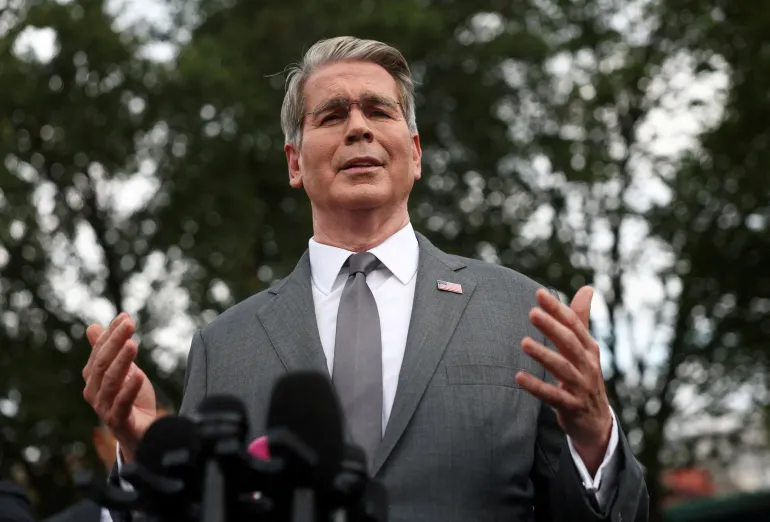
US Treasury Secretary Scott Bessent speaks to reporters at the White House in Washington, DC, on August 20, 2026 [Kevin Lamarque/Reuters]
Brett Erickson, a sanctions expert and managing principal of Obsidian Risk Advisors, said the Trump administration’s willingness to target China will be an indication of its resolve to mount a sustained economic offensive against Tehran.
“That is not a relationship you degrade lightly. If the United States decides to really bring China into the ring, it will be a serious indication that the United States plans to wage this economic war for a prolonged period of time,” Erickson told Al Jazeera.
“If they do not, it will be a tacit admission from the Trump administration that they do not believe economic hardship can seriously bring about a change in the Iranian position,” Erickson said.
Any US pressure campaign that excludes China would be necessarily limited in scope given the outsized importance of Beijing and Tehran’s economic ties.
China reported $9.96bn in two-way trade with Iran in 2025, a figure that does not include some $31.2bn in Iranian oil shipments, according to the US-China Economic and Security Review Commission.
China’s purchases of Iranian oil have been a particularly crucial lifeline for Tehran, accounting for about 90 percent of its oil sales, according to the US Treasury Department.
Until now, the Trump administration’s Iran sanctions regime has targeted only a handful of relatively minor China-based entities.
In April, the Trump administration sanctioned Hengli Petrochemical (Dalian) Refinery, one of China’s largest independent refineries, commonly known as “teapots”, over its alleged purchases of Iranian oil.
The Trump administration also imposed sanctions on four firms in Hong Kong in May, followed by measures in August targeting six China and Hong Kong-based shipping lines.
Washington has so far left Chinese financial institutions, widely viewed as a key node in Iran’s oil trade, untouched.
“Cutting off Chinese economic ties will be key to the success of any attempt to increase pressure on Iran. However, the United States won’t do it,” Jennifer Kavanagh, a senior fellow at Defense Priorities, a Washington-based foreign policy think tank, told Al Jazeera.
“If it does, China will retaliate and has the leverage to impose costs on the US,” Kavanagh said.
China has vigorously opposed US sanctions against Iran, arguing that economic pressure will not resolve the nearly six-month-long war.
In a statement on Sunday, China’s Ministry of Foreign Affairs said that Beijing remained “committed to promoting peace talks” and willing to “continue making efforts for the early restoration of peace and tranquility in the region”.
Iran, for its part, has threatened to retaliate against countries that support the US measures.
Mohsen Rezaei, the secretary of Iran’s Supreme National Security Council, warned on Saturday that any country that participated in sanctions would be considered an “enemy” and that “not a drop” of oil would leave the Gulf if Iran’s neighbours joined the US campaign.
Wang Wen, dean of the Chongyang Institute for Financial Studies at Renmin University of China, said Beijing would inevitably take countermeasures in response to any US sanctions and their intensity would depend on the “severity of US actions”.
“China maintains its desire to avoid conflict, but its bottom line cannot be crossed,” Wang told Al Jazeera.
For Trump, invoking Beijing’s ire would risk not only economic retaliation, but also unravelling efforts to stabilise US-China relations only weeks before the US president is due to host Chinese leader Xi Jinping at the White House.
Trump’s scheduled summit with Xi on September 24 would be their second face-to-face meeting aimed at lowering the temperature in US-China relations since Washington launched its war on Iran in late February, following Trump’s visit to Beijing in May.
US President Donald Trump walks with China’s President Xi Jinping at the Zhongnanhai leadership compound, in Beijing, China, on May 15, 2026 [Mark Schiefelbein/ AP via pool]
Zichen Wang, deputy secretary-general of the Center for China and Globalization (CCG) think tank in Beijing, said neither Beijing nor Washington were likely to want Iran to define the upcoming summit.
“Unless the US measures become very broad or directly target major Chinese interests, both sides are likely to try to keep this dispute from overwhelming the wider agenda,” Wang told Al Jazeera.
“That said, Chinese restraint should not be read as an absence of response,” Wang said.
“Beijing has often avoided immediate rhetorical escalation, but when unilateral US actions have materially affected Chinese companies or other Chinese interests, it has shown a growing willingness to answer with practical countermeasures.”
While the Trump administration could potentially make it more challenging and expensive for China to continue its economic support of Iran, it is unlikely to be able to stop Beijing outright if it is determined to maintain ties, said Erickson of Obsidian Risk Advisors.
“US sanctions can absolutely force companies to de-risk in order to avoid exposure, but there will always be an entity willing to fill this role,” Erickson said, adding that Xi is unlikely to “merely stand by while Trump flexes the powers of American economic statecraft without flexing Beijing’s own in return”.
Though US officials have stated their intention to “collapse” Iran’s government with ramped-up sanctions, Erickson expressed doubt that the Trump administration will be able to achieve its war goals through economic pressure alone.
“Unless the Trump administration is willing to burn serious bridges and employ all remaining levers of economic warfare simultaneously, there is no reasonable assertion that can be made that it will be able to produce the victory that kinetic warfare could not,” he said.
The US is ramping up its economic pressure on Iran after Treasury Secretary Scott Bessent declared the start of an “economic D-Day”.
ADVERTISEMENT
ADVERTISEMENT
According to Bessent, this represents “the single greatest financial offensive ever marshalled against an adversary.” He set out the position in a post on X late on Sunday and in a Financial Times opinion article published the same day.
Bessent stated that US President Donald Trump’s military campaign had “significantly dismantled Iran’s military capabilities and weakened its nuclear programme”. He added that the administration is now “entering the endgame” and that the economic measures begin at dawn.
The objective, according to the US Treasury Secretary, is to “sever every economic lifeline that sustains the tyrannical regime until Tehran stands alone”.
Bessent cautioned countries that continue to buy or transport Iranian petroleum, facilitate financial flows through exchange houses and free trade zones, handle flights, maintain ship registries or enable seaborne fuel transfers, that any remaining links would accelerate their own isolation.
The comments follow remarks by US President Donald Trump last week. At the time, Trump announced in a Truth Social post “the most crushing economic operation ever taken agaisnt any country!”
Despite both declarations, specific measures have not yet been set out.
According to Bessent’s outline, the package could centre on secondary sanctions against nations and entities that keep purchasing Iranian oil, process its finances, operate related banks or support shipping and other commercial channels, layered on top of the existing naval blockade.
Bessent is scheduled to hold a press conference at 7 PM CET on Monday to announce the concrete steps.
Market reaction
Oil prices are lower on Monday morning even as the rhetoric intensifies.
At the time of writing, Brent crude, the international standard, is trading at around $91.5 which is 2% lower than Friday’s close while West Texas Intermediate stands at roughly $86.2, about 1.5% lower than last week’s close.
The fall may stem from profit-taking after recent gains and from reports of a temporary rise in tanker movements through the Strait of Hormuz.
According to shipping information cited by Axios, around 40 tankers transited the southern channel on Friday night, moving roughly 16 million barrels of oil, higher than the 15-20 vessels recorded on preceding nights.
Overall volumes through the waterway remain well below pre-conflict levels.
On the other hand, US futures are also in the red ahead of market open while European stocks are trading flat.
Iran’s Supreme National Security Council Secretary Mohsen Rezaei warns that countries joining the US economic war against Iran will face ‘tit-for-tat’ action. It comes after US President Donald Trump threatened to unleash ‘economic warfare’ against Iran.
NEW YORK — Nearing the six-month mark of the Iran war and facing diminishing stockpiles of key weapons, the Trump administration is touting a crushing financial campaign against Tehran, promising an “economic D-Day” against a country that has withstood nearly five decades of punishing American sanctions.
With sparse details, President Trump announced this week that the U.S. would be imposing an “unprecedented” level of economic warfare and isolation on Iran, aiming to force its leadership to cave to demands to end its nuclear program and fully reopen the crucial Strait of Hormuz to oil and natural gas tankers.
It reflects the dire reality Trump faces with an increasingly unpopular war he can’t seem to end just months before pivotal midterm elections that will decide whether his Republican Party keeps control of Congress. Whether out of desperation or strategy, the president is refocusing America’s might on bringing Iran to its knees through an accelerated sanctions campaign against one of the most economically penalized countries in the world.
In response to the threat, Iranian Foreign Minister Abbas Araghchi posted Friday on X the history of U.S. sanctions against Iran, saying, “We have seen this movie before. Same bull. Different bullies.”
The immediate reaction from Iran hawks has been praise and a call for patience as it plays out, while other analysts warn that Trump is refusing to learn the lessons of his predecessors.
In an interview Thursday on CNBC, Treasury Secretary Scott Bessent offered a small glimpse of what may be ahead, threatening secondary sanctions on nations and companies that conduct business with Iran.
He did not reveal who would be targeted as part of this next phase of the administration’s Operation Economic Fury, which earlier had focused on entities and people who buy oil from or bank with Iran. China and India, however, are major buyers of Iranian oil.
“If you insist on doing business with them, then the U.S. Treasury and U.S. government will put its full might and force against you,” Bessent said. “It’s time for our allies and the rest of the world to make a decision.”
Some experts see ‘uncharted waters’ that could force Iran’s hand
Despite decades of U.S. sanctions against Iran, the Trump administration is arguing that it’s only a matter of time and that striking the right economic target would get Tehran to its breaking point.
Richard Goldberg, who coordinated efforts to put diplomatic pressure on Iran in Trump’s first term, said the consequences of U.S. strikes on Iran’s nuclear sites last year, the war this year and the American naval blockade on Iranian ports have created the perfect storm for capitulation — one that didn’t previously exist.
“I think we’re watching a strategy, whether it takes a short time or a long time, that is very much about fundamentally changing the future of the world by seeing the end of this regime,” said Goldberg, who is now at the hawkish Washington think tank Foundation for Defense of Democracies, or FDD.
“I caution everyone — including myself, who has worked on sanctions, who’s worked on financial warfare — to have the humility to admit that we are in uncharted waters,” he said.
He said the decision this week by the United Arab Emirates — once one of Tehran’s most important trading partners — to suspend trade with Iran over an alleged missile attack will only further isolate the government.
Beyond trade in domestically produced goods, the Emiratis had helped the country absorb some of the shocks caused by sanctions through its re-export hub.
Targeting allies and partners comes at a price
With nearly all of Iran’s energy, financial and transportation sectors already covered by U.S. sanctions, Trump’s aim appears to be to apply secondary sanctions on countries, including allies and partners, that have not cut all ties with Iran to starve the country of any remaining income it may still be receiving.
In many ways, it is a redux of Trump’s first-term maximum-pressure campaign, which he has ramped up during his second term to include military action.
But as Trump and his allies discovered during his first administration, it can be difficult to enforce secondary sanctions without harming U.S. interests and provoking reciprocal measures. There were numerous instances of the administration granting sanctions waivers to countries, particularly those that rely on Iranian oil for their energy needs.
“Trump’s strategy now rests on targeting Tehran directly by impeding its touch points and access to the formal financial system and international economy,” said Behnam Ben Taleblu, senior director of the FDD’s Iran program. “This will require making the Iran issue more important in U.S. bilateral relations with countries in Europe and Asia.”
Iran doesn’t see an ‘open door’ at the end of the sanctions campaign
Iranian officials and analysts have accused the Republican president of flip-flopping with his latest pivot to economic pressure against Tehran. Trump has long derided past leaders who used sanctions to limit Iran’s ability to pay for its military and nuclear development.
In a post last week on X, Esmail Baghaei, a spokesman for Iran’s Foreign Ministry, wrote that Washington’s pattern of retreating to sanctions when it doesn’t want to pursue diplomacy has proven to be futile.
“Iran has demonstrated over decades that it will not be strangled by these exhausted refrains,” he said. “The real risk is that American politicians, clinging to this bad habit, will instead strangle their own remaining chances of a less humiliating exit from a crisis of their own making.”
Ali Vaez, Iran director at the International Crisis Group, said the Trump administration’s decision to take its own maximum-pressure policy to new heights with military action seems to ignore years of U.S. foreign-policy lessons that show Iran does not respond well to pressure.
If anything, he says, the latest economic campaign has only “hardened Iran’s position.”
“I think (Trump’s) blind spot is the fact that the only thing that the Iranian regime views as more dangerous than suffering from U.S. sanctions is surrendering to U.S. terms,” Vaez said.
Plus, the past year of start-stop diplomacy has only worsened the already fragile dynamic between the longtime adversaries, Vaez says, adding that Iranian officials’ lack of trust in Trump and his mediators has created an untenable foundation.
“They believe that even if they capitulate to U.S. terms under economic duress, Trump would move the goalposts and ask for more,” he said. “And this is really the fundamental problem: Pressure without an open door is an exercise in futility.”
Amiri writes for the Associated Press. AP writers Matthew Lee and Fatima Hussein in Washington contributed to this report.