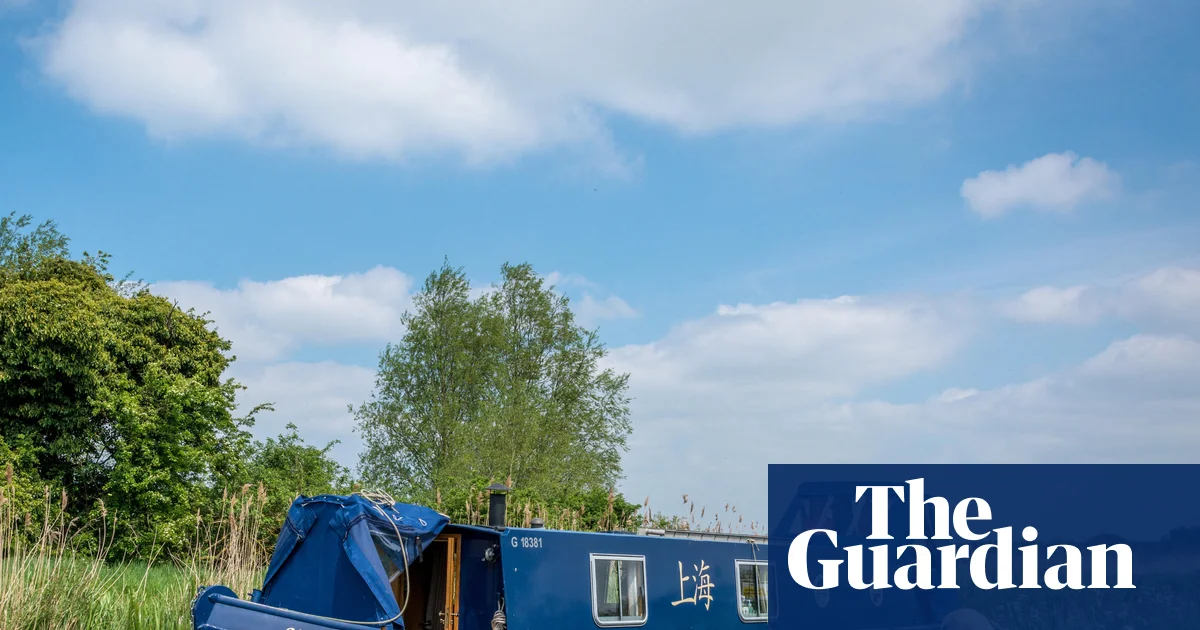
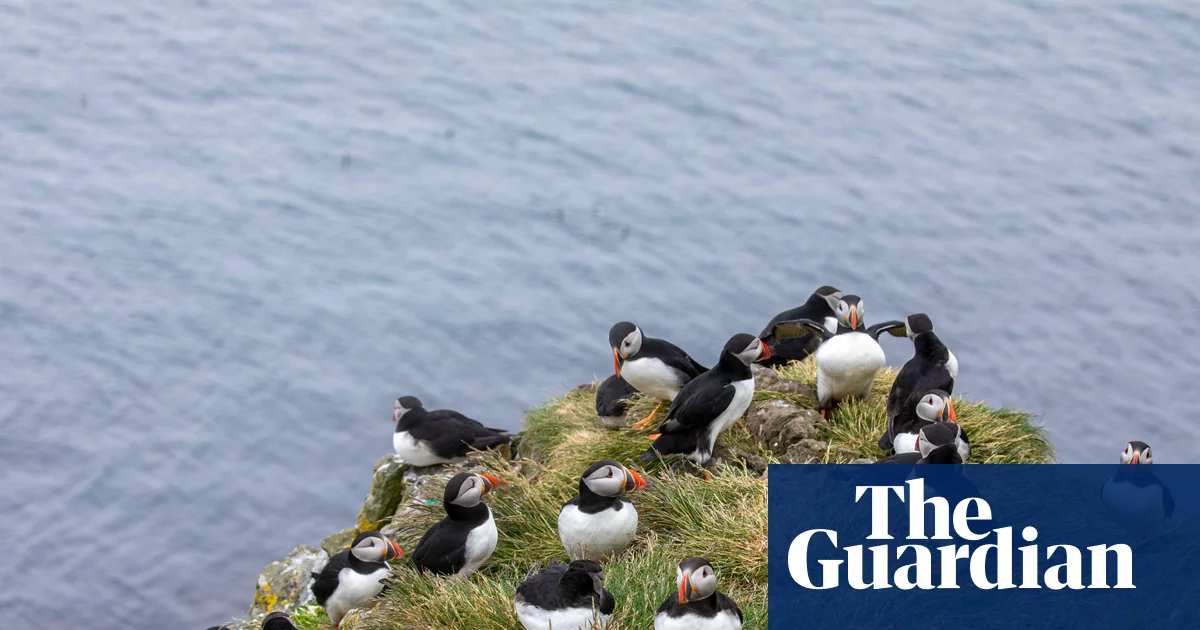
Spring has arrived at Wicken Fen, one of Europe’s most important wetlands, and with it the first summer migrants. Chiffchaffs are usually the earliest, with their rhythmic song ringing out across the fens. Then, if the weather is mild, blackcaps and willow warblers might join them. Listen closely, especially early morning or at dusk, for the foghorn-like calls of the booming bittern across the reedbeds. There’s a pushchair- and wheelchair-friendly boardwalk around Sedge Fen, and wheelchair-accessible wildlife hides. Look out for the electric blue flash of a kingfisher, and male marsh harriers performing their dramatic sky-dancing flights as the breeding season gets under way, before the cuckoos arrive in late April. From £10 adults, £5 children (under-5s free), nationaltrust.org.uk
Artful planting in East Sussex
Spring evening at Petworth House. Photograph: Slawek Staszczuk/Alamy
When Dan Pearson created the landscape design at Goodwood Art Foundationsculpture park, which opened last May, he planned 24 seasonal moments to complement the art-dotted trails through woodland, glades and meadows. This is the first spring visitors will see his graphic plantings of daffodils and bluebells, cherry blossoms and the katsura grove coming into copper-coloured leaf. Over the Easter holidays, children can pick up a free Art in Nature pack to create rubbings and collages inspired by the shapes and textures.
There is artful nature of a different kind at nearby Petworth’s spring festival, with more than 100 pots of spring bulbs in flower, willow foraging and basket making workshops, and other garden-themed kids’ activities. Goodwood Art Foundation, £15 adults, under-18s free,goodwoodartfoundation.org. Spring festival at Petworth, from £21 adults, £10.50 children(under-5s free), 4-19 April,nationaltrust.org.uk
Feast by the sea in Kent
Morelli’s ice-cream parlour in Broadstairs. Photograph: Eye35/Alamy
From Italian small plates in Margate to Japanese ramen in Deal, the Kent coast has upped its foodie credentials. Dig in at the Broadstairs food festival, which pops up on the seafront over Easter (3-5 April). There’s a delicious lineup of chefs, street food stalls and local artisan producers, plus food-themed arts and crafts workshops, from chocolate lollipop making to screen printing napkins with fig, oyster, crab or seaweed designs. Broadstairs is a treat to eat your way around anytime, with seafood at Kebbells, tapas at Bar Ingo and, of course, a sundae at Morelli’s Formica-tastic ice-cream parlour. Free entry, 3-5 April, broadstairsfoodfestival.org.uk
Treetop thrills and stargazing in the Lake District
Go Ape high ropes course in Grizedale Forest. Photograph: Michael/Giant Peach
The deep dark woods at Grizedale Forest in the Lake District offer an action-packed day out for families, with Go Ape treetop thrills, adrenaline-pumping mountain biking and sculpture-filled walking trails (including a Gruffalo orienteering route and a Room on the Broom nature walk for Julia Donaldson fans). Now you can add stargazing to the list. The new Grizedale Observatory opened last May, the Lake District’s first public observatory and planetarium. There are family sessions every Saturday at 4pm, where budding astronomers can touch real meteorites and watch a show in the planetarium. Easter holiday events include Jupiter viewings, aurora nights and afternoon planetarium shows. Grizedale Forest, free (bar Go Ape), forestryengland.uk. Observatory events, from £13 adults, £8 children, grizedaleobservatory.com
See grand designs and baby lambs in North Yorkshire
Castle Howard. Photograph: Eye35/Alamy
Sir John Vanbrugh was a playwright with no architectural experience when he was commissioned in 1699 to build a massive new house for a fellow Kit-Cat Club member, the Earl of Carlisle. It would be fair to say that Castle Howard was a decent first stab. In celebration of the tercentenary of its creator, there are new tours giving unprecedented access to areas of the house, follies and monuments not usually open to the public. Plus you can meet baby lambs born on the estate at the magical Skelf Island adventure playground (4 and 5 April). Garden tickets, which include Skelf Island, from £17 adults, £8.50 children (under-3s free), castlehoward.co.uk
Woodland blooms in Cornwall
Magnolia at the Eden Project. Photograph: Douglas Lander/Alamy
Each year, six champion Magnolia campbellii are eagerly watched in six of the Great Gardens of Cornwall, including the Eden Project. The moment they come into full bloom (counted as 50 flowers), spring is declared to have officially arrived in England. This year it happened on 27 February. The Gulf Stream helps hurry the start of the season along here, and means you may see a few bluebells popping their heads up in the Easter holidays. Tehidy woods is famous for its carpets of bluebells – the first were spotted in early April last year. That will be just in time for fantastical theatre company Rogue Otherworld’s Wild Awake show, which weaves between the trees telling the story of the forest awakening, guided by the Wild Spring Hare. Wild Awake show, £10-£15 adults (pay what you can; under-3s free), 3-6 and 8-12 April, rogueotherworld.co.uk
Poohsticks in Ashdown Forest
AA Milne’s famous bridge in East Sussex. Photograph: Andrew Hasson/Alamy
It’s the 100th anniversary of AA Milne’s Winnie-the-Pooh this year, so good reason to follow the honey-loving bear and his friends down to the real-life Hundred Acre Wood in Ashdown Forest. Milne wrote the children’s classic at Cotchford Farm (now a holiday rental) on the edge of the forest, where he lived with his wife and his son, Christopher Robin. Follow the Pooh Walks (0.6 or 2 miles) from Gills Lap to trace out spots from the book, including The Enchanted Place, the Heffalump trap and Roo’s sandy pit. Don’t leave without playing a game of poohsticks on the Poohsticks Bridge. Pooh fans can plot a return trip for the summer holidays to catch The Big One Hundred celebration, which will include a giant puppet roaming through the woods, interactive performances and five new walking routes. Free, ashdownforest.org
A wild coastal walk in County Antrim
Gobbins cliff path, County Antrim. Photograph: Vincent Lowe/Alamy
The walkways, bridges and steps that make up the Gobbins cliff pathcling to sheer basalt rock, the waves crashing below. This elemental trail was built by the railway engineer Berkeley Deane Wise in 1902, and now can only be followed on 2.5hr guided tours, which have been paused since last year due to rockfall. They are due to restart on 20 March, and it’s a thrilling stop on the Causeway Coastal Route. Alternatively, the Blackhead Path is almost as dramatic and free, starting at nearby Whitehead. The route hugs the coast past smuggler’s caves and rocky coves, before taking the steep steps up to the clifftop Blackhead Lighthouse. A Mauds ice-cream at Coastal Coffee back in Whitehead is just reward for the climb. £22.75 adults, £16.50 under-16s(minimum 4ft tall, roughly seven years old), thegobbinscliffpath.com
Relive Springwatch in the Peak District
Padley Gorge. Photograph: Suxxes Photo/Alamy
Last year, BBC’s Springwatch was based at the Peak District’s Longshaw Estate. Over the weeks of live broadcasts, Chris Packham and Michaela Strachan spotted short-eared owls feeding voles to their chicks, kept an eye on pied flycatcher nests, and tracked hares, deer and a host of other wildlife across the estate’s habitats. The Padley Gorge and Burbage Brook walking route is particularly good in spring, winding past the pond to the ancient woodland of Padley Gorge, with its twisting oak trees and moss-covered boulders. Back out on the meadow, watch for birds of prey overhead – buzzards, red kites, peregrine and kestrels – and adders emerging from hibernation in the grass (so dogs need to stay on leads). Free,nationaltrust.org.uk
Go mudlarking on the Thames
Photograph: Julio Etchart/Alamy
For a hands-on dig into London’s history, try one of the Thames Explorer Trust’s In the Footsteps of Mudlarks tours. Normally anyone searching the river’s foreshore needs a permit from the Port of London authority, which has a waiting list running into the thousands. These two-hour guided tours give combers the chance to temporarily jump the queue, with archaeology experts on hand to help find and identify surface artefacts – maybe smoking pipes, pottery or even bones. Children over eight can join regular scheduled tours, while during the school holidays there are special family sessions (aimed at ages 5-12) meeting at the Brunel Museum in Rotherhithe. Children’s Footsteps of Mudlarks tour, £30 adults, £17 under-12s, on 4, 7, 9 April,thames-explorer.org.uk
Take a seabird safari in North Berwick
Gannets flying over Bass Rock. Photograph: Feldman1/Getty Images
Off the coast of North Berwick, the Bass Rock is home to the world’s largest colony of northern gannets. After spending the winter in warmer seas, the birds, with their distinctive black wingtips and yellow heads, return in February. Boat trips from the Scottish Seabird Centre restart in late March, and range from exhilarating RIB “seafaris” to gentler catamaran cruises, which loop around Craigleith (home to almost 10,000 breeding puffins) and Bass Rock, sometimes accompanied by dolphins and seals. Back on dry land, the centre has live wildlife cameras, as well as exhibits, games and films, or join a spring beach clean (10 April) along the sand. Boat trips, from £32 adults, £15 children (3 and under free); Scottish Seabird Centre Discovery Experience, £13.50 adults, £9 children (under-3s free), seabird.org
Join the Famous Five in Dorset
Swanage Railway and Corfe Castle, which inspired Enid Blyton. Photograph: Janet Carmichael/Alamy
“In the very middle … on a low hill, rose the ruined castle,” wrote Enid Blyton in the first Famous Five adventure, Five on a Treasure Island.Blyton holidayed for decades on Dorset’s Isle of Purbeck, and the imposing remains of Corfe Castle are believed to be the inspiration for Kirrin Castle. The most storybook way to arrive is in the vintage carriages of the Swanage Railway, which the author herself took, chugging through the countryside in a plume of smoke and steam. Try to catch the new Magic Faraway Tree film (out now) at a cinema to complete the Blyton jolly. Swanage Railway, from £14 adults, £7.50 children (under-5s free) one way, swanagerailway.co.uk
Iron age living at Loch Tay
Reconstructed roundhouses at the Scottish Crannog Centre. Photograph: PR
Back in the iron age, crannogs – roundhouse settlements built on artificial islands of stone and timber – would have been a common sight on lochs across Scotland. Their remnants have been remarkably preserved thanks to being buried beneath the cold, dark, peaty waters. The remains of 17 have been found in Loch Tay alone, and on its shores the Scottish Crannog Centre reconstructed these ancient structures in an immersive living museum, until it was destroyed by fire in 2021. It reopened nearby in 2024, and this spring will complete its first new crannog. To celebrate, join The Crannog is Hatching event on 4-5 April, exploring the traditions of birth and renewal, with springtime foods in the Feasting Hall. £15 adults, £10 children (under-5s free), crannog.co.uk
Dive into art near Edinburgh
Gateway pool was constructed with thousands of hand-painted tiles. Photograph: PA Images/Alamy
At the Scottish sculpture park Jupiter Artland, you can get a unique perspective on two of its works of art – by swimming in them. Joana Vasconcelos’s wiggling, vibrantly coloured Gateway pool and Charles Jencks’s Teletubbyland-like Cells of Life are open to bathers. Gateway is created from 11,366 hand-painted Portuguese tiles, and is bookable for half hour sessions from 2 April. Jencks’s lakes, surrounded by undulating grassy landforms, are open for swimmers every Sunday from 11am to 12pm (both over-3s only). There are pieces by Tracey Emin, Antony Gormley, Anish Kapoor and Andy Goldsworthy elsewhere in the 120-acre park, which is a half-hour drive from Edinburgh. Budding artists can also give it a go in the Make Studio, filled with materials – an invitation to get messy with paint, clay and more. From £11.80 adults, £7.50 children (3 and under free; swims included in ticket price but must be prebooked), jupiterartland.org
Find dragons in Caerphilly
The Great Hall at Caerphilly Castle. Photograph: Cadw Photographic Library/Crown
Wales’s largest castle, Caerphilly, reopened last July after a two-year, £8m renovation by Cadw, the Welsh government’s historic environment service. Built in the 13th century, the whole stronghold covers about 12 hectares (30 acres), with wide water defences, hulking great walls, stern-looking gatehouses and a leaning tower that’s even more leaning than Pisa’s (reputedly the result of gunpowder damage during the civil war). The most head-turning of the recent upgrades is the Great Hall dining room, now dressed for its medieval heyday. Elsewhere interactive exhibits bring the castle’s long history to life, and a family of giant, smoke-snorting (animatronic) dragons live in a lair beside the moat. £12.90 adults, £9 children (under-5s free), cadw.gov.wales
Ride a carousel in Flintshire
The Hawarden Estate. Photograph: Louise Roberts
On Saturday 4 April the grounds of the Hawarden Estate will be filled with vintage fairground rides for its Great Easter Show – the ferris wheel spinning, the carousel cranking out the waltz and squeals coming from the red-and-white-striped helter-skelter. Alongside there are circus skills workshops, a dog show, craft sessions and an egg-and-spoon race. If you miss out on the fete do not fear – the fun continues all season with a kids’ Explorer Club every Saturday and classes at the Walled Garden School (how to build a birdhouse on 7 April; a spring foraging walk on 11 April). There is also a self-guided explorer trail from the farm shop, with a 10-metre trumpet to blast and secret mirrors to spot among the trees. The Great Easter Show, £18.50 adults, £12.50 children (under-5s free; tickets include unlimited rides). The Walled Garden School events, from £30a person; Explorer Club, £10 a child (accompanying adults free), hawardenestate.co.uk
Highland tales in Inverness
An exhibition on Celtic music in the north tower at Inverness Castle. Photograph: John Paul
Sitting grandly on the banks of the River Ness, the red sandstone Inverness Castle isn’t really a castle at all: it was built in 1836 as a court and prison. There have been plenty of “real” castles on the strategic site since the 11th century, destroyed by everyone from Robert the Bruce to Bonnie Prince Charlie. This January, after a £47m redevelopment, it opened as the snazzy new Inverness Castle Experience, where visitors follow the voices of the seanchaidhean (Gaelic storytellers) to learn about Highland history and culture. Sure, there are clans and tartan, but also Celtic music, the sport of shinty and a tapestry created by more than 600 stitchers from across the Highlands and Islands. Finish on the rooftop platform looking out towards Ben Wyvis and the Highlands. £20 adults, £14 children (under-5s free),invernesscastle.scot
Cruise the world’s highest canal aqueduct in the Dee valley
Pontcysyllte aqueduct, north Wales. Photograph: Travelling Light/Getty Images
Standing 39 metres above the Dee valley in north Wales, the Pontcysyllte Aqueduct is the highest canal aqueduct in the world and, at 307 metres, the longest in Britain. It’s described in its Unesco World Heritage listing as “a masterpiece of creative genius”. See it up close on a 45-minute trip on board the Little Star, which departs from close to the Canal & River Trust’s Trevor Basin Visitor Centre five times a day from 1 April.Alternatively, walk across the towpath for free (you will need a good head for heights, although there are railings) and continue along the Llangollen canal to Llangollen. There, hike up to the ruins of Castell Dinas Brân overlooking the town, then pick up some homemade butter fudge at Cottage Cream’n’Candy. Trips on AngloWelsh’s Little Star, from £10.48 adults, £6.29 children, anglowelsh.co.uk
Hike the new Teifi Valley Trail
Poppit Sands, Pembrokeshire. Photograph: Robin Weaver/Alamy
West Wales has plenty of stunning walks, and these will be joined in April by a new waymarked route: the 83-mile (134km) source-to-sea Teifi Valley Trail. Designed as an eight-day hike, the route starts up at Strata Florida Abbey and follows the River Teifi downstream. For a lovely day walk, join it for the final leg at Cilgerran Castle, perched dramatically above the Teifi gorge. The path wiggles almost 8 miles through the Teifi Marshes Nature Reserve (kids can have a whiz around the willow maze), past Cardigan (lunch stop at Crwst), to the quaint village of St Dogmaels with its ruined Tironensian abbey. The finishing line is the dunes at Poppit Sands, where you can unlace boots and treat tired feet to a chilly dip. teifivalleytrail.wales
Car-free Cotswolds garden tour
Sezincote House in Gloucestershire. Photograph: Stuart Black/Alamy
The lively market town of Moreton-in-Marsh is the ideal jumping off point for a car-free Cotswolds jaunt – it’s only 1h 30min direct from London’s Paddington, or one change from Birmingham or Bristol. From there, strike out along the Monarch’s Way about 1.7 miles to Batsford Arboretum, home to the UK’s national collection of Japanese flowering cherry trees, with more than 120 covered in frothy blossom. Continue on to Bourton House Garden, which reopens for the season on 7 April, for perfectly clipped topiary and cakes in the tearoom. Finish the loop at Sezincote House and Garden, a little slice of India in the English countryside, with its water garden, elephant statues and stepping stones across a winding stream. Batsford Arboretum, from £10.90 adults, £3.15 children (under-4s free), batsarb.co.uk. Bourton House Garden, £10 adults (under-16s free), bourtonhouse.com. Sezincote House and Garden, from £9 adults (garden only), £3 children, sezincote.co.uk
Winning tip: puffin-watching in the Inner Hebrides, Scotland
Last April, I based myself in Oban and took my teenagers puffin-watching at Lunga, off Mull, in the Treshnish Isles, with an organised tour (Staffa Tours) by ferry and foot. It was a real delight. The guides were brilliant and helpful, especially with my mobility issues, and we were surprised and amazed at how tame and friendly the puffins were – allowing us to get great views of their faces from as near as 5ft or so. Next spring, we are going again as this is the best time to see them arriving in their thousands. April
Profile
Readers’ tips: send a tip for a chance to win a £200 voucher for a Coolstays break
Show
Guardian Travel readers’ tips
Every week we ask our readers for recommendations from their travels. A selection of tips will be featured online and may appear in print. To enter the latest competition visit the readers’ tips homepage
–
Stunning architecture in the heart of Surrey
‘A National Trust gem’ … Homewood, architect Patrick Gwynne’s 1930s villa with a woodland garden, in Esher. Photograph: BritPics/Alamy
Grade I-listed Claremont Landscape Garden near Esher is great to visit in spring. But time your trip there right and you can also visit a National Trust gem just half a mile away: the Homewood, architect Patrick Gwynne’s 1930s modernist villa and accompanying woodland garden (for pre-booked guided tours only on specific Fridays and Saturdays, April-October). The house itself is stunning, with light pouring through the sitting room’s floor to ceiling windows, but on a sunny spring day the garden, complete with rhododendron tunnel, bamboo thicket, water gardens and stepping stones, proves a tranquil spot in which to linger and view the Le Corbusier-inspired abode. David M
Sheffield’s Tudor turret
The Turret House at Sheffield Manor Lodge. Photograph: Phil Wolstenholme/Alamy
One of our favourite days out as a family in spring is to explore the beautiful Sheffield Manor Lodge. There is a wealth of history to explore in the Turret – my young daughter loves telling everyone who’ll listen that Mary, Queen of Scots was detained here. There are also children’s trails, outdoor games and craft sessions – we’ve made stained glass kites, learned about a frog’s life cycle, had Easter egg hunts and completed outdoor yoga trails. On a warm spring afternoon, it is a stunning place – with a lavender maze, apothecary gardens, wildflower meadows and the amazing rhubarb shed cafe. Susan
Artistic treasure hunt on the North York Moors
Hanging Stones by Andy Goldsworthy in Rosedale. Photograph: Julian Broad/Ross Foundation
This magical mystery tour combines fresh air, beautiful, wild landscapes and art. The project is called Hanging Stones by Andy Goldsworthy, and it’s set in Rosedale. Several buildings that were in varying states of disrepair have been rebuilt as artworks and are connected by a six-mile walk encompassing Northdale, near Rosedale Abbey. You have to book a slot to find out where the key is, which you will pick up, together with a map, to get started. It’s the treasure hunt style that will get even the youngest in the group excited about the walk, allowing the adults to do something they wouldn’t otherwise dream of doing with children: admiring art and going for a decent walk. The cost is £10 per adult, while students and under-18s go free. Annelore
Dazzling azaleas in Gloucestershire
Springtime at Westonbirt Arboretum. Photograph: PA Images/Alamy
I always take my family to Westonbirt Arboretum near Tetbury in spring to celebrate the beautiful spectacle of nature exploding into a kaleidoscope of colour and life. The Arboretum is a breathtaking place, especially under a sunny sky. The well-marked paths mean you can easily wander through its 245 hectares (600 acres) and enjoy the fresh air filled with the delicate scent of blooming cherry blossoms. With more than 15,000 specimens and 2,500 species of trees and shrubs from across the globe, it serves as a stunningly beautiful living gallery. In spring, the arboretum dazzles with azaleas and rhododendrons bursting into brilliant shades of white, red and pink. My teenagers especially enjoy exploring the treetop walkway and quiet woodland trails – and a treat of tea and cake at the well-positioned cafe at the end of it all. Nicoletta
Wild garlic and lily ponds in Pembrokeshire
‘You might spot an otter or a heron’ … at Bosherston Lakes. Photograph: Edward Dyer/Alamy
For a springtime lift, head to Bosherston Lakes set in three limestone valleys with spectacular displays of lilies. Start in ancient woodlands, where there’s a shimmering, scented carpet of white wild garlic. It feels like a fairytale. Emerge at the serene lily ponds, where you might spot an otter or a heron, then follow the path to Broad Haven South. The moment you hit the dunes and see the beach open up is one of the finest coastal views in the UK. Finish with tea and cake at the nearby Stackpole Walled Gardens; it’s run by Mencap, so your pit stop supports a fantastic cause while you soak up the Pembrokeshire sunshine. Lucy Coast
Kites fluttering in the Chiltern skies
‘Really joyful’ … A kite festival at Dunstable Downs in Bedfordshire. Photograph: PA Images/Alamy
My favourite UK spring activity is flying kites with my family in the Dunstable Downs. The open hills and steady breeze make it the perfect spot to let our kites dance in the sky. There’s something really joyful about watching the colours flutter along with other kite-flyers. After some fun, we spread out a picnic blanket and enjoy homemade treats while soaking up the sunshine and taking in the beautiful views. It’s such a simple but special way to spend a bright spring day together outdoors. Victoria
A memorable walk in the Cotswolds
‘The perfect example of an idyllic Cotswolds village’ – Bourton-on-the-Water in Gloucestershire. Photograph: Ivan Okyere-Boakye Photography/Alamy
The circular walk from Bourton-on-the Water to the Upper and Lower Slaughters provides a buffet of springtime goodness, from trees in blossom and daffodils to wildflowers and nesting swans. Oh, and don’t worry, the Slaughters aren’t as morbid as they sound. They take their name from the Old English word slohtre, meaning “muddy place”, suggesting suitable footwear is needed. While Bourton-on-the-Water remains a tourist hotspot – the perfect example of an idyllic Cotswolds village – the walk towards the Slaughters via the Windrush Way and the Gloucestershire Way makes for a calming amble soundtracked by rivers and birdsong. Maxine Harris
Luscious blooms and afternoon tea in Devon
Killerton National Trust house and garden. Photograph: Peter/Alamy
Each spring, my family makes a pilgrimage to Killerton gardens in south Devon to see the glory of magnolia blossom on the south-facing slopes of Dolbury Hill, known locally as the Clump. The luscious blooms of pinks and ivory are the main attraction. It’s wonderful to see the children enjoy the release of running on the first-cut lawn and to watch their grandparents taking in the sight of the sea of daffodils. After a wet winter of grey skies, it’s also wonderful to have tea outside the house, basking in the sunshine. Simonetta Taylor
A Northumberland beach stroll
‘A great place for a leisurely wander’ … Beadnell beach. Photograph: Louise Heusinkveld/Alamy
Can anything beat standing on a beach getting a lungful of fresh sea air? I don’t care if I’m still having to wrap up in layers with a woolly hat, being on a beach feels like the start of summer. Beadnell beach in Northumberland is a great place for a leisurely wander, with cracking views and lots of dog-friendly places to refuel in the village. The breakfasts at the Courtyard Cafe have fuelled many a walk along the beach. Hannah S
MAFS star Charlene Douglas has revealed the heartbreaking “final days” she spent with her late friend Mel Schilling following her tragic death.
The relationship expert said she was left “devastated” as she opened up about their last moments together.
Sign up for the Showbiz newsletter
Thank you!
MAFS expert Charlene Douglas remembers her final moments with Mel SchillingCredit: Instagram/@charlenedouglasofficial/Charlene said she will “forever treasure” the memories they sharedCredit: Instagram/@charlenedouglasofficialThey both apppeared on Married at First Sight UK alongside Paul BrunsonCredit: Channel 4
Alongside touching pictures of Mel, he said: “Melanie Jane Brisbane-Schilling passed away peacefully today, surrounded by love.
“In her final moments, when I thought cancer had taken away her ability to speak, she ushered me closer and whispered a message for Maddie and me that will sustain me for the rest of my life.
“It took all of her remaining strength, and that gesture summed up our wee Melsie perfectly. Even then, her only thought was for Maddie and me.”
He continued: “This is a woman who became a new mum and a TV star at 42 — and nailed both.
“This is a woman who, through two years of chemotherapy, when she could barely lift her head from the pillow, never complained and never stopped showing courage, grace, compassion and empathy, and never missed a day of filming.
“To most of you, she was Mel Schilling — matriarch of MAFS and queen of reality TV. To Maddie and me, she was our wee Melsie: an incredible mum, role model, and soulmate.”
Channel 4hailed Mel as a friend who “radiated joy, warmth and optimism”.
Issuing a statement, it said: “Our thoughts and condolences are, first and foremost, with her family and loved ones.
“We’re privileged to be the channel that is home to Mel’s work, which was at the heart of Married At First Sight‘s phenomenal success, both in the UK and Australia.
“It reflected so much about her – her fierce advocacy for other women, her passion for healthy relationships and her mission to unite people in love.
“For many who work for Channel 4, Mel was not just a colleague but a friend, someone who radiated joy, warmth and optimism, who energized every room she walked into, with humour and positivity.
“Everyone who knew her will miss all this about her and much more. We share in the sorrow that we’re sure many viewers will now feel at this terrible loss.”
Tributes have poured in for the TV star since the tragic announcementCredit: Channel 4Mel was previously diagnosed with colon cancer in 2023, which later spread to her lungs and brainCredit: Channel 4Her husband Gareth Brisbane announced the heartbreaking news today in an emotional Instagram postCredit: Instagram
Plus, every time you drive, you can see the escalating average cost for a gallon of gas throughout the state that ranges from $5.77 in Orange County, $5.78 in San Diego County, $5.80 in Los Angeles County and $5.86 in San Francisco County to the high of $6.57 in Mono County, according to AAA.
It can easily make anyone think having fun is unaffordable.
Fortunately, our Travel and Experiences team has put together a list of 75 fun things to do for under $20.
On warm days, it’s hard to beat a ride on the swan boats at Echo Park.
They’re powered by foot paddles, and the pedaling is easy because you’re in no hurry. Maybe you’ll want to do a circuit of the lake (really a man-made reservoir). Maybe you’ll sidle up to the towers of whitewater rising from the mid-lake fountain.
Maybe you’ll wait until after dark (because the swans light up).
(Christina House / Los Angeles Times)
Experience L.A.’s esoteric history at the Philosophical Research Society (Los Feliz)
Cost: Free to visit, workshops and lectures from $10 and up.
Located at the intersection of Los Feliz and Griffith Park boulevards, the Philosophical Research Society has long been a place of mystery, intrigue and, for some, apprehension.
The Mayan Revival campus painted in Southwestern shades of clay, cream and sage was built in 1935 by the celebrated author and esoteric lecturer Manly P. Hall.
Today, it hosts a dizzying array of events each week including poetry readings, death cafes, sound baths, a weekly class on Buddhism, tarot and astrology salons and musical performances — some of which have a suggested donation of just $10.
If you visit, make sure to make time to browse the excellently curated metaphysical bookstore.
(Gina Ferazzi / Los Angeles Times)
Find the perfect meditation spot at the Self-Realization Fellowship Lake Shrine (Pacific Palisades)
Cost: Free.
Whether or not you’re familiar with the work of Paramahansa Yogananda, who founded the Self-Realization Fellowship in 1920, if you live in Los Angeles you owe him a debt of gratitude for the smattering of lush, meditative gardens in Southern California that are still open to the public today.
Among those is Lake Shrine, a beautifully landscaped 10-acre property in the Pacific Palisades surrounding a spring-fed lake that is dotted with quiet meditation spots.
It is free to visit, but you will need to make a reservation online before you go. (Reservations open each Saturday at 10 a.m. for the week ahead, and they can fill up quickly.)
(Wally Skalij / Los Angeles Times)
Cozy up with a flick at the Paramount Drive-In Theater (Paramount)
Cost: $14 per adult, $7 per kid (ages 3-11).
For a night out that feels as cozy as a night in, head to the Paramount Drive-In Theater. In the comfort of your own car, you can spread out, munch popcorn and make all the commentary you want without getting looks from other moviegoers.
Tickets are purchased on arrival, and the parking lot is huge, so you’re bound to secure a good view of the big screen. There is a concession store on site with candy, chips and drinks, but you are free to bring all the snacks you want from home. Recline your seat all the way back, relax and enjoy the show.
You’re reading the Essential California newsletter
Sign up to start every day with California’s most important stories.
By continuing, you agree to our Terms of Service, which include arbitration and a class action waiver. You agree that we and our third-party vendors may collect and use your information, including through cookies, pixels and similar technologies, for the purposes set forth in our Privacy Policy such as personalizing your experience and ads.
The week’s biggest stories
(Irfan Khan / Los Angeles Times)
Heat wave and environmental news
Los Angeles mayor, city council news
Cesar Chavez fallout
California governor’s race
Crime, courts and policing
What else is going on
Must reads
Other meaty reads
For your downtime
(Illustrations by Lindsey Made This; photograph by Myung J. Chun / Los Angeles Times)
Going out
Staying in
L.A. Affairs
Get wrapped up in tantalizing stories about dating, relationships and marriage.
Have a great day, from the Essential California team
Jim Rainey, staff reporter Hugo Martín, assistant editor, fast break desk Kevinisha Walker, multiplatform editor Andrew J. Campa, weekend writer Karim Doumar, head of newsletters
The Government says the increases are needed to make the system self-funded rather than relying on taxpayers.
Officials insist they’re not making a profit, with fees instead covering processing applications, supporting Brits overseas and managing UK border checks.
Standard applications take on average three weeks to process, which is the exact date when the new price comes into force.
So if you want a passport before the cost shoot up, you can apply for one-day premium service.
And be quick as the premium service will go up from from £222 to £239.50 in April as well.
A writer visited the stunning Mediterranean island of Gozo, part of Malta, which boasts 300 days of sunshine, crystal-clear waters, and incredible scenery just a short flight from the UK
Holly Clarke and Chloe Dobinson
02:00, 21 Mar 2026
Holly Clarke visits travels to Gozo a short 20 minute trip from Malta
When off to a European destination during the winter months, its impossible to bank on good weather, however far in the Continent you’re planning on going.
Recently, the Liverpool Echo’s Holly Clarke took a chance with the weather and embarked on a journey to the Maltese Archipelago. Not only did she strike gold in meteorological terms, but the Mediterranean island chain proved to be an absolute treasure.
From exploring the streets of the silent city of Mdina to experiencing the energy and activity of the capital city, Valletta, there genuinely is something for everyone, including fantastic nightlife in St Julian’s, the pristine waters of the Blue Lagoon, and sufficient churches on the island for every day of the year.
Holly departed from Manchester Airport at 7am and was wandering around the breathtaking Balluta Bay by 12pm. Flights are also easily accessible from John Lennon Airport and various other airports throughout the UK.
As much as Holly loved Malta, it was its much smaller, lesser-visited neighbour that really stole her heart.
There are three islands which constitute the Republic of Malta: Malta, Gozo and Comino. Whilst Malta has the largest population out of the three at around 574,000, Gozo has just 39,287 residents, with only two inhabitants on the island of Comino.
Before Holly realised it, she was setting off on a ferry to the island of Gozo, which is developing a new £2million airport that’ll make journeys from Malta considerably quicker. For the time being, the ferry is direct and costs approximately 5 Euros for a return ticket.
Within just 20 minutes, she had arrived on the gorgeous, less-frequented island. The 26-square-mile stretch of land is famed for its rugged terrain and spectacular scenery, and it certainly lived up to expectations. It provides everything from excellent seafood, jaw-dropping views, and crystal-clear waters ideal for swimming.
Gozo is a paradise for outdoor enthusiasts with its dramatic cliffs and deep valleys. Another bonus of the island is that it boasts 300 days of sunshine – that sealed the deal for Holly!
Numerous tourists spend a night or two on the island, but she was aware she’d only be there for a day, so there was no time to waste. Holly’s chosen mode of transport was a tuk-tuk, provided by Yippee Malta, which she absolutely loved.
Holly was driven around by Joe, who has spent his entire life on the island. As she sat in the rear of the tuk-tuk, Holly marvelled at the gorgeous hills, which brought to mind the striking landscapes of the UK. The main distinction was the azure sky and brilliant yellow orb breaking through the clouds, something she hadn’t witnessed for several months back in England.
First stop, a bay named Mgarr ix Xini for a climbing and abseiling experience, run by Gozo Adventures. It provided the ideal chance to embrace a more adventurous side whilst soaking in the stunning valley panoramas.
Having never climbed previously, it’s reasonable to say Holly’s legs were trembling slightly as she gazed up to the summit of the valley where she was meant to be climbing. But after observing the thorough demonstration from Cornil at Gozo Adventures, Holly gave it her best shot and felt incredible afterwards.
After building up an appetite, it was time for Holly’s favourite aspect of any journey: the cuisine. She jumped in a vehicle and made her way to a restaurant on the marina, Il-Kartell. The seafood establishment was the ideal location for lunch, situated on the waterfront, which provided views of the sparkling waters of the Mediterranean.
The restaurant bills itself as “casual dining by the sea”, so she opted for the Linguini Al Kartell and she wasn’t let down. It will rank as one of the most unforgettable pasta dishes she has ever tasted.
It’s evident from just a few brief hours on the island that life there isn’t hurried. Back home, it’s simple to find yourself grabbing a sandwich on the commute to work, or occasionally forgetting to pick up anything at all.
In Malta and Gozo, both residents and tourists spend at least an hour or two enjoying lunch. Beginning with bread and olive oil before diving into a pasta dish and concluding with a double espresso, it was pleasant to find time to decelerate and savour the world a little more.
Nevertheless, there was no opportunity for a mid-afternoon lull as there was so much to explore before the ferry back to Malta. Next on the schedule were the Qbajjar Salt Pans.
The northern coastline is distinguished by a chequerboard of rock-cut saltpans, which are 350-years-old. They are remarkable to observe and are also steeped in history, part of the centuries-old Gozitan tradition of sea-salt production that has been handed down for many generations. On the eastern side of the island lies Għar tal-Mixta. Perched high above Ramla Bay, the cave provided the most stunning panoramic views of the bay and the coastline.
The cave can be accessed via a short 15-minute walk from Ramla Bay beach, and it’s absolutely a must-see on a visit to Gozo if you’re able to make it. Holly entered the cave through a narrow gap in the rocks, then descended a couple of steps to one of the finest views she has ever witnessed.
It was rather crowded with other visitors, even for this time of year, so she patiently waited her turn to capture a photo overlooking the bay.
It wouldn’t be a visit to Gozo without experiencing the iconic Citadel. Situated on a steep hill, the Citadel is a fortified city visible from across the island, towering high in the Gozian skyline.
It is found in Victoria, also referred to as Rabat, the capital of Gozo, and is amongst the island’s most iconic landmarks. The Citadel was formerly a flourishing city before it was converted into a castle in medieval times. Many of the old houses and palaces here have been restored into museums and shops, making it a popular tourist destination.
It’s free to visit, and you could spend hours discovering the fascinating history and exploring its key attractions. We admired the Cathedral of the Assumption, constructed entirely of local limestone. Simply strolling around the Citadel provides panoramic views of the entire island of Gozo. For just 5 Euros, you can also explore the museums and historical sites available. Regrettably, it was time to catch the ferry back to Malta, otherwise she could have easily spent several more hours here.
If Holly had stayed overnight, a sunset viewing at the Citadel or an early morning dip in the crystal-clear waters would have been the perfect end to the trip.
CHUCK Norris’ heartbreaking final post after his death has been revealed.
The 86-year-old actor died on Thursday after beinghospitalized in Kauai for an undisclosed medical incident.
Sign up for the Showbiz newsletter
Thank you!
Chuck Norris shared a heartbreaking final post just the week before his deathCredit: Instagram/chucknorrisChuck shared a final message with fans just before he was taken to the hospital in HawaiiCredit: Instagram/chucknorrisChuck rose to fame in the 1970s with martial arts rolesCredit: Getty
“I don’t age. I level up,” the actor captioned a video of him sparring with boxing gloves on.
“I’m 86 today! Nothing like some playful action on a sunny day to make you feel young. I’m grateful for another year, good health and the chance to keep doing what I love.
“Thank you all for being the best fans in the world. Your support through the years has meant more to me than you’ll ever know.”
The medical emergency that landed him in the hospital reportedly happened suddenly and unexpectedly.
TMZ reported earlier in the weekChuckwas training in Hawaii with friends, as shown in his final video.
The actor’s family confirmed his death in a social media statement.
“It is with heavy hearts that our family shares the sudden passing of our beloved Chuck Norris yesterday morning,” the statement, posted on his Instagram, began.
Most read in Entertainment
“While we would like to keep the circumstances private, please know that he was surrounded by his family and was at peace.
“To the world, he was a martial artist, actor, and a symbol of strength. To us, he was a devoted husband, a loving father and grandfather, an incredible brother, and the heart of our family.”
The family continued, “He lived life with faith, purpose, and an unwavering commitment to the people he loved. Through his work, discipline, and kindness, he inspired millions around the world and left a lasting impact on so many lives.
“While our hearts are broken, we are deeply grateful for the life he lived and for the unforgettable moments we were blessed to share with him.
“The love and support he received from fans around the world meant so much to him, and our family is truly thankful for it. To him, you were not just fans, you were his friends.
More to follow… For the latest news on this story, keep checking back at The U.S. Sun, your go-to destination for the best celebrity news, sports news, real-life stories, jaw-dropping pictures, and must-see videos.
A MAN has revealed how he managed to visit two countries in two days for under £100 – and was back in time for work the next morning.
Aleksander Sikora, 41, wanted to visit both Nice and Monaco on his two days off.
Sign up for the Travel newsletter
Thank you!
Aleksander Sikora managed to visit two countries in one trip for under £100Credit: SWNSHe spent his first day exploring Monaco before going to NiceCredit: SWNSHe made sure to visit the free attractions to keep costs downCredit: SWNS
The dad-of-two, who lives in Farnham, Surrey, bought easyJet return flights from Gatwick to Nice for just £48 which departed on Friday, March 13, and returned the next day.
His pre-trip costs included £13 parking, and be paid £19 for a hostel in Nice before departing as well.
After arriving in Nice, he went straight to Monaco by train (£6) to explore the sights of the famous ‘microstate’ – known for its beautiful buildings and wealth.
He visited the area around Monte Carlo’s casino and saw the Promenade des Champions – golden footprints of award-winning footballers.
Aleksander said: “I went to The Cathedral of Our Lady Immaculate, which was free to enter, and I went to the Prince‘s Palace of Monaco on the hill.”
Aleksander fuelled up throughout the day on a packed lunch be brought with him, although did splash out on some pizza from a local market stall.
He got a train back to Nice – squeezing in a visit to the Notre-Dame de Nice in the dark – where he slept and then had breakfast at the hostel the following morning.
The £19-a-night cost amazingly even included a breakfast of croissants, baguettes and coffee for the bargain price.
Aleksander said: “I am from Poland and somehow one of the other men in the hostel was too.
“Another of the men from the hostel suggested to go to the Russian Orthodox Cathedral so the next day that was what I did.”
Entry was free there too, so he explored after stocking up with more snacks and drinks from a local supermarket.
He walked up to the Colline du Chateau, which offers panoramic views of Nice, and took in the sights.
Aleksander then visited a museum to get some more history of Nice, before a gentle walk back to the airport.
He said: “That was another six miles or so, but I just looked around the streets, chilled out and relaxed.
“I put my headphones in, and just thought about nothing, enjoying my break from work.”
After spending his second day exploring Nice, he got back to the airport to catch his 9pm flight back to Gatwick – and was in bed by 11:30pm, ready for work the next day.
He said it was the best way to see as place – as long as you don’t mind a lot of walkingCredit: SWNSHis hostel even included breakfastCredit: SWNS
Aleksander, a retail employee trainer, said: “I saw a lot of historical things, if you like that kind of history it’s great.
“I studied history for three years, it’s a passion of mine and there is lots to discover.
“I walked around 30 miles in two days, but I don’t mind. I just relaxed and enjoyed it.”
And the entire trip cost around £100 thanks to Aleksander’s savvy travelling methods and bringing his own food.
He added: “The main beauty of the trip was the architecture, all the different cultures.
“You can’t compare them but every place is unique, and you can find beauty everywhere.
Full cost of Aleksander’s trip
Return flight ticket – £48
Car park Gatwick – £13
Night in Nice with breakfast – £19
Train from Nice to Monaco – £6
Train from Monaco to Nice – £5
Half a pizza in Monaco – £3.50
Croissant & Coffee in Nice – £3
Supermarket water and snacks – £2
= £99.50
He was back in time for work the next dayCredit: SWNS
WASHINGTON — Republicans launched an unprecedented effort on Tuesday to hold the Senate floor and talk for days about a bill that they know won’t pass — an attempt to capture public attention on legislation requiring stricter voter registration rules as President Trump pressures Congress to act before November’s midterm elections.
The talkathon could last a week or longer, potentially through the weekend, as Senate Majority Leader John Thune (R-S.D.) tries to navigate Trump’s insistence on the issue and Democrats’ united opposition. Trump has urged Thune to scrap the legislative filibuster, which triggers a 60-vote threshold in the 100-member Senate, or find another workaround to pass the bill, but Thune has repeatedly said he doesn’t have the votes to do that.
Instead, Republicans intend to make a long, noisy show of support for the legislation, which would require Americans to prove they are U.S. citizens before they register to vote and to show identification at the polls, among other things. It’s a risky strategy, with no guarantee it will be enough for Trump, who has said he won’t sign other bills until the Safeguard American Voter Eligibility Act — also known as the SAVE America Act or the SAVE Act — is passed.
The floor debate is expected to eventually end with a failed vote. Republicans need 60 votes to advance the bill to a final vote, but they hold 53 seats, and all 45 Democrats and both independents, who caucus with the Democrats, oppose it.
The debate will “put Democrats on the record,” Thune said. He added that “how it ends remains to be seen.”
The Senate voted 51 to 48 Tuesday to begin the debate, with Alaska Sen. Lisa Murkowski the only Republican voting against moving forward on the bill.
In a social media post on Tuesday morning, Trump issued a warning to any Republican who doesn’t support the bill: “I WILL NEVER (EVER!) ENDORSE ANYONE WHO VOTES AGAINST ‘SAVE AMERICA!!!’”
Creating strict voter registration rules
Trump says, without evidence, that Democrats can only win in the midterms if they cheat and explicitly said Republicans need the SAVE America Act to win in November. The House passed the legislation earlier this year, but the Senate turned to other issues as it became evident that Republicans didn’t have the votes to pass it.
But Trump made clear he wasn’t satisfied and pushed the Senate to act. The Republican president has said he won’t sign other legislation, including a bipartisan housing bill backed by the White House, until the voting bill passes.
The bill contains a slew of provisions that Trump and his most loyal supporters have pushed as part of a broad effort to assert federal control over elections. It would require voters nationwide to provide proof of citizenship when they register and to show accepted voter identification when casting a ballot.
It would also create new penalties for election workers who register voters without proof of citizenship and require states to hand voter data over to the Department of Homeland Security so federal officials could screen for voters who are in the country illegally.
Trump also wants new provisions added to the bill, including a ban on most mail-in ballots.
“It’ll guarantee the midterms,” Trump said of the bill last week. “If you don’t get it, big trouble.”
Democratic opposition to the bill is firm
Democrats and many groups that champion voter access say there is little evidence of noncitizens voting and say the bill would disenfranchise millions of voters — including Republicans — by creating new burdens to prove citizenship.
It is already illegal to vote if you are not a U.S. citizen, but the bill would lay out strict new rules for paperwork that most people would have to present in person to register to vote. Opponents of the measure say those documents are not always readily available for many people and argue that it would kill voter registration efforts and unfairly penalize young people who are registering to vote for the first time, married women who change their last name and people who cannot travel to present their documents, among other groups.
While Republicans have focused on the bill’s new requirements to show identification when they show up to vote, Democrats say they are most concerned that the legislation would allow the federal government to take voters off the rolls.
Senate Minority Leader Chuck Schumer (D-N.Y.) said that Democrats are not opposed to voter identification but “this is about purging the voter rolls in a massive way, so you never even get the chance to show a voter ID when you showed up to vote.”
Expect a show on the Senate floor
Trump, backed by Republican Sen. Mike Lee of Utah, has pushed for a talking filibuster, which would force Democrats to talk for days or weeks to delay passage of the bill. But Thune and the larger GOP conference rejected that idea, arguing that it would end in failure after giving Democrats a stage and the opportunity to offer endless amendments, potentially adding their priorities to the bill.
Republicans are instead taking over the floor with their own speeches, proceeding under regular order but operating outside the normal time limits that are customary when debating legislation. Democrats are expected to answer with their own procedural hijinks, potentially forcing Republicans to come to the floor at all hours for votes, meaning they will need to stay close to the Senate for the duration.
Lee said last week that it’s unclear how it will all play out. He said he thinks Trump “understands that we need to put in an aggressive effort here.”
“And a lot of that,” he said, “is going to have to be determined in real time as we go about it.”
The extent of Trump’s satisfaction with the process, Lee said, “will depend on whether, in his view, we gave it everything we have.”
On Monday night, Lee was rallying voters in Trump’s base on X.
“Once we’re on this bill,” he wrote, “we must stay on it until it’s passed into law.”
Jalonick writes for the Associated Press. AP writer Lisa Mascaro contributed to this report.
The popular Canary Islands holiday destination recorded 84 earthquakes over the weekend near Mount Teide, with officials starting work on a contingency plan in case of an eruption
Tenerife reported 84 earthquakes at the weekend(Image: Getty)
Tenerife experienced 84 earthquakes over the weekend, prompting officials to initiate a “plan for disaster”. The National Geographic Institute (IGN) reported that the tremors were detected in the western part of Las Canadas on the island.
Approximately 59 of these seismic events were accurately located, which they claim occurred around Mount Teide. The most notable activity consisted of two low-frequency pulses around the Canary Island.
One happened between 1.30am and 5.30am on Saturday, with the second recorded between 7.30am and 10.30am on Sunday. It’s believed they both occurred at depths of roughly eight and 21km below Las Canadas, each registering low magnitudes.
However, the IGN has stated that these figures are provisional and could potentially rise. It stresses that this type of activity does not indicate an increased risk of a volcanic eruption in the forthcoming weeks or months, according to Canarias7.
This follows reports that the Santa Cruz de Tenerife Council has begun preparations on a contingency plan in the event of an eruption. Mount Teide, Spain’s tallest peak, last erupted in 1909, reports the Express.
A specialised technical department has now been set up to devise an action plan should it erupt again. The plan aims to bolster the city’s readiness and ensure it can provide shelter and essential services.
It’s believed the city could presently manage a “moderate emergency” but there are concerns a major eruption could pose more significant challenges. Santa Cruz Mayor Jose Manuel Bermudez stated: “We don’t know how it will happen, how it will develop, or when it might occur.
“But scientists have indicated that current volcanic developments on the island are not something normal.”
The IGN monitors seismic activity in Spain through a network of over 100 stations, equipment and sampling points which are deployed throughout Tenerife. This enables continuous surveillance.
Scientists can therefore conduct real-time monitoring to detect potential changes in seismic activity, ground deformations, or geochemistry. Tenerife, the largest of Spain’s Canary Islands, is encircled by volcanic activity.
Whilst the mayor has expressed concerns about preparedness to handle an eruption, the president of the island’s governing council, the Cabildo of Tenerife, Rosa Davila, has previously dismissed speculation.
Teide’s 1909 eruption resulted in “minor damage” on the island. Yet an earlier eruption in 1706 is reported to have destroyed a town along with Tenerife’s main port of Garachico.
“A month and a half ago this activity would not have attracted much attention,” a spokesperson for the local National Geographic Institute said. “However, given the current context we will continue to monitor the situation closely in case anything changes.”
All the predictions, drama and pageantry of Hollywood’s biggest night will play out at the Dolby Theatre this afternoon as the 98th Academy Awards get underway.
How many awards will “Sinners,” directed by Ryan Coogler, win from its record-setting 16 nominations? And will Coogler win best director? Our critic says, “no.”
Tonight is also a big evening for our entertainment team, which has been producing features, previews, explainers, predictions and so much more.
The 2026 Oscars will air on ABC, and those with cable subscriptions can also watch by logging into the ABC app or abc.com.
The telecast will also stream live on Hulu, YouTubeTV, AT&T TV and FuboTV. Internationally, the ceremony will be broadcast in more than 200 territories. You can check your local listings here.
When the red carpet viewing gets underway
“Chicken Shop Date” host Amelia Dimoldenberg will return, for a third-straight year, as social media ambassador and correspondent for the official red carpet, which will kick off at 3:30 p.m. on ABC and Hulu.
For extended coverage, E! will begin its red carpet broadcast at 1 p.m. ABC’s coverage begins at 12:30 p.m., followed by “The Oscars Red Carpet Show,” hosted by Tamron Hall and Jesse Palmer.
“Sinners” is picking up steam heading into the show
My colleague Greg Braxton wrote about how award prognosticators believe Sinners gained positive press after its stars — Delroy Lindo and Michael B. Jordan — were called a racial slur at the BAFTAs.
Jordan’s and Lindo’s handling of the BAFTA incident, along with warmly received victories for the “Sinners” cast at the Actor Awards on March 1, has given the Warner Bros. release unexpected momentum leading up to Sunday’s Oscars ceremony.
Although it received a record-breaking 16 nominations, the film has been largely overshadowed through much of awards season by Paul Thomas Anderson’s political thriller “One Battle After Another.”
And Timothée Chalamet of “Marty Supreme” had been considered for months as an almost-certain lock for lead actor. But the events in past weeks have seemingly positioned “Sinners” for upset wins in the picture race and lead actor for Jordan.
Every character — from Miles Caton’s rebellious guitarist and Jack O’Connell’s lilting vampire to Wunmi Mosaku’s soulful witch and Michael B. Jordan’s bootlegging twins Smoke and Stack — has been scarred by life in 1930s Mississippi.
She also said the film “Eddington” should’ve been a contender (perhaps a nod to “On the Waterfront”). Ari Aster’s merciless black comedy drags us back to May 2020 when tempers, temperatures and misinformation were heating up across America.
Dueling civic leaders Sheriff Joe (Joaquin Phoenix) and Mayor Ted (Pedro Pascal) agree that COVID has yet to arrive in their New Mexican hamlet.
But with the Oscars, quality is often secondary to an awards narrative. Both movies have cultural relevance.
Both won critical acclaim and, to a degree, commercial success. (Though “One Battle” wasn’t the blockbuster “Sinners” was, it still grossed more than any other movie in Anderson’s career.) “Sinners” scored 16 Oscar nominations, the most in history; “One Battle” was close behind with 13.
There’s much more to read in the above links. Enjoy them and the Oscars.
You’re reading the Essential California newsletter
The week’s biggest stories
(Chris Putnam/FiledIMAGE – stock.adobe.com)
Election news
Oil and the Iran War
Crime, courts and policing
What else is going on
Must reads
Other meaty reads
For your downtime
(Illustrations by Lindsey Made This; photograph by Richard Shotwell / Invision / AP)
Going out
Staying in
L.A. Affairs
Get wrapped up in tantalizing stories about dating, relationships and marriage.
Have a great day, from the Essential California team
Jim Rainey, staff reporter Hugo Martín, assistant editor, fast break desk Kevinisha Walker, multiplatform editor Andrew J. Campa, weekend writer Karim Doumar, head of newsletters
When I think of the solidarity of musicians, I recall an iconic scene from the film “Titanic.”
It’s the one where a quartet plays “Nearer, My God, to Thee” as the great, “unsinkable” ship sinks into the North Atlantic Ocean.
They attempted to offer calm amid a sea of panic as passengers and crew feverishly boarded lifeboats. The events were based on a true story and historians note that the body of the Titanic band leader Wallace Hartley was found floating in the ocean “with his music case strapped to it.”
Even in tragedy, we seek music to bring us solace.
Much closer to home, musicians from Pacific Palisades, Altadena and other affected areas have been challenged to keep the music going after losing instruments, studio equipment and business along with their homes in the January 2025 fires that claimed the lives of 31 people.
One organization, Altadena Musicians, launched the app Instrumental Giving to connect donors who can spare an old piano or a gently used cello with those who lost similar instruments.
KC Mancebo, an Altadena Musicians advisor, spoke with The Times about the group’s mission and success.
The campaign’s genesis
It started with composers Brandon Jay and his wife, Gwendolyn Sanford, who saw their Altadena home, music studio and several instruments destroyed by the Eaton fire.
Shortly after the fire, Jay posted about the lost equipment and what each piece meant to his family.
He said the response from that post — hundreds of people offering their instruments and other types of aid — left him “overwhelmed and gobsmacked.”
He called friends and helpers from throughout the music industry, including Mancebo, chief executive of the event production and talent booking agency Clamorhouse, hoping to offer to others the same help he received.
Mancebo had been helping homeowners navigate fire insurance paperwork and processes.
“Brandon Jay asked, ‘Why don’t we start gathering instruments for our friends,” Mancebo said. “We had 25 friends in the Palisades and 15 friends in the Eaton fire that lost everything, so we and others got involved.”
How’s it going so far?
The organization has passed out around 3,500 instruments to 1,200 families since the first donations in late January 2025, Mancebo said.
The donations range from ukuleles to Steinway & Sons pianos.
“We’re providing instruments to anyone from children who lost their first instruments to people who lost their entire studio,” she said. “The need is great.”
The gifts have come from individual donors and corporate benefactors such as JBL, which has provided speakers and equipment, as well as guitar makers Fender and Gibson, among others.
Rebuilding from the ashes
Mancebo lost her Westside home eight years ago because of a defective dryer that caught fire, she said.
“I went through the whole process of insurance, permitting and rebuilding and we didn’t have FEMA or anyone to help,” she said. “I want to provide that help to those in a similar situation.”
Mancebo said it took eight years to recover and rebuild her home.
“No one is fine after the first year,” she said. “Everyone needs help.”
Brentwood resident Amy Engelhardt, a singer/songwriter, composer, lyricist and playwright, donated her Kawai Upright Piano to the Altadena Musicians organization on March 10, 2026.
(Courtesy of Amy Engelhardt)
One person’s goodbye is another’s hello
Brentwood resident Amy Engelhardt, a singer/songwriter, composer, lyricist and playwright, loved her Kawai upright piano she purchased through a PennySaver ad in 2000.
“It was a deal for the starving artist,” she said. “I paid so little and I always considered it a gift.”
Since then, Engelhardt said she has written all of her music on that piano. She didn’t, however, play it while recording her Grammy-nominated vocal group, the Bobs.
Still, she donated her piano this week to a woman who lost her home. The instrument would not be making the permanent move with Engelhardt back to New York, where her playwriting services are in demand.
“I did get emotional about it, but it’s OK,” Engelhardt said. “It’s comforting knowing that someone else will love it and create their own memories.”
You’re reading the Essential California newsletter
The week’s biggest stories
(Hiro Komae / Associated Press)
War with Iran
Oscars on Sunday
Television and entertainment news
Dangerous situations
What else is going on
Must reads
Other meaty reads
For your downtime
Going out
Staying in
L.A. Timeless
A selection of the very best reads from The Times’ 143-year archive.
Have a great day, from the Essential California team
Jim Rainey, staff reporter Hugo Martín, assistant editor, fast break desk Kevinisha Walker, multiplatform editor Andrew J. Campa, weekend writer Karim Doumar, head of newsletters
JUNIOR Andre has made his acting debut alongside his father Peter and an EastEnders star, just days after revealing his secret job.
The young lad, 20, played the role of Johnny in a new coming-of-age drama called Finding My Voice.
Sign up for the Showbiz newsletter
Thank you!
Junior has announced he’ll be starring in a filmCredit: Instagram/findingmyvoicemovieThe news comes only a matter of days after he revealed he secretly works at the London underground to make money to support his own musicCredit: Instagram/findingmyvoicemovie
Finding My Voice is about a girl called Mel who feels like she has nowhere to go after facing a series of tragedies.
Her family breaks up due to alcoholism following the death of her baby brother, plunging her into deep struggles.
Johnny is a friend who is always there for her when she needs someone to believe in her, which is truly heartwarming.
At the end of the month Finding My Voice will host its first screening as a part of Manchester‘s Film Festival.
Another Instagram post announced who Junior would be playing, which received a roaring reception from his friends and family.
The post shows a carousel of snaps of Junior featuring in the film, the first of which includes the name “Johnny” over his head in block lettering.
The caption says: “Junior Andre. Johnny is Mel’s school friend and one of the few people who’s always there when she needs someone to believe in her.
“Finding My Voice movie is out on 28th March at Manchester Film Festival. See you there!”
Junior’s character is very supportive in the filmCredit: Instagram/findingmyvoicemovieHis girlfriend Jasmine gushed with pride online about his film debutCredit: Splash
Right at the top of the post’s comments section is Peter, gushing: “Yea my son,” followed by three flame emojis.
Junior’s girlfriend Jasmine Orr added: “Can’t wait for this,” along with three hand emojis forming hearts.
Fans felt the same level of enthusiasm, saying “Wow” and that they “can’t wait to watch” the film.
Peter plays the role of Costas, who more details are yet to be released about.
Lawmakers express concerns as Trump officials project $50bn more may be needed for Iran war funding.
Published On 12 Mar 202612 Mar 2026
Share
Officials from President Donald Trump’s administration have estimated during a congressional briefing this week that the first six days of the war on Iran had cost the United States at least $11.3bn, a source familiar with the matter told the Reuters news agency.
That figure, from a closed-door briefing for senators on Tuesday, did not include the entire cost of the war, but was provided to lawmakers as they have clamoured for more information about the cost.
Recommended Stories
list of 3 itemsend of list
Several congressional aides have said they expect the White House to soon submit a request to Congress for additional funding for the war. Some officials have said the request could be for $50bn, while others have said that estimate seems low.
The administration has not provided a public assessment of the cost of the conflict or a clear idea of its expected duration. Trump said during a trip to Kentucky on Wednesday that “we won” the war but that the US would stay in the fight to finish the job.
The $11.3bn figure was first reported on Wednesday by The New York Times.
The human cost
The US-Israeli war on Iran has so far killed about 2,000 people, mostly Iranians and Lebanese, as the conflict has spread across the Middle East, with Iranian retaliatory strikes on neighbouring countries hosting US assets, sending energy prices soaring.
The United Nations children’s agency (UNICEF) says the “intensifying conflict” has killed or wounded 1,100 children, creating a “catastrophic” situation for millions of children across the Middle East.
About 800,000 people have already been displaced in Lebanon by relentless Israeli bombardment.
Administration officials also have told lawmakers that $5.6bn of munitions were used during the first two days of strikes.
Members of Congress, who may soon have to approve additional funding for the war, have expressed concern that the conflict will deplete US military stocks at a time when the defence industry was already struggling to keep up with demand.
Democratic lawmakers have demanded public testimony under oath from administration officials about the Republican president’s plans for the war, including how long it might last and what his plans are for Iran once the fighting has stopped.
Trump on Wednesday said the war with Iran may end “soon” because there is “practically nothing left” for the US military to bomb. He did not provide any evidence for that claim.
Barrow head coach Dino Maamria has left the League Two strugglers after only 28 days in charge.
The 54-year-old took over on 11 February but managed only one win from his six games, leaving the Bluebirds outside the relegation zone on goal difference with 11 matches remaining.
“We recognise that this has been a very disappointing season with far too much managerial change,” Barrow said in a statement., external
“As the board of directors, we understand that the buck stops with us. We believe this change gives us the best chance of remaining in the football league.”
Experienced midfielder Sam Foley, 39, has been handed the interim head coach role until the end of the season with coaches Simon Ireland and David Worrall remaining in their roles.
Former Burton, Oldham and Stevenage boss Maamria replaced Paul Gallagher at Barrow, who himself lost all five of his games during a 40-day spell at the helm, having replaced Andy Whing in January.
Tunisian Maamria’s only victory came in a late 1-0 win over Colchester United last month which was followed by four defeats from five games, culminating in a 2-0 home loss to fellow strugglers Bristol Rovers on Tuesday.
“Sometimes I want to boo the players, I understand the frustration (of the fans) I think we all know the problems and my job is to fix the problems,” he said in his final post-match interview on BBC Radio Cumbria.
Barrow are at home to Accrington Stanley on Saturday (15:00 GMT).
Washington, DC – Several Democrats in the United States have emerged from a classified briefing about the war on Iran, saying they still have little clarity about President Donald Trump’s justifications and end goals, even 11 days into the conflict.
“I emerge from this briefing as dissatisfied and angry, frankly, as I have from any past briefing in my 15 years,” said Senator Richard Blumenthal, following Tuesday’s briefing to the Senate Armed Services Committee.
Recommended Stories
list of 3 itemsend of list
Their statements marked the latest wave of condemnation from congressional Democrats, who have a slim minority in the Senate and the US House of Representatives.
Party members in both chambers had recently voted in near unison on resolutions seeking to halt the war, which the US and Israel launched on February 28.
But their efforts to pass a “war powers resolution” to rein in Trump failed amid widespread Republican opposition.
More recently, Democrats have pledged to delay proceedings in the Senate unless top officials from the Department of State and the Pentagon testify under oath about the war.
Following Tuesday’s briefing, Democrats like Blumenthal argued that the Trump administration owes the US public more clarity about the war.
Blumenthal added that the meeting piqued concerns that US forces may be deployed to either Iraq or Iran.
“I am left with more questions than answers, especially about the cost of the war,” he said.
“I am most concerned about the threat to American lives of potentially deploying our sons and daughters on the ground in Iraq. We seem to be on a path towards deploying American troops on the ground in Iran to accomplish any of the potential objectives.”
Senator Elizabeth Warren, meanwhile, said that the Trump administration “cannot explain the reasons that we entered this war, the goals we’re trying to accomplish and the methods for doing that”.
She also pointed to the high cost of the military operations against Iran, which some have estimated to exceed $5.6bn in the first two days alone.
Warren pointed out that Republicans cut healthcare subsidies last year in an effort to reduce federal spending, but appear to have no problem approving military expenses.
“While there is no money for 15 million Americans who lost their healthcare”, she noted, “there’s a billion dollars a day to spend on bombing Iran”.
While approached by reporters, Senator Jacky Rosen indicated she was limited in her ability to comment on classified briefings. Still, she offered brief remarks to voice her frustration.
“I can tell you what I heard is not just concerning. It is disturbing,” she said. “And I’m not sure what the end game is or what their plans are. They certainly have not made their case.”
‘On our timeline and at our choosing’
The latest round of criticism came shortly after US Secretary of Defense Pete Hegseth pledged to conduct the “most intense day” of strikes since the war began.
As of Tuesday, the war had killed at least 1,255 people in Iran, 394 people in Lebanon, 13 in Israel, six in Iraq and 14 across the Gulf.
Trump has repeatedly said the war would not be prolonged, but his officials have offered shifting timelines. Hegseth, for instance, said the fighting would not stop “until the enemy is totally and decisively defeated”.
“We do so on our timeline and at our choosing,” he said.
The Trump administration has also offered an array of justifications for launching the war, which came amid indirect talks with Iran on the future of its nuclear programme.
Trump has blamed Iran’s nuclear ambitions for the conflict, though Tehran has denied seeking a nuclear weapon, and his administration has also said the war was necessary to end Iran’s ballistic missile programme.
Experts have said that available evidence does not support the Trump administration’s claims that either posed an immediate threat to the US.
US Secretary of State Marco Rubio told reporters last week that the US attacked because its close ally Israel had planned to attack Iran, which would have led to retaliation against US assets.
Rubio and Trump subsequently backed away from the circular rationale, with Trump claiming last week that Iran was the one planning to strike first.
Another rationale the Trump administration offered is that the totality of Iran’s actions since the 1979 Islamic revolution represented a threat to the US, thereby necessitating an attack.
Trump and his top officials have not provided evidence for any of their claims.
Calls for hearings, investigation
Democrats have been largely sidelined since the war began. Only a handful of Republicans have joined the left-leaning party in its efforts to rein in Trump through legislative means.
Under the US Constitution, only Congress can declare war. But presidents can still use the military to respond to imminent threats in instances of self-defence.
Still, there are limits to how long such operations can proceed. Under the 1973 War Powers Resolution, presidents must withdraw forces within 60 to 90 days of an unauthorised military campaign, or else seek congressional approval.
Trump, however, has denied he needs congressional backing for the military campaigns he has conducted since returning to office.
The latest attacks in Iran have sparked widespread public opposition, with polls suggesting a majority of US citizens oppose the war effort.
Earlier this week, six Democratic senators called for an investigation into a strike on a girls’ school in Minab, in southern Iran. Several investigations have indicated that the US was responsible for the attack, which killed at least 170 people, mostly children.
Last week, nearly 30 members of Congress called for an investigation into reports that US military leaders had used biblical motivations to justify the war to subordinates.
Some reportedly invoked “religious prophecy and apocalyptic theology” in statements to other enlisted personnel.
On Monday, Senator Cory Booker said Democrats had “collectively agreed” to use an array of procedural mechanisms in the chamber to block legislative business until Trump officials agree to testify under oath.
“Each individual senator has a tremendous amount of power to disrupt the normal functioning of the Senate, as well as certain privileges that we can exercise,” Booker said.
“And what we have agreed right now is that we’re not going to let the Senate continue business as usual, which seems to be ignoring the urgent issues the American people are dealing with.”
THE woman charged with attempted murder after allegedly shooting up Rihanna’s home called the pop superstar a “witch” and claimed she was going to “die” in a disturbing video before the attack.
Shooting suspect Ivanna Ortiz branded the pop star a witch in a disturbing YouTube videoCredit: YouTube / Ivanna OrtizRihanna attends the 2025 CFDA Awards at American Museum of Natural History on November 3, 2025Credit: GettyIvanna Ortiz (pictured) allegedly traveled from her home in Florida to Rihanna’s mansion in LACredit: Facebook / Ivanna OrtizRihanna was reportedly at home when Ivanna shot at her front gate while driving byCredit: AP
Police claim the suspect fired multiple shots using an AR-15-style rifle – with several bullets striking Rihanna’s front gate and an RV parked on the driveway – after she drove to the star’s $14million Los Angeles home on Sunday.
Mom-of-three Rihanna was reportedly at home at the time of the disturbing incident but was not injured.
It is unclear whether anyone else, including her partner, A$AP Rocky, or their young children were in the property at the time.
Ortiz, from Orlando, Florida, remains in custody, and bail has been set at around $10.2million, officials confirmed to The U.S. Sun.
In the months leading up to the crime, Ortiz blasted the star in videos on her YouTube channel,c where she shares daily clips with the title, Praying Woman’s Journal.
“Rihanna, when you die, God is taking me to my future,” she tells viewers in one bone-chilling video from two months ago.
“You want to kill me? Shut the f*** up. Okay, shut the f*** up. Yeah, she’s a witch. She’s a witch. I’m a watchman. She’s a witch. Get that stupid girl out of here, okay,” she continues to ramble incoherently.
Other posts shared on Ortiz’s Facebook mention celebrities, including Rihanna, as she seemingly threatens the pop star.
Most read in Entertainment
On February 23, she wrote, “@badgalriri — Are you there? Cause I was waiting for your AIDS 5-head self to say something to me directly instead of sneaking around like you’re talking to me where I’m not at.”
She also shared a photograph of rapper Drake, with the caption, “When Drake found out Rihanna has AIDS #champagnepapi.”
There is no suggestion that her posts are true.
She referenced Rihanna as far back as December, even claiming she was “with @badgalriri” a month later, along with other stars tagged in her disturbing posts.
Ortiz also seemed angry at many female celebrities on her page, branding Kim Kardashian a “stupid b****,” adding, “Your turn hiding b****, stop begging for a look.”
Pictures show her in full glam with different hair styles, and in one, she appears next to several awards, writing, “Posing with my pageant trophies. Miss Teen Illinois Latina Princess 2006.”
She lists herself as living in Florida and is featured in earlier posts with a young girl, thought to be her daughter.
The U.S. Sun obtained filings from December 2025 that show a Florida appeals court upheld a ruling stripping Ortiz of all time-sharing rights with her child in her legal fight with ex, Jed Nikko Valdez Sangalang.
Ortiz had appealed a temporary order issued by a judge in Orange County that revoked her time-sharing entirely and barred her from having any contact with their child.
She filed for divorce in 2015, and the case docket shows it is still ongoing years later.
She was also previously charged after an alleged violent attack on her ex-partner in front of their young child, according to records.
Details about the exact outcome of that case remain limited, but Ortiz has a history of legal issues in Florida, including allegedly violating pretrial release conditions.
The U.S. Sun has reached out to Sangalang for comment.
Meanwhile, Rihanna has yet to comment on the shooting incident.
A dispatch call from the Los Angeles West Division was reviewed by The U.S. Sun, and features an operator asking officers to attend to an address on Heather Road after reports of gunfire.
The call crackled over the radio, with the dispatcher relaying that the shots had come from across the street and that no one at the scene had a clear view of the suspect.
Witnesses said the gunfire came from a white Tesla, which was seen speeding away down Coldwater Canyon after “ten shots” were fired at the property’s gate.
For more than 10 minutes, officers scrambled for information as they tried to determine the Tesla’s exact model and license plate while investigators worked to pull nearby surveillance footage.
Authorities later said the suspect, described as having braided hair and wearing a cream blouse, was tracked by helicopter to a shopping center parking lot in Sherman Oaks and arrested around 30 minutes after the initial call.
When officers stopped the car, they allegedly found an assault rifle and seven shell casings inside the vehicle.
Ivanna Ortiz pictured in a Facebook postCredit: Facebook / Ivanna OrtizIvanna Lisette Ortiz is seen in a previous booking photo for an unrelated crimeCredit: Orange County, Sheriff’s Dept (Florida)
Harry Styles flew to the US to be in the audience for Saturday Night Live, where he will perform and host the show this weekendCredit: BackGridHarry released Kiss All The Time. Disco, Occasionally on Friday and has sold 125,000 copies in the UK in the first two daysCredit: PA
The massive figure means he has already eclipsed the first week sales of his last album Harry’s House, which sold 113k copies in seven days in 2022.
It’s likely to be the third fastest selling British album of the last decade and the biggest since Adele’s 30 which shifted 261k in its first week in 2021.
Over on the singles chart, he looks set to occupy all three top spots with American Girls currently in the lead at No1, followed by former chart topper Aperture at No2 and Ready, Steady, Go! at No3.
And the figures globally are massive too, as Harry scored the biggest album debut of 2026 on Spotify worldwide with 63million streams on Friday.
The killer news comes after former One Direction star Harry smashed his One Night Only performance in Manchester’s Co-op Live on Friday night.
Fans who didn’t manage to get their hands on the £20 tickets, which were sold in a ballot, can now watch the show back on Netflix after it premiered on there last night.
Following the gig, Harry flew to the US to be in the audience for Saturday Night Live, where he will perform and host the show this weekend.
Chatting with Ryan Gosling, who was in the hot seat, Harry, who previously hosted and sang during an episode in 2019, said: “It’s been awhile, so I wanted to watch, get a feel for it.”
Insiders said the stripped back set, which saw Harry performing his new album from start to finish, will be ramped up for his upcoming 12 Wembley Stadium shows.
A source said: “Harry is celebrating this new era with an incredible stage set up.
“His team are building an epic set for the Wembley residency. Because he’s not moving around, they can really go to town.
“There will be enormous big screens and likely fireworks at the end of the shows.
“Harry gave his fans a taste of what is to come from the shows during the Brit Awards when he did an amazing choreographed routine as he sang Aperture.
“These shows are going down in history.”
I was lucky enough to be in Manchester’s Co-op Live to see Harry in action on Friday night and can confirm this album sounds incredible live.
His decision to lock away camera phones was masterful, as I could see the 20,000-odd fans properly connecting with his music – rather than watching him through an iPhone screen.
I think Harry should keep the ban in place when it comes to his Wembley shows, which kick off on June 12.
Enjoying music in the moment is the best feeling in the world — and Harry has reminded everyone, myself included, of that.
The About Damn Time singer headlined the Houston Livestock Show and Rodeo’s Black Heritage Night six years after her performance there was cancelled because of Covid.
Lizzo headlined the Houston Livestock Show and Rodeo’s Black Heritage NightCredit: Houston Livestock Show and RodeoLizzo entered the ring to the sounds of the Texas Southern University Ocean of Soul marching band playing Chamillionaire’s 2005 hit RidinCredit: Houston Livestock Show and RodeoLizzo whisked punters through her hits including Truth Hurts and Good As HellCredit: Houston Livestock Show and Rodeo
And she made up for lost time and entered the ring to the sounds of the Texas Southern University Ocean of Soul marching band playing Chamillionaire’s 2005 hit Ridin.
During her set, Lizzo whisked punters through her hits including Truth Hurts and Good As Hell and gave fans a thrill as she pulled out her flute to play the melody of Houston native, American rapper Mike Jones’s song Still Tippin’.
Speaking after her set, Lizzo said: “You have no idea how much this night means to me.
“This night will forever change my life.”
I’m a massive fan of Lizzo’s and last saw her on stage at Glastonbury back in 2023.
Just last week she performed a near sell-out show at the London Palladium and now I can reveal she’s back in the studio.
Lola Young is showing no signs of slowing downCredit: GettyLola has been getting to work with James Blake with the pair recording after a chance meeting last yearCredit: Getty
Insiders tell me Lola has been getting to work with James Blake with the pair recording after a chance meeting last year.
A source said: “James and Lola have been in the studio working on a few songs and hopefully at least one of the tracks will end up on her next album.”
After being forced to cancel her tour last year to focus on her health, Lola has also announced she will play Manchester, Birmingham, Glasgow and London in June.
And when she performed at the Formula 1 Australian Grand Prix in Melbourne over the weekend she dressed up like a chequered flag.
Rita Ora performed at the Formula 1 Australian Grand Prix in Melbourne over the weekendCredit: Shutterstock Editorial
Rita teamed her black and white jacket with a pair of tiny black pants and stockings for her performance, which saw her singing some of her biggest hits – including her 2012 breakout song Hot Right Now.
Over the weekend, Basement Jaxx also performed a headline set at the race – which was won by British racing driver George Russell – with DJ Duke Dumont putting on the final show last night with an epic turn on the decks.
BOY GEORGE is to appear on Eurovision – but will be representing San Marino instead of the United Kingdom.
The Culture Club legend will feature on the tune Superstar, performed by Italian singer Senhit, who has qualified for the tiny nation.
Boy George is to appear on Eurovision – but will be representing San Marino instead of the United KingdomCredit: Getty
He didn’t appear at the regional selection event on Friday night, in which Senhit won her place, but I’m told he does intend to be on stage in Vienna at the contest in May.
She previously represented San Marino in 2021 with the track Adrenalina, which had another famous feature, as American rapper Flo Rida joined her on stage.
Despite the special guest that year she finished 22 out of 26, so Boy George will be hoping to improve on that.
But given the UK came 19th last that year, perhaps George has the right idea singing for somebody else.
LADY GAGA has hinted she will marry fiancé Michael Polansky any day now.
Gaga, whose tour ends in the US on April 13, sent a note into pal Bruno Mars’s iHeartRadio livestream.
She said: “Me and my fiancé have been travelling all year, but we’re getting married soon. We were hoping you could choose a special song for us.”
TRAITOR ALAN SAYS TOO MUCH
ALAN CARR has called his upcoming comedy tour, Have I Said Too Much, and I can confirm he has.
But it’s bloody hilarious. During a small gig at the Soho Theatre in London on Saturday night, he took pops at his Celebrity Traitors co-stars – and had the crowd in stitches.
Alan said: “Wasn’t I good in The Traitors? Was I good or were the other celebrities just s**t?
“They were thick as mince and as stupid. When I laughed in their face and said: ‘I’m a faithful,’ I went home and packed.
“What more could I have done? I could have come down in that cloak with the severed head of CLAUDIA WINKLEMAN and they still would have gone: ‘I think it’s JOE MARLER.’”
Alan added: “Do you think I killed Paloma Faith first? No – I killed Clare Balding. We shoved her in the coffin but could not get the lid down because of that quiff.”
DR CALL FOR MUSO PETE
HE went from playing foul-mouthed Malcolm Tucker in The Thick Of It to becoming Doctor Who, and then trying his hand at music.
And after his second album, Sweet Illusions, was released last year, I’m told Peter Capaldi is already lining up his third record.
Doctor Who legend Peter Capaldi is already lining up his third recordCredit: BBC
Peter worked with Blow Monkeys frontman Dr. Robert for album two and now they’re teaming up again, following the end of Peter’s debut run of headline shows.
A source said: “Peter finished his final show at the 100 Club in London last night, and the plan is to get back into a studio and lay down some new tracks.
“He has been blown away by the response to his first ever live shows with his band, and he already has a host of tracks for a new record.
“More than anything he finds making music fun.
“Peter doesn’t need to get to the top of the charts for this all to be a success for him.
“He would never have even recorded one track if it wasn’t for his friend Dr. Robert urging him to remember his student days as a punk and write some new songs.
“He trusts Dr. Robert and can’t wait to get to work with him again.”
Peter’s first foray into music was when he was at art college and he was the lead singer and guitarist in a punk rock band called the Dreamboys.
His biggest music moment so far came last year when Franz Ferdinand frontman Alex Kapranos pulled Peter up on stage at Glastonbury to perform Take Me Out with them.
The week in bizness
TODAY: Ryan Gosling will be on the red carpet in London’s Leicester Square for the premiere of sci-fi comedy Project Hail Mary.
WEDNESDAY: Fundraising gig Trans Mission: A Solidarity Concert will take place at London’s Wembley Arena with appearances from Sugababes, Sophie Ellis-Bextor and Olly Alexander.
FRIDAY: The three-day Country To Country Festival will kick off simultaneously in Belfast, Glasgow and London with performances from Keith Urban, Zach Top and Brooks & Dunn.
SUNDAY: The tuxedos and fancy frocks will be out in force for the Oscars in Los Angeles, where Sinners is up for a record 16 awards.
WE’VE scoured the internet to find some of the best things to do over the Easter holidays for all ages – and the best part is, they all cost less than £10.
From Easter garden parties with furry friends to Gruffalo and Stick Man woodland trails, here are our top things to do as a family for under a tenner.
Holkham Hall and Estate in Norfolk are hosting an Easter garden party and detective trailCredit: Holkham Hall
£10 and under
BBC Horrible Science: Cosmic Chaos exhibition at the Science and Industry Museum, Manchester
Visit Manchester’s Science and Industry Museum for a new exhibition guided by the characters from BBC’S Horrible Science.
The hit children’s TV show is known for its unique experiments and fascinating facts that kids love – and this educational exhibition is just as wacky as the programme.
Follow an outer space adventure where you’ll see space toilets, travel through a wormhole and boogie on an alien disco planet.
Aimed at families with children aged 7+, you can even have a go at programming a space rover and analysing real pieces of moon rock.
The exhibition is open now until January 2027, and costs £10 per person with under 3s going free. Make sure to book your tickets online in advance.
Wild Tots club, nature workshops and Easter Eggstravaganza, Suffolk
Carlton Marshes Nature Reservein Lowestoft, Suffolk is hosting a variety of nature-themed events for families this Easter.
The Wild Tots group allows children aged 18 months to 5 years to get creative with hands-on messy crafts and games in the woods, with a range of Easter-themed activities on offer.
The Wild Tots Easter Special takes place on 31 March, costing £7 per child which includes an Easter treat. Adults go free.
There’s also hands-on nature workshops for families during the holidays, including art workshops and drop-in wildflower seed bomb making, at £3 per child or £5 for two.
There’s also an Easter Eggstravaganza taking place on 9 April, where families can tour the nature reserve, build nests and take home some Easter crafts for £8 per child and £3 per adult.
Plus the Carlton Marshes nature reserve itself is well worth exploring in the holidays. Make the most of a sunny day out with the family, and set up a picnic overlooking the Suffolk and Norfolk border.
Check the website for a full list of upcoming events and workshops.
Mixed Reality Experience at The Natural History Museum
Step into the future at the Natural History Museum with their mind-blowing Visions of Nature AR experience.
This high-tech adventure uses mixed reality headsets to whisk you 100 years into the future. Here you can explore an inspiring world where nature has bounced back in the most spectacular way.
Suitable for children aged 10 and over, you’ll be taken through eight different ecosystems including rainforests and the Arctic Ocean.
Using the headsets, you’ll find amazing plants and animals that look so real you’ll want to reach out and touch them.
The experience is available daily with sessions between 10:15am and 4:45pm. Tickets cost £9.95 per person, and can be booked in advance online.
Horrible Science: Cosmic Chaos is coming to the Science and Industry Museum, ManchesterCredit: Science and Industry MuseumVisions of Nature is a mixed reality experience held at the Natural History Museum in LondonCredit: Natural History Museum
Curiosity Club at the National Museum of Scotland, Edinburgh
The National Museum of Scotland in Edinburgh is free to visit and packed with fascinating galleries and displays.
The hands-on Imagine and Adventure Planet galleries are perfect for kids, with interactive games and cosy reading corners.
Plus, Curiosity Club sessions at the museum are packed with games and activities that allow kids ages 7 to 11 to interact with the galleries in new ways.
Taking place in the museum’s Learning Centre, this club follows new themes each month, with the next theme Primates beginning on 28 March.
Curiosity club sessions cost £10 per child and must be booked online in advance.
Observatory tours and stargazing in Omagh, Northern Ireland
Shielded by the Sperrin Mountains of Northern Ireland, the OM Dark Sky Park and Observatory is protected from light pollution – meaning that the sky glistens with stars.
This attraction is a top choice for budding astronomers, or families wanting a unique nighttime experience.
Book onto a guided tour of the OM Exhibition to learn all about the local landscape and the history of the Sperrins, whilst making your way through holographic installations.
Tickets cost £6 per adult and £3.90 per child, with under 2s going free. Make sure to book your tour online in advance.
The Easter Garden party and detective trail at Holkham Estate, Norfolk
Head to Holkham Hall and Estate for an Easter extravaganza that will entertain the whole family, set in a beautiful walled garden.
The Easter Garden at Holkham event takes place from the 3 to 6 April, and will include magic shows, games, races, and plenty of chocolate to go around.
The event will also see different animal breeds visit each day for children to meet and greet, from cuddly guinea pigs, to spiky hedgehogs, to scaly bearded dragons.
Meanwhile, the detective-themed Easter trail is simple to follow with a trail sheet and egg boards dotted around Holkham Park.
Once you’ve got your thinking caps on, you’ll be looking for clues to help you crack the code in a family trail suitable for all ages.
The Easter Garden event costs £7 per ticket, with under 2s going free. Make sure to book online in advance.
The Easter detective trail is completely free and runs from 5 to 17 April.
Explore stunning nature at night with a guided tour of the OM Exhibition in OmaghCredit: OM Dark Sky Park And ObservatoryThe Easter Garden event in Holkham is suitable for children 8 and underCredit: Holkham Hall
£5 and under
National Trust Easter Trails, across the UK
Nearly 100 National Trust sites across the UK are hosting Easter-themed events and egg hunts during the holidays.
Most of these trails spread across UK sites cost £3.50 per child, but there are some free options too.
This includes an Easter Bunny Bootcamp held at Staunton Harold in Derbyshire, from 28 March to 12 April. The trail itself is free, and the estate does not charge for admission.
The outdoor trail features fun activity stations and fitness challenges to tackle as a family as you help the Easter Bunny find his missing carrots.
There’s also a unique Easter event taking place at Dunstable Downs and Whipsnade Estate in Bedfordshire.
Dunstable Downs will be taking part in the tradition of orange rolling, with 10 family racing stations made from tennis ball tracks. There will also be an Easter-themed trail and classic egg hunt to take part in.
The event takes place from 28 March to 10 April, with admission to the Downs free. The trail costs £3.50 and includes a trail sheet, bunny ears and chocolate egg, with options for children with dietary requirements available.
Check the full list of Easter events on the National Trust website to find a trail or egg hunt near you.
The Gruffalo Orienteering Trail, Exeter
Haldon Forest Park is the ultimate outdoor destination in Devon, with an abundance of cycling and walking trails as well as plenty of activities year-round.
Easter is the perfect time to explore the park, with spring sunshine and dry walking trails making a welcome change from the winter sludge.
Pick up a map and certificate for just £1.50 from the Info Pod, and set out on an exciting forest adventure with The Gruffalo Orienteering Trail.
This map will help you to find 12 sights hidden in the woods, and ends at the park’s play area where there’s a giant Gruffalo sculpture.
You can pick up your trail for £1.50 from 9:30am to 3:30pm during the Easter holidays.
Easter Spring Trail and Mini Mammoths club, Shrewsbury Museum and Art Gallery
The School Holiday Adventure: Take on the Museum Trail will take over the Shrewsbury Museum this Easter.
In a free family trail suitable for ages 5+, you’ll be able to search for hidden treasures amongst displays and undertake a series of hands-on challenges.
As well as this trail, the museum offers a weekly Mini Mammoths workshop where children ages 2 to 4 can take part in songs, stories and even handle historical objects. There’s tea, coffee and snacks to enjoy, too.
The trail is completely free and takes place from 28 March to 11 April. The museum is free to enter and open from 10am to 4pm Tuesday to Saturday.
Mini Mammoths takes place on Thursday mornings between 10:30am and 12pm. Tickets cost £6 for one adult with up to two children, working out at at £3 per person or less.
There are nearly 100 Easter trails and egg hunts to pick from across the UK with National TrustCredit: National TrustThe Gruffalo Orienteering Trail in Haldon Forest Park is a top choice for families in ExeterCredit: Haldon Forest Park
Egg hunt, Easter crafts and interactive storytelling sessions at Blakesley Hall, Birmingham
There’s a whole host of exciting events popping up across Birmingham museums for Easter 2026.
Between 1 and 3 and 8 and 10 April, you can take part in an Easter trail at the Tudor home Blakesley Hall.
Follow an Easter trail through the gardens of the historical hall to find all the hidden eggs and complete the challenge.
The egg hunt costs £3.50 per child and takes place from 11am to 3pm.
Other events taking place at Blakesley Hall include Craft Wednesdays: Easter Arts as well as Goldilocks and the Three Bears storytelling sessions.
The crafts on offer include Easter cards and bracelet making, which cost £3.50 per session. Book your slot in advance online.
The Goldilocks storytelling sessions are fully interactive, as children will learn the story while touring rooms of the house.
This includes seeing the kitchen where Goldilocks made her porridge, and taking a seat in the three bears’ chairs.
These storytelling activities do however break the £5 mark, at £5 per child and £8 per adult. The sessions take place on 2 and 9 April. Make sure to book online in advance.
Room on the Broom trail at Westonbirt Arboretum, Gloucestershire
Enjoy a spellbinding day out at Westonbirt Arboretum, where the classic kids’ book Room on the Broom is bought to life in a nature trail.
Little explorers can follow the mile-long trail, stopping to collect the special ingredients needed for the witch’s spell.
Don’t forget to grab a family photo with the witch and her animal friends on their brand new broom before you head home.
The trail pack costs £4 and includes colouring, stickers, a lanyard and a pop-out wand. Westonbirt Arboretum is open between 9am and 4:30pm daily.
Free
Amazing Aircraft Top Trumps Trail, IWM London
Take a family throwback to the days of collecting Top Trumps with this free trail at the Imperial War Museum, London.
Aviation and history fans young and old will love this interactive trail. Simply pick up a trail sheet and search for hidden aircraft dotted about the museum to add to your collection.
There’s also a Story Seekers trail available on weekends, from 10am to 4pm, where you can learn all about historical heroes at sea.
The IWM London is free to enter and open daily from 10am to 6pm.
Collect aircraft-themed Top Trumps at the Imperial War Museum, LondonCredit: Winning Moves UK LtdThe Room on the Broom trail is a flat and easy walk full of exciting activities along the wayCredit: Visit Bath
Big Beasts, Little Beasts trail at the Great North Museum, Hancock
The Big Beasts, Little Beasts trail is taking over the Great North Museum: Hancock, Newcastle upon Tyne, with family-friendly games dotted across the galleries.
To join the fun, just grab a free trail sheet at the welcome desk and follow the interactive activities throughout the museum. There’s even some great prizes to take home.
Plus, if you visit on Saturday, March 28, you can catch a free living history family day to celebrate the opening of new exhibition: Treasure: Hidden, Lost and Found.
The Big Beasts, Little Beasts trail runs until April 2. Entry to the Great North Museum, Hancock is free. The museum is open 10am to 5pm Monday to Friday, closing an hour earlier on weekends.
Tracks of Life Train Exhibition at Clitheroe Castle, Lancashire
Railway enthusiasts should head to Clitheroe Castle Museum for the Tracks of Life exhibition, a celebration of the legendary railway photographer Ken Roberts.
Alongside his famous railway shots, you’ll find model trains and fascinating artefacts that bring the history of trains to life.
While you’re there, don’t forget to explore the 12th-century castle ruins and 16 acres of parkland at Clitheroe Castle.
It’s perfect for a scenic picnic or a hunt for ancient coins, plus the grounds and keep are completely free to visit.
Plus, if you find anything interesting, there’s often Finds Liaison Officers on hand to help identify your treasures.
Clitheroe Castle Museum is open 12pm to 4pm from Friday to Tuesday, opening daily from 1 April.
Stick Man Trail, National Memorial Arboretum, Staffordshire
Fans of the book, film, or that catchy party song won’t want to miss the Stick Man trail hidden in the woods of Alrewas, Staffordshire.
This mile-long woodland path is packed with the familiar faces of classic characters in carved wooden sculptures throughout the trail.
To start your journey, just grab a free trail map from the National Memorial Arboretum welcome desk, and head into the woods to see who you can find.
The National Memorial Arboretum offers free admission and is open daily from 10am – 4pm.
The Stick Man trail in Staffordshire is full of wooden sculptures that kids will loveCredit: National Memorial ArboretumClitheroe Castle Museum is hosting a railway exhibition this springCredit: Clitheroe Castle Museum
Spring Family Fun Festival at the Southbank Centre, London
From April, the Southbank Centre in London will host an exciting Spring Family Fun festival.
The festival offers both free and paid events during the Easter holidays, with free events including family textiles workshops and free Wordplay songs, rhymes and dance workshops.
There’s also Simmer Down dancing sessions with live music and art workshops inspired by new exhibitions.
The Spring Family Fun festival takes place from April 1 to May 31. For dates and times of specific events, visit the festival website, where you can pre-book your activities.
The Box, Plymouth
The Box is a top-tier family attraction in Plymouth, offering everything from free museum trails and craft tables to fascinating art exhibitions.
You can dive into the current Beryl Cook: Pride and Joy exhibition, or pick up a family trail sheet to hunt for hidden treasures across the galleries.
For those with little ones, don’t miss the free storytelling sessions held every Friday morning for under-5s.
It’s the perfect way to spend a morning, followed by a quick visit to meet Mildred the Mammoth or a creative session at the drop-in craft tables.
The Box in Plymouth is open from 10am to 5pm from Tuesday to Sunday.
Meet Mildred the mammoth at The Box in PlymouthCredit: The Box PlymouthLondon’s Southbank Centre is hosting a spring family festival with events over the Easter holsCredit: Southbank Centre