Discovery+, one of Skydance’s new streaming assets, will now cost $6.99 a month for its ad-supported tier, up $1. Its ad-free tier is also up $2, costing viewers $11.99 a month. The prices take effect immediately for new subscribers. Existing subscribers will get 30 days’ notice and see the higher rates on bills dated on or after Nov. 12.
Skydance did not immediately respond to a request for comment.
The platform first launched in 2021, at $4.99 a month for its ad-supported tier and $6.99 for ad-free. Nearly six years later, the price of the cheapest tier has risen roughly 40%, and the ad-free tier has jumped about 72%. This is the service’s second price hike since January 2025.
The standalone streaming service features tens of thousands of TV episodes from cable networks like HGTV, Food Network and TLC.
Before the merger, each company maintained its own streaming services, with HBO Max and Discovery+ under Warner Bros. Discovery and Paramount+ under Paramount Skydance. The services are currently operating as separate entities. But David Ellison, Skydance’s chairman and chief executive, has said he plans to merge the two platforms into one streaming service. It’s unclear when that might happen, what it would cost, or where Discovery+ fits in. The company has not publicly laid out plans for the service.
Prices for HBO Max currently range between $10.99 and $22.99 monthly. Paramount+ costs between $8.99 and $13.99 a month.
Streaming is one of the biggest open questions for Skydance as it enters a new era. The company is carrying roughly $80 billion in debt and is targeting more than $6 billion in cost savings over three years. Skydance has said those savings will come primarily from technology, procurement, marketing and real estate, and Ellison has said the bulk won’t come from layoffs. Industry observers expect that debt load to add pressure for more price increases across Skydance’s streaming lineup.
This price increase also comes at a time when many streaming platforms are similarly hiking their prices — in part to cover the rising cost of programming and talent. Discovery+ joins platforms like Netflix, Apple TV, Hulu and Disney+ which have all raised their subscription fees in the last year. Prime Video raised the cost of its ad-free add-on in April.
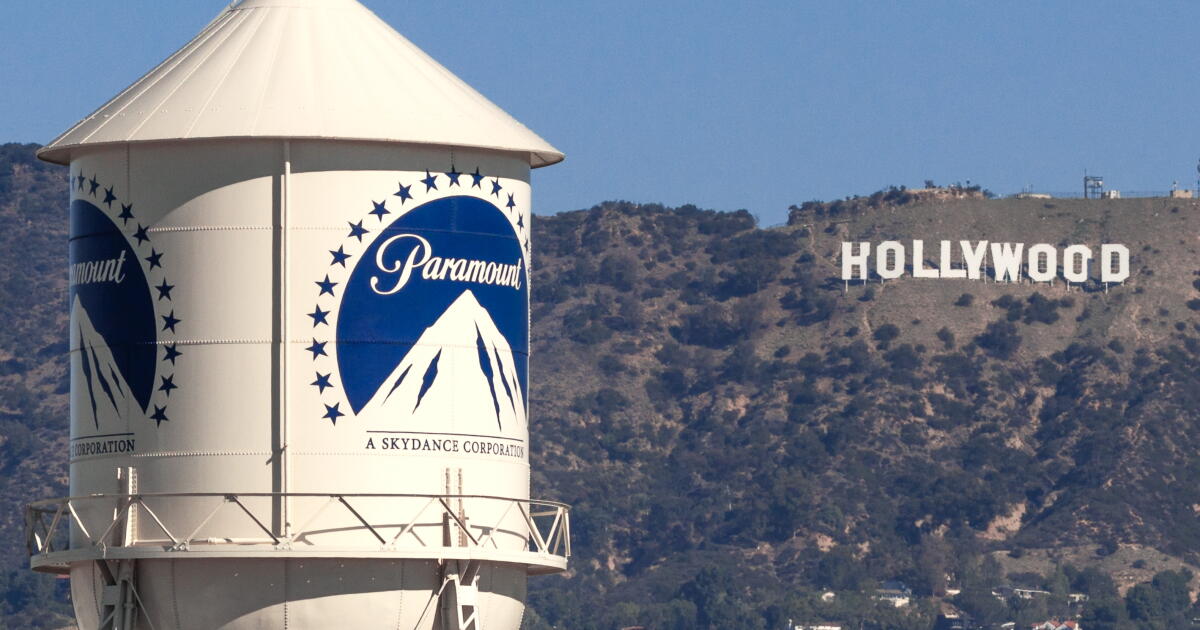
Skydance-owned Paramount Pictures has taken over the lease for the Bay Theater in Pacific Palisades and intends to reopen the cinema, which has been closed since the January 2025 Palisades fire last year.
Paramount plans to upgrade the theater with state-of-the-art projection systems and in-seat food and drink service, Rick Caruso, whose company owns the Palisades Village shopping center where the Bay Theater is located, said in an interview. Caruso is founder and executive chairman of the real estate firm Caruso.
Paramount plans to show first-run theatrical movies from all studios. The theater will be operated by The Lot, a La Jolla-based luxury dine-in theater chain with four locations in California. The theater is expected to reopen later this year, Caruso said.
“The comeback of this movie theater is a great signal for all of L.A.,” he said. “Los Angeles is resilient, and we’re going to show the country that Los Angeles can bounce back from a terrible, terrible disaster, and the comeback is going to be much greater than the setback.”
Palisades Village reopened in August after more than $100 million in renovations, including major infrastructure work. The upscale outdoor mall survived the Palisades fire, but needed refurbishment to eliminate any potential contaminants from the blaze.
Caruso declined to share terms of Paramount’s lease agreement, saying only that it was long-term. Paramount declined to comment on the size of its investment in the theater.
Caruso said he brought up the Bay Theater over lunch last year with David Ellison, chief executive of Skydance, who was then working to acquire Paramount. The two were discussing that deal and Ellison’s belief in the importance of the movie theater business to the industry.
“Together with Caruso, we are proud to help bring the Bay back to life as a place for the Pacific Palisades community to gather around the shared experience of cinema,” Ellison said in a statement. “This theater has always meant more than movies alone — it’s woven into the fabric of this neighborhood, and helping restore it is a privilege.”
The Bay Theater was previously leased by Netflix, which took it over in 2021. The company used the theater to host special events, screen classic films and showcase its own original theatrical movies.
Caruso described Netflix and company Chief Executive Ted Sarandos as “incredible stewards” of the theater, adding that Sarandos was “very much a gentleman” in having the discussion about Paramount stepping in at the theater.
Ellison has long extolled his love of movies and appeared at the CinemaCon movie theater owners convention earlier this year to reiterate his commitment to theatrical releases.
Studios were barred from owning theaters for decades under the Paramount consent decrees, which a federal judge terminated in 2020. Netflix has since operated the Egyptian Theatre in Hollywood and the Paris Theater in New York.
“Through our curated offering and dedicated hospitality, we look forward to welcoming the Pacific Palisades community back to the movies, the way they were intended to be shared,” Adolfo Fastlicht, founder and chief executive of The Lot, said in a statement.
Tech scion David Ellison spent three years doggedly pursuing his dream: acquiring Paramount, then Warner Bros. Discovery.
Ellison pulled off his bold feat this week by completing Paramount’s $111-billion takeover of Warner Bros., uniting two industry pioneers and a wealth of cherished properties — Batman, Bugs Bunny, Harry Potter and Maverick of “Top Gun,” as well as CBS, HBO, Comedy Central and CNN. All will be tucked under a corporate umbrella that Ellison is calling Skydance — the name of the studio he formed two decades ago.
The mogul and his lieutenants celebrated their victory in style, ringing the New York Stock Exchange opening bell on Thursday, capping a bruising battle to secure approval of a deal that had sparked protests across Hollywood over fears of looming job cuts.
Ellison and his team must braid together two huge film studios (housing nine film labels), four streaming services, three TV production studios, three animation units and more than 50 television networks, including two prominent news organizations. That could be a daunting task, particularly based on how previous Hollywood mergers have fared.
“Now, the real work begins,” David G. Fubini, a Harvard Business School senior lecturer, said in an interview.
Anxieties were evident Tuesday — the day the deal closed — when Ellison held a town hall meeting at Warner Bros., which drew nearly 500 employees.
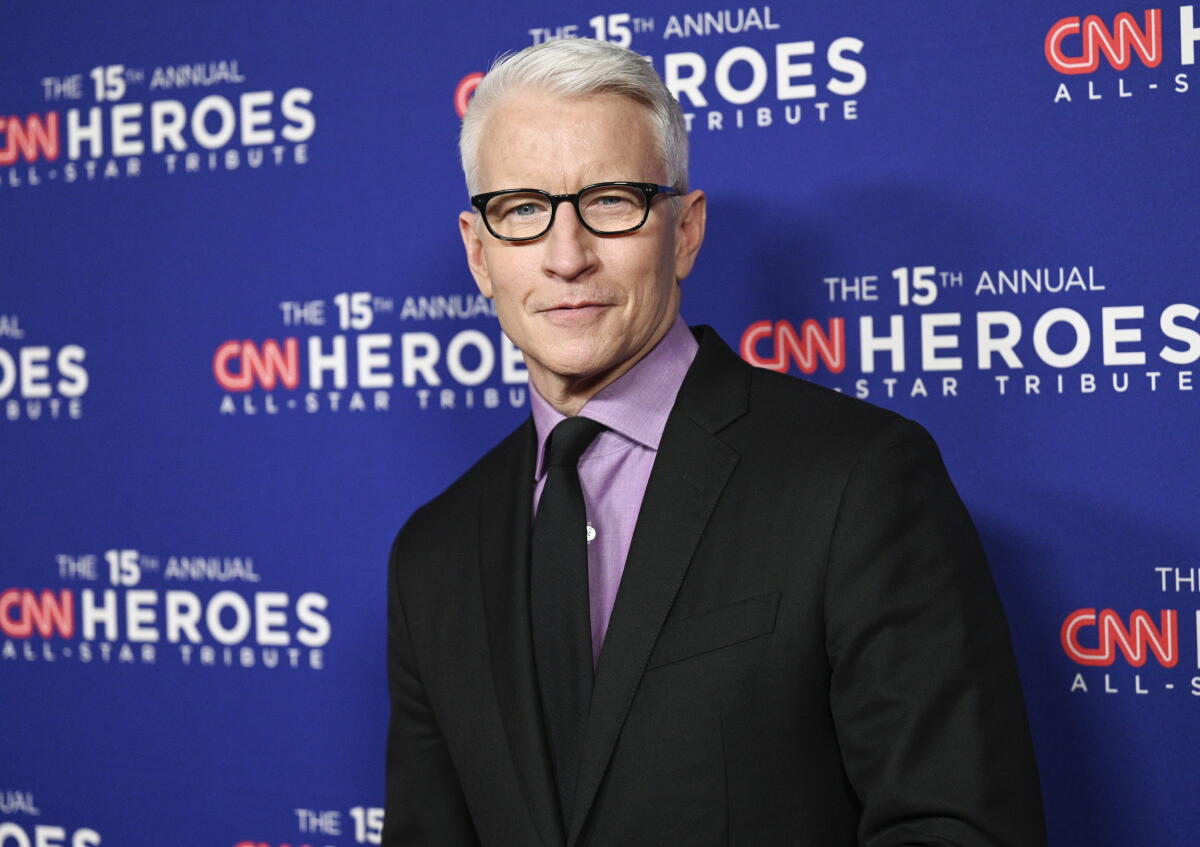
During the session, CNN’s Anderson Cooper quizzed his new bosses, including about anticipated layoffs and news independence.
“Do you stand with CNN and our effort to completely restore access to covering President Trump?” Cooper asked, referring to CNN’s legal fight alongside MS Now and Politico to reverse the president’s ban on the three organizations.
“Of course,” Ellison replied.
CNN news anchor Anderson Cooper, pictured here in 2021, quizzed his bosses at a Burbank town hall.
(Evan Agostini / Invision / Associated Press)
Hours later, Ellison parried with reporters in Paramount’s darkened Stage 3, recently revamped with laser projection capabilities to simulate fantastical and far-flung settings for TV shows, such as the streets of New York.
“This was a turbulent process, and, at times, a really ugly process, to actually get this deal over the finish line,” Ellison acknowledged to reporters. “What I want to be able to do now is turn the page, and actually make sure that we are in the business of rebuilding trust.”
To do that, Ellison intends to make more movies and TV shows than rivals. He wants to ensure the Warner Bros. and Paramount studios, which will be kept separate for now, remain talent-friendly destinations.
Ellison has taken an opposing view from his predecessors who confronted crumbling industry economics by cutting expenditures to boost their corporate bottom lines.
The 43-year-old executive, son of Oracle co-founder Larry Ellison, proudly views his family as “owner-operators,” unshackled by quarterly earnings expectations or the need to dole out dividends to keep investors happy. The Ellison family controls the company’s voting stock, allowing David Ellison to take a long-term view as he charts Skydance’s course.
The goal is to “win in storytelling,” Skydance said in an investor presentation. It intends to build the media industry’s most “technologically capable” firm, which uses artificial intelligence to speed work flows. Skydance plans to spend at least $30 billion a year on film, television and video game content.
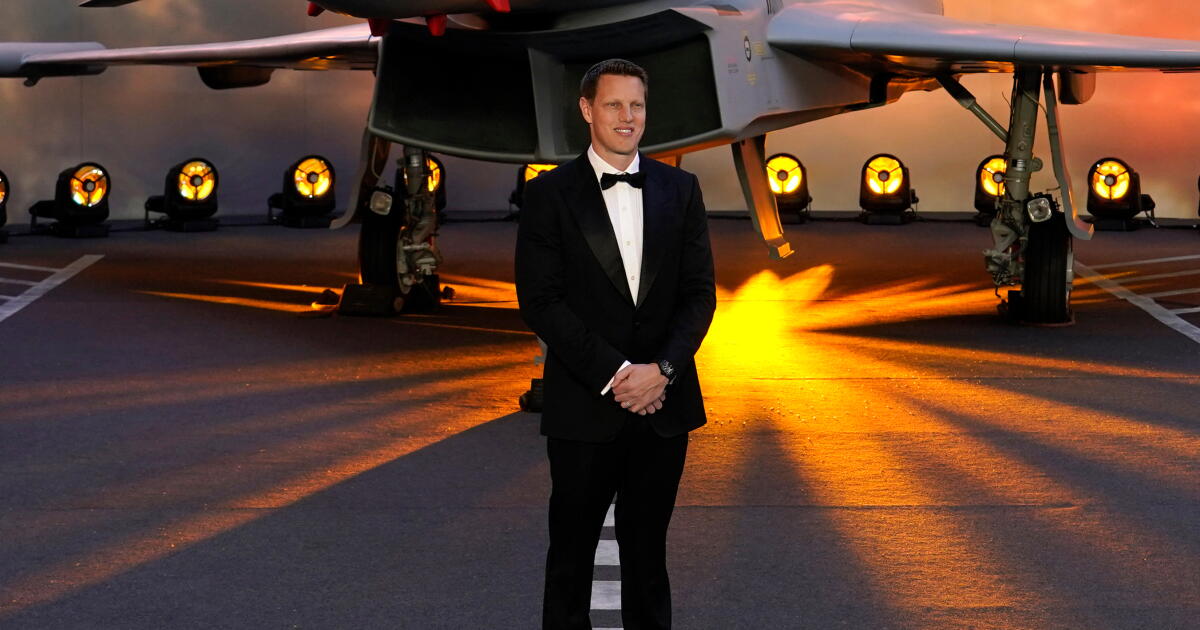
Skydance co-CEO Ynon Kreiz, Sarah Ellison, CEO David Ellison and investor Gerry Cardinale of RedBird Capital Partners on the floor of the New York Stock Exchange on Thursday.
(Yuki Iwamura / Associated Press)
The realities of Ellison’s big swing will soon sink in as he and his team turn their focus to integrating the myriad operations and about 55,000 employees.
In some ways, Ellison is behind the curve.
Most major mergers are consummated after executives have dedicated months to quietly drafting detailed operational plans and organizational hierarchies. Ellison, in contrast, has spent the last nine months in a pitched battle for Warner Bros. — ultimately vanquishing Netflix, hundreds of vocal merger opponents, and California Atty. Gen. Rob Bonta and his coalition of 11 other state attorneys general who filed an antitrust lawsuit in July in an attempt to derail the deal.
Ellison and Bonta resolved their legal fight Sept. 21. A week later, a federal judge cleared the way for the merger to close.
The lawsuit settlement with Bonta requires that the combined company produce at least 30 movies a year for five years. It also must maintain the studio facilities in Los Angeles, making “reasonable efforts to operate the lots in a manner consistent with past practices,” according to the agreement.
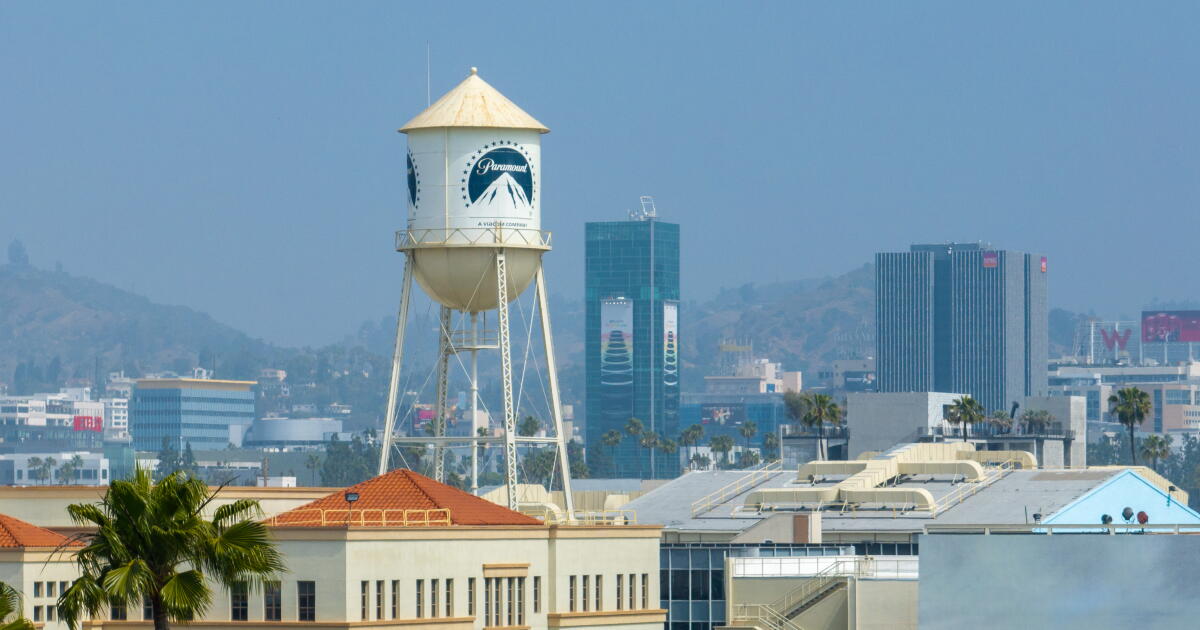
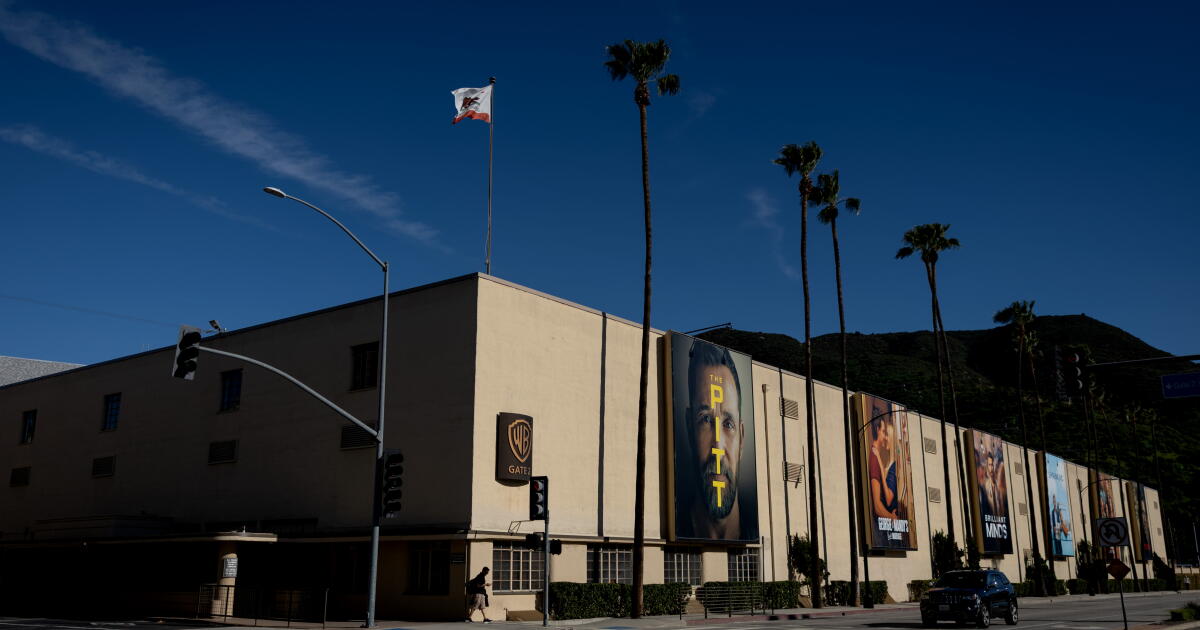
Skydance has committed to maintaining operations on the Warner Bros. lot, pictured here, and at Paramount Pictures in Hollywood.
(Eric Thayer / Los Angeles Times)
Ynon Kreiz, former chief executive of Mattel toys in El Segundo, has been tasked with leading the integration. The 61-year-old executive joined Ellison at Skydance as his co-CEO earlier this week. Day One of the combined company marked Kreiz’s second day on the job.
“They have a whole new management team that will be expected to immediately lead this massive integration,” Fubini, a former partner at consulting firm McKinsey, said. “The clouds have cleared, and they are at the base camp of Mt. Everest facing this enormous undertaking.”
In a report this week, TD Cowen Global Research maintained its “hold” rating on the newly constituted Skydance, expressing some doubts about Ellison and his team’s ability to “avoid integration and execution problems that have bedeviled other major media mergers.”
Hollywood has had a history of failed mergers, including Discovery’s 2022 takeover of WarnerMedia from AT&T, which led to years of cost cuts that ultimately seeded the ground for Ellison’s takeover. AT&T’s purchase of the same assets in 2018 also quickly unraveled, some 20 years after the epic failure of AOL Time Warner.
Ellison now must grapple with the hefty acquisition costs for Warner Bros., which climbed as the deal was delayed. The company emerged from the transaction with $86.8 billion in total debt; with most of that going toward buying out Warner Bros. Discovery’s stockholders at $31.17 a share.
The debt burden also includes more than $18 billion in obligations leftover from past mergers. Skydance has nearly $7 billion in cash on hand.
Oracle’s Larry Ellison and executive producer David Ellison arrive at the L.A. premiere of “Star Trek Into Darkness” at the Dolby Theatre in 2013.
(Eric Charbonneau / Getty Images for the Hollywood Reporter)
The Ellison family brought in foreign investors, including royal families of Saudi Arabia, Qatar and Abu Dhabi as passive owners, to contribute equity to the deal. Gerald Cardinale’s RedBird Capital Partners, a longtime Skydance stakeholder, added $4 billion, bringing its total investment in Skydance deals to $6 billion.
The deal’s financial terms pose deep challenges, analysts said. Fitch Ratings this week downgraded Skydance credit, citing “materially higher leverage after the acquisition and significant execution and integration risks,” according to its report.
“Interest rate increases made financing this transaction far more expensive than anyone anticipated,” said Eric Talley, a professor at Columbia Law School. “Those lenders are going to start expecting their interest payments — Skydance executives won’t have the luxury of time.”
The company could struggle, Talley said, to “generate the cash flow needed to easily service that debt unless they can significantly cut costs.”
Skydance has promised investors that it will make $6 billion in cost cuts over three years. It anticipates $2 billion in reductions within a year, with the bulk of the rest occurring in the second year of the merger.
“They are going to be firing a lot of people,” TD Cowen Global Research media analyst Doug Creutz said.
During the press briefing, Kreiz sought to downplay the expected workforce toll, saying Skydance would achieve savings by combining technologies that support streaming services and marketing expenditures. It plans to save costs on real estate by locating employees at Skydance-owned properties in Santa Monica, Hollywood and Burbank.
Ellison and Kreiz said they would jointly manage the new colossus.
“Where David will focus on creative, technology, long-term strategy, including especially as it relates to the creative part of the business, I will focus more on the operations and the day-to-day management of the business,” Kreiz said.
Kreiz was named to Skydance‘s expanded board this week along with Laurene Powell Jobs, founder of the Emerson Collective; and Bobby Kotick, former CEO of Activision.
The new leaders expressed confidence they could expand and integrate their two major streaming services to drive growth. HBO Max and Paramount+ combined will reach more than 200 million subscribers.
The plan, they said, is to combine the two streamers within a couple of years, but the company may offer subscribers a bundle with the two offerings sooner.
Skydance, according to sources, also expects to bolster its free, ad-supported service Pluto TV, which offers more than 200 channels. The service hasn’t had much corporate attention in recent years amid the cuts and deal-making.
The executives have not disclosed which teams would soon be affected or how they will structure overlapping business units.
For example, the company’s three TV studios each have their own leader: Channing Dungey runs the largest, Warner Bros. Television; David Stapf has long managed CBS Studios; and Skydance executive Matt Thunell has been president of Paramount Television Studios since last year.
Integrating CNN and CBS
Anxiety over whether CNN and CBS News would be mashed together was quelled, at least for now.
Skydance announced that it was retaining CNN Worldwide Chairman Mark Thompson as head of the larger news organization. CNN journalists had worried that CBS News Editor in Chief Bari Weiss, who has presided over a year of turmoil at the network, would be put in charge of both.
Any news consolidation could take years, in part, because CBS News is largely unionized while CNN is a non-union shop.
“We are going to spend the next several months basically getting under the hood,” Ellison said.
CBS News Editor in Chief Bari Weiss, pictured here in 2023 in Los Angeles, has had a turbulent tenure at CBS.
(Francine Orr / Los Angeles Times)
Another challenge will be stabilizing the Warner Bros. film unit, which has had a rough year at the box office. This month, the top two Warner Bros. film executives, Mike DeLuca and Pam Abdy, exited abruptly, clearing the way for longtime Ellison lieutenants Dana Goldberg and Josh Greenstein to oversee both film studios. The co-heads of DC Comics, James Gunn and Peter Safran, segued to the new Skydance.
Skydance also will have to deal with the NFL, which could demand substantially higher fees for CBS to keep its Sunday games.
The current contract allows the league to reopen negotiations because of the ownership change. Skydance is hoping it can wait three years until the contracts of other broadcasters also are up for discussion.
Skydance will be a major player in sports. Last year, Paramount agreed to spend $7.7 billion for UFC fights. The combined company also has rights to professional golf, including the Masters tournament; National Hockey League; Major League Baseball and NCAA basketball, including March Madness, as well as European rights to televise the Olympics.
“Until you actually get inside the company, there are things you won’t know,” Creutz said. “But they are going to have to come up with answers pretty quick.”
David Ellison emerged with his prized Hollywood juggernaut Tuesday as the merger of Paramount Skydance and Warner Bros. Discovery officially closed.
The $111-billion transaction culminated a year-long battle by the 43-year-old tech scion to add Warner Bros. Discovery to his family’s growing portfolio.
The Ellison family now controls one of the largest traditional media companies ever formed, with HBO, CNN, CBS, Comedy Central, TBS, Food Network, two traditional Hollywood studios and two major streaming services.
Shares of the new company began trading under the ticker SKYD, a switch from last week when the company went by PSKY for Paramount Skydance. Ellison has called the merged company, Skydance, the name he selected two decades ago when he began building his Hollywood studio.
By naming the product of two mergers Skydance, David Ellison relegates two of Hollywood’s founding studios to a sub-brand stew and attempts to erase a bunch of controversial hires.
What a surprise. David Ellison has decided to name the Frankenstudio media company created by the merger of Paramount Skydance and Warner Bros. Discovery simply Skydance.
And why not? “Massive Debt Funding Media” doesn’t really roll off the tongue (though “Ultra Leveraged” has a nice ring); “Ellison and Dad” is a bit too on the nose; and “Skydance” is, after all, the name he chose for the one company out of those four that he built rather than bought.
Skydance is a poetic term with some definite “Star Wars” overtones and perhaps unintentional symbolism. Before the aviation-loving Ellison claimed it, “sky dance” referred to the aerial mating of certain birds, most famously the American woodcock, also known as the timberdoodle or (I’m not making this up) the bogsucker.
(“Timberdoodle Media,” now that’s a splendid name, and “Bogsucker Productions” could work as well.)
In his attempts to acquire Warner Bros. Discovery, Ellison has certainly engaged in some high-flying … well, courtship might not be the right term for the dizzying mix of cajoling and threats he has employed to get the deal done, and it certainly does not seem fair to the American woodcock. I’m no expert, but I don’t think their mating rituals involve using the New York Times to plead their case or, when that doesn’t work, threatening to move en masse to Tennessee.
For those inexplicably hoping for ParaBros, Skydance seems a bit of a letdown, especially considering all the trouble Ellison went to. It’s been quite a show, the various razzle-dazzle versus strong arm tactics (not to mention the Middle Eastern money) he mobilized to turn two of Hollywood’s preeminent founding studios into ingredients in sub-brand stew that also includes CNN, HBO Max, CBS, DC Comics, Nickelodeon, MTV and Food Network.
Overseeing such a diverse mix is obviously too big a job for one person so Ellison added yet another flavor by drafting Ynon Kreiz as co-chief executive. Kreiz was previously chairman and chief executive of Mattel, where he facilitated the toy company’s big Hollywood push with “Barbie,” “Masters of the Universe” and the upcoming Hot Wheels movie. (Polly Pocket, now in development at Reese Witherspoon’s Sunshine Productions, should be preparing for her close-up.)
By sticking with Skydance, Ellison is not just making a large swath of Hollywood indisputably his own, he’s showing remarkable confidence in a name that first came to many people’s attention in 2019 when he hired John Lasseter.
Six months after Walt Disney Co. ended its relationship with the then-chief creative officer of Pixar and Disney Animation Studios following an investigation into multiple accusations of sexual harassment and workplace misconduct, Ellison hired him to oversee Skydance Animation.
Unsurprisingly, this led to all manner of protest, within and outside the company. When Emma Thompson learned of Lasseter joining Skydance, she withdrew from its highly anticipated upcoming animated film “Luck.” In a stinging letter she sent to the company at the time (and allowed The Times to make public), she wrote: “It feels very odd to me that you and your company would consider hiring someone with Mr. Lasseter’s pattern of misconduct given the present climate in which people with the kind of power that you have can reasonably be expected to step up to the plate.”
Lasseter was not Skydance’s only controversial hire. After merging with Paramount, the company made deals with or hired multiple men, including Brett Ratner, Max Landis and Jeff Shell, who had been accused of sexual harassment and/or misconduct.
Shell was made president of Paramount less than three years after losing his job as NBCUniversal chief executive following the disclosure of an “inappropriate relationship” with an NBC employee. He stepped down from Paramount in April after a monthslong legal battle with a Las Vegas gambler and self-described “fixer” who claimed that Shell had reneged on a deal to develop a series in exchange for free crisis control.
Now, of course, all of that is ancient history. Now Paramount is merely a sub-brand and Hollywood is less concerned with who Skydance hired as it is with who, and how many, Skydance will fire.
Also how exactly the CNN/CBS oversight committee Ellison agreed to create as part of the settlement with 12 states is going to work. And what will happen if Skydance does not release 30 new films each year, which Ellison has promised to do as part of the settlement deal. And how expensive the new Skydance streaming bundles are going to be. And if, perhaps, in some language Skydance translates to “the end of the entertainment industry as we know it.”
Most important, is it too late for the American woodcock to sue?
David Ellison said the merged Paramount and Warner Bros. Discovery will be called Skydance — the moniker he picked nearly two decades ago when the tech scion began building his Hollywood empire.
Ellison, currently the chairman and chief executive of Paramount, is aiming to finalize the acquisition of Warner Bros. Discovery by Tuesday. Then the combined company will assume the name and logo of his once small studio.
“We chose this name for a few important reasons,” Ellison wrote Friday in an X post. “As we bring Paramount and Warner Bros. together, we wanted to preserve what has made each of these studios iconic. Both have distinct identities, extraordinary legacies and brands that have resonated with audiences … We never wanted a new corporate identity to diminish, alter or overshadow either one.”
By calling the company “Skydance,” Ellison said the merged entity would have “an identity of its own while allowing Paramount and Warner Bros. — and all our extraordinary brands — to remain in the spotlight.”
In Hollywood, there had been much speculation over what jumbled mash-up of the corporate titles would be used, with WarnerMount and Paramount-Warner Bros. often mentioned as possibilities.
Both companies boast century-old studios, beloved media brands and a recent past that has included several fraught mergers. When AT&T sold WarnerMedia to David Zaslav’s Discovery in 2022, he selected Warner Bros. Discovery as the corporate name.
The merger is quickly reaching the finish line after U.S. District Judge Araceli Martínez-Olguín on Wednesday signed a settlement agreement, effectively ending an antitrust lawsuit brought in July by California Atty. Gen. Rob Bonta and 11 other state attorneys general who initially fought the formation of a new Hollywood colossus. Paramount now has won approvals by nearly 70 regulators for the industry-reshaping deal.
For more than a decade, Paramount has been the smallest of the major media companies, owning CBS, Comedy Central, BET, Nickelodeon and the Melrose Avenue studio. With the $111-billion merger with Warner, Skydance will gain more valuable assets including HBO, CNN, TBS, Food Network and Warner Bros. film and television studios, along with their massive libraries that include the Harry Potter, “Lord of the Rings,” and DC Comics franchises.
Earlier this week, Ellison announced he was bringing Ynon Kreiz, who has served as the CEO of toymaker Mattel for eight years, to run the new entity’s day-to-day operations. Kreiz, 61, brings years of operational experience that Paramount’s top executives had lacked.
Paramount released details of Kreiz’s contract on Thursday in a regulatory filing, saying he would receive an $5 million annual salary and an annual target bonus of $4.9 million. He will also qualify for a signing bonus of $31.5 million to come over to the new company, paid through restricted stock units.
In addition, HBO Chairman Casey Bloys is widely expected to become head of the merged company’s streaming programming. Paramount’s streaming chief Cindy Holland exited the company earlier this week to make way for Bloys.
During a Thursday appearance at the Bloomberg News Screentime media conference in Hollywood, Bloys declined to discuss his presumed new role. But he suggested that that Ellison’s company might bundle HBO Max and Paramount+ services, allowing the two services to remain for now, rather than try to fold them into one gigantic offering.
Skydance will carry than $80-billion in debt, much of it acquired to retire the holdings of Warner Bros. Discovery investors at $31.17 a share. The company also has promised investors that it would find $6 billion in cost-cuts within three years.
During a separate appearance at the Bloomberg conference, RedBird Capital Partners founder Gerry Cardinale, a Paramount investor and board member, said finding $6 billion in cuts would be relatively easy, and would not be focused solely on layoffs. It would include combining the technology stacks for the various streaming platforms.
But Cardinale acknowledged layoffs would be part of the cost-cuts, a prospect that frightened many in Hollywood after endless waves of job cuts at the two companies.
Warner’s outgoing chief executive Zaslav will leave with a golden parachute valued at about $887 million, which includes cash, stock and options valued at more than $550 million, according to regulatory filings.
In addition, Warner board members separately agreed to pay Zaslav’s tax bills, which could approach $330 million.
Paramount Skydance’s streaming chief Cindy Holland is exiting the studio, clearing the way for HBO Chairman Casey Bloys to claim a key role in the company once Paramount acquires Warner Bros. Discovery.
Holland announced her departure Tuesday in a memo to her staff. Her resignation is effective immediately.
She joined Paramount nearly 14 months ago as chairman of direct-to-consumer operations, in charge of Paramount+ and Pluto TV, after David Ellison’s Skydance Media took control of the media company long held by the Sumner Redstone family.
Holland, a respected former Netflix executive, was one of the few Paramount executives who lacked long ties to Ellison, who brought much of his Skydance team with him to Paramount.
Her resignation comes as Paramount is waiting for a federal judge to approve a settlement agreement that would allow Paramount to finalize its $111-billion purchase of Warner Bros. Discovery, which also includes CNN, TBS and the Warner Bros. film and television studios.
The agreement, unveiled last week, was designed to end a lawsuit brought by California Atty. Gen. Rob Bonta and 11 other Democratic attorneys general, who had argued Hollywood’s biggest merger in decades violated U.S. antitrust laws.
“As David readies for the next phase of his vision, we’ve discussed my role and the future of the combined businesses,” Holland wrote in the memo shared with her staff viewed by the Times. “David is optimizing for HBO stability as we move into this next chapter, and I fully support that.”
Ellison, in recent months, has signaled his intention to install Bloys in a pivotal role at the combined company.
Ellison months ago made a public commitment to protect HBO, which has long been a leader in prestige TV programming. The network has already undergone two ownership changes, and considerable management turmoil, during the last decade. Bloys has led HBO as its chairman since late 2022. He was one of the first Warner executives that Ellison met with this year after Paramount prevailed over Netflix in the bidding war for Warner Bros. Discovery.
The New York Times first reported Holland’s departure.
“Cindy has been a trusted partner to me and so many others, and I couldn’t be more grateful for her leadership, her relentless drive and everything she’s done for our company,” Ellison said in a statement.
Last week’s settlement of the antitrust lawsuit between state attorneys general and Paramount Skydance over its planned merger with Warner Bros. Discovery marked a clear victory for David Ellison.
If approved by a judge, the settlement would clear the way for the emerging Hollywood mogul to complete the blockbuster $111-billion purchase after months of uncertainty over whether the deal would overcome intense opposition in Hollywood.
What’s more, Ellison achieved the settlement without having to agree to any so-called structural remedies that California Atty. Gen. Rob Bonta had been seeking.
But Ellison can hardly rest on his laurels. The Paramount Skydance chief executive will have to work hard to repair badly frayed relations with Hollywood talent who fiercely opposed the consolidation of two historic studios as a bad deal for workers. And the 43-year-old tech scion will be constrained by some of the terms that were imposed in the consent decree negotiated with Bonta and other attorneys general.
“I don’t envy David Ellison. You bought this ship, now you’ve got to sail it. And you’re facing threats on all fronts: bad will, everybody rooting for you to fail and operating a business in an incredibly uncertain, challenging time,” said Gabriel Kahn, a professor at the USC Annenberg School for Communication and Journalism. “At the same time, you are going to have to mortgage everything to make these debt payments.”
As part of the deal, Paramount agreed to a slate of requirements that, if it fails to deliver, could induce financial penalties, litigation and other costs.
For one thing, Paramount would have to pay a penalty and divest the Miramax film studio if it does not distribute 30 or more films a year in theaters.
The studio also pledged to spend $300 million more each year on film production in the U.S. and further boost its film spending if the federal government adopts a film tax credit of at least 20%; it agreed not to sell or close its lot on Melrose or the Warner Bros lot in Burbank and to operate them “in a manner consistent with past practices,” until 2031.
Additionally, Paramount is required to establish a board to ensure editorial independence for CNN and CBS News, though it will be appointed by Paramount directors with the authority to remove its members.
Beyond attempting to smooth the industry’s many ruffled feathers, Hollywood’s newest mogul must now also wrestle down an astonishing $80 billion in debt accrued as a result of this highly leveraged merger.
The months-long battle was bitter and hard fought and enmity within the industry has yet to subside.
On Tuesday, the morning after Bonta announced the settlement agreement, protesters converged outside of Paramount Skydance’s Melrose Avenue gate criticizing the deal. Some held fake gravestones that read: “RIP local business,” “RIP crew call” and “RIP creativity.”
Two days later, a coalition of several groups including the Committee for the First Amendment, filed an amicus brief asking the court to reject the consent decree, saying that it failed to address the anti-competitive concerns of the state attorneys general and would not protect jobs or consumers.
The sense of betrayal was acute.
“Hate to say it but we all got played,” wrote actor Mark Ruffalo, a leading organizer in Block the Merger, a grassroots organization made up of 1st Amendment advocates and Hollywood celebrities who aggressively opposed it, in a post on X.
Sen. Elizabeth Warren (D-Mass.) repudiated the deal, saying in a statement. that it “enables a handful of billionaires to call the shots in the media.”
The entertainment unions struck more cautionary notes.
SAG-AFTRA, the actors union, wrote in a statement that the deal “addresses some of our deep concerns,” but added, “We hope that the process of engaging with the attorneys general has impressed upon them the fact that in addition to collective bargaining, our members rely on the law to help protect our interests. These are the lowest standards that our employers must meet.”
Bonta, who had spearheaded the antitrust suit, gave a tepid endorsement of the consent decree.
“I want to be clear about something right up front: This settlement is not a vote of support for this merger. It is not a blessing,” he said.
During Paramount’s heated and often contentious legal and political wrangling to wrest control of Warner Bros., many in Hollywood became increasingly apprehensive. Combining two legacy studios, opponents feared, would bring even more job losses to an industry already battered by runaway production.
The skepticism hardened as the Ellisons made several controversial moves after Skydance acquired Paramount last summer. They included agreeing to pay $16 million to settle a lawsuit filed by President Trump over a “60 Minutes” interview segment, canceling the “Late Show With Stephen Colbert,” ending diversity, equity and inclusion programs and appointing Bari Weiss as editor in chief of CBS News, who engaged in a wholesale overhaul that led to a revolt at the esteemed “60 Minutes.”
When the newly formed Paramount Skydance announced its intention to swallow up Warner Bros. Discovery just months later, a massive wave of political pressure and public backlash began.
But the Ellisons dug in.
In January — after Netflix threw a surprise wrench into the Ellisons’ designs on Warner Bros. by offering $72 billion, which the studio accepted — Paramount took Warner Bros. to court and launched a hostile takeover bid.
A month later, Netflix walked away from the deal and collected a $2.8-billion termination fee after the Warners’ board agreed to Paramount’s higher all-cash bid.
But many in Hollywood began agitating against the planned merger and pushing for guardrails and protections.
In April, Block the Merger released an open letter declaring their opposition; its list of professionals across the film and television industry eventually swelled to nearly 6,000 names, including Ruffalo, Jane Fonda, Ben Stiller, Sofia Coppola, Trey Parker and Denis Villeneuve.
“The future of free media and a strong entertainment industry in America is at stake here,” said Norm Eisen, co-founder and executive chair of Democracy Defenders Fund, who also helped lead the Block the Merger campaign.
The Writers Guild of America sued to stop the deal, saying it violated antitrust laws. The union last week settled its lawsuit, citing the costs of continuing the litigation, after Paramount agreed not to lay off writers at CBS Broadcast News for years and to pay $17.5 million to the union’s health fund. Nonetheless, the guild said: “We continue to believe the merger will cause damage to writers and the industry at large.”
Some backed the megadeal, including power broker Ari Emanuel.
The WME executive and chairman and CEO of TKO came out swinging, excoriating the antitrust suit, in an op-ed for the Wall Street Journal in July. “They say they are protecting competition. Their actions threaten to destroy it,” he wrote.
Both Ellison and his son David reportedly promised the president they would make “sweeping” changes at CNN, which is owned by Warner Bros. Discovery.
In June, David Ellison attended the “UFC Freedom 250” event hosted by Trump on the South Lawn of the White House, and last week he was a guest at the White House state dinner honoring Chinese President Xi Jinping.
Amid the high-level public-facing Trump engagements, Paramount had been quietly trying to allay fears about the relationship to industry insiders.
Two individuals in the entertainment industry, who declined to be named for fear of retaliation, said that Paramount sent emissaries to extend a kind of olive branch, explaining their commitment to Hollywood and downplaying the relationship as a necessary step to get the deal done.
In August, Ellison published an op-ed in the New York Times in which he extolled his lifelong love of movies and laid out his case that he could be “trusted as a steward” of the media giant he was amassing, that includes two institutional news organizations (CBS and CNN) and the legacy studios he wished to combine.
However, his seemingly conciliatory message was undercut that same month when he threatened to relocate Paramount’s base to Tennessee or Texas. Ellison built his Skydance production in Santa Monica.
Across the industry, workers viewed the mixed messaging with wariness and anger.
“If Ellison truly wants to be a steward and do the things that he said he can do and wants to do in that article, I think people would welcome it,” said Pamala Buzick Kim, a co-founder of Stay in LA, the 23,000-member grassroots campaign aimed at boosting local film and television production. “They just have no evidence of it.”
Aside from the bad blood, Ellison’s biggest challenge may be financial.
At a time of massive industry upheaval, most observers believe that the company will have to lay off droves of workers to bring its costs down.
“I will honestly say that the biggest work that they have cut out for them is servicing this debt, and that’s going to guide every decision,” said Kahn, the USC professor.
“Now they’re going to have to fire lots of people in order to reduce costs to be able to make this deal pencil out, and they’re going to be skating on the razor’s edge to make sure that they have enough revenue coming in going forward to service this debt. They have almost no room to maneuver.”
But Paramount has one thing working in its favor: leverage. David (as in Ellison), for better or worse, is now the industry’s Goliath.
“I think temper tantrums can be easily forgotten if the work is there,” said Buzick Kim. “I think most people would be happy to leave it behind them — if the work is there.”
Times staff writers Meg James, Stephen Battaglio and Samantha Masunaga contributed to this report.