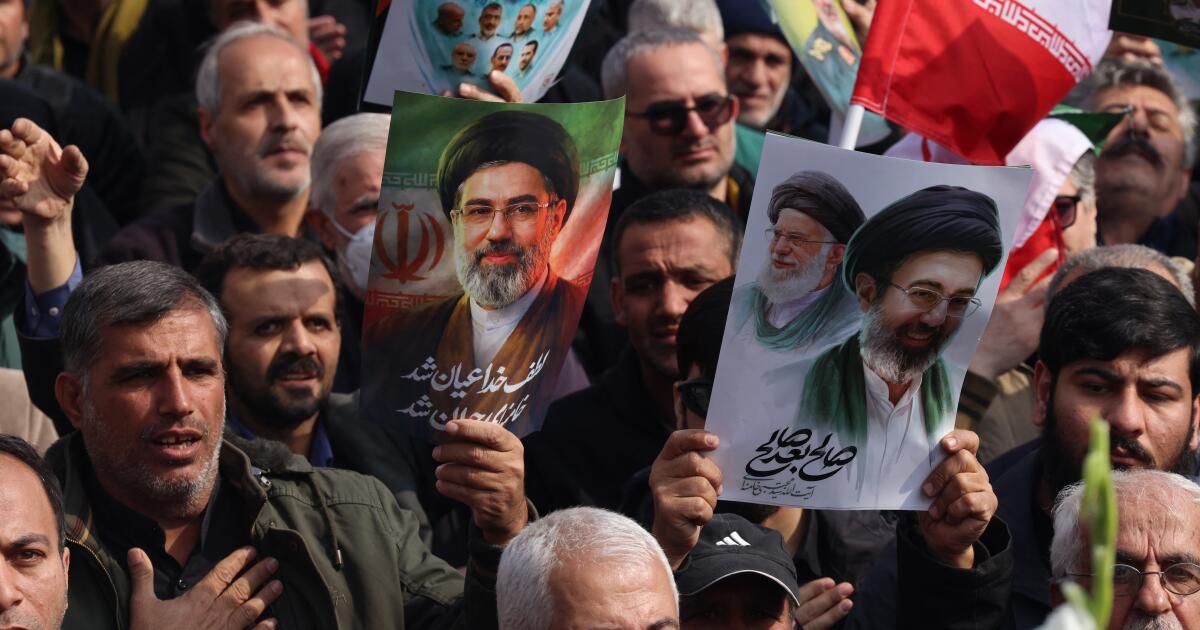
The once-bustling holiday resort – popular with the likes of Elizabeth Taylor – was abandoned in the 1970s but has since become a haven for one niche but growing tourist market
14:05, 04 Apr 2026Updated 14:21, 04 Apr 2026
The town is now ghostly and empty – but that’s why it’s becoming a tourist hotspot once again(Image: Getty Images)
Once a playground for Hollywood’s elite, this coastal resort has transformed into an unsettling ghost town. Yet this Cypriot location has found new purpose amongst travellers, emerging as a destination for ‘dark tourism’.
A short distance from well-known Cyprus holiday spots such as Paphos and Limassol lies Varosha. Varosha was formerly a glamorous getaway destination in its own right, attracting Elizabeth Taylor and other luminaries of the 1960s.
However, when Turkish forces invaded Cyprus’s northern territory on July 20, 1974, the seaside resort was altered forever. Five days earlier, there had been a coup attempt backed by the Greek junta. The 15,000 inhabitants of Varosha were compelled to evacuate en masse following the military incursion, leaving behind their homes, businesses and pristine beaches.
Consequently, the district became a ghost town with structures left predominantly vacant. Even now, the neighbourhood remains frozen in time under Northern Cyprus’s jurisdiction. Unsurprisingly, the area lost all attraction for holidaymakers, as vegetation began reclaiming the pavements and sea turtles made nests on Varosha’s formerly sunbather-packed beaches.
Yet in October 2020, a decision was taken by Turkish President Recep Tayyip Erdogan and the then prime minister of Northern Cyprus, Ersin Tatar, to reopen the district to visitors. Varosha has since begun drawing a markedly different type of tourist than it did during its 1960s golden era.
More than 1.8 million tourists have descended on the ghost town over the past four years, according to figures published in 2024. Visitors appear to be drawn in by the town’s chilling historical significance and its crumbling, derelict landscape.
Speaking to the Daily Express, Hubert Faustmann, a professor at the University of Nicosia, said: “The section found itself in the top tourist sites in terms of dark tourism, so they started to open up certain parts of Varosha, and it’s now a tourist destination with guided tours, with e-bikes, vehicles and coffee shops.”
Faustmann continues: “Varosha is being used as a tourist destination, as a tourist attraction, without a single inhabitant prior to 1974 returning. It’s changed in the sense that it’s open to the public, but it’s not open for return.”
In a bid to shed its decaying reputation, Varosha has undertaken clean-up efforts ahead of its reopening. The town now boasts a range of amenities catering to all types of visitors, from beach umbrellas to canteens.
PACE rapporteur for Varosha Piero Fassino, who had visited the ghost town in mid-May, presented his findings to the assembly during the gathering. The Italian senator expressed his hopes that Varosha could be transformed back into a “living town” following his visit.
That being said, dark tourism has been a longstanding element of the travel sector, achieving widespread attention through the Netflix programme, Dark Tourist. The series explores the bizarre, eerie and superstitious customs and folklore connected to numerous locations across the globe.
Speaking to The Mirror, dark tourism enthusiast Louise Joy explained: “Traditionally, dark tourism is visiting places associated with death and tragedy.” Joy is a blogger and founder of The Morbid Tourist and reveals she routinely seeks out “spooky” locations when travelling.
Joy suggests TikTok has also made a substantial impact on the dark tourism sector in recent years. “The individuality on TikTok [helps] people seeing stuff that is different and you don’t necessarily see that out there offline, like in books,” says Joy.
5 Star’s gripping documentary series A+E After Dark returns for its seventh series at a time when new figures reveal a stark and troubling reality for frontline NHS workers
14:50, 02 Apr 2026Updated 15:21, 02 Apr 2026
A&E After Dark: Doctors tend to car crash victim at Dublin hospital
Gripping documentary series A+E After Dark returns for its seventh series on Thursday night on 5 Star.
The new season is filmed inside the A+E departments of Norfolk and Norwich University Hospital, Newham Hospital in East London, and Royal Victoria Hospital in Belfast.
The show offers unprecedented access to the night shifts where staff pressure, violent attacks and life-or-death decisions collide.
The first episode shows shocking racist abuse towards an A+E nurse in Newham, attempts to save a stabbing victim and their attacker in Norwich and two injured young men involved in a 70mph collision during wet weather in Belfast
A synopsis for episode one reads: “At Norfolk and Norwich University Hospital, doctors race to save both victim and attacker after a shocking stabbing brings two critically injured men into A+E at the same time.
“In Belfast, a high-speed crash during extreme weather leaves multiple patients at risk of spinal injuries, while an elderly woman undergoes a painful procedure for a broken femur.
“Meanwhile in Newham, security intervene when a patient refuses to stop live streaming inside the department, and in Norwich, a team fights to restart a patient’s heart during a sudden cardiac arrest.”
In a chilling first look clip at the collision in Belfast, it sees four young men rushed into the department after a high impact car crash at 70mph.
It then sees Doctor Michael examining one of the front passengers, David, who is in serious pain. Speaking in a VT, Doctor Michael explains: “Obviously, the faster the car is going, the more severe injuries you will get.”
Looking over David, Doctor Michael says the patient will be sent for X-rays on his face, neck, lower back and knees to check there are no fractures or breaks.
It comes as NHS England sadly reports a three-year high in violence against staff. Almost 1 in 7 NHS workers (14.47%) were physically attacked by patients or the public last year, with a record number of staff subjected to unwanted sexual behaviour, rising sharply to nearly 1 in 3 ambulance workers (31%), while 9% reported experiencing discrimination – the highest level ever recorded, according to new data from NHS England.
A+E After Dark captures the relentless reality of night-time emergency care across the UK. The new series follows dedicated teams in Belfast, Newham and Norwich as they battle exhaustion, overcrowding and escalating violence to save lives.
**A+E After Dark airs on 5 Star at 9pm on Thursday 2 April and is available to stream on My5. You can follow the series on **Facebook** and **Instagram** and **TikTok.
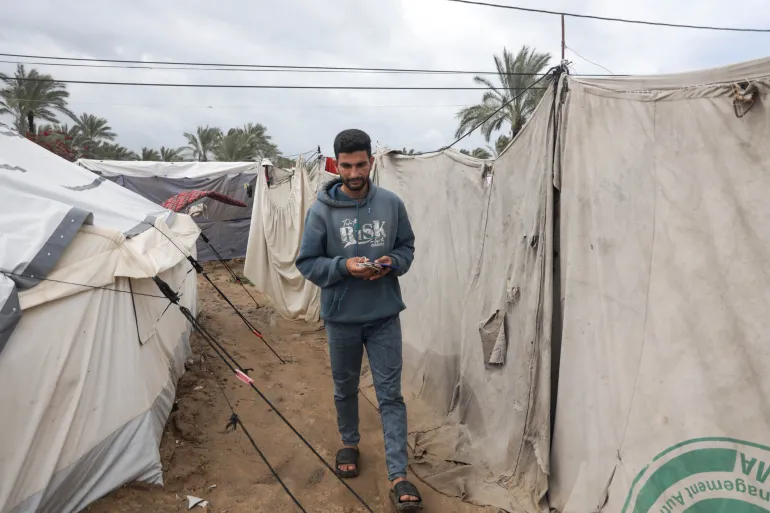
Deir el-Balah, Gaza Strip – Every morning, Abdel Karim Salman begins his routine by heading out carrying his own phone and his wife’s phone, both completely drained of charge. He walks to a nearby charging point to plug them in and recharge them again.
Throughout the night, Abdel Karim relies entirely on the torches from the phones to light the inside of the tent he lives in with his family in central Gaza’s Deir el-Balah.
Recommended Stories
list of 3 itemsend of list
Abdel Karim, 28, a former civil engineer at the Beit Lahiya municipality in northern Gaza, was displaced to Deir el-Balah a year and a half ago with his wife and two children, along with about 30 members of his extended family.
His family home was completely destroyed on October 9, 2023, in the first few days of Israel’s genocidal war on Gaza.
Abdel Karim and his family have been on a difficult journey of displacement since then, with little in the way of normality, and in particular, a regular source of electricity for a bulb in his tent.
So he looks for alternatives to light up the structure, namely the phones, despite the rapid battery drain caused by keeping the torch function on.
“I charge my phone and my wife’s phone, and we use them for lighting at night, especially since my children are under five years old and they get scared if they wake up in the dark,” he says.
Abdel Karim says that the suffering caused by electricity shortages in Gaza is one of the largest “silent” forms of suffering that receives little attention.
For Abdel Karim, the charging process itself has turned into a daily, exhausting burden.
He walks between 150 and 200 metres every day to reach a charging point, paying between two and four shekels ($0.65 to $1.30) per charging session, twice a day.
“That means about eight to 10 shekels ($2.55 to $3.20) per day just for charging phones,” Abdel Karim explains, equivalent to approximately 270 to 300 shekels ($86 to $95) per month, a large amount given the lack of income among displaced families in Gaza amid the territory’s war-driven economic crisis.
“Many days and nights we sleep in darkness inside our tent. When we can’t charge the phones, they turn off, and we are unable to recharge them.”
Abdel Karim Salman heads daily to the charging station to charge his phone and his wife’s phone, which they use as a source of light in their tent throughout the night [Abdelhakim Abu Riash/Al Jazeera]
Few options
With municipality-supplied electricity absent for two years in Gaza, several temporary alternatives have emerged, such as solar-powered lamps, but they remain unaffordable for most residents, having increased tenfold to about 300 shekels ($95) during the war.
As for solar energy systems, they are even more expensive, reaching $420 per panel, and with the additional cost of a battery – about $1,200 – and an inverter. All these items are also scarce due to severe Israeli restrictions on their entry into the Gaza Strip since the beginning of the war.
For Abdel Karim, who lost his job soon after the war began, those sums are out of his reach.
Among the alternative solutions introduced during the war are private generator-based electricity systems operating on diesel fuel.
However, those are also unaffordable for many, and their services have fluctuated due to irregular fuel supplies through the crossings.
And so, with most options simply too expensive, that leaves many in Gaza in the same boat as Abdel Karim.
The impact of the power cuts is not limited to lighting or charging, but extends to every detail of daily life, especially for families with children.
“There is no refrigerator, no washing machine … even baby milk cannot be stored for more than two or three hours,” Abdel Karim explains, as he remembers his previous life, when his home was filled with electrical appliances and reliable power.
“The phone charging socket used to be right beside my bed. I could plug it in whenever I wanted. Today, that has become a dream inside this tent,” Abdel Karim adds.
He also says his children have been psychologically affected, especially his eldest son, due to the lack of any means of electronic entertainment or distraction from his grim surroundings.
“There is no TV or screen. He keeps asking for the phone all the time just to calm down, but that also needs charging. Everything is dependent on electricity.”
According to Abdel Karim, his suffering is not an exception. He believes almost all of the people in Gaza are living the same reality, noting that even families in nearby camps who tried to pool resources to buy energy systems have been unable to afford them.
“We hope God brings relief … because we are truly left without any solutions, as if we were abandoned in the desert.”
Abdel Karim Salman lives with his wife and two children in a tent [Abdelhakim Abu Riash/Al Jazeera]
Longstanding problem
On October 7, 2023, Hamas launched an attack on southern Israel, and Israel then began its war on Gaza.
More than two years on, Gaza has been decimated by Israeli attacks – on top of the more than 75,000 Palestinians killed.
But even before the war, Gaza faced daily rolling blackouts due to limited power imports from Israel and fuel shortages.
Israel, despite withdrawing its illegal settlements from Gaza in 2005, continued to control access into and out of the Palestinian enclave, and repeatedly attacked it.
And so, even in normal conditions, most households only received a few hours of electricity per day, relying on a fragile mix of imported supply and Gaza’s one power plant.
The situation escalated sharply after October 7, when Israel declared a “complete siege” on Gaza, cutting electricity supply and blocking fuel imports.
Within days, Gaza’s power plant shut down due to fuel depletion, and by October 11, 2023, the territory entered a full electricity blackout, according to United Nations agencies.
With no fuel entering and transmission lines cut, homes, hospitals, water systems and communication networks lost reliable access to power, shifting to limited and increasingly unsustainable generator use.
Since then, Gaza’s electricity infrastructure has continued to deteriorate due to both fuel shortages and widespread physical destruction of the grid. Generators remain the primary alternative but are severely constrained by fuel scarcity, affecting essential services such as healthcare, water production and telecommunications.
During the time between 2025 and 2026, Gaza’s power system is widely described as effectively non-functional, with electricity access fragmented, inconsistent and largely dependent on emergency solutions rather than a stable grid.
An opportunity
The severe electricity crisis has created an indirect source of income for Jamal Musbah, 50, who runs a mobile phone charging station powered by solar energy and a generator line.
Before the war, Jamal worked as a farmer and owned two agricultural plots on the eastern borders of Deir el-Balah. Today, they have been bulldozed and fall under Israeli control.
His charging station has instead become his main source of income, supporting his eight children.
“I had an energy system consisting of six panels, batteries, and a device, which I used for pumping water and irrigating the remaining land around my house before the war,” Jamal says to Al Jazeera.
As an alternative income source after the war and the electricity blackout in Gaza, Jamal repurposed his solar system to provide basic phone charging services to residents, though this came with major challenges.
“The demand for charging was extremely high, and my batteries were exhausted within the first months, as electricity became very scarce at home,” he adds.
However, things worsened when a neighbouring house was targeted, destroying four of his six solar panels, significantly reducing his capacity and income.
At the beginning of the service, Jamal also offered food refrigeration services alongside phone and battery charging, but after the damage and battery depletion, he had to stop those services.
“We used to charge about 100 to 200 phones daily. Now we only manage 50 to 60 at most due to reduced efficiency of the solar panels,” Jamal says, attributing this also to weather conditions, clouds and the winter season, when solar efficiency drops significantly.
“In winter, you look for alternatives to solar panels and turn to generators that barely work … the electricity crisis makes you feel like you are running in a never-ending cycle of suffering.”
His charging station now operates with a small system of two panels and one battery.
People from nearby areas, including university students and displaced families, rely on it due to a lack of alternatives and the inability to afford generator-based electricity subscriptions.
“My sons are university graduates and earn their living from this station. We charge 1 to 2 shekels per phone.”
Even though Jamal is able to make some money out of the crisis, he ultimately faces the same hardships as others in Gaza do.
“Economic hardship has affected all of us … even basic services like phone charging have become a heavy burden. There are no local solutions to this crisis.”
“The only real and lasting solution is the official restoration of electricity to the Gaza Strip.”
Coronation Street’s Megan Walsh was interviewed by police on Thursday’s episode of the world’s longest-running TV soap and things are not looking good for the predatory teacher
Megan has been having a relationship with her student Will on Coronation Street(Image: ITV)
Coronation Street aired a series of dark scenes on Thursday night as various truths about Megan Walsh began to emerge.
For months, the teacher, played by Beth Nixon, has been at the heart of a controversial storyline in which she has been carrying out an illicit relationship with her student Will Driscoll.
While all this has been going on, Megan, who was introduced as the teenager’s private athletics coach, has started up a fake relationship with Daniel Osbourne (Rob Mallard) although she is pregnant with Will’s baby. Will’s schoolmate Sam, who is in the year below, was the only one to have worked it out but when Megan started threatening him about, he turned to pills to cope and then experienced an overdose. Things were only made worse when Megan became a flatmate of Sam’s stepmum Leanne, worming her way into their lives further.
Coming out with the same old story, she said: “He is a teenage boy who has a crush on me. Probably not the first, probably not the last. Believe me, I haven’t done anything wrong. This is every teacher’s worst nightmare. I’m in complete shock, to be honest. Maybe I overstepped by getting too close to them.
“But that doesn’t mean that I’m grooming their son. I… I became a teacher to give something back, not to… I can’t even say it. It makes me feel sick….” Megan and her lawyer Adam Barlow pointed out that there was no evidence as yet, but DC Kit Green revealed that they had some footage of her and Will together in her flat. This was all a result of Sam’s ill-fated attempt to catch them on camera, only for Megan to realise and stage a performance to cover things up.
Kit warned: ” It’s not looking good, is it, Megan? I think the CPS will agree!” Later on, it became apparent that Megan had been released and she returned home only to find Leanne throwing her possessions out of the upstairs window. A furious Leanne yelled: “I’m putting the rubbish out!” But Megan pleaded: “Oh, Leanne, please, I don’t need this after the day I’ve just had. I’ve already been suspended from work.”
Leanne shot back: “Well, if it was to me, I’d suspend you from that lamppost!” She launched a suitcase out the window and Megan was left with no choice but to pack up her belongings after it bust open and its contents spilled out across the cobbles and Leanne slammed the window shut, effectively making her homeless.
That afternoon, Eva (Catherine Tyldesley) and Ben, who had worked out that Megan and Will had spent his sixteenth birthday together in bed at the Chariot Square, raced to the hotel to see if they could get CCTV footage of that date but, conveniently, the footage had been wiped at midnight, owing to an automatic 90-day setting.
It was then that Eva brought up she something she had been holding back – that Megan had supposedly had an abortion some months ago.
But Megan herself never confirmed this, and Leanne had just happened to come across some pregnancy vitamins in a bedside drawer, prompting the distraught family to realise that she could still be expecting. Realising they could be onto something, Eva said: “If she has lied, then all the evidence we need is growing right there in her belly.”
SHE is an Oscar-winner married to a former James Bond, but Rachel Weisz says Hollywood made her feel so ugly she considered having plastic surgery.
When the British beauty first went there in the Nineties, she contemplated a nose job, boob job or liposuction to get noticed and boost her career.
Sign up for the Showbiz newsletter
Thank you!
Oscar-winner Rachel Weisz says Hollywood made her feel so ugly she considered having plastic surgeryCredit: Shutterstock EditorialRachel with Leo Woodall in new Netflix thriller VladimirCredit: PARachel in 2015’s YouthCredit: GIANNI FIORITO
Rachel, now 56 and one of the world’s most sought-after stars, said: “I went into quite a major depression.
“I was watching so many daytime TV shows. And then I would get in my car and drive to these auditions while listening to the radio.
“I feel sick now when I listen to the radio, all these commercials for different car dealers.
“I just felt like the world was so desperate and lonely and sad and people were trying to sell cars and no one wanted to buy them.
“People are very focused on their own thing. In LA unless you’ve just won an Oscar or you’re ‘Mr Studio Head’, no one talks to you. Even at parties. I was at this big Hollywood party, and no one looked.
“Everyone is blinkered and they just kind of scan the room for anyone important. LA makes you feel ugly. Because if you’re an actress, no one pays you any attention.
“And you immediately start thinking, ‘God, I must have a nose job. Or, I must get that boob job, or I must get that lipo’, whatever it is.”
For Rachel, who started her career with bit-parts on Inspector Morse and whose new thriller Vladimir was released on Netflix on March 5, real success and happiness came when she turned her back on the glitz and glamour of Los Angeles.
She decided to split her time between London, where she grew up, and New York with her then-partner, director Darren Aronofsky, and their son Henry, now 19.
Rachel, who has been married to 007 actor Daniel Craig since 2011, told Index mag: “There’s not much room for eccentricity in Hollywood, and eccentricity is what’s sexy in people.
“I think London’s sexy because it’s so full of eccentrics.”
The actress’s breakthrough came in 1999 when she landed the role of feisty librarian Evelyn Carnahan in blockbuster The Mummy.
By 2006 her A-list status was cemented when she won the Best Supporting Actress Oscar for The Constant Gardener.
She went on to star in 2009’s The Lovely Bones and 2015’s Youth, as well as 2021 Marvel film Black Widow.
Now Vladimir sees her as married college professor M, whose life spirals into a steamy, all-consuming obsession with her younger colleague, played by One Day and White Lotus star Leo Woodall.
The series is based on the book of the same name by Julia May Jonas, which Rachel describes as a brilliant piece of writing.
She added of the character she plays: “I deeply empathise with her and understand her. But I left her when I got home.
“She’s like a projection of what a viewer might want to live out.”
Rachel and Daniel, who officially ended his 15-year stint as James Bond with No Time To Die in 2021, were friends for years before falling for each other in 2010 while filming thriller Dream House.
Within months they secretly wed in New York and went on to have daughter Grace, now seven. They split their time between Brooklyn in New York and Primrose Hill in North London.
But the couple deliberately choose not to do films together.
Rachel said: “I think we really love our private life as a life, as a family, and then we go to work separately.
“It means we can alternate, so I can stay home with the family while he works. We can swap out. If we’re both doing something at the same time, it’s probably less ideal.”
Rachel grew up in Hampstead, North London, with dad George, a Hungarian-Jewish mechanical engineer, and mum Edith, who originated from Austria and was a teacher-turned-psychotherapist.
The star started modelling at 14 and studied English at Cambridge University, with her parents hoping she would choose a more traditional career.
Rachel told the Sunday Sitdown With Willie Geist podcast: “They were just the kind of parents who were like, ‘You’ve got to get a degree, like you have to go to college’, which in the end I did.
“They wanted me to have a fall-back, so I could be a teacher . . . that would be a really good job.
“My parents would be really happy if I was a teacher. My dad was very sceptical about my career choice. I think he wasn’t very impressed by what I was doing.
“He was my harshest critic for a very long time. I think he only, after a good 15 years, was like, ‘OK, yeah’.
“He was tough — yeah, he was tough, in a good way. He was always honest, he didn’t make it nice. He’d take things apart and say, ‘I didn’t understand what you were doing,’ or, ‘That was a bit wooden’.”
But winning her Oscar changed everything.
Actress Rachel holds her Oscar for her performance in The Constant GardnerCredit: EPA
Rachel said: “That definitely changed my life. Maybe my dad was like, ‘OK, all right, you were OK’.
“He would never be more over the top than that.”
And that Oscar meant she had the freedom to choose the roles she truly wanted, just like the one in Vladimir.
She said: “In the beginning of my career, I just did whatever job I got so I could pay the rent. I wasn’t picky.
“Now I’m in this luxurious position where I can choose things. It’s really about the character and writing, if it appeals to me or if it seems it would be interesting to pretend that story.
“I was never the kind of kid that got on the table and did a tap dance and a song. I wasn’t the star of the school plays or anything. I was actually really shy.
“I think a lot of actors, when I meet them as grown-ups, they go, ‘I was really shy too’.
“I think I’m just a daydreamer. I think storytelling is, in a way, daydreaming, but putting your daydreams into writing and getting people to embody them.
“I think my daydreaming skills have just come into it, I get paid for it.”
Despite now being praised for her stylish looks, ranging from velvet trouser suits to Valentino haute couture, walking the red carpet still makes Rachel nervous even today.
She said: “I don’t think any actress would say doing the red carpet is not terrifying. The way to get through it is to pretend.
“It’s a fantasy, like walking into a fantasy world. These people, they transform you, and that is fun.
“What you see on the red carpet is not a character that has anything to say.
“I used to be very shy, and in a way that was what was so great about the idea of acting. You can hide the real you behind that character.”
But after years of struggling with fame, Rachel says she has finally learned to be content with exactly where she is in life.
She said: “Someone once said to me when I was younger, ‘Never think the best party is somewhere else’. You know that feeling of being somewhere and thinking you should go somewhere better?
“You can’t do that. Wherever you are is the right place to be.”
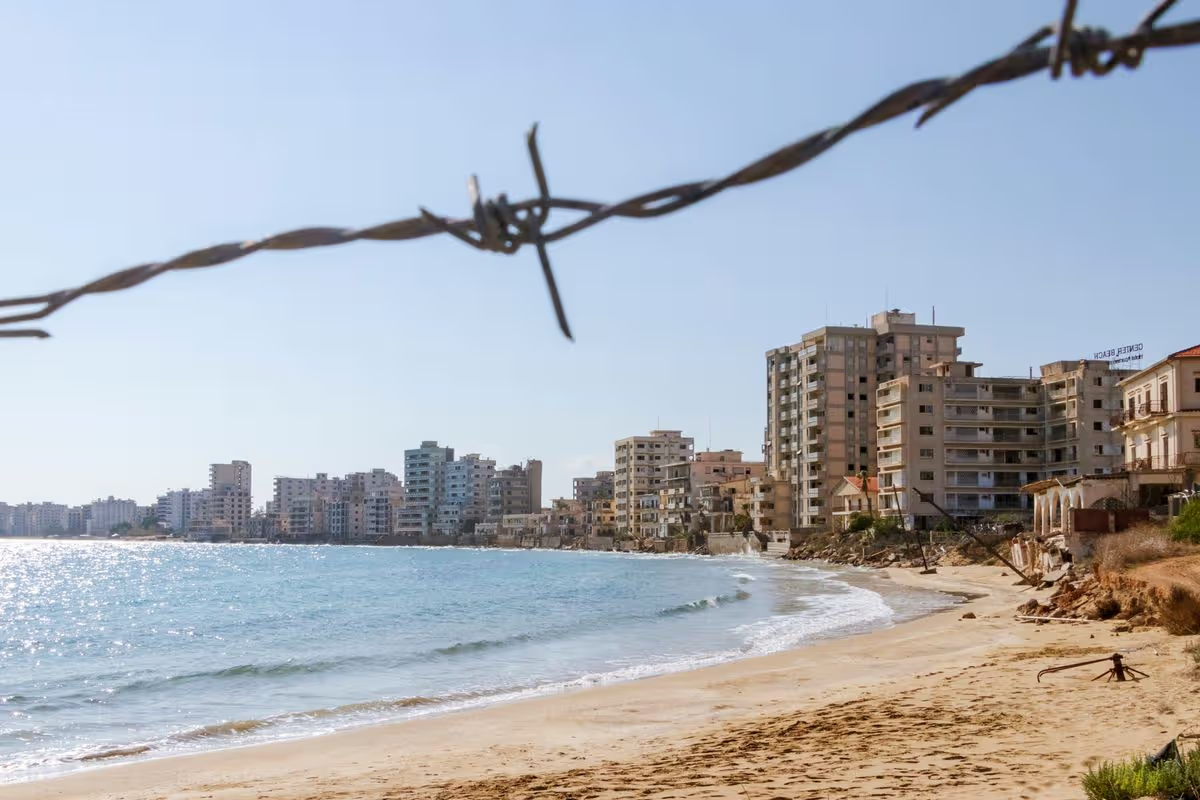
WASHINGTON — Days after he was named Iran’s next supreme leader, and over a week since U.S. and Israeli bombing wiped out much of his family, Mojtaba Khamenei issued his first statement on Thursday demanding vengeance against the alliance over the war it unleashed.
He called on Iranian forces to continue thwarting vital shipping traffic through the Strait of Hormuz. He vowed to open new fronts against the United States and Israel. And he warned that Gulf states hosting U.S. bases would remain targets of Iranian attack.
Yet, what concerned the White House most was what the new supreme leader didn’t say.
Khamenei made no mention of a strategic endeavor that had brought the Islamic Republic to war: Its nuclear program, suspected for decades of harboring military dimensions.
The omission was not lost on officials in the Trump administration, who told The Times they are largely in the dark over the new supreme leader’s stance on whether Iran should break out to build a nuclear weapon.
Khamenei’s deep alliance with the Islamic Revolutionary Guard Corps, which has advocated for weaponization in the past, has raised concern that the new leader will depart from his father’s long-standing position against building a bomb.
U.S. intelligence assessments long held that the late ayatollah, Ali Khamenei, had adopted a strategy of remaining at the threshold of developing a nuclear weapon while avoiding the costs and risks of actually building one. In 2003, as the United States invaded Iraq over false claims that Saddam Hussein possessed weapons of mass destruction, Khamenei issued a religious edict — a fatwa — declaring nuclear weapons to be forbidden under Islam.
That doctrine is now in doubt, with the new supreme leader wounded and stewing underground over the U.S. assault that has devastated Iran’s military and killed his father, his mother and his sister, among other family members.
Concern among U.S. officials comes as Trump has expressed interest in ending the war “very soon,” even though a stockpile of uranium — a key ingredient in the construction of nuclear weapons — remains buried but accessible to Iranian authorities.
Defense officials are skeptical that the nuclear program can be fully dismantled without sending in a substantial U.S. ground force, an escalation that Trump has sought to avoid. But ending the war with Iran’s nuclear infrastructure partially intact could have devastating repercussions. The U.S.-Israeli campaign could force the new Iranian leader to conclude that regime survival requires a nuclear deterrent, one official said.
“Even if President Trump declares victory tomorrow, and points to the damage done to Iran’s conventional military, the fact of the matter is you have a more hardline regime in place with the key ingredients for a nuclear weapon,” said Eric Brewer, deputy vice president of the nuclear materials security program at the Nuclear Threat Initiative, who noted that Tehran still has a stockpile of 60% enriched uranium — close to weapons grade — and advanced centrifuges to take it over the finish line.
“What’s the plan for day after,” Brewer added, “as Iran starts to build back, and potentially seeks nuclear weapons?”
Patrick Clawson, director of the Iran program at the Washington Institute for Near East Policy, said that Mojtaba Khamenei’s position on the nuclear program has been a stubborn mystery. Reports spreading on social media that he opposed the Joint Comprehensive Plan of Action, a nuclear deal brokered among world powers and Iran during the Obama administration, are unsubstantiated, he said.
“While Mojtaba often advised his father on domestic issues, there is much less information about his position on foreign affairs, other than opposition to Israel,” Clawson said. “I have never seen any indications he took a position about the JCPOA.”
President Trump has outlined the destruction of Iran’s nuclear capabilities as a major goal. But in closed door briefings to Congress, defense officials have been less emphatic, according to Democratic lawmakers.
On Tuesday, shortly after Khamenei was named to succeed his father, Defense Secretary Pete Hegseth warned him to disavow continued nuclear work in an exchange with reporters.
“He would be wise to heed the words of our president, which is to not pursue nuclear weapons,” Hegseth said, “and come out and state as such.”


![Abdel Karim Salman heads daily to the charging station to charge his phone and his wife’s phone, which they use as a source of light in their tent throughout the night [Abdelhakim Abu Riash/ Al Jazeera]](https://i0.wp.com/www.aljazeera.com/wp-content/uploads/2026/03/873A6907-copy-1774666645.jpeg?w=640&ssl=1)