Dam

Venezuela: Rodríguez Calls for Electricity Rationing, US Chargé d’Affaires Visit Guri Dam

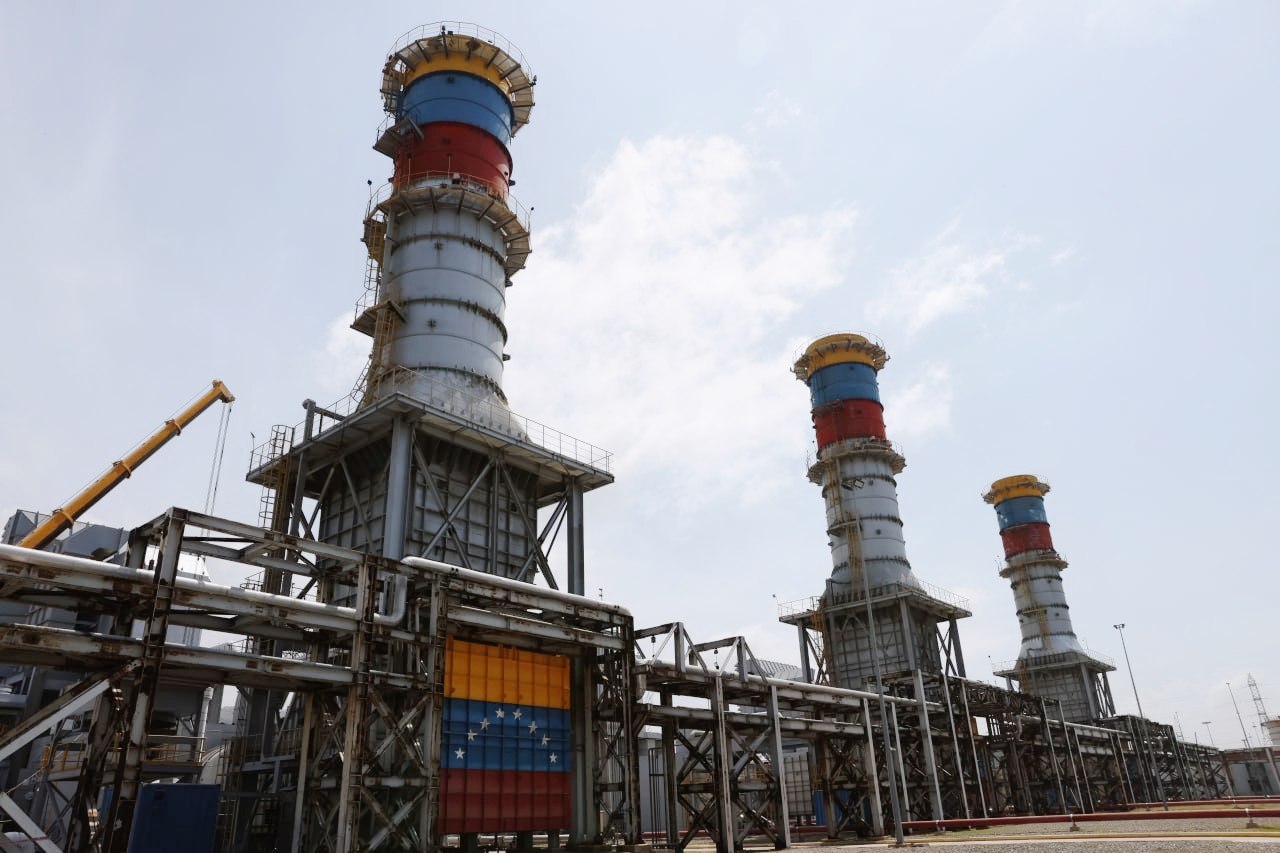
The Termocarabobo plant was affected by the June 24 earthquakes. (Archive)

Mérida, August 4, 2026 (venezuelanalysis.com) – Venezuelan Acting President Delcy Rodríguez announced a series of immediate measures during a conference call on Sunday with governors and cabinet members to safeguard Venezuela’s National Electrical System (SEN) amid climate risks and disruptions from the recent earthquake.

Rodríguez outlined an action plan to prepare for the severe drought and high temperatures associated with the “Super El Niño” phenomenon. Venezuelan authorities will launch a national energy and water conservation plan and steps to secure electricity generation.

“We must be prepared for the ‘Super El Niño’ climate phenomenon, and I have requested the activation of an Electricity and Water Savings Plan to promote awareness and the commitment of every Venezuelan in the responsible use of these resources,” she stated during the broadcast.

The acting president also addressed the impact of the recent double earthquake that struck central-northern Venezuela, which severely affected high-voltage transmission lines and damaged electricity generation facilities. 

The most significant damage occurred at the Termocarabobo plant, which temporarily lost 600 megawatts (MW) of generation capacity. Rodríguez stated that technical crews have already restored 300 MW and expect a full recovery in the coming weeks.

“The fluctuations we have experienced in recent days are directly linked to the significant loss of those 600 MW, and today I am pleased to say that we have already recovered 50 percent,” Rodríguez noted. She added that the government aims to incorporate an additional 480 MW of thermal generation before the end of the year to cushion the grid against climate-induced strain.

The emergency measures respond to renewed instability in the power grid across several regions of the country. While localized rationing and temporary outages have been common in most of the country, they have worsened following the June 24 double earthquake. Residents have reported hours-long blackouts, sometimes twice a day. 

To address structural generation deficits, the Venezuelan government has sought to open the electricity sector to private corporations.

On June 15, Acting President Rodríguez signed a memorandum of understanding with US-based GE Vernova, formerly General Electric, aimed at adding 1,000 MW to the electrical grid within 24 months and up to 5,000 MW over four years.

Days before the GE agreement, Venezuelan authorities established a deal with Argentina-based IMPSA, presently owned by a US consortium, to rehabilitate the Manuel Piar (Tocoma) and Antonio José de Sucre (Macagua) hydroelectric dams in Bolívar state. The IMPSA agreement targets an initial restoration of 672 MW at Tocoma within 19 months, with potential expansion up to 2,640 MW over five years.

In parallel, the National Assembly preliminarily approved a reform to the Organic Law of the National Electrical System in early June. The reform departs from the 2007 framework that defined electricity as a strategic sector under state control, opening generation, transmission, distribution, and commercialization to private sector concessions lasting up to 25 years.

The opening of the electric grid to foreign interests saw US Chargé d’Affaires in Venezuela John Barrett visit the Simón Bolívar Hydroelectric Plant, known as the Guri Dam, in Bolívar State on Sunday, August 2.

Barrett reported that he accompanied a “specialized technical team” from the US Department of Energy, which inspected the facility in coordination with Venezuela’s state electricity company CORPOELEC. The US official claimed the assessment seeks to establish “a roadmap to modernize the electric system.”

The Guri Dam presently produces over 10,000 MW of the roughly 13,000 MW supplied to the grid. Venezuela’s National Electrical System currently operates significantly below its installed capacity of around 30,000 MW.

The electric sector has been severely strained over the past decade as a result of lack of maintenance, brain drain, and the impact of US economic sanctions. The coercive measures severely restricted CORPOELEC’s ability to import spare parts, secure credit, or maintain contracts with original equipment manufacturers. A recent rise in oil production has added to the electric generation gap and contributed to increased blackouts.

Edited by Ricardo Vaz in Caracas.


Source link

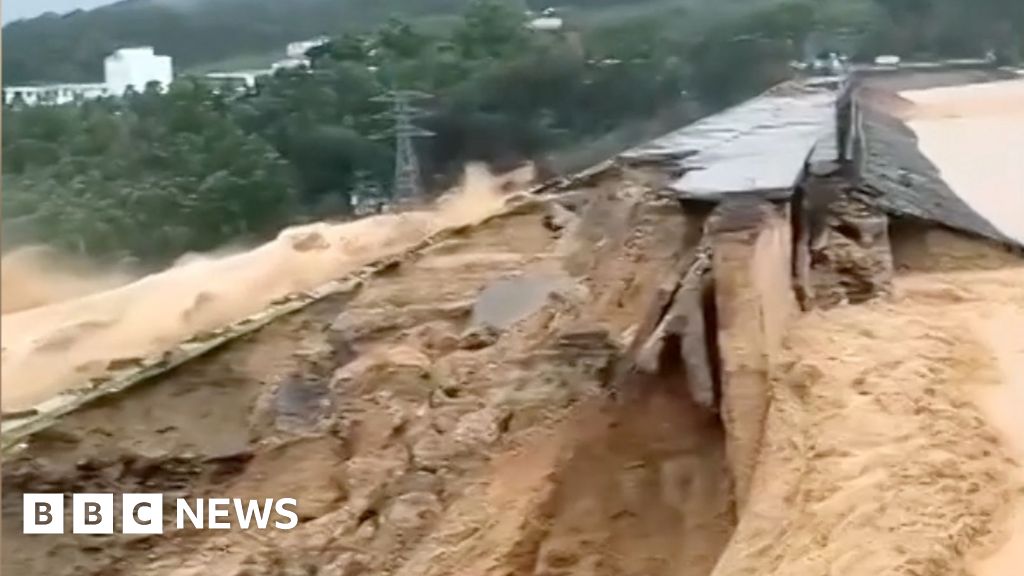
Watch: Fatal Typhoon Maysak floods burst dam wall in China

A reservoir wall broke in Nanning in China, sending out a torrent of water after rivers swelled from the passage of a typhoon. At least four people have been killed by flooding due to Typhoon Maysak, while another 62,000 have been evacuated across the southern city, officials say. The emergency flood control response has been raised to its highest level.

President Xi Jinping has called for “all-out efforts” to rescue people affected by the floods across China. Authorities have warned that torrential rains will continue in the coming days.

Source link

Where to swim in L.A.: Hansen Dam pool reopens for summer

There’s nothing like taking a cool dip after a hot day, especially in L.A. summer weather. As peak swimming season kicks off, the Hansen Dam Aquatic Center pool in Lake View Terrace reopened Memorial Day on weekends after being closed for the season. It will be open daily for swim and play starting Saturday.

The popular San Fernando Valley aquatic center spans 40 acres that include a massive 1.5-acre pool lined with sand like a beach. There’s also a nine-acre lake used for fishing and nonmotorized boat activities.

1

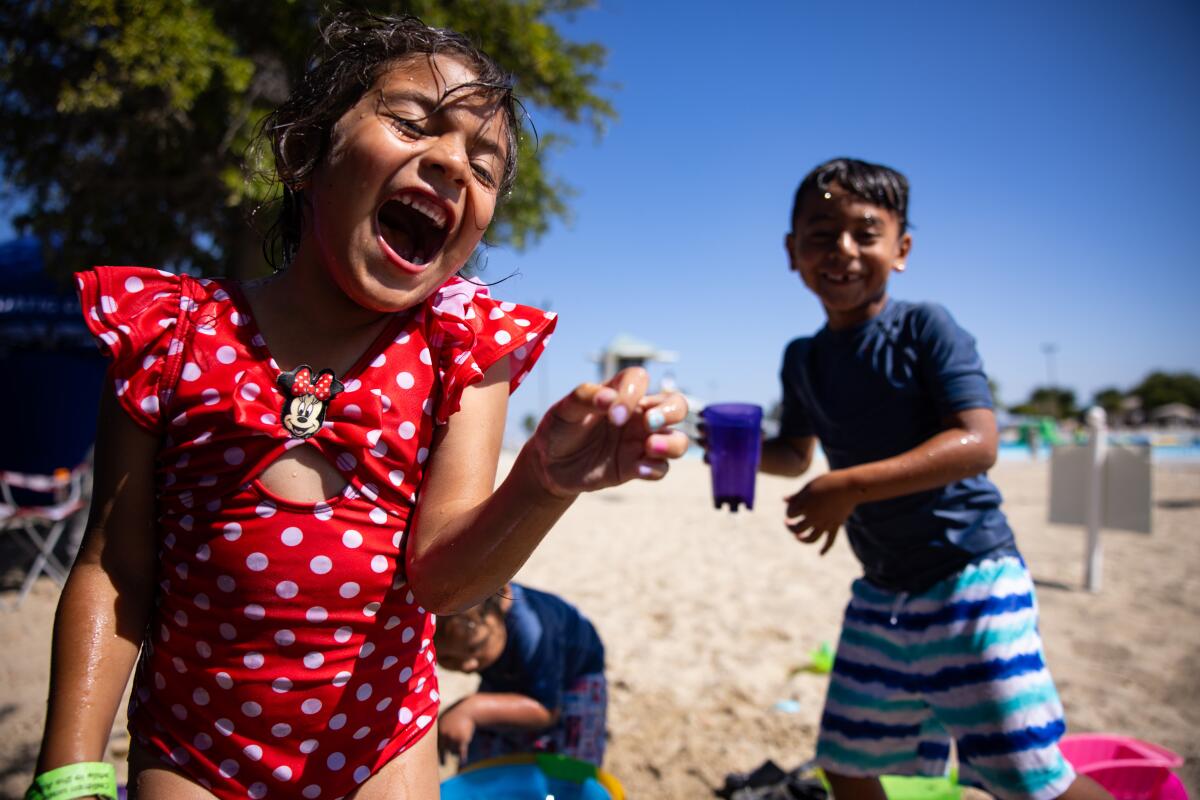
Jaylia Martinez, 5, left, is splashed with water by Elijah Santillana, 6.

2

The height chart for the water slide at the Hansen Dam Aquatic Center.

3

Visitors enjoy the pool at the Hansen Dam Aquatic Center.

1. Jaylia Martinez, 5, left, is splashed with water by Elijah Santillana, 6. 2. The height chart for the water slide at the Hansen Dam Aquatic Center. 3. Visitors enjoy the pool at the Hansen Dam Aquatic Center. (Kayla Bartkowski / Los Angeles Times)

“As one of the largest pools in the U.S., capacity [being] 3,500, we get so many people from all over the city, all over the county, people coming from out of state to this place,” Edwin Realegeno, aquatic facility manager of the center, said.

The Hansen Dam Aquatic Center pool was constructed in 1999 in a $15-million project to replace a previous pool in the area that was filled with silt.

Along the pool’s sandy shores, individuals can use the volleyball courts and teqball table. There are also different levels of shallow water for young swimmers and toddlers.

  • Share via

Paty Santillana, a Van Nuys resident, has visited the Hansen Dam Aquatic Center for the last 15 years. “It’s perfect for little kids. I have a 5-year-old and also a 21-year-old, who we used to come here with,” Santillana said. She adds that her grandchildren are ecstatic every time she mentions a visit to the pool.

Idalia Fraga, a 12-year-old swimmer who has been to the pool twice since its reopening on Memorial Day weekend, said she enjoys the pool for its affordability.

“Prices are very cheap … it really helps those families who struggle,” Fraga said.

After some renovations to its large water slide that will be reopening Saturday, the pool is open to swimmers for an admission fee of $4 for adults and children 17 and under for $1. The center takes cash only.

The recreational lake is open year-round and is restocked with fish from the California Department of Fish and Wildlife.

Christopher Lopez relaxes by regularly fishing at the Hansen Dam Recreation Lake on the weekends.

Christopher Lopez relaxes by regularly fishing at the Hansen Dam Recreation Lake on the weekends.

(Kayla Bartkowski / Los Angeles Times)

Along the lake, people enjoy walking the surrounding grassy pathway and fishing. Christopher Lopez, a Pacoima resident, who also goes by the nickname Squid, goes to the lake for the latter.

Lopez started fishing nearly two months ago with his longtime friend from elementary school. “[It’s about] getting out of the house and having something to do on the weekends and being able to enjoy the day,” he said. “Spending our time out here I think is just a great addition.”

For Lopez, catching bass or trout and enjoying the occasional breeze is a perfect day to absorb the beauty of nature.

Lifeguards Israel Orozco, left, and Ian Zabel, right, watch the pool as visitors cool off at the Hansen Dam Aquatic Center.

Lifeguards Israel Orozco, left, and Ian Zabel, right, watch the pool as visitors cool off at the Hansen Dam Aquatic Center.

(Kayla Bartkowski / Los Angeles Times)

The recreational center is hosting fundraising 1K and 5K runs on Sunday followed by a party with free access to the pool. Realegeno said the fundraiser is to help fund public pool centers across L.A. County and to promote swimming safety lessons.

Visit the recreation center’s website or Instagram page for more information as well as updates on pool or slide closures. Hours vary.


Source link

Hoover Dam, challenged by drought, now wears a massive U.S. flag

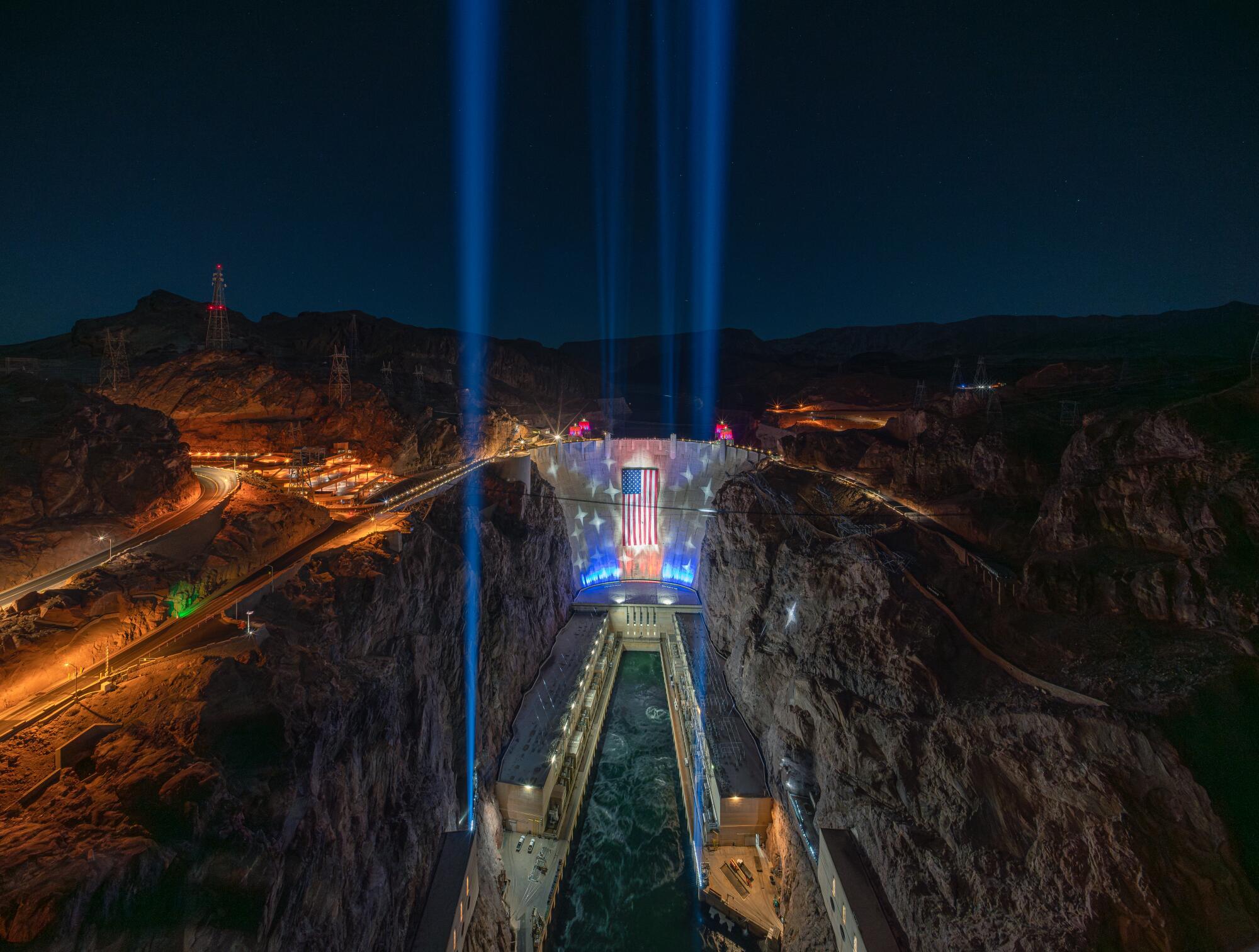
Nope, it’s not AI. It’s just a really big flag with bright lights, draped on Hoover Dam for the next several weeks.

As a display to mark the 250th anniversary of U.S. independence, the states of Nevada and Arizona and the federal Bureau of Reclamation teamed up to hang and illuminate an enormous American flag on the dam on Memorial Day.

The display, scheduled to be in place through July 4, is visible to anyone crossing between Arizona and Nevada on U.S. Route 93, which goes across the top of the dam. The flag is 150 feet tall and 300 feet long, spread on the south-facing side of the dam and lit by 550 LED lights (powered by dam-generated electricity).

An illuminated U.S. flag hangs at Hoover Dam.

A wider view of the illuminated U.S. flag at Hoover Dam.

(Michael Bittle)

It’s a spectacle that comes at a challenging moment for Hoover Dam, as experts warn that Lake Mead’s dwindling water levels could threaten the dam’s ability to generate hydropower. “Slap a flag on it, that’ll fix it,” suggested one of several Reddit commenters who were moved to snarkiness by the flag image.

The dam, a frequent day-trip destination from Las Vegas, stands 35 miles east of the Las Vegas Strip, about 295 miles northeast of Los Angeles. The site features a visitor center and overlook, and guided and self-guided tours.

Installation of the display involved dozens of riggers and two cranes. The flag, which is roughly the dimensions of a football field, has been previously used for celebrations at Indianapolis Colts and Las Vegas Raiders football games.

Within two days after it was hung, gusts of wind up to 50 mph prompted organizers to lower the flag last Wednesday as the National Weather Service declared a wind advisory for the area. Organizers raised the flag again late Friday.

Strong winds are not uncommon in the area. Organizers said weather “may periodically require the flag to be temporarily lowered.” Updates on the flag’s status can be found on the Hoover Dam Facebook page.

The Las Vegas Convention and Visitors Authority paid for the display. A spokeswoman said the cost, including flag, production, installation costs and six weeks of lighting, will be between $750,000 and $1 million.

The dam, a five-year construction job that was completed in 1936 during the depths of the Great Depression, is often hailed as one of the nation’s most impressive works of infrastructure. Though this is not the first time a flag has been draped on it, organizers have called the display “the most ambitious long-duration installation ever attempted at Hoover Dam.”

Source link