Venezuela: Rodríguez Calls for Electricity Rationing, US Chargé d’Affaires Visit Guri Dam
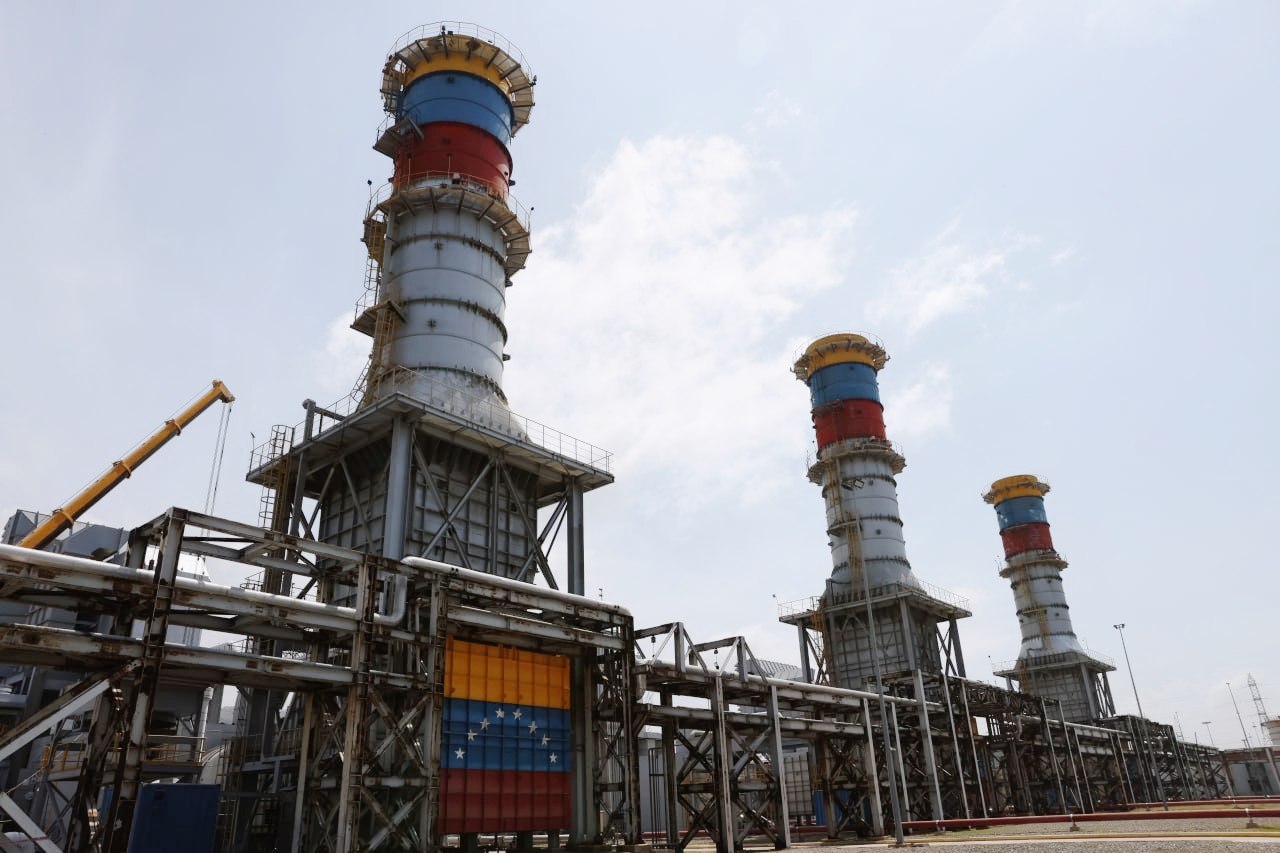
The Termocarabobo plant was affected by the June 24 earthquakes. (Archive)
Mérida, August 4, 2026 (venezuelanalysis.com) – Venezuelan Acting President Delcy Rodríguez announced a series of immediate measures during a conference call on Sunday with governors and cabinet members to safeguard Venezuela’s National Electrical System (SEN) amid climate risks and disruptions from the recent earthquake.
Rodríguez outlined an action plan to prepare for the severe drought and high temperatures associated with the “Super El Niño” phenomenon. Venezuelan authorities will launch a national energy and water conservation plan and steps to secure electricity generation.
“We must be prepared for the ‘Super El Niño’ climate phenomenon, and I have requested the activation of an Electricity and Water Savings Plan to promote awareness and the commitment of every Venezuelan in the responsible use of these resources,” she stated during the broadcast.
The acting president also addressed the impact of the recent double earthquake that struck central-northern Venezuela, which severely affected high-voltage transmission lines and damaged electricity generation facilities.
The most significant damage occurred at the Termocarabobo plant, which temporarily lost 600 megawatts (MW) of generation capacity. Rodríguez stated that technical crews have already restored 300 MW and expect a full recovery in the coming weeks.
“The fluctuations we have experienced in recent days are directly linked to the significant loss of those 600 MW, and today I am pleased to say that we have already recovered 50 percent,” Rodríguez noted. She added that the government aims to incorporate an additional 480 MW of thermal generation before the end of the year to cushion the grid against climate-induced strain.
The emergency measures respond to renewed instability in the power grid across several regions of the country. While localized rationing and temporary outages have been common in most of the country, they have worsened following the June 24 double earthquake. Residents have reported hours-long blackouts, sometimes twice a day.
To address structural generation deficits, the Venezuelan government has sought to open the electricity sector to private corporations.
On June 15, Acting President Rodríguez signed a memorandum of understanding with US-based GE Vernova, formerly General Electric, aimed at adding 1,000 MW to the electrical grid within 24 months and up to 5,000 MW over four years.
Days before the GE agreement, Venezuelan authorities established a deal with Argentina-based IMPSA, presently owned by a US consortium, to rehabilitate the Manuel Piar (Tocoma) and Antonio José de Sucre (Macagua) hydroelectric dams in Bolívar state. The IMPSA agreement targets an initial restoration of 672 MW at Tocoma within 19 months, with potential expansion up to 2,640 MW over five years.
In parallel, the National Assembly preliminarily approved a reform to the Organic Law of the National Electrical System in early June. The reform departs from the 2007 framework that defined electricity as a strategic sector under state control, opening generation, transmission, distribution, and commercialization to private sector concessions lasting up to 25 years.
The opening of the electric grid to foreign interests saw US Chargé d’Affaires in Venezuela John Barrett visit the Simón Bolívar Hydroelectric Plant, known as the Guri Dam, in Bolívar State on Sunday, August 2.
Barrett reported that he accompanied a “specialized technical team” from the US Department of Energy, which inspected the facility in coordination with Venezuela’s state electricity company CORPOELEC. The US official claimed the assessment seeks to establish “a roadmap to modernize the electric system.”
The Guri Dam presently produces over 10,000 MW of the roughly 13,000 MW supplied to the grid. Venezuela’s National Electrical System currently operates significantly below its installed capacity of around 30,000 MW.
The electric sector has been severely strained over the past decade as a result of lack of maintenance, brain drain, and the impact of US economic sanctions. The coercive measures severely restricted CORPOELEC’s ability to import spare parts, secure credit, or maintain contracts with original equipment manufacturers. A recent rise in oil production has added to the electric generation gap and contributed to increased blackouts.
Edited by Ricardo Vaz in Caracas.