Renewal delays leave DACA recipients jobless and fearing deportation
After their work permits expired, an immigration attorney near San Diego was fired and a nurse in the East Bay area was placed on unpaid leave.
Both depend on work permits and legal protection afforded under Deferred Action for Childhood Arrivals, a program created by President Obama in 2012 for immigrants who were brought to the U.S. as children. But recent processing delays at U.S. Citizenship and Immigration Services are leaving many DACA recipients vulnerable to arrest and deportation as their two-year work permits expire.
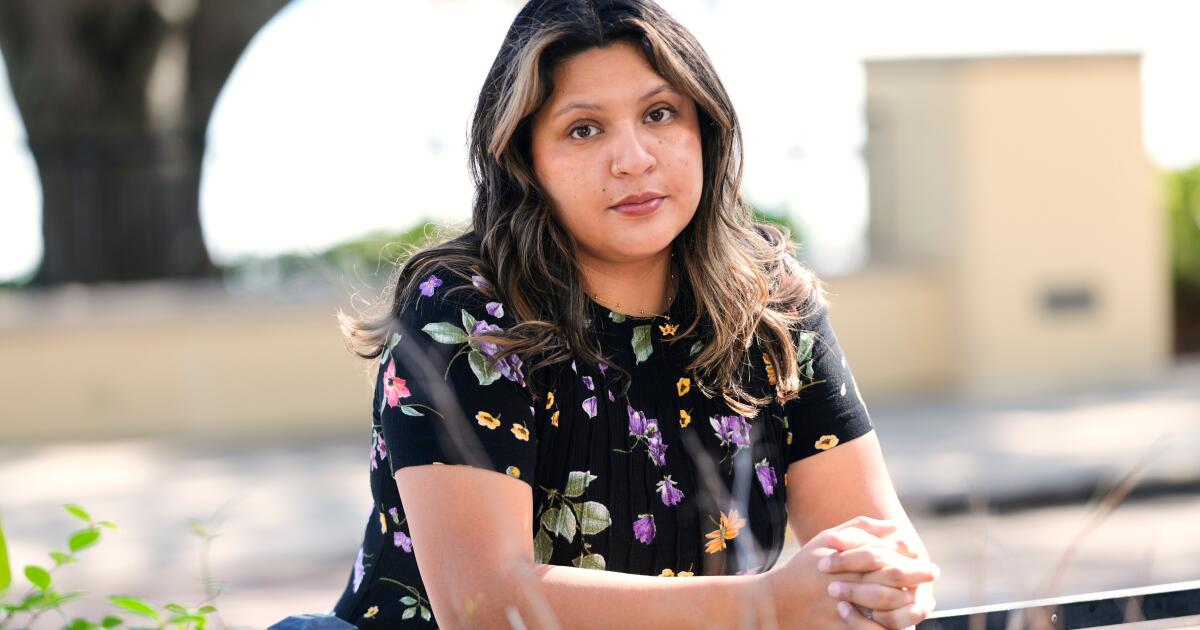
“It’s definitely an attack on the program,” said the lawyer, Maria Fernanda Madrigal. “My first thought was, ‘Oh, they’re so clever. They weren’t able to end the program through the courts, so this is what they’re doing.’”
Over the last several years, median processing times for DACA renewals remained under two months. Now, most cases are finished within 3.5 months, according to Citizenship and Immigration Services.
The agency did not explain what’s causing the processing delays. Spokesperson Zach Kahler wrote in a statement that “under the leadership of President Trump, USCIS is safeguarding the American people by more thoroughly screening and vetting all aliens.”
DACA does not confer any form of legal status in this country, he said.
During his first term in office, Trump tried unsuccessfully to rescind DACA.
This time around, his administration has simply weakened its benefits.
Last year, Department of Homeland Security officials started urging DACA recipients to self-deport. The Department of Health and Human Services made DACA recipients ineligible for health insurance through Obamacare.
And last month, a precedent-setting decision from the Board of Immigration Appeals, which will apply to immigration judges across the country, said having DACA is not enough to protect someone from deportation.
A Department of Homeland Security spokesperson said ICE arrested 650 DACA recipients between Jan. 20, 2025, and April 30, nearly 90% of whom had been charged with or convicted of a crime. The spokesperson did not say how many have been deported.

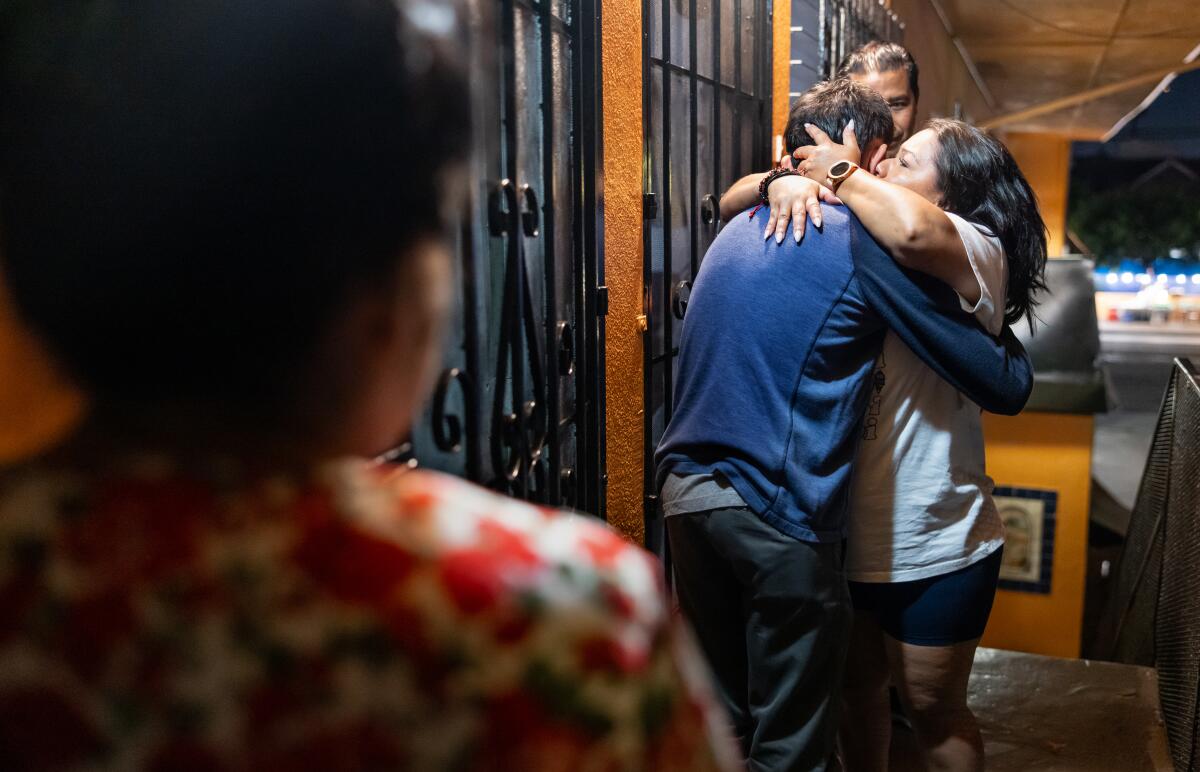
DACA recipient Javier Diaz, center, is welcomed by his neighbors including Martha Avelar, right, in South Los Angeles after returning home from a detention center in Texas in July 2025.
(Christina House / Los Angeles Times)
But in a February letter to U.S. senators, then-Homeland Security Secretary Kristi Noem said the agency had deported 86 DACA recipients between Jan. 1 and Nov. 19, 2025. Federal judges have ordered the agency to return some, including Maria de Jesus Estrada Juarez, a Sacramento mother who was deported a day after her green card interview.
Lawmakers are expressing alarm that DACA’s promise of protection is being undermined.
Last month, Democrats on the Senate Judiciary Committee held a forum on the Trump administration’s “all-out assault on DACA.” The forum featured Santa Ana Police Chief Robert Rodriguez, who testified that he had been forced to fire a police officer because their work permit renewal was not processed on time.
Last week, members of the House from California’s Central Valley, including Rep. David Valadao (R-Hanford), sent a letter to Homeland Security and Citizenship and Immigration Services leaders, urging them to expedite DACA processing.
“Our offices have seen a substantial increase in constituent cases involving pending renewals, with many remaining unresolved for more than six months,” the letter continued. “These extended processing times are creating avoidable hardships for our communities and our economy.”
California has more than a quarter of the nation’s approximately 500,000 DACA recipients, according to Citizenship and Immigration Services figures. On average, they are 31 years old.
To qualify for DACA, applicants had to pass background checks and meet certain educational or work requirements.
During a news conference ahead of the DACA forum last month, Sen. Dick Durbin (D-Ill.) reflected on the day in June 2012 when DACA applications first opened. He said parents of young immigrants asked him if it was safe for their children to sign up for the program, which required admitting their lack of legal status and home address.
“Are you sure that the government won’t use that information against us at some time?” he remembered them saying. “I said, ‘Follow the law exactly as it is written and announced in the executive order, and we’ll stand by you. Just believe in us to do that.’”

Sen. Dick Durbin (D-Ill.), foreground, speaks during a Homeland Security oversight hearing before the Senate Judiciary Committee in March.
(J. Scott Applewhite / Associated Press)
“Well, I didn’t anticipate the current president and what he is now doing,” Durbin continued.
Sarah Krieger, a former Citizenship and Immigration Services official who is now senior policy counsel at the National Immigration Law Center, said processing delays were caused, in part, by the agency temporarily pausing an automated system for processing DACA and other applications.
Krieger said that “streamlined case processing” was turned off about a month after Trump took office last year, in order to audit whether each process had sufficient security checks. The automated system was turned back on a couple of months later but was modified to include more manual security checks. Krieger left the agency last July.
Turning off the automated system was “a purposeful choice that doesn’t increase national security,” she said. “All it does is slow things down.”
Citizenship and Immigration Services recommends that applicants submit their paperwork and pay the $555 fee between 120 and 150 days before their benefits expire.
Among those who did so are two nurses who work for Kaiser Permanente in the Bay Area. Both requested anonymity out of concern over their immigration status.
One of the nurses, who came to the U.S. from the Philippines as a toddler, said she applied for renewal on Dec. 1. Her work authorization expired April 15.
Kaiser placed her on a 30-day unpaid leave of absence, after which she would be fired. Eventually, her work permit was renewed, but only after Sen. Alex Padilla (D-Calif.) and two other members of Congress lobbied the federal government on her behalf.

Sen. Alex Padilla (D-Calif.) speaks during a news conference on the DACA program on May 12 outside the U.S. Capitol.
(Graeme Sloan / Getty Images)
Padilla said his office has fielded requests from hundreds of DACA recipients this year.
Another Kaiser nurse, who also submitted her renewal paperwork in December, is still waiting. She has been on unpaid leave for nearly a month.
The nurse, who is from South America, said one Citizenship and Immigration Services officer told her it could take up to 10 months for her renewal to be processed.
The nurse is pregnant and she and her husband just bought a house. Losing her job would mean losing her healthcare and maternity leave benefits.
“I’ve spent years caring for others in my community, paying taxes, contributing to a healthcare system,” she said. “I worked through COVID and it’s heartbreaking to feel like you’re so easily discarded.”
Another DACA recipient, Elsa Sanchez, 35, of Georgia has maintained DACA status since 2012 and says she always follows the recommendation to submit the renewal application at least 120 days before the expiration date.
For the last three renewals, she said, she was approved within a week or two. This time, her work permit and DACA expired on April 1, more than four months after she submitted her application.

Elsa Sanchez, whose work permit expired because of DACA renewal delays, at her home in Atlanta.
(Emilie Megnien / Associated Press)
The healthcare IT company where Sanchez works as a senior customer success manager allowed her to take a 60-day unpaid leave of absence but said it would have to terminate her employment afterward.
Sanchez’s unpaid leave was set to run out on June 1. On May 20, she got notice that her DACA renewal had finally been approved. But by then Sanchez, a single mom, had had to pull funds out of the college savings account for her 19-year-old daughter, who is attending a local university. She put the money toward her nearly $2,000 rent and food.
“I feel so relieved and grateful,” she said in an Instagram video announcing the news. “I know that a lot of us are still being affected by these delays. I wish that I could share my approval with all of you and that we would all be celebrating today.”
Others have also turned to social media to share their experiences and swap resources. Madrigal, the fired attorney, pivoted to making daily videos. On Tuesday, she shared “day 35 of unemployment.”
“Some days look like big emotions and uncertainty,” she wrote. “Other days look like walks, toddler activities, cooking dinner and ending the night with tostadas. Trying to find joy and normalcy in the middle of it all.”