Aug. 14 (UPI) — U.S. health officials said they have begun inspections at the Mexican processing plant of the U.S. food distributor Taylor Farms as they deal with a continuing cyclosporiasis outbreak that has spread across 17 states.
The Food and Drug Administration and the Centers for Disease Control and Prevention announced Thursday they have “initiated an onsite inspection and sampling” at Taylor Farms de Mexico’s facility in Guanajuato, Mexico, located about 185 miles northwest of Mexico City.
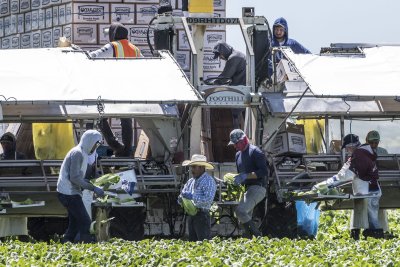
Taylor Farms, based in Salinas, Calif., voluntarily recalled all iceberg lettuce from that area on July 17, including shredded lettuce used in Taco Bell products and in salad kits sold in some grocery stores.
Taco Bell also said it was removing shredded lettuce supplied by Taylor Farms in affected states.
The illnesses, most of which began before July 17, have reached 9,481 cases reported across 17 states as of Thursday, the FDA said.
The latest total included two new states since the previous update issued last week — Maine and Massachusetts. The other affected states include Illinois, Indiana, Kansas, Kentucky, Michigan, Ohio, Oklahoma, Pennsylvania, West Virginia, Missouri, Arkansas, Iowa, Nebraska, New Hampshire and North Carolina.
“FDA remains confident that all recalled iceberg lettuce related to this specific Cyclospora outbreak is off the market,” the agency said Thursday. “FDA will continue to work with federal and state partners to investigate this multistate outbreak.”
Including the current outbreak, the CDC has registered reports of 13,895 cases of cyclosporiasis since May 1, and is also tracking of at least 10,455 additional cases of cyclospora infection requiring further investigation and analysis.
The situation has angered Democratic lawmakers who are demanding answers from Taylor Farms and the Trump administration.
On July 27, Rep. Robert Garcia, D-Calif., ranking member of the House Committee on Oversight and Government Reform, called on Taylor Farms CEO Bruce Taylor to explain his company’s role in the outbreak and whether it “used its political donations and White House connections to interfere with the Food and Drug Administration’s investigation into the contaminated food supply.”
“Evidence points to Taylor Farms products as a source of the outbreak, but reports indicate that your company may have attempted to influence the ongoing [FDA] investigation into the matter, obfuscate Taylor Farms’ role in a public health crisis, and mislead consumers trying to keep their families safe,” Garcia wrote.
And on Wednesday, the Food Safety Coalition, a group including consumers, scientists and government watchdogs, urged the Senate Republicans to rescind a measure instituted last year which “prevents the [FDA] from implementing traceability requirements for high-risk foods, including leafy greens, until July 2028.”
The hobbled traceability rules, the coalition said, has contributed to “a crisis in consumer confidence, in part due to Taylor Farms’ … failure to provide information to the public required under the FDA rule in its recall communications.”
But as this president afflicts the country with a prolonged civic bout of Montezuma’s Revenge, Mexican food’s role in the overall mess Trump has left us with is notable.
One of this country’s most popular cuisines has inadvertently spent this summer embarrassing Trump in fundamental ways — and I’m not just talking about TACO, the acronym referring to how Trump Always Chickens Out on his most bombastic claims and threats. The most prominent — and disgusting — example has been outbreak of foodborne illness traced back to popular Mexican restaurant chains that have sickened tens of thousands of Americans while Trump has shrugged and effectively told us to eat frijoles.
The Food and Drug administration traced an outbreak of cyclosporiasis, a parasite-born intestinal disease, to contaminated lettuce grown in Mexico by Salinas-based Taylor Fresh Foods that made its way to Taco Bell. The world’s biggest Mexican fast food chain quickly put out a statement that it removed all suspected lettuce from its restaurants and that “we encourage all relevant restaurants, retailers, and foodservice operators to do the same.”
If only the Trump administration was as proactive in caring for the well-being of Americans as the creators of Doritos Locos tacos and Crunchwrap Supremes.
It turned out that the Centers for Disease Control and Prevention’s Foodborne Diseases Active Surveillance Network told state inspectors last year that they were no longer required to report to the agency any instances of the parasite that causes cyclosporiasis they found in this country’s food supply. This was part of massive cutbacks at the CDC that reduced its staff by a quarter and cut billions of dollars in funding.
When reporters confronted Health and Human Services Secretary Robert F. Kennedy Jr. with these facts, he responded that such criticisms were “invalid” and that the cyclosporiasis outbreak was “under control.”
Make America Healthy Again? More like Make Americans Heave Always.
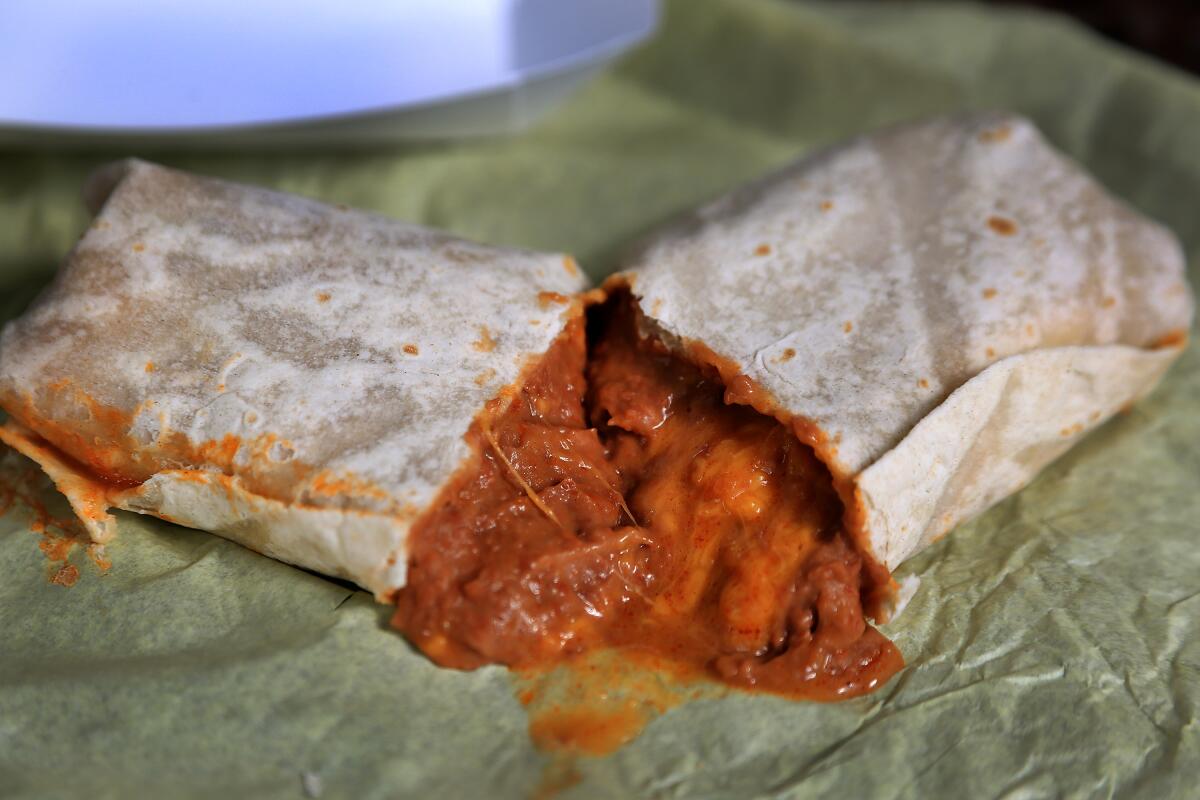
A bean and cheese burrito with green chile sauce at Al & Bea’s in Boyle Heights.
(Kirk McKoy/Los Angeles Times)
On Aug. 4, the Food and Drug Administration revealed that a salmonella outbreak traced back to contaminated jalapeños imported from Mexico had left hundreds of Americans sick. But the feds were two weeks late to the news: By July 20, Chipotle had already removed all suspected jalapeños from its stores. Unlike the Trump administration, it had invested in food-safety tracking that quickly spotted the problem, a system implemented after the company suffered hundreds of millions of dollars in sales losses and a $25-million federal fine last decade due to repeated foodborne illnesses originating in its stores.
I’m no fan of Chipotle’s underwhelming hipster vibe or Taco Bell’s over-salted options, but they know what the Trump administration seems to not understand: Americans deserve to eat without worrying about whether they’ll get ill as a result. And they also know Americans especially like Mexican food, a cuisine dependent on exported produce that is now more expensive than ever because of Trump’s misguided tariffs and overall bellicosity to our Latin America trading partners.
You would think Trump himself would know: Remember the infamous photo he posted on Cinco de Mayo during his first term of him smiling at his desk appearing ready to chow down on a giant taco salad bowl?
Which leads to the second section of Trump’s combo plate of bad Mexican food news this year. On the same day the FDA belatedly disclosed the jalapeño salmonella outbreak, Turning Point USA spokesperson Andrew Kolvet posted on social media that a college student complained to him that “a burrito shouldn’t cost $20.” Kolvet correctly pointed out that many people currently feel the cost of living is too high, and rightfully suggested that Republican Party leaders should sympathize with such concerns lest they lose even more voters that they already have during Trump’s second term.
Instead, Trump toadies from Vice President JD Vance to Rep. Dan Crenshaw urged young people to eat instant ramen and live frugally instead of splurge on burritos. That provoked other conservative activists to smack down the MAGA Men for showing how out of touch they are with how expensive everything is right now.
Forget the Consumer Price Index: The cost of a burrito is the best way to judge how much the cost of living actually is. I haven’t regularly bought them for years because they’re just not worth it anymore.
A delicious, slender bean-and-cheese burrito with no sauce at the venerable Al & Bea’s in Boyle Heights is going for six bucks and change right now when it was about $2 cheaper two years ago. The gargantuan breakfast burritos at my favorite place to get one, Athenian III in Buena Park, run about $13. Even my go-to fast-food treat, a half-pound Del Taco bean-and-cheese burrito, costs $2.61 with tax at the closest location to my house.
Remember when they were about a dollar? I do.
As someone whose wife runs a restaurant, I don’t blame businesses for hiking their prices; I blame Trump. He campaigned two years ago on stopping and reversing the runaway inflation that was happening toward the end of the Biden administration and won over a lot of Mexican Americans as a result. But when those voters can’t even enjoy a carne asada burrito for lunch without thinking about whether they’ll have enough money for the rest of the week, that should worry Trump and his team as the November midterms approach.
That they’re collectively still blaming Biden shows how pendejos they are at best, and uncaring at worst.
Back to that 2016 Cinco de Mayo photo of himself enjoying a taco salad sold at his Trump Hotel in Manhattan. It was peak Trump: daring opponents to call him out for appropriating a hallmark of Cal-Mex dining while thinking Americans would see the move as a metaphor for the bounties of riches and good times Trump would usher in for this country.
A decade later, Trump just makes too many Americans want to run to the proverbial toilet and barf from all the slop he and his minions have cooked up for our country.
The U.S. Centers for Disease Control and Prevention have said that shredded iceberg lettuce from Taylor Farms served in Taco Bell have cause many of the cyclosporiasis illnesses. File Photo by Erik S. Lesser/EPA
July 17 (UPI) — Taylor Farms announced Friday it is removing all iceberg lettuce sourced from central Mexico from the U.S. market, after federal officials said they traced the cyclosporiasis outbreak that’s caused illness in thousands of people to lettuce supplied to Taco Bell restaurants in five states.
The U.S. Centers for Disease Control and Prevention and the Food and Drug Administrationsaid their investigators found the shredded iceberg lettuce came from Taylor Farms, a supplier that also sells salad kits in grocery stores.
In a statement, the company said it is voluntarily removing all of its Mexico-sourced iceberg lettuce, adding the outbreak is not associated with any of its salad kits.
“While the FDA traceback is indicating a specific independent farm that represents less than 1% of the U.S.’s iceberg lettuce supply as the potential source of the outbreak, we have removed all iceberg lettuce from the region indefinitely,” the company statement said.
The CDC’s website says not to eat “shredded iceberg lettuce served at Taco Bell locations in Indiana, Kentucky, Michigan, Ohio and West Virginia.”
More than 1,600 people have been confirmed ill with the bug.
The agencies did not name a supplier, but two people familiar with the inquiry told The Washington Post that investigators have identified Taylor Farms as the supplier.
“The investigation remains active, and additional states, restaurants, retailers or products may be identified as more information becomes available,” said Emily Hilliard, a spokesperson for the Health and Human Services Department.
“The signal we have gotten is that there is a very high percentage of people who got sick at Taco Bell, and when investigators asked what their menu items were in common, lettuce came up frequently,” one person familiar with the investigation said.
“Based on ongoing conversations with public health officials, and out of an abundance of caution, Taco Bell has taken immediate action to voluntarily remove potentially impacted lettuce from a supplier in select states,” Taco Bell Corp. said in a statement. “The affected ingredient from our supplier is being indefinitely removed from our supply chain nationwide and will be replaced within 24 hours in select states.”
Taylor Farms is a leading global producer of salads and healthy fresh foods, with production facilities across the United States, Canada, Mexico and Western Europe. The company has been linked to several outbreaks.
In November 2024, onions from Taylor Farms were tainted with E.Coli and sold at McDonald’s stores via Quarter Pounders burgers. About 100 people in 14 states were sickened. In December 2015, 19 people in 18 states were sickened with E. Coli after eating tainted celery supplied by the company to grocery stores. In August 2013, salad kits from Taylor Farms grown in Mexico were recalled after more than 360 people in Texas, Iowa and Nebraska became ill with cyclosporiasis. In February 2013, Taylor Farms recalled organic baby spinach products sold in 39 states for potential E. coli contamination, though there were no reports of illness.
President Donald Trump delivers a prime-time address to the nation from the East Room of the White House on Thursday. Pool photo by Saul Loeb/UPI | License Photo
The U.S. Centers for Disease Control and Prevention has confirmed a multistate outbreak of cyclosporiasis. File Photo by Erik S. Lesser/EPA
July 15 (UPI) — The U.S. Centers for Disease Control and Prevention has confirmed the multistate outbreak of cyclosporiasis, the parasite-based illness, in at least four states.
The four states are Michigan, which has seen the highest rate of illness; Ohio; Kentucky; and West Virginia. But cases have been identified in 34 states, the CDC said.
The CDC had said that there was “no evidence of a single, multistate” outbreak, The Hill reported, but on Tuesday said that the hundreds of cases in the region appeared to link to a common source. The source hasn’t been confirmed, said Dr. Gwen Biggerstaff, deputy director of the CDC’s Foodbourne, Waterbourne and Environmental Diseases division. Biggerstaff hosted a call with reporters on Tuesday.
Michigan health officials have reported more than 3,700 cases of the illness and believe lettuce or salad greens could be the culprit. Dr. Donald Prater, FDA acting deputy commissioner for food, said the agency is continuing to investigate “multiple produce items, including lettuce.”
As of Wednesday, the CDC has gotten reports of at least 1,645 lab-confirmed cases of domestically acquired cyclospora since May 1, which is the start of the typical cyclosporiasis season. Biggerstaff said the agency is aware of more than 5,100 additional reports that require further analysis.
Cyclosporiasis is an intestinal illness caused by a microscopic parasite called cyclospora. It’s spread when people consume food or water contaminated with the parasite, typically fresh produce that has not been adequately washed or cooked, Biggerstaff said.
Symptoms include watery diarrhea — sometimes frequent — along with cramping, nausea, loss of appetite, fatigue and low-grade fever. Symptoms generally begin about one to two weeks after exposure, she said.
“I want to underscore an important point: This illness does not spread directly from person to person. The source of this outbreak is what we eat or drink — not casual contact with someone who’s sick,” Biggerstaff said on the call.
Biggerstaff emphasized that “the true number of infections is almost certainly higher than what’s reflected in these numbers, because many people with mild illness recover without seeking medical care and are never tested.”
Cyclospora can only be diagnosed by stool sample, the CDC said. The agency urged medical professionals to “specifically request cyclospora laboratory testing on stool specimens” to be sure of the diagnosis.
In the past, cyclosporiasis was associated with travel abroad, but in the past few years has been tied to domestic and imported produce.
The CDC said the reason cyclosporiasis investigations take longer is because people show symptoms up to two weeks after exposure to the parasite. Also, there is no whole genome sequencing of the parasite, which makes it more difficult to match the food product to the people made sick by it.
Instead, labs use genotyping, which is not as fast or precise, Biggerstaff said. In some cases, the source may never be identified.
Cyclosporiasis, an infection that causes “explosive” diarrhea, is on the rise more than usual in regions throughout the United States, health officials said Wednesday.
July 8 (UPI) — Cases of cyclosporiasis, an infection that causes “explosive” diarrhea, are on the rise in regions throughout the United States, health officials said Wednesday.
The intestinal illness, which is caused by the Cyclospora cayetanensis parasite, often surges through the summer, but this year has been marked by larger-than-usual spikes in some states.
Reported cases in Michigan are nearing 1,000 since June 22, a representative from the state’s Department of Health and Human Services told ABC News. The state usually has about 50 reported cases a year.
Authorities in Ohio, North Carolina, New York, Texas and Illinois are also dealing with more cases than usual. However, a spokesperson for the U.S. Centers for Disease Control and Prevention said there is “no evidence of a single, multistate Cyclospora outbreak” right now. It can take weeks or more for local authorities to report confirmed cases to the CDC.
The parasite spreads through food or water contaminated by feces from an infected person, and person-to-person spread is unlikely. ABC News reports that the Michigan health department’s working hypothesis is that the outbreak is connected to contaminated produce.
Past outbreaks have been connected to fresh produce such as raspberries, salad greens, basil, cilantro and snow peas.
The illness is not usually life-threatening, but if not treated, it can last a few days to over a month, the CDC said. Multiple relapses are possible. The CDC also notes that the true number of those infected with Cyclospora is likely higher than reported.
In addition to the most well-known symptom of sudden, watery diarrhea, symptoms of cyclosporiasis include vomiting, nausea, severe stomach cramps, loss of appetite and fatigue. It can take up to two weeks after eating contaminated food for symptoms to show themselves.
They also should take basic food safety precautions, such as washing hands with soap and water before and after handling raw fruits or vegetables, thoroughly washing all fresh produce under running water before eating or preparing, cutting away any damaged areas on fresh produce and refrigerating prepared produce as soon as possible.